
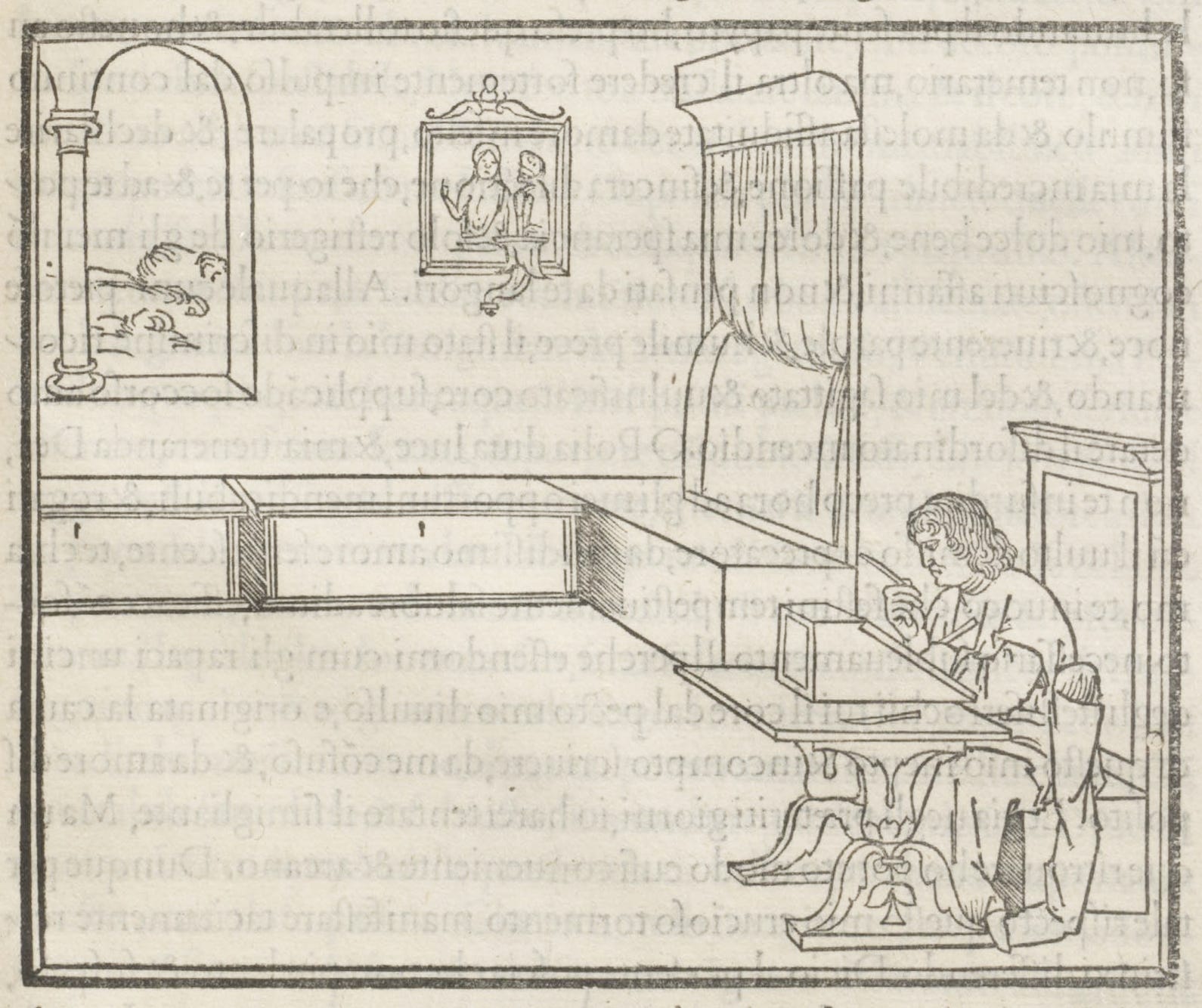
In the few short months that I have been consistently writing, I still come across the same problem over and over again: no one will read this.
No one will read this, and why does it matter? Is the art of creation substantiated by its being seen? What about the things we do in private because we prefer to keep it that way? What makes a person submit or pitch their writing to lit mags, agents, and publishing houses? Are my efforts in writing rendered valuable once the eyes of a stranger fall upon it?
The answer is complicated, subjective. If it matters to you, then yes, it does matter that your writing reaches people — it’s something you want to share, which can and should be fulfilled. Unless you have a big following on Substack, which I’m assuming most people reading this don’t, submitting your writing may seem like the only way to get your writing in front of a wide audience. In other words, becoming a ‘serious’ writer seems like it mainly consists of submitting your writing to magazines, which is a very annoying process for the simple fact that it feels like crossing the creative threshold into the sales world, where a piece of writing is only as good as your pitch or is simply rejected altogether. Usually, there are no reasons given for why it’s rejected. The only reassurance there is knowing that you have dotted your i’s, crossed your t’s, and done your homework on what a publication is seeking. The writing process is arduous enough without the further expulsion of one’s energies in pitching yourself to editors and scoping out where your writing might fit, be it a website or magazine or whatever, so I understand why many writers simply haven’t done this or can hardly muster the energy to do this.
Another aspect that’s equally if not more grueling is the time that it takes for an accepted piece to get published. Sometimes it takes a few months or up to a year for it to appear online or in print, and by then the dopamine gained from what was achieved has subsided significantly. I was telling my partner the other day that as a writer, the gratification that one receives from writing is terribly delayed, if not totally random. Gratification is most present when a piece is actively being worked on, researched, and meticulously crafted, not when it’s close to being finished or on the way to being shared. Every writer knows the feeling well: when a piece of writing is done, your faculties are entirely extinguished; you want nothing more than to be done with it, can hardly stand to reread and edit your own work for the umpteenth time, and all you want is to call it finished and shuffle it away somewhere, which isn’t to say that we don’t appreciate we’ve created — if anything, deciding on its home despite that depletion of energy says otherwise.
Nevertheless I understand why it’s an attractive goal, as one can’t help but ask themselves what in the world they’re going to do with something they have written. The answer is obvious but contains ideas that I believe are dangerous, which is that of dictating the worthiness of an activity or project if it is seen versus unseen. Seen or not, there is energy that is being placed somewhere; it’s being given a chance at actualization. The reward is found in the writing, not in being seen or liked or admired.
I know it’s different for everyone and is oftentimes dependent on the project’s aim and ambition, amongst other factors (length, subject matter, and so on), but for me, the most consistent flow of dopaminergic energy is in the writing itself; where the energy is taking place. But the energy of a project is not always there. It comes and goes, and there’s no telling when it will come back, if it does. Recently, I started two projects which felt full of energy and potential, but as I worked on them, the energy dissipated and left what I had written too bare and unsatisfying for me to send out. This is what happens when you begin to take note of your ideas and develop them — some may make it out and be fully realized, while others will need to be archived, shelved, tucked in the corner somewhere until the next opportunity to look at it and give it what it needs becomes evident.
Which is to say that as so long as I have given an idea my fullest attention, and worked at it enough so that it gives form to what I have in mind, that I’ve already begun to reap the reward. Everything else after the fact is a bonus, which brings me back to the original topic — does it matter what I write if no one will read it? The answer is, unequivocally, yes — if you’re a writer, then what matters to you most of all is the work itself. It doesn’t matter if you have never been published, or are a diarist, or write long posts on Tumblr instead of writing ‘seriously’ — the work you’re doing in private is serious. No one forces you to write. You do it for some obscure reason that you may not even understand. But the proclivity for it is enough, and with enough time you will see that it doesn’t matter if someone reads it or not, that the fate of whatever it is you have written matters little in the grand scheme of keeping up with your own energy enough to produce an oeuvre at the end of it all. It’s proof of your life, proof that you existed. The pulsing energy that lives within you exists whether you like it or not, and attending to it is reason in and of itself. That’s the entire point. So what does it matter? This preoccupation is irrelevant in the bigger picture that is your indisputable necessity.
No posts
Comments
Nothing yet. Say the first thing.
Sign in to join the conversation.