
Spire: The City Must Fall is a tabletop role-playing game designed by Grant Howitt and Christopher Taylor, in which the players are drow (dark elves) living under high‐elf (aelfir) domination in a massive, mile high arcology called Spire.
In this setting, the drow are a subjugated people; the aelfir hold political, cultural, and religious power. The drow seek revolution and agency, often operating in secret via the Ministry of Our Hidden Mistress.
Other races also live in Spire, including humans, gnolls, and the gutterkin. They are not the main player races. The players are drow. But these other races are deeply woven into the social fabric of Spire, structurally and thematically. They help define the world, supply antagonists, allies, sources of prejudice, opportunity, conflict, and texture.
Below I breakdown how humans, gnolls, and gutterkin are presented, what roles they fill in the game world and its stories, what tensions they embody, and how they reinforce Spire’s central themes of oppression, revolution, identity, and moral complexity.
Humans in Spire are technically one of the ‘other races’ living under the rule of the aelfir and within Spire. They are neither the ruling class (aelfir) nor the oppressed class (drow) in quite the same way. Instead, they tend to occupy roles of technology, ingenuity, mercantilism, and occasionally mercenary work.
Humans have made notable contributions to Spire’s technological side: inventions, reverse engineering ancient “katakos” technologies, firearms, machinery, etc. Their mastery of technology gives them power, but also places them in a liminal zone: sometimes privileged by their utility, but still subject to prejudice and to the politics of the aelfir.
Merchants, engineers, retroengineers: Humans are often involved in commerce and in “retrieving” or repurposing old technology. They may operate on the fringes, or be in more established guilds or university settings where human technological knowledge is both prized and feared.
Mercenaries / Arms providers: Some humans sell weapons, work in arms manufacture or trade, or act as intermediaries in supplying both revolutionary and oppressive forces. Their technical expertise (firearms, industrial tech) makes them key nodes in the system of power and resistance.
Partial privilege and prejudice: Because of their skills, humans can sometimes transgress the strict boundaries placed on drow (for example), but they are not above scrutiny. They live under the shadows of the aelfir’s power, often forced into ambiguous moral positions: collaborating, resisting, or simply surviving.
Mechanically, humans often appear in NPC roles, district backgrounds, or in involvement with specific domains (e.g. Technology, Commerce). They offer both resources and obstacles to drow PCs. Their presence allows the setting to explore tension between dependence on others’ skills and self‐determination, trust and betrayal, innovation and colonialism.
Humans represent a middle ground: tool-makers and weaponsmiths, yes, but also agents of change. Their technological talents echo modern analogues: how technical or scientific power can be both liberating and oppressive. The fact that the aelfir both need and fear that technology speaks to themes of control: control of knowledge, control of progress, and how rebellion often requires mastering or subverting what oppresses you.
Also, humans illustrate that oppression and resistance are not binary. Some humans may side with the aelfir; others may ally with the Ministry or other dissenting factions. They complicate “us vs them” in ways that enrich narrative conflict.
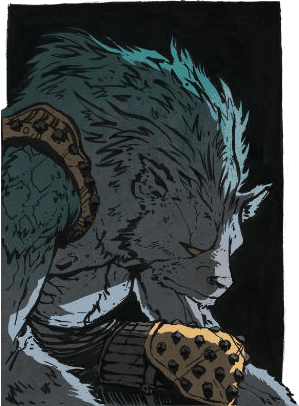
Gnolls in Spire are hyena-faced humanoids originating from lands far to the south. They are known in the lore to have a reputation (justified or not) for demon summoning and savagery.
They are refugees in many cases. Some have fled the reach or control of the aelfir, or have ended up in Spire due to trade, displacement, or fleeing persecution. Within Spire, they are heavily marginalized: their race is deeply stigmatized, and many see them as monstrous or dangerous. They suffer intense racism, even more so than the drow in some aspects.
Arena and spectacle: Gnolls often run or control large, violent spectacles. For example, the Arena in the undercity: gladiatorial fights, blood sports, etc. These are businesses, power bases, sources of revenue and reputation. The spectacle both feeds the demand for violence in Spire’s underbelly and also provides a way for marginalized gnolls to carve out influence.
Patronage, gang leadership, power brokers: Gnolls may lead gangs, control districts, run secret or semi-legal operations. Mother Moon, for instance, is a powerful elder who is both sorcerer and leader of gnolls, and through her position she both resists the aelfir and exploits the system to her benefit (e.g. in the Arena) to gain power, safety, and wealth.
Intellectual/Academic/religious roles: Despite their rough reputation, some gnolls are described as learned. Mother Moon, for example, is a “learned sorcerer and academic” who keeps secret libraries of aelfir poetry. She maintains a dual identity: predatory, savage in the eyes of many, but also scholarly. This contrast is important in Spire.
Mechanically, gnolls provide both opportunities for alliances (or enmities) for PCs. They are part of the NPC ecosystem: faction leaders, sources of missions, sources of conflict. Their ability to control spectacle, violence, trade, and their connections with the occult (demon summoning, religious traditions, etc.) means they are powerful potential allies or formidable antagonists.
Gnolls embody many of the tensions of Spire:
Predation, myth, and stereotype: Their reputation for demon-summoning or “savagery” is partially a tool of oppression and fear. It justifies aelfir or others treating them as irredeemably dangerous. But by giving gnolls complexity (as scholars, leaders, interested in knowledge) the game challenges racial stereotypes and prompts players to think about legacies of myth, propaganda, and the power of narrative.
Marginal power: Gnolls are marginalized, but they build power in the shadows: controlling dangerous districts, organizing spectacle, negotiating asymmetrical power with those who oppress them. In that sense, they demonstrate how oppressed groups can exploit prejudice, control forbidden or unlawful spaces, or use violence and fear to preserve autonomy.
Violence as performance and necessity: The public arenas, brawls, and spectacles are not just cruelty. They are also theatre, political tools, sources of revenue, identity. They highlight how violence is commodified, how oppression breeds violence, but also how violence is one of the few levers the powerless might have.
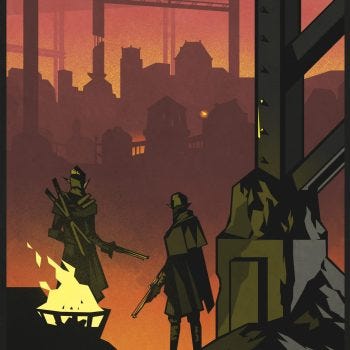
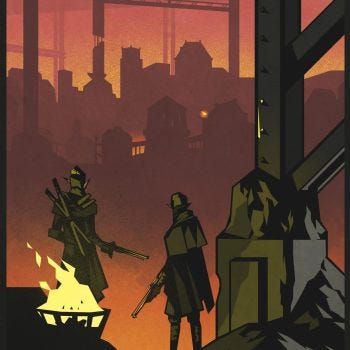
The gutterkin are a broad, catch-all term for mixed-race, malformed, hybrid, or otherwise “othered” beings living in the lowest strata of Spire: the undercity, slums, garbage-strewn districts, scrap heaps, and forgotten spaces. Examples include rat-boys, trash elementals, malformed hybrids, or children of mixed parentage. They are often considered abhumans by the official definitions.
Officially, the aelfir condemn them, often ordering them exterminated or otherwise suppressed. In practice, gutterkin are tolerated only in marginal spaces; they are common among the poorest people of Spire. They are exploited, criminalized, and neglected.
Street-life, crime, and survival: Gutterkin are deeply embedded in the informal economy of Spire: the undercity gangs, the pickpockets, the scavengers, the thieves, the low-rent laborers, the ragtag crews who patch together a life in the margins. They steal, scavenge, make do with what they can find. Many undercity districts are defined by the presence of the gutterkin, their shelters, their gangs, their culture.
Disposable actors in spectacle: Sometimes gutterkin are the ones who fight in the arenas (or die in them), or who serve as spectacle themselves (as marginalized exotic objects). Their bodies, suffering, even death may become entertainment, or at least components in the trade in fear and violence.
Agents of decay & resistance: Though largely oppressed, gutterkin also have their own small societies, their own subcultures, their own networks. Some resist via petty theft, sabotage, pulling information, or simply by enduring. Their presence is a reminder that oppression’s reach is everywhere, that even in the worst slums, people try to live, to fight back in small ways.
Mechanically, gutterkin are primarily NPCs, background characters, flavor, but may be PCs in some fringe or optional rules (though core PC races are drow). Their roles are often tied to Low Society, Crime domain, and districts like Red Row or Derelictus. They may be obstacles or sources of plot hooks (escaping oppression, criminal underworld, undercity weirdness, resource scarcity).
Gutterkin are perhaps the most visceral embodiment of Spire’s darkest themes: inequality, disgust, survival, marginalization, physical corruption, deformity, and resilience. They show what happens when society dehumanizes certain people: both the abuse they suffer and the ways they endure and build identity amidst deprivation.
They contrast with high society; with the shiny palaces of the aelfir; with the moral grandeur of revolutionary rhetoric. Gutterkin forces characters (and players) to see the consequences of oppression on flesh, on community, on everyday life. Working with, for, or among gutterkin is a reminder of what revolution must change, what is forgotten, what is despised, and what is redeemable.
The presence of humans, gnolls, and gutterkin is not just decorative — their relationships with the drow and with each other create key tensions that drive Spire’s stories.
Prejudice and alliance: Drow may harbor prejudice against gutterkin; humans may be opportunistic; gnolls may distrust drow or collaborate with humans depending on their situation. Alliances are often uneasy, based on mutual need. This creates friction, betrayal, and moral ambiguity.
Power and exploitation: The aelfir exploit all these groups (humans, gnolls, gutterkin, drow) in various ways: labor, prejudice, legal systems. Some humans benefit by serving the aelfir, some gnolls exploit victims for spectacle, some gutterkin do what they must to survive. Revolution can’t simply invert privilege; the risks of replicating oppressive dynamics are always present.
Symbiosis of survival: The oppressed, the marginalized, the exploited often find ways to intersect: trade, information, shelter, smuggling, contraband, help in guerilla war. For example, a group of drow PCs might rely on gutterkin for intel or smuggling, or on human tech experts to build a weapon. Gnolls might provide muscle, reputation, or access to undercity territories.
Spectacle, rumor, and myth: The way the aelfir use stereotypes of gnolls (demon summoners, savage) or gutterkin (beasts, abhumans) serves to maintain social order. Rumors, propaganda, and spectacle (the Arena, criminal underworld shows) are ways those stereotypes are reinforced. But the game gives space to subvert those myths: showing learned gnolls, gutterkin communities, sympathetic humans, etc.
Spire: The City Must Fall is deeply interested in themes of oppression, revolution, identity, the costs of resistance, moral complexity, and change. Humans, gnolls, and gutterkin help illustrate and deepen these themes.
Invisible labor & hidden people: Gutterkin and marginalized humans and gnolls do much of the invisible work: crime, scavenging, supplying bodies for spectacle, undercity infrastructure, smuggling. They show what must be changed. Not just the top of the tower, but the foundations; what revolution must address.
Prejudice as both cause and weapon: The aelfir use prejudice against gnolls and gutterkin to justify oppression. The oppressed may internalize or push back. It gives PCs something to confront on multiple levels: systemic, interpersonal, moral.
Ambiguous morality: Not all gnolls are bad; some human tech-folk may be genuine allies or unscrupulous collaborators; gutterkin may survive by acts that harm others. The game resists simple good/evil categories. Trust is scarce; every alliance costs something.
Identity, hybridity, survival: Gutterkin are often mixed-race or malformed; humans are already liminal; gnolls challenge what it means to be “civilized” or “savage.” Identity is negotiated, sometimes stolen, sometimes reclaimed. Revolution is not just political but cultural.
Cost of resistance: Because humans, gnolls, gutterkin can suffer brutal consequences, the PCs’ associations with them matter. Choosing to rely on gutterkin networks may bring risk; dealing with human arms-dealers may involve debts or moral compromise; opposing gnoll powers may entail large scale violence. These costs define the stakes.
Humans, gnolls, and gutterkin in Spire: The City Must Fall are more than minor racial categories: they are integral to the world-building, to the power dynamics, to the narrative possibilities. They serve as sources of conflict and alliance, as reflections and contrasts to the plight of the drow, and as reminders of what is at stake in a revolution: not only the toppling of oppressors, but the transformation of a society that has triaged people into powerful and powerless, beautiful and ugly, clean and unclean.
If you play Spire, engaging deeply with how humans, gnolls, and gutterkin live, suffer, resist, and survive can make the game far richer. Their stories, and how your PCs intersect with them, can illuminate the hardest questions: what kind of society should replace oppression; how do we avoid replicating injustice; who counts as a person; what price are you willing to pay for change.
No posts
Comments
Nothing yet. Say the first thing.
Sign in to join the conversation.