
Millions of people dream of working for the world’s biggest companies.
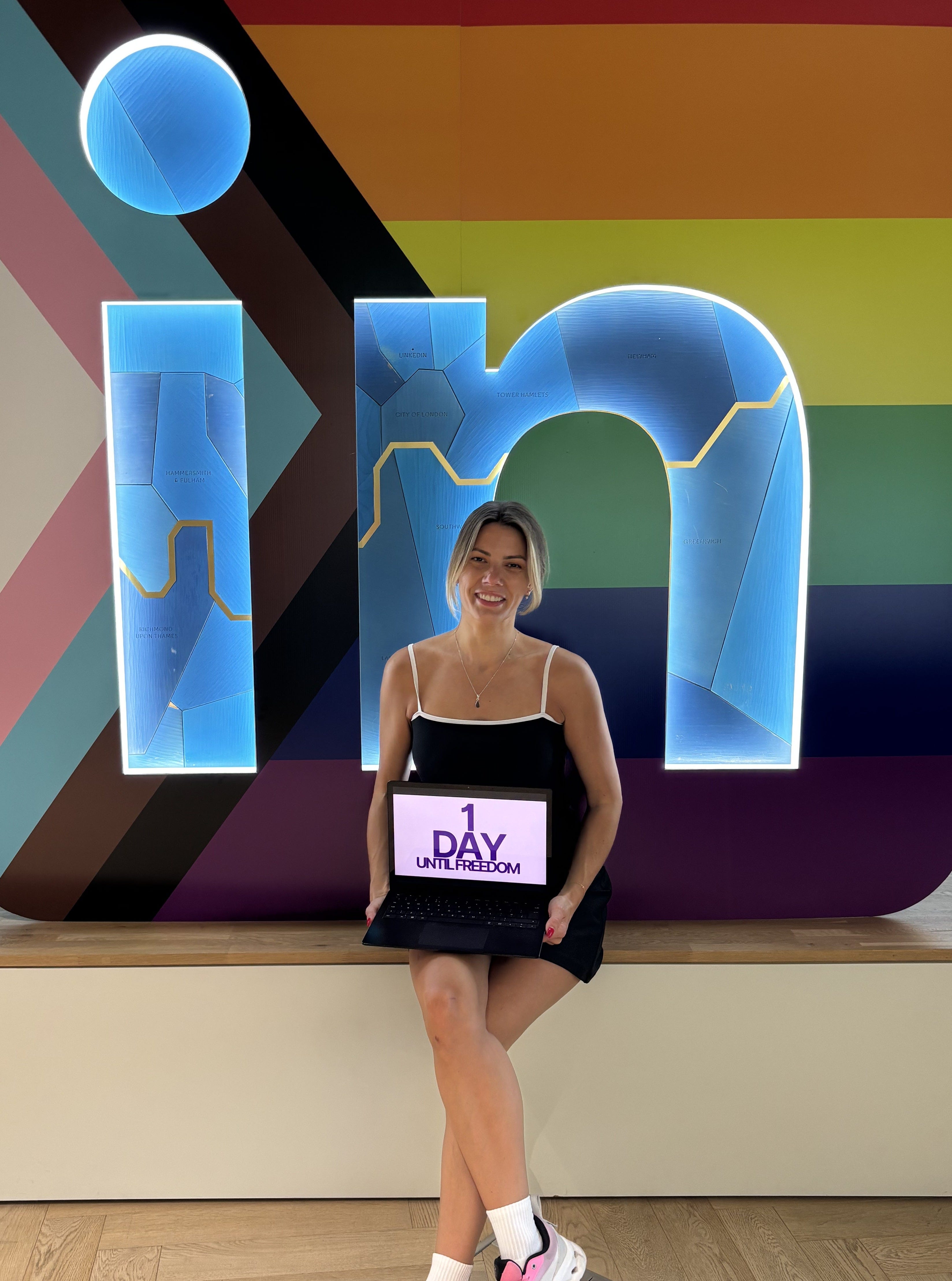
At LinkedIn, I was earning £200,000+ a year, and the perks were RIDICULOUS!
Stocks. (LinkedIn is owned by Microsoft)
Private healthcare. Dental.
Gym memberships. Free food.
Cleaning services. Massages.
They even paid for my egg-freezing procedure.
However, the most addictive benefit was watching people’s faces when they asked where I worked.
“Ohhh, LinkedIn!!”
For a few glorious seconds, people assume you’ve got your life together.
But the irony is that I had absolutely no business ending up there. Unlike many of my colleagues, I never went to university. I couldn’t think of anything worse!
Every major company I worked for required a degree. Yet somehow I ended up working for SAP, MasterCard, Gartner and LinkedIn anyway.
So how did that happen? The answer isn’t what you think.
Back in 2010, I had just finished school in Mannheim, Germany.
Unlike my sister, who went on to earn a Bachelor's degree, a Master's degree and eventually a PhD, I had absolutely NO DESIRE (!!) to go to university.
I was done with school. Finished. Cooked. Never again.
While my friends were filling out university applications, I was frying sausages at a kiosk by the local swimming pool and trying to figure out what the hell to do with my life.
My parents desperately wanted me to go to university. I desperately didn’t. Whilst my sister was becoming a doctor, I was becoming surprisingly knowledgeable about bratwurst. 😂
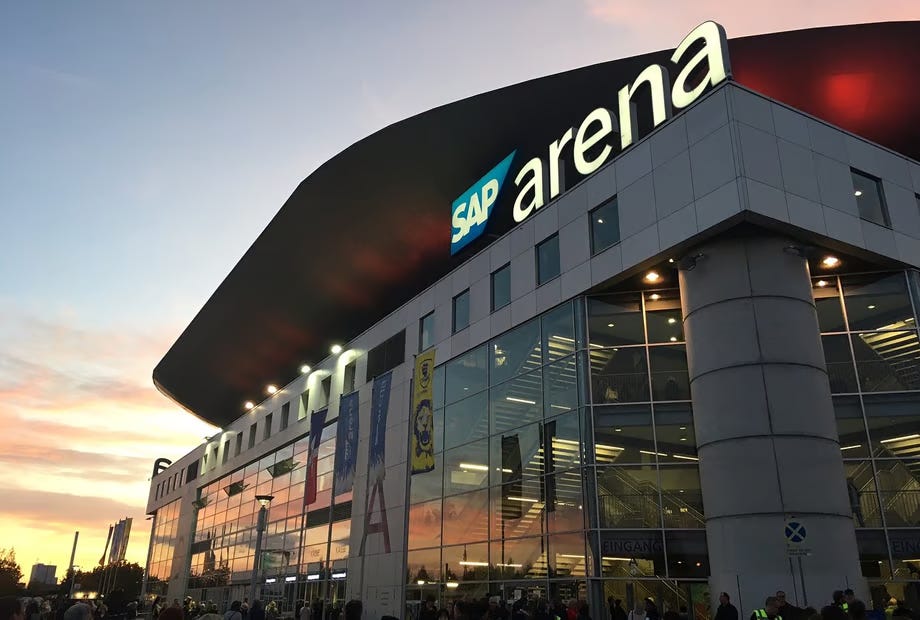
Then I stumbled across an internship opportunity at the SAP Arena. (For those unfamiliar, the SAP Arena is a concert venue. Think of it as Mannheim’s version of the O2 Arena.)
The internship paid a staggering €250 per month for a 40-hour work week. I had to work nightclub shifts at weekends to survive.
But I LOVED it!!!
Financially, it was a terrible decision, but looking back, it changed EVERYTHING. Because of three letters: SAP
A few years later, I decided to leave Germany.
I’d always dreamed of living in New York. But visas, immigration rules, and my bank balance had other ideas. So London became my Plan B (good old pre-Brexit times).
I booked a one-way ticket, checked into a 12-bed hostel near Hyde Park, and gave myself three weeks to find a job before admitting defeat and flying back home.
One (rather random) company invited me to interview for a German-speaking recruitment role. But before I’d even attended the interview, they already offered me the job! (huh?!?!)
They were enthusiastic. Suspiciously enthusiastic. Until I realised why:
They’d seen SAP on my CV.
In their minds, I’d worked for one of the biggest technology companies in the world.
But in reality, I worked for a concert venue with SAP written on the side of the building (which also was run by one of SAP’s co-founders’ sons and happened to host SAP’s annual shareholder meetings).
Did I rush to correct them? Not immediately… 🫣
I felt that the SAP connection was close enough to claim I worked at “SAP’s events division”.
What I learned is that people see SIGNALS (perception, reputation, call it what you want). And those signals shape opportunities that qualifications don't.
The moment they thought I’d worked for SAP, I became more valuable and skilled in their eyes. They didn’t even bother asking me about my qualifications. They already assumed I must be a stellar employee.
A few months later, I discovered I hated recruitment. (Not recruitment as an industry. My recruitment company. There is a difference.)
One of our clients was looking for a German-speaking junior employee. My job was to find them a candidate.
Instead, I sent them my own CV. 🤓
(Yep, that was highly inappropriate and wildly unprofessional. But if I’d applied the normal way, my application would’ve been buried…)
I over-prepared and over-delivered during the interview and got the job!!
The company was called 5one, but on my first day, I found out that they had just been acquired by MasterCard. THE MasterCard!!!
Now my LinkedIn profile read:
SAP.
MasterCard.
(Not bad for someone who’d spent her teenage years being told she wasn’t academic enough.)
Recruiters started to slip into my LinkedIn DMs. And when the time was right (aka I was in need of a pay raise), I decided to interview for a company called CEB.
I’d never heard of them. But what I did understand was that they were offering more than double my salary. 😀
I interviewed. I got the job. I turned up on day one. I discovered CEB had just been acquired by Gartner. THE Gartner!!! ($6.5Bn Tech Consultancy)
(One might say lightning never strikes twice in the same place. I might disagree.)
At this point, my LinkedIn profile looked like I’d followed some sort of genius masterplan.
SAP.
MasterCard.
Gartner.
I no longer had to convince people I was capable. The logos were already doing the talking for me. 🤓
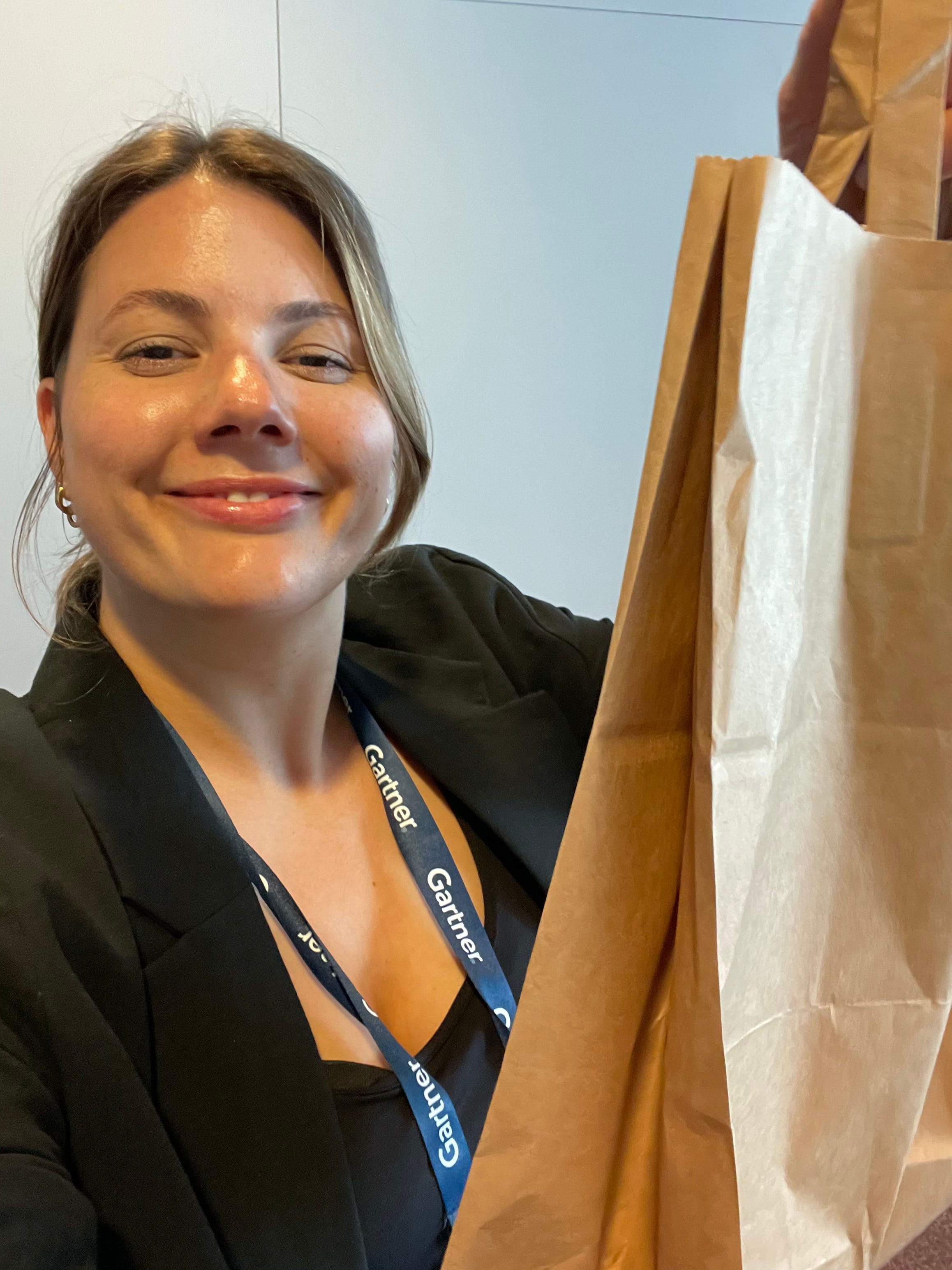
Years later, I decided Gartner’s Wolf of Wall Street culture isn’t my vibe. So I joined a company Hootsuite.
Three months in, the tech bubble burst post-COVID, and they laid off 33% of their staff. I was still on my probation when I was made redundant. Meaning I got NOTHING. One day I was earning £180k, the next £0. (Not exactly how I’d envisioned the next chapter of my career.)
HOWEVER…. ☝🏻
LinkedIn had been watching Hootsuite’s redundancies, trying to snatch up some great (but desperate) talent. They slipped into my DMs looking for a German-speaking sales professional.
I interviewed. I was told I had the job. I was also told there was a hiring freeze, and they’d be in touch in a few months’ time (yeah, lol).
I rejoined Gartner in the meantime. (I normally don’t like warmed-up pizza, but I just bought a Tesla on finance. Not a wise financial choice in hindsight.)
Six months later, LinkedIn came back. They kept their word (who would have thought!!).
And that's how I ended up working for the blue logo.
LinkedIn was the best employer I eeeever had. The work-life balance was REAL. The friendships were REAL. The egg freezing and the £200k salary were VERY REAL.
And yet, I was working inside a HUGE operation, building someone else’s wealth.
I wanted to build something of my own. I wanted to have the freedom to rest when I was exhausted, to shift gears when I felt energised, and not to have my worth measured in quarterly targets.
So I left.
It’s been almost a year since I’ve become an entrepreneur. My income is close to what it was at LinkedIn but with more excitement, more freedom (and more uncertainty) than I’ve ever had. 🤩
On paper, my career journey looks as if I’d carefully mapped out every step. As if I’d strategically worked my way through increasingly prestigious companies and as if I’d always known where I was going.
BIG LOL!!
I was making it all up as I went along. I think most of us are. We’re just pretending otherwise.
And yeah, let’s not deny that there was luck involved.
Two times I walked into a company on my first day and found out it had just been acquired by a giant. (I wish I could teach you that.)
But luck tends to find people who are TAKING ACTION.
Here’s what you can control:
Be visible. Keep your LinkedIn updated. Let people know what you’re doing and doing well. Those insane opportunities in my career came to ME (but only because I had made myself findable).
Be audacious. Send the CV anyway. Approach the hiring manager directly. If you don’t ask, you will not get. 🤷🏼♀️
Overdeliver. Every time I was given an opportunity (and technically wasn’t qualified), I prepared like my LIFE depended on it. That’s the part you have full control over.
I went from frying sausages at a German swimming pool to earning £200k at LinkedIn.
Every bold move I made put me in front of the right people (sending my own CV, leaning into the SAP name confusion, and updating my LinkedIn profile strategically).
Opportunities found me because I positioned myself to be found.
So STOP hiding.
Be PROUD of your work.
Update your profile and make yourself SEEN.
Be AUDACIOUS and ask for what you want.
The worst that can happen is that someone thinks you’re too keen.
And that will NEVER be a bad thing.
🧡
No posts
Comments
Nothing yet. Say the first thing.
Sign in to join the conversation.