
Like a lot of people, I was devastated last week when I heard Glen Hansard had died. I’ve loved him and his music since the movie Once, which, again, is I know a lot of other people’s experience, too.
I first watched Once on a plane right after it came out, which is a truly superior way to watch any movie. Plane movies just hit different. I’d gone to NYC to meet up with my editor — this was for a YA novel I wrote way back when, prior to my current romance career — and felt so fancy, having lunch with my editor and agent at a swanky restaurant, paid for by my publisher, while they talked about how excited they were for my book (actually I don’t remember this part; it may not have happened) and also what was up lately with my agent’s way more famous client (I do remember this part quite clearly). My then-editor mentioned this movie and how much she’d enjoyed it, and she said something about how it “had legs,” a phrase I’d never heard before but now can’t hear without thinking of her. The idea that something small can take off.
I’d run into this editor at an event several years later, where she’d shake my hand and say so nice to finally meet you, and I’d feel hurt because like, do you not remember that lunch? We’ve met. We had a whole conversation, in a roundabout way you introduced me to one of my favorite films. I do get it — what’s one special lunch for me is another Wednesday for her; it was a long time ago — but it’s a perfect example of how casually cruel publishing can be sometimes. This kind of thing happens all the time.
In honor of Glen, I’m writing this recap of Once where I will totally spoil you on the movie if you haven’t seen it yet, and I will also probably spoil you on parts of In Every Possible Way because my book owes a lot to this movie and Glen Hansard’s music in general. (My top album of 2025 was The Frames’ The Cost, because I listened to it so much while drafting.) So — you’ve been warned!
The movie opens on Glen1 busking on Grafton Street, playing his beat-up acoustic with the hole in it while he sings about when the healing has begun. There’s a kinda sketch-looking guy lingering around, clearly taking a piss around the corner (in the literal American taking a piss way and not the metaphorical British one) and then getting really into Glen’s music, clapping and cheering him on. He bends down to tie his shoe, and Glen is like, “Don’t fuckin’ . . .” because he can see this guy’s body language, he can tell he’s making a move to steal the money out of his guitar case. “I’m just tying my lace, man!” the guy protests, affronted, and moves a little farther away.
But Glen can’t get back into his song, still strumming while he tells the guy seriously, don’t fucking touch it. The guy protests again and even throws a little money in himself to show his good will. See? He’s just into the music; he’s not looking to steal anything. Glen thanks him, shakes his hand, goes back to playing. Maybe sometimes you’re paranoid when you shouldn’t be, maybe he’s the one misjudging this guy.
Then the guy grabs the whole guitar case and sets off running2. So no, Glen had the guy pegged exactly right. Glen sets off after him, handing his guitar off to some stranger — “Hold that, will ya? Thanks.” They run through stores on Grafton Street before the thief runs out of breath at the entrance to St Stephen’s Green and Glen’s able to catch up to him. “I’m down there trying to fucking make a living like anyone else,” Glen says. “If you want money, just ask me for it. Don’t have me chase you all the way up the street for it.” The guy’s like, okay, can I have that fiver then? Glen gives it to him. The guy asks how Glen’s ma is and Glen’s like, she’s dead, man.
You learn a lot about Glen from this one scene. That he’s a busker, of course, but also that he’s a decent guy. He doesn’t want to be robbed, but he’s still going to give some of his money to this thief, who he clearly knows at least a little bit from seeing him around Grafton Street if nothing else.
Early in my book, Jess and Eamonn head from Grafton Street into St Stephen’s Green after Eamonn agrees to show her around, so watching this scene could help you picture that. I watched this movie several times while I was working on the book, in part because I was really trying to get a feel for dialect and dialogue, certain slang, the way things are phrased. “Fair play to ya,” for example. It’s a great expression and I think we should use it more over here.
Now it’s night, and Glen is still busking. And if you have something to say/You better say it now . . . And then it builds, he’s strumming harder, half-yelling, ‘Cause this is what you’ve waited for . . . This is what Glen always did so well in his music, that soft introspection, then that sudden intensity, all of the emotions so close to the surface. I bet he would’ve done an INCREDIBLE rendition of “Riptide” on Grafton Street.
He ends the song, and a woman is standing in front of him, clutching a stack of magazines to her chest. She claps, throws in some money. “Ten cents,” Glen says, raising his fists in a sarcastic little celebration. “Brilliant. Thanks.”
The woman — Markéta Irglová3 — is like, “Excuse me?” and that’s enough to shame Glen into apologizing. There’s really no need to be shitty. Ten cents is ten cents. She asks him if he wants to buy an issue of the magazine, and he says he can’t afford it. She asks if the song he just played is his or whether it’s an “established song,” and then wants to know why he doesn’t play it during the day. She sees him every day and he never plays it. He points out that people want to hear songs they recognize during the day. (This is why you hear so many “Riptide” covers.)
“I play these songs at night,” he says. “They wouldn’t listen.”
“I listen,” she says.
“Yeah, but you gave me ten cents,” he points out.
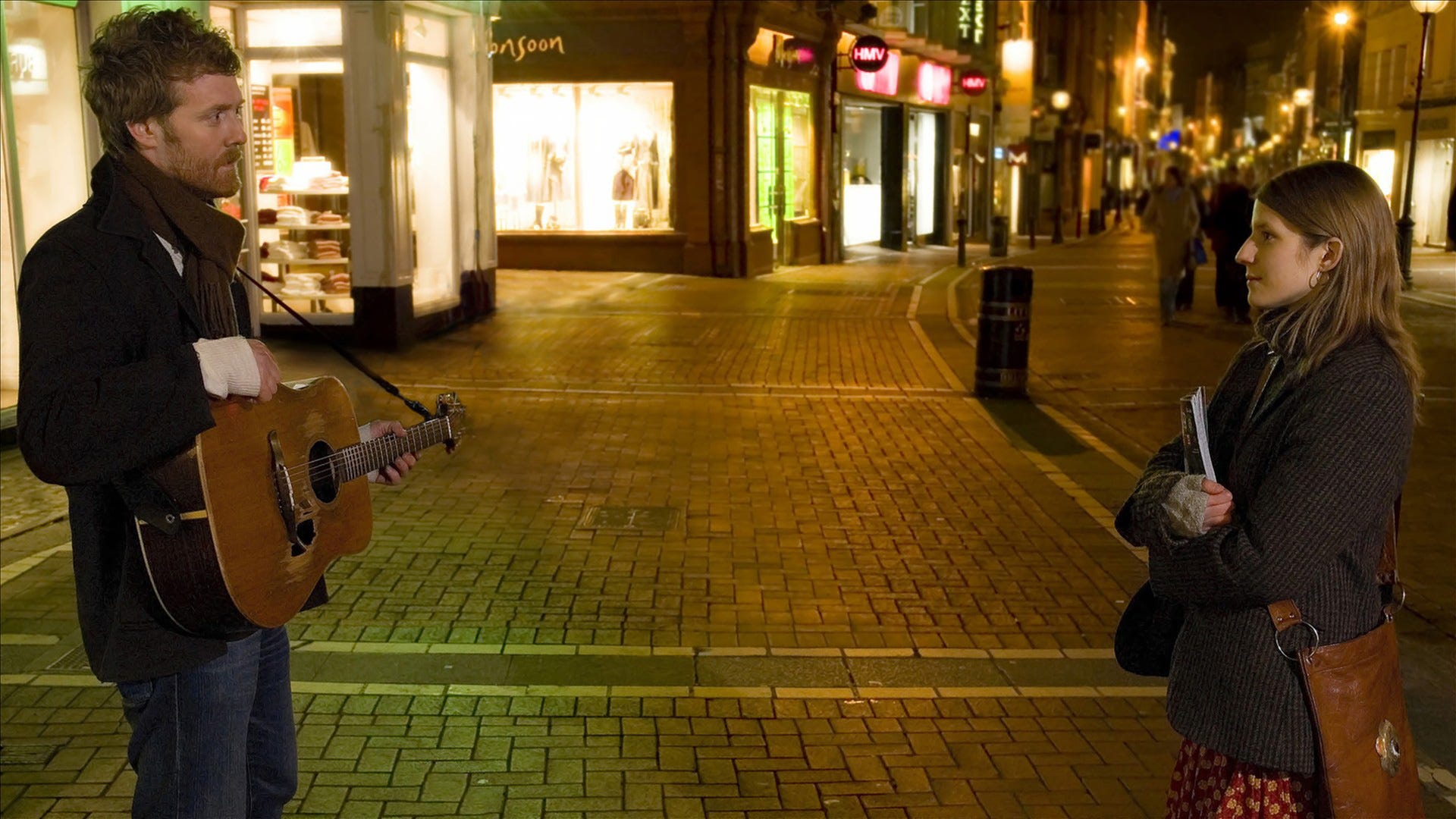
The power of that “I listen.” At its heart, that’s a lot of what this movie is about. Finding that person who listens.
She wants to know if he busks for money, and it’s not really bringing in money, why he doesn’t just get a job in a shop. He has a job in a shop, he says. One thing I love about this movie — and again, something I very much put into In Every Possible Way — is that these are just two working class people, trying to make it through their daily lives even as they have dreams that are much bigger than their current lives can contain.
“Who’d you write that song for, please?” she asks, and when he says no one she calls bullshit. It’s very cute, that little please added to the end of her question, the way she says “Bullshit” in her Eastern European accent. He admits that the song is about someone but she’s gone — not dead, just gone — and Markéta says he’s obviously not over her because no one who wrote that song could be over her. If he played that song for her, she thinks he could get her back, but he says he doesn’t want her back.
Another thing about this movie, and about Before Sunrise, and then about my book. There’s something about talking to a stranger, sometimes. You can ratchet up the intimacy in a way that paradoxically you wouldn’t do with someone you knew better. You can get right to the heart of it.
She wants to know what kind of shop he works in, and he says it’s a Hoover repair shop — whzzzzz he says, to illustrate what he means. Markéta is so excited. She has a broken vacuum cleaner! He can fix it for her, yes?
Even later that night, Glen is back in his room, strumming his guitar in a sad, contemplative song. You have broken me all the way down . . . Yeah, I would say he’s not over her. He still has a picture of the ex on his nightstand! He tries to call her but gets her voicemail. Oh, Glen.
The next day at the Hoover repair shop, Glen is heading back out into town but talks to his dad a bit first about a job, what he should bring back to eat. So now we know that he works at this shop with his dad. It’s also kinda charmingly disorganized in there — you’ve been to this kind of shop before, where it’s just two guys who fix vacuum cleaners and there are parts and equipment hanging on the walls and half-broken models just lying around while they get to them. You just know their receipts are handwritten carbon copies.
You see Glen out there busking, singing his heart out, tourists gathered to watch, a man in a bright green T-shirt that says IRELAND across it drunkenly dancing along. But over that scene the sad song from the night before still continues, Glen and an acoustic guitar while he sings And what chance had we got/When we missed every shot. It’s a brief sequence, but very effective — you see the contrast between what he’s doing and the way he’s feeling inside.
(Too many sad words make for sad, sad songs . . . From “Sad Songs” off The Cost, one of my favorites on the album.)
Markéta shows up, and she’s BROUGHT her Hoover. Like she’s dragging it behind her while she sells magazines. Glen’s clearly surprised to have her show up like that, with her vacuum in the middle of the street. “What’s wrong with it?” he asks, and she says in her cute accent, “It is fucked.” Sometimes that’s all you can say! It doesn’t suck up the dirt anymore, man, it’s fucked!
Glen’s like, well, I don’t know what you want me to do, I don’t have tools or anything on me right now. Bring it tomorrow to the shop. And she’s like, no, I brought it today, and invites herself on his break with him so he can take a look at it. Again, very In Every Possible Way vibes, her kinda forcing a reluctant man to help her and hang out with her more! Eamonn’s even a mechanic, which isn’t that far from a vacuum repair guy when you think about it. I didn’t make all these connections deliberately, but it’s funny to me that you can absolutely find them.
“You hungry?” he says. “I’m always hungry,” she replies.
You watch them have lunch through the window — it’s a very interesting sequence of shots, where you can see the reflection of the buildings and cars passing by as they have their conversation. He brings up the fact that she obviously knows about music, and she says her father was a violinist in the orchestra back home. “But he got arthritis and then he killed himself,” she says, and she delivers the line so matter-of-factly that even Glen is like, wait, really? But Markéta’s already moving on, saying that he taught her to play piano. “It’s not so hard on the fingers,” he said.
She doesn’t get to play much, though, because she can’t afford to have a piano at home. There’s a local piano store, though, where the man lets her play for an hour per day at lunchtime. Glen’s like, well, let’s go. “You want to hear me play?” she asks, smiling. “Now?” He’s got his guitar case slung over his back; she’s still dragging that vacuum cleaner behind her.
At the music store, she sits at a piano — not the baby Yamaha, it’s been sold — and starts playing Mendelssohn’s “Song without Words.” I only know that because of the subtitles I put on for this recap; I’m not one of those people that can call out a bunch of classical pieces. A very thematically fitting piece, though, given that it’s a lot of what this movie is about, too — finding the person who listens, and also how much you can say with music that you can’t put into words.
Glen crouches down next to the piano while she plays, clearly impressed. “Did you write that?” he asks when she’s done. “No, no, Mendelssohn did.” So at least Glen’s not someone who can call out every classical piece, either.
She wants him to play another of his songs, and this is of course one of the most iconic scenes in the whole movie. He gets out his guitar and starts showing her “Falling Slowly” — how it’s in C, that opening melody we all know so well by now, singing “da-da-da-da” along to her finding the notes on the piano.
I always low-key make fun of the part in Crossroads where you see “I’m Not a Girl, Not Yet a Woman” come together. It’s just a little cheesy (in the best way, I wouldn’t change a thing) watching them turn her “poem” in a notebook into a song, the way Britney sings a note and then says “Like that?” in her soft, shy little voice. But truthfully I love watching music come together like this, and I’ve been around enough musicians (my husband and his friends) that I’ve seen it happen. It’s so magical when it does. Magical to me, anyway, as someone who doesn’t have an ear for it, doesn’t know how people sing a note and then find the corresponding one on the piano, who can figure out harmonies and riffs in real time.
So Glen starts playing “Falling Slowly” on his guitar. I don’t know you, but I want you all the more for that . . . I mean, you can see why I might’ve listened to this particular song while drafting In Every Possible Way.
By the chorus, the song is building, she’s singing along with him, they’re shooting occasional looks at each other, smiling like, okay, we’re really doing it! Are you hearing this? It gives me goosebumps. It really does. If you want to know when I sometimes tear up it’s when he sings this part: Well, you have suffered enough, and warred with yourself/It’s time that you won. It’s the words that do it but also the way it goes so low right before it builds back up into the chorus. I don’t know, man. This is the shit that music can do that words can’t.
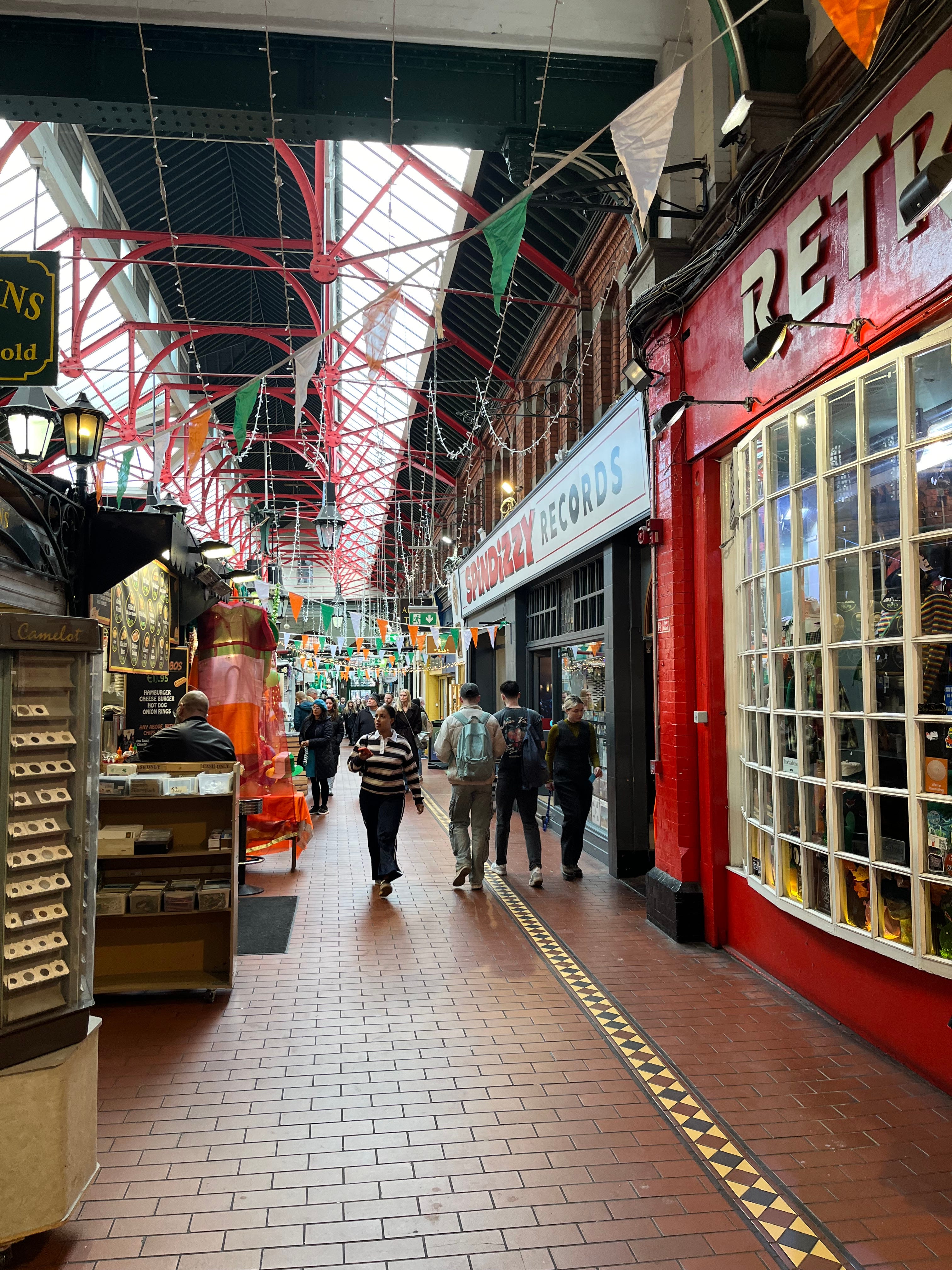
Even the shopkeeper likes it. He looks up from his newspaper at one point, giving a little smile in their direction even though they can’t see it. The song plays out over Glen and Markéta walking back through George’s Street Arcade and then getting on a bus. I went to George’s Street Arcade when I was visiting Dublin and I was so excited about it because I totally recognized it from this movie:
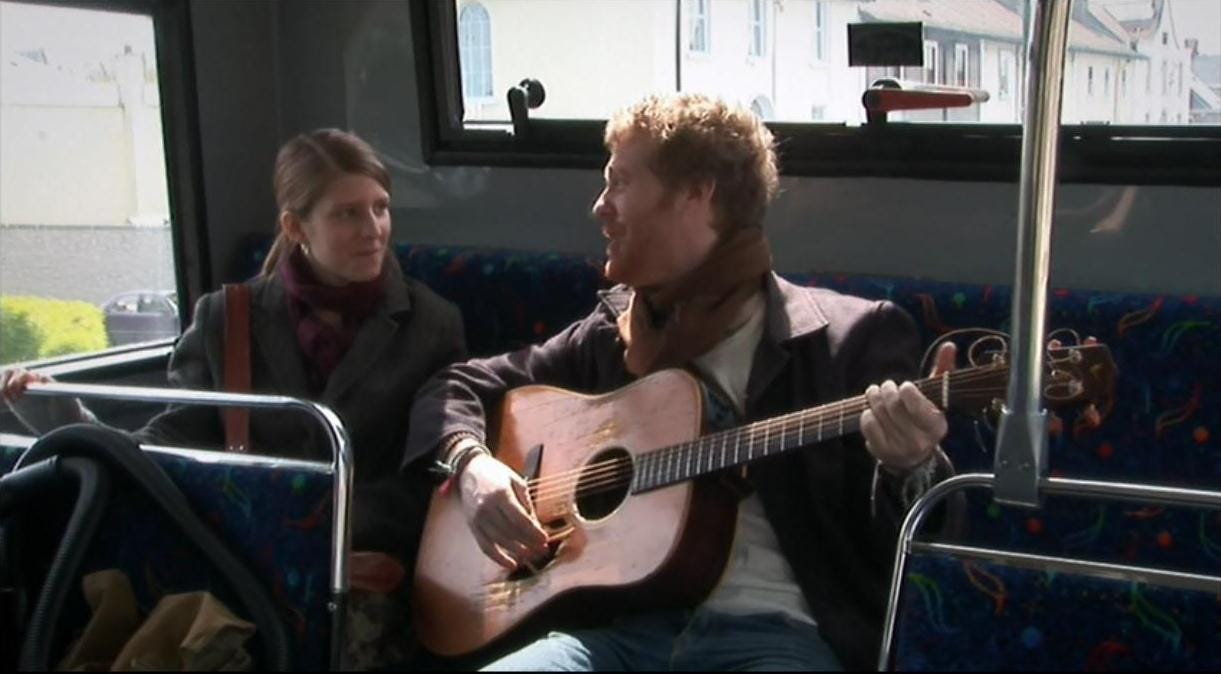
On the bus, Glen says that he moved back to Dublin about a year ago to help out his dad after his mom died. “Tell me about her,” Markéta says, and Glen is like, “Who, me Ma?” but no, Markéta has a one-track mind. She wants to hear about the special girl he writes the songs for. Glen starts singing an over-the-top folksy diddy that goes, Ten years ago, I fell in love with an Irish girl/She took my heart/But she went and screwed some guy that she knew/And now I’m in Dublin with a broken heart. This song is actually quite good4. The chorus goes, Oh, broken-hearted Hoover-fixer sucker guy . . . I’m into it. One day I’ll go there and win her once again/But until then I’m just a sucker of a guy. He’s laughing by the time he sings that last part, but it’s kinda telling, that in this song he says he wants to win her back when the night before he said he didn’t.
More singing reveals that she may not even be with that guy anymore, he doesn’t know, but she’s living in England now. When Markéta asks him straight-up if he’s going to go after her he says nah, then launches into a heavier riff, making his voice low and almost metal-ish to sing Fuck her, fuck her, she’s gone forever. Then he’s more punk, yell-singing She fucking fucked it up! before remembering oh yeah, he’s on public transit, and having to apologize to an old woman who turned around in her seat. The woman’s kinda laughing, though, I don’t think she minded. She fucking fucked it up, Glen sings again, softly this time, making a little rocker gesture with his hand.
Markéta goes back to Glen’s shop with him, where he and his dad work on her vacuum cleaner. “Your son is a very talented man, sir,” she says, and the dad’s like, well yeah, I trained him meself, and she clarifies that no, she means with his songs. Glen smiles at her over his shoulder, and you can tell he’s pleased that she said this. They fix her vacuum — it was just the belt — and Glen tries to wave off her paying for it but when she insists the dad’s like, “Four euro, love.” I like this moment because I feel like it’s less about the shop needing the money (although they probably do) and more like the dad sees that as a matter of pride she does want to pay for it. I have no idea the rate for fixing a vacuum cleaner, much less the conversion to euros, but I imagine she still got a deal.
Glen takes her up to his room, where he plays a recording of some of his music for her. I can feel this moment, when you’re in a small space with someone you don’t know very well, and you’re sharing something vulnerable with them, and you don’t know where to look so you just look at the ground and pretend that you’re focused on the music when really you can’t help but be more focused on each other. Markéta says she has to go and asks him to make a disc of his stuff for her so she can listen. He asks her to stay. “What?” she says. “Stay the night,” he says.
They just stare at each other. His eye contact . . . it’s so desperate and lonely. He likes her — you do get the impression that he likes her. But it’s almost like he just wants someone to stay. It almost feels like it’s not even about sex, it’s just about having another person in that room with him.
Still, though. It’s definitely also about sex, and she’s not into it. “Fuck this,” she says. “Thanks for the Hoover, yeah?” When she leaves, Glen winces, closes his eyes, looks to the ceiling. “Fuck,” he says to himself. Yeah, dude, you fucked that one up.
Glen finds Markéta at Grafton Street again, where now she’s selling flowers. He brought her the CDs she asked for, but also he just really wants to apologize. “I’m just really lonely, and you’re gorgeous, and . . .” he starts, but then he admits he fucked up and promised it’ll never happen again. She was stony-faced but she allows herself to break. “Do you have a CD player?” she asks. He does — batteries are low, but it should work. I love that she asked for CDs and she doesn’t even have a CD player.
He wants to at least buy her a tea or something, but she says no, she has to get home, she has responsibilities. She lets him walk with her, though, and you hear her telling him that it’s a good day for her because she got a job cleaning in a big house and the woman is going to give her some money. I love the way this movie gets across that Glen is struggling, but his is more in a I still live with my dad, I work in his shop, I busk but I don’t make much money at it kind of way. Markéta, on the other hand, is s t r u g g l i n g.
Which you see when she takes Glen back to her small apartment, where she lives with her toddler daughter and her mother. Some of those responsibilities she talked about. Markéta and her mother chat in Czech for a minute while Glen stands there, still with his guitar slung over his back, a little out of place. He stays for dinner, where Markéta’s mother calls him “handsome” in Czech and he’s pleased when Markéta translates it for him, asking her how to say “thanks.”
Meanwhile, Markéta’s daughter can’t help but mess with Glen’s guitar, and Markéta tries to get her to stop but Glen says she’s grand. “Where’s her dad?” he asks, and you know he’s been dying to ask that the minute he walked through that door and saw that Markéta had a kid. She says that he doesn’t live with them, he’s “at home” — presumably back in the Czech Republic.
A few neighbors come over, because they come by to watch television since there’s only one in the building. They’re clearly also Eastern European and use the programs in part to practice their own English, and you can tell that Glen is a little surprised but also charmed by the whole vibe.
After Markéta puts her daughter to bed, she and Glen sit out on the stoop while she listens to his CDs on the portable CD player. “You have no lyrics for this one?” she asks over one instrumental track, shouting a little because she can’t hear the volume of her own voice. He tries to tell her that he’s been working on some but they’re not quite right, but he has to take out one of her earbuds to do it. Then he’s struck with an idea — “Would you be into trying . . . trying to write lyrics for it?”
She’s excited at the prospect, and so is he. “It’s too romantic for me,” he says about the song, and she agrees that it is romantic. “You have a romantic streak,” she says. He clarifies that he used to have a romantic streak, when he was her age.
It’s funny how I never really register this movie as being an age gap romance even though the difference in the actors’ ages is almost two decades — Glen was about 36 when the movie came out, and Markéta was about 19. Whether the age gap between the characters is meant to be that significant or not, you do see the difference in their ages on screen, as well as the difference in some of their life experiences and perspectives, but I don’t know, it just never felt like the most salient part of the movie. It’s funny to me how that happens, and was something I thought about a lot as I was writing my own age gap romance that’s not even really an age gap romance (in that yes, she’s 8 years older than him, and it’s kinda a big deal in that it feels sometimes like a big deal to her, but also it’s not a big deal at all? What’s 8 years?)
Markéta tells him he has to go now, and thanks him for “the Hoover and food and songs.” He tells her thanks for the company, and that he needed it. He also tries to get her to go for a late coffee or a walk or something, which . . . goddamn Glen you really are just so lonely!
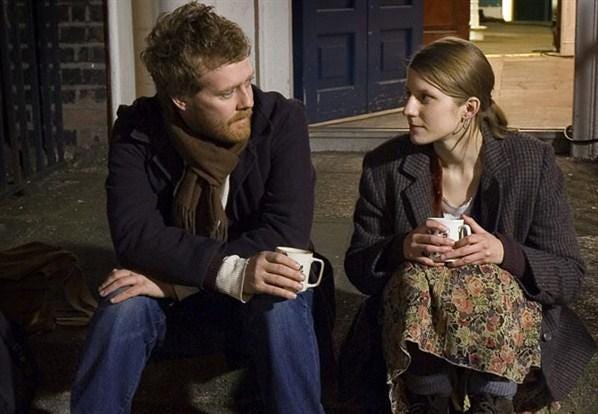
Back in the small room she shares with her daughter, Markéta continues listening to Glen’s CD until the batteries die on the portable player. “Fuck you, batteries!” she says, and I really do love how much and the way she says fuck in this movie, it’s so cute. She looks all around the apartment for some replacement ones, including in the TV remote, before she finally goes to a painted pink piggy bank. “I’ll pay you back,” she whispers to her sleeping daughter.
She buys some batteries at an all-night convenience store, and then there’s this sequence where Markéta walks down the dark streets of Dublin in her pajamas, singing over Glen’s instrumental melody in her earbuds. Are you really here/Or am I dreaming?/I can’t tell dream from truth/For it’s been so long/Since I have seen you/I can hardly remember your face anymore.
The sequence itself feels a little dream-like. The kids hanging around outside the store react to Markéta singing, watching her with their mouths open, as if struck by her pure, haunting voice. They watch her walk away without moving themselves, like they’re frozen by it. Markéta feels like the kind of person who would just walk down the street singing, but it’s also so out-of-this-world, almost more like a music video, that you’re not sure if it’s meant to be happening in reality or if this is just the way it feels in her head.
When I get pretty lonely/And the distance causes only silence/I think of you smiling/The pride in your eyes/A lover that sighs . . .
The lyrics seem to be about her husband — the idea of someone she hasn’t seen in a while, someone who she thinks of. But they feel like they’re about Glen, too, in a way. This romantic streak that his music has brought out in her.
If you want me/Satisfy me . . .
I’m just going to write out all the lyrics to this song at this point because I think they’re really beautiful and really telling. The second verse goes:
Are you really sure that you believe/When others say I lie?/I wonder if you could ever despise me/When you know I really tried/To be a better one to satisfy you/For you’re everything to me/And I’ll do what you ask me/If you let me be free
I feel like I understand her character and her relationship with her daughter’s father back home so well even from this brief, poetic glimpse. Markéta married young, probably because they got pregnant, but with a lot of romantic ideals. He’s probably older than her, a little controlling maybe, but someone she looks up to, someone she wants to earn the admiration of. But she also wants to be her own person. She’s a woman who wants to be satisfied the way that she seeks to satisfy him. She’s made mistakes, but she’s tried, and she wants him to try the same way if he wants to keep her. This is the precipice she’s at when Glen meets her with his romantic, lovelorn songs.
You see Markéta cleaning her houses; Glen writing his songs. Here’s a part directly from the movie because it’s better if you watch it:
Ooof. Okay, between that song and the home video clips of Glen with his ex5, you feel like you see it all — the love they had for each other and then how it all fell apart, how heartbroken he is now. If you want to know the part I tear up here it’s when you see him perform his “magic trick” where he makes her disappear from the park bench while he sings, You’re moving too fast for me/And I can’t keep up with you . . . It’s that alchemy of music and visual again, something about her disappearing from that bench while his voice lifts in that specific way.
Glen finds Markéta in Grafton Street again and says he’s decided, he’s going to go to London after all. She thinks that’s a good idea — he’ll get his girlfriend back, plus he’ll get a record deal. He wants to make a recording of some of his music before he goes, actually, and wonders if there’s any way she’d be willing to sing and play along on it? He’s kinda stutter-y and nervous when he asks, it’s very cute. And she’s obviously flattered and thrilled to be asked.
(This is such an aside, but they both have such wonderfully off-white teeth in this movie! I love it so much! Bring back flawed teeth. I put a single line in In Every Possible Way about Eamonn’s crooked bottom teeth and my Irish sensitivity reader flagged it just to make sure I wasn’t including the classic “bad teeth” stereotype about Ireland/the U.K., but I kept it because honestly as someone with bad teeth myself I think I get to be #ownvoices on that one. Eamonn’s imperfect teeth were important to me.)
It’s also sweet that Glen says asking her was the “first thing” he got sorted out, and now he just needs to sort everything else out, like where they’re actually going to record and what songs.
They go on a tour of a studio where they can record, and the engineer quotes them three grand for the whole weekend. “Three?!” Markéta says, incredulous. “Yeah. Three grand, that’s pretty good.” Again not knowing euros and 2006 pricing and whatever but truly, studio time is expensive, so it probably is pretty good. But Markéta’s been selling magazines and roses in the street, you can’t out-hustle a hustler, so she counters at one grand. “Have you heard his songs?” she asks the engineer. “He’s great!” The engineer is nice about it, but he’s like yeah, I don’t actually care, I can fill this place in an hour. She ups her price to one-and-a-half grand, but says that’s her limit.
“We can talk about two,” he says finally, giving her a kind smile. He likes her chutzpah, you can tell. “We don’t talk,” she says. “We shake.” So they shake on two thousand, and Glen says she’s a “tough cookie” but you can tell what he means is that she’s fucking amazing, not only does she play the piano and has the voice of an angel but she also just saved him a thousand dollars.
Markéta takes him to her favorite charity shop, where he picks out a suit. “That will do,” Markéta says, and Glen turns to the shop clerk for a second opinion. “You’re gorgeous,” the old man says.
I remember watching this the first time thinking, what does he need the suit for? To impress his girlfriend when he shows up? To feel more professional while he records? But that question is answered very quickly for you — the suit is so that he can impress the man at the bank into giving him a loan to help make his music. They play the tape for the stodgy old small loans manager, and Markéta assures him that she knows Glen will secure a lucrative deal if he just gives him this chance. “Take it home,” she says. “You listen to it.”
But the small loans manager doesn’t need to listen to it. He tells them to wait just a minute and then he comes back with his own acoustic guitar. I want to be free/I want to be me/I want you to be you/You want me to be me, too/I think you do . . . he sings. He’s obviously super into it. He signs the requisite paperwork and rubber stamps it, Glen glancing over at Markéta to blow out a breath like wow, can’t believe that worked, and Markéta still wearing her fingerless gloves as they shake hands to finalize the deal.
Look, I’m not saying this movie doesn’t get a little cheesy at times with its plucky-underdogs-charm-everyone-they-meet storylines (we haven’t even gotten to the moment in the recording studio yet) but I do not care. I love every second of it. It’s so earnest and good, everyone pulls it off, it never feels cheesy to me, it just feels lovely and heartfelt and heartwarming. I want them to get everything they’ve ever wanted, and I want it to happen in the most over-the-top affirming way. And there’s that undernote of melancholy throughout the movie, too, which I think stops it from ever feeling that schmaltzy even at its schmaltziest.
So we gotta get the gang together aka Glen and Markéta find a group of musicians playing on Grafton Street that Glen obviously knows. It’s a slow day — see for yourself, there’s barely any money in the open guitar case at their feet. So he invites them to do a recording with him next weekend.
“Doing Lizzy stuff, or . . .?” one of them asks.
“No, it’s not Lizzy, it’s me own songs.”
“We only do Lizzy,” the guy says. “It’s one of our things.” But you can tell that he likes Glen, that he wants to make it work. “That sort of stuff, is it, sort of rocky Lizzy stuff, or . . .?”
But Glen has to admit, that no. No, it’s not rocky Lizzy sort of stuff.
“Is it good?” one of them asks.
“It’s great!” Markéta puts in. She’s Glen’s biggest cheerleader and he really needs that. “Is it?” he asks.
It’s late, and Markéta needs to call her mother to make sure she can put her daughter to bed, but after a quick chat in Czech on a payphone she’s good to go. She and Glen head to a house party with a bunch of people, where they share a bowl of noodle soup6. “Can you sing?” the host asks them. “If you can’t sing, you’re out.” Of course we know that’s not going to be a problem. Everyone goes around and sings songs, some a cappella, then everyone as a group while Glen strums his guitar. And I love her so/I wouldn’t trade her for gold/Walking on moonbeams/I was born with a silver spoon . . . Hell, I’m gonna be me/I’m gonna be free. It feels like a nice callback to the guy at the bank, too.
The next day, Glen shows up at Markéta’s place with a motorbike, asking if she fancies a spin. The motorbike is his dad’s, he says, and he’d kill him if he knew he’d taken it out, but he just really wants to go for a ride. This scene makes me very sad now for obvious reasons, but we’re going to get past that to just keep enjoying the beautiful movie. At first, Markéta says she can’t, she has work, and Glen’s stuck in another of those awkward moments he keeps finding himself in with her where he has to be like, yeah, no, of course, I just figured, but yeah, no problem. But then she asks if he can have her back by lunch, and jumps on.
They drive through the city, by the water, and the whole time, you’re still hearing that I wouldn’t trade her for gold group song over it all.
When they finally off at a secluded nature spot, Glen is shocked that Markéta just revealed to him that she’s married. “Does it surprise you?” she asks. I mean, that’s a fair question. She does have that daughter, and not to say you have to be married to have a kid, but it maybe ups the odds a little. “Fuck’s sake,” he says. “Yeah.” I think it surprises him because he’s so lonely, and he’s been tuned into her loneliness this whole time, believing it means that they’re in this together. But just because you’re technically with someone, doesn’t mean you’re not still lonely. That’s where their signals got crossed.
We get confirmation that they did marry when she got pregnant with her daughter. She says that he’s back in Czech Republic, and that it’s over now, and she came to Ireland on her own.
They hike up on a hill where they look out over the water, and Glen asks her the Czech for Ocean. “Ott-san,” she says. “Pretty much the same.”
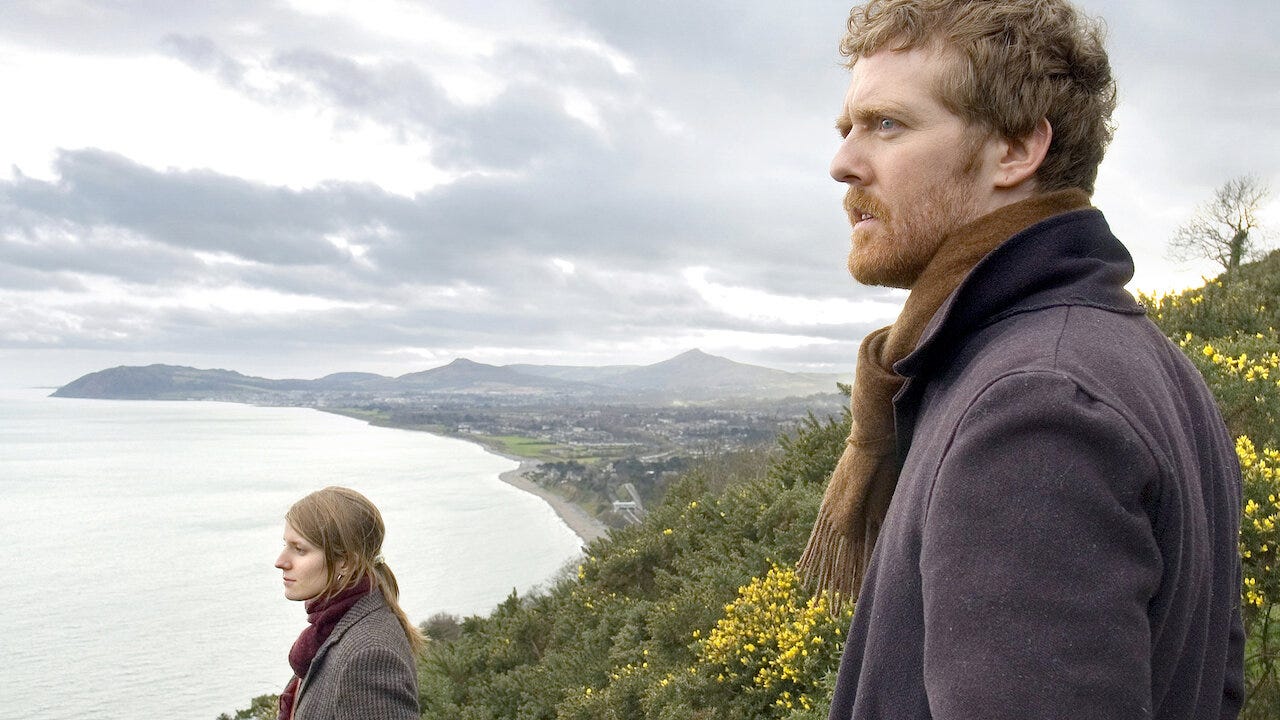
“So what are you going to do?” he asks, referring back to her husband.
“I don’t know,” she says, sighing. “There’s such distance between me and him. He’s so much different to me and so much older. It doesn’t really work.”
She says she’s fine on her own, but she doesn’t want her daughter to grow up without a father.
“What’s the Czech for . . . do you love him?” Glen asks.
She tells him, and he repeats it back to her.
“Miluji těbe,” she says in response. Which means I love you. I only know that from the IMDb trivia — the viewer wouldn’t know that unless they spoke Czech, and Glen definitely doesn’t know7. When he asks what that means, she doesn’t tell him.
Markéta really wants him to teach her how to drive the motorbike, but he says no, his dad would go “bleedin’ mental.”
Later, they’re all rehearsing in Glen’s room, Glen sitting on his bed playing his guitar, Markéta on the keyboard, the ragtag Lizzy group from before on other instruments. Glen’s dad, bless this man, comes in with a tray of tea and cookies for everybody. Seriously, bless this man. Do you even know how loud a bunch of musicians in a single, regular bedroom are? I do! And I like to think I was pretty chill about it but I can’t say that I ever brought in a tray of tea and cookies.
So now it’s finally their time in the studio, and it’s clear right away that they’re complete amateurs. When the engineer tells them he wants to check how the drums sound, the drummer (who looks like a child, I think he might literally be a child?) is like, no, I checked them, they sound great. And the engineer has to patiently explain, no, I mean I have to set up mikes on them? For recording? And check how it sounds? This engineer seems a little impatient with them, a little like “ugh here we go” before they even start, and it doesn’t help that they sound discordant and disorganized as they’re all warming up. There’s a zoom-in on his deadpan face through the studio window that would make a perfect gif of someone who’s over it.
“I’m stuck here in the studio with a bunch of fucking oddballs,” he says to someone on the phone at one point, laughing.
Glen directs everyone on when to come in before looking at Markéta. “You know what you’re doing,” he says, and she nods. That moment gives me a little thrill. I just love competence and competence being recognized. It’s very romantic to me.
The engineer hasn’t seen any competence yet, though, so he’s still on the phone. Glen taps on the mic. “Whenever you’re ready, yeah,” he says, patiently waiting for the engineer to get off his phone call. But you can see from his face that he’s a little annoyed. He’s paying for this time, after all.
“All right, lads,” Glen says once they’re cued up. “Here we go.”
He launches into “When Your Mind’s Made Up,” strumming that opening pattern, Markéta looking up at him to follow along but also . . . I don’t know, as if she likes looking at him. So if you ever want something/And you call, call/Then I’ll come running . . .
Even the dick engineer likes what he’s hearing. He sits up, taking his feet off the mixing board, putting down his newspaper to make some adjustments. This is what I mean about cheesy-adjacent — I’ve seen this scene before, where the Skeptical Doubters are brought around and can’t help but nod their heads. I’ve seen the final Flashdance scene! But it still hits. And this is such a beautiful song. It crescendoes in that way all great Glen Hansard songs do, where you feel like he might actually be ejecting his lungs and his heart from his body, might be laying them down at your feet, might let you keep them forever.
Damn, okay one-take wonders!!!! “Wow,” the engineer says. “That was nice. Did you write that?” Fuck yeah, Glen did!!!!!!
There’s a montage of them recording another song, sitting around laughing on a break, Markéta’s daughter is there at one point, Glen’s scrawling lyrics on a doodle-covered notebook, they’re playing video games, the drink bottles everywhere shows how long they’ve been at it.
It’s four o’clock in the morning and they’re all rubbing their eyes and half-asleep on the couch, but Glen says he’d love to keep going if everybody is into it. They decide to take ten to have some tea but then yeah, they’ll push on.
During the break, Markéta wanders into a dark room and finds a piano. She sits down at it and starts playing what my subtitles refer to as a “lush melody.” Glen finds her and she stops, saying that she doesn’t think they’re supposed to be in there. He says eh, it’s all right, it’s a nice piano. “It’s a perfect piano,” she says. He wants her to play him one of her songs. She demurs, saying they’re only half-written, not finished, but he presses her to play one. So here it is:
Walking up the hill tonight/When you have closed your eyes/I wish I didn’t have to make all those mistakes and be wise/But please try to be patient/And know that I’m still learning/I’m sorry that you have to see/The strength inside me burning
Thematically, it’s very similar to the song she was writing over Glen’s music. You see what she’s struggling with — it feels like it’s a lot about her age, feeling young and naive, knowing she’s making mistakes, but also wanting some grace, wanting it to be acknowledged how strong she is when he’s closed his eyes to it and doesn’t seem to see. Her voice goes up at the next part, and then starts to break.
And where are you, my angel now?/Don’t you see me crying/I know you can’t do it all/But you can’t say I’m not trying/And I’m letting myself down/By satisfying you/I really wish that you could see/I —
She can’t get any further because she starts to cry. “Did you write that for your husband?” Glen asks. “Yes, I did,” Markéta says, “and he didn’t like it.” Glen says he’s an idiot and she agrees. She rests her head on his shoulder and he reaches up to embrace her, sighing a little into her hair. It’s the most intimate physical moment they share in the whole movie.
He asks her to come to London with him and for a moment they dream about how they’ll make an album together, she’ll do backing vocals and play on it. “Can I bring my mother?” she asks, still half-playfully, but she’s testing him, too. She’d have to bring her mother, and her daughter. It’s not that easy for her to just uproot everything and run off to London to make music, and they both know that. “We should go back to work,” she says before he answers.
By now, it’s early Monday morning, they’ve been at it all weekend, everyone’s exhausted. The engineer says it’s time for “the car test,” aka time to hear the album on some shitty speakers, the kind you’d usually listen to music on, instead of in the perfect studio conditions. This is so fucking real. We’re always listening to various mixes in the car, through earbuds, through nicer headphones, every different permutation, while my husband is working on a song. Then he always goes back to make tweaks to it that he tries to explain to me but I don’t always understand. The mids got scooped, the snare’s too present, the guitar tone’s not quite right.
There’s a little “Timmy!” Southpark reference8, which is SO of its time it’s a little funny in a movie that otherwise feels so timeless. And then they drive around, the recording of “When Your Mind’s Made Up” playing in the car as they drive out on the beach. Literally. They drive the car right onto the sand and then they play frisbee with a dog, with each other, lay on the hood of the car and generally goof around. At one point Glen hugs Markéta in a kinda playful way, they’re walking and talking, she jumps on his back and you can just see how close they’ve become and how much their relationship has grown even in this short time, from them sitting in his bedroom together or sitting on her stoop to now, when they seem more like friends.
Glen’s thrilled about the recording and thanks the engineer, although he says he just “pushed some buttons.” Turns out that guy wasn’t such a dick, once he saw that they were the real deal.
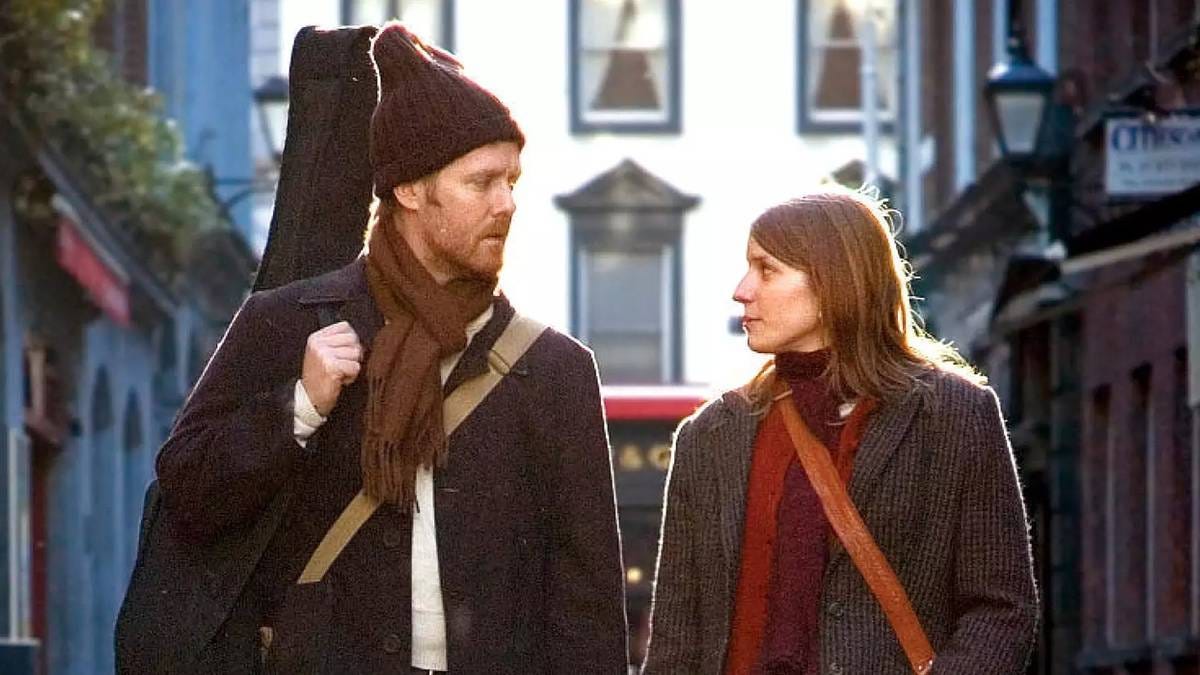
Glen and Markéta walk down the street until she has to veer off toward home. He tries to get her to go with him, saying he’ll make her breakfast and they can listen to the CD together, but she says she has to get home to her daughter and to organize some things. “So do you,” she points out. “You’re leaving.” But he wants to know what things she has to organize, and she says she talked to her husband last night and he’s coming over, they’re going to try to make it work. Glen says that’s great and you can tell he means it, that he’s happy for her, but also . . . he’s a little sad about it, for himself. He reiterates she should still come over, have some tea, but she says it’ll just be “hanky panky” if she comes over now. You can tell he’s a little shocked that she used that term, but also that she called it out at all. She’s so direct! It’s one thing I love about her character.
“It won’t be for hanky panky,” he assures her, but she says he knows it would. “And that would be nice,” she says. Now he’s interested. “Would it?” he says. She says it would, but it would be worthless, though. He kinda shrugs in a gesture that seems to say ah, don’t say that and also maybe you’re right all at the same time. She does agree that she’ll come over later, though, and he checks that she’s sure before he kisses her on the cheek and says he’ll see her later. As they walk away, they can’t help but keep looking back at each other, laughing.
Of course, Markéta doesn’t come. Glen waits in his room, and then he stands outside the Hoover repair shop at night, looking at his watch, but she doesn’t show.
The next morning, he plays his songs for his dad at the kitchen table. “Do you like it?” he asks, then nervously puts in before his dad can respond, “It’s just a demo.” But his dad doesn’t just like it . . . he loves it. “Fucking brilliant,” he says. “Fantastic stuff.” You can tell Glen is so touched. His dad even says he has a few hundred quid set aside for him, for a deposit on a new place, and wants to know when he’s leaving. He wants his son to go, and as soon as possible. “Make your Ma proud,” he says, then gestures toward the tape player. “Now play it again.” I love his dad so much.
Glen calls his ex, telling her that he’s coming, and she says she’s missed him and wants to know if he wants her to meet him at the airport. I can’t totally figure out this relationship, I gotta admit. I guess she fucked up and so he left but she’s been waiting for him to come around this whole time? I don’t know, she’s just super excited at the idea of him coming to see her and I guess the songs made me think that there was more of a rift than that.
But Glen has one more stop. He drops by Markéta’s place, where her mom answers the door with the baby fussing in her arms. Markéta’s not home, unfortunately, and they don’t have a phone for him to call, but he says he’ll write to her. The baby’s in the middle of screaming so it’s not a great time to have this conversation. He reiterates that he’ll write and then he says bye.
He wanders around for a bit, looking around some of the places where he and Markéta have walked over the course of the movie. He goes to the music store where they first played that song, and asks about a piano for sale. “Falling Slowly” plays over a montage as we see Glen board his flight, his guitar slung over his back, while Markéta comes out of her apartment to see a delivery man with a piano on the sidewalk. She shields her eyes against the sun, laughing a little. For me? Glen is walking down the gateway, smiling to himself, while Markéta is playing the piano, her husband playing with their daughter in the living room, the Eastern European boys still over to watch the only television in the building.
Markéta looks out her window9, playing her piano, while that part of the song plays that makes me cry, leading into the chorus. Take this sinking boat and point it home/We’ve still got time/Raise your hopeful voice/You had the choice/You’ve made it now . . .
It’s a perfect movie. It makes me feel so many things. I remember when I saw it for the first time, on that plane, I could not believe that they didn’t end up together. That’s it? She gets back with her husband, and he goes off to reunite with his ex in London? But Markéta and Glen were so good together, and what about the music?!?!
And then when I really thought about it, I felt a little sheepish, that I hadn’t figured it out. Even the title — Once — kinda gets at the ephemeral nature of their meeting. Like they were together once, but they’re not anymore. Or they met each other once, but then went their separate ways. (The title actually refers to the fact that many artists put off their careers by saying “once” this or that happens, then they’ll get started, only to find that they’ve left it too long. But still, I think the title does suggest that it might be a poignant, bittersweet movie.)
Another big tell is that neither Glen or Markéta’s characters are ever named in the movie. When you see the credits roll, they’re in there as “Guy” and “Girl.” That was another thing that I didn’t clock the whole time I was watching the movie — I was just in it, it didn’t even occur to me to think, oh yeah, they’ve never said these people’s names? And then I referred to them by their actor’s names in this newsletter because a) it’s so much easier, and b) I didn’t want to give that part away if you hadn’t clocked it, either.
I don’t know if anyone noticed in In Every Possible Way, but I never say Jess or Eamonn’s last names either, partially in homage to this movie! But also partially because I think it works better for the story if you never know them. It’s kinda part of the magic of it all. You know that Eamonn’s name is not Gallagher (because that was his mother’s name, and the one Jess tries to search for him under, but he confirms later she never would’ve found him that way because he has a different last name). And all I can tell you about Jess’ last name is that it’s super common, the type of thing where if you typed “Jessica” + this last name, good luck narrowing it down on social media. Not that Eamonn knows it to look up, anyway.
Obviously the romantic in me wishes that Markéta and Glen got together in the end. But I like this ending, too. It’s romantic, too, in its own way, even if it’s not a romance. They were really important to each other for this brief moment of time; they changed each other’s lives. They just maybe weren’t meant to be together beyond that, and that’s okay. I appreciate that Glen made that final gesture, buying her the piano. And I appreciate that Markéta was so damn ethical the entire movie, that her responsibilities obviously meant a lot to her and she wanted to do right by her marriage and her daughter. Maybe you can head sim that they get a second chance down the road. But also maybe not — that’s how these things go sometimes.
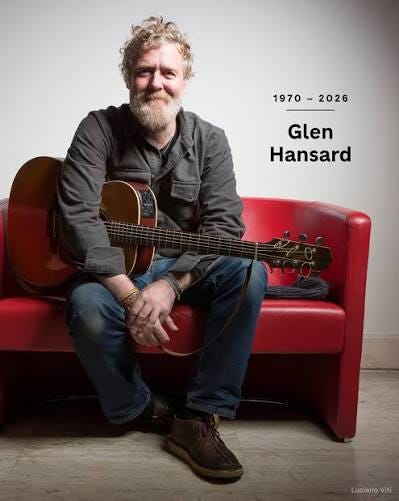
There’s another lyric in “Sad Songs”10 — And the price of fame/is that they love you when you’re gone. I hope Glen Hansard knew how loved he was while he was alive. I think he did. This is going to sound so silly, but I really did think sometimes about trying to send him a copy of my book, just to be like, hey, you have no idea how much of your music I listened to while I wrote this. Thank you for that.
And you know what? I never thought he’d read it or anything, but he really did strike me as someone who would’ve received it with gratitude, who would’ve appreciated any connection between his art and someone else’s. And I don’t feel like I actually have to have sent it to him to still feel that warmth, that love. I feel it in the music.
Currently reading . . . I finally read All Fours by Miranda July. I knew it was going to be weird and wryly funny and a blast to read from the very first paragraph, and I was right. I actually may relisten to it on audio because a friend said that was really the better way to experience it.
I also read Gretchen Schreiber’s Ellie Haycock Is Totally Normal. I don’t read a ton of YA anymore, but this book reminded me of all the best parts of the category — the friendships and big emotions and sarcastic humor and hidden crushes and trying to figure out how you fit into the world. It’s about Ellie Haycock (obviously), who’s back in the hospital again after she’s dealt with a lifetime of surgeries and treatments for her VACTERL diagnosis. She’s always tried to keep her Life at the Hospital and Life at Home separate, but that’s getting harder and harder as she tries to hold on to the friends and activities she has at school and these old and new friendships she’s making with other kids at the hospital. I hung out with Gretchen a little bit at Tampa Bay Comic Con last year, and she’s so witty and sharp — I could totally hear her voice in Ellie’s, which made it even more fun to read.
watching . . . I’m almost done with Hacks. I’m on the last season. I’ve really enjoyed the show but I gotta say, I do get tense when the girls are fighting!! I want Ava and Deborah to be at odds in a fun way but not in a “pulling pranks to get you fired” kind of way. Also, there’s a jacket that Ava wears in a lot of early episodes that I kind of want, but I’ve never been a “look up a piece of clothing from a show and order it” type of person, generally, unless it’s Avril’s T-shirt in that music video.
listening to . . . My older son has me on that new Strokes album, Reality Awaits. I’m vibing with it. I know it’s controversial how much of the autotune effect Julian puts on his voice now, but maybe because I was prepared for that going in it doesn’t really bother me. Like if I went cold from Is This It into Reality Awaits I could see how I’d be like wait what the fuck, but luckily I was eased into the idea by a whole slew of memes including one of that Rockwell painting “Freedom of Speech” where the guy boldly declares that he likes the autotune, actually.
visit my website where at this point I wonder if my FAQ should be about this movie instead
follow me on Instagram, even though it won’t bother to show you my content if/when I make some
buy In Every Possible Way, which really owes so much to Once and Glen Hansard
no part of this newsletter was written with AI because fuck AI
I’ve decided I’m going to share some of the most interesting trivia from IMDb down here. For example, this role was originally intended for Cillian Murphy, but he pulled out because he wasn’t confident in his ability to handle all the music and he also wasn’t sure about acting alongside such an unknown actress as Markéta. I love Cillian Murphy, seriously, but this is Glen Hansard’s movie so I’m glad it worked out this way.
Apparently they filmed this scene with such long-distance lenses, trying to give the actors space so they’d be more natural, but also because they couldn’t afford to shut down the street for filming, that at least one bystander thought this was a real theft and kneed the guy in the groin.
Markéta had to ask permission off school to be in this movie. This was her first film! It was only Glen Hansard’s second, after a smaller role in The Commitments, and he initially didn’t want to do this because he wasn’t sure he wanted to be an actor. Both of them said they wanted to just focus on music after the movie was done. Markéta was the youngest person to win a non-acting actor when she won for “Falling Slowly” at 19.
“Broken-Hearted Hoover Fixer Sucker Guy” wasn’t scripted — it was just Glen Hansard goofing around, and it was so good that they put it in the movie.
The “ex” is really the director/writer John Carney’s girlfriend.
The party scene was filmed in Glen’s flat, Markéta made all the food you see in it, and the first woman who sings is Glen Hansard’s mother! I love all this low-budget filmmaking stuff, where you can really see how it’s a labor of love. They filmed with a lot of friends, natural lighting, anything that would keep the budget down.
This line was apparently ad-libbed by Markéta, and Glen really didn’t know what she’d said, so his baffled response is real.
The cast and crew were apparently really missing their Southpark, which is why they named a character Timmy and made this reference. They should’ve been in my eighth grade class, where kids at school would narrate whole episodes as part of their everyday conversation! This is how I know a bunch of Southpark references despite (famously) growing up without cable!
This was the most expensive shot of the whole movie — they had to pay $2,500 for a crane to get it.
Writer/director John Carney was in The Frames for a few years — that’s how he knew Glen. I’ve mentioned a lot of my top songs off this particular album (which John Carney isn’t on) in this post and before in my newsletter, but if you want to know one more favorite, it’s “True.” I like the singing in the background that gets louder as Glen wails over it. Why do you ask for my trust? When you’re not worthy of it . . . and Glen’s still making a meal out of the word gone the whole time.
Comments
Nothing yet. Say the first thing.
Sign in to join the conversation.