
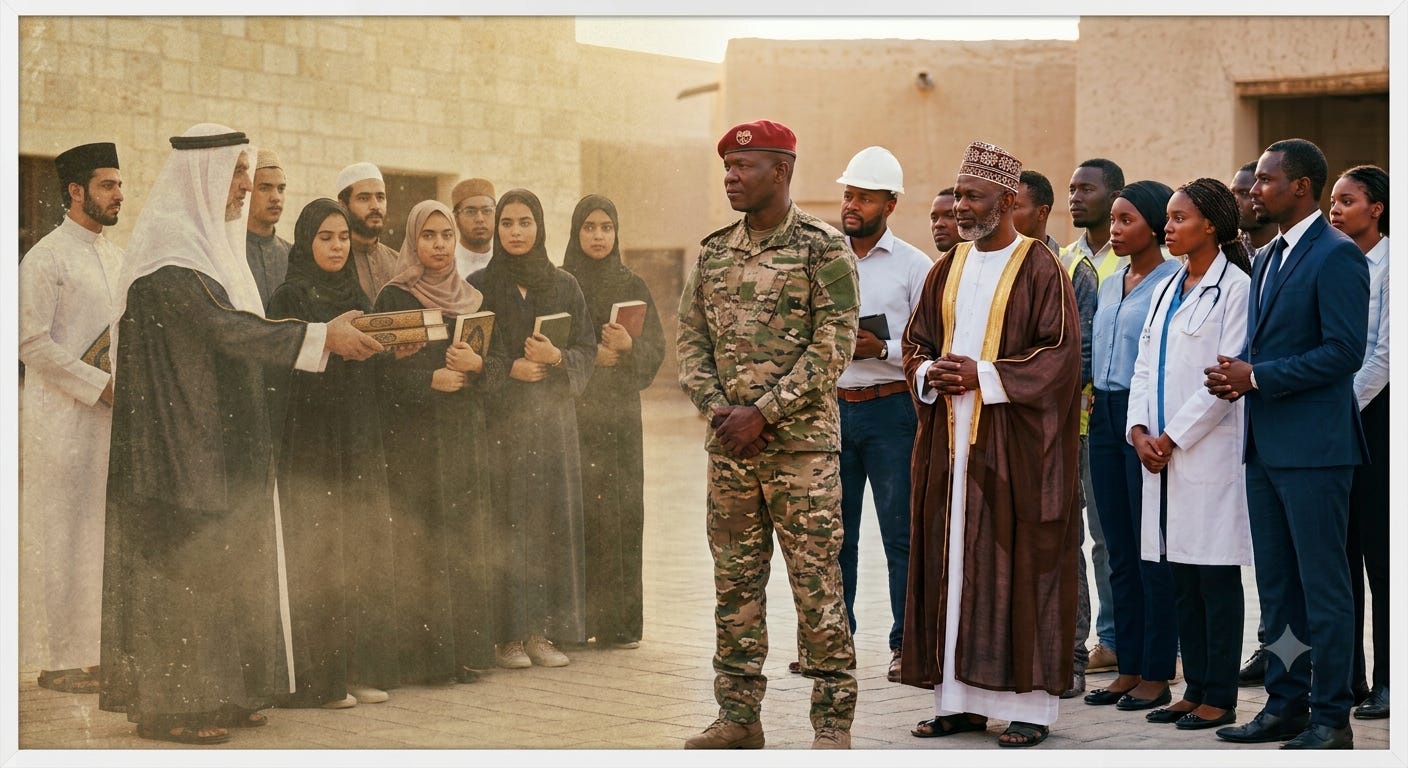
Bismillah. Insha Allah, what follows draws on the documented lives of scholars, several centuries removed and several traditions apart, read together in service of a single argument. Where that reading has strengthened what these men actually stood for, credit belongs to the record itself. Where it has compressed, oversimplified, or misread any part of what Ahmad Baba, Usman dan Fodio, Ahmadu Bamba, or Ibrahim Niasse actually taught and lived, that error belongs to this piece alone, and correction is welcome rather than resisted. Their legacies are larger than any single article can hold, and this one does not claim to be the final word on any of them.
The present situation this piece speaks to, Burkina Faso’s relationship with its own scholars and with Gulf religious patronage, is still unfolding as this is written. Some of what is described here may look different by the time it is read. That is not a reason to withhold the argument. It is a reason to offer it honestly, as a contribution to a conversation still in motion rather than a verdict handed down on a settled question. This is a dialogue worth having and worth having in good faith on all sides of it.
Shaykh Ibrahim Niasse built the Faydah Tijaniyya into the largest Sufi renewal movement in twentieth-century West Africa, and by the middle of the century his authority reached from Kaolack to Kano to Cairo. In Egypt, in the years surrounding his diplomatic and scholarly travels there, he set his mind to a single technical and spiritual problem: the Qur’an needed to be recorded, and that recording needed to reach every corner of Africa a traveling reciter could never visit in a single lifetime.
He understood exactly what was at stake in the request. A recitation carried across the airwaves would enter homes no missionary journey could reach, and it would work on the heart in the way only sound and memorization together can work on it.
This was not a convenience he wanted for himself. It was a tool he wanted for a continent.
The men positioned to grant or block that request were largely Arab religious authorities and largely not Black, and they answered him with the language of bid’ah. Recording the Qur’an, in their judgment, was a reprehensible innovation, a technology reaching into sacred ground where technology had no standing to reach. Niasse held real authority of his own by this point in his life. He could have proceeded on that authority alone and let the objection stand unanswered. He chose instead to write.
The result was seventy-two pages, Al-Hujjah al-Balighah fi Kawn Idha’at al-Qur’an Sa’ighah, “The Conclusive Proof That Broadcasting the Qur’an Is Permissible,” and the choice to write it rather than simply act tells its own story: he wanted the permissibility established as precedent for whoever came after him, not secured as a private exception for himself alone.
The treatise argued from scripture and from analogy. Niasse cited Qur’anic verses commanding the spread of guidance, among them 6:38, 16:8, and 15:21, and he reasoned by direct comparison to a precedent already settled and uncontested: the minaret and the loudspeaker at the Haram in Makkah, tools that had already been accepted because they multiplied the reach of the call to prayer and the recitation within it. A tool that multiplies benefit, in his argument, becomes obligatory the moment it exists. It does not remain optional, and it does not remain suspect.
Even the reciter he wanted for the project resisted him at first. Sheikh Mahmoud Khalil al-Husary declined the request when Niasse first brought it to him. Niasse did not turn to a more willing voice. By an account passed to me directly by Sheikh Seydi Cisse, a descendant in Niasse’s own line who confirmed these details in personal conversation and reviewed them for accuracy before granting permission for them to be written, Niasse understood the recording as a duty placed on him specifically, by the Prophet Muhammad and by Sheikh Ahmad al-Tijani, and a duty of that kind does not release a man because the first answer was no. He wrote to al-Husary again. He wrote again after that, more times than the official record preserves. Al-Husary eventually relented.
What followed became one of the most beloved recitations of the Qur’an in Islamic history, carried personally by Niasse across every da’wah mission that followed, played and replayed on his own travels, distributed freely to anyone within reach of him. The men who tried to stop it are remembered, if at all, as an obstacle the recitation moved past.
Niasse himself later wrote a poem by hand praising al-Husary, describing the effect of the recording in terms of presence itself: heard in Kaolack, reciting through the machine while physically thousands of miles away. The opposition Niasse overcame to make this happen was not evenly distributed. The majority of it, though not the whole of it, came from outside the Black African Muslim world entirely.
Ustadh Zachary Wright, writing as an academic historian rather than as a member of Niasse’s own tradition, names the doctrine precisely: Niasse’s community drew on inherited Islamic tradition and worked to transcend the confines of the colonial and postcolonial state, rather than being reduced to clients. Not being reduced to clients. That phrase is the spine of everything that follows, and it did not begin with Niasse. It began with a duty he understood as inherited directly from the Prophet Muhammad and from Sheikh Ahmad al-Tijani, the same duty that drove him to write seventy-two pages rather than simply act on his own authority, and it did not end with him either. It passed down an unbroken line, father to grandsons in the office of Khalifa, and it is still governing decisions at Medina Baye today.
Niasse said it more plainly than any historian could, in his own poetry, in the dawawin he composed across a lifetime: “As long as I am a servant to Ahmad, Allah has made it forbidden for my heart to go astray or to submit to an oppressor.” Servitude to the Prophet was not, for him, a posture of submission to worldly power. It was the very thing that made submission to worldly oppression impermissible. Everything documented about his conduct toward kings, presidents, and religious authorities alike traces back to that single line.
The lineage starts on the ground, literally. At twenty-two, inheriting his father’s fields and a growing circle of students, Niasse spent his days farming and his evenings teaching, dividing the calendar itself between the dry season at Medina Baye and the rainy season at Kóosi Mbittéyeen. Those who documented his life did not treat the farming as background to the scholarship. They described his practice of Islam as grounded in action, in mastering the self through the Qur’an and Sunnah, and in producing and laboring across every field of life, farming included, not merely traveling and preaching. That is not an isolated biographical detail. It is the first generation of a doctrine that a people who feed themselves are not straying from Islam but practicing it.
The second generation carries it forward institutionally. Under Sheikh Muhammad al-Mahi, the current Khalifa, Medina Baye runs the Toolu Baye initiative, built explicitly for food self-sufficiency, framed in Mahi’s own words as a retour vers la terre, a return to the land, and backed by a dedicated Medina Baye fund. Sheikh Hassan Cisse extended the same inheritance into education, healthcare, and the dissemination of knowledge, growing Medina Baye to more than seventy institutions. Seventy institutions do not produce seventy varieties of the same cleric. They produce a functioning society.
Niasse’s own standing among the very authorities who might have gatekept him tells its own story. As a young man, when he expressed interest in studying French alongside his Islamic education, his father, a scholar who had himself fought French colonization, refused to allow it, the language of the oppressor was not a language his son would be given for free. Niasse carried that refusal into adulthood in sharper form. When French colonial authorities pressed him to permit the Qur’an to be taught in French, he told them plainly: they would have to kill him first. Their answer was to redirect millions of francs toward missionary schools in Senegal and not a single coin toward Muslim education. He never bent to it. And in 1961, he became the first West African ever to lead Friday prayer at al-Azhar Mosque in Cairo, the seat of Sunni religious authority itself, after which he was given the honorific Shaykh al-Islam, the highest title a Muslim scholar can hold. That same year, the Secretary General of the Muslim World League in Mecca wrote to him directly, stating that the scholars and jurisprudence of the Hijaz itself had, in effect, passed to him, that he had become, in the letter’s own words, “of the real people of Medina in both fiqh and Qur’an.” The center of Islamic religious authority did not gatekeep him. It deferred to him.
The doctrine held just as firmly toward political power. Niasse maintained close relationships with Kwame Nkrumah, Ahmed Sékou Touré, Gamal Abdel Nasser, the Grand Mufti of Jerusalem Hajj Amin al-Husseini, and Léopold Senghor, at the exact moment these men were building the political architecture of African independence, several of them experimenting with socialist and Marxist-influenced models of that independence. Niasse held those alliances without ever adopting their ideological premises as his own. In the same poetry that names servitude to the Prophet as the barrier against oppression, he wrote just as plainly of the secular ideologies his own allies were drawn to: “Neither Napoleon nor Lenin and Marx are divinely inspired, so do not be fooled by their theories, but a book revealed by Allah, the Most Glorious and Most High.” He worked with revolutionaries. He did not become one of their revolutions.
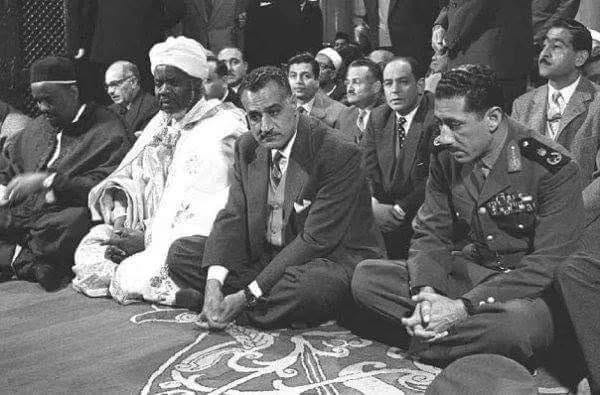
Biographers who document his relationships with these leaders often describe him, accurately, as acting toward them as a hujjah, a proof or witness, wanting nothing from them in return, serving instead as a source of spiritual counsel if they heeded him and of consequence if they did not. When Nasser, an ally and a fellow architect of anti-colonial politics, moved to execute Sayyid Qutb, Niasse pleaded with him directly to spare a fellow Muslim’s life. Nasser executed Qutb anyway. Niasse, visiting Nasser’s grave afterward, pronounced his concern for the state of Nasser’s soul in the next life. He wrote Al-Ifriqiyyah lil-Ifriqiyyin, “Africa for the Africans,” opening the essay by comparing colonizers to idolaters, worshippers of things that neither hear nor see. In the Palestine Letters of the late 1960s, he told Arab leaders directly that he could accomplish what they would not, offered to mobilize a West African army, and reminded them of obligations they were failing to meet.
One fact belongs in this record precisely because it sharpens the doctrine rather than embarrassing it. Niasse co-founded the Muslim World League in Riyadh and the High Council of Islamic Affairs in Egypt and Karachi, and stood as the League’s Vice President under King Faisal of Saudi Arabia himself.
And in his own poetry, addressed to exactly this category of man, he wrote: “Tell the Kings of this earth, may their eyes grow weary, for this godly Dominion we possess can never be sold for any dirham.”
He stood beside a king, built institutions with kings, and told kings plainly, in verse, that no price existed for what he actually held. He was not outside the Gulf’s pan-Islamic architecture, resentful of it from a distance. He helped build part of it, from a position that never once entertained the idea that the relationship could purchase his submission. He worked inside Gulf institutions and against Gulf religious gatekeeping in the same lifetime, because the two were never in tension for him. The question was never the origin of the outside actor. It was whether that actor’s engagement served the independence and development of his people, and no engagement, however elevated, ever outranked the line he had written for himself: servant to Ahmad, forbidden to submit to an oppressor.
That is the inheritance now sitting at Medina Baye, three generations deep, in a farm, in a treatise, in a diplomatic letter to Cairo, and in an agricultural fund still bearing the family’s name.
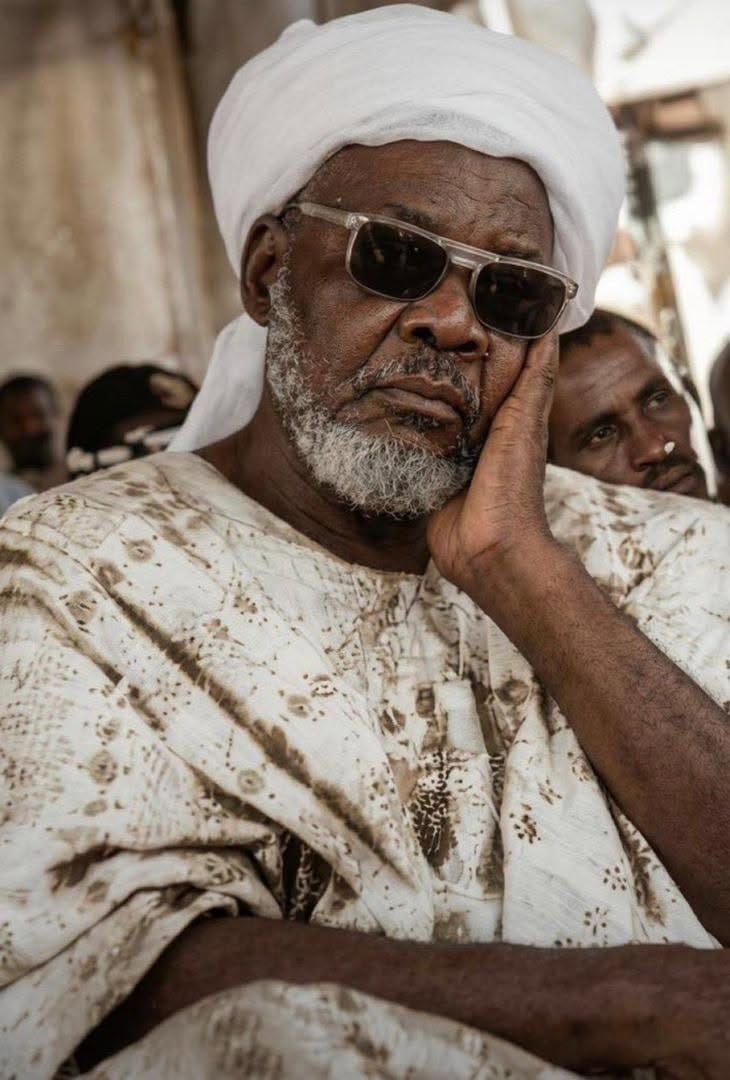
What Niasse’s activity, his influence, and his example indicate across three generations is a pattern that recurs across West African Islamic scholarship wherever colonial and postcolonial pressure met a tradition serious about its own survival, and the pattern is older and wider than any single order.
More than a century before Niasse and even before Bamba, Ahmad Baba al-Massufi al-Timbukti led the Sankore madrasah in Timbuktu, an independent scholarly guild tradition, not an organized tariqa. When Morocco invaded Songhai and occupied Timbuktu in 1591, more than two hundred ulama, Ahmad Baba among them, refused to pledge allegiance to the occupying power. He was exiled to Marrakesh for twelve years for it, his personal library of sixteen hundred manuscripts seized or destroyed in the process. Even in exile he kept working, issuing fatwas arguing directly against the enslavement of free-born Muslims on racial grounds, refusing a self-serving interpretation of Islamic law being used to justify a specific injustice. Independence, refusal to legitimize occupying power, and scholarship placed in service of a people rather than a patron: this pattern predates organized Sufi orders in West Africa by generations, and it was never their invention alone.
Ahmadu Bamba, founder of the Muridiyya and a contemporary of the same colonial order Niasse’s generation inherited, built an entire theology on the premise that labor is worship, not separate from it. His disciple Ibrahim Fall carried this into the Baye Fall movement through the principle of Dieuf Dieul, you reap what you sow, and organized cooperative peanut farming that grew, generation after generation, into a substantial share of Senegal’s total agricultural output. Bamba refused alliance between Muslim elites and colonial power on principle, choosing instead a path of non-violent resistance built on education, moral reform, and material self-sufficiency rather than dependence on the colonizer’s economy.
Usman dan Fodio, founder of a different tradition again, answered the same question before it had fully formed. As caliph of Sokoto, he prioritized literacy and education as the foundation of a self-governing Islamic state, building indigenous capacity rather than borrowing it. His own daughter, Nana Asma’u, carried that inheritance forward through the Yan Taru movement, educating women across the caliphate in a tradition of scholarly transmission that continues today. Dan Fodio did not treat indigenous self-governance as automatically righteous simply because it was his own. He became one of his own state’s sharpest critics once it was built, warning that its bureaucracy was becoming, in his own words, another oppressive ruling class. Independence, in this wider tradition, was a standard the tradition held itself to as firmly as it held outsiders to it.
An independent scholarly guild, two Sufi orders, four centuries of pressure, and one recurring answer: scholarship in this region has never treated dependence on colonial power or on any outside authority afterward as a mark of piety. It has treated self-sufficiency as the discipline and treated the people who practice it as standing closer to the tradition, not further from it.
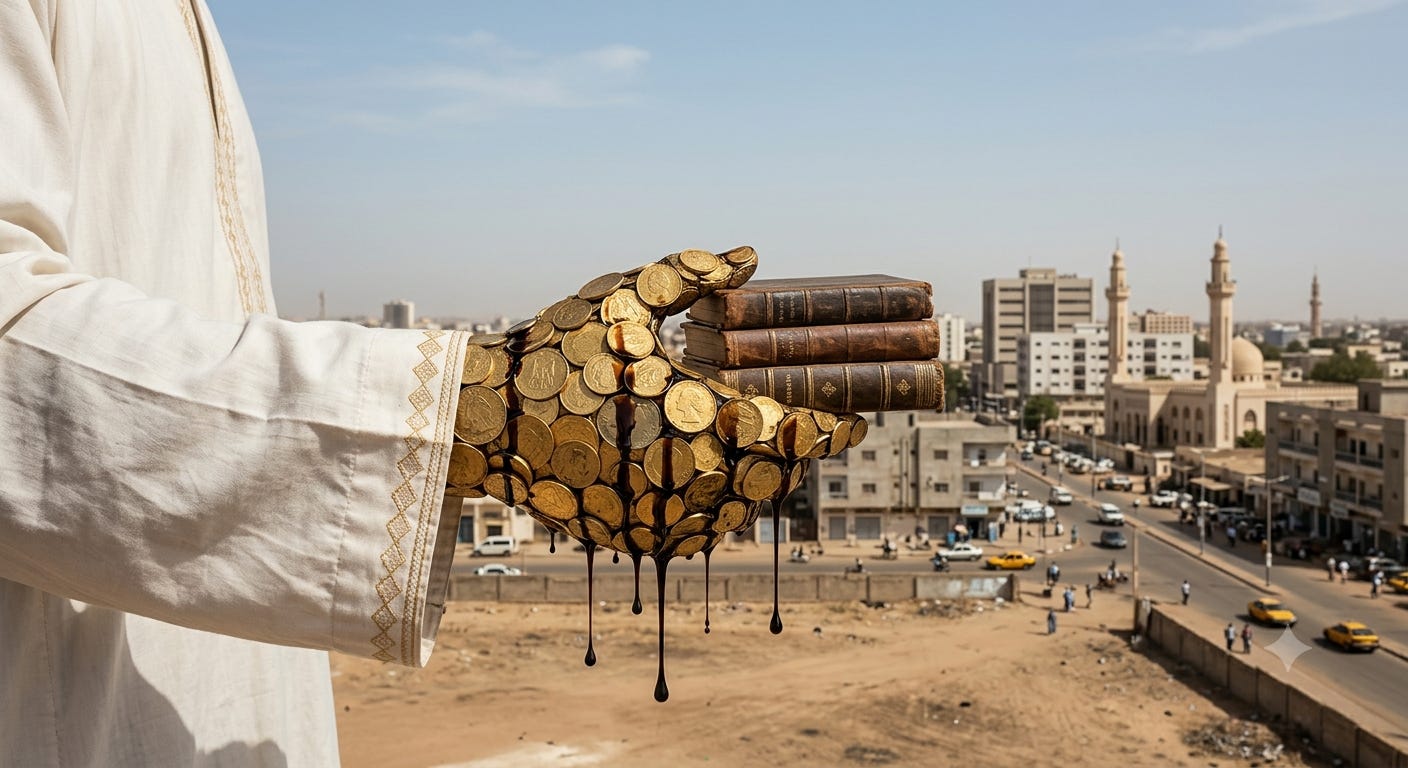
When Ibrahim Traoré rejects, or more precisely raises a qualified objection to, the recruitment and training of Burkinabè clerics in Saudi Arabia, and when he names roughly eight hundred of a thousand students studying Islamic law rather than engineering, medicine, agriculture, and information technology as a problem worth solving, he is not attacking Islam. He is not attacking scholarship.
He is not attacking Sharia. He is standing exactly where this tradition has always stood, and anyone who tells the people of Burkina Faso or Gambia otherwise is either ignorant of that tradition or counting on the people listening to be ignorant of it too.
Niasse did not engage non-Black Arab gatekeepers in Egypt because he opposed Arabs. He fought them because they tried to withhold a benefit from Africa that belonged to Africa as much as to anyone. He did not co-found the Muslim World League and stand beside King Faisal as its vice president because he was suspicious of Saudi Arabia as such. He stood there because engagement without subordination was always available to him, and he took it. The doctrine his own descendants still practice at Medina Baye, on a farm, in an agricultural fund, and in seventy institutions built for a functioning society rather than a clerical monopoly, is not hostile to Riyadh or Abu Dhabi. It is hostile to any arrangement, with any outside power, that produces dependency instead of capacity.
That is the arrangement now under real scrutiny. The same Gulf religious infrastructure that trains clerics by the hundreds while producing almost no architects, engineers, or agronomists sits inside a labor system, the kafala sponsorship structure across Saudi Arabia and the UAE, documented by Human Rights Watch, Amnesty International, and Georgetown’s Journal of International Affairs as systemic in its confiscation of migrant workers’ passports, with East African workers specifically named among those affected.
That is a different population than the religious students, and the distinction matters, but it belongs in the same accounting of how these states have treated African people who came within their reach. It sits inside a longer history too, one this project has documented at length elsewhere: Saudi Arabia’s religious infrastructure did not emerge in a vacuum, and its deployment as an anti-communist tool in partnership with the United States during the Cold War, financing operations across Africa through the Safari Club, is the subject of its own companion treatment rather than a claim this piece re-derives from scratch.
A quieter concern about ideological extremism runs alongside Traoré’s own public position too, less prominent in his own statements than the talent-drain argument and less independently verified, but present in the wider conversation around him and worth naming rather than pretending it isn’t there: East African enrollment in Gulf religious universities grew from several hundred students in 2010 to nearly ten thousand by 2014.
As Traoré’s position has developed, so has a chorus of voices applying a scrutiny to his caution that they do not apply with equal force to the patronage system itself.
A public affairs analyst at the University of Namibia called Traoré’s emphasis on science and development a reasonable one while still cautioning against abandoning religious scholarship altogether, and unnamed critics elsewhere have accused him outright of targeting Islamic values.
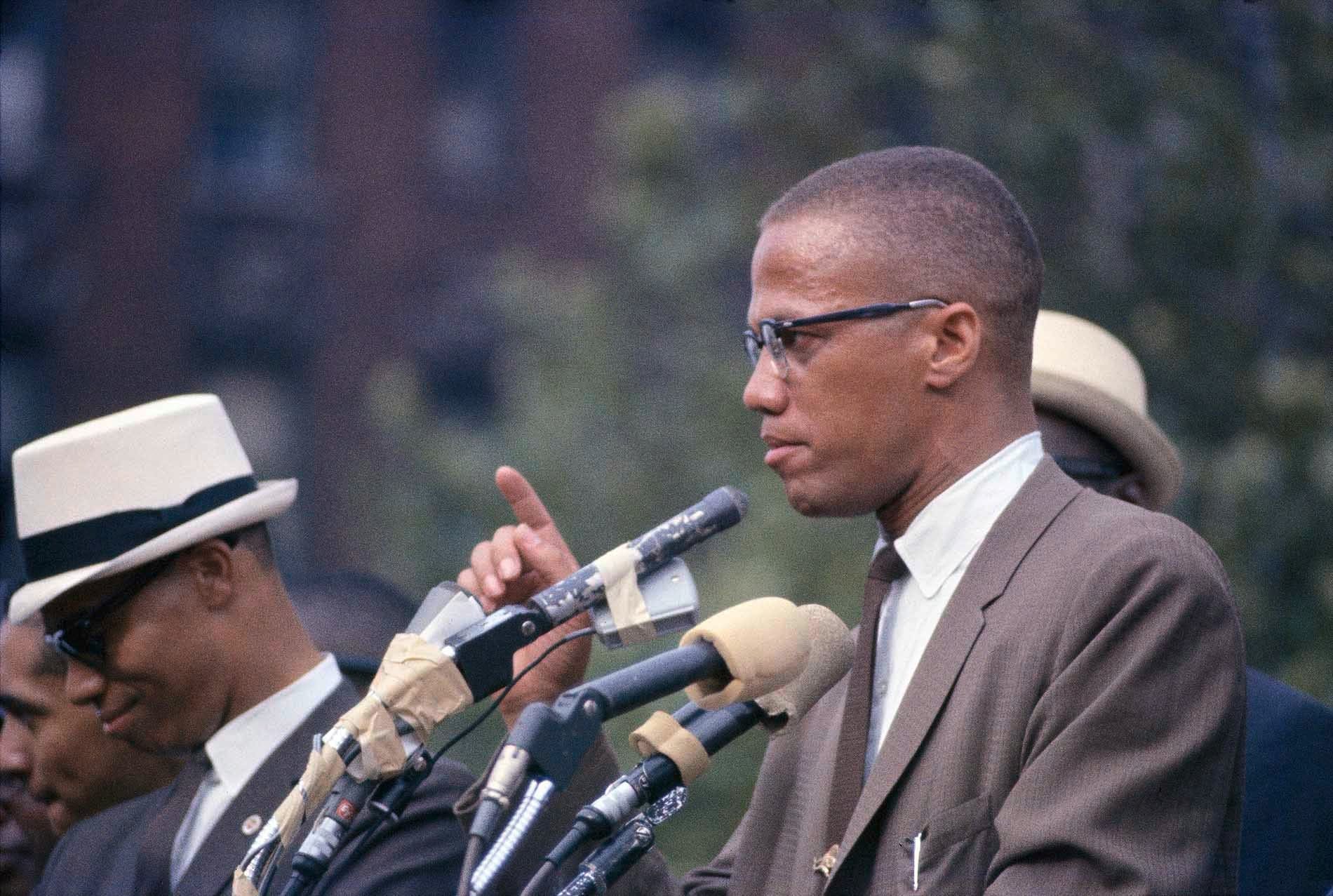
Malcolm X named this instinct decades ago and an ocean away: some come running to defend the house that is burning, not because the house has earned that loyalty but because they have come to depend on what that house provided them. It is not treason to have studied in Riyadh. It is worth noticing, carefully and without accusation, when someone applies more scrutiny to an African leader questioning that patronage than to the patronage itself.
Alex Thurston, an academic who studies the Sahel closely and without polemic, actually confirms the piece’s own spine directly: West Africa possessed rich and sufficient Islamic traditions long before Saudi-trained scholars arrived and never required outside validation to be legitimate.
Thurston also raises a caution worth holding onto rather than smoothing over, because the piece’s own standard requires it. He notes that once jihadist violence takes hold in a region, state accusations of extremism have a documented tendency to sweep up mainstream religious figures with no actual connection to that violence.
That is a real risk, and Traoré’s recent arrest of Imam Mohamed Ishaq Kindo and the closure of Ouagadougou’s largest Sunni mosque are the kind of actions that risk carries. What is understood on the ground in Burkina Faso, by accounts that cannot yet be independently verified and are offered here as exactly that, unverified, is that the current confrontation is aimed specifically at Wahhabi-aligned figures rather than at Sunni scholarship as a whole and that Traoré, a practicing Muslim himself, has stated repeatedly that this is not an assault on Islam but an attempt to separate what strengthens the nation from what has been used to destabilize it.
That distinction, if it holds, is precisely the one Niasse’s own life already drew: between religious authority that serves a people and religious authority that gatekeeps or subordinates them. Whether Traoré’s actual conduct stays inside that distinction or drifts past it into exactly the kind of coercive religious control Niasse himself never practiced even against his fiercest opponents is a question this record cannot yet answer with certainty. It is a question worth asking of him with the same rigor being asked of Riyadh, not less.
One further thing is owed here, and it is a matter of proportion, not evidence. Burkina Faso is a young nation still finding its footing against centuries of colonial and postcolonial imposition, and a leader doing that work in real time is owed a measure of good faith that this piece has not extended lightly to anyone else in this record, Gulf or otherwise. Traoré will make mistakes. He may overstate a case here and there. That alone does not settle what kind of man he is.
Organizers have always understood something Niasse himself understood when he wrote seventy-two pages rather than let a quiet exception stand: sometimes a position gets stated with more force than its final form will hold, not from carelessness, but because agitation is how a table gets moved before a more balanced settlement becomes possible. Nothing in Traoré’s record to date, a man confronting jihadist insurgency, colonial-legacy religious patronage, and a domestic political establishment all at once, suggests someone too undisciplined to know the difference between a negotiating position and a final one.
That is where Niasse's example finally closes the argument rather than merely opening it. He never asked anyone, Gulf, Egyptian, or African, for a blank check either. He gave and withheld trust by the same measure to Nasser as much as to the men who tried to silence a recording and let the record of conduct decide the verdict each time.
He wrote it himself, long before any of this was a headline: servant to Ahmad, forbidden to submit to an oppressor.
Not a servant to Riyadh. Not servant to Cairo, or Accra, or Ouagadougou. That is the ground his whole example was built on, and it is the ground worth standing on now. He was strategic when strategy served the people he answered to, patient enough to write seventy-two pages rather than force a private exception, patient enough to write al-Husary again and again until a reluctant voice agreed. But he was never strategic about the one thing that could not be traded away. Self-determination was not a bargaining position for him. It was the floor beneath every negotiation, every alliance, every institution he helped build, including the ones in Riyadh.
No theological allegiance, however sincerely held, outranked the independence of the people he was answerable to. That ranking is the inheritance. Three generations later, on a farm still bearing his family's name, in a broadcast that changed how a continent heard its own scripture, and in a young nation now asking hard questions of the same patronage system Niasse once out-argued in Cairo, the answer was never in doubt.
Comments
Nothing yet. Say the first thing.
Sign in to join the conversation.