
Preface
Every generation inherits stories it does not know it needs.
Not the stories that comfort. Not the ones that confirm what we already believe about ourselves and the leaders we have chosen to trust. But the stories that arrive uninvited, carrying something we did not know was missing until it was placed before us and we recognized the shape of it.
Thanks for reading Yusuf Jones! Subscribe for free to receive new posts and support my work.
This is one of those stories.
It comes from an African kingdom—from the world of warriors and councils and kings, from a time when the distance between a leader's decision and its consequence was measured not in reports and justifications but in blood and breath and the lives of men who had given everything to those above them and expected, in return, to be seen.
The setting is old. What it reveals is not.
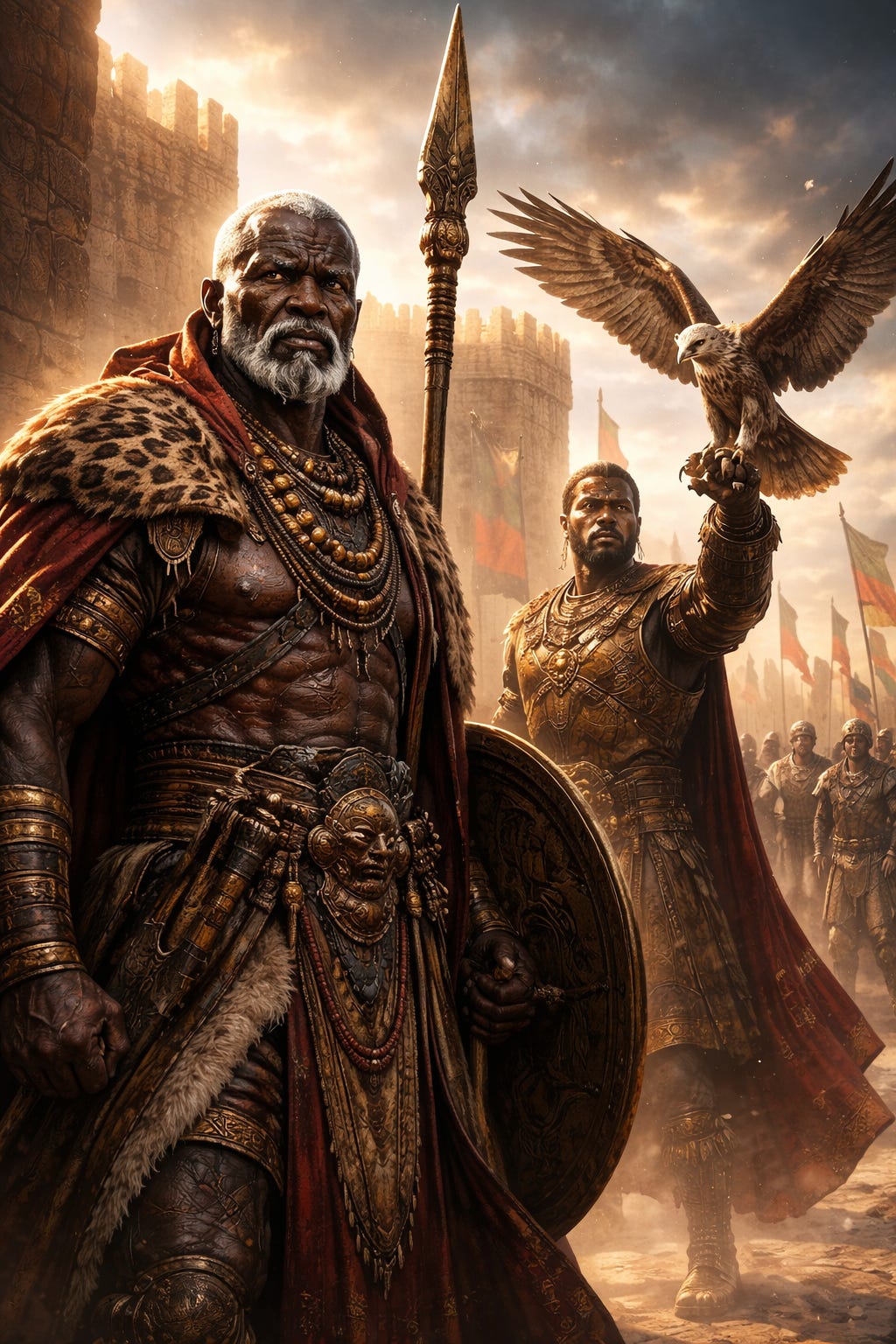
At the center of this parable is a hawk. A small thing, seemingly. A bird used to carry messages between a forward position and the command tent, between the isolated and those sworn to protect them. Its presence meant voice. Its absence meant something else entirely. And the decision to withhold it—made casually, almost without ceremony, by men who believed they were simply being practical—is where this story truly begins.
What follows is a story about leadership. About what it asks of those who hold it and what it reveals when they fail to answer. About the slow, quiet ways that sacred trust erodes before anyone has admitted that erosion has begun. About the interior life of men who know what they should do and find reasons, carefully constructed reasons, not to do it.
It is also a story about a king.
And about what kings know.
The tradition from which this parable draws understands leadership as amānah—a sacred trust, a covenant that does not begin and end with human agreement but reaches upward into divine accountability. The leader who is given authority over others does not merely answer to those others. He answers to something that sees further than any hawk can fly and knows more than any messenger can carry.
This parable takes that understanding seriously. Gravely seriously.
It will not tell you what to conclude. It will not resolve everything neatly or deliver its lesson in language that permits comfortable distance. It will simply place you inside a kingdom, beside a wounded elder, inside a tent where two men are deciding something they do not yet understand they are deciding.
And then it will ask you to watch what happens when the king arrives.
The parable begins with Movement One.
The Taking of the Hawk
In which sacred trust is assigned, a hawk is withheld, and an elder warrior discovers what those above him truly think of his life.
Thanks for reading Yusuf Jones! Subscribe for free to receive new posts and support my work.
Comments
Nothing yet. Say the first thing.
Sign in to join the conversation.