
A friendly reminder that Rant! is a reader-supported publication. Thank you for making this newsletter possible!
ALEX’S WEEKLY RANT!
This week brings a little more #YachtWatch action, although with tankers rather than oligarch yachts. Less fun, I know. But they all play a role in Russia’s economy, so let’s dive in.
On Tuesday, France seized yet another sanctioned vessel that had been moving Russian gas across the globe and, in turn, helping fund Russia’s war economy. The tanker Deliver was boarded by the French Navy near Sicily. President Macron posted the requisite video of commandos being bad asses while taking over the ship.
France has seized five tankers in total: three in the Mediterranean, two in the Atlantic, plus they helped when Belgium detained another tanker (here is the requisite video of the mighty Belgian Navy being bad asses while detaining the ship Ethera in March).
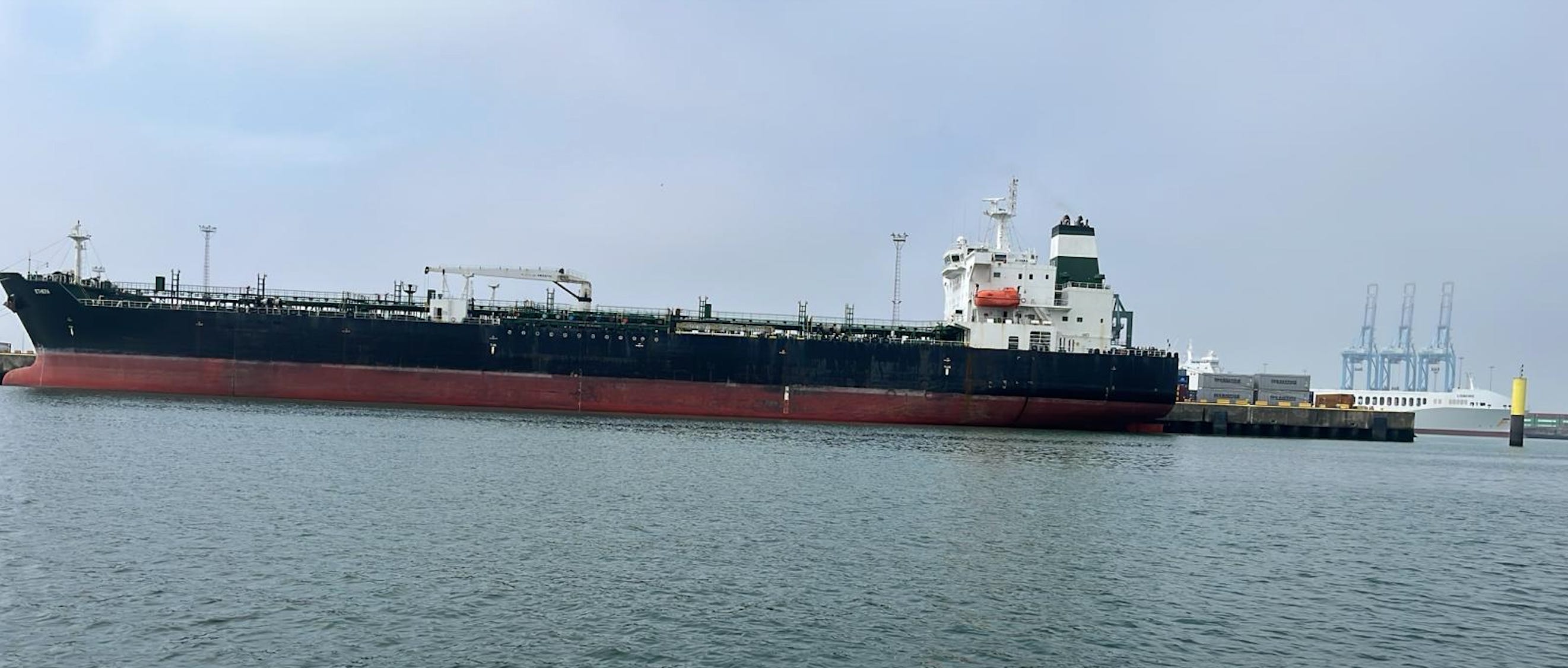
Meanwhile, the UK detained the vessel Smyrtos on June 14 in the English Channel (here is the requisite video of the UK Navy being bad asses on that mission) and now is looking at how it might sell the oil the tanker was carrying and use the proceeds to fund Ukraine.
This is a lovely prospect, but I have doubts about it succeeding. Remember when they started seizing Russian oligarch yachts and we all had dreams of selling them off to fund Ukraine, or sending them to Ukraine to be used as hospital ships? Ya, that never happened. So I am trying to temper my excitement here.
Here is my understanding of the UK’s legal logic (noting very openly that I am not a maritime law or sanctions expert): Smyrtos was judged to be a stateless vessel flying a false flag. This allowed the UK to board it under the law of the sea. Once on board, they found sanctioned oil in breach of UK domestic law. This allowed the UK to seize the vessel and the oil. There is then a legal leap claiming the oil, therefore, now belongs to the UK through civil forfeiture.
Again, I am not a lawyer, but based on what we saw with the detained oligarch yachts, I don’t think this is a simple case.
My understanding is that the oil is sanctioned, and therefore no one can sell or buy it legally precisely because it is sanctioned. Furthermore, there is a case to be made that the oil still belongs to Russia. And I can imagine Russia sending in a team of lawyers to drag the case out.
We saw this, for example, with the yacht Amadea, when Russia sent a straw man owner to tie up the issue in court. Eventually the US DOJ succeeded in the courts to be able to auction the vessel off, but at an enormous cost. The US was spending $600,000 a month to maintain that ship. The courts took 40 months to allow for the sale. That’s $24 million. Just in maintenance. Still worth it in my mind, but something to take into consideration.
An added challenge in holding these shadow fleet tankers is their size. They are just so fucking big. Smyrtos, for example, is 244 meters long or 800 feet! That’s more than two and a half American football fields (please check my math, not my forte).
They take up a lot of space and very few ports can afford to let that space be taken up by a ship that isn’t loading or offloading.
Then there are the logistics relevant to the oil itself. Where do you offload it? That offloading station has to be able to accept that kind of oil (in the case of Smyrtos, it is crude).
I seriously hope the UK can pull this off, but I don’t expect it to be fast or easy if they do.
To Disrupt A Network
Indeed, it’s likely these ships and crews won’t be stopped forever. Russia continues to find ways around sanctions (as does every other sanctioned country). Sanctions are meant to encourage a change in behavior, but in the event they don’t—as we see regularly with these vessels carrying illegal oil—enforcing the sanctions can disrupt the network. This in turn makes it more costly in both time and money to move the goods around.
Illicit networks—which is what these sanctions-evading networks are—function with a certain amount of trust between bad actors. Think of any criminal or drug movie. If the cartel boss wants to open a new distribution network in Chicago, for example, he has to find partners he trusts enough to work with. If those partners get taken out (arrested, killed, turned by a rival), he has to find new ones.
When one node of the network gets interrupted, it takes time and money to find someone who can fill that same role. If your plumber fails to show up, you can just call another plumber. But if your captain who is willing to sail on a rickety, poorly maintained ship full of illegal goods gets detained, or your vessel gets detained, or your whole crew gets detained, you now have to find another vessel and another crew. The owner of the new vessel might be more reticent to help you now, because he sees the risk is higher and he might lose money. The crew may be less ready to jump at the job since the risk of arrest has increased. This requires Russia to pay more for everything. And it takes more time to get all the players in line.
The bottom line here is: I fully support all this seizing of shadow fleet ships. It is ratcheting up the pressure on Russia’s economy, which is also getting stressed from several other directions. This is a good thing and I hope we keep it up. The best sanctions, of course, are the long-range sanctions Ukraine has been imposing with their drones that burn the oil at the source. These increase the stresses on Russia’s war economy and have the added benefit of communicating to Russia’s elite in Moscow and St. Petersburg that they aren’t immune to the consequences of this war.
The US, meanwhile, removed individuals, companies, and vessels from its sanctions list. 🤷🏻♀️
Oh, and that Russian warship I talked about last week? It’s drifting because it has no fuel which is funny because it is in the Channel watching over Russia’s illegal fuel shipments!
THE WEEK’S LINKS
A roundup of things you should be reading
OUR DNI WAS CONTROLLED BY A CULT LEADER. SERIOUSLY. I AM NOT MAKING THIS UP.
Tulsi Gabbard, her guru and the mysterious messages that helped shape her political career (Washington Post)
RUSSIA HATES ITS OWN ASSETS
As Wagner Marched Toward Moscow, Szijjártó Offered Help. Lavrov Laughed. (VSquare)
EXCELLENT RESOURCES!
Just Security has launched WHAT JUST HAPPENED? as well as a litigation tracker to help readers keep up with the chaos
Alex Finley is a former officer of the CIA’s Directorate of Operations, where she served in West Africa and Europe. She writes and teaches about terrorism, disinformation / covert influence, and oligarch yachts. Her writing has appeared in Slate, Reductress, Funny or Die, POLITICO, The Center for Public Integrity, and other publications. She has spoken to the BBC, MSNBC, CNN, C-SPAN’s Washington Journal, France24, and numerous other media outlets. She was also invited once to speak at Harvard, which she now tells everyone within the first ten seconds of meeting them. She is the author of the Victor Caro series, satirical novels about the CIA. Before joining the CIA, Alex was a journalist, covering Capitol Hill, the Pentagon, and the Department of Energy. She reported on issues related to national security, intelligence, and homeland security. Did she mention she was invited to speak at Harvard?

Comments
Nothing yet. Say the first thing.
Sign in to join the conversation.