
“Anyone can sympathize with the sufferings of a friend, but it requires a very fine nature… to sympathize with a friend’s success.” - Oscar Wilde
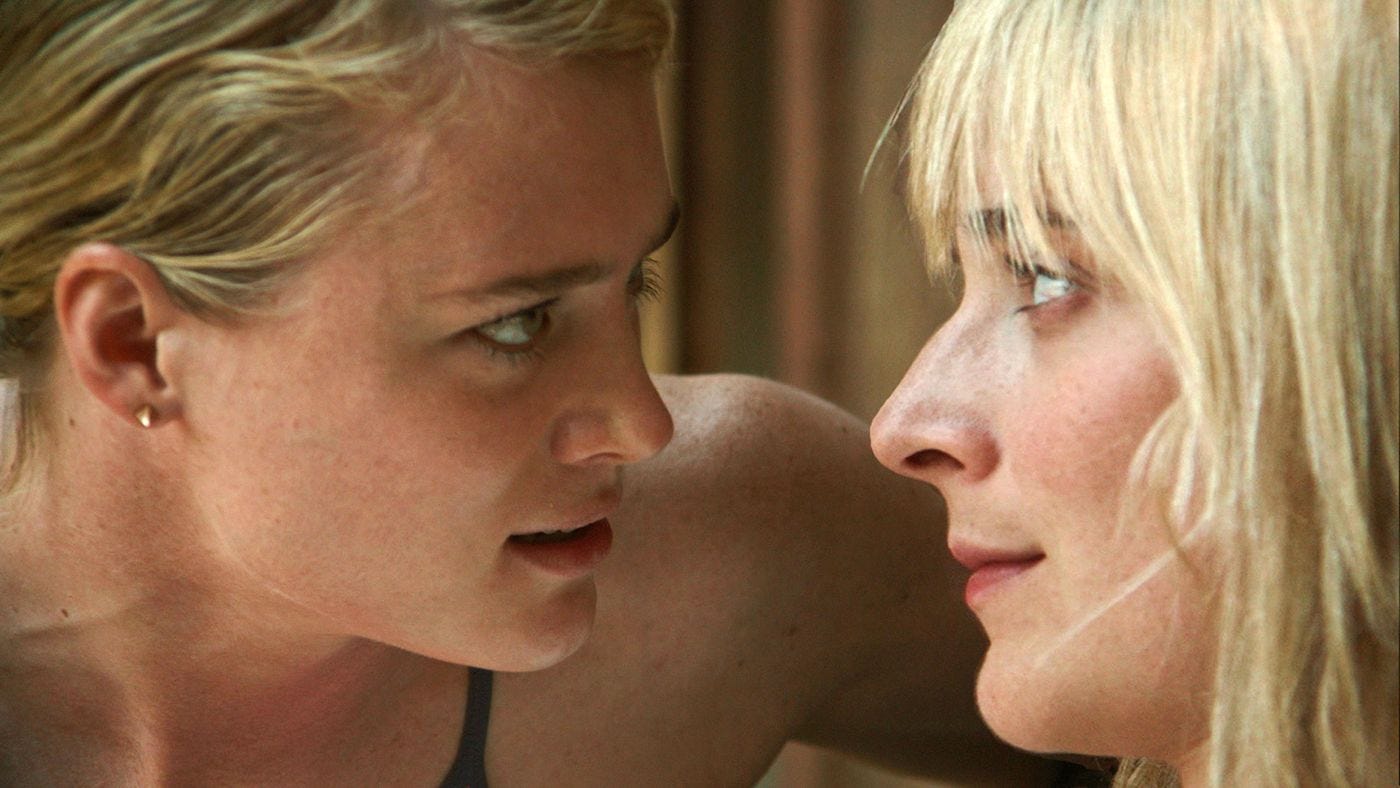
“Do you ever feel like a whore?” Anna asks her longtime friend, Beth, as they drive to Big Sur for a weekend getaway. Both women are actors, and Beth has just booked another lucrative horror film - one that requires extensive nudity. Anna, meanwhile, is stalled at the starting line of her career. Though she’s likely more talented, Anna doesn’t quite slot into the industry’s narrow beauty ideal. As brunches land and Monterey Chardonnay flows, her resentment begins to boil over.
Always Shine, directed by Sophia Takal and written by her husband, filmmaker Lawrence Michael Levine (Black Bear), dissects a distinctly American affliction - namely, how a culture built on ruthless competition turns dear friends into bitter rivals, and leaves both “winners” and “losers” spiritually destroyed. They explore this rocky emotional terrain with a clarity and finesse few American filmmakers achieve.
Takal and Levine emerged from New York’s post-mumblecore film scene in the early 2010s. Levine’s Gabi on the Roof in July starred Takal alongside Lena Dunham, Amy Seimetz, and Kate Lyn Sheil, while Takal’s Green (2011) won the Emergent Narrative Woman Director Award at South by Southwest. Despite industry buzz, Takal struggled to get her sophomore effort off the ground. After two versions of Always Shine failed to launch, Takal realized the movie would only get made if she did it herself.
Scraping together a shoestring budget of $75,000, Takal tapped Caitlin FitzGerald and Mackenzie Davis for the leads, and set out to Big Sur with a six-person crew. They crowded into a rented coastal house, which doubled as the primary shooting location. “The only way to shoot in Big Sur is to have millions of dollars or to be so small that no one knows you are there,” Takal told Filmmaker Magazine in 2016.
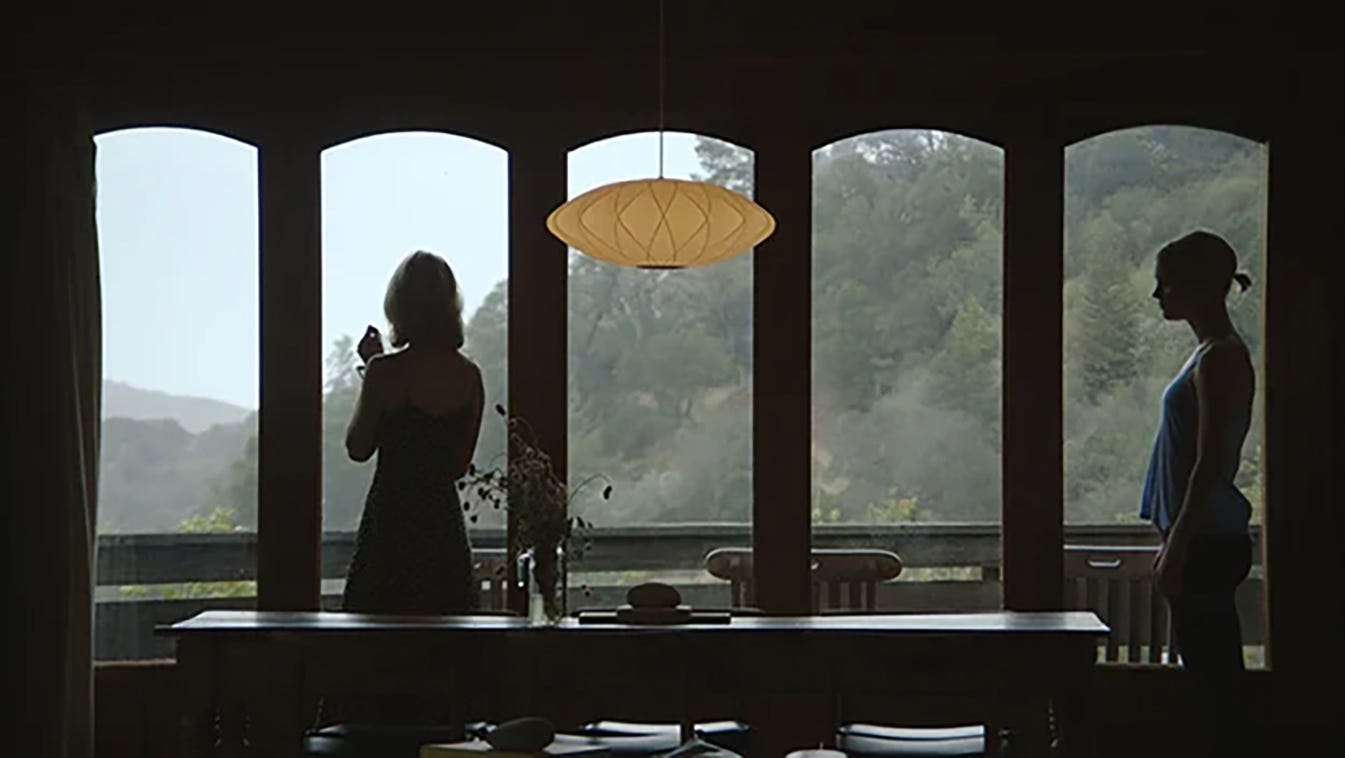
To capture the lush, dreamy, and at times suffocating visual style inspired by Persona and Three Women, Takal and cinematographer Mark Schwartzbard shot with a $2,000 vintage zoom lens they found on eBay. To my eye, Always Shine looks better than most studio films costing hundreds of times as much today. More importantly, its probings of performance, jealousy, and female friendship feel even more urgent than they did a decade ago.
I reached out to Sophia Takal to discuss how she came to make Always Shine. You can watch - or read - our conversation below. But first, the news.
Underexposed is a weekly ad-free film publication celebrating great underseen cinema and moviegoing culture. Paid subscribers get exclusive essays, videos, and more - while supporting the future of movie culture.
Applied Physics: The DIY Action Films of Eric Jacobus. Jonah Jeng has a fascinating piece in Filmmaker Magazine celebrating the scrappy - yet astonishingly sophisticated - Hong Kong–style camcorder action movies of small town director Eric Jacobus: “The physical performances evince a maniacal degree of practice, perfectionism, and daring; somehow, a handful of twenty-something suburbanites manage to deliver a catalog of kicks, flips, trapping combos, and wince-inducing falls to rival those of their heroes.”
An Anti-Monopolist just won in Michigan. “There is a rebellion afoot in America,” writes Matt Stoller this week. I sure hope he’s right. For years, my impassioned pleas for an antitrust revival have earned me nothing but blank stares. Now, the victor of a tense Senate primary election, public health official Abdul El-Sayed, has this to say:
“I’m a capitalist who reads about capitalism. And when you read about capitalism, it is very clear, even to the originators who coined the idea, that the biggest risk to capitalism was not going to be government regulation, as much as the corporatists want you to think it is. It was always going to be monopoly.”
Right on cue, the Federal Communications Commission eliminated a cap on the share of U.S. television households a single company can reach, NBC News reports, “a major move that could pave the way for more corporate consolidation in the media industry.”
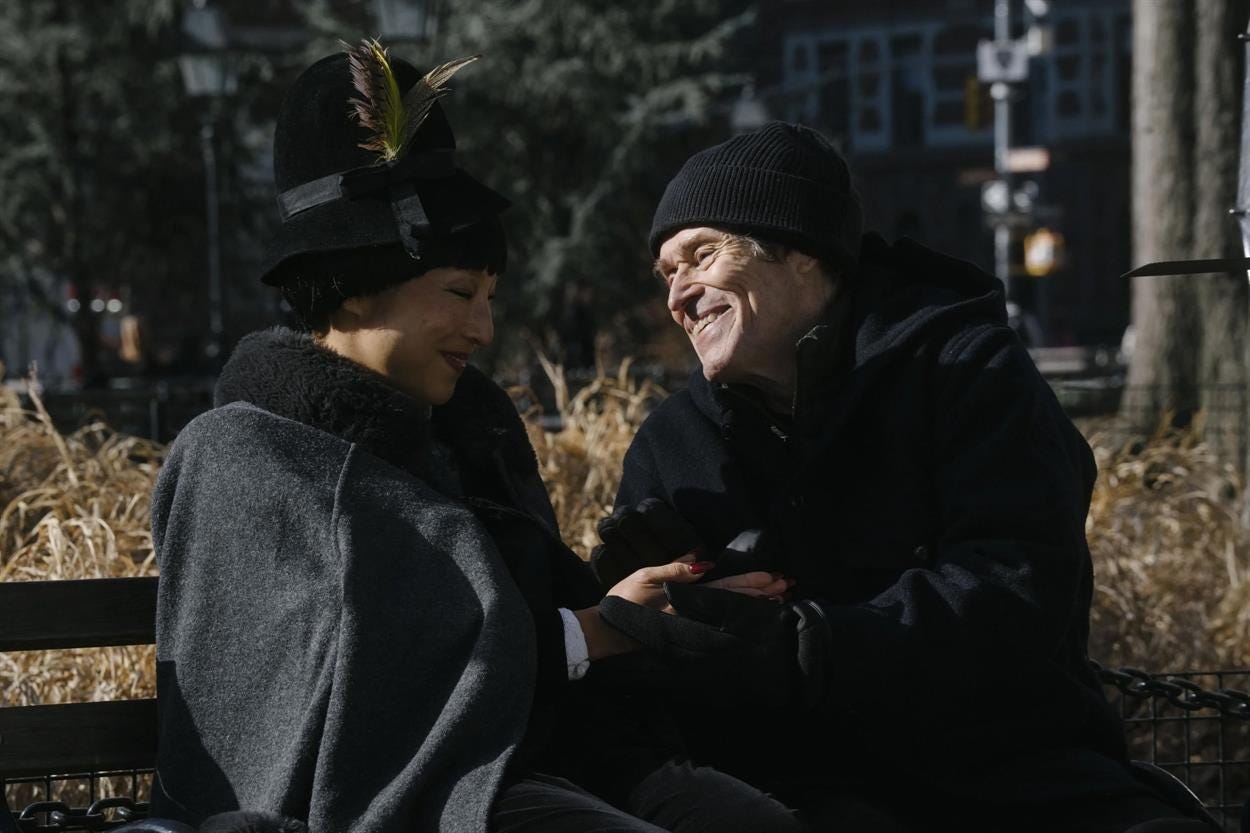
This weekend, I’m eager to watch the new movie from Kent Jones, Late Fame, starring Willem Dafoe and Greta Lee, with a screenplay by Samy Burch (May, December and the upcoming Coyote Vs. Acme). Here’s the synopsis: “Ed Saxberger, a postal worker whose former life as a downtown poet in late-70s New York is rediscovered by a young admirer and his ‘Enthusiasm Society,’ a group of 20-somethings with a comically romanticized sense of the past.”
A conversation with director Sophia Takal (condensed and edited for clarity)
Alex Rollins Berg: What drew you to film?
Sophia Takal: I really wanted to be an actor from the time I was 5 or 6 years old. The first thing I ever saw that was just, “Oh my God, I want to be an actor” was the Judy Garland movie Meet Me in St. Louis. I became obsessed with Judy Garland for the next ten years - would only watch Judy Garland’s movies, only listen to Judy Garland music. And so I decided to be an actress.
I went to college, and decided that I would study film instead of theater, because I was just like, “Then I’ll meet directors, and they'll cast me in their student films, and that will help me be an actor.” I went to Vassar for a couple of years, and then I transferred to Columbia, and that’s where I met my husband [Lawrence Michael Levine]. He was in grad school there, and we just started making movies together. At first, the idea was I would act in the movies, like some sort of ersatz Cassavetes-Rowlands type thing. And then, I was watching him make a movie that I was acting in, and I was like, “That looks fun. I want to do that.” I’m much better suited to being in charge than being someone’s puppet.
It was the “mumblecore” time, where everyone could just make movies for no money with their friends. And that was like, cool, and no one was like, “This is exploitation. I’m working for free for many weeks.” The first movie I made, I shot for like $5,000 with a two-person crew, and Larry and me and our roommate at the time, Kate [Lyn Sheil].
So it was just like very, very intimate. And it was a good time to learn on the job because the stakes were pretty low and everyone was really patient with me. And then that ended up like getting into South by Southwest and winning an award there, which was really surprising because I didn’t think anyone would ever see it. And that’s and I was just like, “Maybe I’m good at this. Maybe I should keep doing this thing.” And then I did.
Alex Rollins Berg: You sort of straddle the line between mumblecore and what came after, which is a loosely affiliated collective of filmmakers, a little generation later. Film collectives are something we used to hear more about than we do these days. Did you feel like you were a part of a collective at that time? Was that helpful for you, coming into the business?
Sophia Takal: It definitely felt like a group and that felt really, really good. That’s something I definitely miss.
I learned so much and had so much fun. The first movie that Larry and I made is Gabi on the Roof in July. Kate Sheil was in that, Lena Dunham was in that, Amy Seimetz was in that. And they were also doing their own things, too. Kate and Amy had been working with Joe Swanberg, and so that’s how I met Joe, through them. I remember this one 4th of July weekend, Joe invited us to go with Kate to his parents’ house in Virginia. And at one point, he’s just like, “I’m going to shoot a scene for Silver Bullets here.” And then Larry was holding the boom, and I was just watching, and I was just like, “This is so cool. We’re all helping each other out.”
I’m really curious what young people are doing. I don’t feel I have my finger on the pulse of young filmmakers or micro-budget filmmakers who are working right now. So I’m curious if that still exists. You probably would know more than I do.
Alex Rollins Berg: Yyyeah. I’m like, “Is there a pulse?” I’m not sure.
Sophia Takal: I know this one indie filmmaker named Jessica Barr, and she’s making really cool work for no money with people she knows in her house with whatever resources she has. I know that she looks back at the mumblecore, post-mumblecore scene as something that’s inspirational or something.
Alex Rollins Berg: I just want them to be able to do more. I mean, I work amongst some of them at NYU, and I’m excited about what they have the potential to do. But on a professional level, it just seems like the landscape has changed in weird ways, which I’ve talked about a little bit on Underexposed. It’s this conundrum - it seems in many ways easier to make things these days than it ever has been. Smartphones and that kind of stuff. I mean, there are fewer barriers to entry than at the time you were coming up. But they are also these other barriers, like the dispersal of attention across many different platforms. I think that’s a big issue that we haven’t contended with much. I’m hopeful that we continue to make films, and that people like my students get to make films.
Sophia Takal: Yeah, I hear that. Gen Alpha, they’re really into DVDs or something I read.
Alex Rollins Berg: That’s what I hear! [laughs] To bring it back to you, I didn’t see everything of the mumblecore movement, but Always Shine, which I encountered around the time it came out, I felt it achieved something that those other films didn’t. The intensity of the emotions you were able to get, and the grandeur of the photography - there were no compromises there. I didn’t feel the limitations of the budget because you were able to just get into a story that felt so much more impactful to me. It’s more enduring to me than some of the romps of the mumblecore era.
I’m curious to know about how you came to make Always Shine and what the experience was like, to the best of your recollection?
Sophia Takal: To the best of my recollection… [laughs]… I was dealing with a lot of feelings. I really wanted to be an actor. Like I said, it was like, the only thing I ever wanted to do. And I was feeling frustrated that it wasn’t happening. I was working with my friends, but I couldn’t get an agent, and I was just like, “I don’t know what I’m supposed to do here.” And at the same time, I noticed a lot of other friends that I had - who were actors, who were women - were getting more work. And I guess I wove a narrative that the reason they were getting more work was because they were more pliable, or deferential, or fit into this mold of what traditional femininity allowed for. I am a really bossy and opinionated person, and I can be annoying or loud. My whole life I was told to be quiet, or to calm down, or that I was too much. And I spun this idea that sort of drove me crazy, that I wasn’t enough of a type of woman that I thought I was supposed to be, or that would allow for me to be successful in that mode.
As I was going through that, Larry was similarly dealing with his own jealousy issues towards me and my career, because I was younger than him, and I think he felt that I was getting a little bit more attention than he was. And there was a bit of a conflict there.
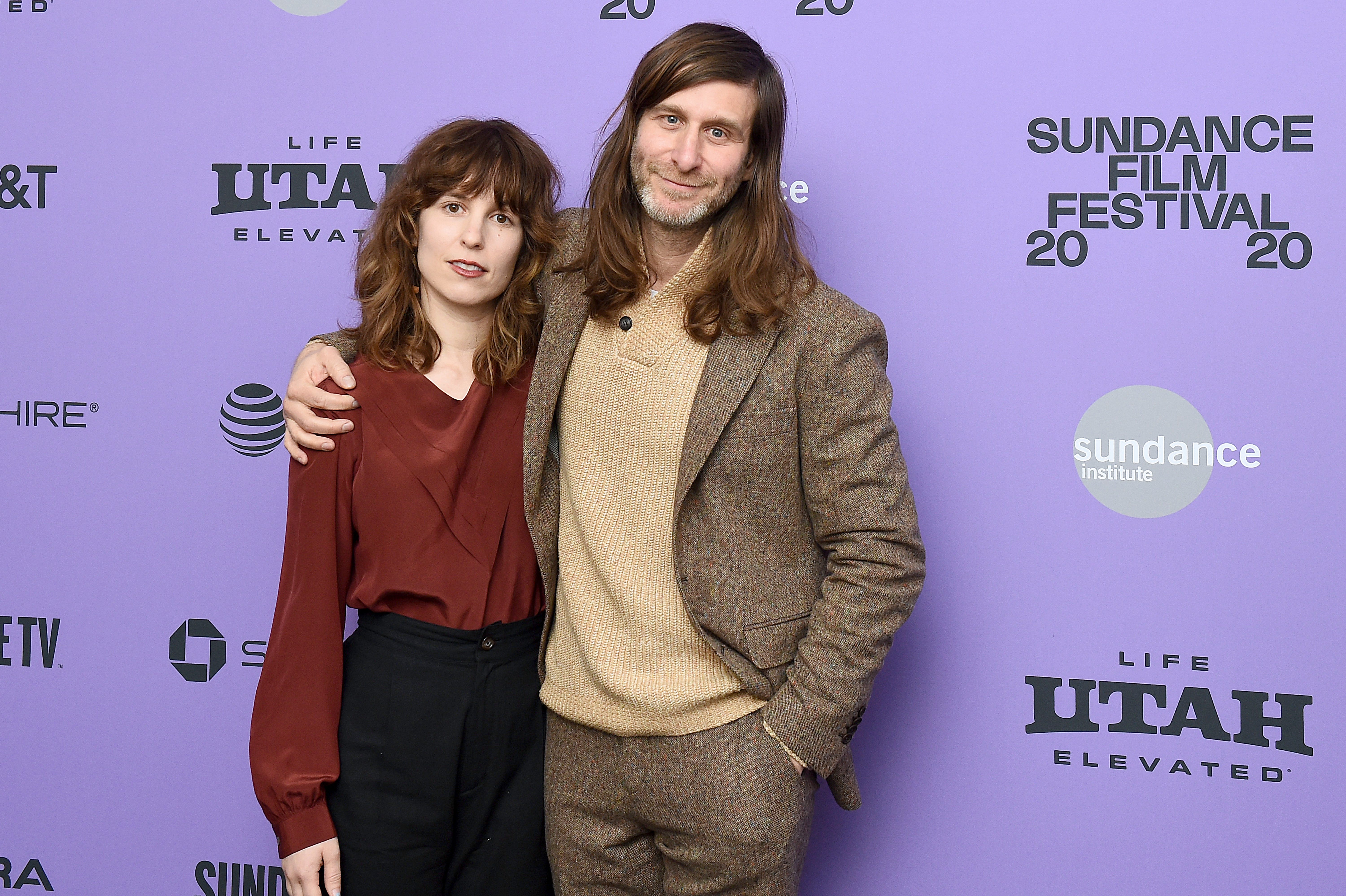
We were really open about it and talking about it a lot, and at first I was going to do an improvised version of the movie with me and someone else. I didn’t know who. And so I wrote this outline, and I showed it to Larry. Larry was like, “I’m dealing with these same issues. It’ll be fun to write this as a script together. I think you can do something more robust with this idea.” And then I just sort of let him do all the work. And he wrote the script.
What you were talking about in terms of how emotionally impactful it is, or emotionally honest or maybe more propulsive is really all to his credit. He just did such a great job writing that script. This was a long time before I made the movie, in 2012. I was just like, “You know, who’d be great in this? Elisabeth Moss.” I had my manager send the script to her agent, and after like six months, Elisabeth Moss finally read it.
Then I flew to LA to meet with her, and we sat and talked, and she was great. She had all these interesting questions. It was my first time sitting down with a professional actor and going through that process, and she wanted to do it. And then we started talking to other actors about playing the role of Beth. A lot of people wanted to work with her because she’s a great actor, and then, I don’t know what happened - she dropped out.
During that time, we were meeting “Beths.” I zoomed with Mackenzie Davis, and we had a very open and honest conversation. We had a really good connection, but she said she felt more like an Anna than a Beth, so I was just like, “Oh, I guess that’s not the person to play that.” We had another version with other actors, that we couldn’t get money for. And after those two versions fell apart, I was just like, “You know what? I got to just pay for this myself and make it for no money. This is not going to happen unless I do it.” I want[ed] to work with actors I feel really strongly about, and Mackenzie had always been in my mind. So then I reached out to her and she said yes.
I cobbled together money from a few places. We made it for like, $75,000. And it was the best time, the best movie shoot. I’m still trying to chase that high of what that felt like, I felt like I had really created a community, and I felt like my job was so easy because all I had to do was let everyone do their best work, and just trust them.
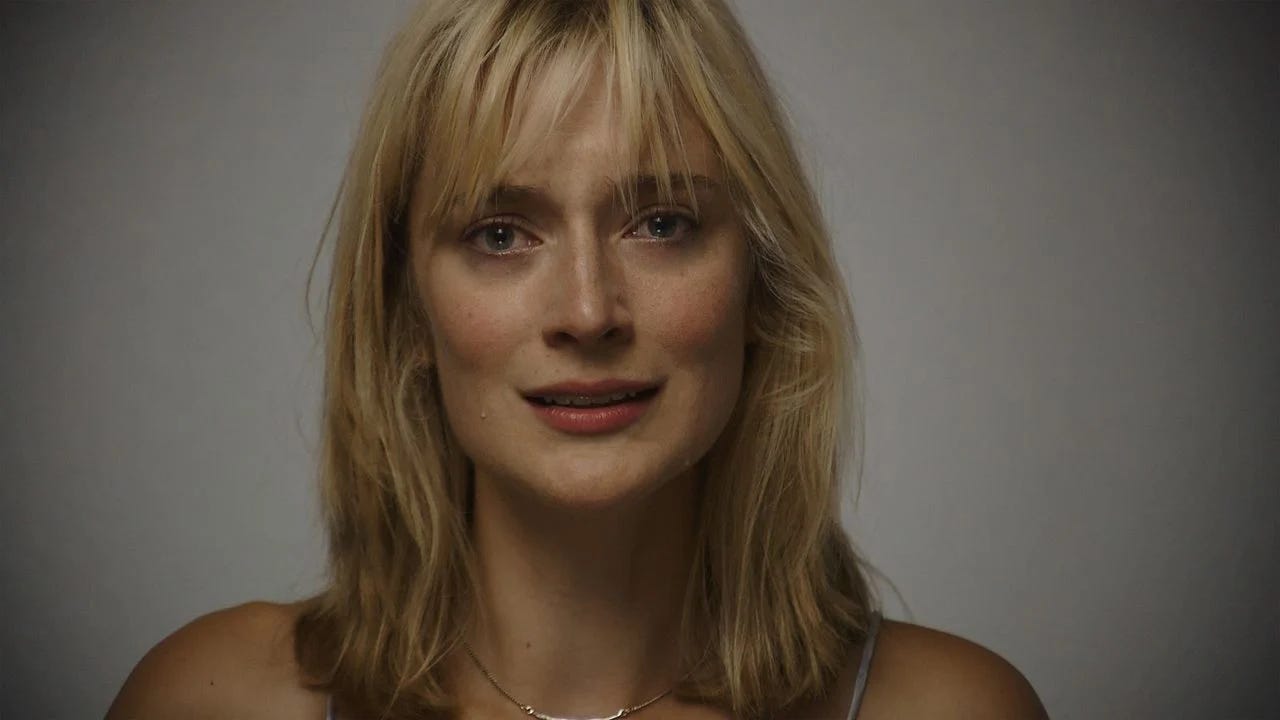
Alex Rollins Berg: This movie has such a distinctive style of editing, and I know that wasn’t originally a part of the plan, but something you discovered along the way. How much did that change the movie from what you originally envisioned?
Sophia Takal: So Zach Clark edited the movie. It’s a really good question. When I finished the movie, I remember feeling like this is the movie I had in my mind - not necessarily in terms of the editing style, but how it made me feel, and the artistry of it.
That Zach was able to bring to the editing was a big part of that. I shot the movie and then I tried to edit it myself, because I had edited Green on my own. But I couldn’t do it. I couldn’t watch the footage. I had just watched Persona for the first time - after I shot the movie.
Alex Rollins Berg: Really? Interesting.
Sophia Takal: Yeah, which is interesting. I was watching the opening of Persona. I was like, Oh, that’s sick. That’s cool. I tried to do an opening credits scene, which was just like a bad version of what Zach ended up doing so beautifully. And I think that sort of helped him understand the tone I wanted in the edit. And then he just brought so much to it.
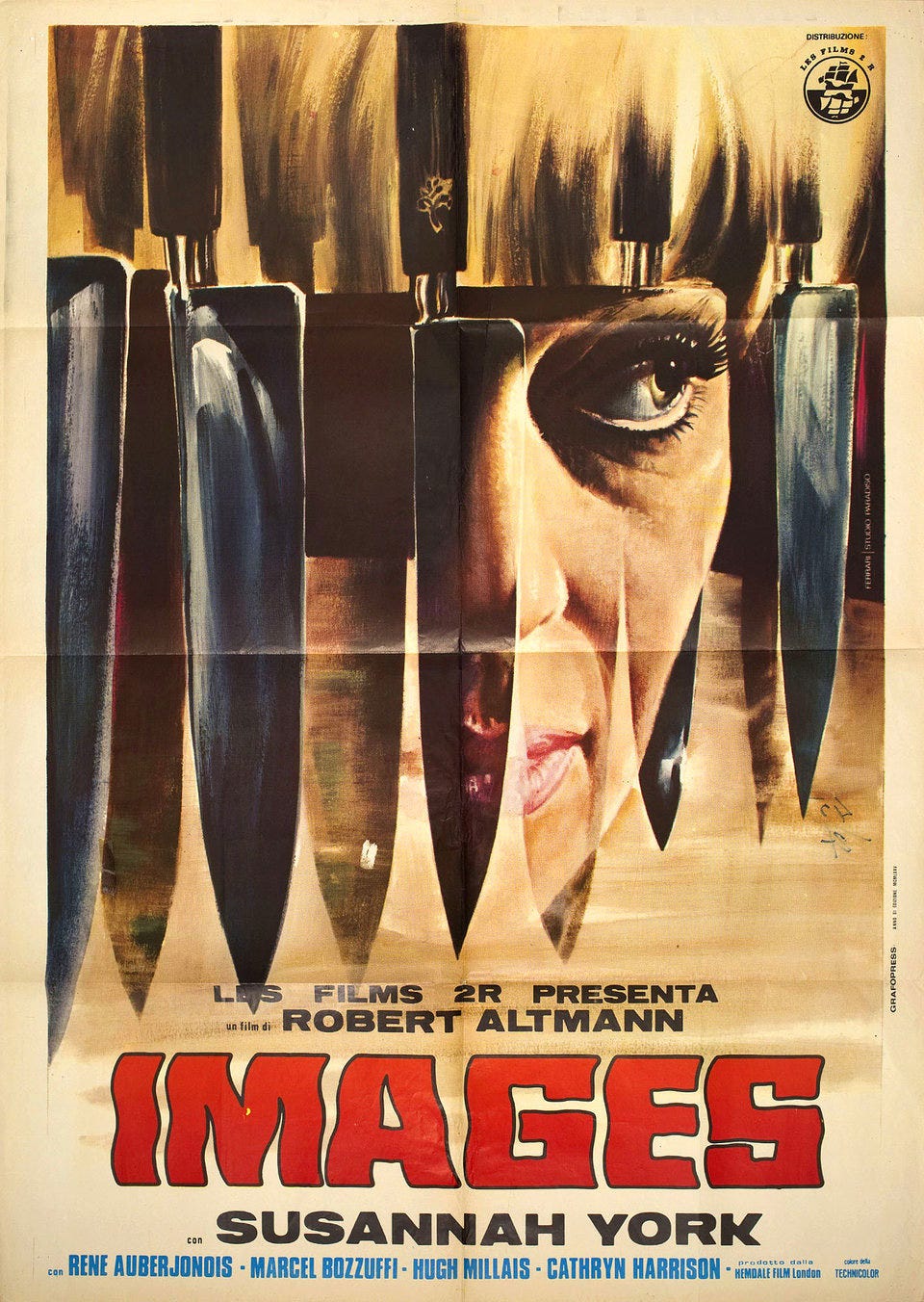
Alex Rollins Berg: You also called out Images in another interview. Another weird Altman movie. I mean, they’re all weird in their own ways.
Sophia Takal: That one is so weird. I would say not even that good.
Alex Rollins Berg: Yeah, doesn’t hold up that well.
Sophia Takal: But it does have great style.
Alex Rollins Berg: It does have great style.
Sophia Takal: And if you watch the trailer for it on YouTube, I had to do a Hulu movie where there was already an editor on board - who was also an excellent, amazing editor. And I showed him the trailer for Images. And I was like, “Make it feel like that, and you don’t even have to watch the whole movie to get there.”
Alex Rollins Berg: I have not seen the trailer, I’ve just seen the movie, so I’m going to go seek that out. Three Women came to mind when I was watching Always Shine. It’s not derivative in any way, but it structurally feels like that movie, and a little bit aesthetically.
I just looked at Always Shine again this past weekend, and it really holds up. A lot of cultural conversations have happened since then. There’s every bit as much professional jealousy as ever, if not more, in the world. And the pain of the characters felt more relevant than ever - including the misery of the quote-unquote successful one, you know, being stuck in a system that is exploitative, ugly, and soulless - and neither really winning. Do you look at that movie and think you would have handled it differently if you were directing in 2026?
Sophia Takal: I haven’t watched it since it came out. So I don’t know if it holds up. Yeah, but I’m going to trust you that it does! I don’t know that I would do anything differently. It was about feelings I was having at the time, so I think it honors those feelings. I don’t feel so crazy jealous anymore. That was a big turning point in terms of my own relationship to other women. I try really hard not to indulge in the scarcity mindset.
Alex Rollins Berg: Bringing it back to Larry, who’s another filmmaker I really admire. I love Black Bear, the script is incredible. There’s interesting shared DNA. Not entirely, but a little bit of a Venn diagram overlap between the concerns of those movies, in terms of looking at acting and performance and deconstructing certain things.
Sophia Takal: That is something else I feel like is more pervasive now even than when I was writing and making Always Shine is a lot of people who, when we were asking for money, were like, “No one wants to see a movie about actors.” And my whole thing was just like, everyone’s performing in their life. And now, of course, everyone’s performing even more because so many people put so much of themselves on social media. And there’s a constant feeling of observation, I think, on all of us, even if we’re not on social media, like there’s a chance that something we do could be recorded.
And I think there’s like this the sense that who we are is being presented to the world, whether we like it or not. I feel like that’s definitely something that’s changed a lot. I think actors are just a really interesting heightened version of what everyone is doing, which is performing some version of themselves, or something that’s totally different from themselves.
Now streaming on Pluto and finer platforms everywhere.
Better yet, own it always on this shiny Blu-ray.
That’s all for the free version. Paid subscribers get access to an extended bonus video, Sophia Takal’s Guest Picks, and this week’s Off The Shelf.
Comments
Nothing yet. Say the first thing.
Sign in to join the conversation.