
Underexposed is a weekly ad-free film publication celebrating great underseen cinema and moviegoing culture. Paid subscribers get exclusive essays, videos, and more - while supporting the future of movie culture.
One way to make people want to see your movie is to not allow them to see it.
At a time when content is being pumped relentlessly into our eye sockets, the idea of making your precious art any harder to see seems absurd. But sometimes, it works.
It worked in 2015, when John Malkovich and Robert Rodriguez made a short science fiction film called 100 Years, which is locked in a vault until its release date in November 2115.
It worked in 2021 with Memoria, the drama-mystery film starring Tilda Swinton. Neon vowed never to release it on Blu-ray or DVD, or allow it to stream on any service. It would only play in theaters in a traveling road show, going across the country for years, one week at a time.1
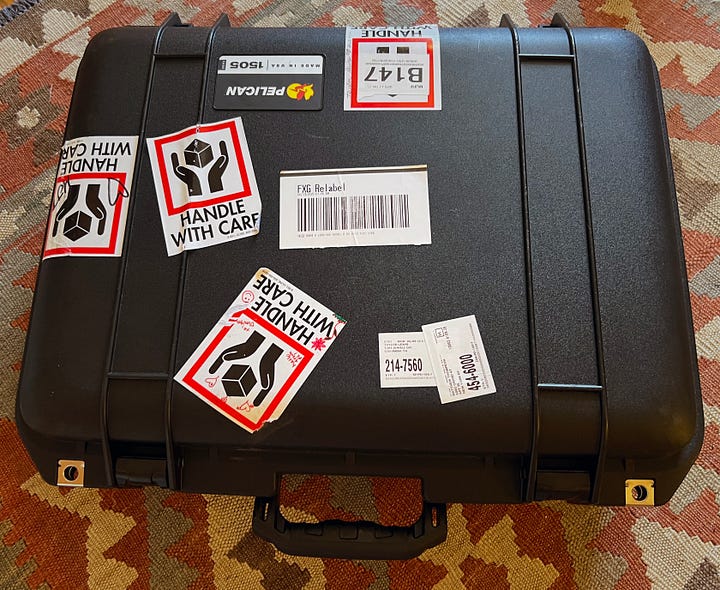
And it worked again last month, when I heard whispers of a Pelican case making its way around New York City.
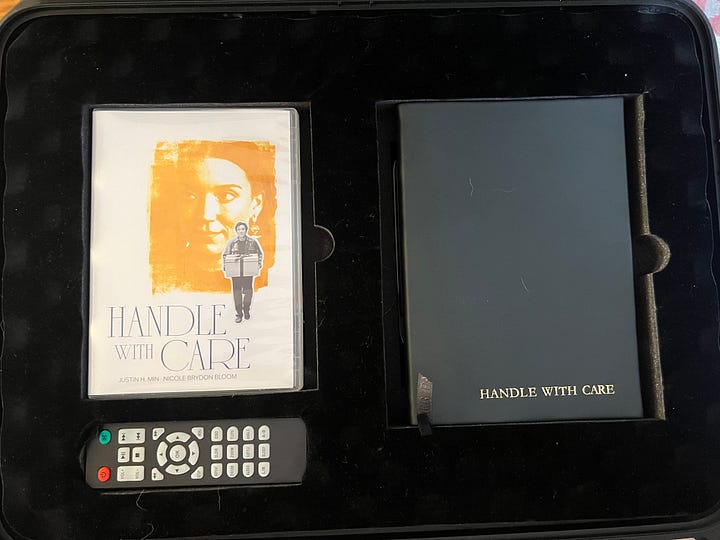
Inside, nestled in laser-cut foam, is a DVD of Handle with Care by filmmaker MJT (Matthew James Thompson). Ahead of its festival premiere next month, the only way to see this lush romantic dramedy is to join a waiting list. When your turn comes up, the previous viewer delivers the case to you. Alongside the disc sits a portable DVD player and a guest book, where you can leave your thoughts for the strangers who will watch next.
Handle with Care centers on Cole ( Justin H. Min), who finds himself suddenly divorced after a brief marriage, and sets about the grim task of returning unopened wedding gifts. The mission slingshots him all over town and into the lives of fellow New Yorkers.
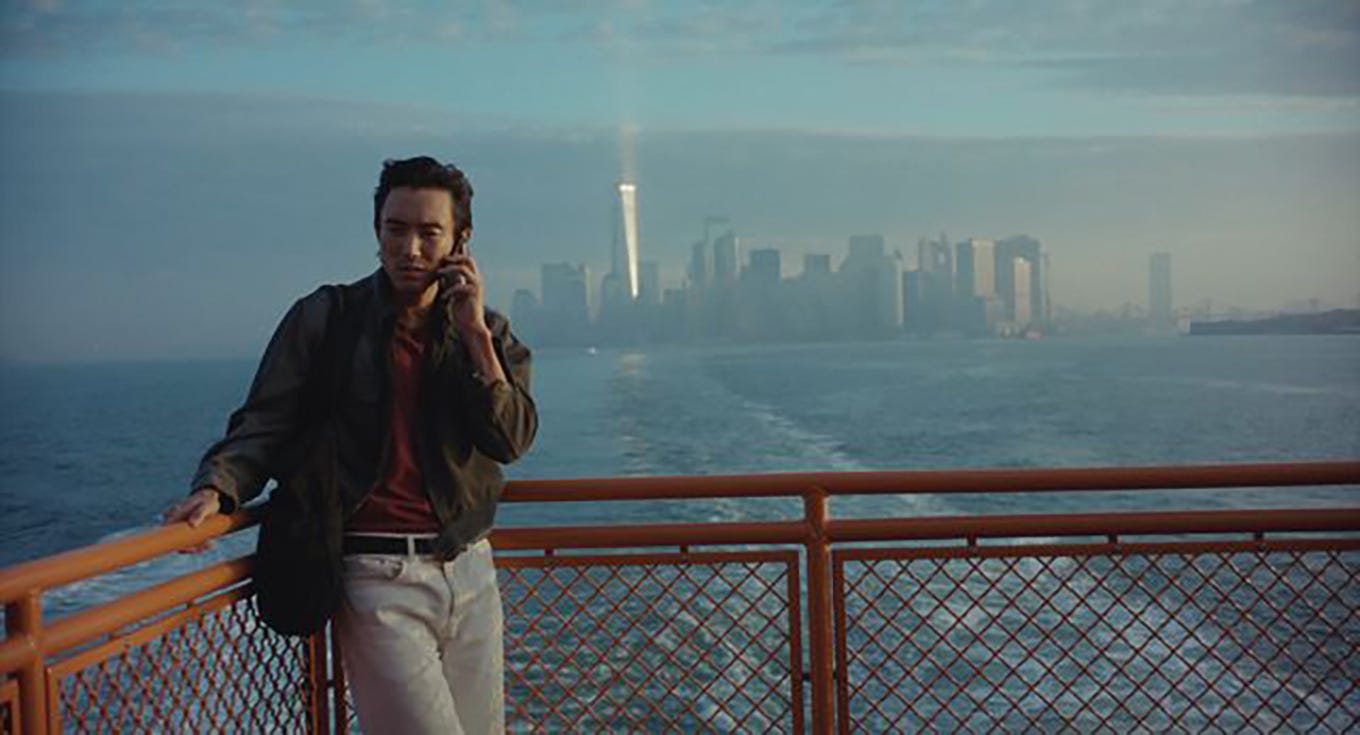
Drawing on personal experiences, and the craft he’s honed as a commercial director, Thompson worked with cinematographer Justin Henning to conjure the vibrant autumnal New York of When Harry Met Sally and Working Girl - right down to a serene ride on the Staten Island ferry.
Like the wedding gifts in the movie, the Pelican case hand-off briefly draws us into the company of others, giving the Handle with Care experience an unexpected layer of metatextual immersion. I spoke with Matthew James Thompson about the making of Handle with Care, the significance of Shark Week, and the power of scarcity.
But first, the news:
The collapse of audience capture? Ted Gioia, whose writing lured me to Substack almost two years ago, has been analyzing Netflix’s declining audience base, and sharing his predictions for the future. There is a wider consumer revolt against extractive business models, he alleges. Open platforms like YouTube and Substack will flourish, while walled gardens like Netflix will wither. “We should all celebrate. Because this is good news. It means that the smartest thing these companies can do is release the rest of us from captivity. And if they don’t, we will liberate ourselves.”
More good news (can you believe it?) - in the week since my interview with Elizabeth Joyce went out, the campaign to buy Letterboxd for the film community has blasted past its $100,000 goal, with one day still remaining. If you haven’t supported them yet, I encourage you to toss some copper in the war chest. Going up against tech and studio giants to save this precious film discovery platform won’t be easy.
Let’s round it out with another item of good news - Alamo Drafthouse has just announced Alamo Exclusives: “Many of the best movies we wish you could see are the ones you’ve never heard of. Each year, remarkable films premiere at festivals. Some become the next big acquisition story, but others don’t quite fit into the traditional mold and never make it to screens. And so we're proud to launch Alamo Exclusives, a new direct distribution program dedicated to bringing standout independent films from the festival circuit to Alamo Drafthouse theaters across the country.”
A conversation with writer-director Matthew James Thompson, edited for clarity
Alex Rollins Berg: This is such an exciting project - the delivery system that you’ve created around this film is a topic unto itself. But before we talk about that, we should talk about who you are, and how you came to make this movie.
Matthew James Thompson: Yeah, absolutely. This is my first feature. It’s a New York-based romantic dramedy. I often use a comparison of something like 500 Days of Summer, which is sort of a romantic comedy, but very artfully done - maybe an aspirational comparison, but yeah. It follows this character in the wake of a short-lived marriage selling unopened wedding gifts online.
I’m always struck by the kindness of strangers in New York. You can be on a subway train and have a profound conversation for 30 seconds with someone, and then never see them again. And so the strangers that our character meets along his journey through selling these items kind of reframe his outlook on the world.
Alex Rollins Berg: Having watched this film now, I was just struck by the quality of the imagery that you were able to capture, the actors, and the plethora of incredible New York locations that you were able to procure. How did you put all of this together?
Matthew James Thompson: Oh, man. So it’s funny, our production budget, I guess I’ll just say, was under half a million. Our production budget was around $300,000. And then we had to raise a little more for post. And it’s one of those amazing things where I had been trying to raise money for other movies and this script had kind of been kicking around of ones I was working on. And I always really loved the subject matter. I had this realization that of the three scripts I had that I thought were in a good place, that this one felt like we might be able to do for less money.
You know, there’s all these little tangents, moments where our character goes [into] a Wikipedia wormhole, into a subject like wedding registries, and we use archival footage to tell the story. Each one of those is screen time that we didn’t have to shoot.
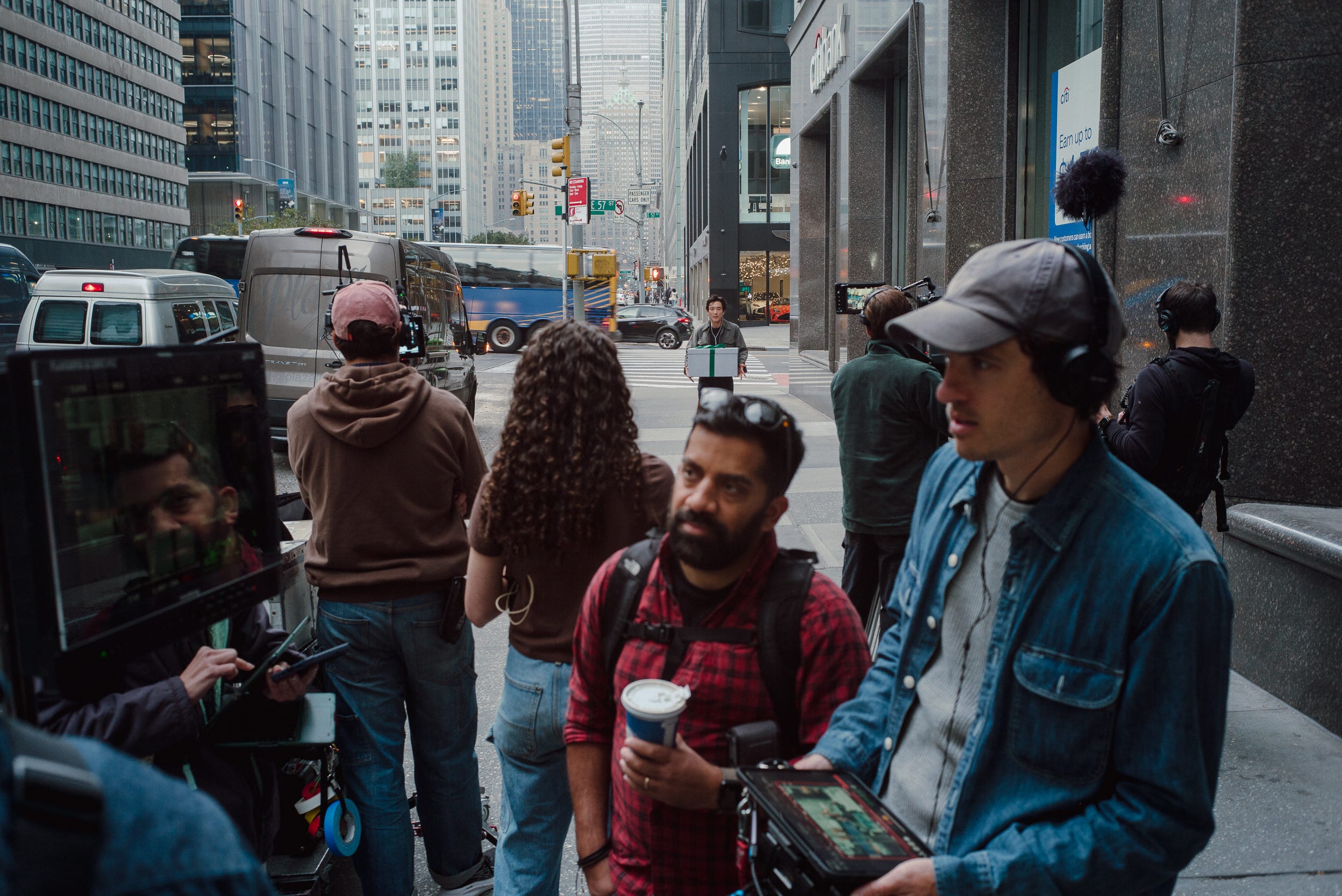
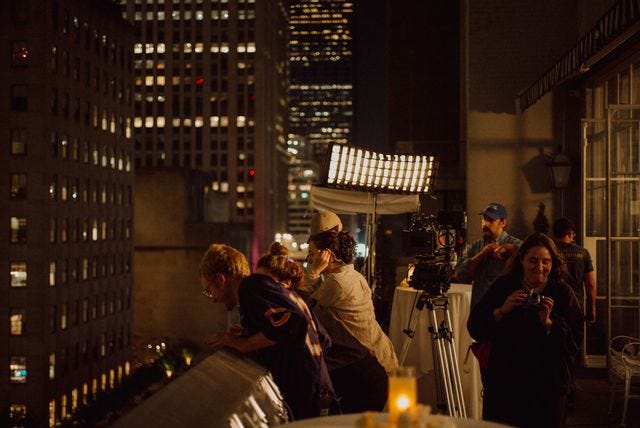
When I was thinking about our 15-day schedule and these sorts of things, I was like, oh man, all these little things make the film feel a lot bigger than it is. As far as locations and the look, I have to call out Justin Henning, our cinematographer, he had such buy-in on the story. He loved the script. He was able to get that look with like, I think his crew was three people. It was just unbelievable. And even Justin Rosini, our location scout, and our production designer, Emma Cantor, everyone came in and really had buy-in. And so I think that because of that, it really did - I mean, it’s so overused, but it really did feel like a little film family where everyone was like, “We’re in this together.”
Alex Rollins Berg: I know you had a great team, but you’re at the heart of that team. You’ve done a wonderful job with this movie. It’s clear you have a background in crafting visual storytelling. And I understand you were a commercial director, but I want to know how you got involved in movies in the first place and a little bit more about your journey.
Matthew James Thompson: Growing up, I did always love movies. When I was really little, I became obsessed with Superman. My mom found those Christopher Reeves movies, and they were kind of classics, even when I was a kid. That VHS is probably threadbare somewhere in my parents’ basement. And then there’s also a time I remember being a little kid and going up to visit my grandparents in Maine, and my mom and my grandma went to see, like, a local theater production. And so I was just hanging with my grandfather in this cabin in Maine. And he loved old Alfred Hitchcock movies. We watched Strangers on a Train on Turner Classic Movies, and they would it was almost like VH1 Pop Up Video, which now I’m dating myself for so many people who don’t know what that is. But they would show all these little tidbits about how something was done. You know, how at the end, the carousel going really fast, they were supposed to speed it up and the guy was supposed to crawl under, but he couldn’t. So it was actually really dangerous. And I started really thinking about things in a different way.
And then I found skateboarding. It’s funny, obviously there’s the X-Games and now the Olympics and that side of skateboarding, but the true brand of within skateboarding, it’s much less about going to a contest and much more about video, made in very close collaboration with a filmer. I would almost say it’s closer to ballet, where there’s an incredible amount of athleticism, but there’s also this like artistic merit intrinsic to the activity.
And so just being immersed in skateboarding throughout all of high school and practicing making videos, editing videos with friends, that was my film school. I didn’t end up going to film school, but I went to college and studied art history and media and communications. And then after, started doing PR work and started learning more like that.
There was an industry around advertising, and that’s when I started editing commercials and then working towards directing commercials. But I think my goal was always to make movies. And it always takes longer than you think to kind of like transition into it. And now having done the first one, I hope that there’s more to come.
Alex Rollins Berg: Pre-releasing a movie in 2026 on DVD to a lucky few - I think it’s brilliant. Tell us about how you came to it, and what it’s been like.
Matthew James Thompson: We are still searching for a kind of traditional distribution. I mean, obviously the goal and the dream is to have a theatrical run, however small. So it really is more a preview to get the word out. I think where it came from was, we were submitting to film festivals, and we now have a few lined up. But in the beginning, your heart is set on Sundance and South by Southwest, these really big tentpole festivals. It’s incredibly difficult to get into these festivals. And when I really thought about it, as much as my ego wanted to be there, and walk the red carpet and all these things, what I really wanted or needed for the film was just some general awareness to get people to know what it is.
So I had this idea to just have a DVD. A lot of people are talking about physical media. It’s funny - early on, people were like, “Aren’t you worried that the DVD would get pirated?” And I was like, I don’t even think people have DVD players anymore. So we made a case, the Pelican case, because we want it to be durable and weatherproof. And then inside, you open it up and there’s one copy of the DVD with some behind the scenes photos. There’s one notebook, where people can sign in. And then on the second layer beneath it are all the cables for to hook up a DVD player and a small DVD player - for anyone who has gotten rid of theirs. The reason that it always felt like it tied back into the movie was, of course, our character is carrying these items all over New York City and selling them on Craigslist and Facebook Marketplace. So we built a microsite which is very derivative of Craigslist, where you can sign up to get the DVD. So it’s a very democratic approach. And you can also hand off to the next person through the website.
I remember hearing old stories about Shark Week for Discovery Channel, and they would send to advertising media buyers an inner tube with a hole cut out of it or something, you know, like a bite mark in it. They would just send like all these things that felt reminiscent of Jaws to promote directly to the person. So I like this idea of something physical and tangible in the world, and I love this idea of unexpected people meeting, like someone who’s only connection is this film. And then they’re coming together and, I don’t know, maybe they meet for coffee.
The case is kind of floating around New York now. And I think I’ve been really I’ve been surprised and excited by the response, to it, how many people have signed up, and how many people want to be a part of it. Also, I think there are areas where if I were to do it again, I would work out efficiencies - it took me a few weeks to realize that I should arrange the spreadsheet by zip code so that, like, if it gets to you, Alex, that the next person is close by, because a couple times it was like, you know, someone’s in Red hook.
Alex Rollins Berg: I was going to ask what the response has been so far. I mean, I think one of the most wonderful features of this Pelican case delivery system is the guest book, where you write a little thing, much like you would if you were staying in someone’s bed and breakfast or something. Have you perused those comments yet?
I have, there’s been a couple times where, for instance, like when, you know, two people were really far apart where I just said, hey, you know, I’ll hand it off and I have it for a day and I can look at some of the guest book responses. And that’s honestly my favorite part too. It’s sort of wonderful that it can’t be shared online or socially. So it’s not something that we’re ever going to post photos of. It’s really amazing that not only are they taking the time to watch the movie, but they take the time to write something really thoughtful and lovely. Any time someone is getting the case, I always say to make sure to set aside some time just to even read other people’s, even if all they want to do is sign it.
Alex Rollins Berg: It speaks to something that’s really important now. We all have our criticisms of the world that’s been built over the last 25 years. But we have backed ourselves into a corner, in a sense that we built a world where the internet platforms are bad, but they seem like our only option. To do something like this is courageous - a small, gentle reminder that there is a world outside of what happens online. It can feel transportive to people.
We both live in New York and, you know, you can make a lot of fun of these people that, like, line up for yogurt or whatever. But if I’m being charitable, I want to believe that those people are seeking sort of what you’re providing, which is an experience with friction, where it’s not easy and instant. And in its lack of ease, it gives the experience meaning, weight and significance. You’re creating that with this movie, and it’s the perfect type of movie - I mean, it’s a callback to a different time. I think Courtney Romano called it “Nora Ephron-coded,” which was fun.
Matthew James Thompson: I have found people to be profoundly good. Like it’s actually shocking how, you know, everyone’s so worried about “how’s New York under X administration, or after the pandemic?” And when you’re here and you’re with the people, of course there is crime, there is, there are these things. But the way the news and social media propagates it, you’d think that you can’t walk 50 feet without getting tripped or punched or mugged or something. Even this leap of faith of being like, I know roughly where the case is, but there is a leap of faith that I just trust people to do the right thing. Right?
Alex Rollins Berg: I love the film for that reason, too. Just the basic action that he’s taking - trying to offload these unopened wedding gifts to strangers, there’s a coldness, a transactional quality to that. But also there’s an extreme vulnerability. And I love to be let in on that vulnerability and observe the way that that transaction sometimes blossoms into a real human connection.
Matthew James Thompson: Oh, man. Yeah. I appreciate that that resonated with you. I think, you know, living in New York, you have to compile things into an apartment, everyone’s living on a budget and trying to make it. And but they care about their space because space is limited. There’s so many times where I’m going somewhere in an Uber to get a coffee table that I found that I really like, and then before you know it, you’re in deep in Queens and you’re looking at this guy’s motorcycle in his garage that he’s been fixing up because his brother always wanted it or something. You can’t make this stuff up. It’s so wild. But again, to me, it’s one of my favorite parts of New York, you just stumble into these interactions - if you’re open to it, and you’re not closed off to it. That’s another big theme of the movie. Our character starts very cynical. He believes he knows everything. And as you said, those layers of cynicism, which I think have been kind of programed into us through having access to so much information, trying to get back to a little bit of that childlike wonder of like, “I don’t know what’s around the corner, but I’m going to assume it’s something good.”
Alex Rollins Berg: Tell us about the festivals you’re going to, if you’re able to tell us. Where can people see Handle With Care?
Matthew James Thompson: So on August 8th, in just a few weeks, we are premiering at the Rhode Island Film Festival. It’s Saturday, it’s actually closing night of the festival, which is really wonderful. And we are playing at Avon Cinema, which is this awesome old movie theater that’s actually been in continuous operation under the same family since 1938. Which is very cool. I’m actually originally from Providence, so it’s also sort of a lovely homecoming, to go back and be able to show the movie there.
Then towards the end of September into October, we are playing at the Portland Film Festival in Portland, Oregon. There’s a few that we’re still waiting to hear back from. In a dream scenario, we would release it around Valentine’s Day for some sort of theatrical window. So that’s our goal.
This week’s Underexposed Movie Pick:
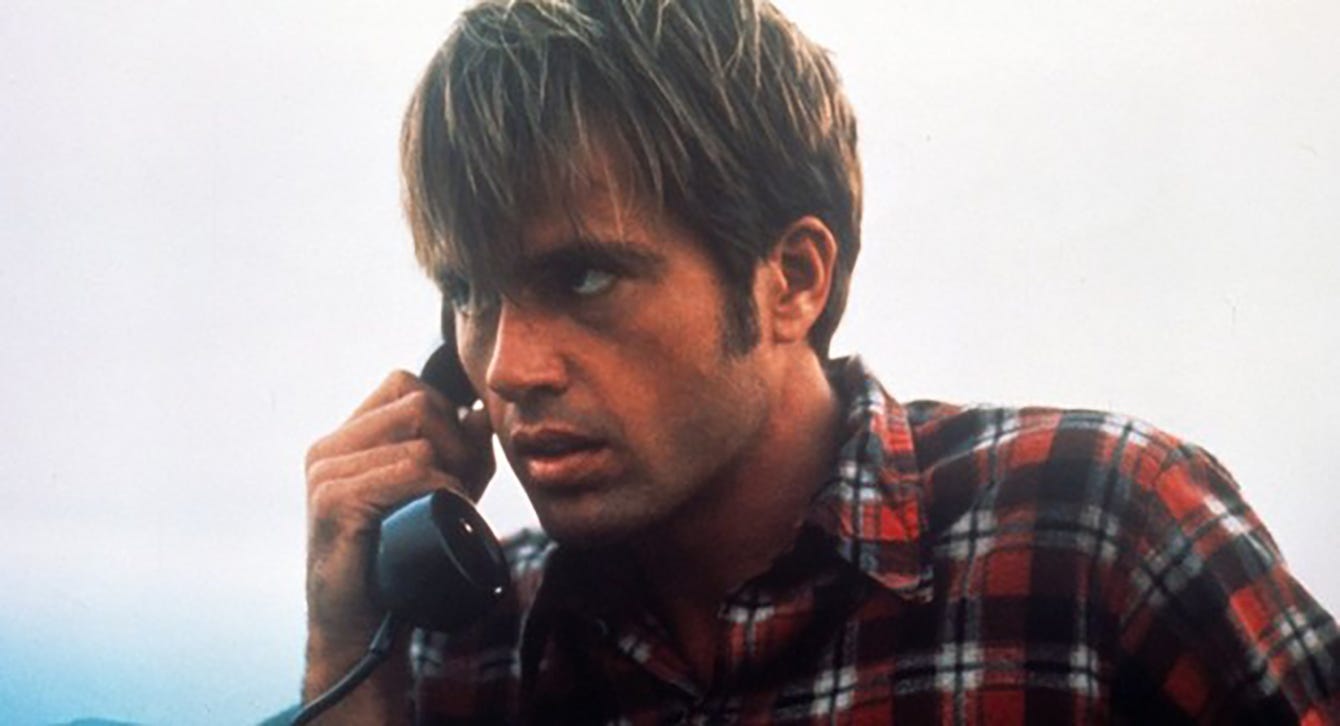
This movie was also released under the title Handle With Care, so it seemed like an appropriate week to trot it out. After making his first three films with Roger Corman, Jonathan Demme struck out on his own, transporting us to Union, Nebraska, where a young fella named Spider (Paul Le Mat) repairs CB radios for a living. A crude, squelchy precursor to the internet, CB radio signals are populated by colorful voices broadcasting under monikers like “Papa Thermodyne” and “Chrome Angel.” Citizens Band is a shaggy, sweet ensemble comedy that chronicles the hopes and delusions of small town Americans. Written by Paul Brickman (who went on to make Risky Business), I rented this movie years ago from Kim’s Video and haven’t seen it since. But if memory serves, it’s a fun one, especially if you’re a fan of Demme’s later work. You can rent it here.
That’s all for the free edition. Paid subscribers get access to a bonus video, MJT’s Underexposed Guest Pick, and this week’s edition of Off The Shelf.
Comments
Nothing yet. Say the first thing.
Sign in to join the conversation.