
For those of you who prefer to read on paper (or e-reader) rather than in your Substack or email app, I have converted this essay into an easily printable PDF.
A version of this story was first published by On Landscape magazine in February 2025.
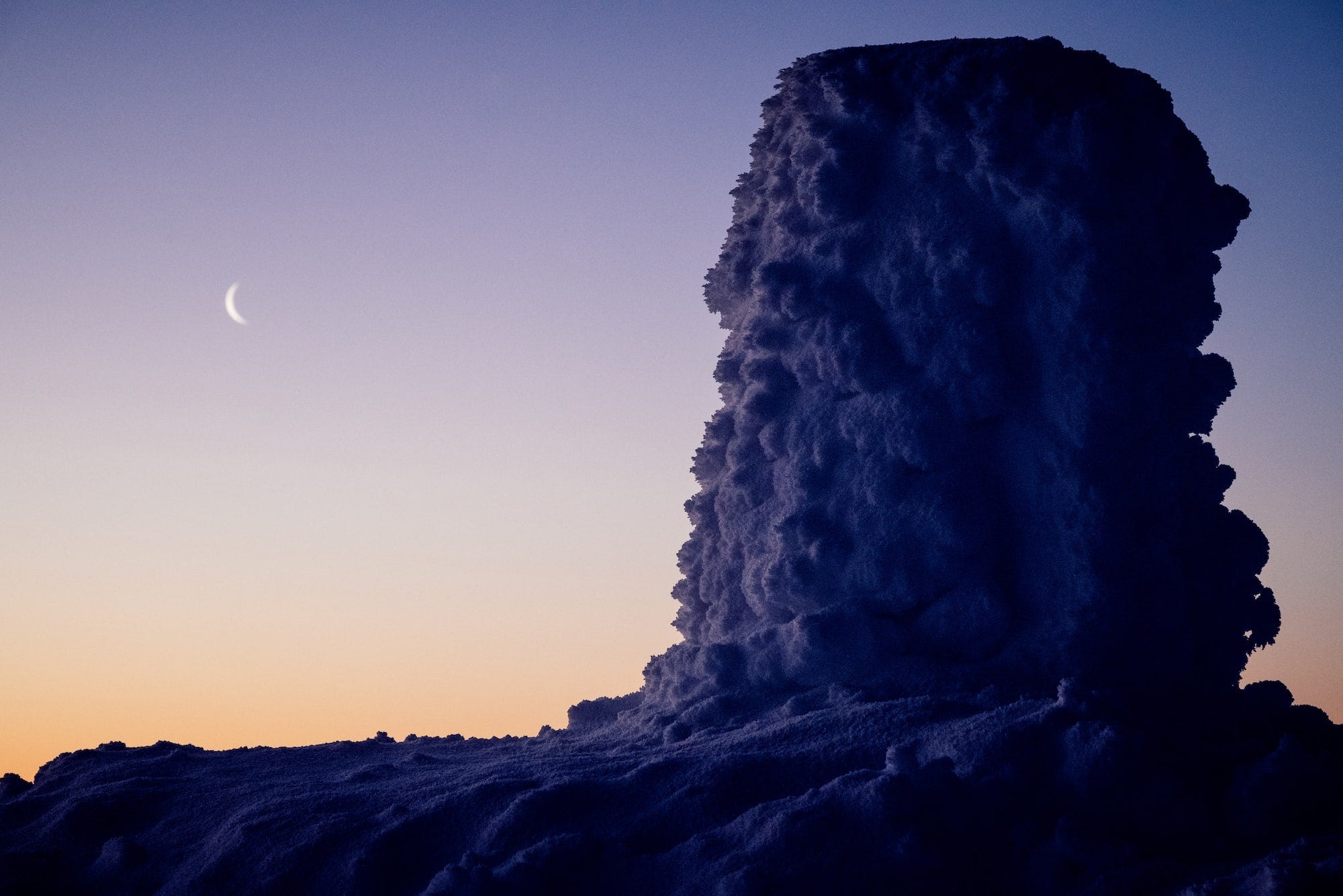
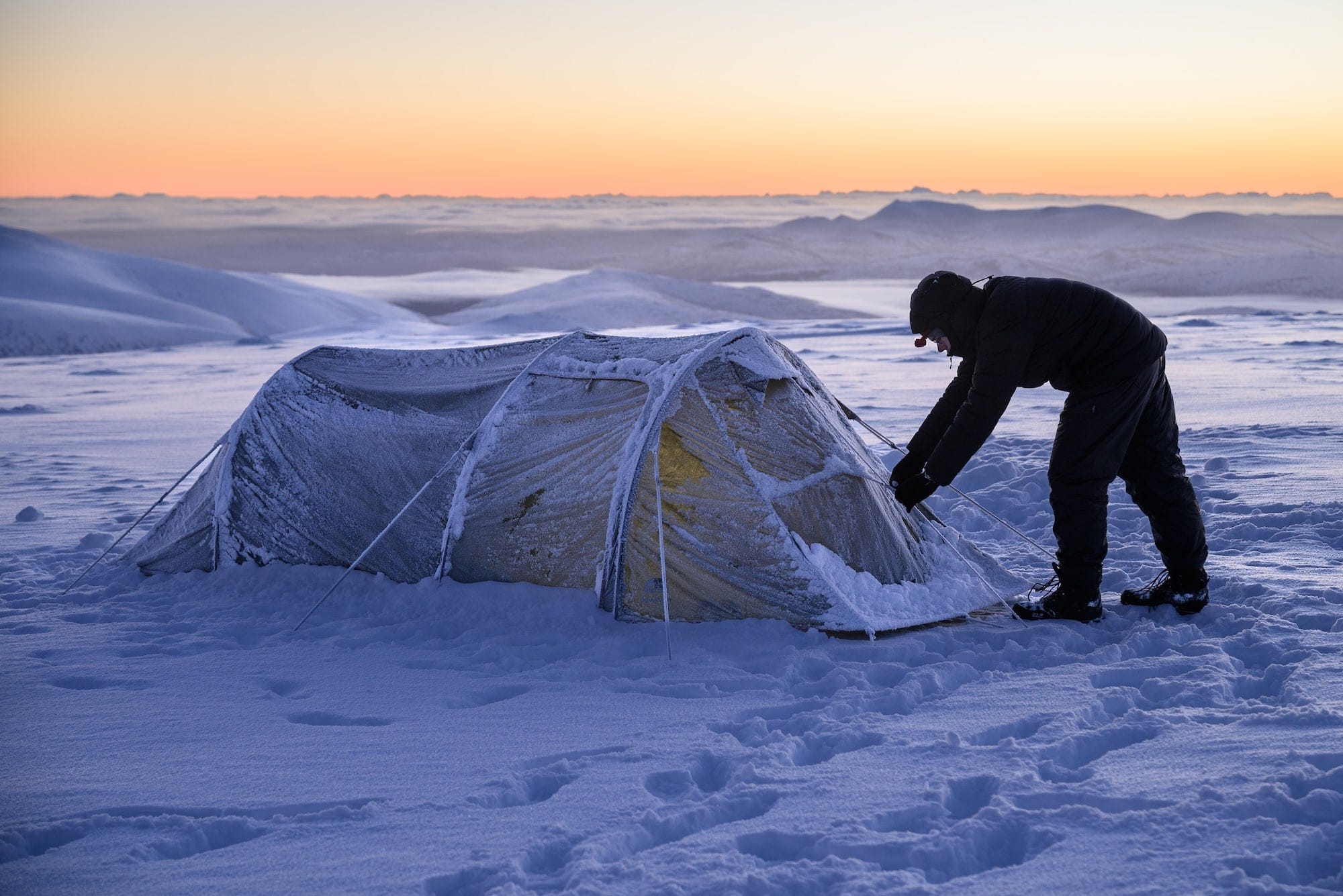
It began when my stove exploded on the summit of Ben Macdui in the Northern Cairngorms, Scotland, late on one freezing evening just after New Year 2024.
I’ve always found Ben Macdui an enigmatic place. Although it lacks the sheer grandeur and hint of remoteness projected by Braeriach, its neighbour across the Lairig Ghru, Macdui is just far enough from the ski centre to feel like a place with an identity of its own, and there can be a delicate aura of… something… around its summit. Would it be stretching things to say an awareness? A personality? Especially around dusk or dawn, the place’s character is tangible. Why does it keep drawing me back? What does it want, and what do I want while I’m there? What experience is it I’m seeking?
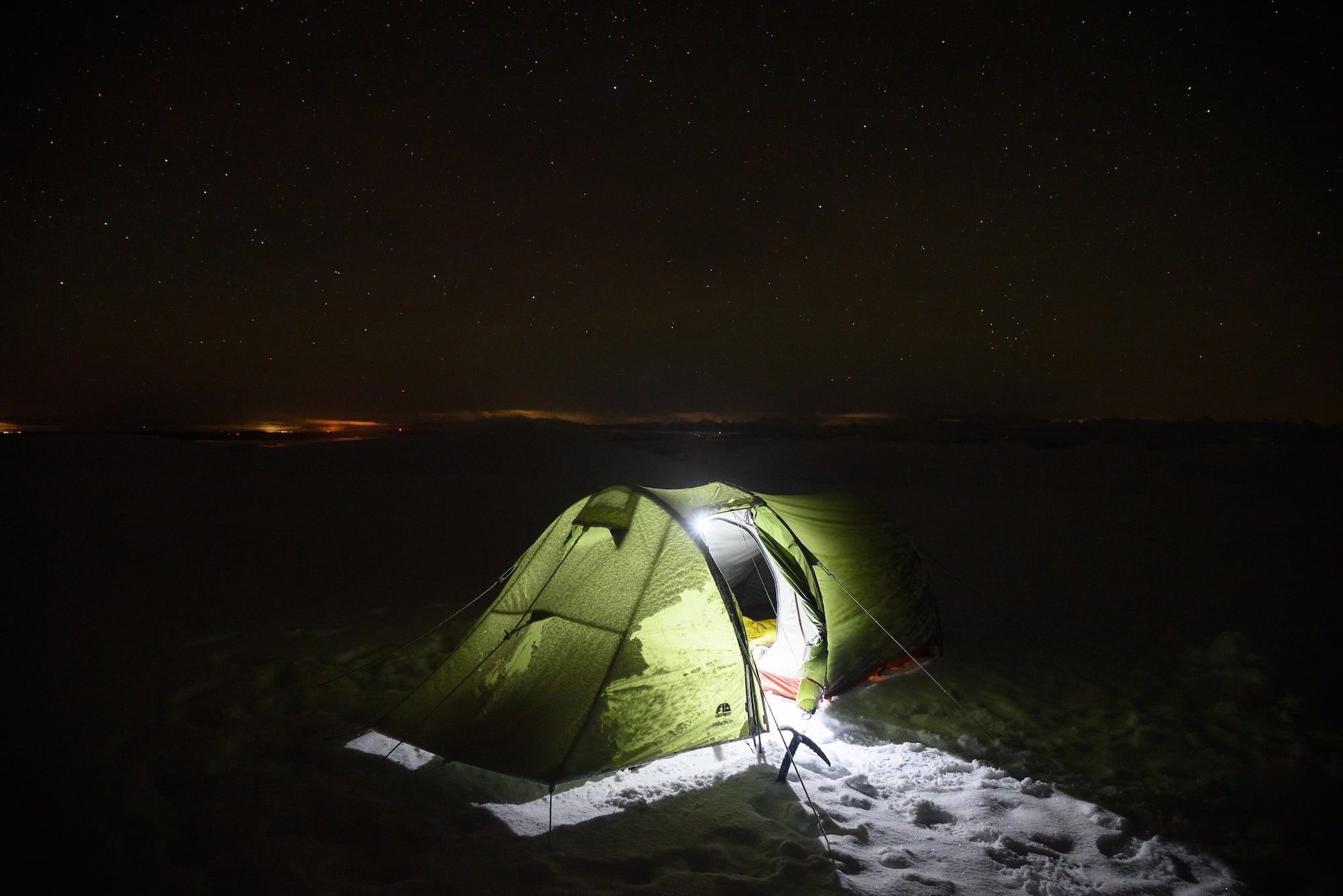
I had felt a little vulnerable a couple of hours before in the winter twilight as I stamped out a tent platform in the snow. My plan: to camp on the summit in deep winter conditions, then get up early to photograph the dawn light show over Braeriach and its accompanying peaks away to the west.
Actually, that’s not quite true. I’m going to make an important distinction. Although I’d gone there with camera and tripod, and fully intended to return with some quality images, photography was not my main goal.
My philosophy of photography has evolved a few times over the last decade, but there’s a core question I keep coming back to: am I doing a thing in order to create images, or am I doing it to have an adventure and maybe create image opportunities along the way? Connected to this, what does adventure even mean now that it has become so thoroughly commoditised and commercialised? What higher purpose does it serve, if any?
On this summit camp, as I sat in my tent porch swaddled in my down jacket and heard the spurt of fuel from my stove’s faulty valve an instant before it turned into a fireball, such thoughts were far from my mind. I wasn’t thinking about the anticipated dawn light show next morning either. I was thinking ‘Holy hell, my tent is about to burn down and I’m in the middle of the Cairngorms after dark.’
Instinct saw me through the next few seconds. Luckily it was a calm night and I’d left the tent door open, so I booted the conflagration out into the snow where it burned and spat like some kind of tiny but furious demon. The noise was like nothing else – a miniature rocket trying to take off – and I was shocked at how quickly this silent and sacred place had been desecrated.
My tent was pitched just behind the summit cairn and a few moments earlier I’d been looking out at a monochrome field of stars twinkling in the frosty air. Serene and eternal. Now a hellish orange strobe gave flickering form to my surroundings, imposing a new nightmare reality over Macdui’s gentle aura. The violence of it, this instant monochrome to colour switch, felt like an assault in such a place.
Now my fear was that the gas canister would explode. I crouched on hands and knees into the night and approached the demon. It had already begun to melt its way down to the bottom of the snow pack, like a nuclear reactor going China Syndrome. So I kicked snow into the hole until the fire went out and peace returned, broken only by rising steam and the stink of burnt plastic and hot metal.
Back in my tent, I took inventory of my food and liquid water supplies. Without a stove to melt snow, would I be able to stay out in the mountains for several days, as I’d planned? I decided that if I could prevent my bottles from freezing, and maybe top up with liquid water at the Fords of Avon, I could still complete my planned route.
I couldn’t help thinking that Macdui had communicated something to me. A subtle but firm reminder of my place – a warning that I had been careless to bring such violence here, and that I should be more respectful.
I’ve been told that I don’t really understand colour, and that’s a fair observation. In art lessons at school, I exclusively drew in pen and ink. I have a fondness for ancient computers from the monochrome era because I find the colourful interfaces of modern computers chaotic and overstimulating. And as a photographer, I feel most in my element when shooting black and white film. Something about the simplicity of the medium just fits how my brain is put together.
Perhaps this is one reason why I find the winter mountains so visually captivating. Snow is the great simplifier; colour can so often feel distracting, even indecorous.
This doesn’t mean that I exclusively – or even mostly – shoot black and white in the winter mountains. It’s just that the truth of my experiences there rarely feels like it can be communicated through colour. As I’ve refined what photography means to me, I realise that a core of human experience is the essential component; I must be truthful to what I experienced and felt, who I was on that day, the character of the place, and the story of the moment. And because I struggle to see in colour, it’s rarely part of this truth. At best it’s incidental.
The existence of AI-generated fake photography has crystallised my views on all this. In AI mimicry we see content without communication, media without emotion – imagery, in other words, robbed of human experience.
Experience is what makes us human; what makes us conscious and therefore real. When I climb a mountain and place my mind into a condition receptive to making photographs, I am not primarily creating content – for me the resulting image is secondary. What I’m really doing is seeking a human experience, a formula of self and place and emotion, through which I assert that I exist as a being outside the reach of the Machine1.
In the resulting photograph I communicate that moment of experience to another person; it’s a conversation in which both artist and viewer expresses their reality. In the entirely dead voice of AI I see only an assertion that the Machine exists – and that it exists to consume human experience, consume us, in order to reinforce its own reality while undermining ours.
In the disembodied digital world of the Machine, we exist only as media in a place outside embodied experience, outside time and place. I make pictures – and often deliberately avoid posting them online – partly because it’s a way of resisting that.
Perhaps this is why I’ve grown sensitive to esoteric things like the ‘voice’ of Ben Macdui. It’s not a very Enlightenment-friendly idea, is it, that a mountain has a unique character, perhaps even a soul, and now seeks to chastise me in some way for exploding a stove on its summit – for introducing such a profane burst of colour in a place and time where none should exist. But this is the truth of my experience that night.
Colour, then, was on my mind the next morning when I forced myself out of my sleeping bag in temperatures well below freezing. My watch read 4.30am – hours yet before first light, and ample time to wander around the broad plateau with camera and tripod and open senses, waiting to see what I would see.
My first job was to dig my dead stove out of its temporary grave in the snow pack with my ice axe. I found it frozen into a great mass of ice that had to be hacked free. I shook the gas canister, but could hear no liquid sloshing around inside. It had either all burnt off or more likely leaked out via the fire-damaged valve after the fire had been extinguished. I wrapped the mess in a plastic bag and buried it in the bottom of my pack.
In leaving no trace of my crime, I hoped that I had proven my respect, done enough to apologise to the spirit of the place. What now would occur? All I knew is that I couldn’t force it; I had to be receptive to experience it as it unfolded. If that meant no photos, well, that’s par for the course in the winter mountains. And probably no more than I deserved.
But that’s not what happened.
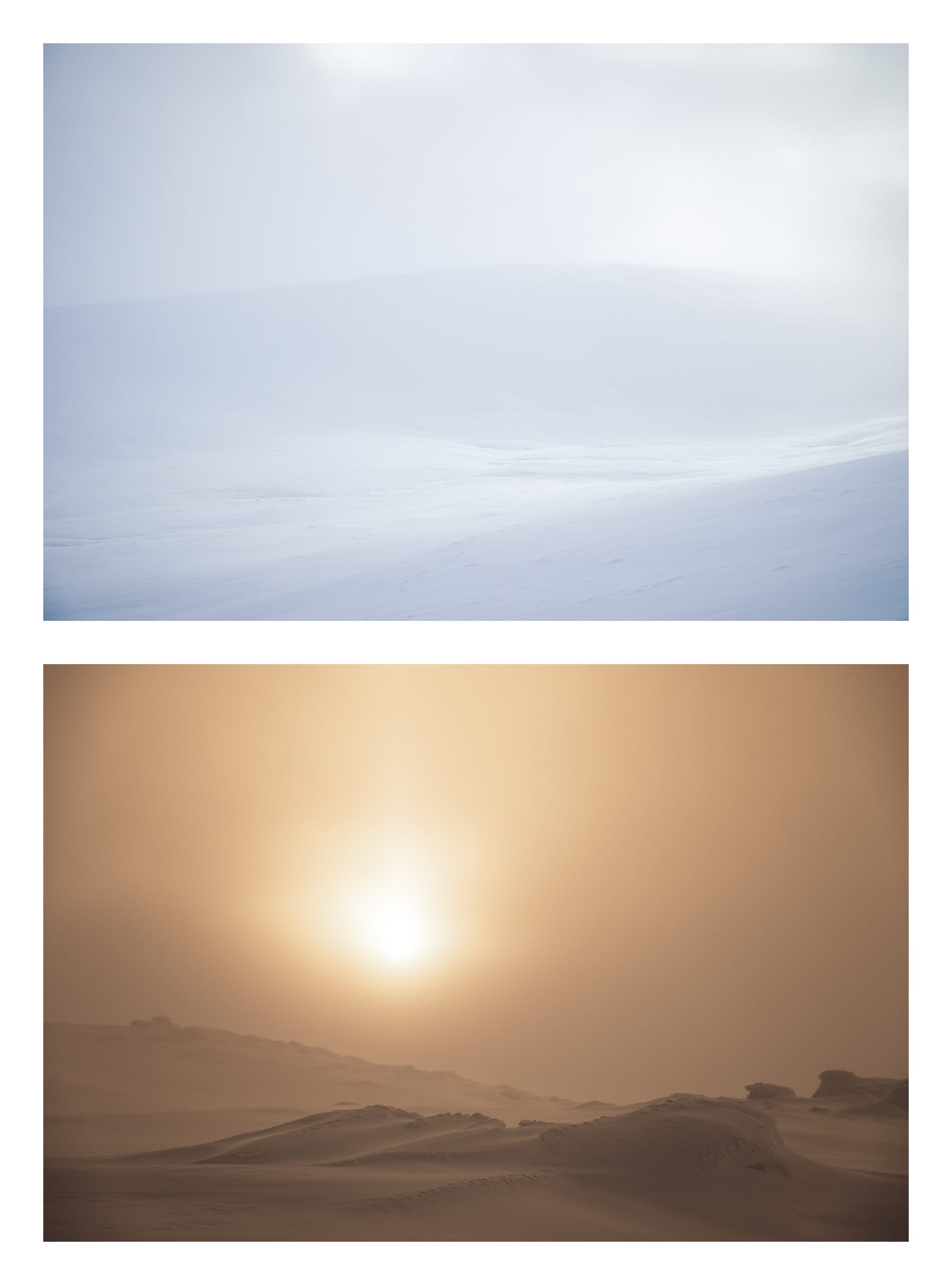
The colours that blossomed over the coming hour or so were some of the most intense and beautiful I’ve ever felt. Yes, felt – for those colours seemed to go far beyond the sense of sight, infusing each mountain around me with a secret emotional fire, as if each had chosen to reveal some rare and precious truth to me in a moment that would be shared with nobody else and could never be repeated.
For once, colour was no distraction. Colour was itself the experience, making all else immaterial. It was as if the part of my brain that usually lay dormant – the part that understood colour – was being awoken for one morning only.
The mountains are wise and generous teachers. This, perhaps, is one of the greatest gifts of photography; that it affords these valuable opportunities to experience things we otherwise never would, open our souls to new emotions, place our minds in a state of gracious and observant curiosity. A flow state, in other words – the most human thing there is. The final image is only part of this conversation between the world and ourselves. Being there, doing the thing, learning the lesson, is everything.
The resulting images almost don’t matter, but nevertheless I’m very happy with them. I processed carefully to bring out the fragile yet bold shades of magenta, gold and blue. For once winter colour is the subject. And in the mountain days ahead I found that my ability to see in colour did not desert me. What a gift.
I have never been more real than that morning on Macdui’s summit. And Macdui has never been more real to me.
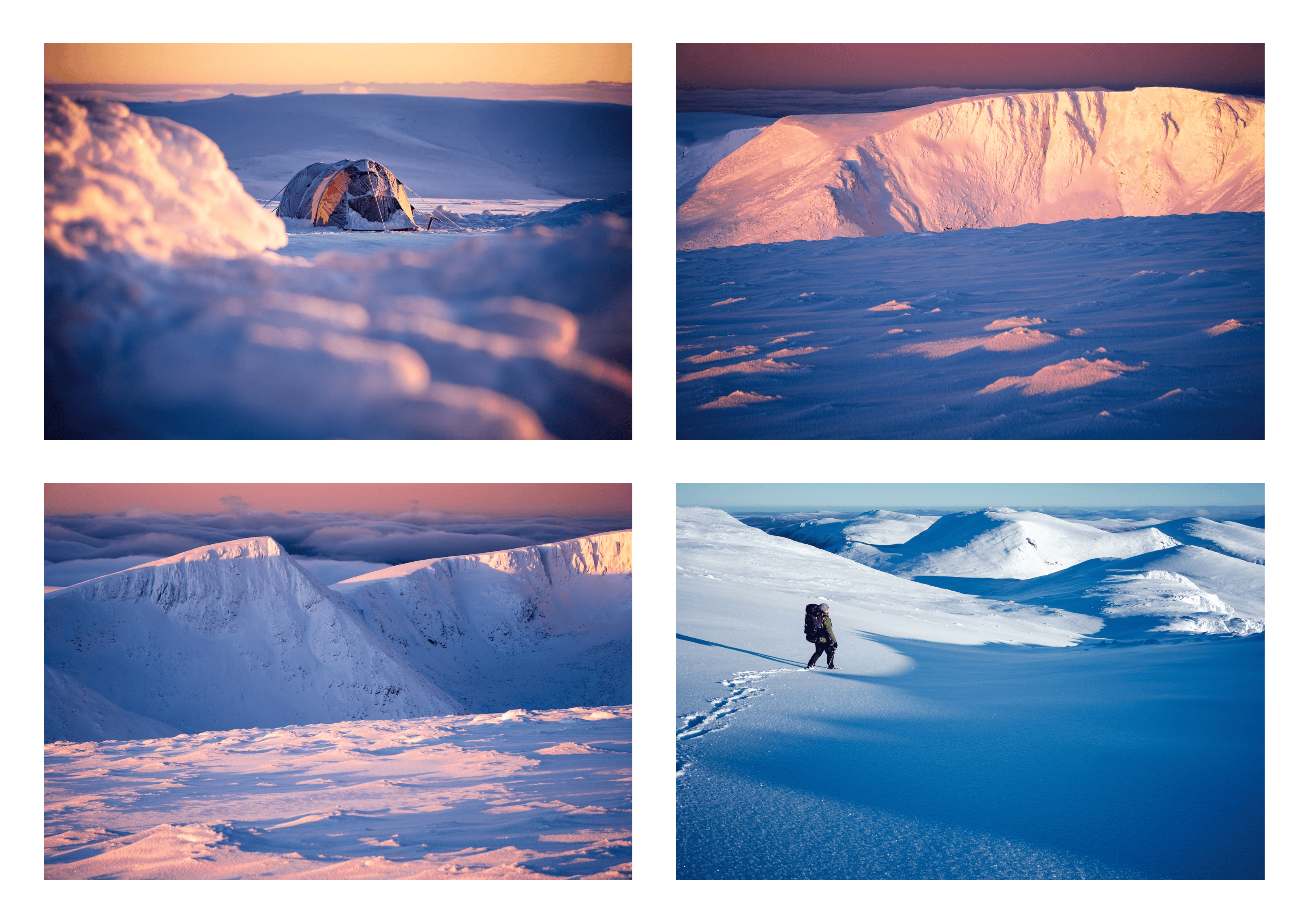
A set of these images was submitted to the annual Outdoor Writers & Photographers Guild photographic award and received a Highly Commended certificate. The judges’ comments: ‘A very satisfying portfolio of photos, with a narrative that flows from the first image through to the last. All the more impressive for the harsh winter conditions, with limitations on daylight available and the weight of wild-camping equipment.’
Your support enables me to keep publishing Alpenglow Journal. I don’t earn a living from this work, but these words, images and feelings are the most personal I will ever share. It takes a lot of time and effort to put it all together. Please consider becoming a monthly paid subscriber to support me directly – or you can always drop me a one-off tip via Ko-Fi. Thank you.
Images and words © Alex Roddie. No AI has been used in the creation of any work on this page. All Rights Reserved. Please don’t reproduce this material without permission.
‘The Machine’, first referred to by E.M. Forster in his classic short story The Machine Stops, is a way of referring to the globalised machine culture of capitalism that acts as our life-support system – but also seeks to dominate and replace nature, perhaps even turn humanity into God. In so doing, some thinkers have suggested that it is devouring not only our humanity but the natural world. D.H. Lawrence wrote, ‘Man invented the machine/ and now the machine has invented man’; Paul Kingsnorth wrote, ‘We are as gods, but we have failed to get good at it, and now we have run out of time. And we are not the gods we thought we would be. We are Loki, killing the beautiful for fun.’
Comments
Nothing yet. Say the first thing.
Sign in to join the conversation.