
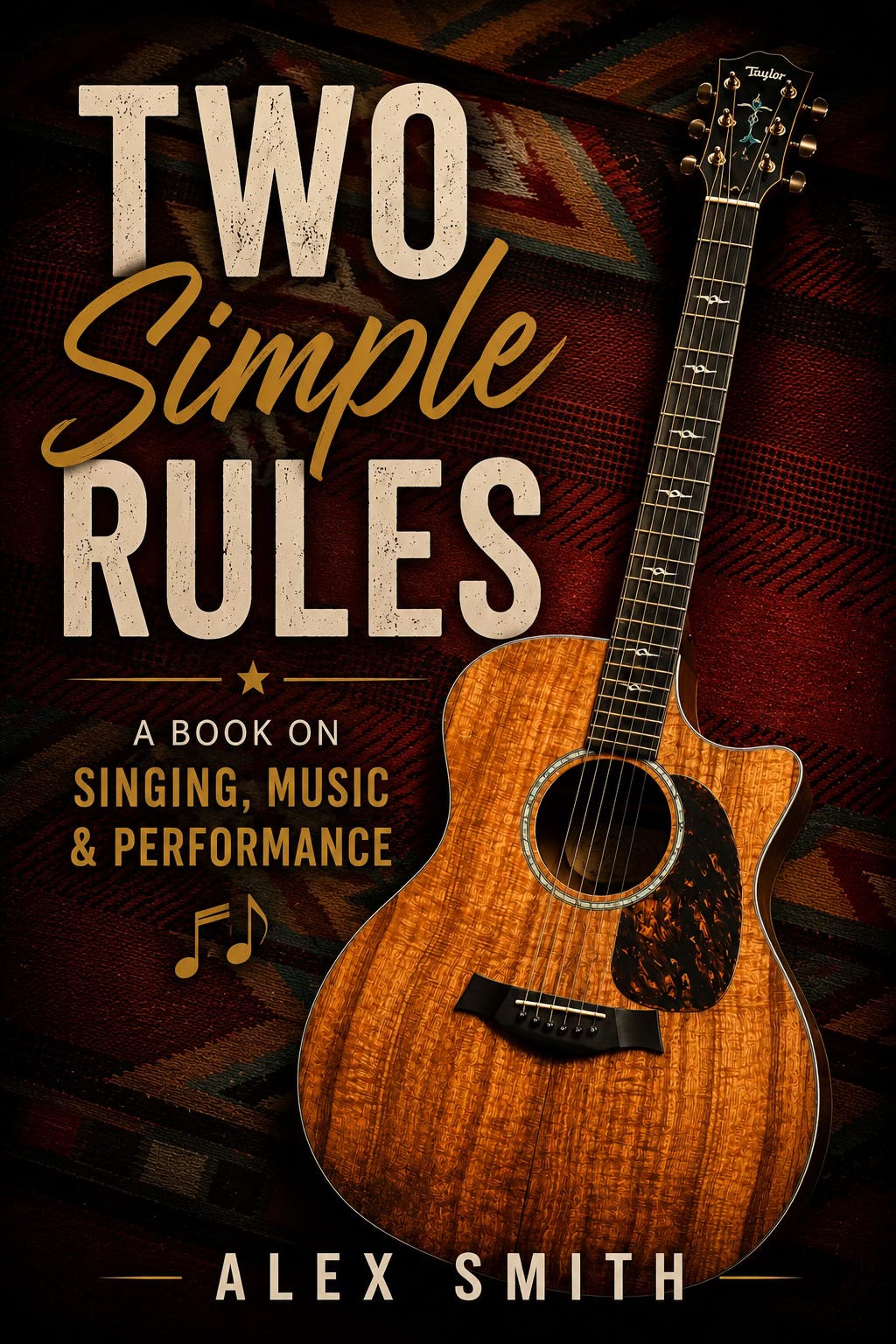
For the past several months, many of you have been following along as I’ve been writing my first book.
Today, I finally typed the last sentence.
Two Simple Rules Finding Your Voice and Sharing It is finished.
What started as a book about singing gradually became something more. It’s about confidence, creativity, learning from mistakes, connecting with an audience, and discovering that the lessons we learn through music often apply to the rest of life as well.
I’m putting the finishing touches on the Kindle, paperback, and hardcover editions, and they should be available on Amazon soon.
To celebrate, I’d like to share the introduction with you.
Introduction
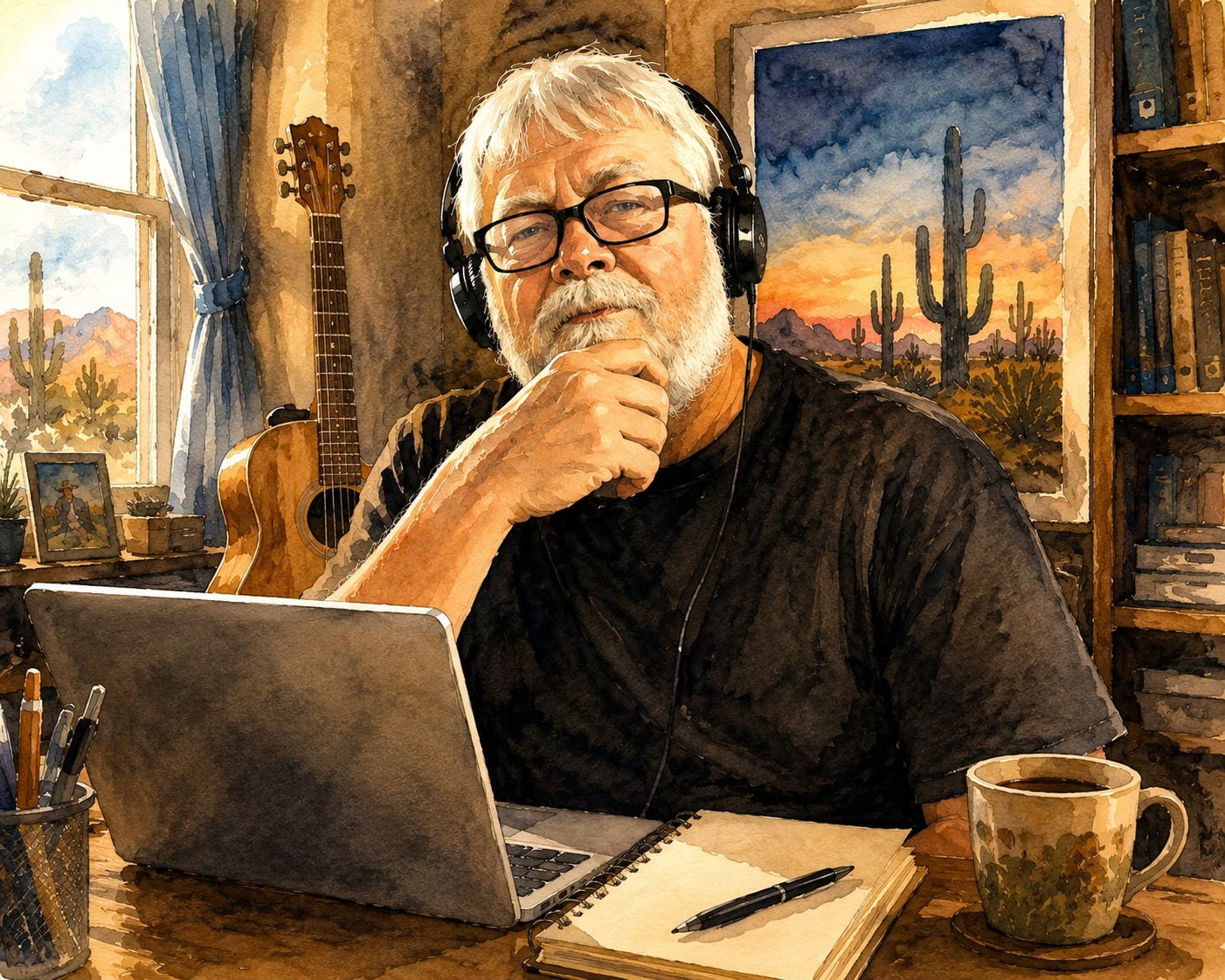
When I first sat down to write this book, I thought I was
going to write a book about singing.
The original idea was to share what I’d learned over the
years as I worked to become a better singer. Not because
I dreamed of becoming the world’s greatest vocalist, but
because I wanted to sing the songs I played on guitar. I
wanted to perform the songs I’d written without having to
depend on someone else to sing them.
I’ve always believed that, while there are plenty of great
interpreters, the person who writes a song often understands it in a way no one else can.
They know where it came from. They know what inspired it. They know what
every line is trying to say.
Besides, hiring another singer can get expensive.
The truth is, when I started singing in public, I didn’t have
a lot of confidence or natural ability.
Then again, the same could probably be said about
writing this book.
Like a lot of people, I had to work at it. I spent years trying
to catch up, studying, practicing, performing, and slowly
becoming more comfortable on stage.
But something interesting happened while I was writing.
The book started taking on a life of its own.
I realized the biggest lessons I’d learned had very little to
do with vocal technique.
They were about performing.
About connecting with an audience.
About listening to other musicians.
About getting out of my own way.
There are plenty of excellent books on breathing,
resonance, vocal anatomy, vocal exercises, and all the
technical aspects of singing. In fact, I’m putting together a
course of my own that explores those subjects in much
greater detail.
This isn’t that book.
This is a book about the ideas that helped me become a
better performer.
Some of them worked right away.
Some took years.
Some I’m still working on.
I don’t claim to have all the answers.
These are simply the ideas that helped me.
Take the ones that work for you. Leave the rest behind.
One thing I’ve learned over the years is that life is full of dreams.
Some are probably out of reach.
At 5’11”, with absolutely no basketball skills, I’m never
going to play in the NBA.
That ship has sailed.
But some dreams are different.
Some are attainable.
Learning to become a better performer is one of them.
I saw that firsthand when I started the Greater Quartzsite
Ukulele Orchestra.
Many of the members were seniors.
Some had never performed in front of an audience.
Some hadn’t played music in years.
Some weren’t even sure they belonged on stage.
A few weeks later, they were performing in front of a
packed room full of family and friends.
They weren’t trying to become famous.
They were simply discovering that it wasn’t too late.
One of my hopes is that, somewhere along the way, you’ll
stop thinking of yourself as just a singer and begin
thinking of yourself as a performer.
Singers are musicians.
Pianists are musicians.
Bass players are musicians.
Drummers are musicians.
Each brings a different skill to the stage, but they’re all
trying to accomplish the same thing.
They’re listening to one another.
Communicating.
Creating something unique...
Something that will never happen exactly the same way
again.
Being a performer means communicating—not only
with other musicians, but with your audience as well.
One of the joys of becoming a better performer is
discovering that you’re part of that conversation.
Maybe this book will give you the confidence to step
beyond singing along with a recording.
Maybe it’ll encourage you to sing with a live band.
To learn how to communicate with other musicians.
To leave a little room for the unexpected.
Some of my favorite musical moments weren’t planned.
They happened because a group of musicians listened to
one another and created something together.
I hope you get to experience that.
One of the biggest obstacles isn’t your voice.
It’s the little voice in your head that says,
“You can’t.”
I’ve listened to that voice more times than I care to admit.
Fortunately...
I didn’t always believe it.
I didn’t write this book because I had everything figured
out.
I wrote it to gather the ideas I’ve learned over the years
into one place.
Some I use consistently.
Some I forget.
Some I wish I’d remembered sooner.
In many ways, I wrote this book so I’d have a reference
manual I could come back to myself.
If it helps you become a better performer...
Wonderful.
If it gives you the confidence to tackle something you’ve
always wanted to do...
Even better.
Either way...
I’m glad you’re here.
Well... you’ve already paid for the book.
You may as well turn the page.
Writing this book has been one of the most rewarding creative projects I’ve ever tackled. Thank you for reading my newsletter, encouraging me, and following the journey from idea to finished book.
I can’t wait to share it with you.
— Alex Smith
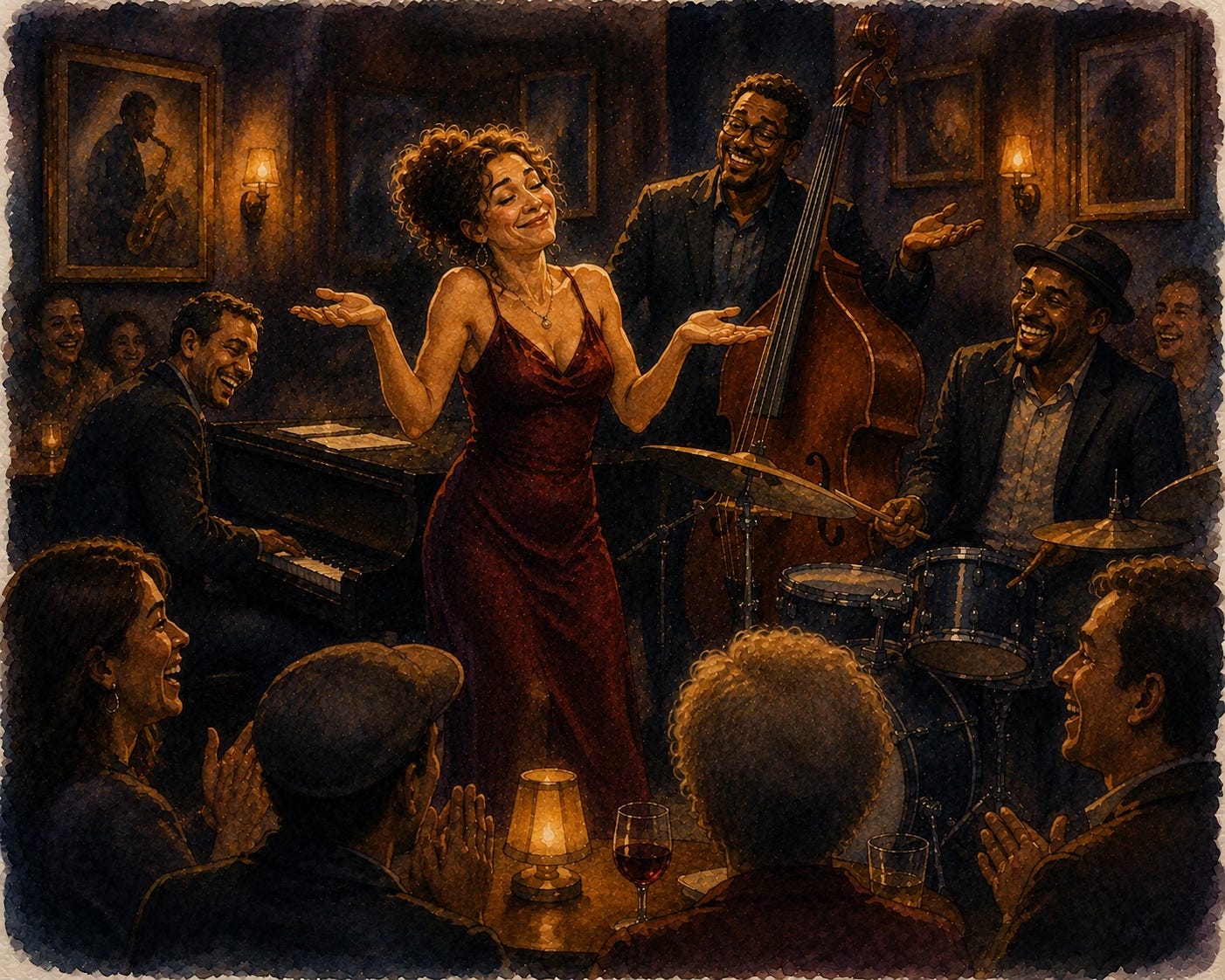
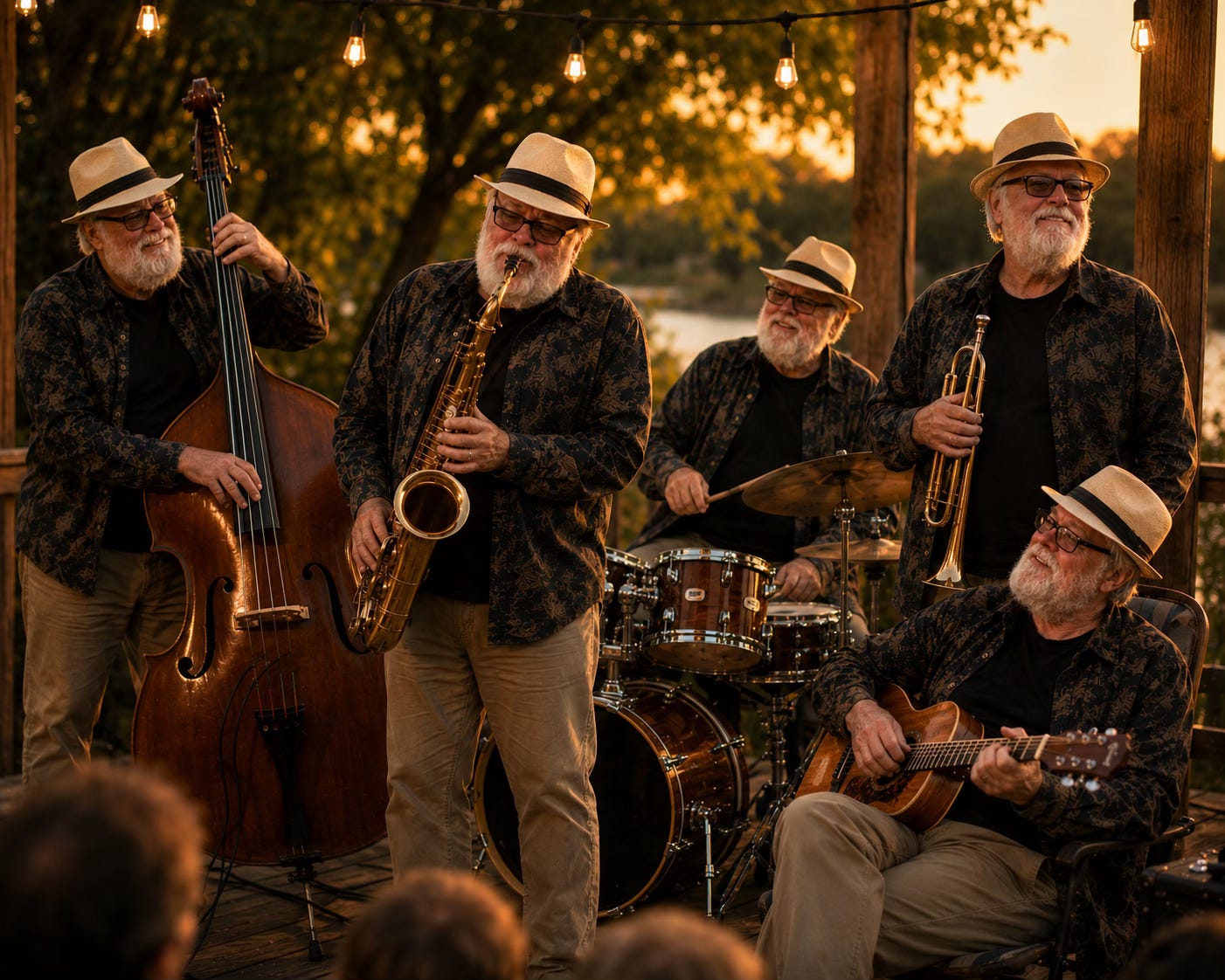
I know Mudheads like there pics.
Every chapter has one.
Here’s a couple examples.
Chapter 5 Don’t Be Afraid to Miss a Note
Chapter 18 Leave Space
No posts
Comments
Nothing yet. Say the first thing.
Sign in to join the conversation.