
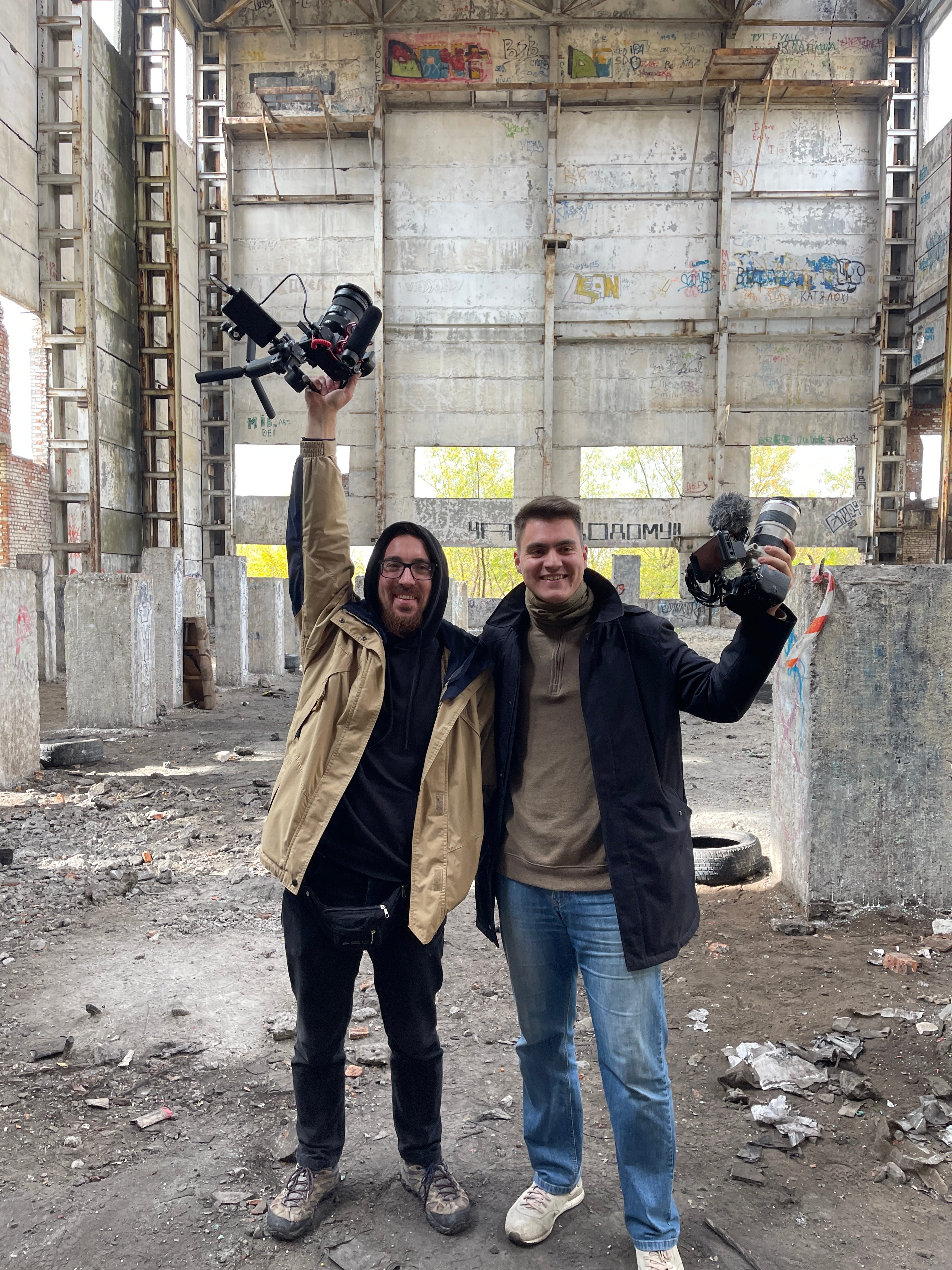
Before anything else, I am a documentary filmmaker.
Not a strategist. Not a technologist. Not a newsletter author, though I’ve become one. A documentary filmmaker first. That’s the DNA. That’s where this all started and where it still lives. The journalism came second. The development work came third. Everything else — the platforms, the tools, the company building — grew out of one foundational belief. That the most important thing a camera can do is point at something true and refuse to look away.
I’m thinking about that now as my doc, Creative Force, heads to Cannes. And getting a film to that moment — any film, after any journey — forces a kind of reckoning. You stop moving long enough to ask what you actually made. Who it’s for. What you owe the people who trusted you with their story when everything around them was on fire.
That reckoning, for me, lands somewhere between gratitude and fury.
Because, while I am grateful for the experience, I’m heartbroken by what this industry has done to documentary storytelling.
Not angry. Heartbroken. There’s a difference.
I got off a call with my agent yesterday.
He’d been at Hot Docs. Sitting across from buyers. Showing them work.
When he got to my Ukraine documentary — a film about the civilian resistance, about ordinary people making extraordinary decisions in the first hours of an invasion — the buyers couldn’t get away from it fast enough.
Not because the film was bad. He didn’t get that far.
Because of the subject matter.
Ukraine? Pass!
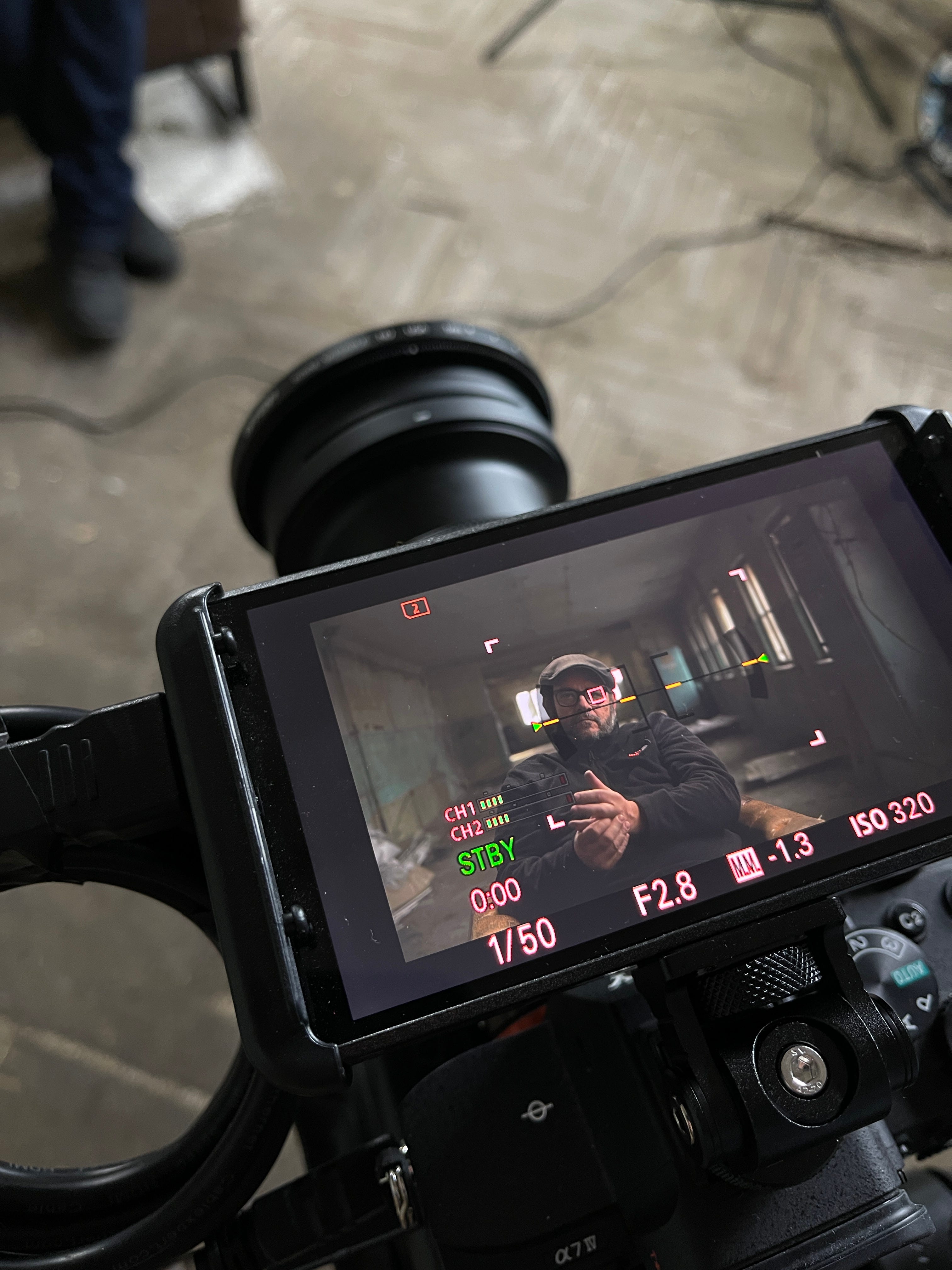
Thanks for reading PitchCraft: Unlocking Success in the Hollywood Chaos! By sharing this post, you guarantee I can keep providing you with insider insight , strategies and playbooks
Let me put that in context.
We are living through a global moment of resistance that has no modern precedent.
In Ukraine, ordinary people are in years into defying an empire with their bare hands and an unbreakable insistence on existing. In this country, something stranger and more significant is happening — Prtions of both the left and the right, people who agree on almost nothing, are finding themselves on the same side of the same street, pushing back against greed, corruption, and the organized machinery of human suffering. Across Europe, across Latin America, across every continent where people are being squeezed by the same concentrated power wearing different flags — the word of this moment, the word that cuts across every border and ideology and demographic, is RESISTANCE.
That is the story the world is living right now.
And the acquisition executives cringed at the idea of a documentary about the war in Ukraine.
I want to be careful here. This isn’t about my film. One documentary is not the point.
And this isn’t about the people making all those sports docs, true crime series, or music films. Those filmmakers are doing serious work. Many of them are doing extraordinary work. The problem is not what they’re making.
The problem is what’s being purposefully erased to make room for it.
The Ukrainian resistance is one of the defining stories of this century. Not this decade. This century. Three generations from now, filmmakers will still be making work about what happened when a people decided, collectively and without ceremony, that they were not going to hand their country over. That story will be told in every language. It will shape how the world understands courage, resistance, and the relationship between ordinary people and empire for as long as people tell stories.
That war is still raging. The human cost is still accumulating. The inspiration being generated by the people fighting it is still epic, still newsworthy, still the kind of thing that documentary film exists to capture and hold for the historical record.
And buyers are treating it like a trend that already peaked.
The acquisition executives who turned away from it didn’t protect their slates.
They opted out of history.
And I keep asking myself what kind of philosophy produces that decision. What business school teaches that a content model which does — at minimum — the smallest amount of work toward social good, toward cultural record, toward the basic function of bearing witness, is simply not worth the bandwidth. That the ROI on truth is too uncertain. That the risk of mattering is too high.
That’s not being the custodian of your slate. That’s moral bankruptcy dressed in a Patagonia vest and calling itself strategy.
Here is what makes that decision almost cosmically absurd.
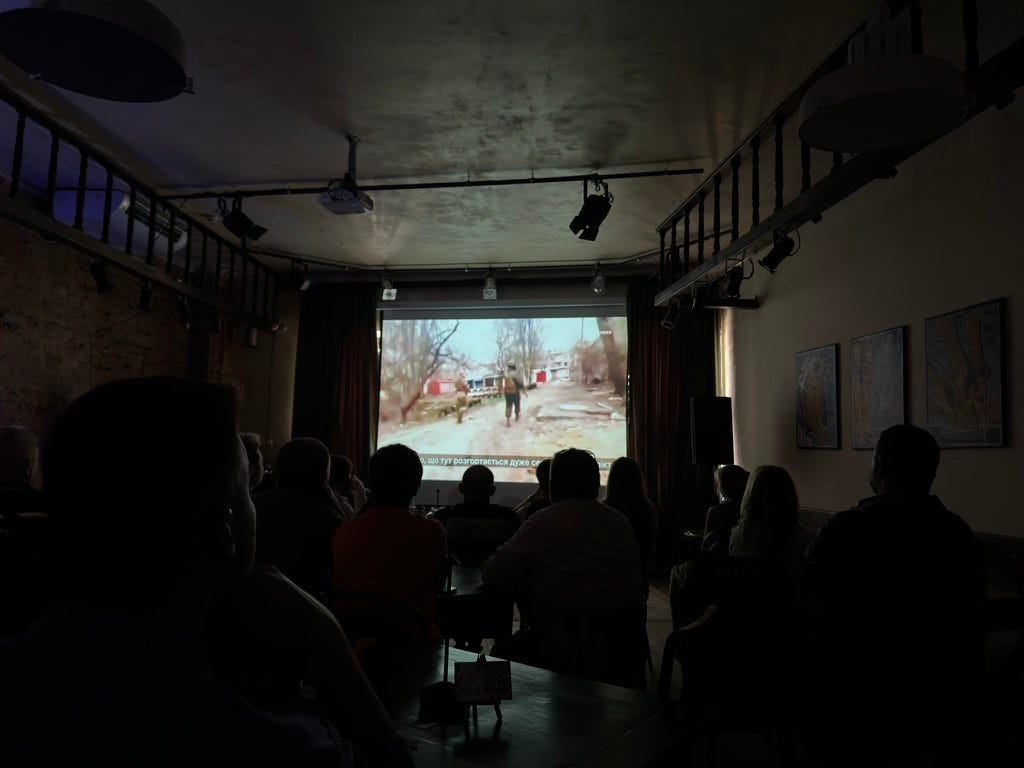
While American buyers were passing, ARTE — the Franco-German public broadcaster — invested over €1.5 million funding twelve Ukrainian documentaries through their Generation Ukraine initiative. Two of those films premiered at the Berlin International Film Festival in 2024. One of them, Intercepted, directed by Oksana Karpovych, won special mentions for both the Ecumenical Award and the Amnesty International Award.
ARTE is still producing Ukraine war documentaries now, in 2026.
The head of ARTE Distribution said it plainly this year: the demand for documentaries remains strong globally. High-end docs with strong editorial vision and international relevance are exactly what audiences want.
Europe didn’t decide this topic had run its course.
America did. On behalf of everyone. Without asking.
There is no empirical evidence that American audiences have stopped wanting documentary films about things that matter.
None. The data does not exist.
What exists is a curated content slate that has decided, on behalf of all of us, that documentary means four things now.
Sports. True crime. Music. Celebrity.
Highly polished. Highly produced. But often with a relationship to truth that is — let’s be generous — selective.
Not because audiences rejected it. Because executives and commissioners decided audiences wouldn’t want it — before those audiences were ever given the chance to decide for themselves.
That distinction is everything.
At the exact moment when a global resistance movement is looking for its mirror — for the stories that reflect back what it’s fighting for and why — the American documentary industry has decided that the most important thing it can do is commission another limited series about a fraudulent influencer.
The death of Participant Media marked the end of the last major institutional infrastructure in America built around the idea that documentary should go where corporate news will not. That it should sit with the uncomfortable and say: this matters, and you need to see it.
Participant made An Inconvenient Truth. Citizenfour. American Factory. Films that changed policy, shifted culture, and found massive audiences who were hungry for exactly what they were being told didn’t exist.
That infrastructure is gone. The gap has been papered over.
Meanwhile corporate news — the other institution that was supposed to hold truth to power — completed its own collapse. Documentary was supposed to be the backstop.
That function has been deliberately, systematically abandoned.
The erasure of historic documentation from the content slate is not a market correction. It is a choice. Made by a small number of people. With enormous consequences for the historical record.
And history — the actual, accumulating, unstoppable history being made right now in the streets of Kyiv and Washington, Tehran, Brussels and Beijing — does not wait for a buyer to decide it’s commercially viable.
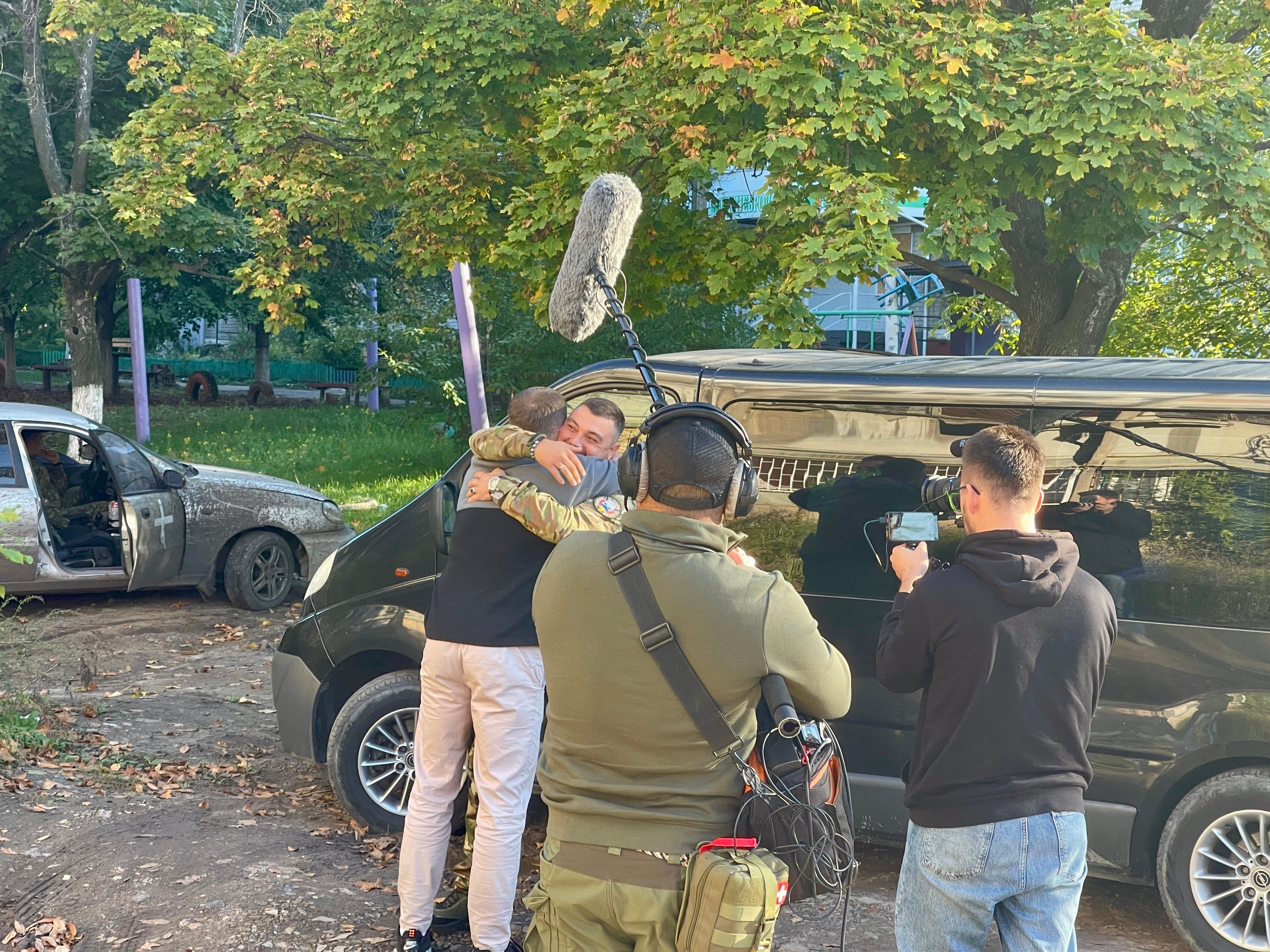
So what comes next.
Here’s the part most people in this industry haven’t fully processed yet.
The buyers don’t control distribution anymore. They control one distribution path. And it’s contracting.
The infrastructure that actually reaches global audiences — YouTube, Substack, direct email, international public broadcasters, community-based screening networks, parametric licensing — none of it requires an acquisition executive’s approval. None of it requires a pitch meeting. None of it requires someone in a market to decide your subject matter has run its course.
Here’s the mind-bending part.
The audience for serious documentary work is not smaller than it used to be. It is larger, more dispersed maybe, but more reachable, and more willing to pay directly than at any point in the history of the form. What collapsed was not demand. What collapsed was the intermediary layer that used to be required to connect supply to demand.
That layer is now optional.
Which means the question is no longer: how do I get a buyer to say yes.
The question is: what does filmmaker-direct distribution look like for serious documentary work in 2026.
That question has answers that didn’t exist five years ago.
International co-production money — Europe is actively buying what America is ignoring. ARTE proved it with twelve films and €1.5 million. ZDF, the Nordic public broadcasters, and the BBC all still believe documentary has a civic function and fund it accordingly. The submission portals are open. The appetite is real. The money is there.
Audience-first development — building the community around the film before the film is finished. Not marketing. Infrastructure. The audience that will demand the film exists before the film is acquired.
Parametric licensing — releasing work in layers. A chapter. A scene. A conversation. Each one building the audience and generating revenue before the full work exists. The film funds itself through its own distribution.
Direct international screening networks — community organizations, universities, cultural institutions, diaspora communities. They have budgets. They have audiences. They don’t need a platform’s permission.
None of this is romantic. None of it is easy.
But all of it exists. Right now. Available to any filmmaker willing to stop organizing their career around the approval of people who opted out of the most important stories of our time — at the exact moment the world needed someone to tell it.
The global resistance doesn’t need Hollywood’s permission to exist.
It’s already building its own infrastructure.
The question is whether documentary filmmakers are going to be part of it.
Or whether we’re going to keep waiting for a buyer who’s too busy passing on Ukraine to notice the world is on fire.
Alex LeMay is a filmmaker, journalist, and founder of Open Studio OS. Creative Force screens at Cannes International Film Week, May 11-31. PitchCraft publishes from the intersection of storytelling, strategy, and the work of building things that matter.
No posts
Comments
Nothing yet. Say the first thing.
Sign in to join the conversation.