

Continuous hormone monitors will allow us to finally “read” our bodies, making “writing” inevitable.
One example of the “read & write” paradigm is continuous glucose monitors (CGM). For decades, people with diabetes relied on periodic finger-prick tests and snapshot measurements. When CGMs arrived, albeit after +20yrs of heavy R&D, they created an entirely new relationship between humans and metabolism. The ability to continuously “read” glucose made it possible to “write” over metabolic disease: personalised dosing, real-time feedback, and eventually closed-loop insulin delivery systems that would have been unthinkable without the continuous signal.
Hormones like cortisol, testosterone, oestrogen, and progesterone are the Operating System of our bodies. Continuously reading them will transform human health across disciplines, genders, and industries. Here, I describe the impact of continuous hormone monitors (CHMs) and what it takes to get there.
In late 2025, I had the opportunity to see a new ARPA program for continuous hormone monitors take shape. Through it, I observed CHMs are ARPA-Hard for several reasons:
We can now measure hormones like progesterone at-home through saliva and urine tests, but hormones in these fluids are 50-100x lower in concentration than in blood and represent just a snapshot image.1 If we wanted a snapshot image of hormones, clinically routine lab tests like ELISAs and DUTCH (Dried Urine Test for Comprehensive Hormones) tests will do. Measuring them continuously and accurately though, is a whole other level.
Biosensing technology for continuous glucose monitors or sweat-based biosensors are now widespread, but the hardware simply doesn’t work for hormones. They’re just not sensitive enough.
Current glucose monitors work by a hair-thin needle under the skin coated with enzymes that, when they encounter glucose, trigger an electrochemical reaction to create a measurable signal every few minutes. But this only works when the thing you're measuring, glucose, is abundant in that area.
In the interstitial fluid layer of your skin, where glucose monitors usually work, the concentration of progesterone is approximately 70,000x lower than glucose. Estradiol? Around 2,000,000x less. These are both at the peak levels of the cycle.2
New classes of sensors—including aptamer-based approaches, DNA sensors, and advanced electrochemical detection—are actively being developed for hormone monitoring. But as with all sensors, sensitivity, miniaturisation, and durability are factors in constant trade-off.
But particularly with ultra-sensitive hormone monitors, “noise” becomes the single largest issue. This “noise” being the natural, biological variability between and within people. Hormones pulse throughout time, are context-dependent, cycle-dependent, and are intertwined with many chronic, complex diseases. These factors can confound ultra-sensitive hormone measurements and make the results inaccurate.
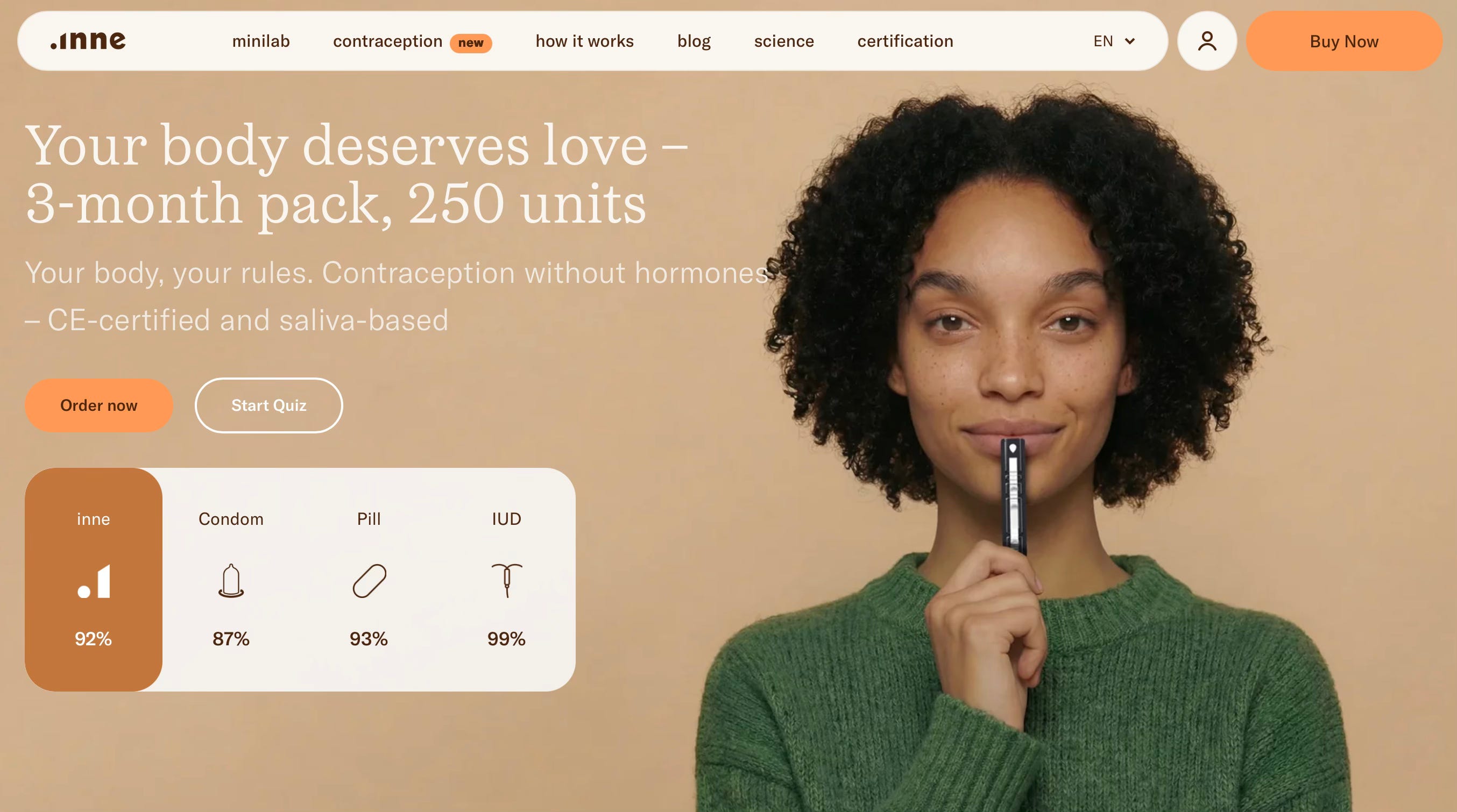
This means that even the best available tools already cannot work in complex hormone conditions. Even inne, a saliva-based progesterone tracker and one of the more rigorous products on the market, is not a fit for those with PCOS, endometriosis, or irregular cycles. PCOS alone affects roughly 10–13% of women; endometriosis affects about 10%. With significant overlap between these conditions, tens of millions of women in the US are effectively excluded from today’s hormone tracking tools.3
The variability of hormone cycles and levels is simply too vast for foolproof, broad-application continuous monitors to be commercially viable in the next 1-3 years.
This is where things get misleading. There are three fundamentally different categories of technology being discussed under the CHM umbrella today:
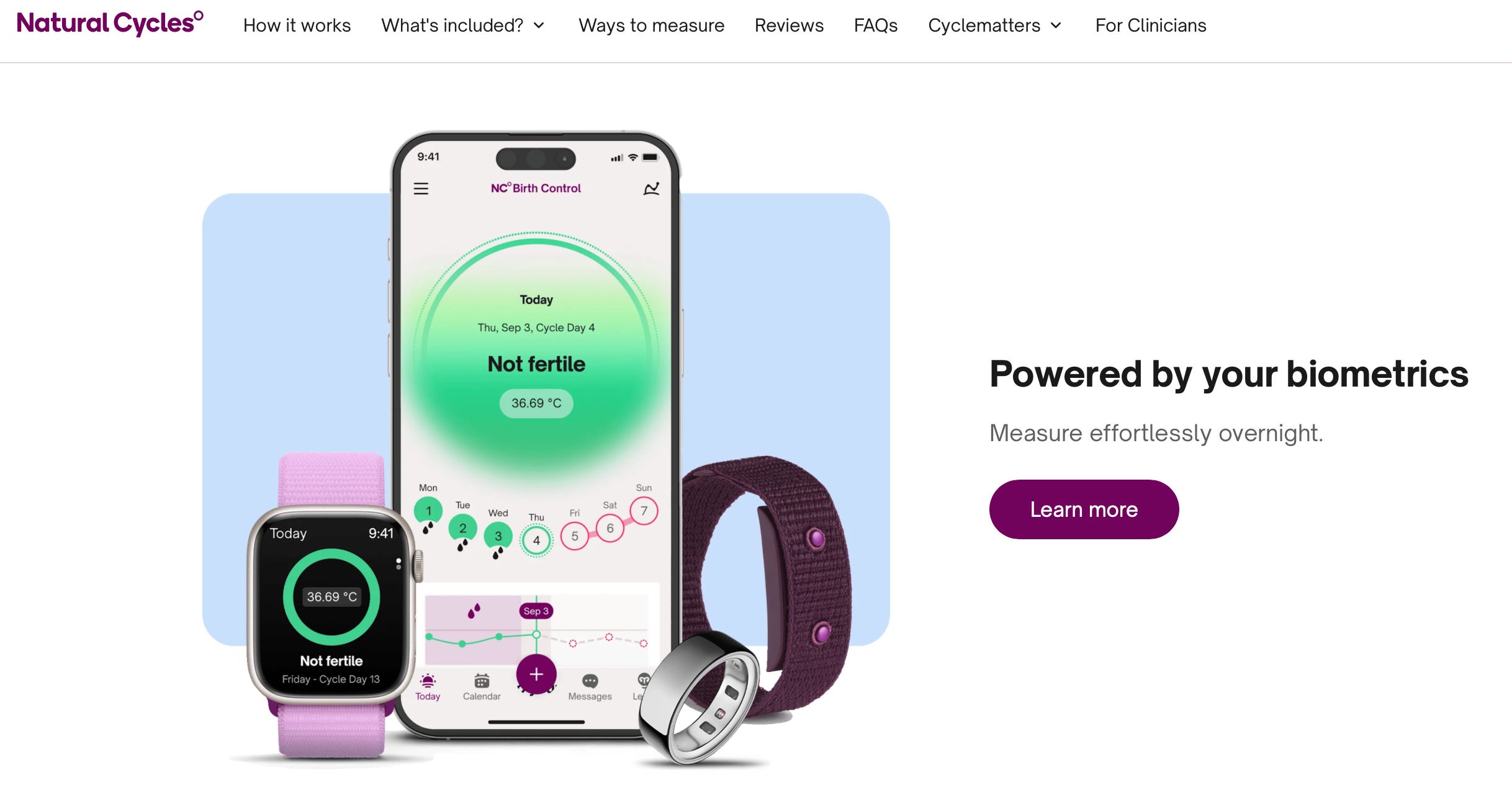
First, there are devices that infer cycle phase from proxy signals—skin temperature, heart rate variability, electrodermal activity, respiratory rate—and call it “hormone monitoring.” A wrist-worn device that claims to track oestrogen, progesterone, LH, and FSH non-invasively through a bracelet, without disclosing a sensing mechanism for actual hormone detection, is almost certainly doing this. Proxy-based cycle tracking is not new—it’s what Natural Cycles, Oura, and Ava already do, with varying degrees of accuracy.
Second, there are teams attempting actual direct hormone measurement through interstitial fluid for example via micro-needle patches and novel biosensors with aptamers, DNA, or electrochemical signals. This is very technically difficult, but many credible venture-backed companies like Impli and Biosens8 are attempting this today.
Third, there are the validated clinical tools that already exist—blood draws, ELISAs, DUTCH tests—which are accurate but expensive, inconvenient, and limited to snapshots.
Each category of monitors trade accuracy with cost, convenience, and durability, making CHMs an ARPA-Hard problem. So when a startup blurs the line between them, claiming 94% cycle phase accuracy as if it’s evidence of continuous hormone measurement, it risks eroding the trust of women who have been dismissed by the healthcare system for decades and deserve real tools.
Cycle phase classification from proxy signals is very a useful product. But it is not a continuous hormone monitor, and calling it one can set back the entire field.
CHM markets are undefined, the regulatory pathway is uncertain, large reference datasets are sparse, and the hardware is capital-intensive.
The lack of pre-existing markets and unclear regulatory pathways are immediate red flags for most private investors. This limits the amount of up-front capital they put in, making the expensive hardware MVP difficult to develop.
There are also systems-level bottlenecks to CHM R&D. First, there is limited “ground truth” to the data. You can claim that you developed a new CHM and measured a person’s hormones continuously, but how does someone else validate that claim? With the data you collected… yourself? There is currently no open-access reference data for continuous hormone monitoring, making it difficult to “prove” that your monitor even works.
Second, hormones vary substantially across people and contexts, including age, ethnicity, health conditions, medication use, and cycle patterns. Without a large, diverse reference dataset, CHMs are forced into narrow populations because that is all they can credibly validate. At worst, you create devices that only accurately measure the populations they were trained on and baking inequity and mistrust into the entire investment category.
But developing CHMs in large patient cohorts and validating them with out-of-sample data is prohibitively expensive and operationally challenging. From the open-source foundational reference dataset to in-patient hardware validation, to get CHMs right we need pre-competitive, public-private R&D and data generation programs seeded by impact-driven, non-dilutive funding.
This is exactly where ARPA-style programs can come in to solve high risk, high impact, infrastructure projects that benefits an entire field rather than any single company. Arguably, these foundations need to be built first to solve the cold start problem so that CHMs can fully realise the transformative potential it has.
Even in the best-case scenario (under 35, own eggs), IVF is only successful ~50% of the time.
IVF is not a simple, easy process. Retrieving eggs requires weeks of hormone injections to stimulate the ovaries, careful timing to harvest eggs at peak maturity, and then precise hormonal support for embryo implantation. Each step is guided by hormone levels that we currently only measure every 2-3 days in static snapshots.
IVF not only disrupts normal hormone levels, but routine clinical visits disrupt daily life, work, and education for women. A single (failed) cycle costs $15,000-30,000 and weeks of physical and emotional toll on the couple who have already tried natural conception for months to years. CHMs would transform the entire IVF workflow, making critical hormone measurements instantly available and tunable. It gives back agency to parents and make IVF more accessible for the ~1 in 6 people globally experiencing infertility.4
If it all goes right, CHMs won’t just improve IVF but reduce the need for it entirely. Better continuous data on cycle timing would give couples and clinicians far more precise tools for natural conception, transforming the way in which we have children today.
Chronic pain, specifically pelvic pain, is one of the most common symptoms in patients with chronic uterine disease. Endometriosis—a condition that affects nearly 1 in 7 women—causes debilitating pain with an average ten-year diagnosis timeframe, disrupting work, education, fertility, and daily life. It’s more common than heart failure, yet our understanding of it remains remarkably poor.
Endometriosis is difficult to treat in part because the pain fluctuates dramatically with the menstrual cycle, compounded by anxiety, depression, and environmental factors. New drugs are evaluated in clinical trials based on their ability to reduce pain. But when pain varies so significantly, it’s difficult to precisely quantify treatment effects. Without continuous hormone monitoring, it’s hard to distinguish whether the variable response to the new drug is coming from the drug itself or from where a patient is in her cycle, adding confounding data to clinical trial outcomes and masking nuanced treatment effects.
CHMs can change this. By tracking hormonal patterns alongside pain reports, clinicians could identify true treatment responses, personalise interventions, and finally begin to untangle the complex relationship between hormones, inflammation, and pain. Endometriosis alone costs the U.S. over $100 billion annually in lost productivity, healthcare costs, and reduced quality of life.5 Clinical trials for new treatments routinely fail not because the drugs don’t work, but because we can’t measure their nuanced effects through the confounding signal. If we can understand the complexities of chronic pain in even just one disease, it can transform our understanding of all chronic pain conditions.
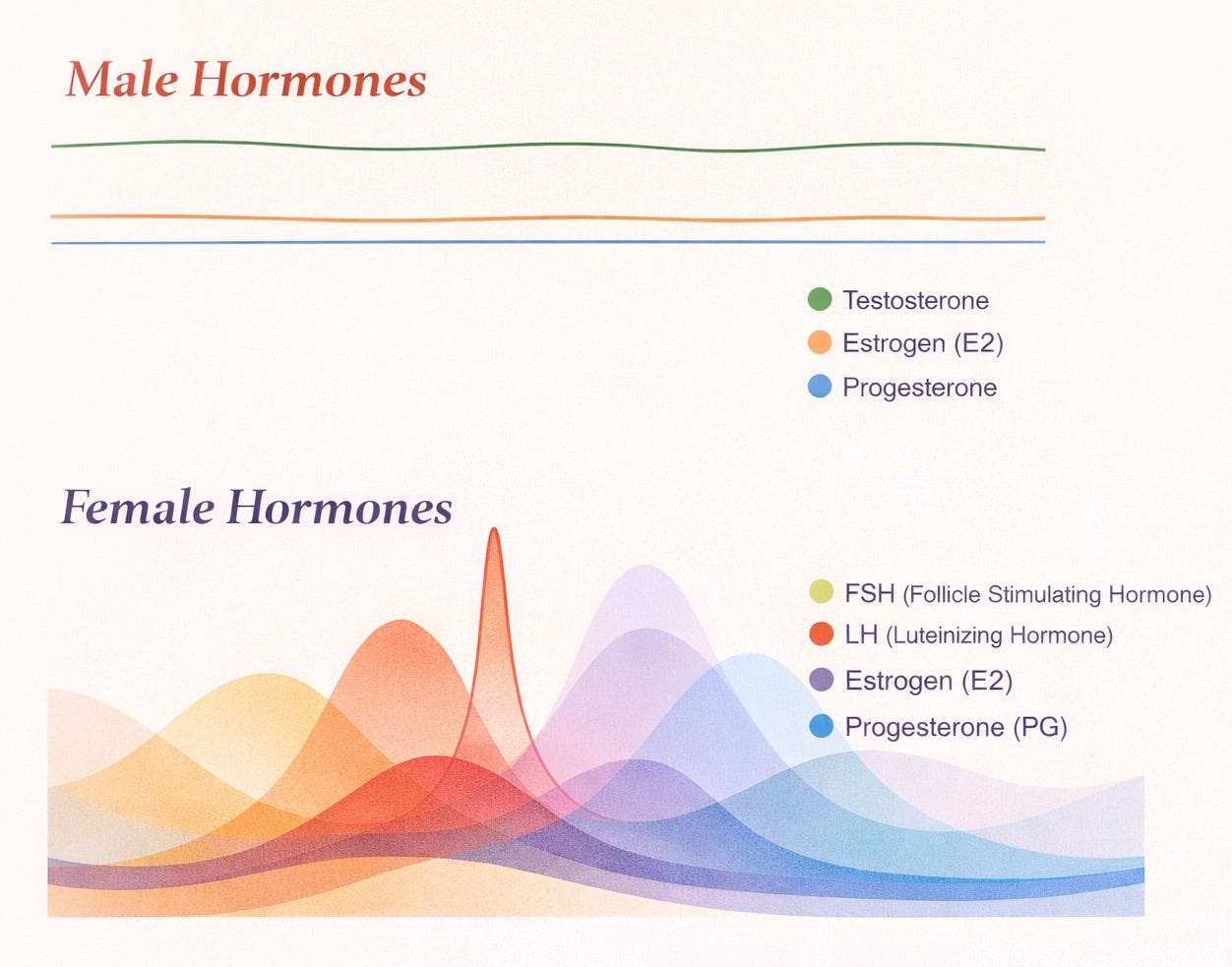
If hormones are the operating system of our bodies, then chronic disease is what happens when the OS goes unmonitored. The case for CHMs extends far beyond reproductive health.
Women make up ~80% of all autoimmune disease cases.6 From rheumatoid arthritis, multiple sclerosis to lupus, they are often driven by dysregulation of hormones like oestrogen or cortisol that directly tune immune activity and inflammation.
But the relationship runs both ways: chronic stress, postpartum changes, anxiety, and depression also disrupt hormones, creating feedback loops that turn chronic disease treatment into trial-and-error. Autoimmune diseases cost the U.S. healthcare system an estimated $100 billion or more annually, much of it driven by delayed diagnosis and ineffective treatment cycling.7 Continuously monitoring these hormones would help clinicians predict flares before they happen, reducing years lost to misdiagnosis.
The first step is giving patients the agency to understand their own bodies.
Women also spend 25% more of their life in poor health than men. But the market for menopause treatments stands at only $18 billion in 2024, despite recent analyses estimating the yearly gain to U.S. GDP at over $9.1 billion from better menopause care alone—a massive gap between market size and actual economic impact.8
Hormone Replacement Therapy (HRT) has been a transformative option for many, but most women don’t know what their hormone levels are or how they’re being affected. Oestrogen and progesterone levels decline with menopause, but how fast? And by how much? Continuous monitoring can give back agency and transform the lives of over a billion women who experience menopause today.
CGMs taught us that chocolate donuts cause a sugar crash—and those kinds of simple realizations have fundamentally changed our relationship with food and our bodies. Hormones, even more than glucose, control our bodies—yet we have no equivalent monitor for the system that operates them. CGMs created an entirely new category of consumer health and reshaped how millions of people manage their metabolic health. CHMs will do the same, but the impact will be much larger.
No team is close to delivering a fully non-invasive hormone monitor in a consumer form factor within the year—though several are doing credible work toward that goal.
Impli is one London/Swiss-based startup developing a subcutaneous implantable biosensor that continuously measures LH, progesterone, and estradiol during IVF cycles. Their aptamer-based sensor has been tested in artificial interstitial fluid across a concentration range of 1 pg/ml to 1 µg/ml, showing strong correlation (R² ≈ 0.9) with ELISA measurements and detection limits below 1.2 pg/ml for all three hormones. While still in the validation stage, this represents genuine progress toward continuous hormone monitoring.
Ida Tin the initiator behind The SPRIN-D Hormone Challenge, and tasked with scoping it for the German innovation agency, represents the pre-competitive infrastructure layer that’s also missing. The VC model doesn’t encourage collaboration between startups, and no single company can build the foundational reference datasets and validation frameworks that the entire field needs. Public and philanthropic capital are in a unique position to build this.
The path forward requires both deep biosensor R&D and open-access reference datasets to validate them. Given these factors, startups, especially early-stage companies, must be careful of how they market their products to prevent creating mistrust in the broader field. Tin comments, “essentially this program is about establishing a new industry enabled by levelling up from snapshots to continuous hormone data. I believe it will bring us into a new era, not just in women’s reproductive health, but across medicine broadly. We have seen great interest across the wider health care industry to have access to this data stream. Now the challenge is to generate it, for which we need the biosensors, and handle it with the privacy and high ethical standards that it deserves”.
If we accept that women’s health has been underfunded, then it should be equally obvious that many deeptech solutions for women’s health remain deeply intrinsically undervalued. Conservative estimates place the combined economic burden of endometriosis, autoimmune disease, and menopause-related productivity loss well above $200 billion annually in the U.S. alone4,5 and the world looses $1 trillion, every year in lost productivity because women don’t get adequate health care (McKinsey report 2024). This is a generational opportunity for private, public, and philanthropic capital.
But we have to build this right. Women’s health data has been politicised, commodified, and weaponised throughout history—often serving everyone except the women generating it. Continuous hormone monitors are powerful tools that could finally give women greater agency, but they also create a resource that could be seriously misused.
The recent hype around CHM products showed how easy it is to oversell the science or misrepresent what the technology can actually do today. This is harmful to the industry and predatory toward women who deserve transparency, even from small startups. Rather, especially from small startups.
To build the abundant, flourishing futures we dream of, we have to develop technologies like CHMs with technical rigour, put privacy first, and work collaboratively where possible to serve those who’ve waited long enough. CGMs took over twenty years from first concept to the consumer devices we know today. CHMs will require at least another five to ten years of sustained, well-funded R&D to reach similar maturity. The question is whether we’re willing to invest patiently in getting it right—or whether we let hype outrun the science and lose a generation of trust in the process.
Thank you to Ida Tin and the many friends & colleagues for thoughtful discussion and input.
Estimates based on known physiological concentrations: ISF glucose ~90 mg/dL (~900,000,000 pg/mL); peak luteal progesterone ~10–20 ng/mL (~13,000 pg/mL in ISF); peak ovulatory estradiol ~200–400 pg/mL in ISF. Ratios are order-of-magnitude approximations.
PCOS affects ~10-13% of women; endometriosis affects ~10%. Conditions frequently overlap and often cause irregular cycles.
National Institute of Allergy and Infectious Diseases (NIAID), as reported by the American Autoimmune Related Diseases Association (AARDA). See: PMC9918670.
No posts
Comments
Nothing yet. Say the first thing.
Sign in to join the conversation.