

“For many of us, one of the easiest mistakes to make is to focus on trying to over-satisfy the tangible trappings of professional success in the mistaken belief that those things will make us happy. Better salaries. A more prestigious title. A nicer office. They are, after all, what our friends and family see as signs that we have “made it” professionally. But as soon as you find yourself focusing on the tangible aspects of your job, you are at risk of becoming like some of my classmates, chasing a mirage. The next pay raise, you think, will be the one that finally makes you happy. It’s a hopeless quest.”
This question has been on my mind ever since I read the book around four or five years ago. I wanted to write through what I believe right now to be the best ways to measure my life and what I believe is meaningful. Admittedly, it’s changed a lot over the last few years, and I hope in many ways I’m no longer the person I was a few years ago.
For a long time, I treated life as a series of dress rehearsals. But as I get older, I realise that this truly is, to the best of our knowledge, our one and only shot. So the stupid stuff, the corny stuff, the awful stuff, and the great stuff are all a part of it. This will almost certainly be embarrassing for me a few years from now, but I wanted to do it anyways. I'll start with the professional, then get to the harder stuff. This is how I measure my life.
My one mission is to add back healthy years to our lives by curing chronic disease. Life is like a box of sand with a hole on the bottom. The sand leaks, and, to our knowledge, there’s no way to stop it.
Death is scary, but suffering is what can and should be solved in the coming years. But for most health innovation, traditional tech or even past biotech business models aren’t applicable. I’ve spent the past decade trying to cure chronic disease through different modalities.
In academia, I first worked on gene editing and DNA sequencing technologies as a way to find new targets to diseases with no cure like breast cancer and Alzheimer’s. Four years in, I realised academia was not the fastest place to make new therapeutics, so I moved to startups.
There, I had the opportunity to lead multi-million dollar drug discovery teams over another four amazing years, and found drugs for debilitating diseases from heart failure to osteoarthritis. Though they are still awaiting trial submission, I believe one day these drugs could have a transformative impact on people’s lives.
But along that journey, I saw that traditional research couldn't solve certain systemic problems—like the ~95% failure rate of clinical trials, driven largely by animal models that don't reflect human biology. No single company could fix that.
So I sought out Focused Research Organisations as a new, emerging modality for scientific progress that takes philanthropic dollars to applied basic research. Though my FRO, Artemis, did not succeed, in that process I realised FROs are, to put it crudely, like ARPA programs with extra philanthropic steps. So I took the lessons and pivoted toward ARPA-style programs directly.
That brings me to now, as I develop a new program that I believe could bring transformative change to the people I love. ARPA programs create catalytic social change—a kind of change that makes the rest inevitable. Just like how Sanger sequencing the first bacteriophage made the Human Genome Project inevitable, I hope this new program, if funded, makes a flourishing future inevitable too.
I’m still searching for the way that I can uniquely add healthy years to our lives. But if developing ARPA programs has taught me anything, it’s that we’re all trying to make the world a better place in our own unique ways. Most of us, be it tenured university professors to illegible 19 year old EV-awardees in India, are all just trying really hard to help the people we love.
There’s many ways to get to the future we dream of, but we’ll only get there if we all try.
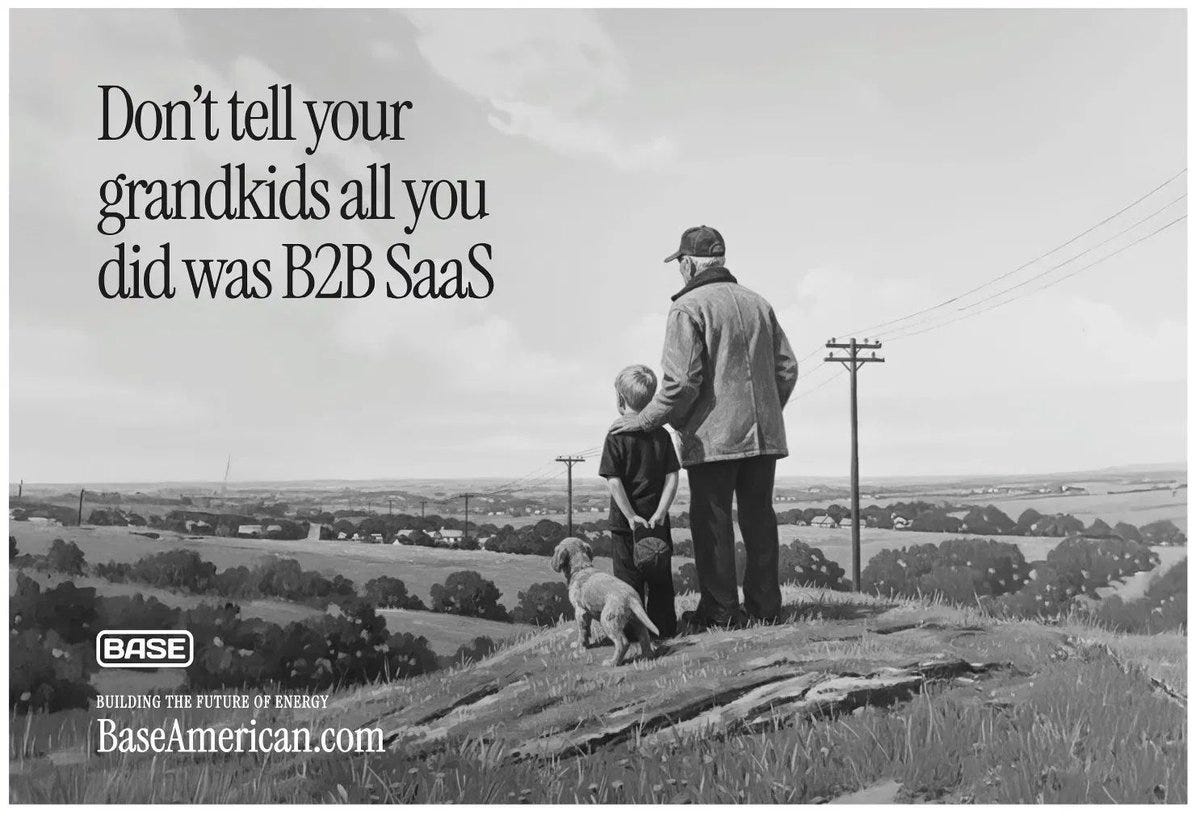
I struggle with this one.
When you study the greatest founders and business people, you learn that their personal lives are often a mess. Divorced, in debt, isolated, abusive, or just generally troubled. This “holistic” mindset is often expressed in retrospect—founders like Brian Chesky say they wish they hadn’t sacrificed so much to get where they are. But they also know their success probably wouldn’t have been possible without those sacrifices.
Doing great things requires immense suffering and sacrifice, yes. But why is this mindset almost exclusively applied to work? Building a personal life is hard too. It’s harder to make friends as we age, family is complicated, Tinder is just hooking up with extra steps, and fame comes with consequences. So why not value it at the same level as work—or at least a bit more than we do now?
In my experience, it’s often just as hard, or harder, to build great relationships as it is to build great companies. You’re not being disciplined by “locking in”, you’re just running away. Though some great founders may be “cursed” with double-edged sword-type traits that cuts both ways, I believe most founders are capable of attaining an actualised life that’s rich in professional and personal success.
The media celebrates billion-dollar acquisitions as success while caring less about the founder’s personal life. This skews our perception of what normalcy and “success” looks like and by extension what we think we should value.
There are exceptions, but I generally believe strongly in extreme ownership—that we’re defined by our actions. This is different from outcomes, which can often be disconnected from the intention behind our actions.
What I mostly want to critique is people (including myself) who say things without acting on them. Along the “Words → Actions → Outcomes” spectrum, I think we should all strive to be on the Actions-Outcomes side rather than just saying a lot and not doing anything. I’ve been thinking about this on both the personal and professional side:
When I left my previous startup, I wanted to start really building the relationships I had with colleagues, advisors, and people I admired. I saw qualities in them I wanted to embody, and I realised the best way to do so was by taking a risk to pursue my own projects. Although the initial project I launched was not successful, I have no regrets about it. But the one thing I do regret is that I didn’t write enough about my journey in the process.
Learning in public—it’s one of the things I deeply respected about Nadia Asparouhova, for example, but it proved much harder and scarier than I thought. To this day, I still recommend anyone and everyone I meet to write more in public. It’s only brought positive things into my life, and my only regret is that I didn’t write more. My confidence has grown significantly with time, and surprisingly, the more I write, the more I have to say.
My grandfather passed from cancer at Christmas 2024 and left my grandmother alone in a rather large house. For an 85+ year old woman who I don’t think weighs more than 40kg, the thought of her being alone was scary—his passing another painful reminder that you never really know when you’ll see someone for the last time. I wanted to spend more time with her, and told her I’d visit in July.
But I ended up going to London and never visited her. She’s doing okay on her own right now, but that guilt has never left me. She’s excited for what I’m doing and rarely says she wants me to visit, even though I know she does.
I was defined by my actions in the end. Defined by not writing enough, not seeing my family enough—just as I might be defined by taking massive swings to do hard things professionally. That guilt, and that experience, have made me think much harder about what I should really be doing with my time. I wouldn’t trade this period of my life with anything else. I’ve been calling it my own “Eat, Pray, Love” era. And like the movie, there’s been plenty of meditation and yoga.
Since I left my previous role, I’ve had the incredible opportunity to reflect on what I value and how I measure my life. A liminal space where I can allocate time and effort to things I never had room for before. For anyone who can financially afford it, I highly recommend creating gaps in your professional life just to think. You realise quickly that there’s a lot of life to live and plenty of big problems worth solving. I promise you won’t be bored.
One of the most important decisions you’ll ever make is what problem you choose to work on. Unfortunately, society doesn’t encourage—or give most people much time—to decide this. The liminal spaces to do this carefully and thoughtfully are scarce, but it’s worth carving out for yourself.
I believe they give you a kind of resolve in who you are. The kind of confidence that lets you stick to your guns when everything feels uncertain. I think it’s one of the scarcest things in today’s world.
So think big, and I hope you can ask yourself: “How will I measure my life?”
No posts
Comments
Nothing yet. Say the first thing.
Sign in to join the conversation.