
Hi, it’s Alex from 20VC. I’m investing in seed & series A European vertical solutions (vSol) which are industry specific solutions aiming to become industry OS and combining dynamics from SaaS, marketplaces and fintechs. Overlooked is a weekly newsletter about venture capital and vSol. Today, I’m sharing the most insightful tech news of November.
I curated updates and insights around three themes:
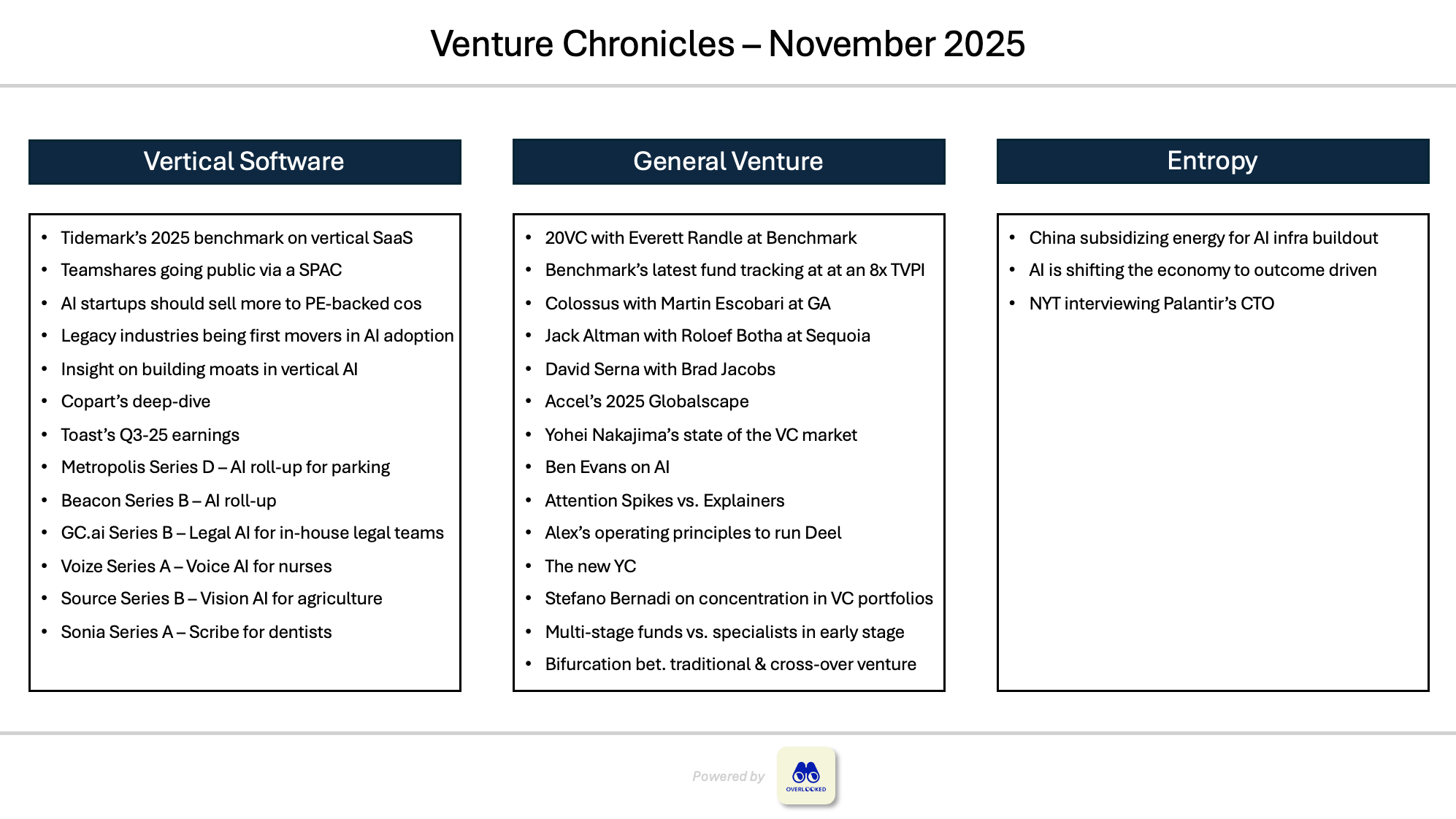
Vertical Software
General Venture Capital
Entropy - other news and personal topics of interest
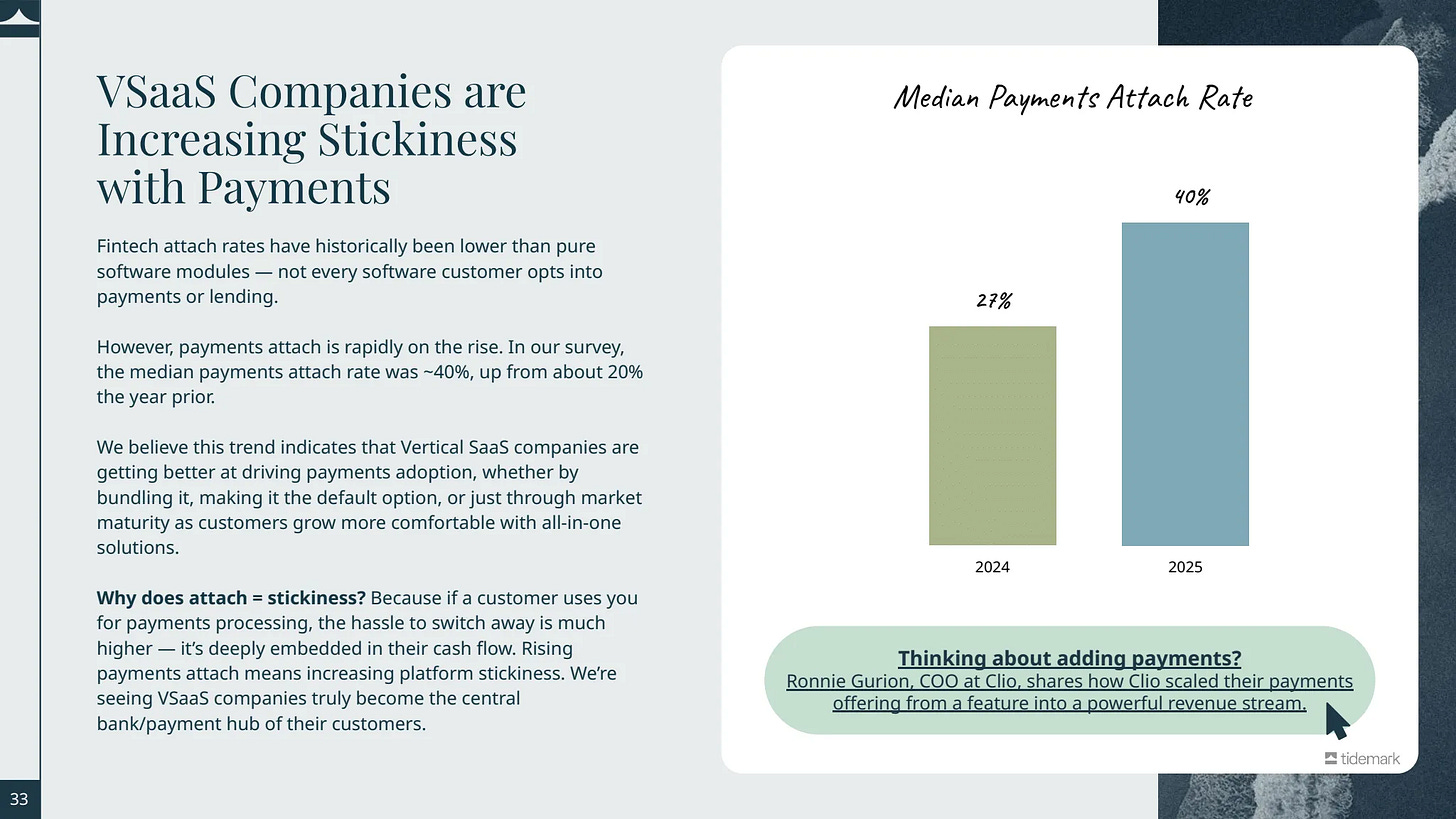
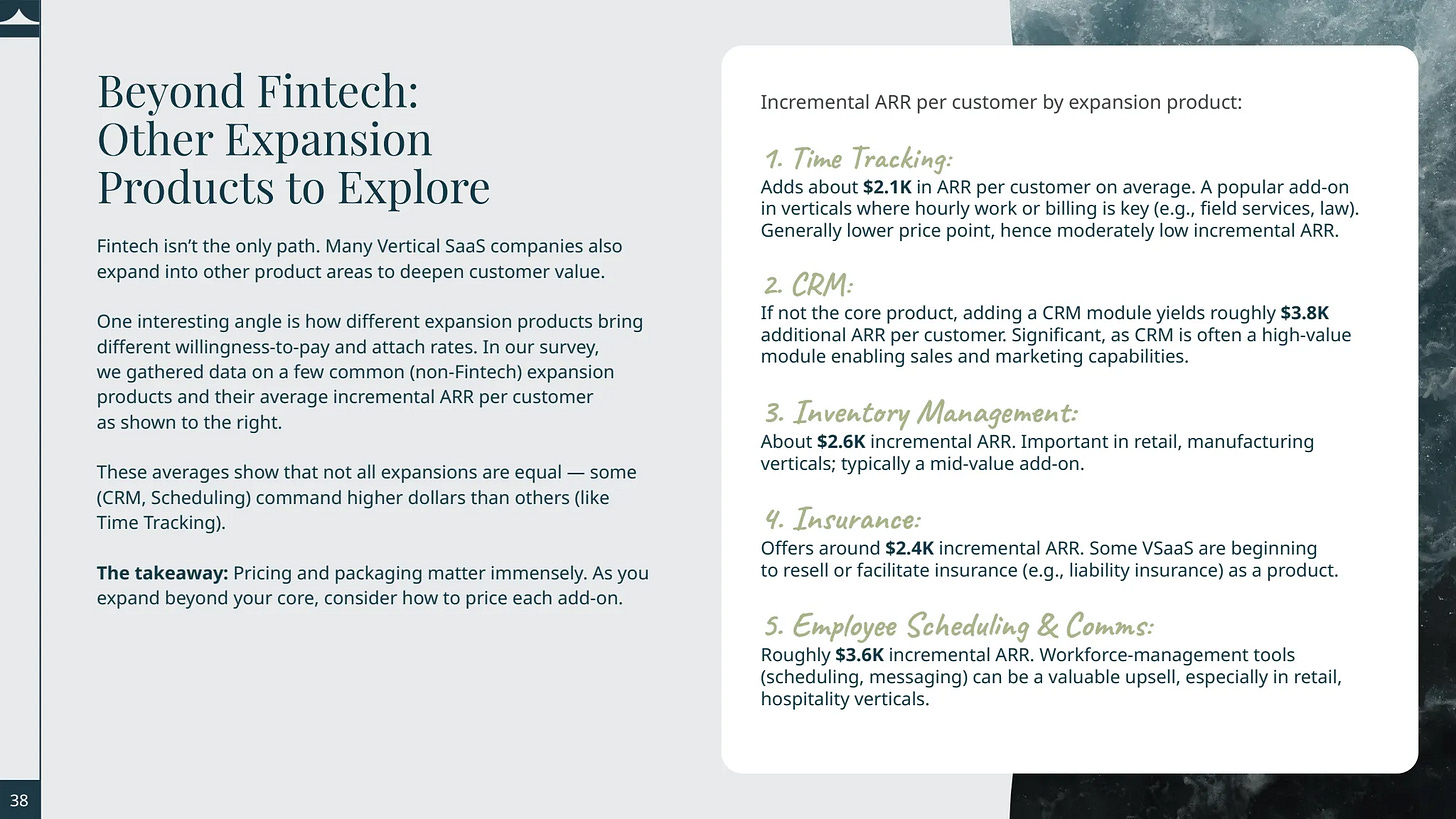
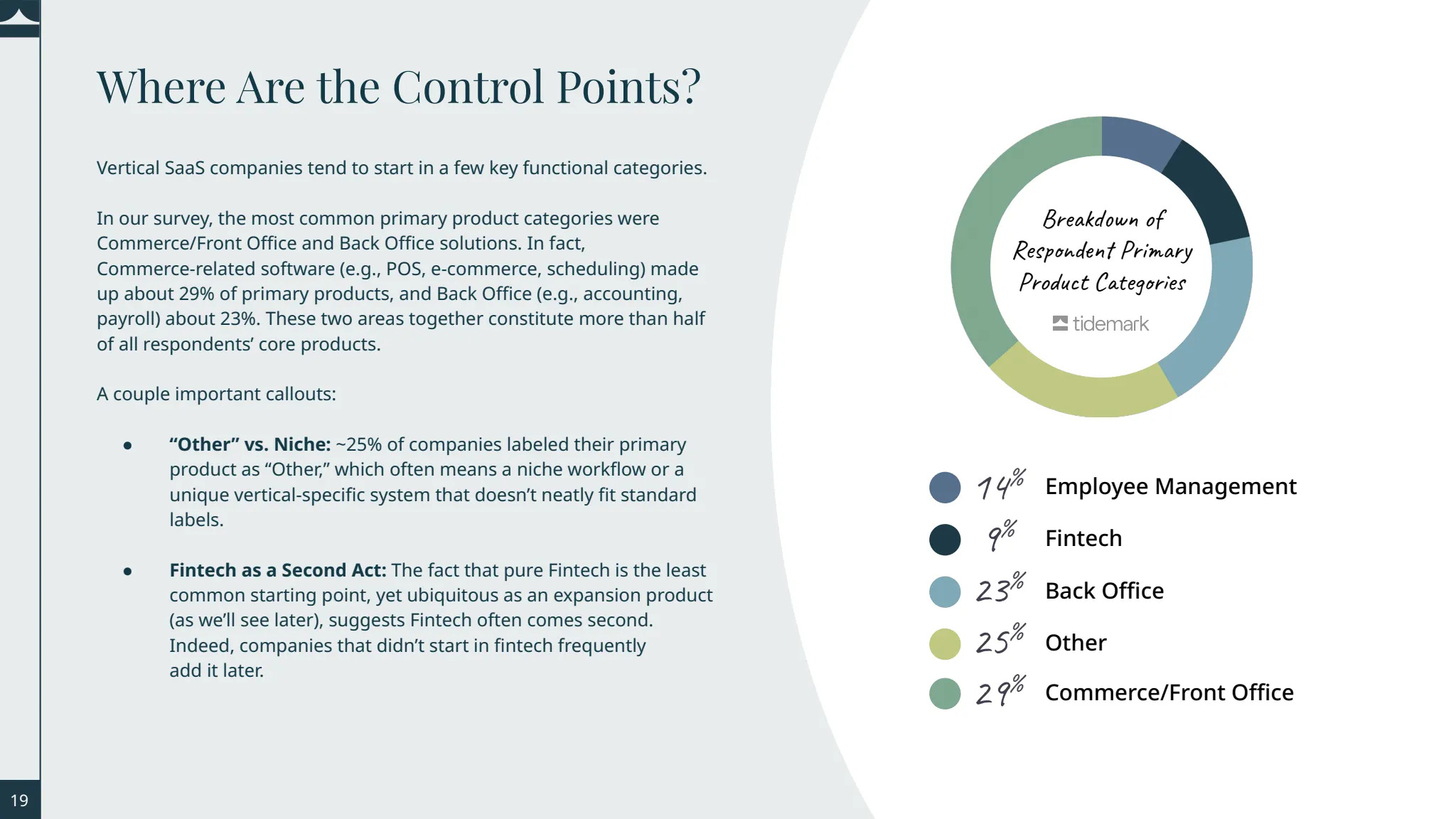
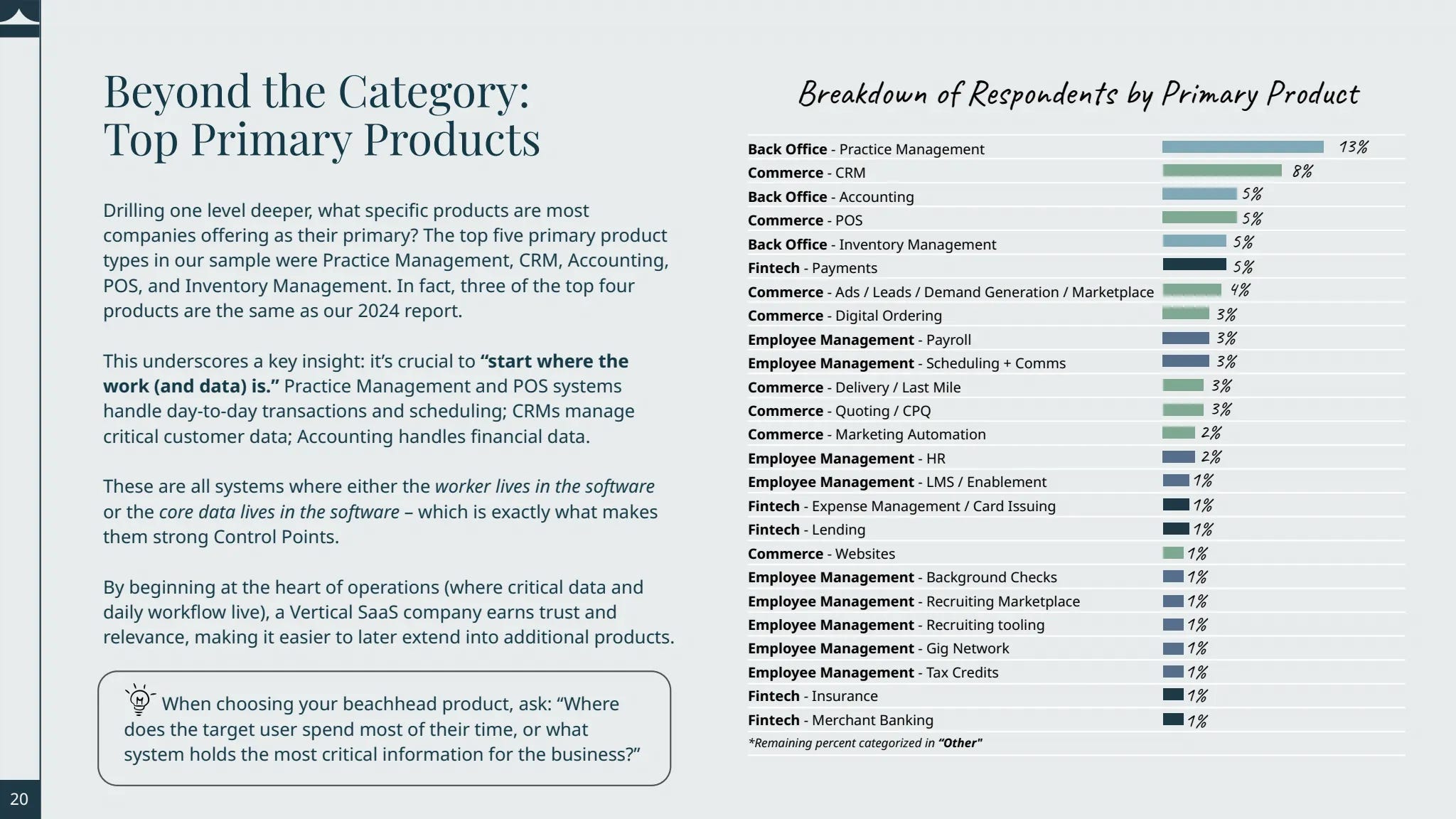
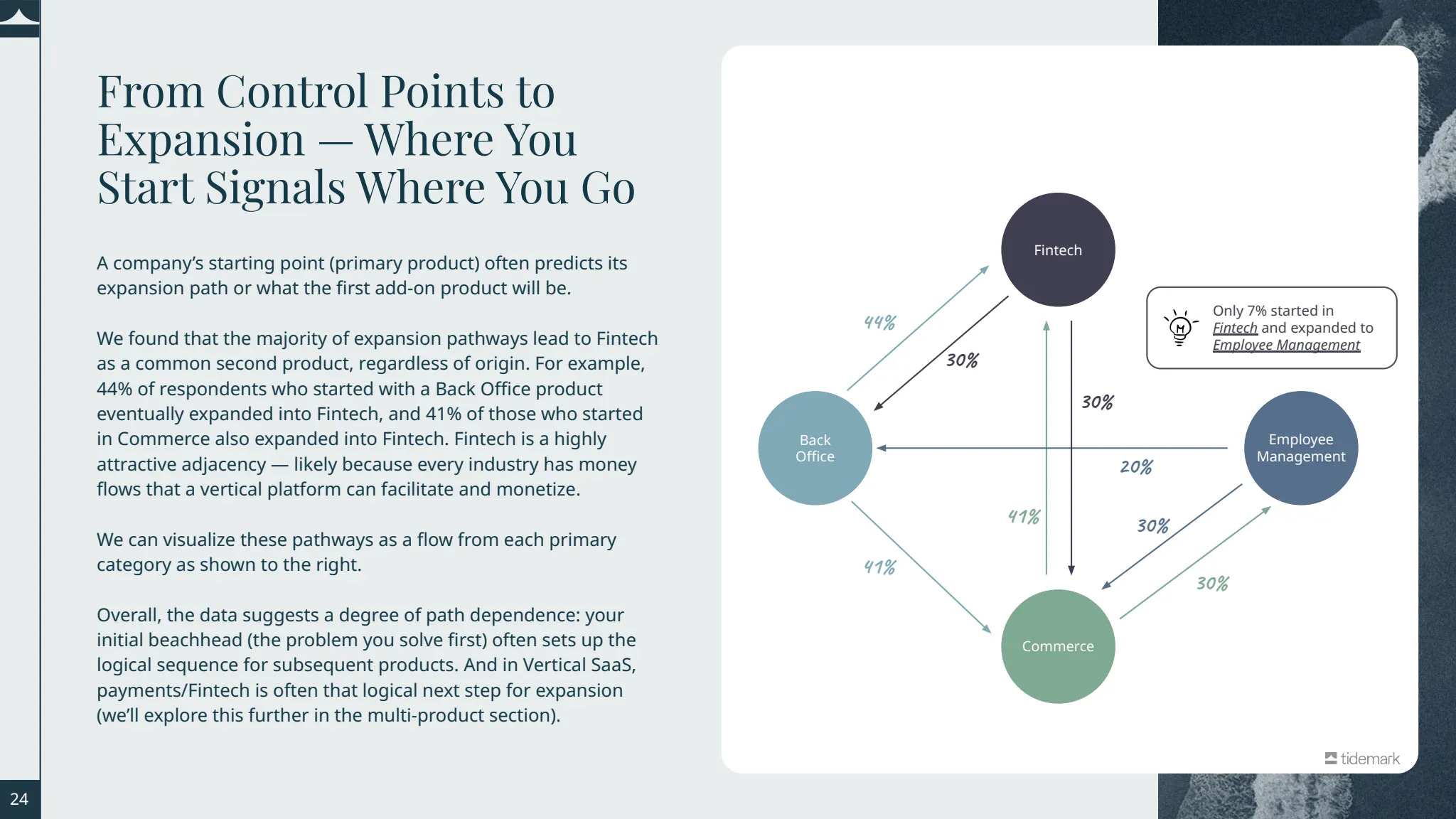
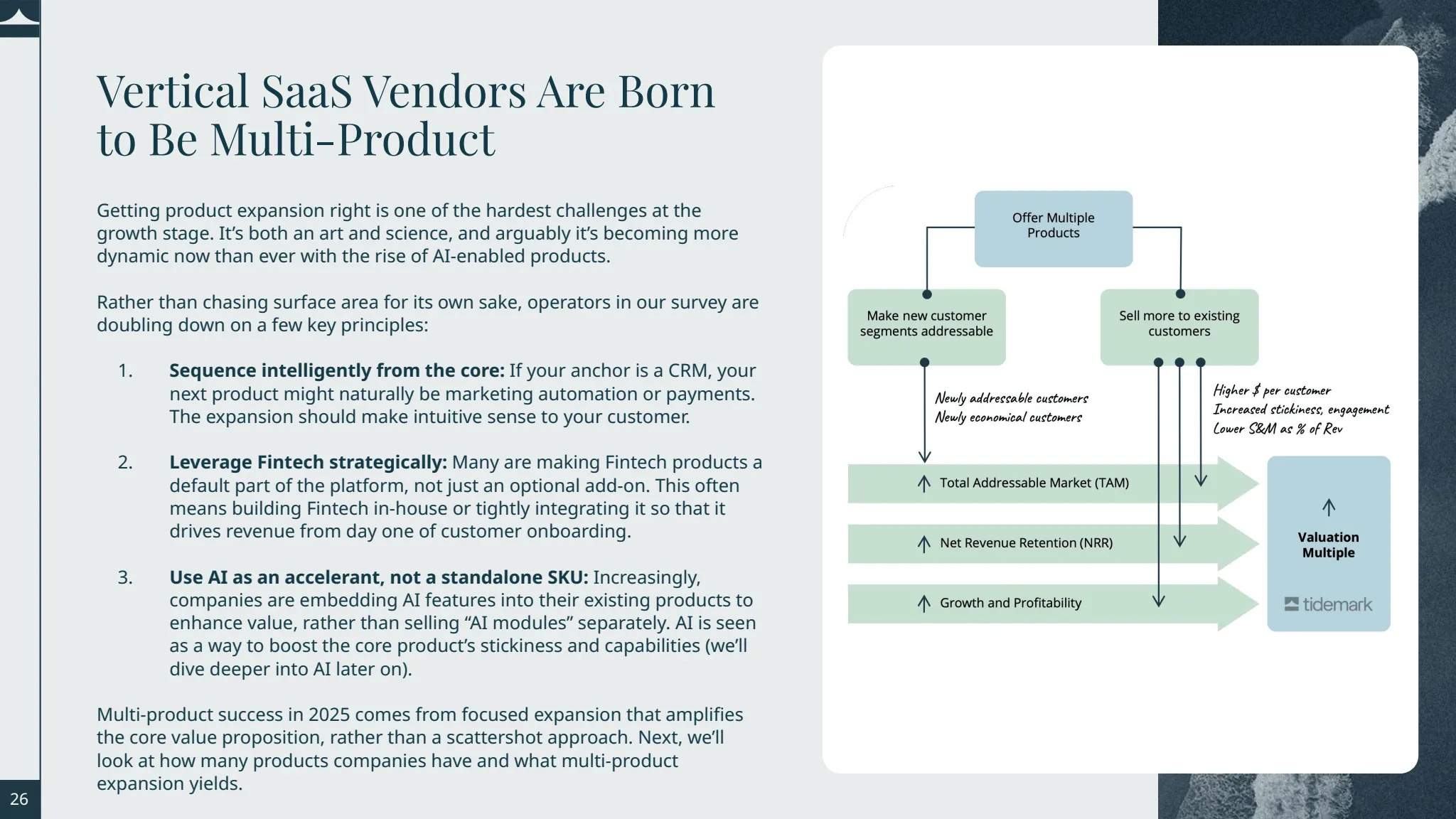
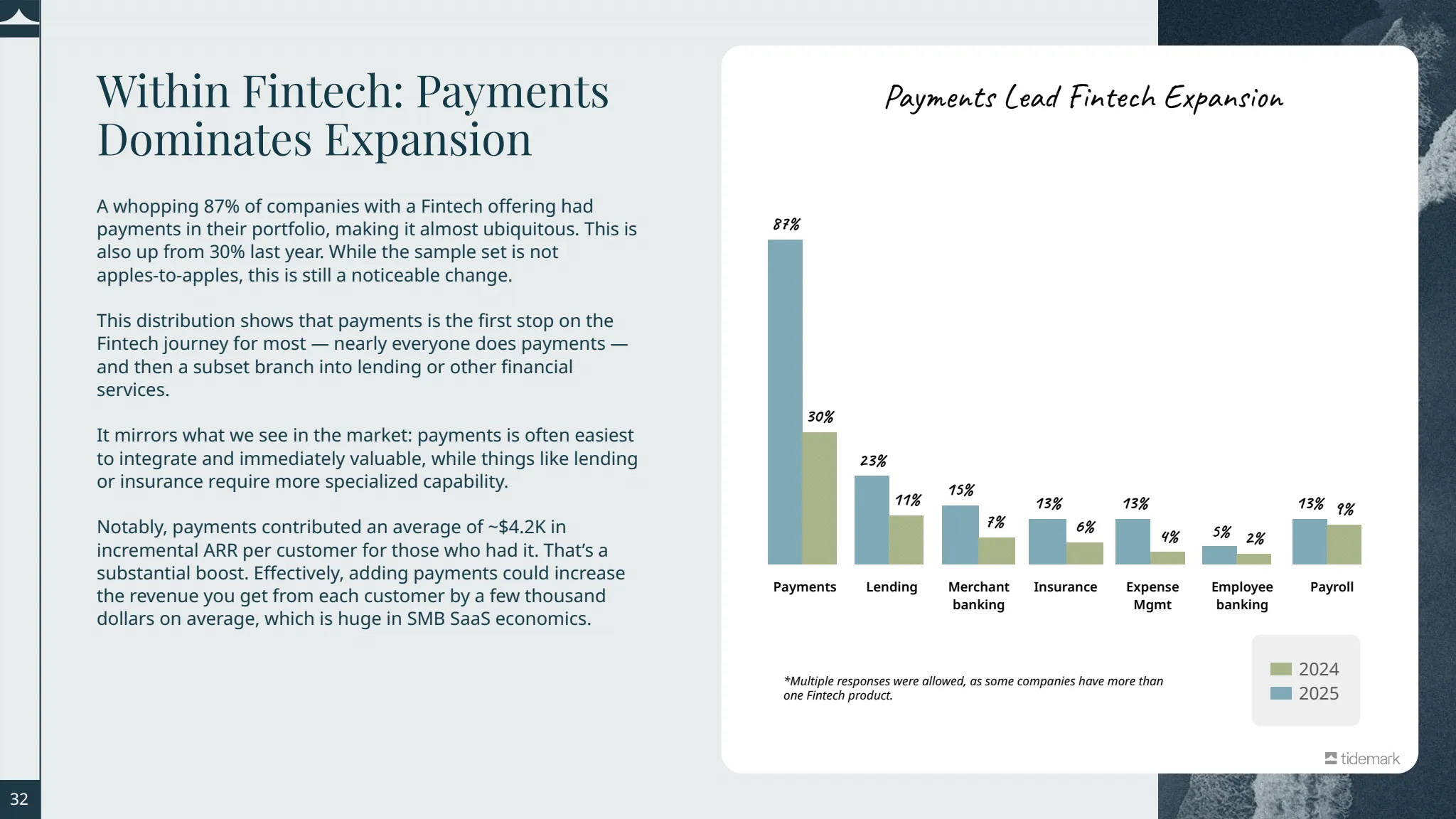
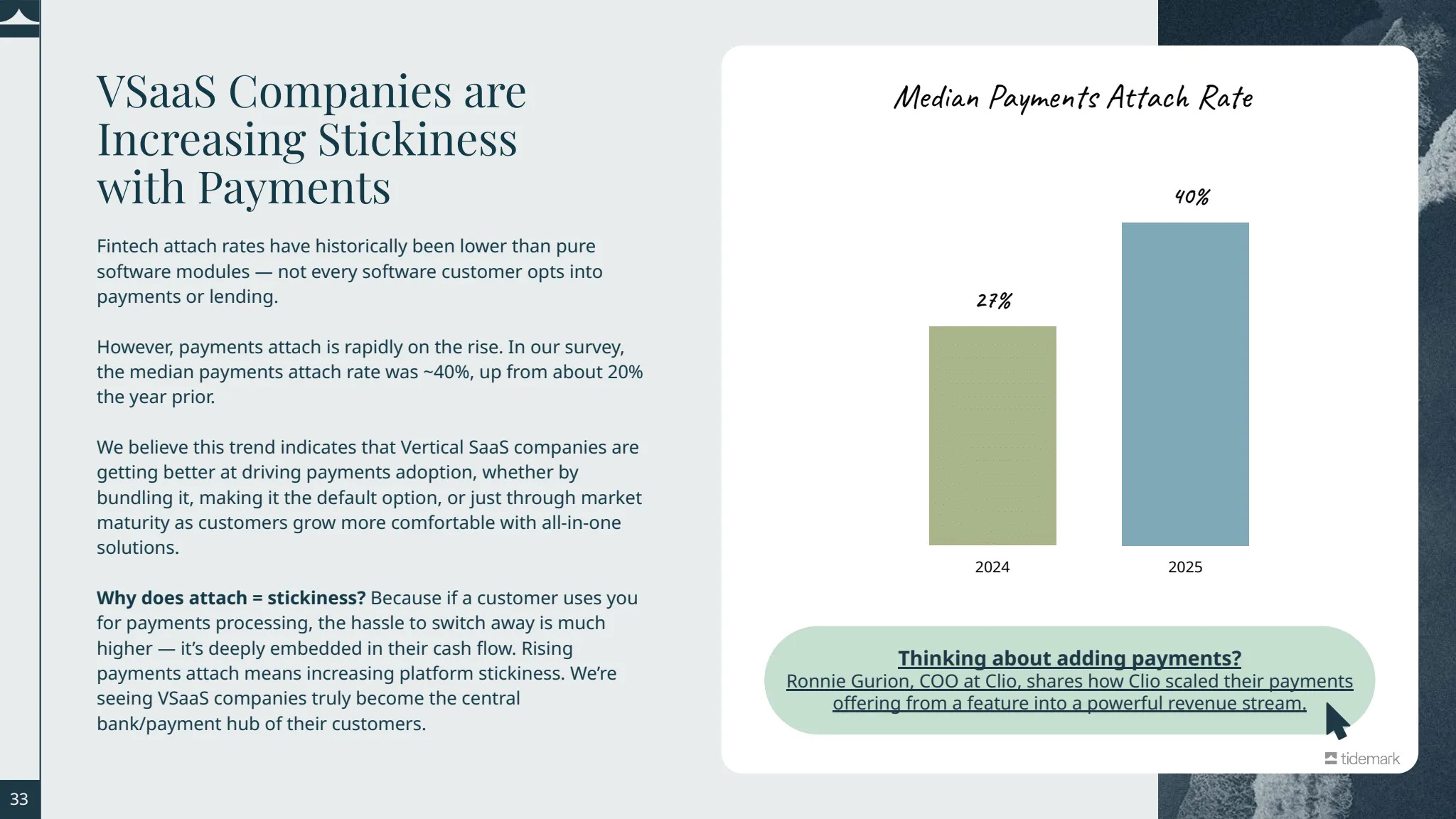
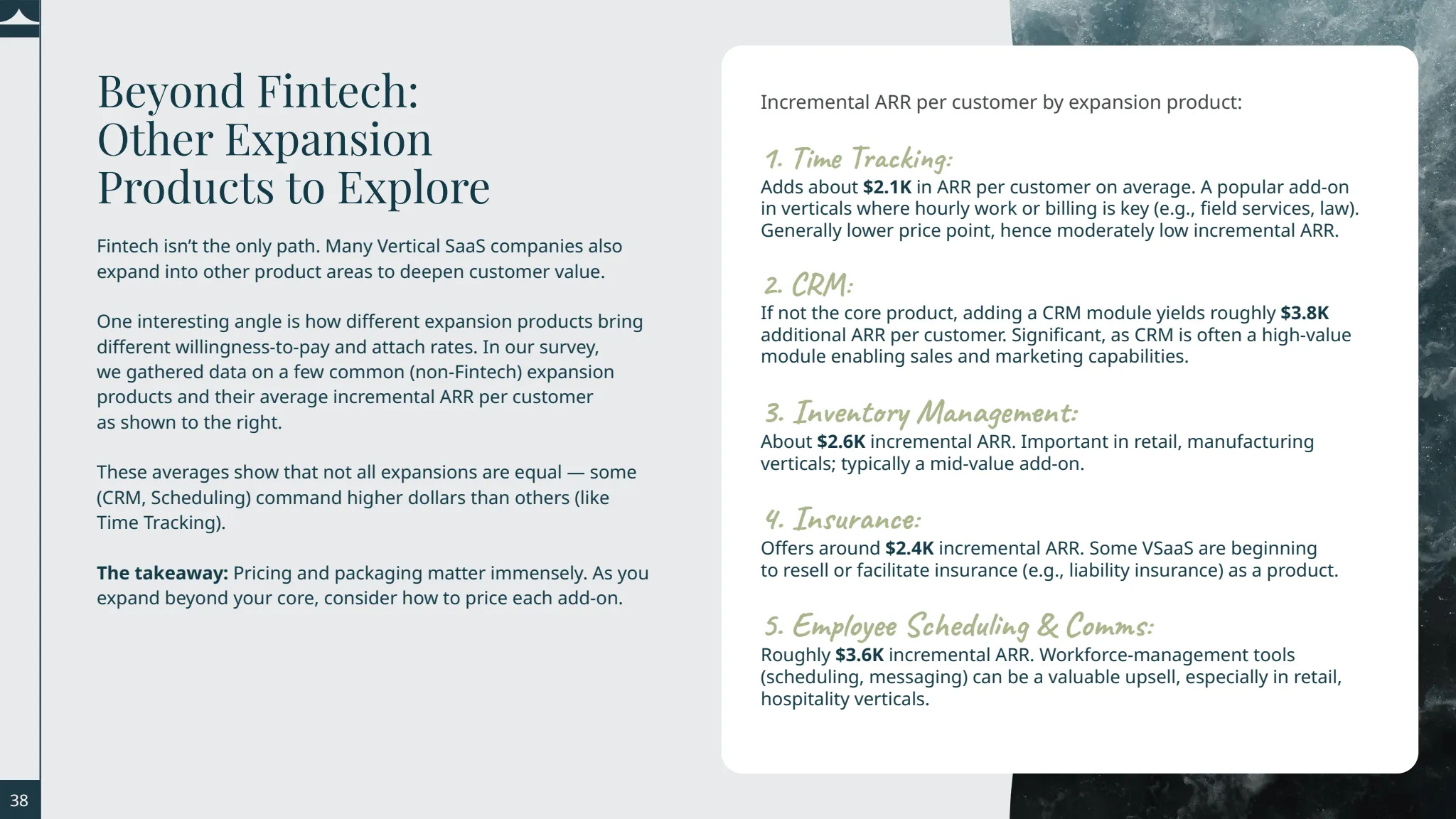
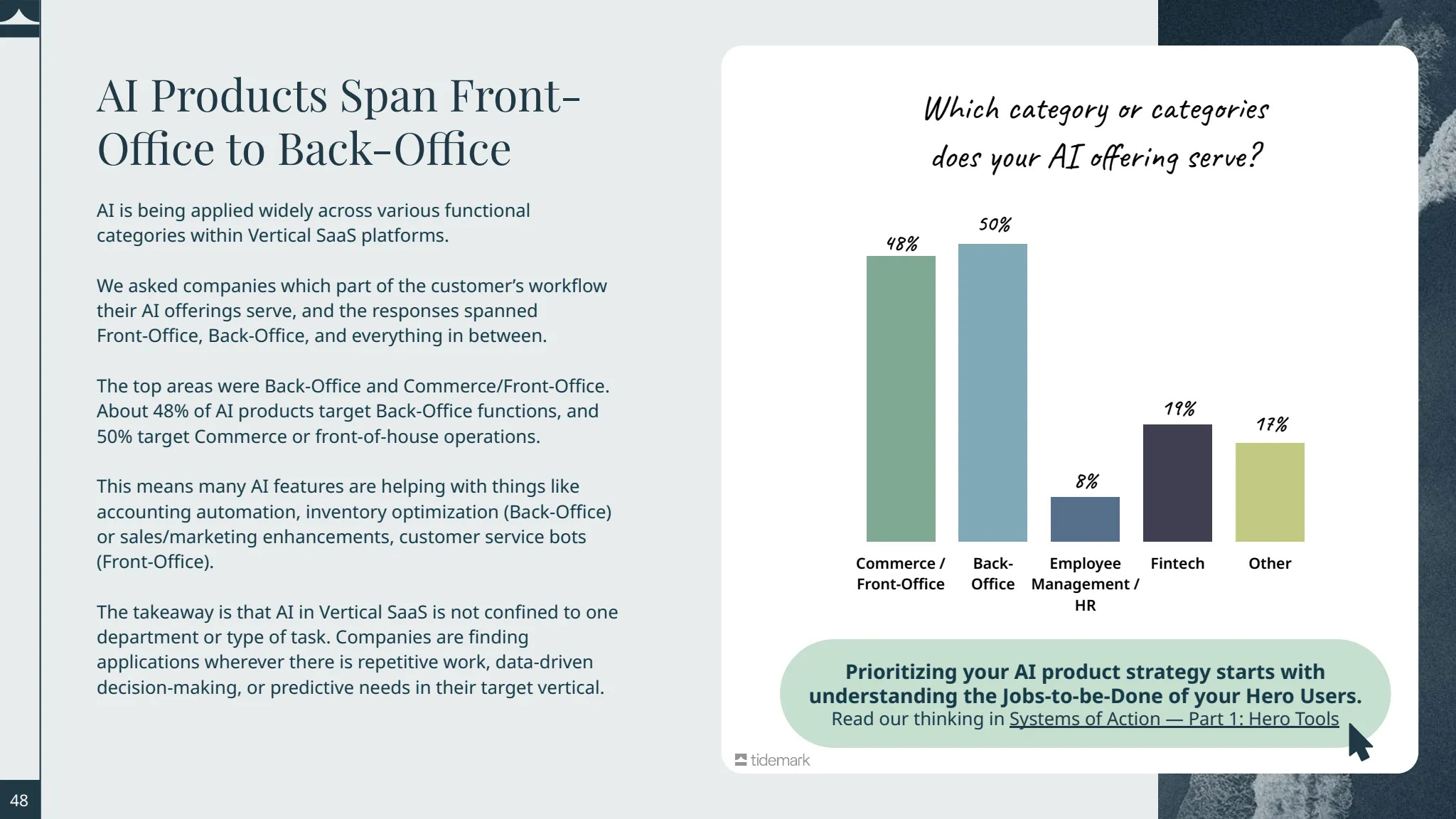
Tidemark released its 2025 benchmark on vertical SaaS. - Tidemark



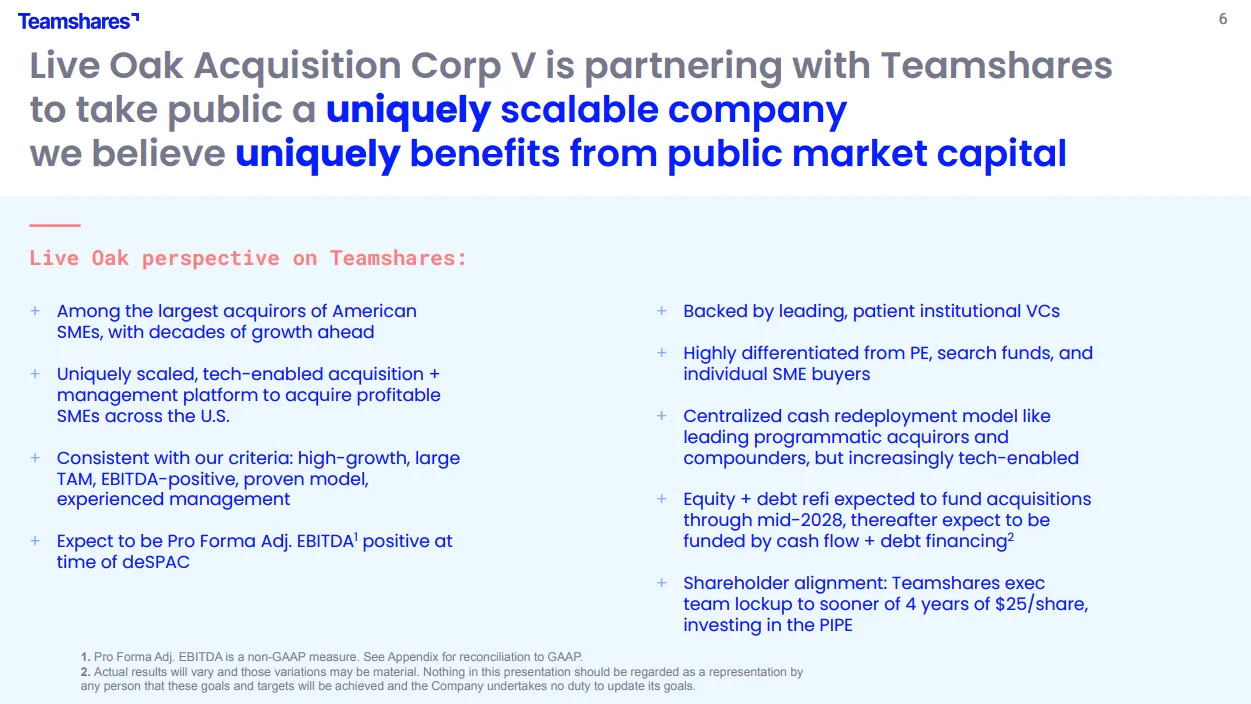
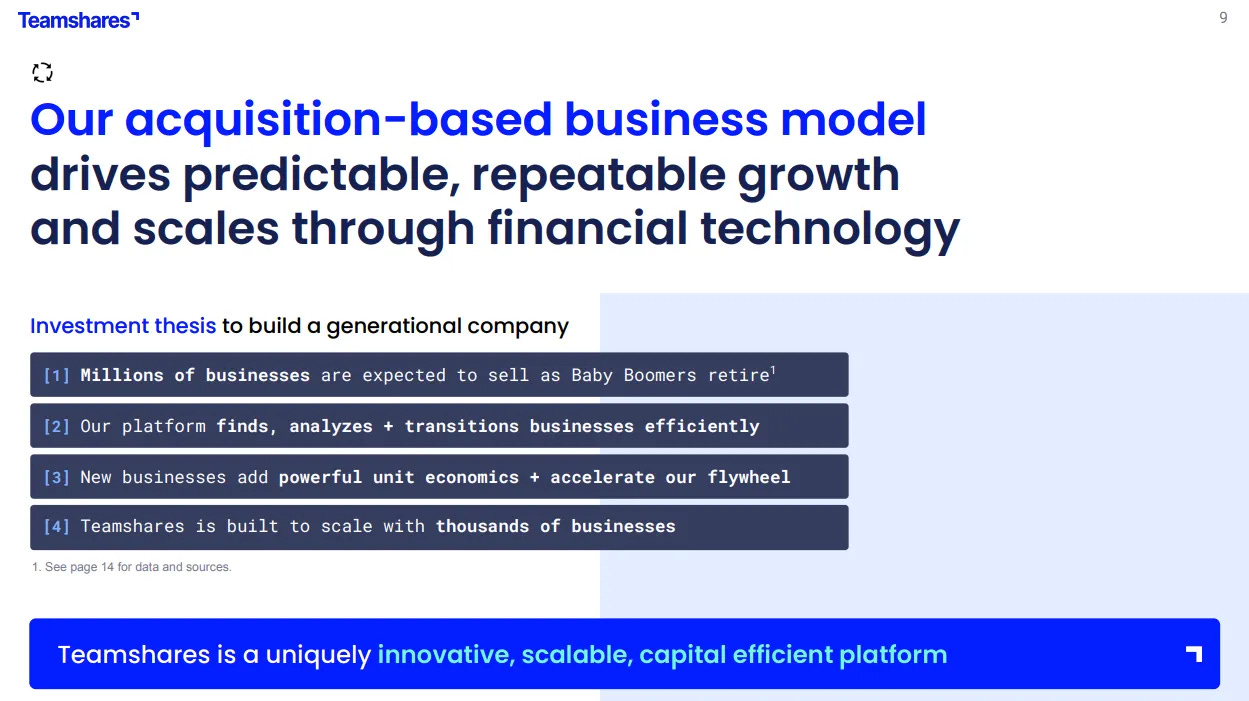
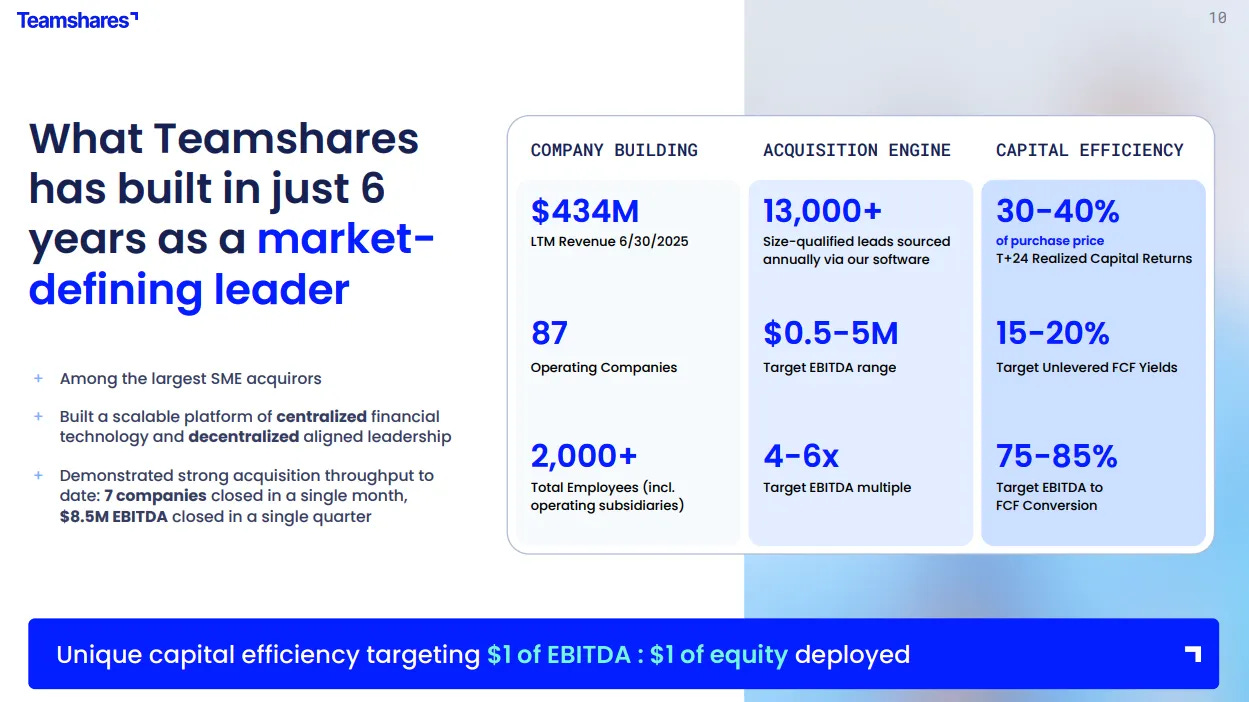
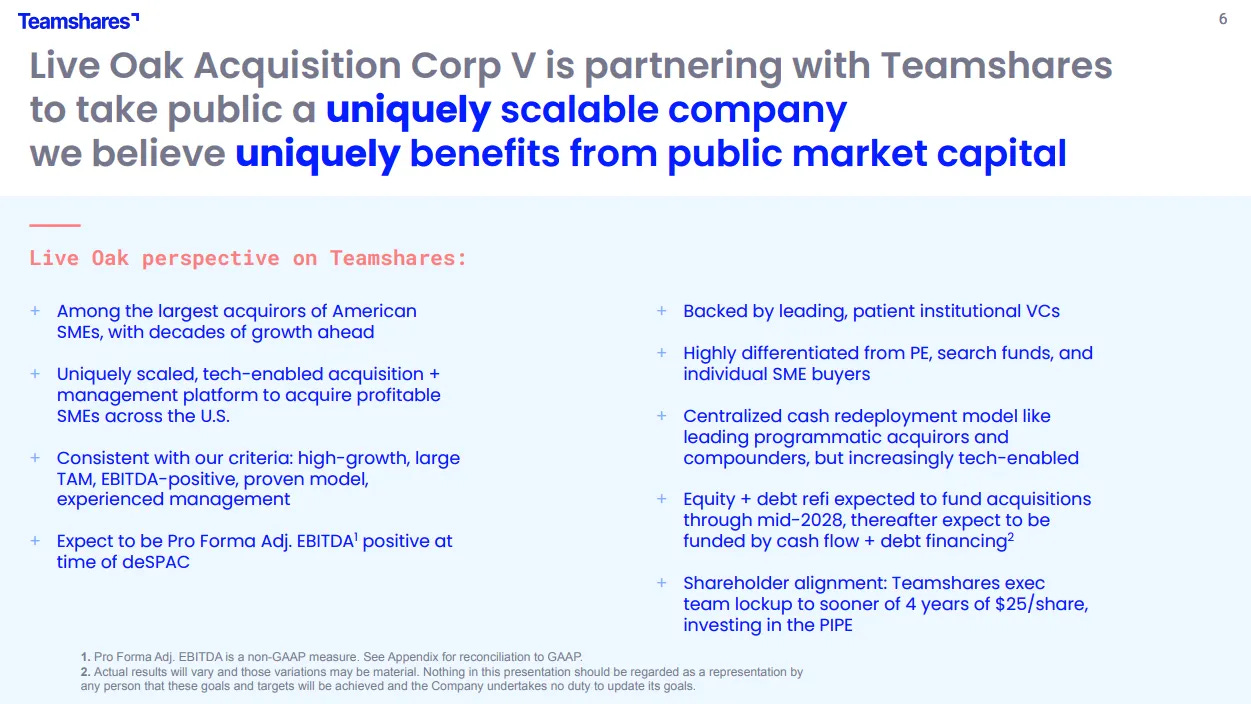
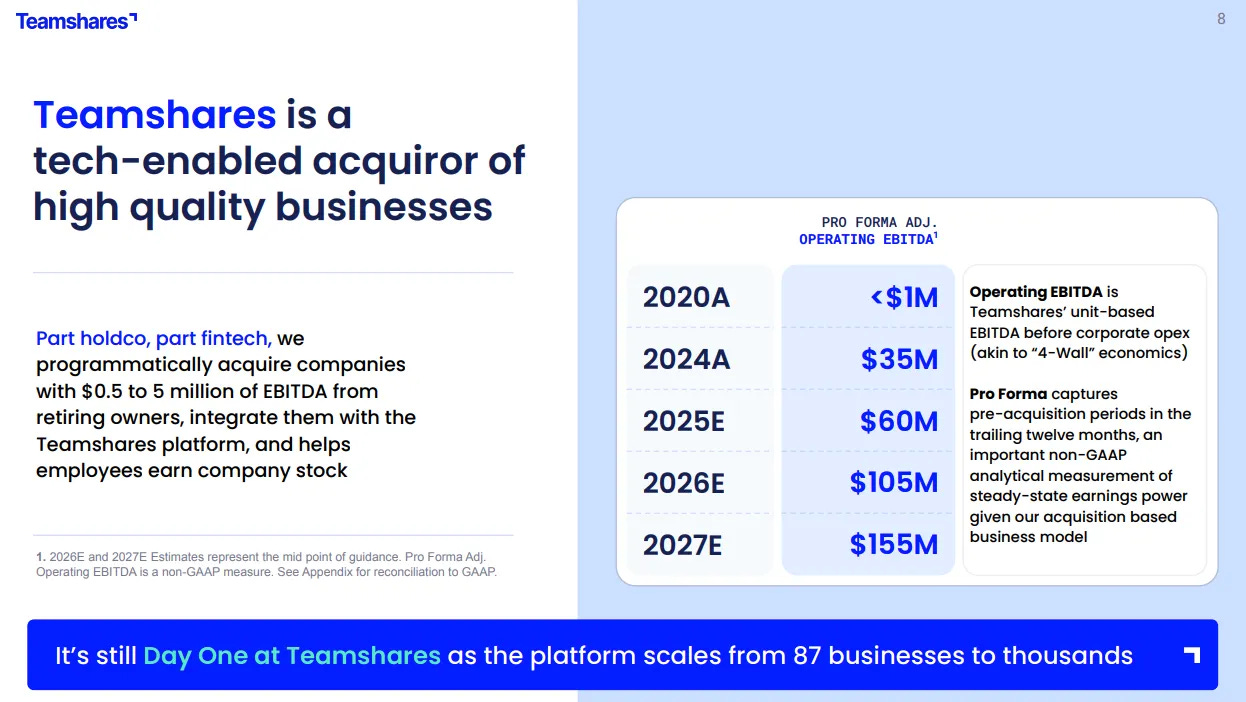
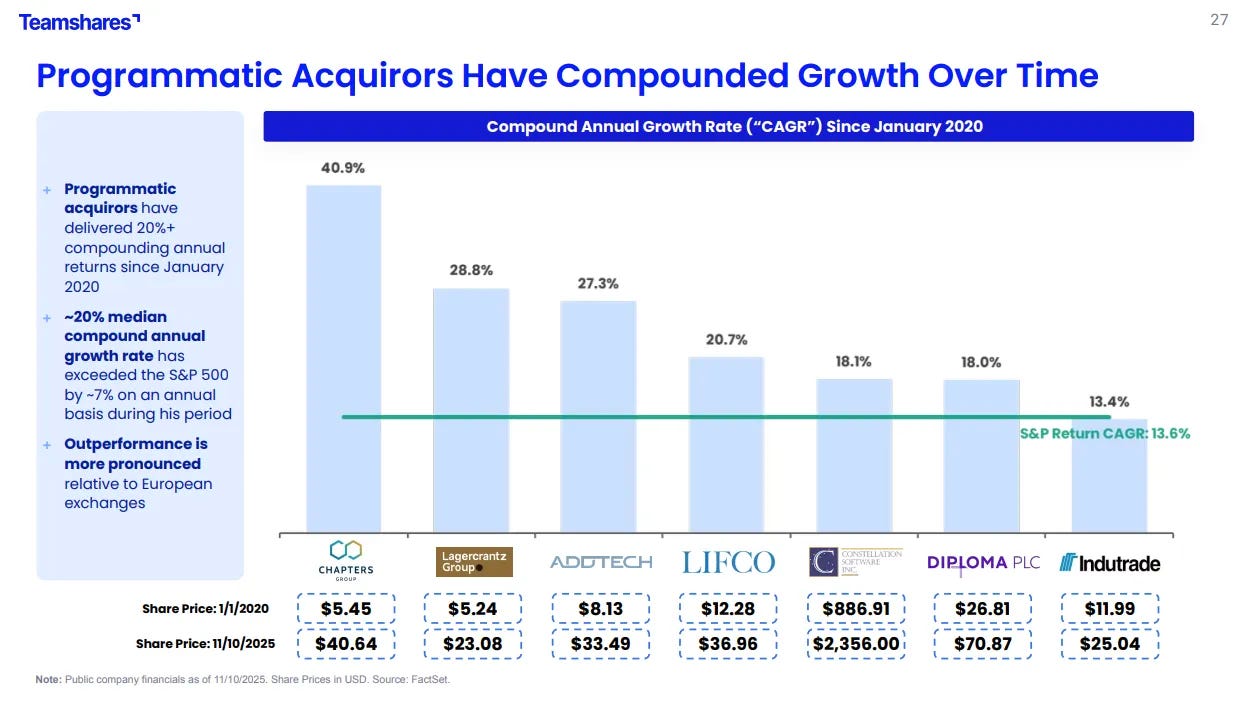
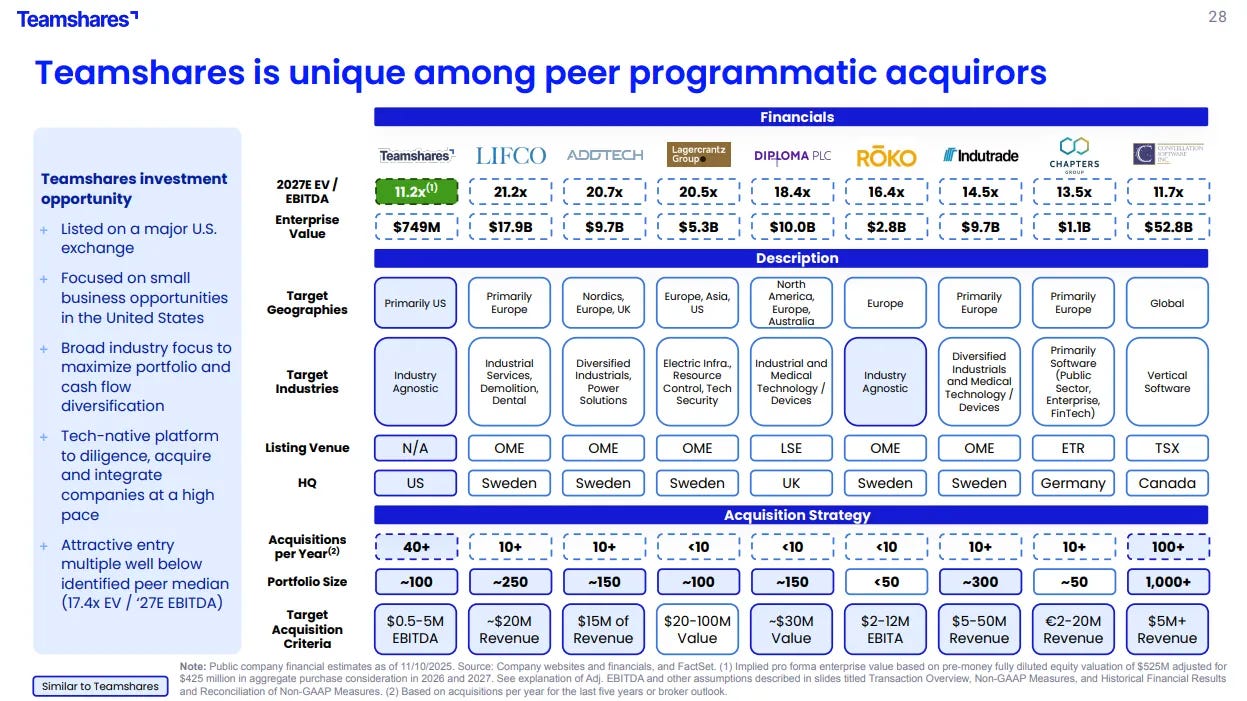
Teamshares is going public via a SPAC merger at a $750m valuation with a vehicle managed by Live Oak. - Teamshares
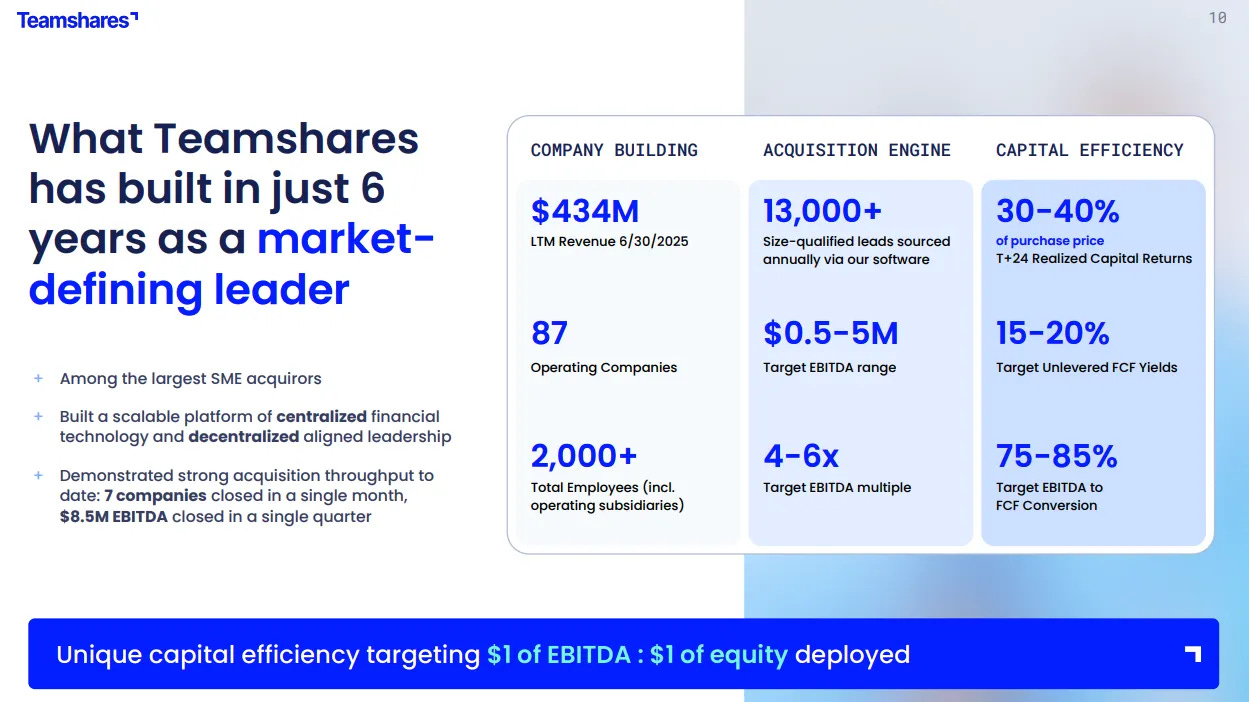
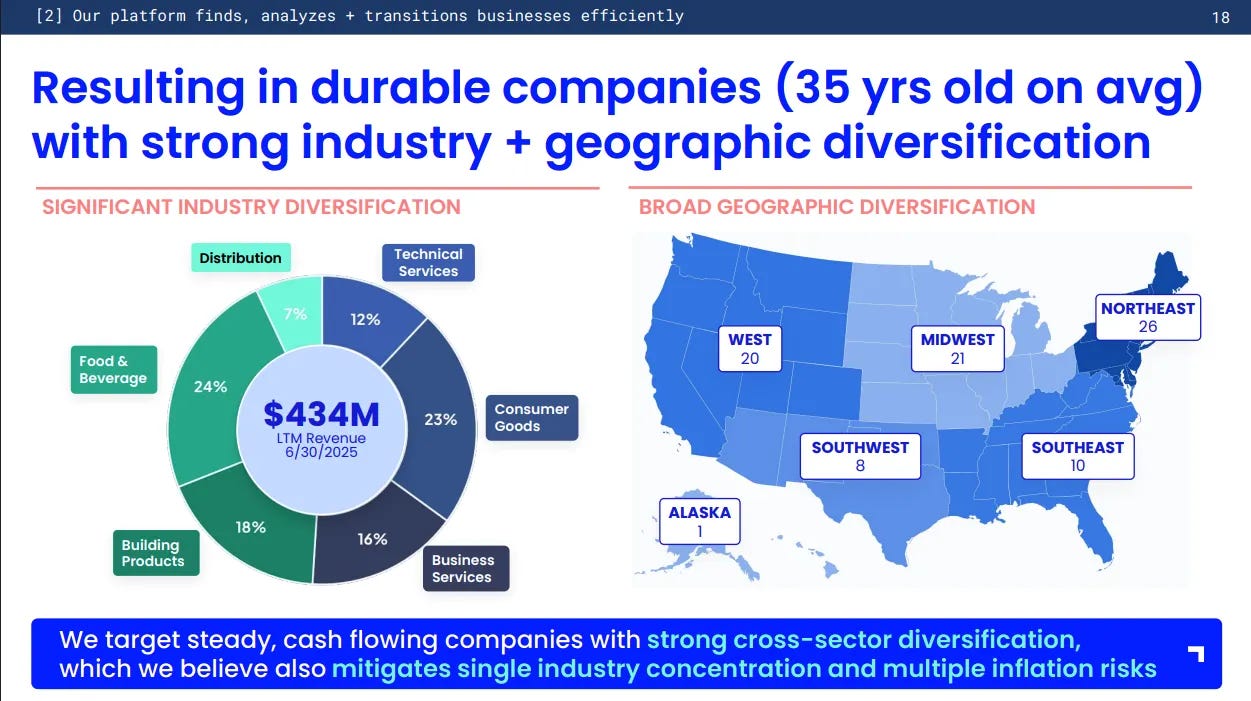
It’s a tech-enabled roll-up of high quality SMBs. It targets companies with EBITDA in the $0.5-5.0 m range, typically owned by retiring founders. Teamshares has consolidated revenue above $400m across 40 industries and 30 states.
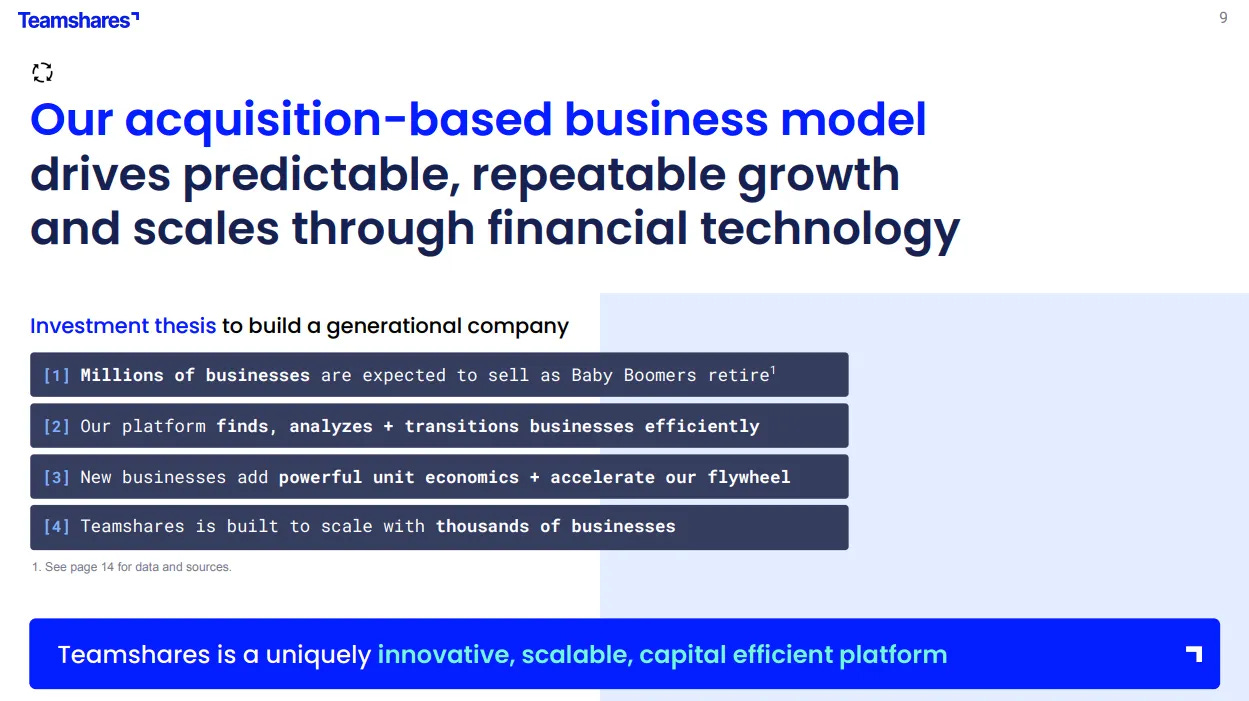
There are approximately 3m US companies whose owners are over age 55 and likely to face succession or sale decisions over the next decade.
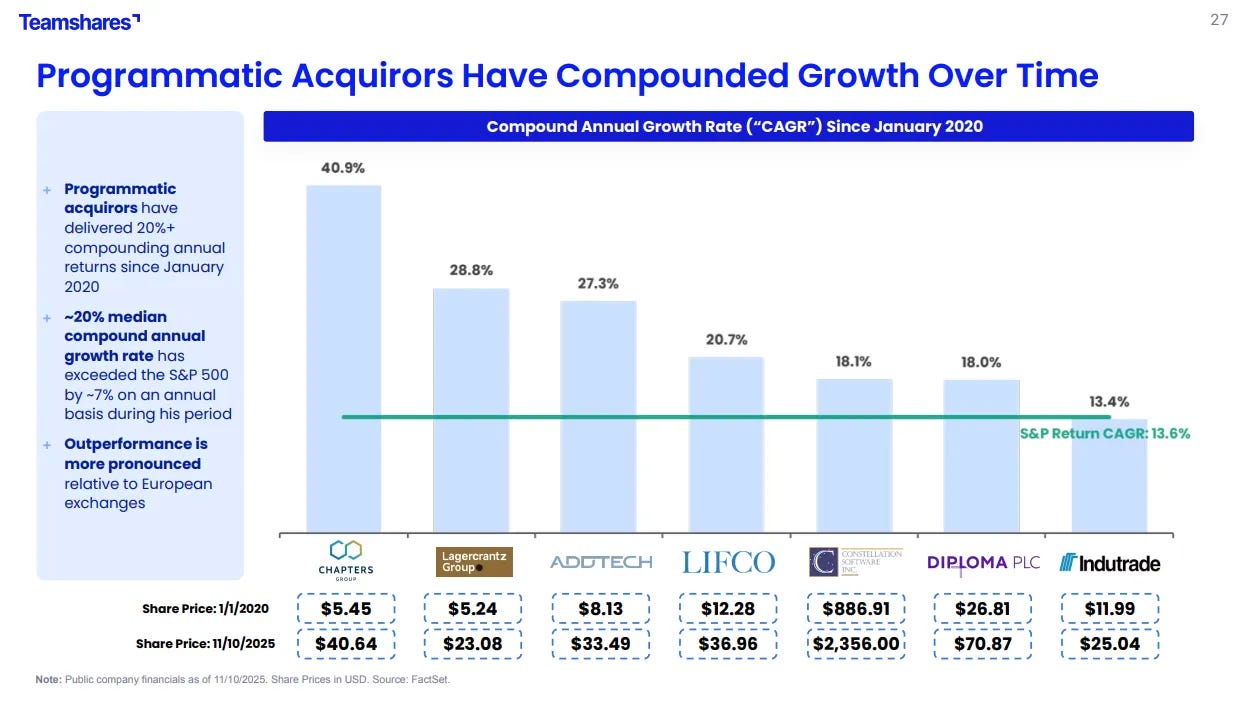
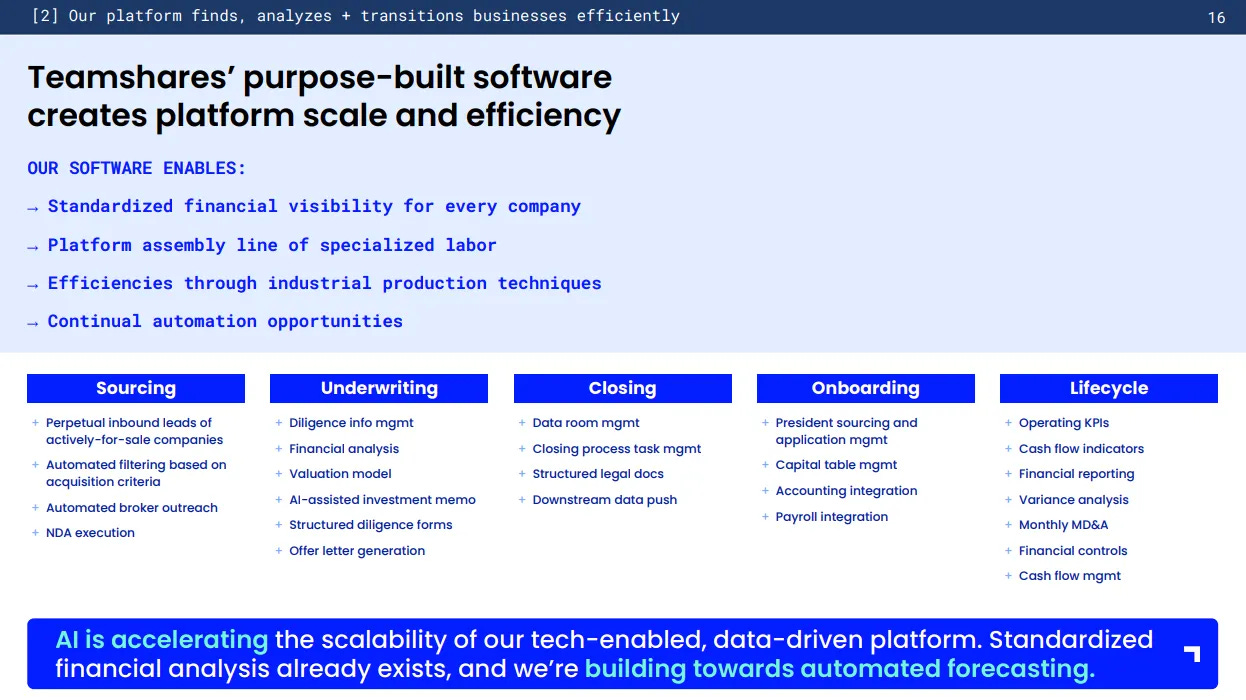
Teamshares acquires enterprises, embed them into its platform, align employee equity, and then keep repeating acquisition + integration to deliver scale, margin improvement, cash-flow conversion.




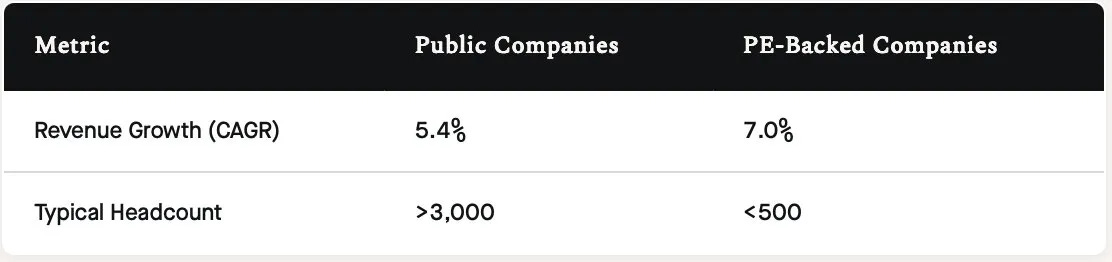
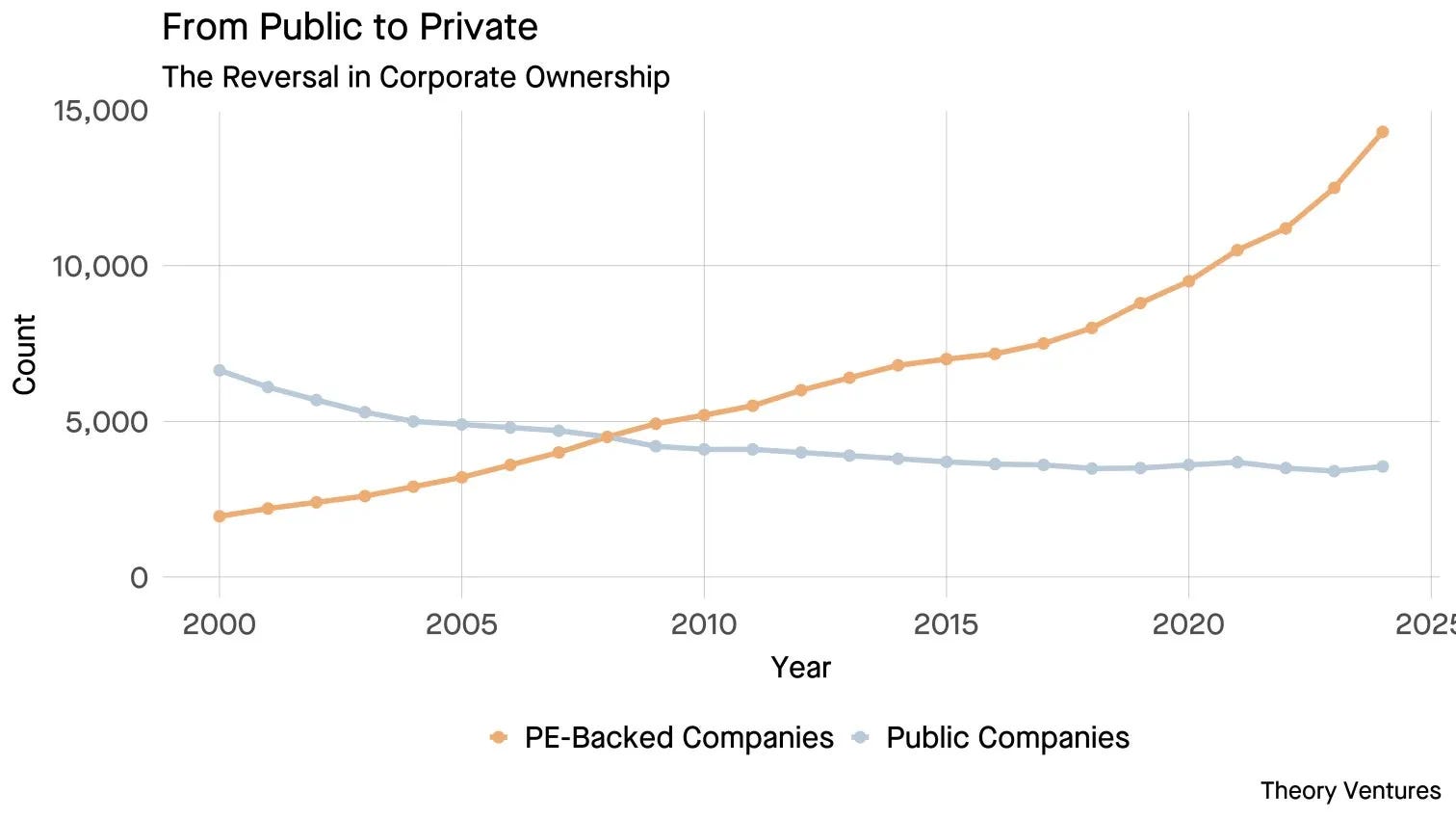
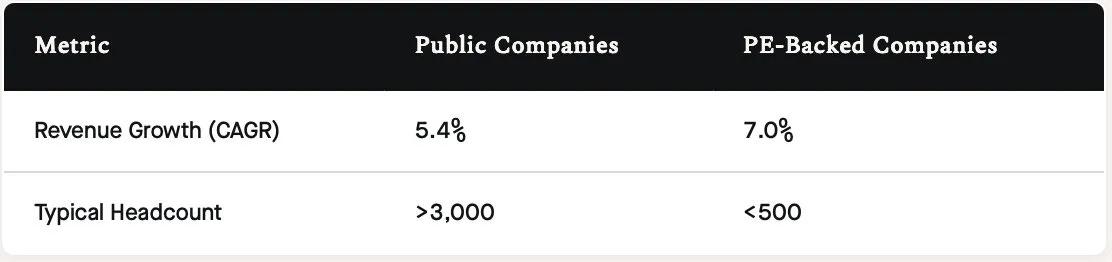
AI startups should sell to private-equity backed companies which are growing rapidly in the US and are craving for solutions to improve their profitability. - Tomasz Tunguz
“While public companies have decreased from 6,639 in 2000 to 3,550 in 2024, PE-owned companies in the US have grown from 1,950 to 14,300.”
“The crossover happened in 2009, when PE inventory overtook public company counts for the first time. By 2024, PE-backed companies outnumber public firms by roughly 4:1.”
“The mid-market profile of these PE-owned companies suits AI startups’ desires for faster sales cycles.”
“The profit motive of private equity aligns perfectly with AI startups’ capacity to cut costs & drive efficiency. PE firms acquire companies to improve margins & operational performance before exit. AI tools that reduce headcount, automate processes, or accelerate workflows deliver exactly what PE operating partners need.”
“A private equity firm owning 25 companies proves value in one or two before rolling out to the entire portfolio.”

Legacy institutions are emerging as the fastest adopters of vertical AI. - Equal
“Historically, we’d always seen startups as the early adopters for new entry products.”
“In vertical AI, however, that doesn’t seem to be the case. We are seeing legacy institutions as the early adopters for our products. These institutions are committing early, dedicating real budget, and sprinting through implementations.”
“Being a mature startup is harder than ever before - fundraising markets are categorically focused on AI, credit markets have dried up and the bar for going public has increased. In our opinion, you should be doing anything you can to get ahead, especially partnering with the latest and greatest AI specialists to get additional leverage for your business and to cut your burn.”
“Today’s modern business models aren’t about the application interfaces you’ve developed, but the networks, customers and data that you have accumulated over the life of your business.”
Insight wrote a post on the different levers to build a moat in vertical AI. - Insight
“We see two major categories where vertical AI companies can build real moats: workflow depth and proprietary data. Whether through core workflow systems with AI deeply embedded, forward-deployed engineering, custom integrations, or novel data capture, these are the edges that create compounding advantages.”
“The companies that will endure are the ones that build systems of record and engagement — platforms their users live in all day, where work is created, shared, and stored.”
“In the AI era, faster setup and adaptive configuration [with Forward Deployed Engineers] allow companies to deliver tailored solutions without sacrificing the scalability of software.”
“If workflow depth gives you stickiness, proprietary data gives you a compounding advantage. Access to specific, and often messy and unstandardized data, remains one of the strongest moats in AI. Foundation models can do powerful things with public data, but they don’t have every bespoke integration, private customer data, or edge device feed.”
My friend Javier Valverde at Prosus wrote a great company deep-dive on Copart which is a online car auction marketplace where insurance companies, dealerships, and individuals sell and buy damaged, used, or salvage vehicles. - Javier Valverde
“Copart is one of the largest car auction sites in the world, and the leader in auctions of damaged cars (e.g. a car that has been in an accident).”
Tech was a key ingredient in Copart’s success. “They were one of the first to use an ERP in the early 80s, the first to digitize paper processing of cars with the DMV, and the first to let buyers bid on cars through the internet in the mid 90s, revolutionizing the unit economics of the business.”
“Johnson turned the yard into a quiet cash machine by innovating. He bought the car brands other yards ignored, broke down parts to finer SKUs, and made a point to keep facilities clean for customers. He ended up starting several junkyards focused on different niches, like trucks or self service.”
“Increasing density to reduce towing cost. The business’s biggest cost was the distance between the accident site and yard. More yards in the bay area meant shorter tows. Shorter tows meant higher margins.”
“The model scaled exactly as Johnson predicted: more yards → lower towing cost → more cars → more buyers → higher sale prices → higher margins.”
“A hidden feature of the Copart operating model was significant negative working capital, as the cash for cars is paid to Copart immediately by the buyer, and Copart would not pay out the seller until the car transfer papers have been processed.”
“In the late 90s Copart would buy yards operating at 5-10% EBIT and integrate them into their system to earn 25% EBIT.”
“Copart is today worth $32Bn while IAA was worth $5Bn before it was acquired in 2023. Copart does $4Bn in revenue and $1.5Bn in EBIT (37% margin). $1 invested at IPO would have compounded to $11, a decade later in 2004 (10x), to $25 in 2014 (25x), and to a whooping $250 today (250x).”
Toast reported its Q3-2025’s earnings. It reached $2bn in ARR growing 30% YoY. It increased its locations 23% YoY adding 7.5k locations in the quarter to reach 156k total locations. - Toast
It expanded Toast IQ with an AI conversational assistant for restaurants and retailers offering personalised recommendations to customers.
“We are an industry leader here in the US, in our core business, with a clear path to doubling our market share as we scale locations and deliver customer focused innovation for restaurants.”
95% of Toast’s ARR is coming from its core segment of small & mid-market restaurants in the US. “Enterprise, International and Food & Beverage retail are collectively on pace to reach $100m in ARR this year.”
“It took us more than ten years to reach our first billion in ARR, and just two years to double it.”
More than 50% of all Michelin starred restaurants in the US are powered by Toast.
“Our marketing and advertising tools are another way we’re helping restaurants grow. We started with email and SMS, then layered in AI to automate and personalize outreach. With Toast Advertising, operators can now launch campaigns across Google and Meta in just minutes with AI powered recommendations and clear ROI reporting.”
“Our core business already operates at our target 40% EBITDA margin giving us the flexibility to invest in new growth engines.”
Scale and network effects. “You’ve got millions of restaurant employees using Toast. And when you walk into Toast restaurants, a consistent theme that I hear is that they love Toast and they want to work at Toast run restaurants.” “We also launched a benchmarking product one year ago to help restaurants with menus and pricing insights.”
Metropolis raised a $500m series D led by LionTree at a $5bn valuation. It also raised a $1.1bn debt syndicated by J.P. Morgan. - Reuters
“Founded in 2017, Metropolis scaled rapidly by acquiring established businesses and integrating its technology, including the $1.5 billion take-private of parking services provider SP+ in 2024. Earlier this year, it acquired SoftBank-backed biometrics and vision analytics firm Oosto for about $125 million. Now one of the largest parking lot operators in the U.S., Metropolis runs more than 4,200 locations across 40 countries. The company says it processes about $5 billion in annual transactions from 50 million customers and is profitable. Metropolis uses cameras and license plate readers to identify vehicles whose owners have opted into its system, allowing them to enter and exit parking lots without stopping to pay. It plans to sell the same technology to the hospitality industry to automate payments and check-ins, and charge the businesses through software subscriptions.”
Metropolis is raising to double down on R&D, to expand its technology beyond parking lots (e.g. retail, dining, hospitality, and fuel stations) and to continue rolling-up physical assets which unit economics can be drastically improved with its technology.
Beacon Software raised a $250m series B co-led by GC and Lightspeed at a $1bn valuation to roll-up software & services companies and to drastically improve their unit economics with AI. - Betakit
“It purchases smaller, niche software and services firms, embed AI into them, and grow them over the long run.”
“The AI holding company claims that it has already acquired and partnered with dozens of software and services companies—across areas like education, finance, logistics, and recreation—since its launch last year. More than 30% of them have been Canadian. This group includes Saskatchewan’s Let’s Camp, an online platform to connect campers to campgrounds, Toronto digital sports registration and club management company PowerUp, and Ottawa-based Viefund, which sells back-office software to mutual fund dealers.”
“Beacon provides portfolio businesses with a shared platform of tech, design, FinTech, and go-to-market capabilities, as well as access to an advisory community of leaders from Instacart, Meta, OpenAI, and Shopify. The company plans to use its Series B capital to fund more acquisitions and scale its centralized tech team and AI stack.”
“Every company Beacon acquires runs independently. The goal, Ganenthiran said, is not to centralize control but give “every founder and operator in our ecosystem access to world-class tools and capabilities that would otherwise be out of reach for a small software company.”
“While Beacon acquires both bootstrapped and venture capital-backed companies, Ganenthiran said it has seen better alignment with the former to date. Beacon’s preference is for founders to stay on post-acquisition but the firm can be flexible.”
GC.ai raised a $60m series B at a $555m valuation led by Scale and Northzone. It’s a platform built for in-house legal teams (general counsel, legal operations) rather than external law firms. It supports workflows across contracts, policies, compliance, regulatory and employment law, including features such as: AI chat, contract redlining, negotiation playbooks. It grew from $1m to $10m ARR in under one year with a 23% CMGR in 2025. It has 1k companies including News Corp, Nextdoor, Skims, Liquid Death, Vercel, TIME and Zscaler. It will use the funding to accelerate product development, deepen enterprise capabilities (e.g. integrations, agents, high-precision document work) and expand sales/go-to-market. - Artificial Lawyer
Voize raised a $50m Series A led by Balderton with the participation of HV, Redalpine and YC. It’s an AI voice companion for nurses turning spoken notes at the point of care into structured documentation that flows into existing EHR systems. It’s used by 75k+ nurses in 1,100+ care facilities across Germany and Austria. It will use the funding to deepen penetration in DACH and broader Europe but also to expand in the US. - Balderton, Tech.eu
Source raised a $17.5m series B led by Astanor to bring AI to the agriculture sector in a software category called Controlled Environment Agriculture (CEA). - Source, Agtechnavigator
“Since its founding in 2020, the software has been implemented in over 300 greenhouses covering 2,500 hectares across 18 countries. This acreage contributes to the daily supply of tomatoes, bell peppers, and cucumbers for an estimated 40 million people.”
“Source.ag overcomes this by centralizing data and digitizing growing knowledge, functioning as an ‘AI co-pilot.’ Among other things, the software enables companies to predict tomato yields with far greater accuracy and fully automate irrigation.”
It will use the funding to double down on product development especially on expanding its yield forecasting engine to additional crops, introducing data-driven plant metrics (e.g. plant balance) and deeper integrations with third party data platforms.
Sonia raised a €12m seed round by UVC. It’s a medical scribe for dentists to handle the documentation of procedures and surgeries. It has onboarded 500 customers in Germany and Austria in less than 12 months. Sonia plans to expand in other healthcare verticals beyond dental. - UVC
Harry interviewed Everett Randle who recently joined Benchmark as GP. - 20VC
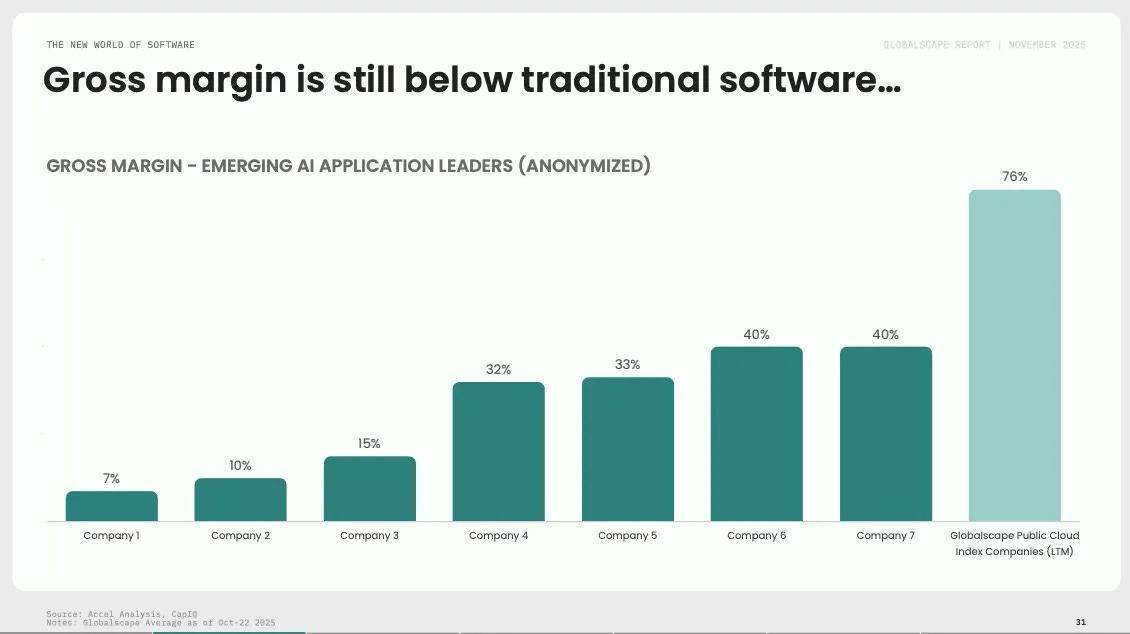
AI companies should not focused on relative gross profit margin but on absolute gross profit dollars per customer. An AI company’s average gross profit per customer can be four or five times that of a normal SaaS company because it can have a much broader relationship with a customer (e.g, taking part of their labor budget or providing more economic value) than a traditional SaaS company.
Investors should focus on trying to understand what the terminal gross margin structure will look like for AI companies, reasoning from first principles about gross profit dollar per customer and margins evolution in 5-7 years.
High gross margins in an AI app company could indicate that the company has very little AI inference expense in its COGS, suggesting that usage of AI features is weak.
Peter Thiel designed Founders Fund to constantly test conviction of its investors. Investors can co-invest personally into companies they lead round for. It’s framed as a perk but an unwillingness to invest one’s own capital in a new or existing portfolio company is seen as a very negative signal.
Multi-stage funds are concentrating their investments into “golden categories” which are emerging markets adding at least $1bn of net new ARR per year. Code generation is a great example. It went from nearly zero to an estimated $6-7 billion in ARR in roughly 2.5 years and is projected to add $4-5 billion in net new ARR this year alone.
The Conway’s Law applies to venture capital: “you ship your fund size.” Mega funds are optimising for investment velocity even at the cost of lower average returns per investment. Boutique funds can run a different strategy with high-touch support and higher cash-on-cash multiples.
Benchmark is not dogmatic about hitting a specific ownership target like 20%. It optimises around (1) being the highest ROI and closest partner to their founders and (2) generate the highest money-on-money returns for their LPs in their venture portfolio.
The Information published a great article about Benchmark’s team and strategy evolution in the current AI boom. - The Information
“Over several decades, Benchmark has relied on the same playbook: When investing, it generally wants 20% or more of the startup along with a board seat, a combination that has allowed Benchmark to have a guiding hand in some of Silicon Valley’s biggest names, including eBay, Uber and Snapchat.”
“Lazarte asked for a board seat and offered Foody a $20 million check for 20% of Mercor valuing it at $100 million, according to a person with direct knowledge of the fundraising discussion. Foody countered: Benchmark could go on the board, but he wanted a $500 million valuation. Ultimately, the two sides compromised, settling on a 10% stake at a $250 million price tag, according to two people with direct knowledge of the fundraising discussion, which valued Mercor at about 100 times annualized revenue.”
“We’re in a landscape where the rules of venture investing have dramatically changed. AI startups want far more capital than young companies have typically needed, and a mass of eager investors has rushed forward to fund them”
“Benchmark’s preference for investing a relatively small amount of capital limits how aggressively it can compete in the priciest rounds—a trade-off the firm accepts.”
“Benchmark hasn’t been absent from the AI fray. In 2024, the firm’s partners doggedly pursued Foody [at Mercor] and also invested in Fireworks AI at a $100 million valuation for about a 15% stake.”
“In 2023, Benchmark put $20 million into Sierra for about 15% of the company, a check that is now worth more than $1 billion in value, according to people with knowledge of the matter.”
“Along with the Sierra deal, Benchmark’s bets on Fireworks and Mercor have helped push the value of the fund raised in 2020—based on its cash distributions and the paper value of its investments—to eight times what investors put in initially, according to a person with direct knowledge of the returns. One limited partner remarked to me: “If I was them, I would just sell it all.””
“Today, the firm’s GPs are investing from the same $425 million fund, and the partners may make just one or two investments per year. By comparison, a partner at Andreessen Horowitz or General Catalyst, might invest in a dozen startups a year.”
I listened to an Invest Like the Best’s podcast episode with Martín Escobari who is the Co-President and Head of Global Growth Equity at General Atlantic. - Colossus
“They’re [3G] great spear fishermen. You don’t chase the fish, you wait. You decide where you’re going to anchor. You drop down with no equipment other than the spear and you hold your breath for one minute, for two minutes. You let little fish go by because you’re not there to hunt little fish. You’re waiting for the big fish. And then when you’re almost running out of oxygen, you got two or three seconds to get the big fish and then go up as you’re both feeding this sort of lack of oxygen, he feeling a spear through his chest, but it’s an exercise of waiting.”
“They wanted to buy a company that would benefit from a low inflation rising consumption. Beer is one such company, but they waited five years for this company to come for sale and it came for sale two weeks before an election when the Swiss owners got scared that a socialist was going to become president. They closed the deal in a week.”
“This is like my fourth or fifth bubble. All bubbles are born out of a truly transformative technology. In all the previous bubbles, the short term was disappointing and the long term delivered more than expected. But in that process, a lot of fortunes were made and destroyed.”
“Our approach this time different from the internet has been to be incredibly aggressive at deploying AI in the portfolio. Let’s see what’s working in the real world. We have an incredible scale with over 200 portfolio companies. We have 100 people in our portfolio support, portfolio operations team. This year we’ll do 500 projects with the portfolio. A third of them are AI projects. So we’re seeing what works in the front lines. As soon as we see a use case with real ROI and a real revenue to the provider of the service and you can sort of model what the economics and the cost to serve and what the long-term profitability maybe is of this exciting new market, then we pounce (e.g. code generation, marketing optimisation).”
“In venture and growth equity loss ratios of 20 to 40% are common. At GA, we have a 4% loss ratio. There’s something about the way we deal with risk that allows us to capture what we think are reasonably good returns, but that’s surprisingly low risk ratio. We don’t take binary risk. For us, a worst-case scenario is a company growing into the valuation we paid for it. It limits what you do. It limits the timing of where you go into a new industry. You probably leave some money on the table, but you also leave a lot of risk on the table. This product of reasonable returns with low risk is a great product. I have 95% of my net worth in that product and I sleep well at night.”
“One other of our tricks, our strategies to navigate global complexity is, in every geography we’re in, we have the best families, the most entrepreneurial families become investors, and we cultivate them not necessarily for their money, but for their insights around the country and around the entrepreneurs with which we partner.”
“The premium for US exceptionalism has never been higher. US public equities are trading at 26 times earnings for a 4% forecasted growth, which is at the 97th percentile of the last 25 years. The US dollar, despite a 10% depreciation this year, is pretty much two standard deviations away from the neutral state, so the US has never been this expensive. I love the US, it’s still the number-one economy, I still have half my assets in the US, but not 90% of my assets in the US. Not only is it very expensive, total debt to GDP is 125% of GDP. That is the highest of the OECD. It’s higher than it was after World War II, when America levered to defeat the Axis of evil. Current plans in place, within five years, we’re going to be at 145% of GDP, which is higher than Greece and Italy, and the US has not had a recession since 2009. Are you sure you want to have 95% of your assets in the United States of America? I don’t. If you look at the rest of the world, you can buy Europe at 14 times earnings, you can buy Brazil at nine times earnings, you can buy Mexico at 10 times earnings.”
GA’s investment check-list: “Huge TAM, business models that create economic value and have moats, teams with the right go forward capabilities, situations where there’s inorganic growth to get and tremendous amount of strategic value (i.e. if we’re successful, someone will overpay to have this capability).”
“If you’re in your 20s or early 30s, go work at AI because you’re going to live through dog years. Meaning, we were talking about the .com era with seven years of activity happening in one year, and regardless of whether the company does well or you make money, you’re going to have compressed learning. That only happens once every 20 years.”
“Unfortunately, we compete against 19,000 GPs. It was not very nice thing to say, but one of my competitors said there’s more GPs than McDonald’s in the United States.”
“You need sharper clarity on your competitive edge.
For us, it starts with brand. We’ve built a reputation as true partners. That only matters if it delivers concrete value. GA brings real leverage. We have 100 people in operations who can help with pricing, sales effectiveness, AI for customer service. It’s part of the package. We have an in-house talent team with access to 15,000 veteran executives. If you need a CTO, you get a list tomorrow with people we already know well.
You also need to be a specialist, not a generalist. We chose our GA Power Alleys. Sixteen domains like AI applications, value-based care, digital payments. In those areas, we believe we’re among the best globally and we show up with 32 case studies to prove it.”
Jack Altman interviewed Roelof Botha from Sequoia. - Jack Altman
VC is not a scalable “asset class.” The current $250bn annual investment into U.S. venture capital requires an unsustainable $1.5tn in annual company exit value to generate merely average returns (e.g. 3.7x net multiple or 12% IRR net of fees/carried over a seven year exit horizon). While individual outcomes will be larger than ever, there are not enough of them to justify the capital influx. Historically, only about 20 companies per year on average have achieved realized exits of $1bn+. This number has not materially changed despite massive capital inflows
The true “secret of Silicon Valley” is not product innovation alone, but a relentless focus on cost reduction, which provides ultimate strategic power. A common mistake is believing that price is a competitive advantage. The real advantage is cost. A fundamental cost advantage allows a company to choose its strategy: match a competitor’s price and enjoy higher margins, or lower its price to gain market share while maintaining a healthy margin.
“We want to recruit people to Sequoia who want to be pirates not people who want to join the Navy.”
The firm’s investors are met daily with a wall inscribed with their own handwriting stating, “We are only as good as our next investment.” This serves as a constant reminder to not rest on past successes.
Sequoia obsessively analyzes competitors’ investments to identify missed opportunities, emerging categories, or failures in understanding.
David Serna interviewed Brad Jacobs who cofounded eight different $1bn+ companies. - David Serna
“You got to get the long-term trend right. You can get a lot of other stuff right. But if you don’t get the long-term trend right, you’re kind of in trouble.”
“Problems are your friend. You don’t want to just tolerate problems. You want to embrace problems. You want to hug problems. Problems are the way you succeed.”
Recruiting is the CEO’s most important job. “The CEO’s most important job is recruiting superlative people... I spend most of my time on people, and talent issues.”
The A-Player visualization test. “If when I visualize that person quitting, my reaction to that is pure terror, and absolute panic, and like somebody took a baseball bat and just whacked me in the stomach, and then punched me in the face... That’s what you call an A player.”
Make everyone a partner through equity. “I make everybody my partner on the senior team. And I give people tons of equity, but there’s a catch. You can’t sell it for five years. And most of it invests in the last two years.”
Ask frontline workers for ideas to improve the business. “Often when we buy a company, we discover that the frontline employees, middle managers, and even some senior executives have never been asked, ‘What would do to improve the company?’” You should ask them 3 questions: (1) “What’s the stupidest thing we’re doing?” (2) “What’s the smartest thing we’re doing?” and (3) “What’s your single best idea to improve the company?”
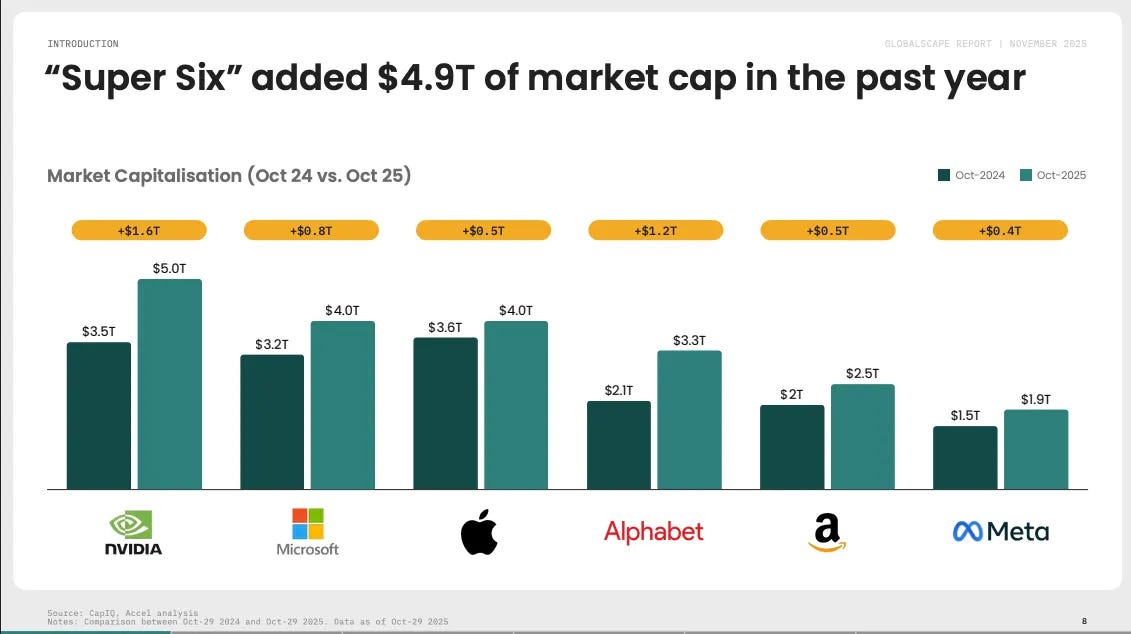
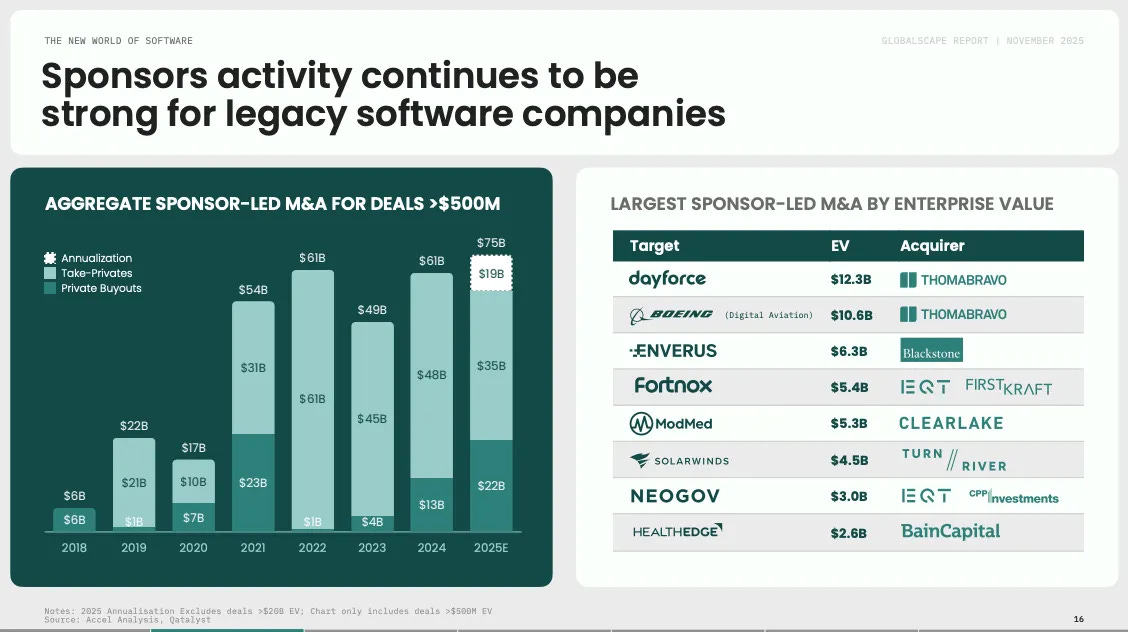
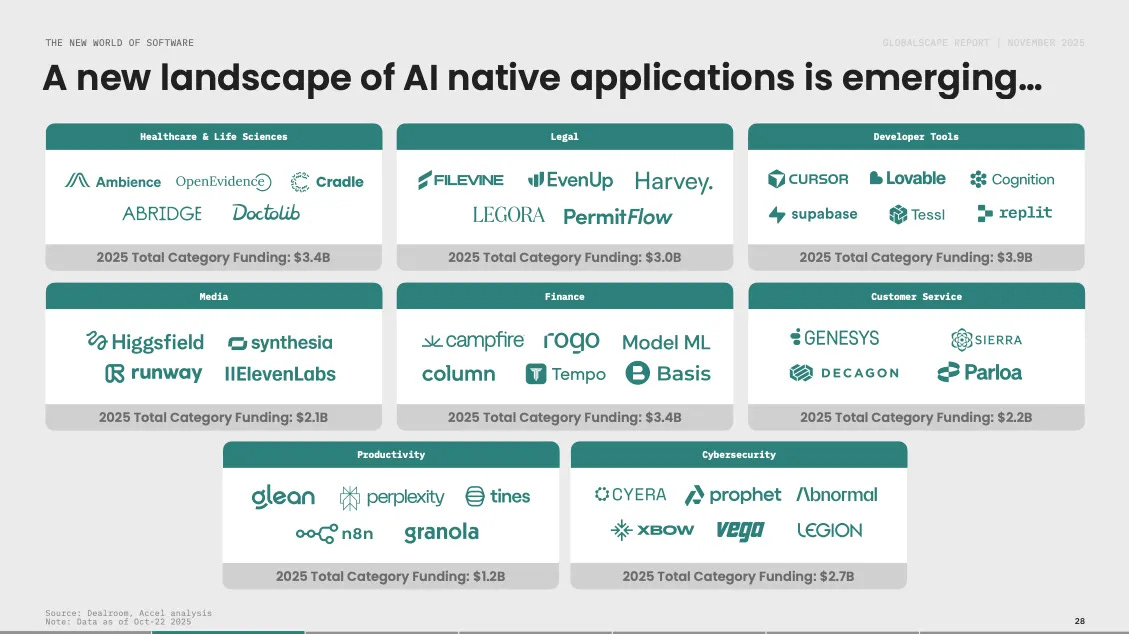
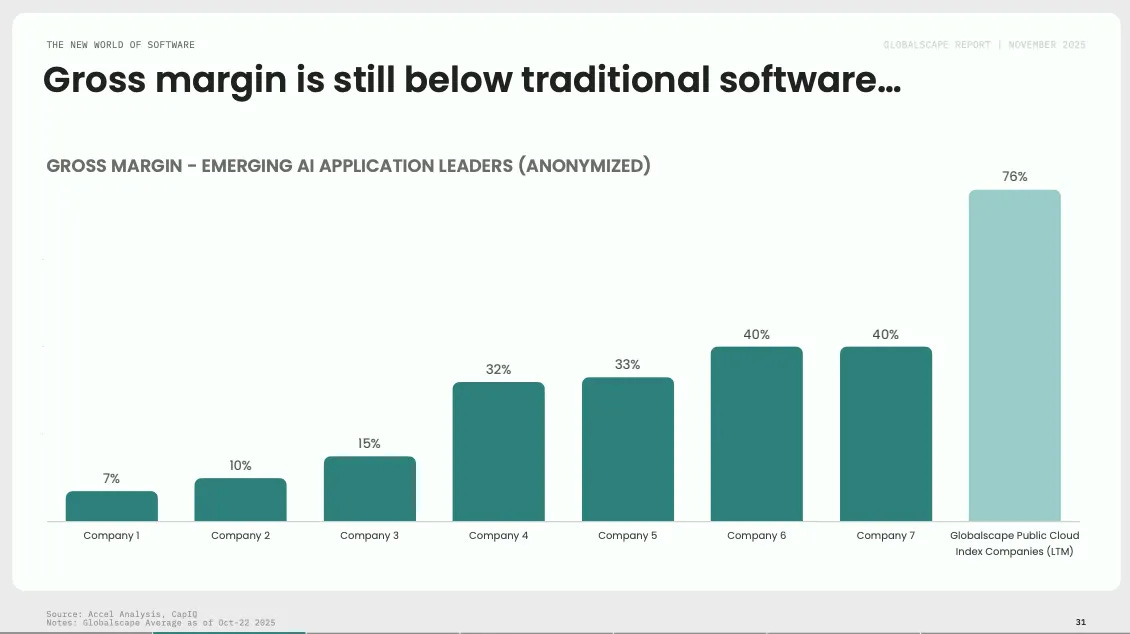
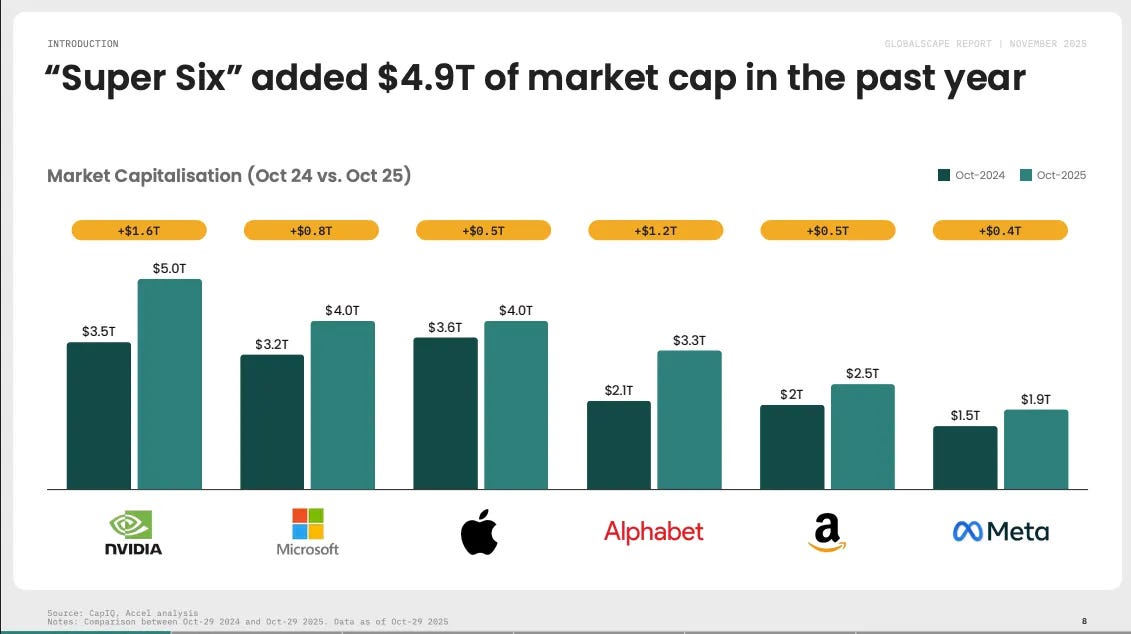
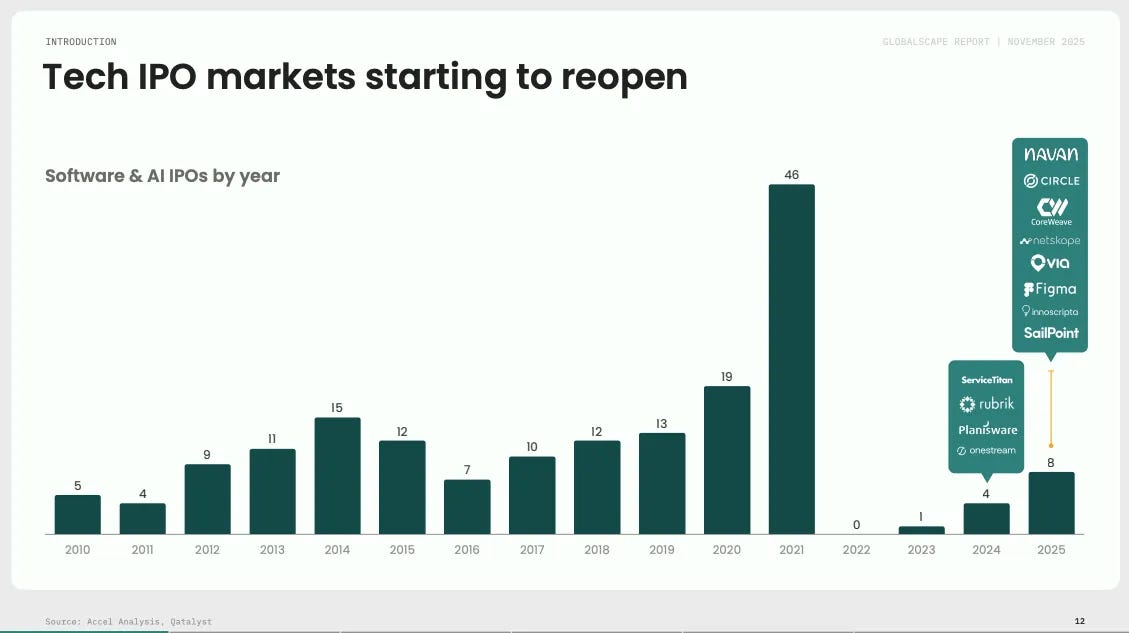
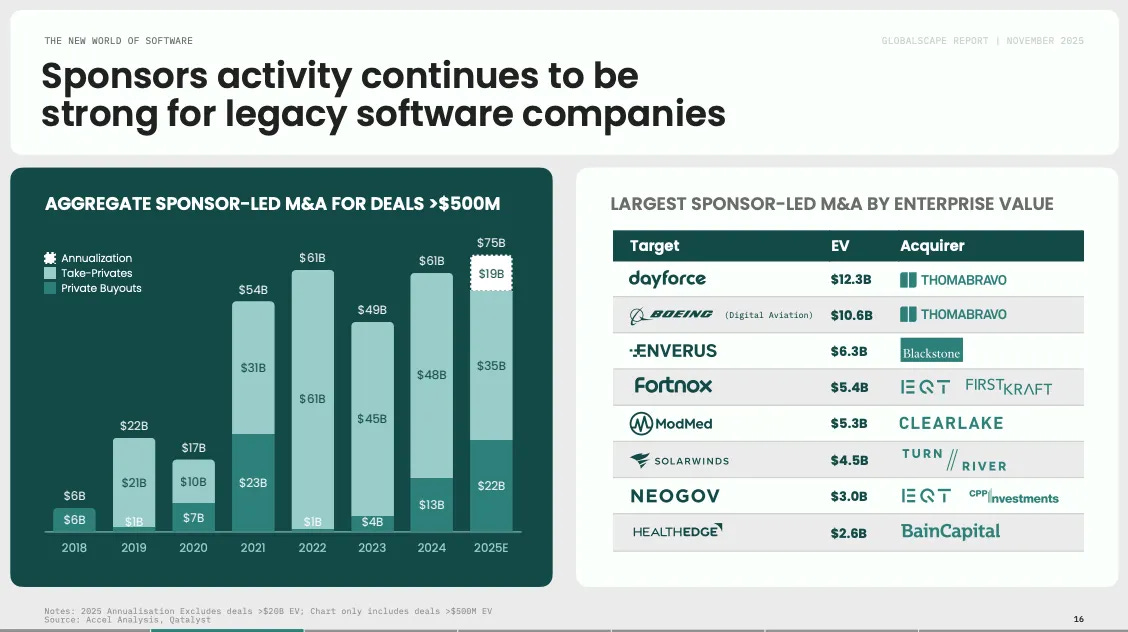
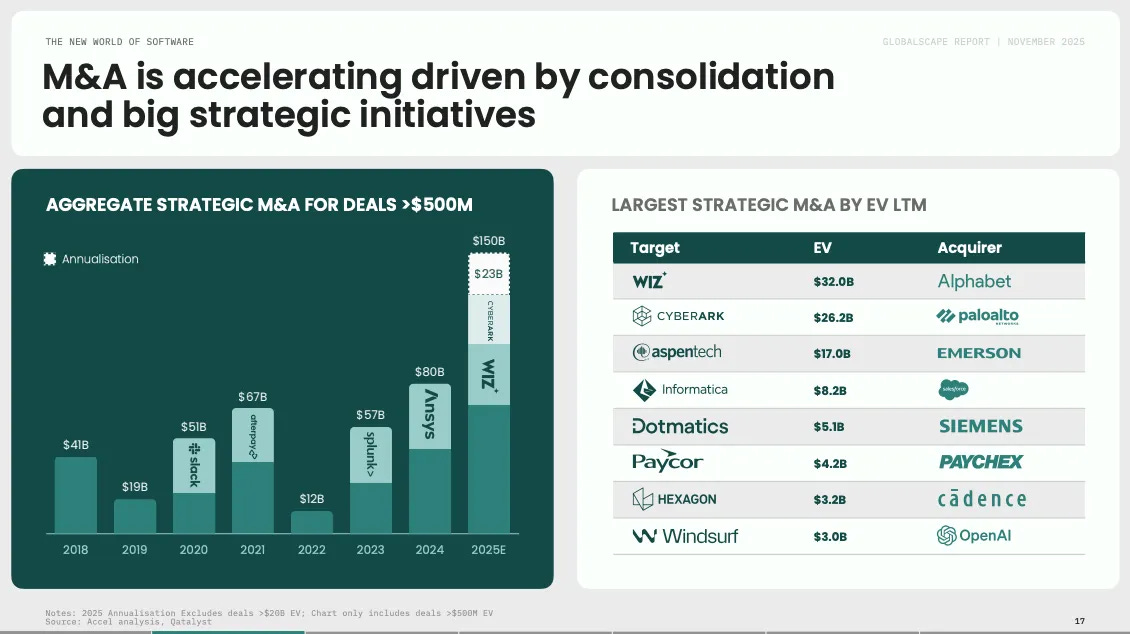
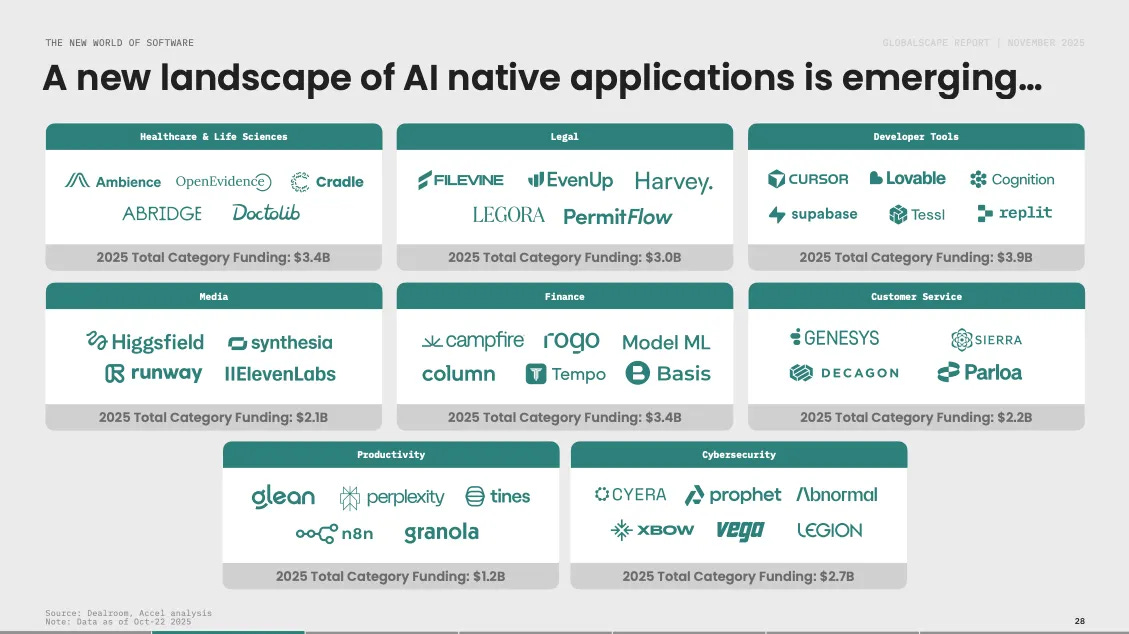
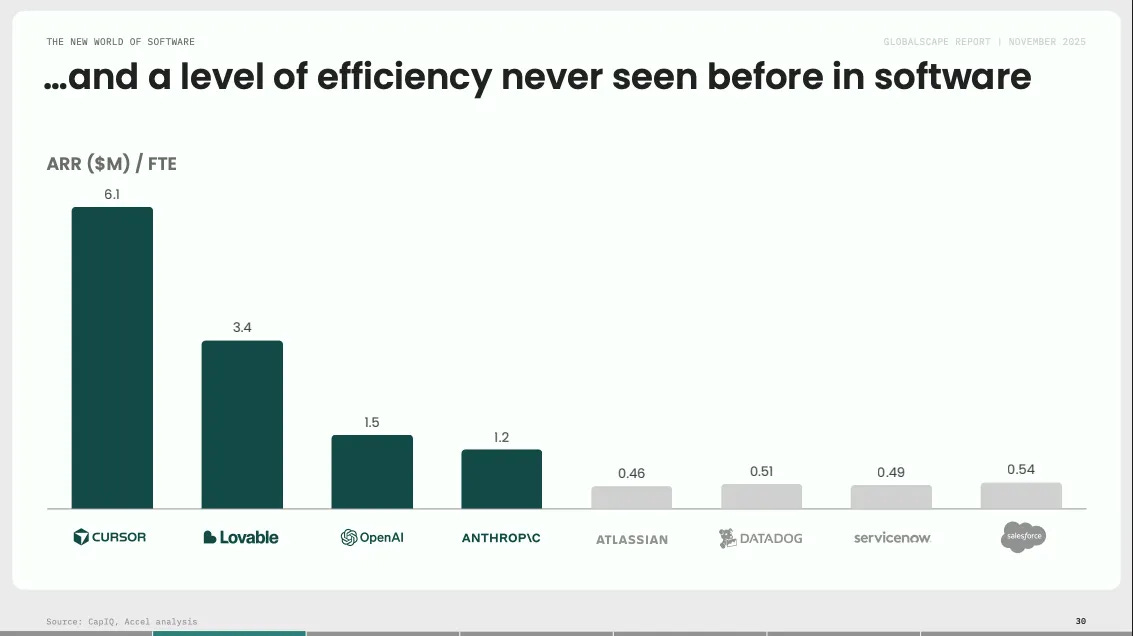
Accel published its 2025 Globalscape mapping the AI-driven global transformation. - Accel



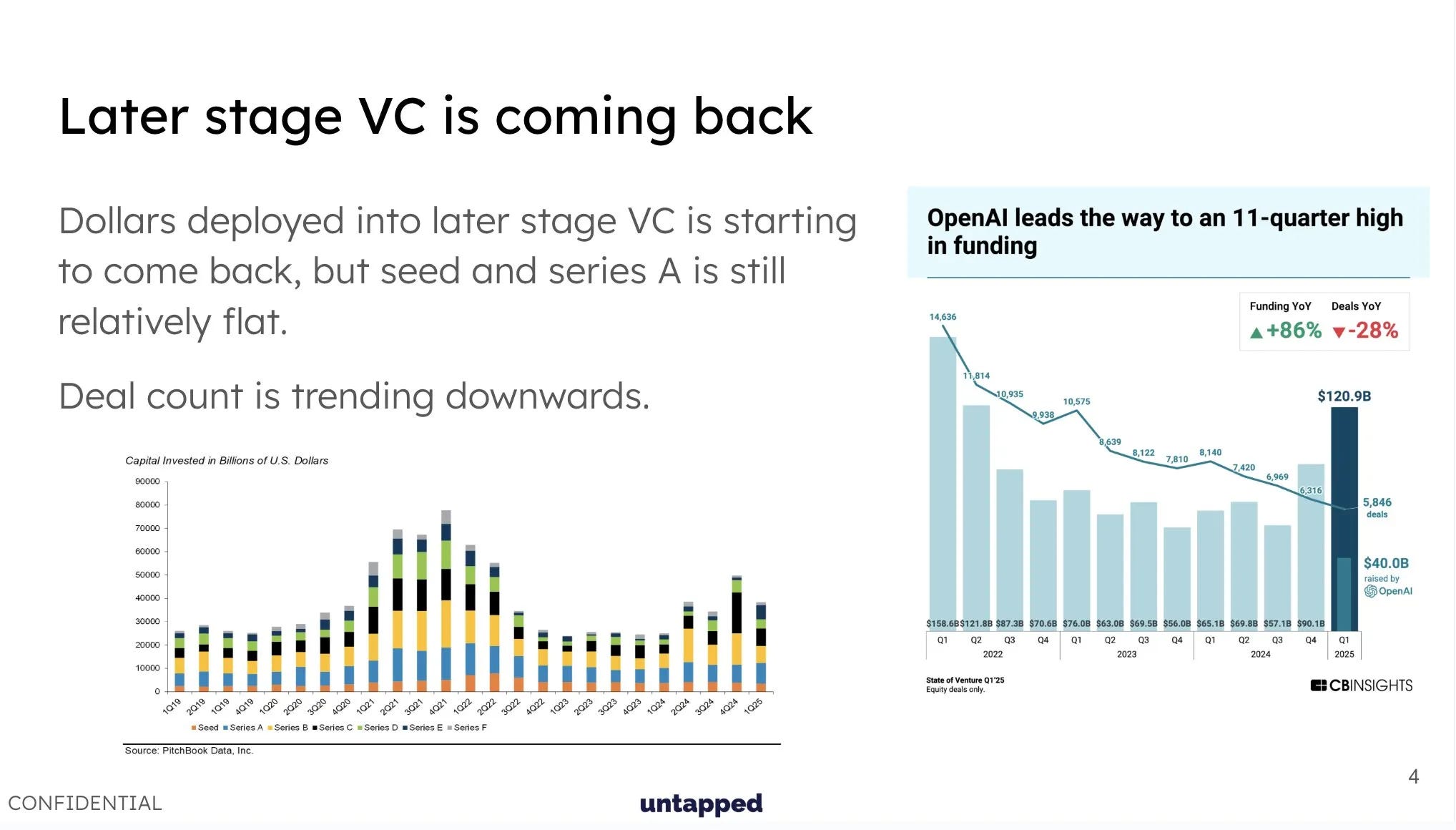
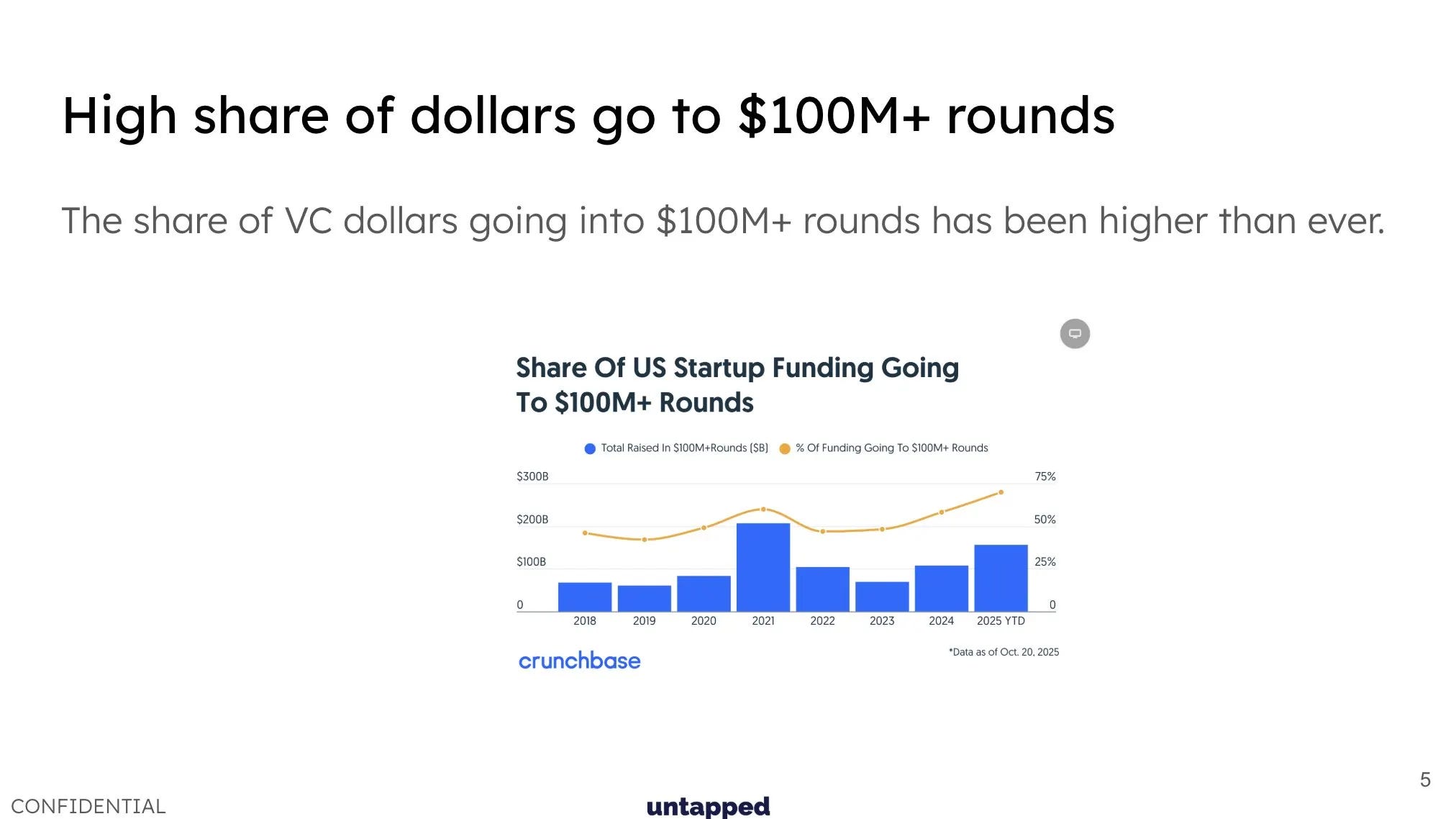
Yohei Nakajima shared his slides on the state of the VC market shared prepared for his LP Summit. - Yohei Nakajima
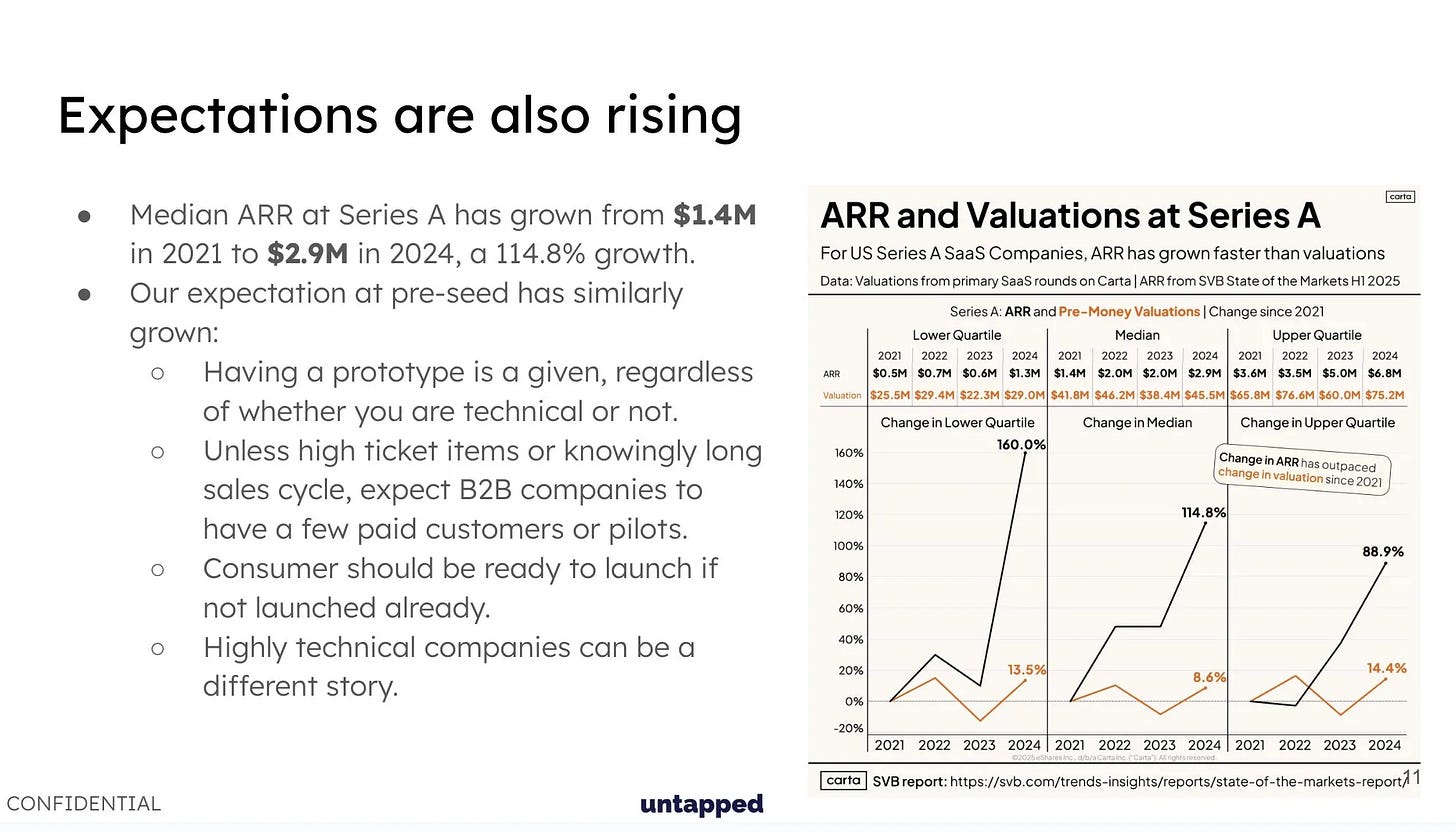
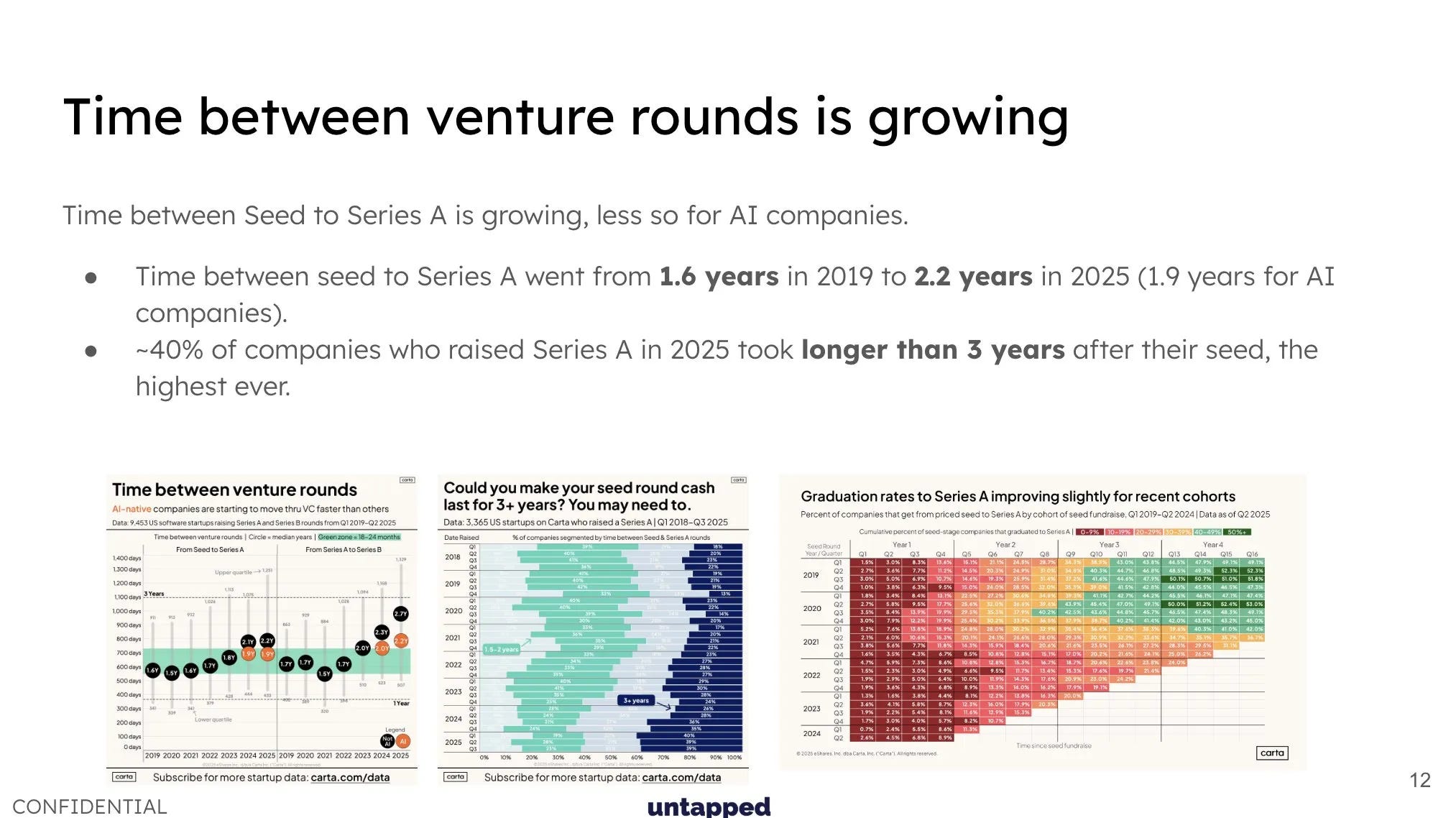
Series A median ARR more than doubled in 4 years from $1.4m in 2021 to $2.9m in 2024.
Time between venture rounds is growing. Median time from seed to series a went from 1.6 in 2019 to 2.2 years in 2025. 40% of companies who raised series a in 2025 took longer than 3 years after their seed.
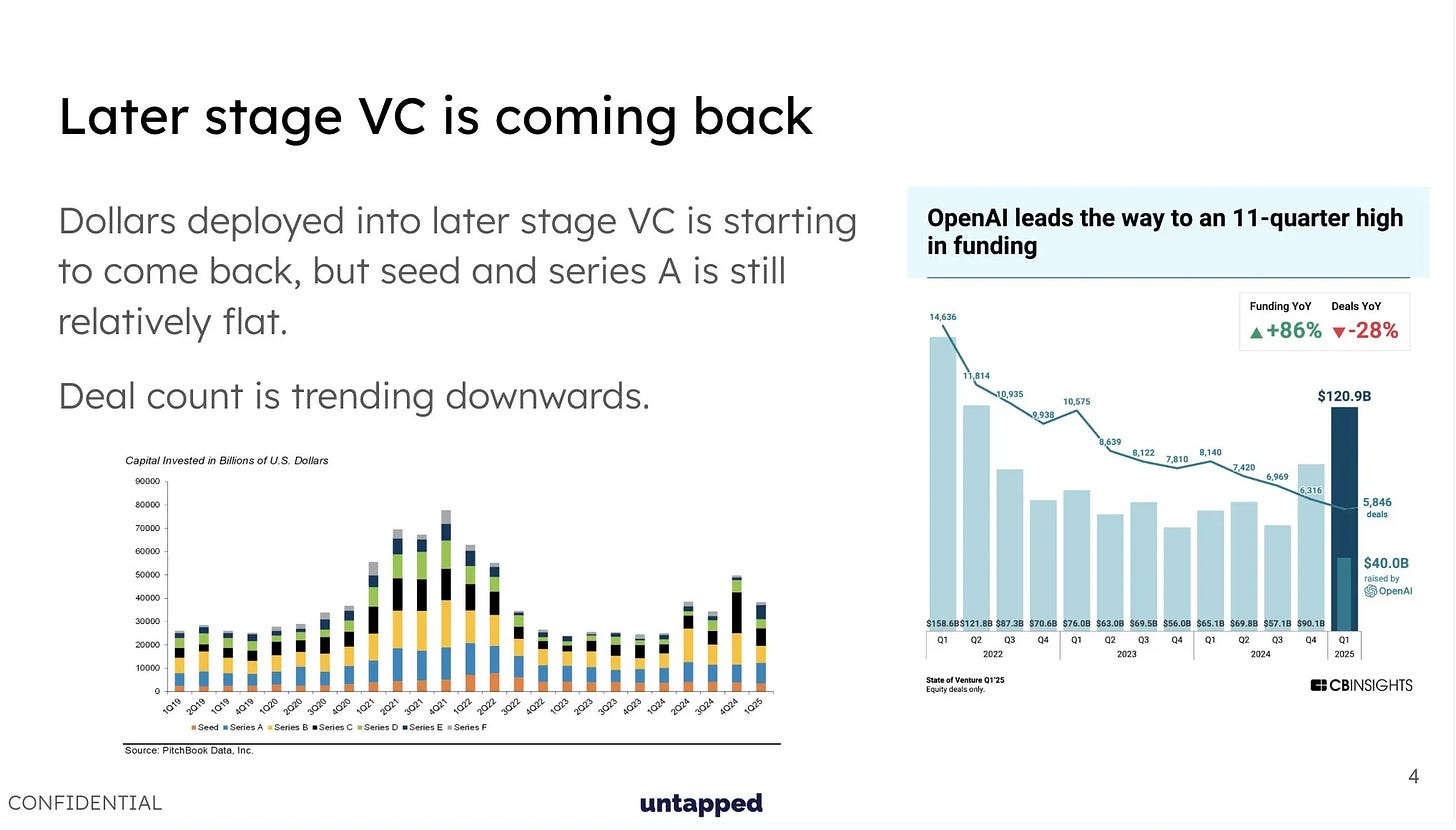
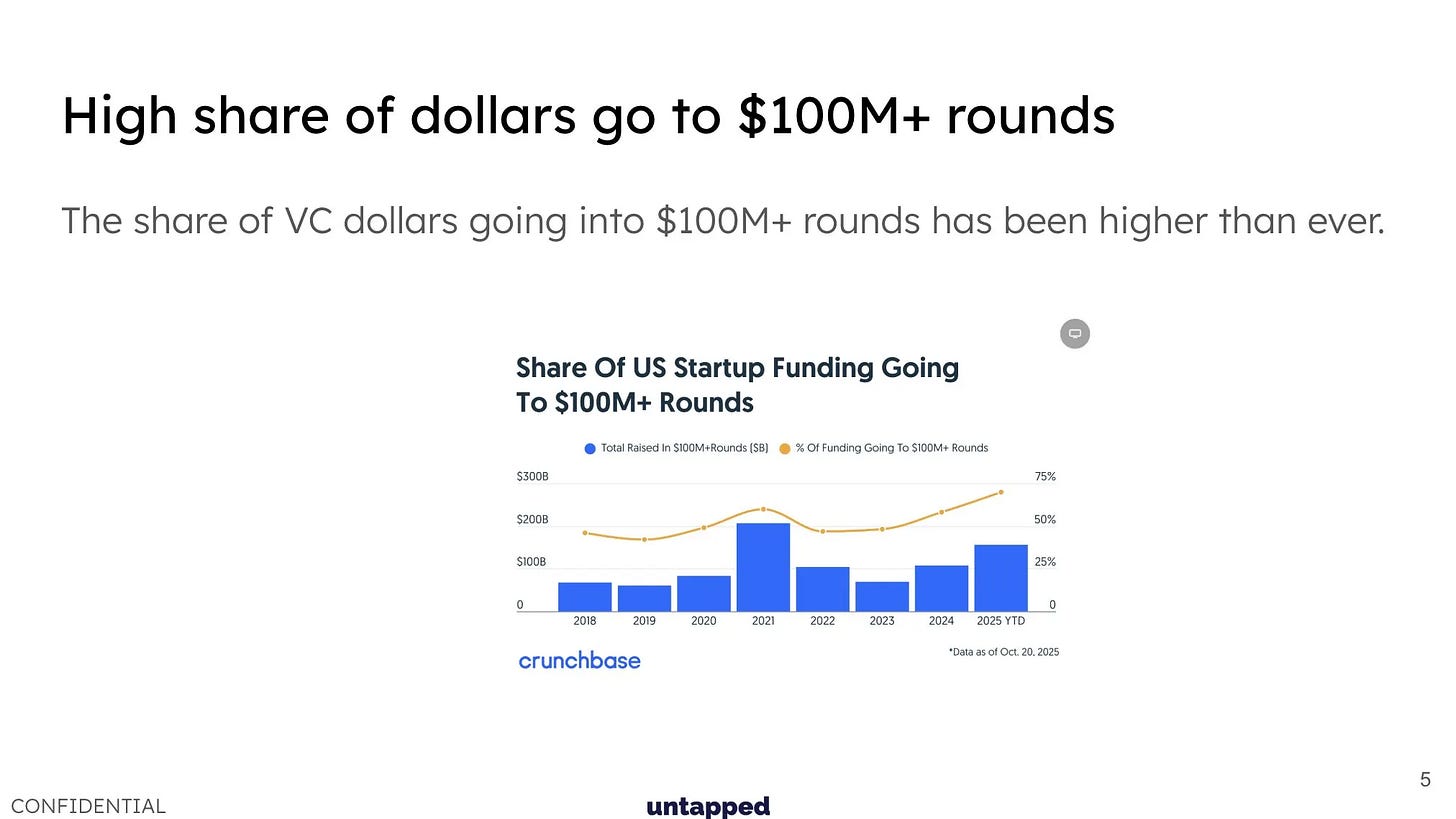


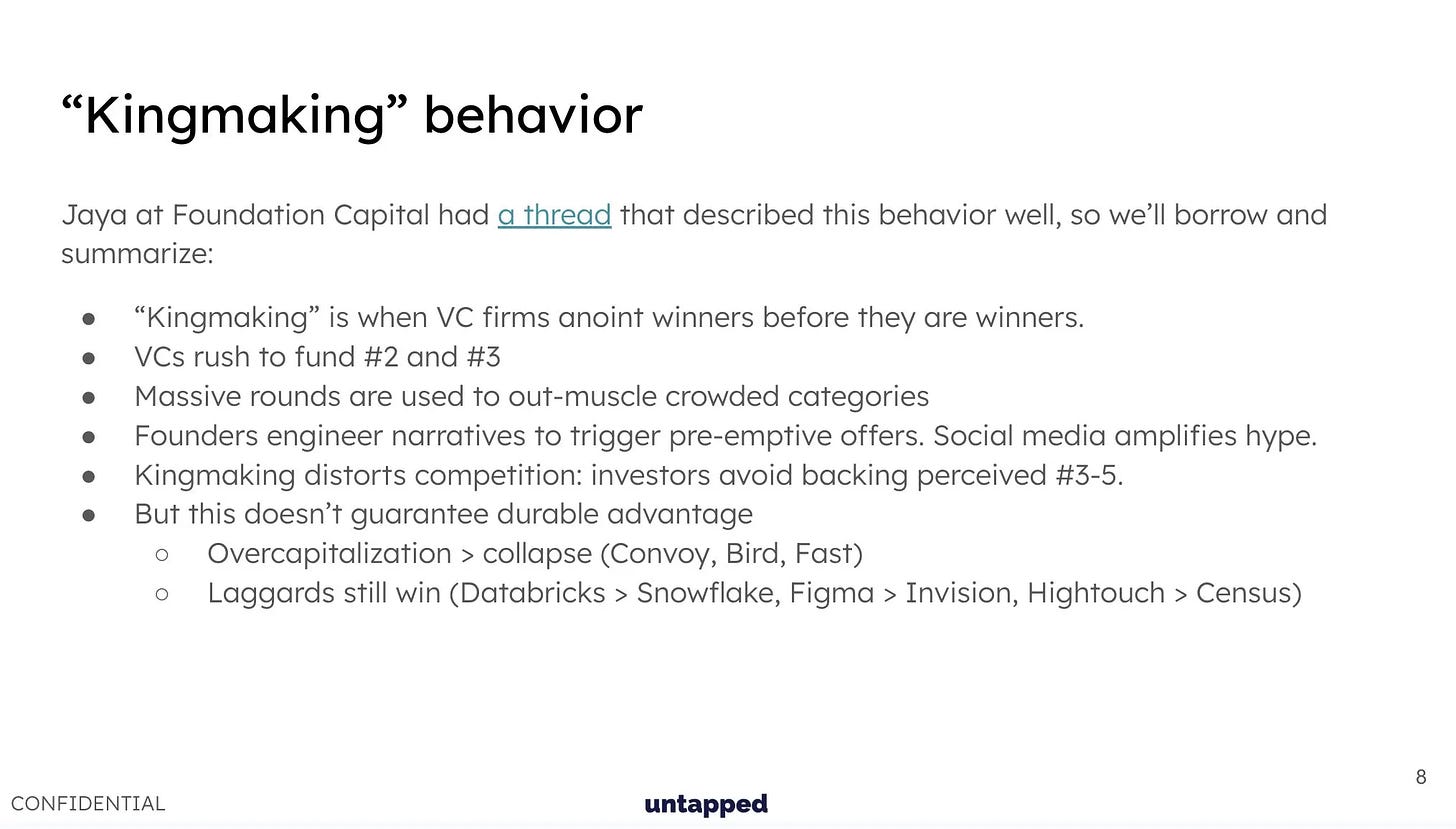

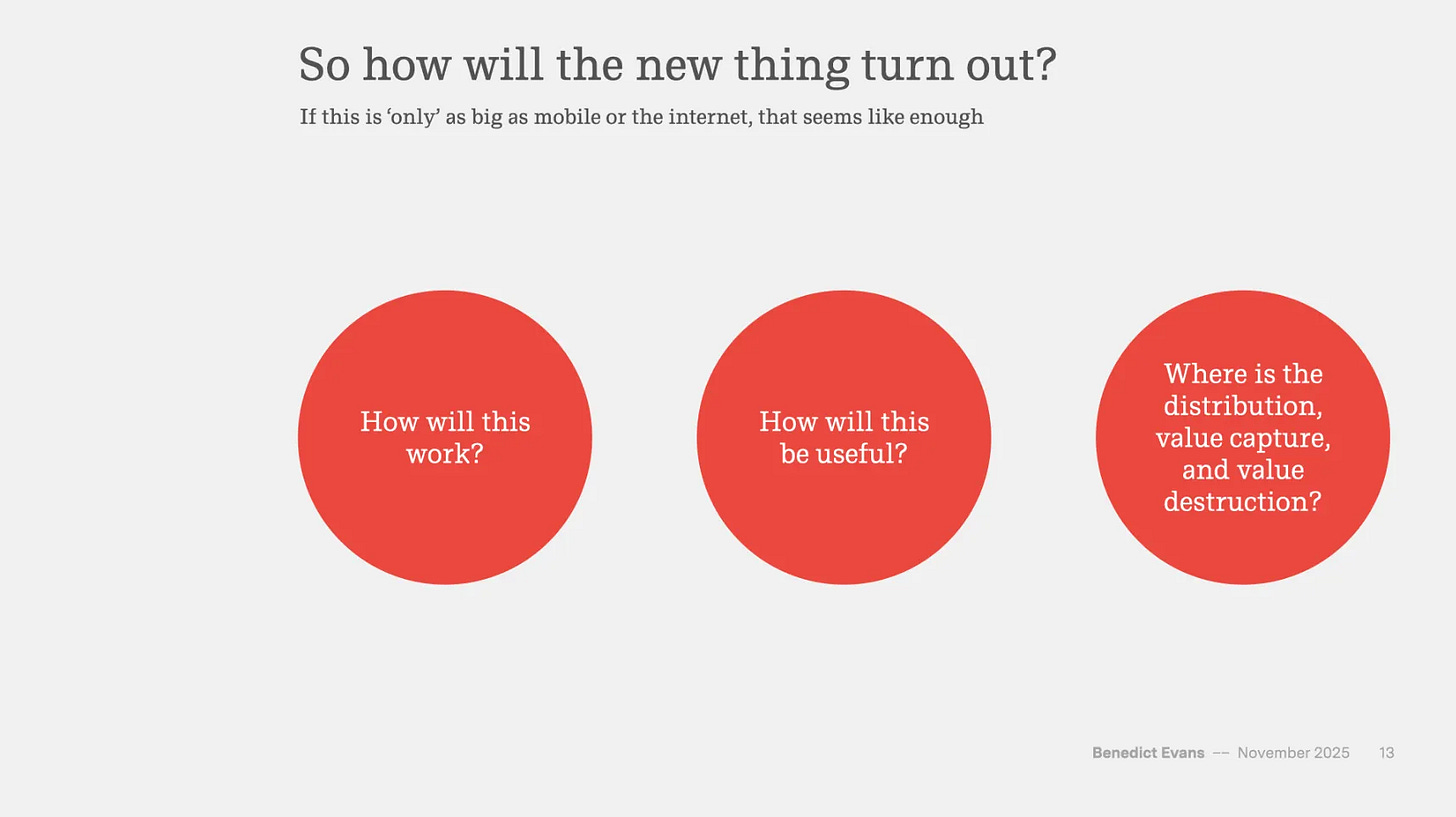
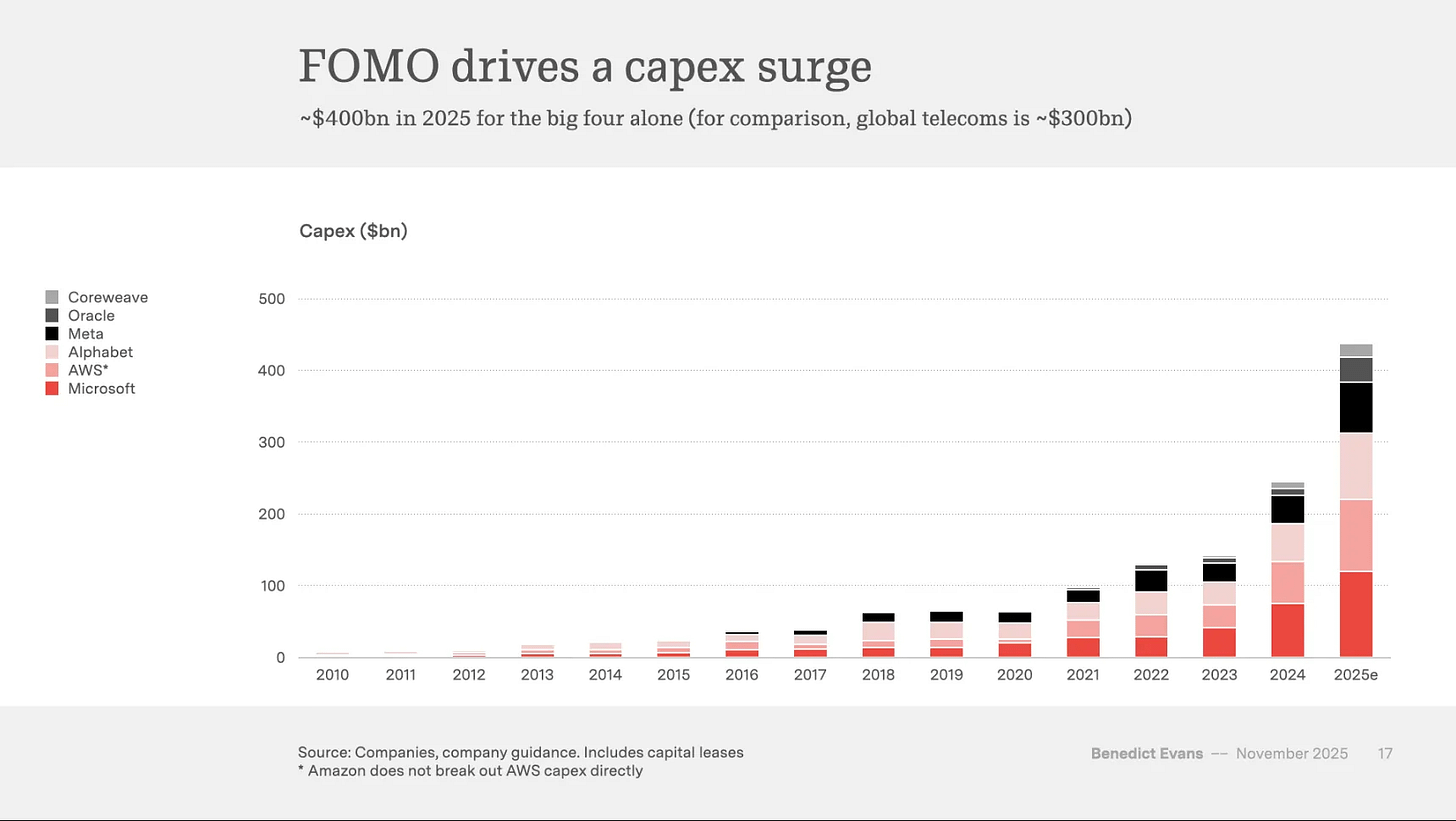
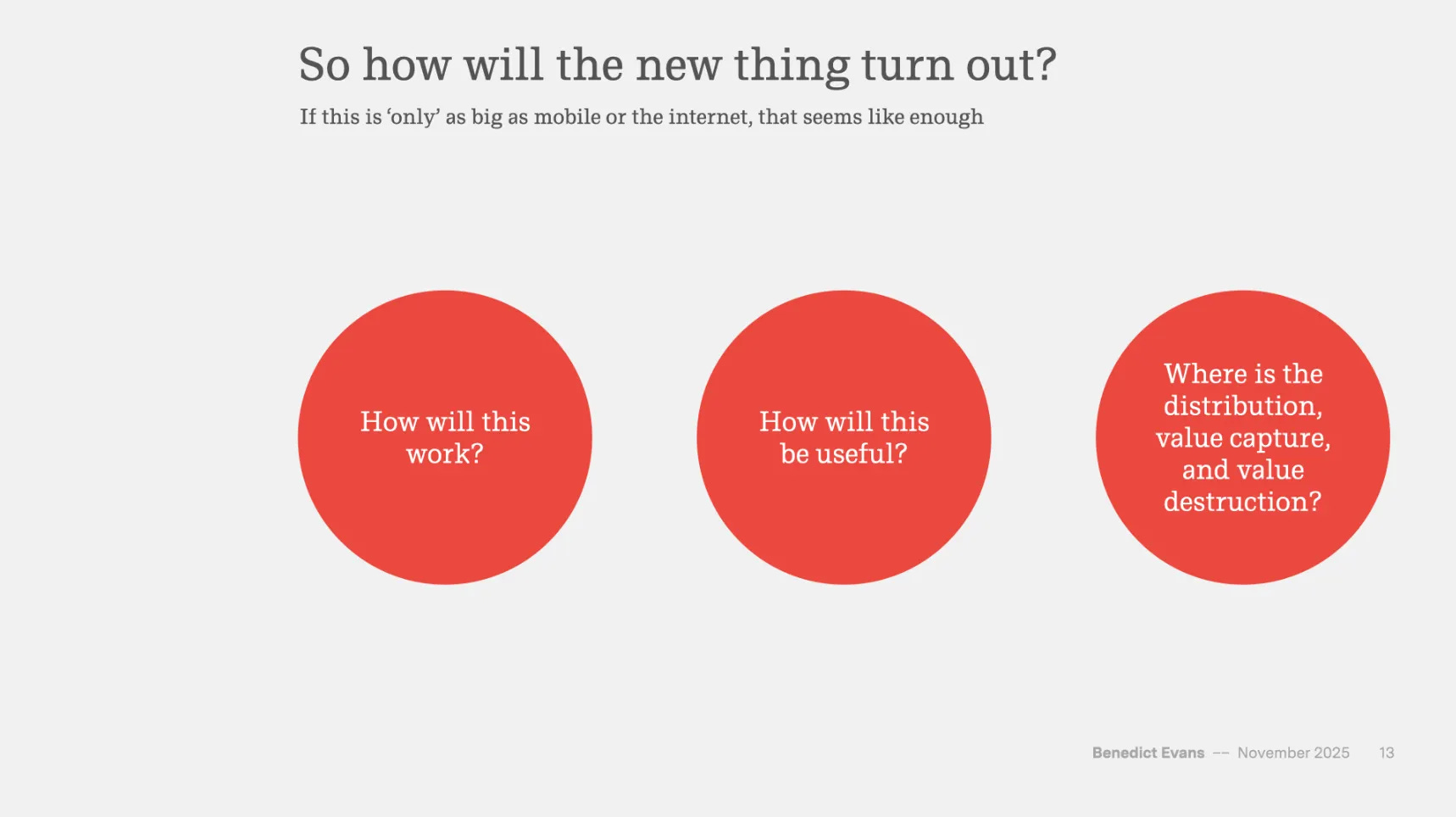
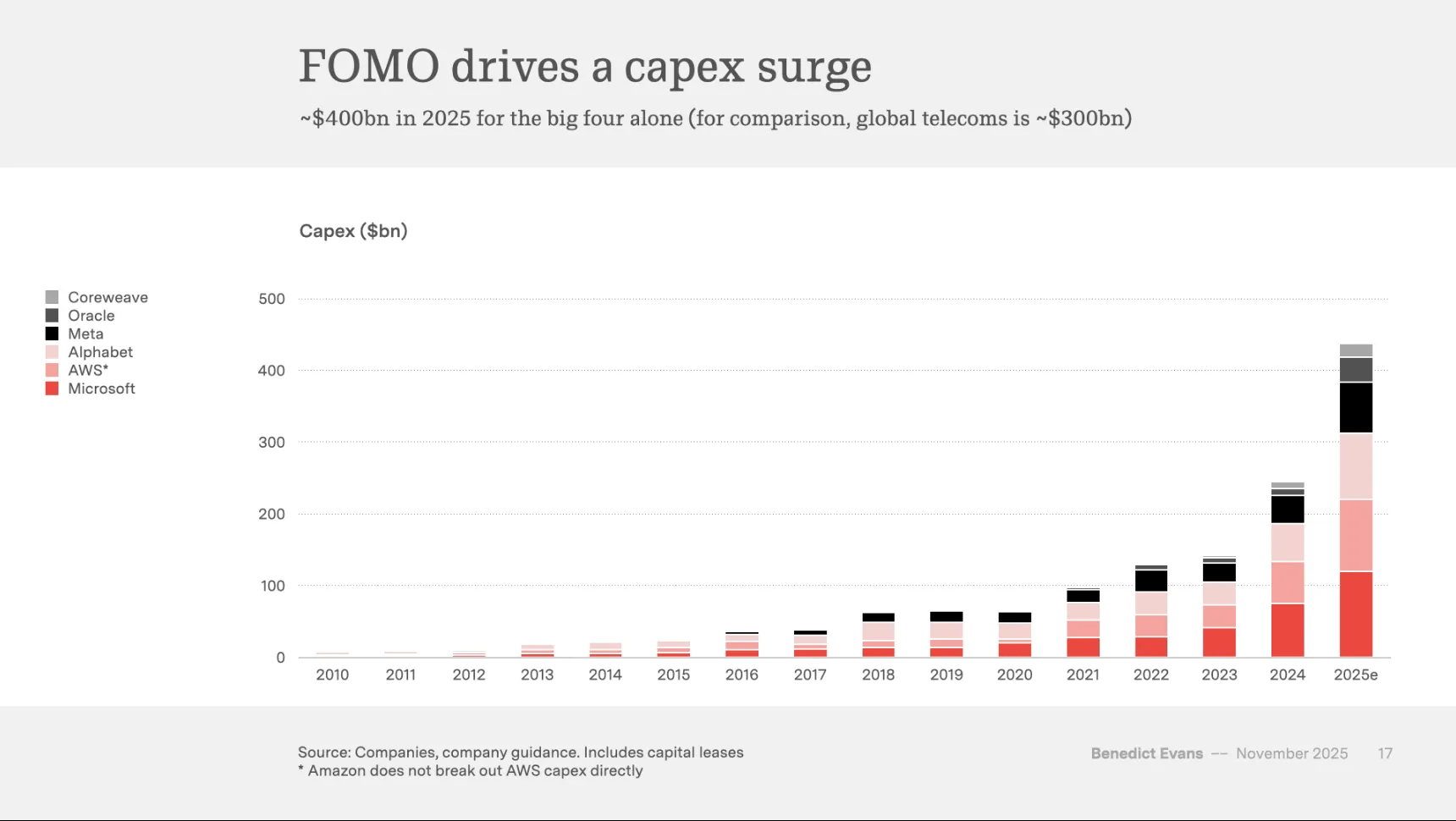
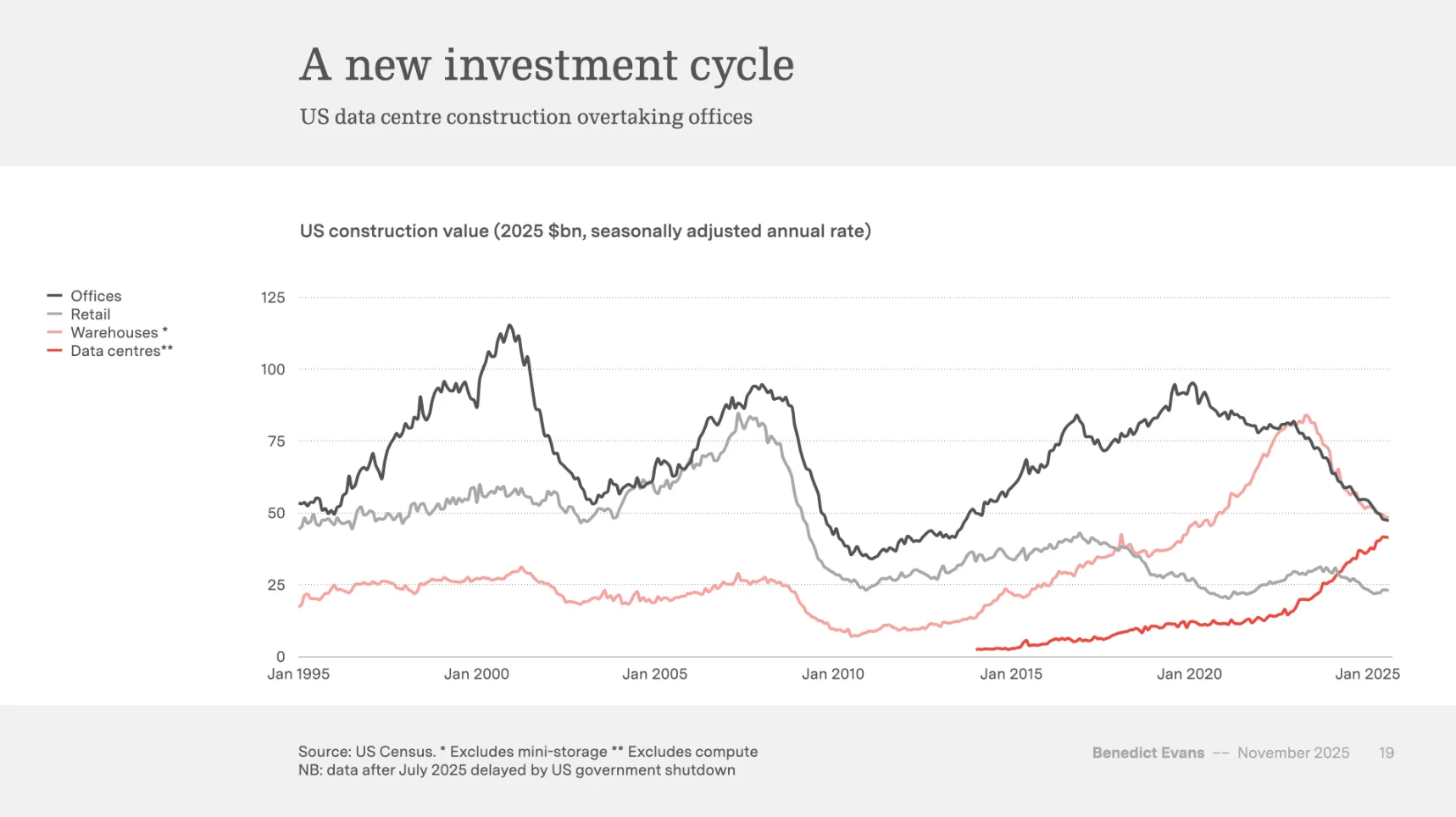
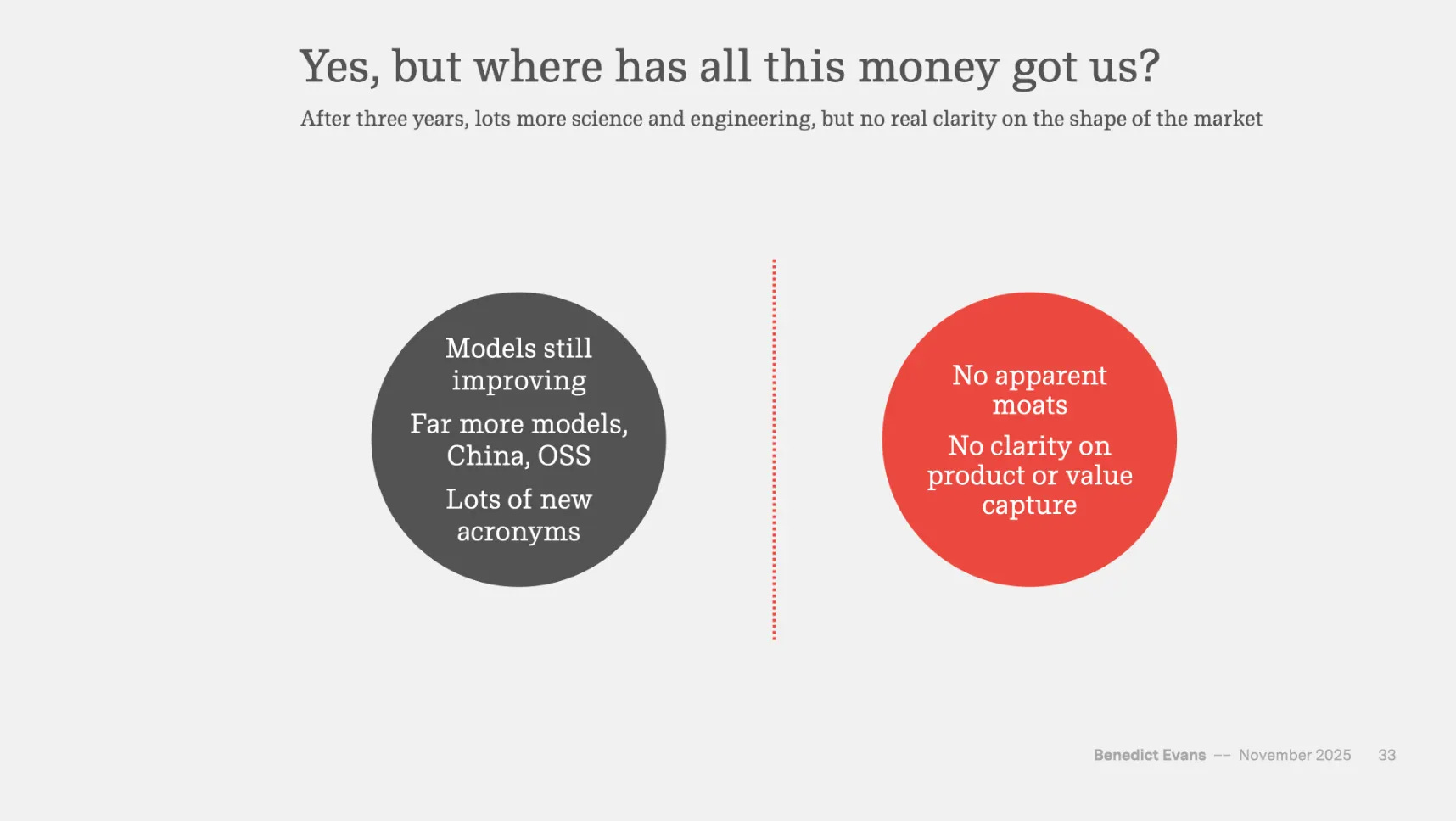
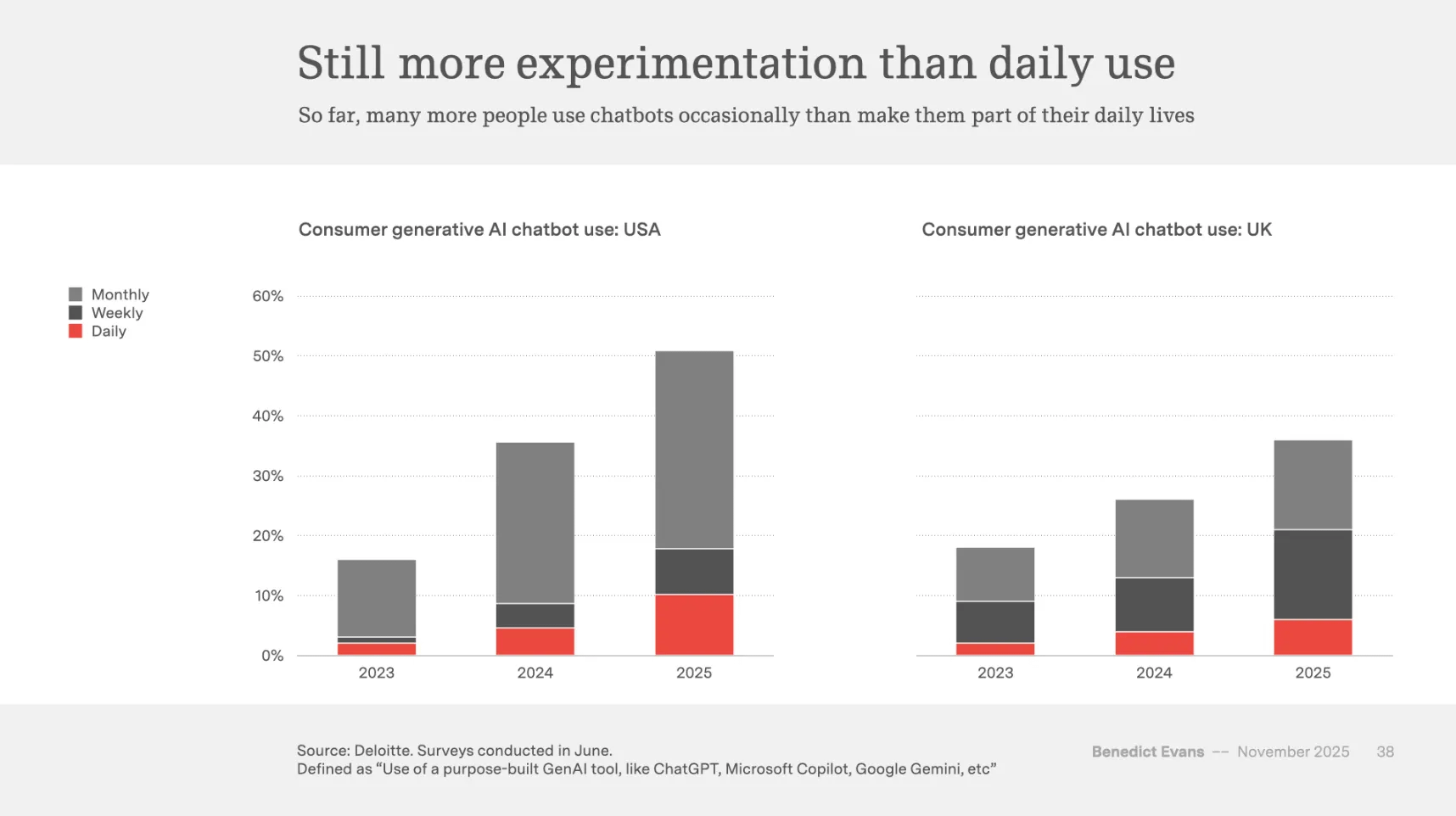
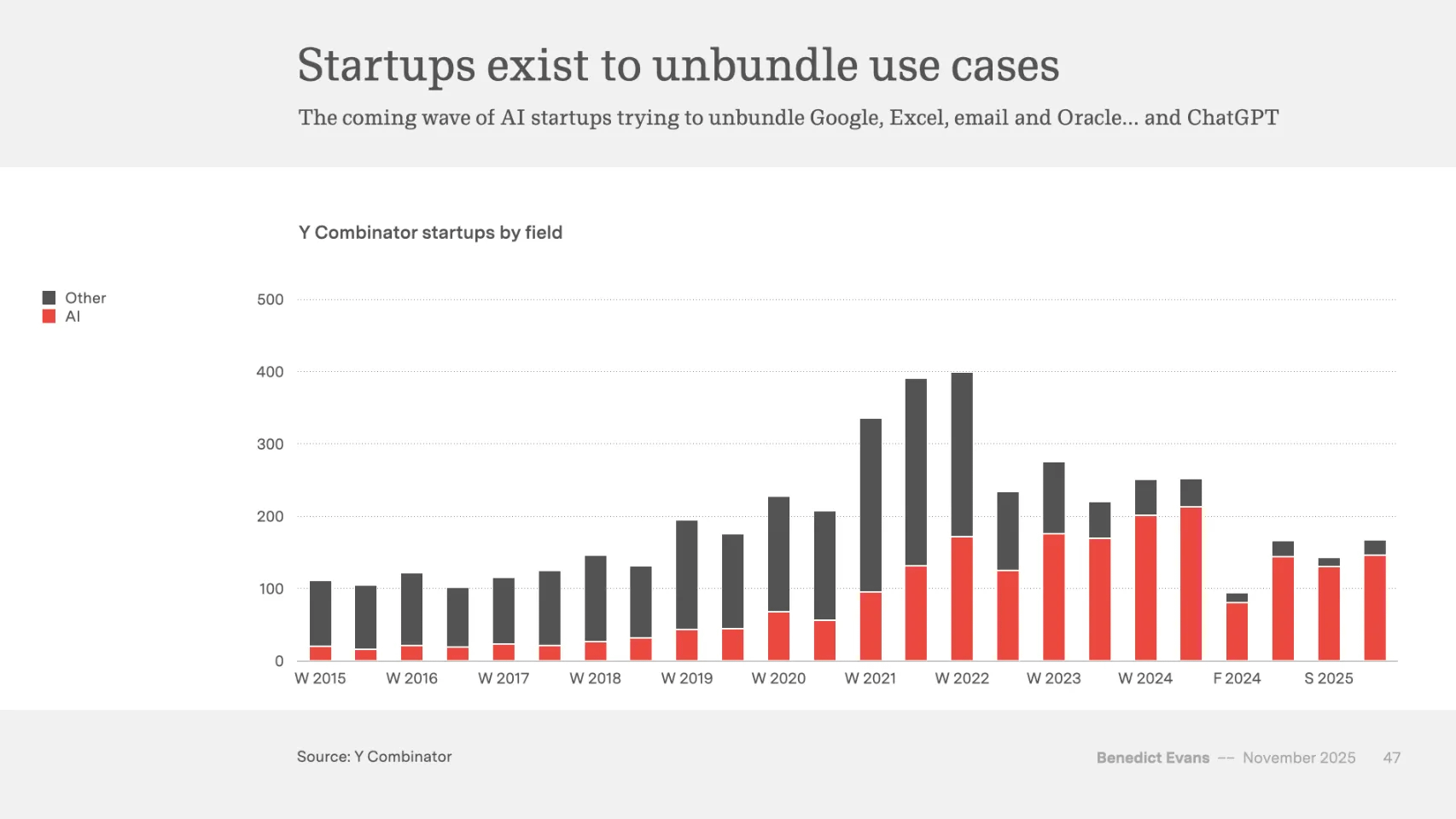
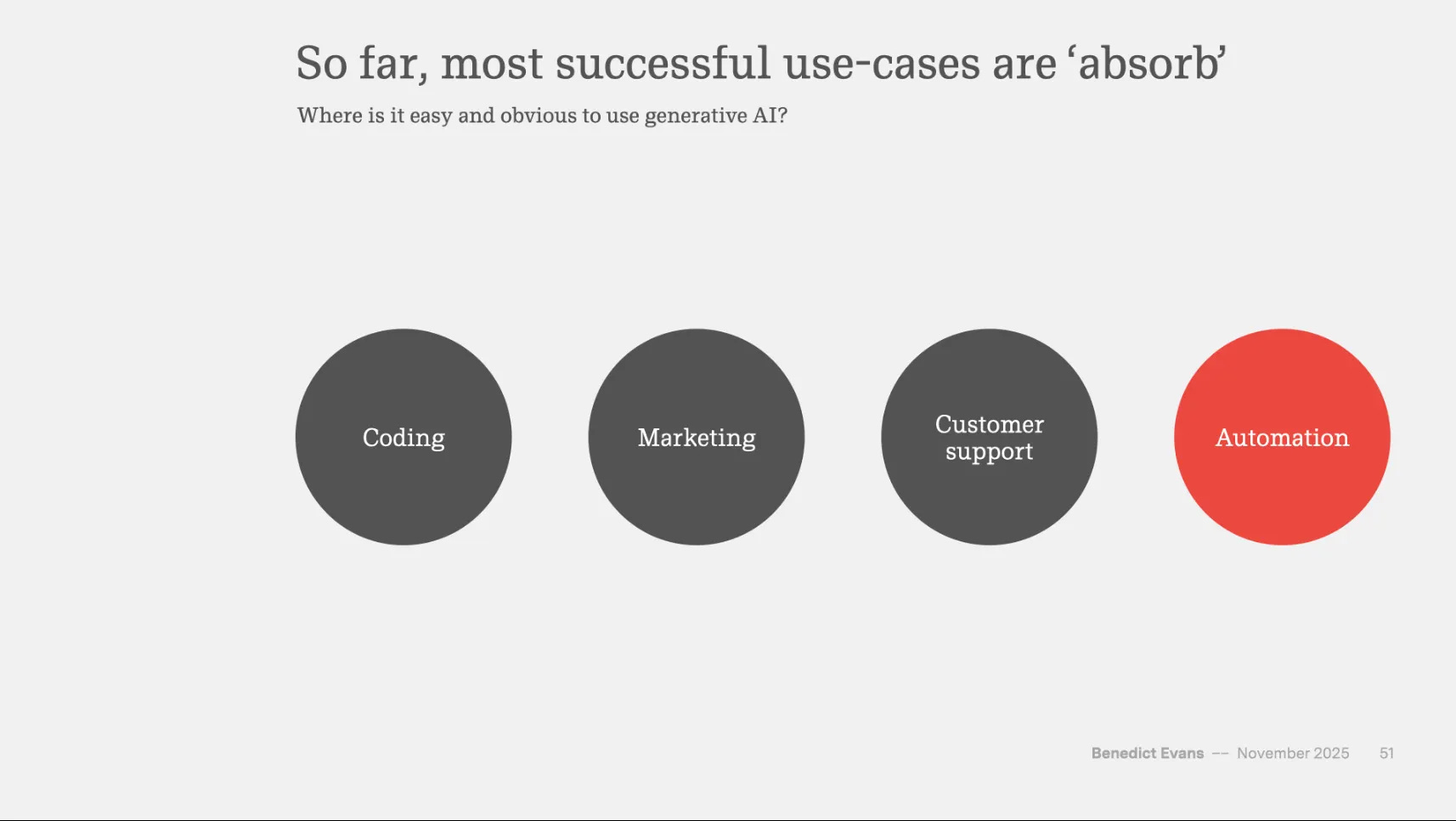
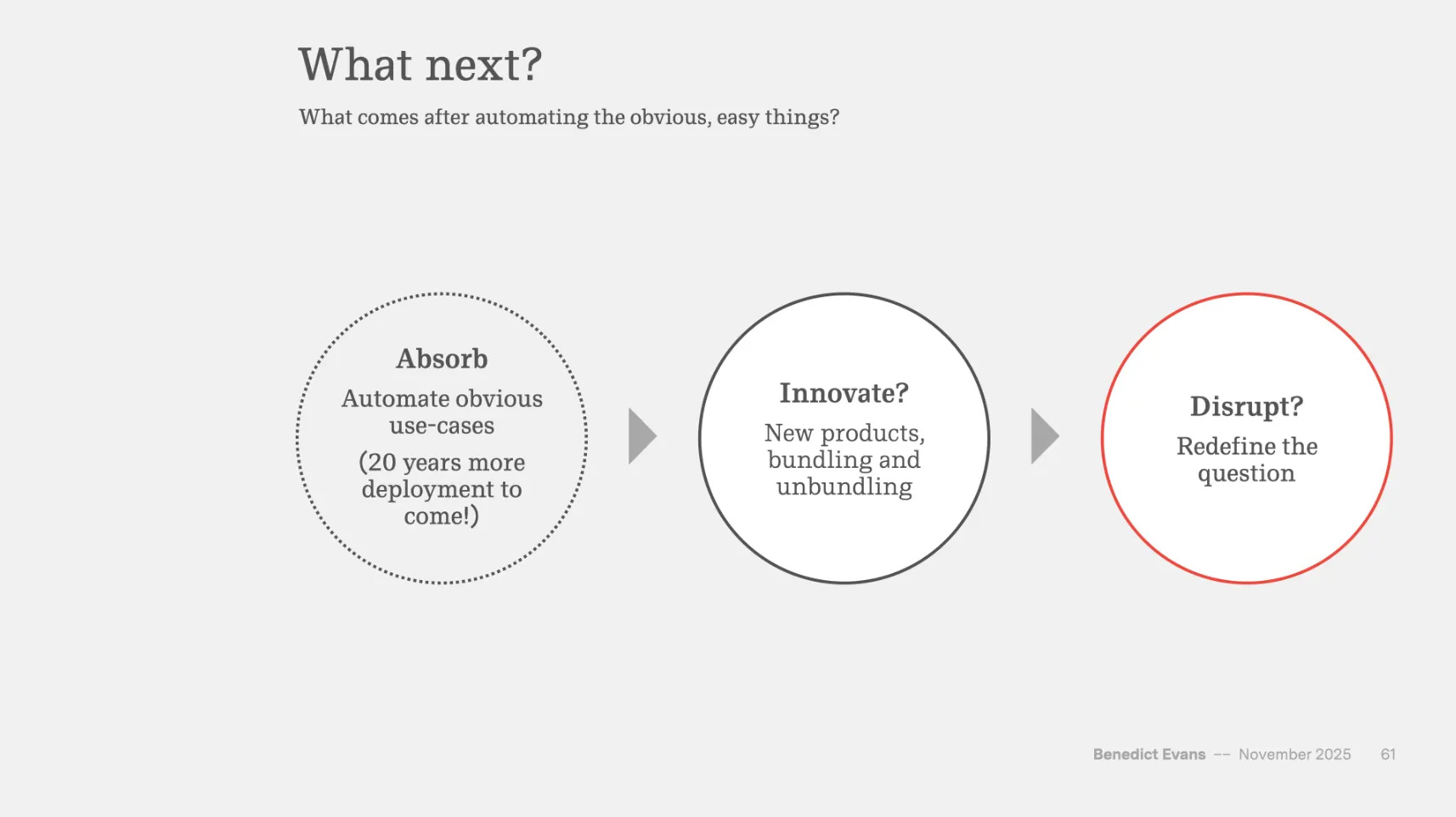
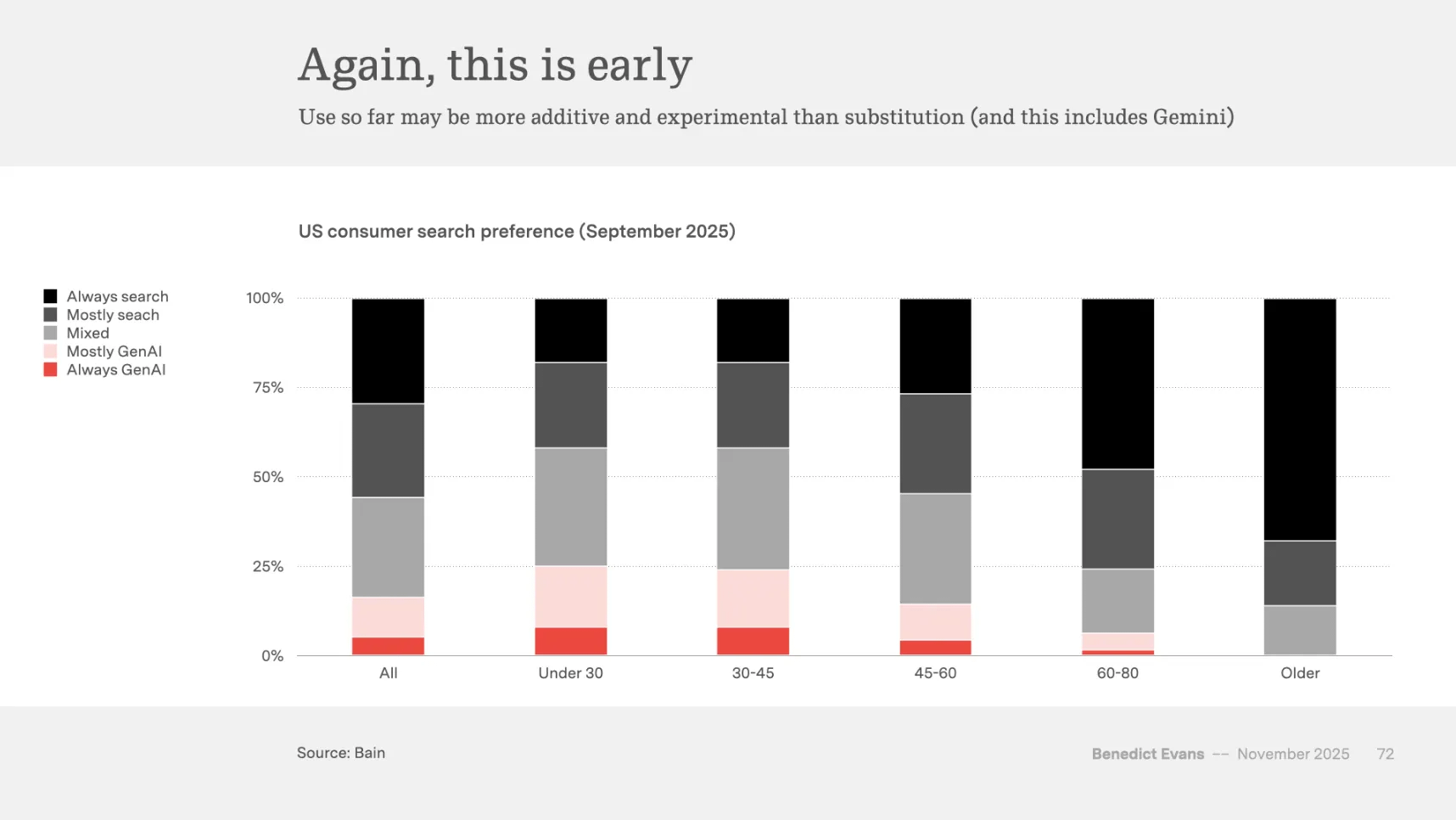
Benedict Evans shared a presentation on the impact of AI. - Ben Evans

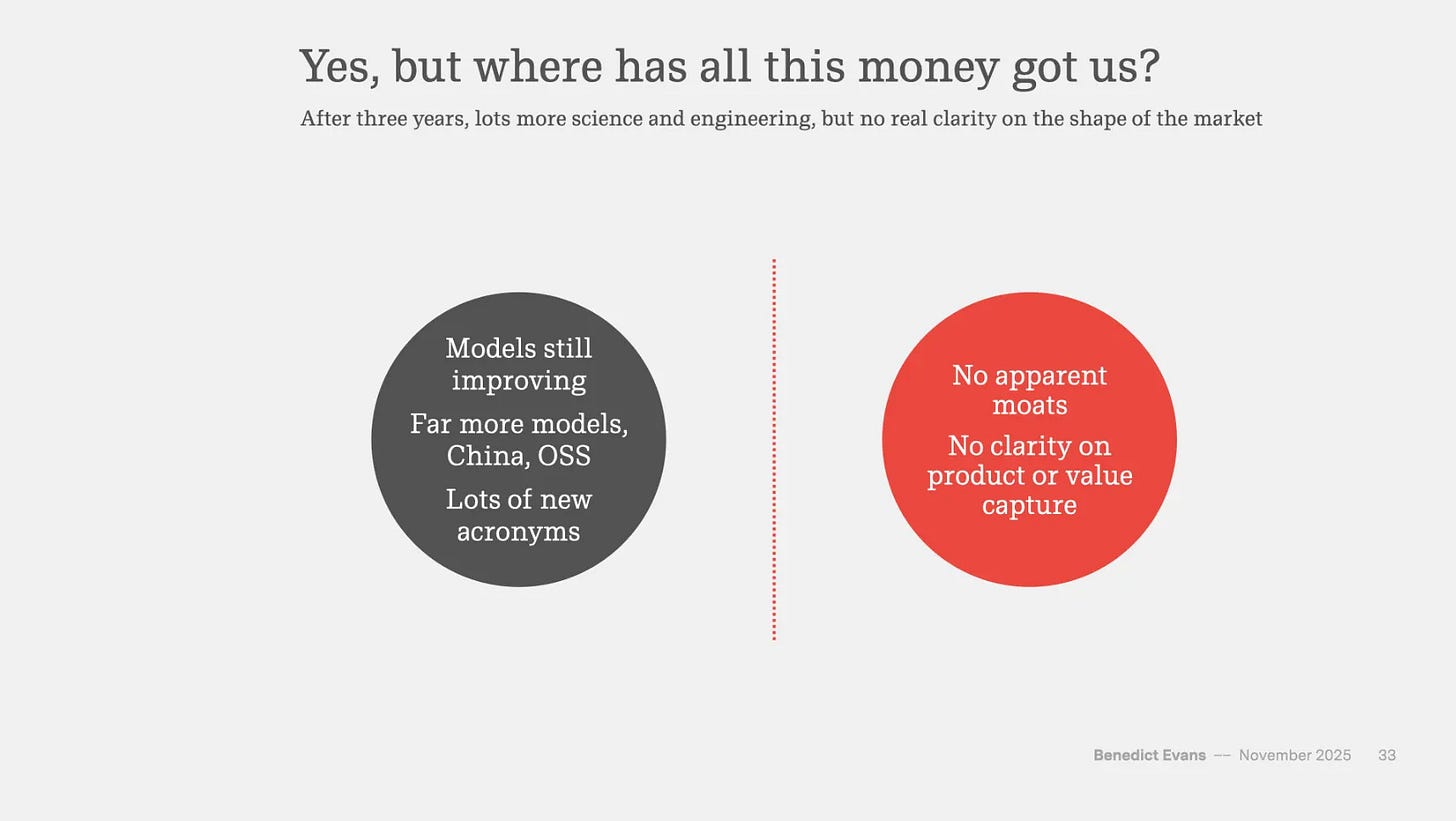
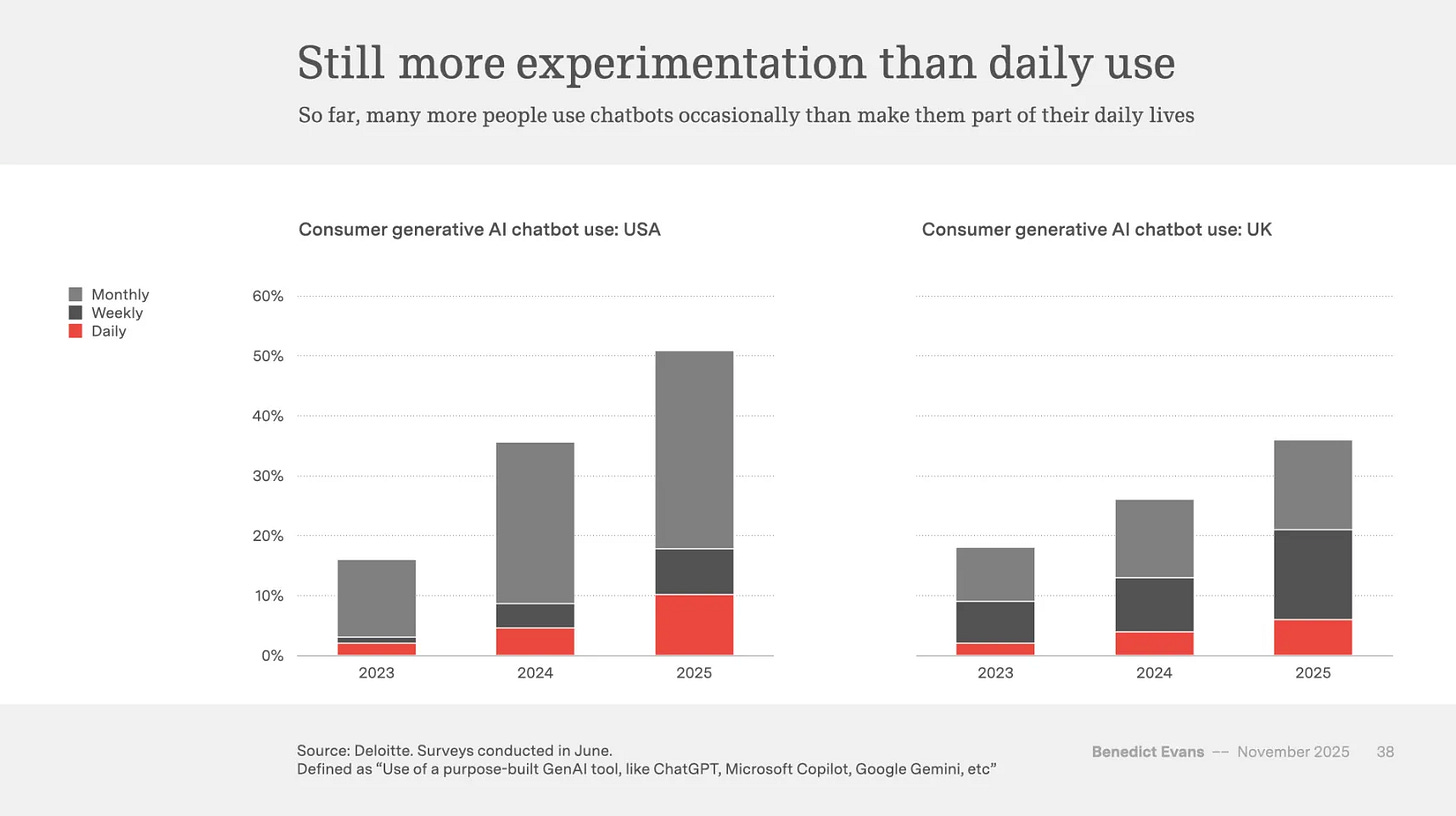
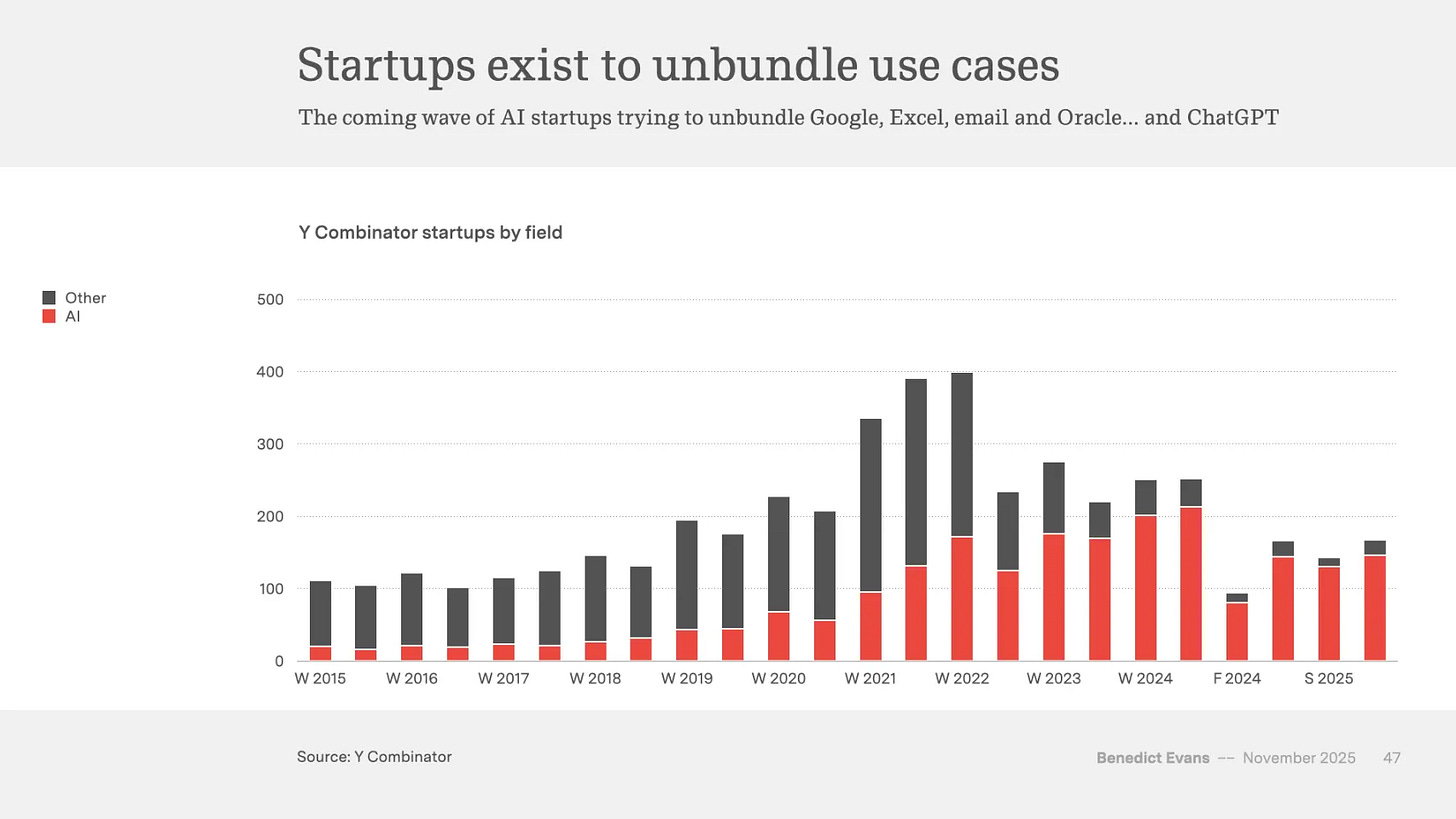
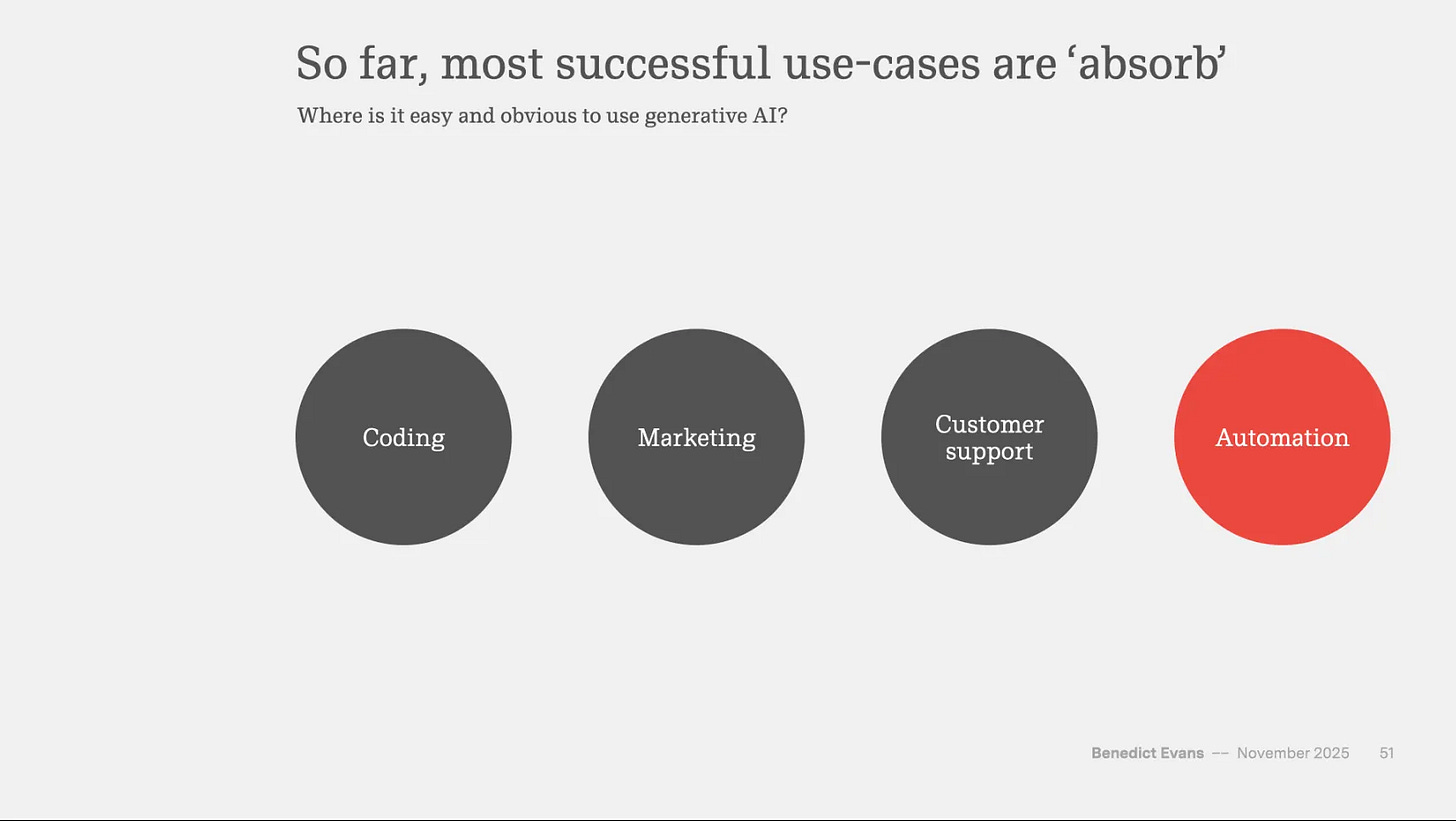


Fundraises fall into two types: Attention Spikes, which get easy funding from hype or standout signals, and Explainers, which need time and explanation to build conviction. - Aaron Harris
“I’m reasonably confident that there are two types of fundraises. I’ll call these “Attention spikes” and “Explainers.””
“A Spike raise is a fundraise done on the basis of the excitement generated by a specific - and relatively narrow - part of the startup.” Spike will either come from the pedigree of the team or from an unbelievable traction.
“What matters in these situations is that your growth or the quality of that growth stands out relative to the other things currently in the investor’s queue.”
“On the other side are the Explainers - these are businesses that can and should and do raise rounds but don’t have that immediate attention grabbing signal. These companies require the founders to actually explain what it is that they do and why it is interesting.”
“These companies are fascinating to me because they’re some of the most long term interesting companies. What’s more, the pricing is usually lower than the Attention Spikes, they have fewer competitors, and the founders often know things other people don’t. Despite that, they will have a harder time fundraising because, at first glance, they do not look special.”
“Unless you have some amount of contact with investors, it is hard to know if you are an Attention Spike or an Explainer.”
Alex Bouaziz shared his key principles to run Deel: treating everything as sales, staying in the details, nailing the first 20 hires, living with customers and responding fast, expanding TAM, keeping cash discipline and profitability, leveraging angels, constantly de-risking, staying focused, and leading decisively on instinct. - Alex Bouaziz
“Everything is sales. Recruiting is sales. Fundraising is sales. Retaining your best talent is sales. Dating is sales. And sales is sales. A founder’s effectiveness = (technical skill × ability to sell).”
“You need to be in the details. The best founders can zoom all the way in and out.”
“Your company’s fate is 70% sealed by the first 20 hires. Ego aside, bring on a technical expert and have them vet talent for you. Your first hires are your culture, your standard, your work environment. They are the company. Get the first 20 hires right.”
“Your TAM is limited by your imagination, not by the market. Constantly rethink the pod, find other big issues that need solving and are valuable, and solve them exceptionally well.”
“Never run out of cash. The only way a business dies is by running out of cash. Profitability = power. You call the shots, not investors. You can always act in the company’s long-term interest because you know you are safe.”
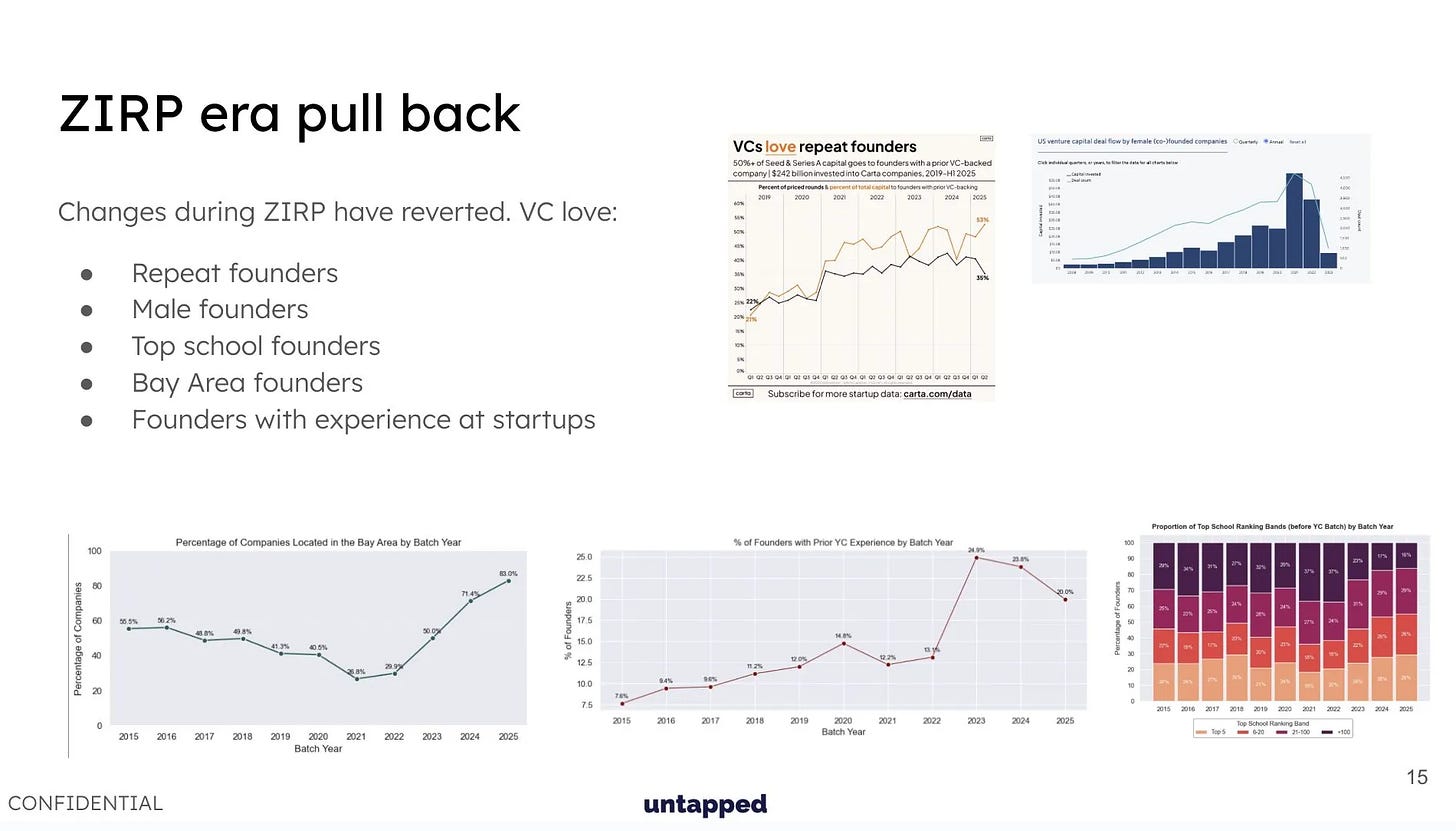
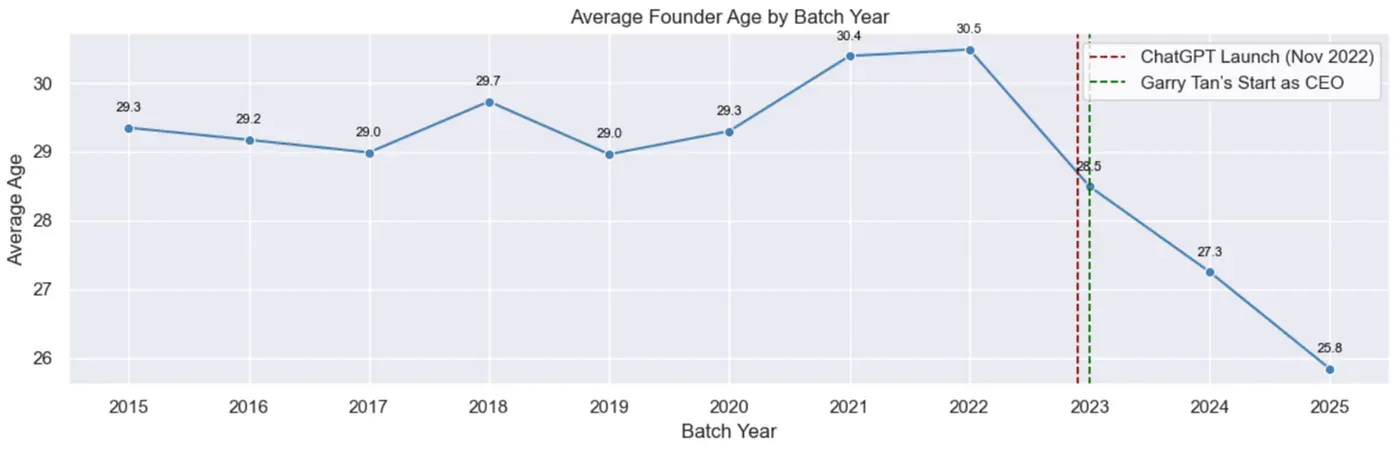
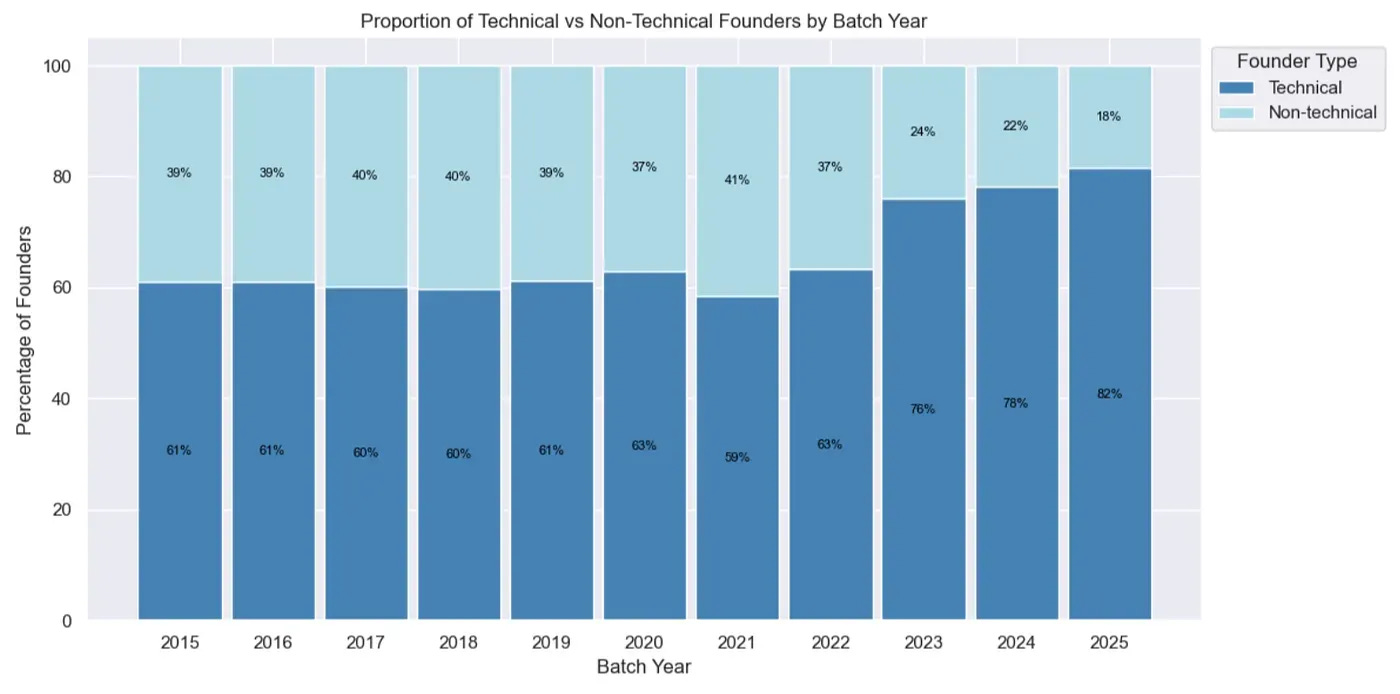
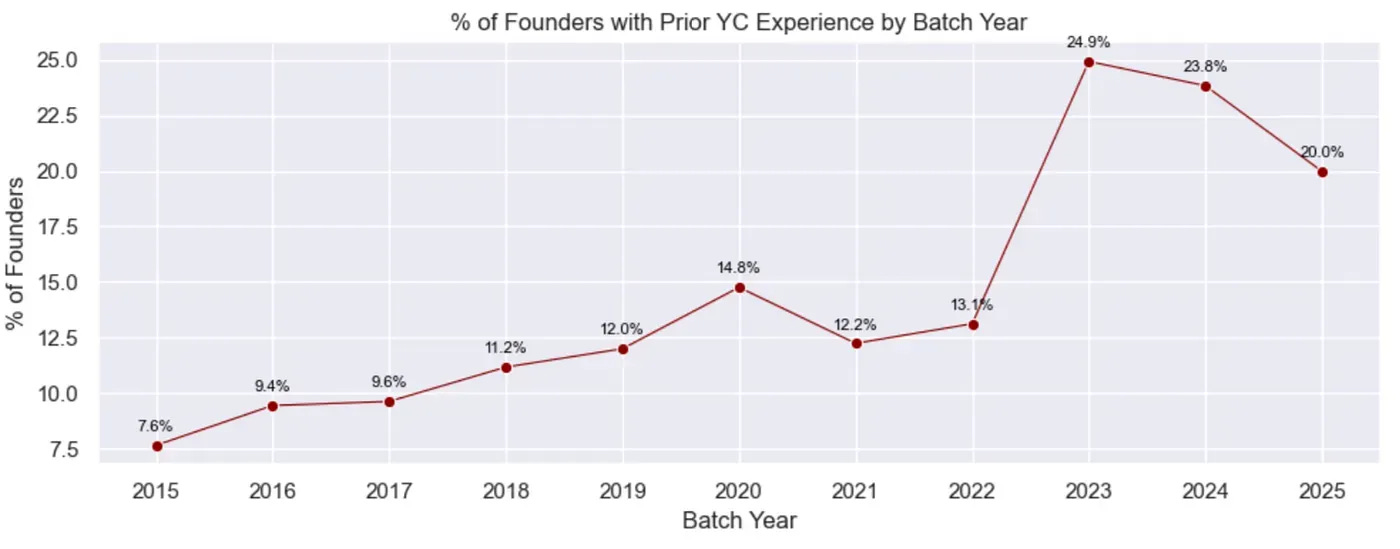
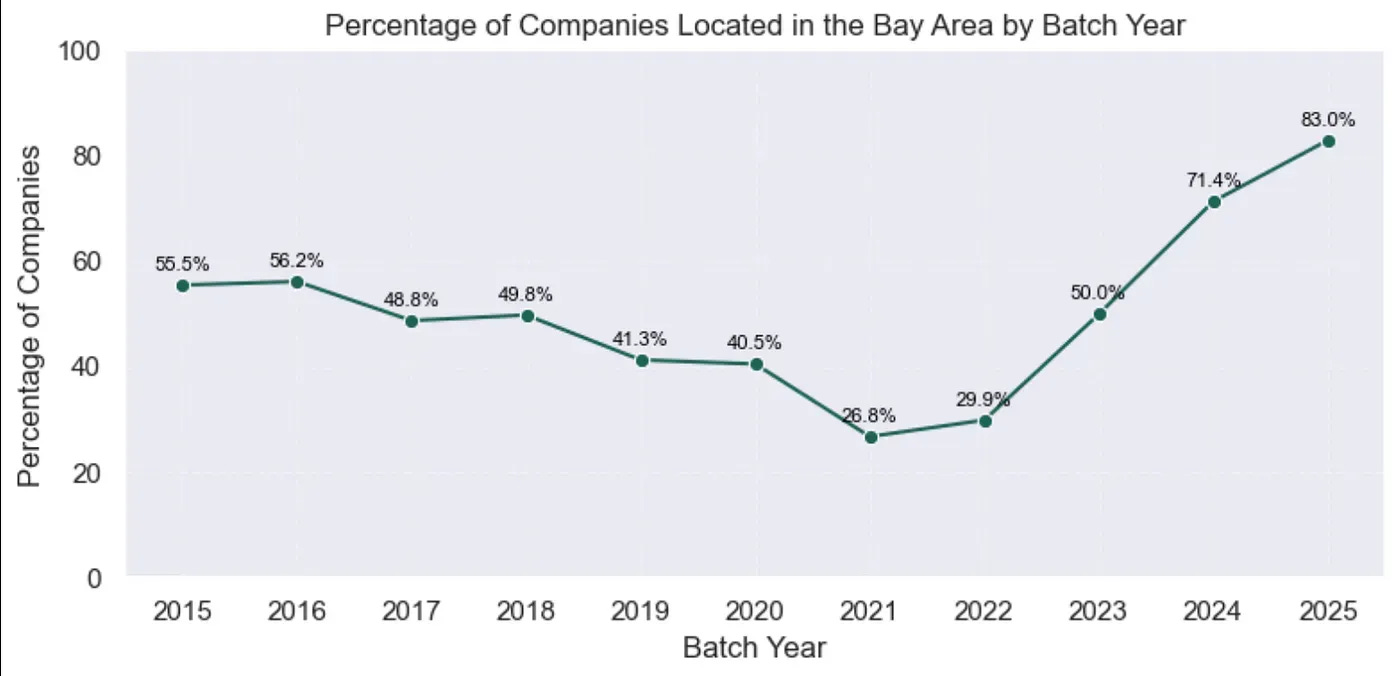
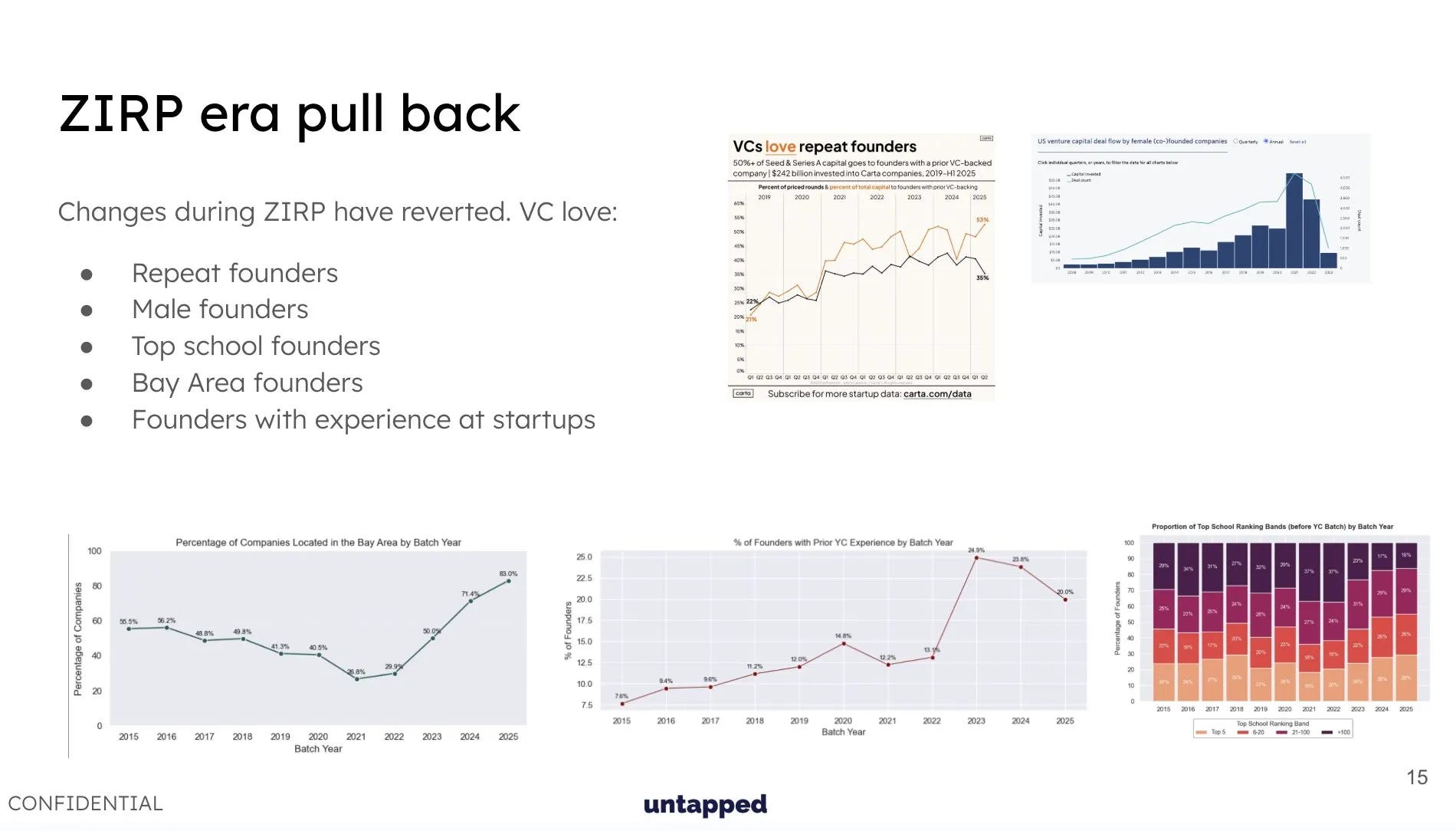
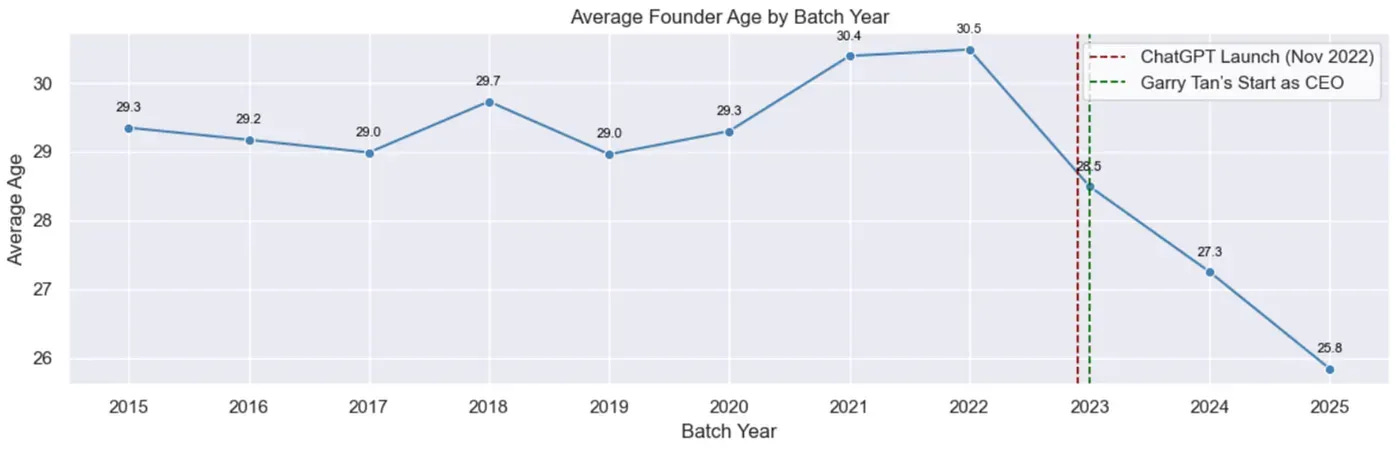
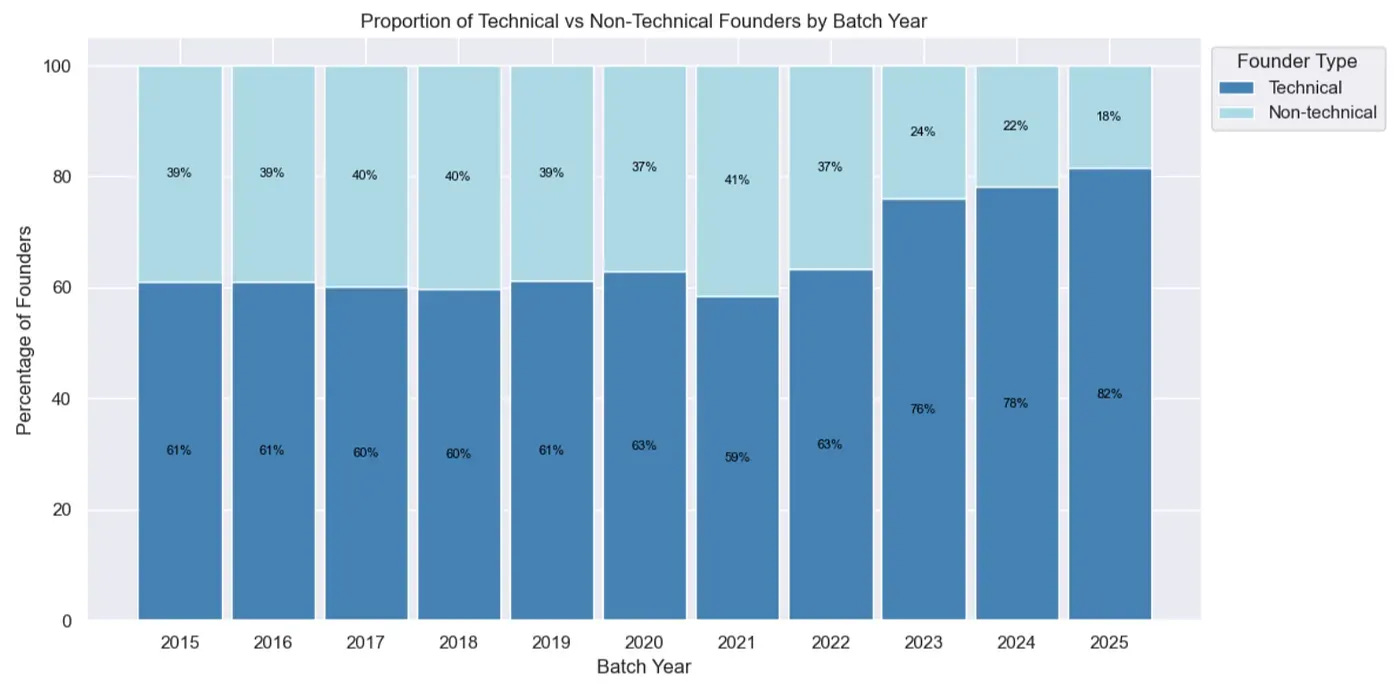
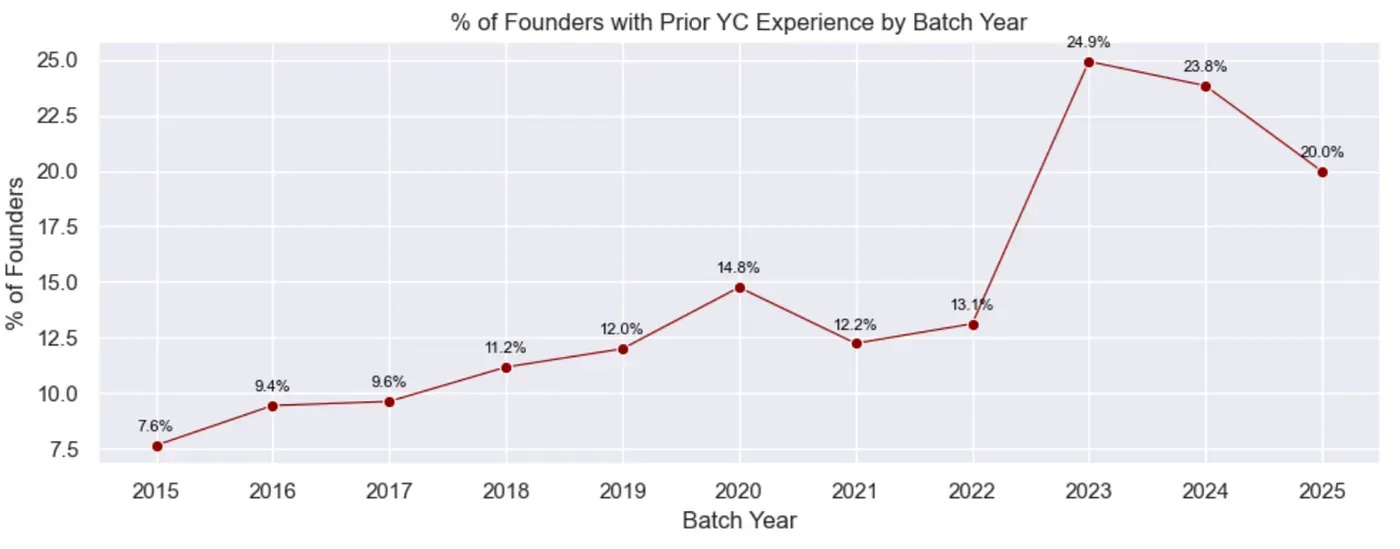
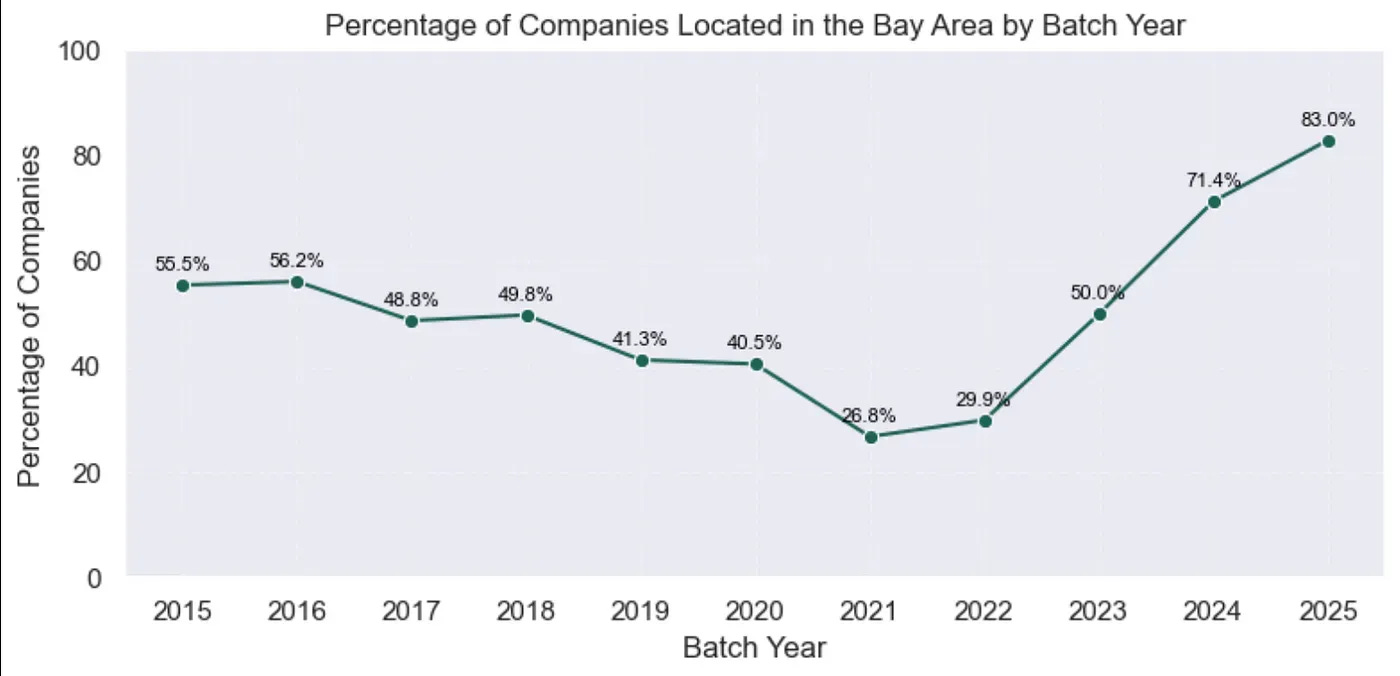
Garry Tan’s return to YC is marked by a shift towards younger, more technical, SF-based and highly pedigreed founders. - Rebel Fund
26 years old (vs. 29 years old in 2015)
82% technical (vs. 61% in 2015)
83% based in SF (vs. 55.5% in 2015)
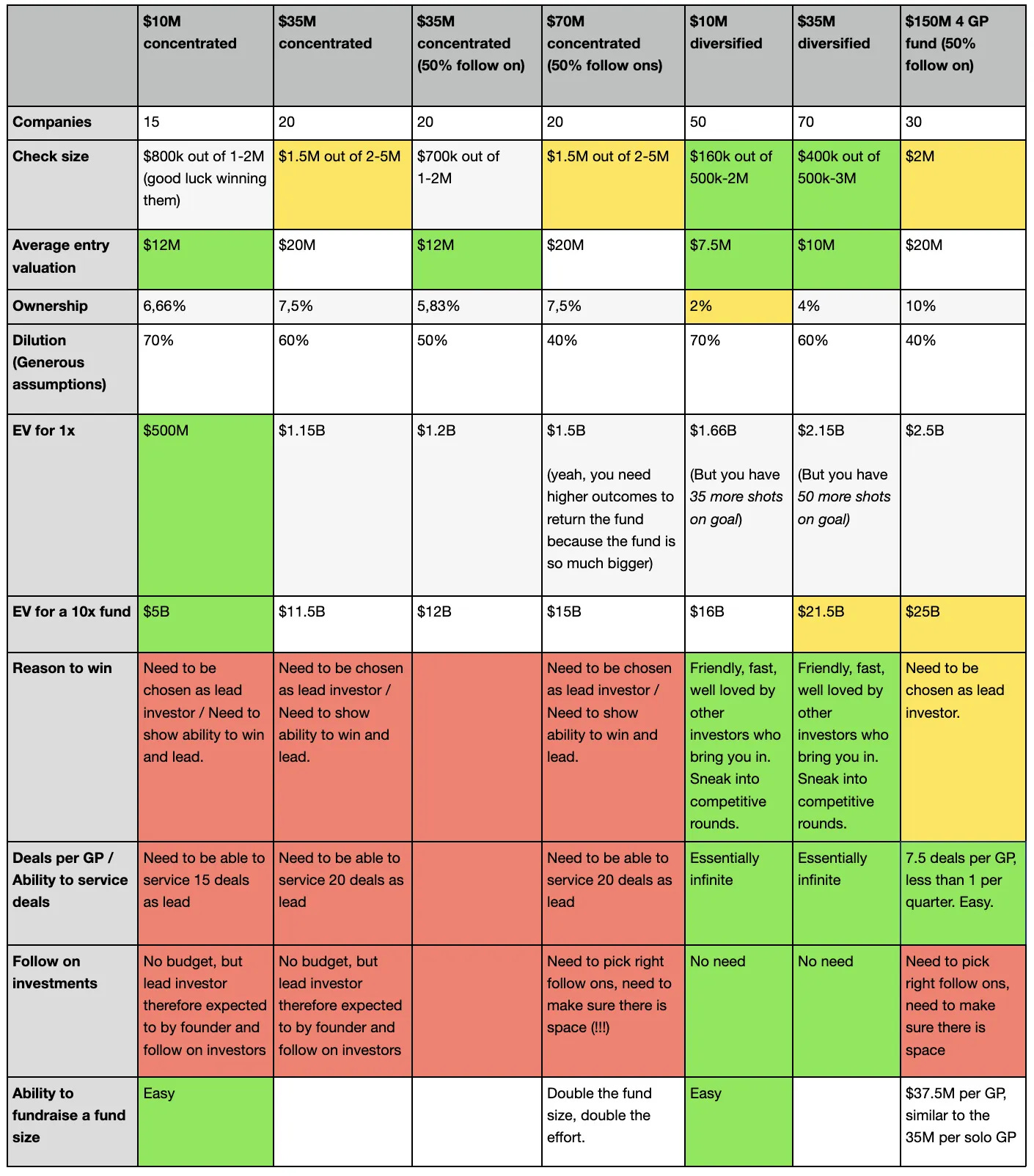
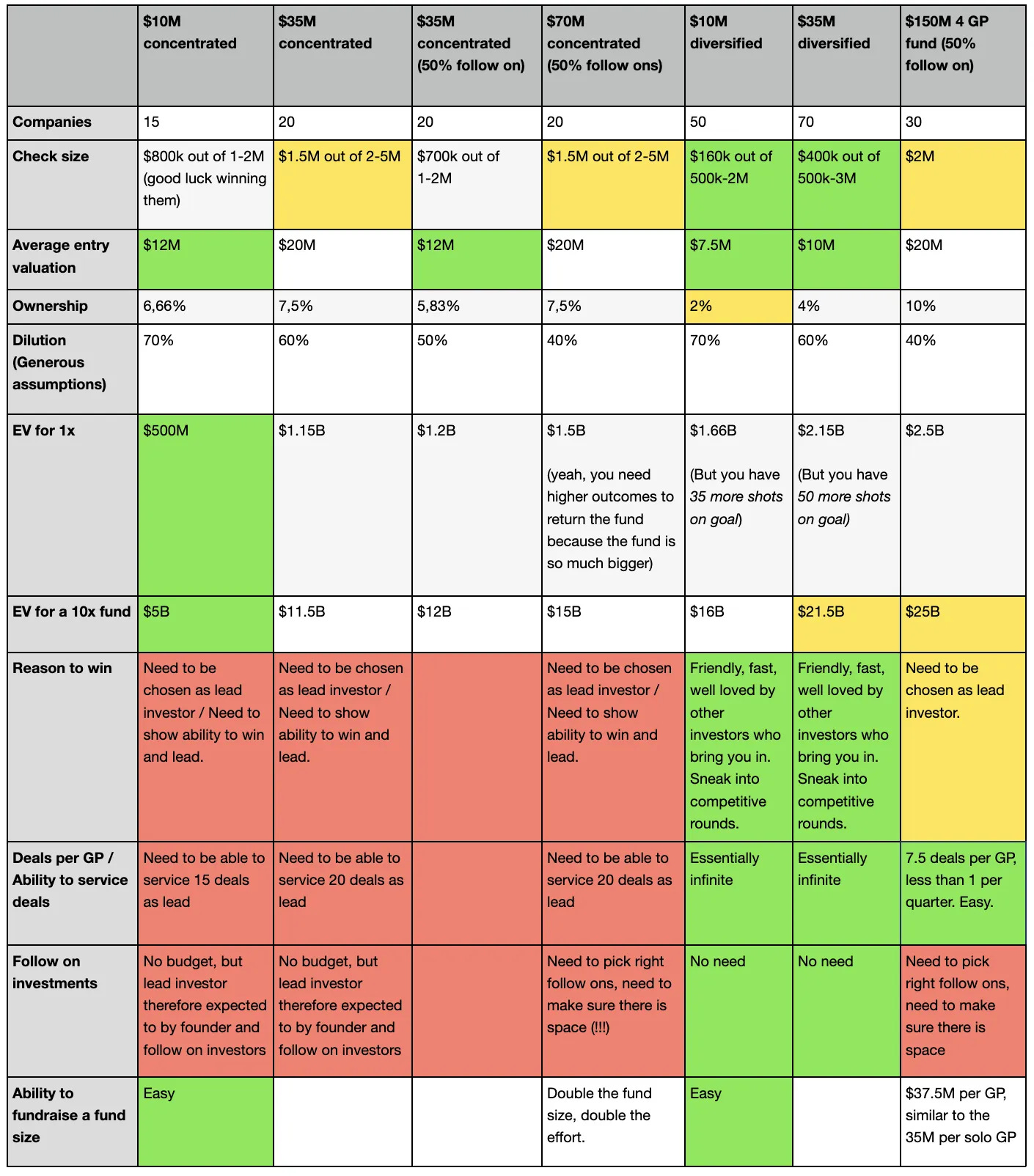
Stefano Bernadi wrote about concentration in pre-seed & seed funds arguing that it’s a much better strategy to have a very diversified portfolio at this stages. - Signature Block
“A lot of LPs seem to believe that to outperform, you need to build an extremely concentrated portfolio (~15–20 companies), and then concentrate follow-on capital in the winners.”
“Diversified funds have consistently outperformed concentrated ones.”
“It’s such a better story to believe that someone just has a magic touch, can see the future, can add massive value, is the one who knows all the best founders, and so on, and will therefore translate into a massively higher unicorn hit rate.”
“Lowercase I, probably the best-performing seed fund in history, made ~80 investments in Fund I. First Round was doing 20–25 deals per year at its peak. SV Angel placed hundreds of bets. Elad Gil, Semil Shah, Naval, and most others famous SF mega-winners all built high-quality but extremely wide portfolios.”
“Power laws don’t reward magic. They reward surface area.”
“10xing a diversified fund is only 2x harder than a concentrated fund, but with a massively higher luck surface area.”
“Could we build a portfolio of 20 super high quality companies with very large ownerships? I think that’s a very big assumption that a lot of people make too lightly, and I don’t want to make it. We might be able to see them, but winning all of them in the right timeframe and servicing them properly is unlikely.”
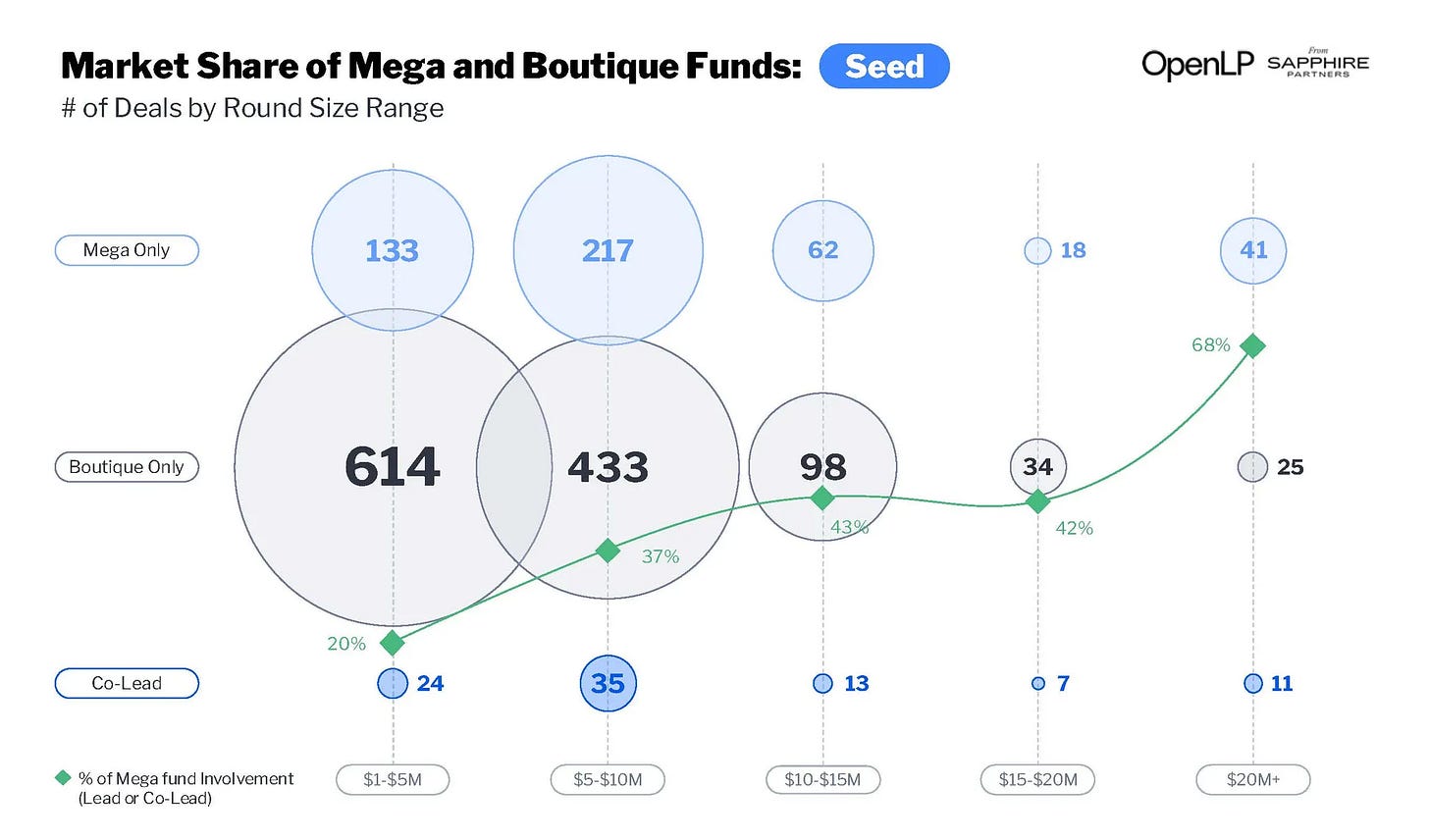
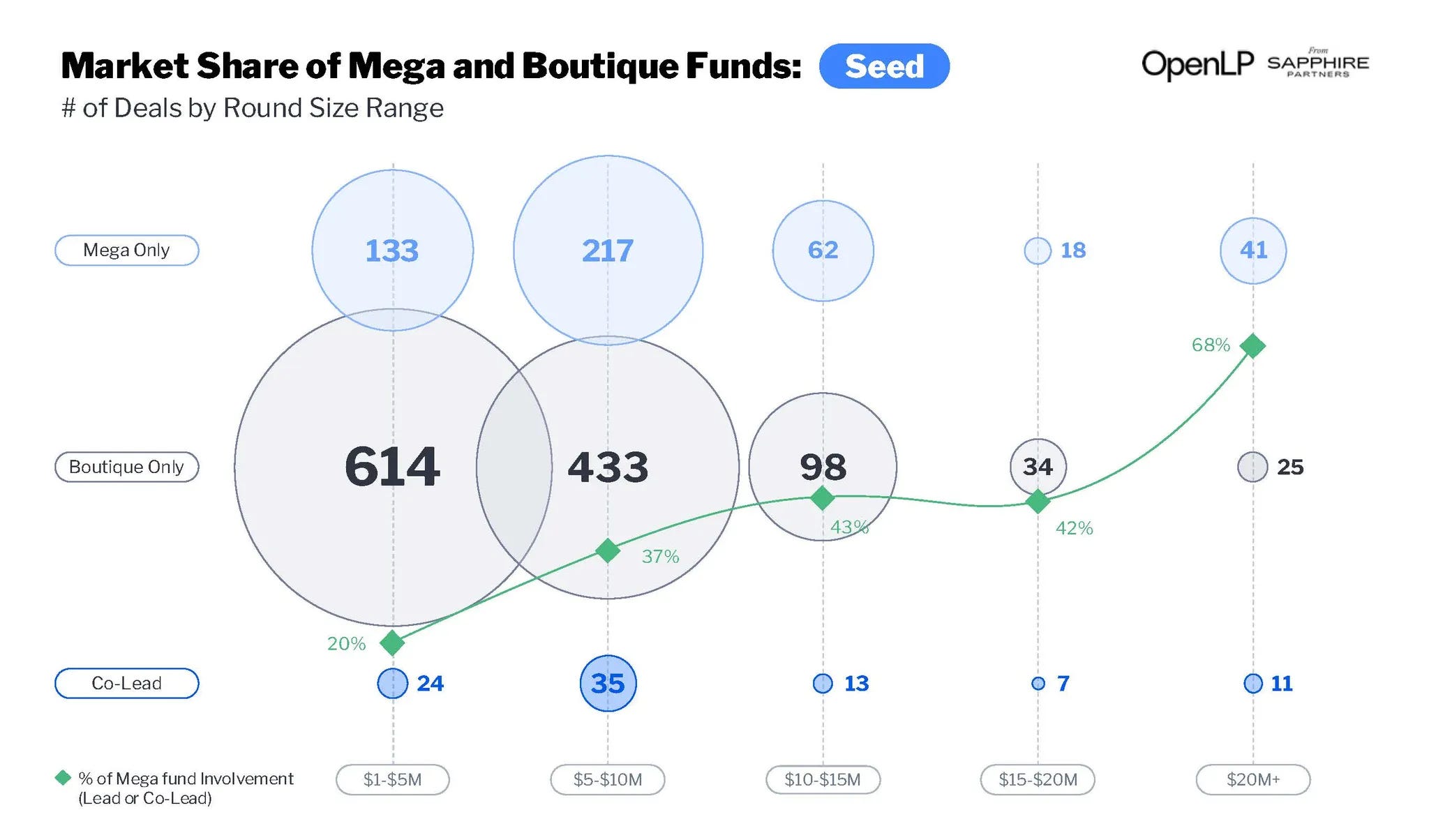
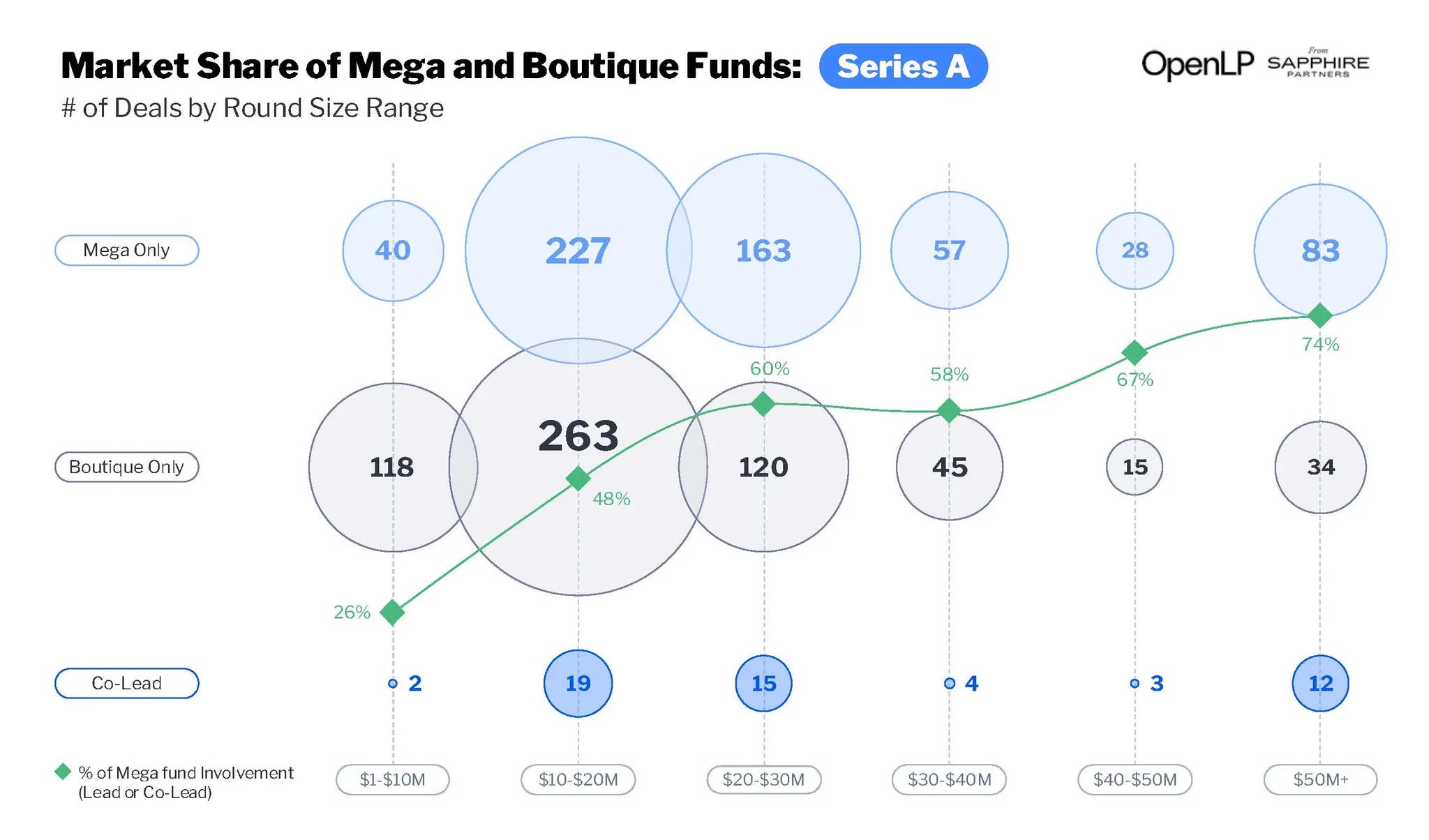
80% of seed rounds below $5m are done without a multistage fund involved while 68% of seed rounds above $20m are done with a multistage fund. - Beezer Clarkson
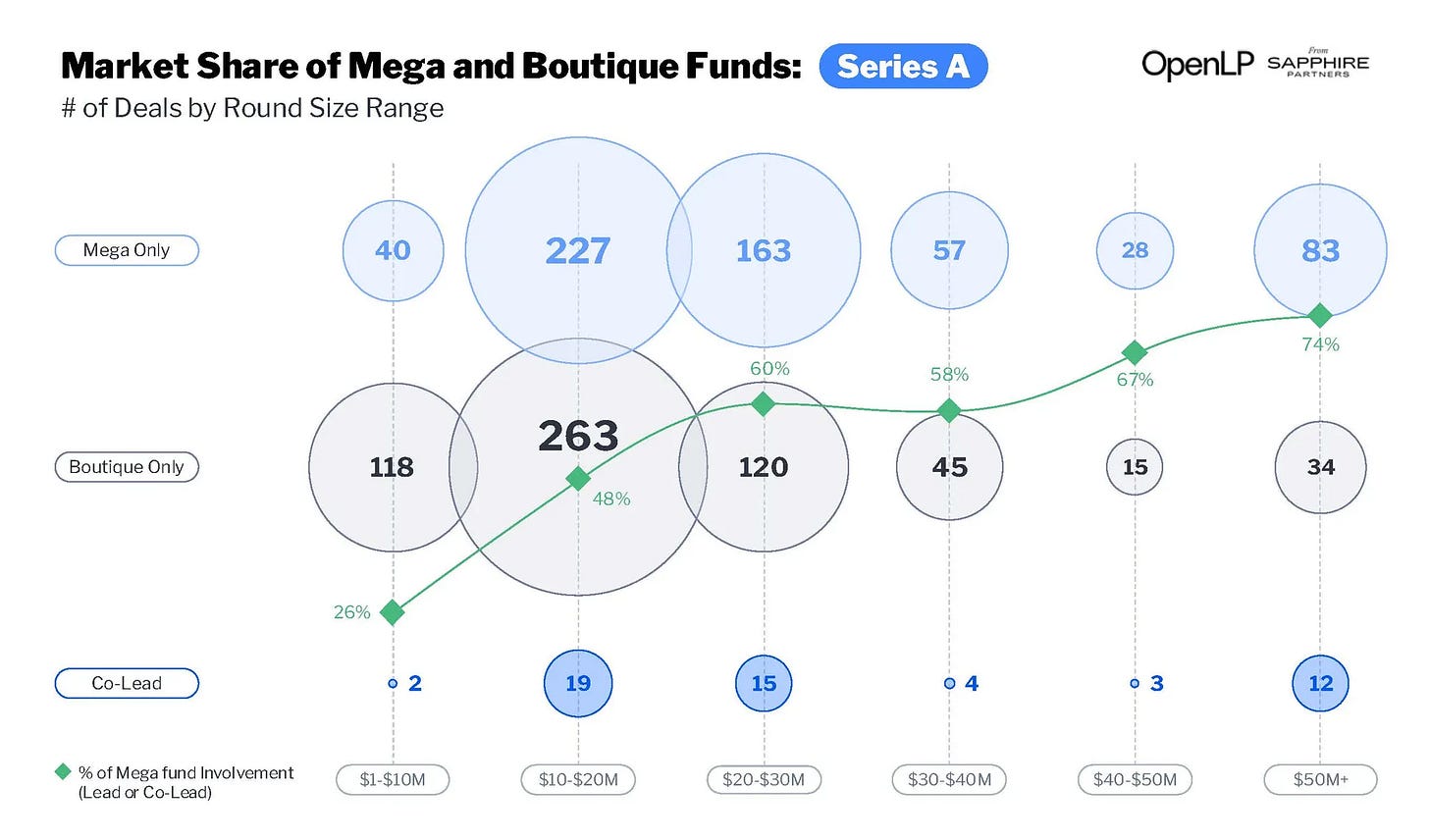
There is a bifurcation in venture between traditional venture and cross-over venture. - Nucleus
“Two distinct camps in venture right now. One group is still committed to classic venture. They love Benchmark and Sequoia and want to go deep on focused early work with lean and true partnerships. The other is leaning into crossover strategies that mix incubations, rollups, buyouts, and public market exposure. this camp loves Thrive, Greenoaks, and Paradigm.”
“The spike in new firms ties back to the two camps and the simple reality of fewer partner seats at the firms who can win.”
“Firms want to be lean again. check writers are falling back to pre zirp levels, and many are getting pushed out.”
“AI is giving people a reason to reimagine their craft with a toolkit that did not exist before.”
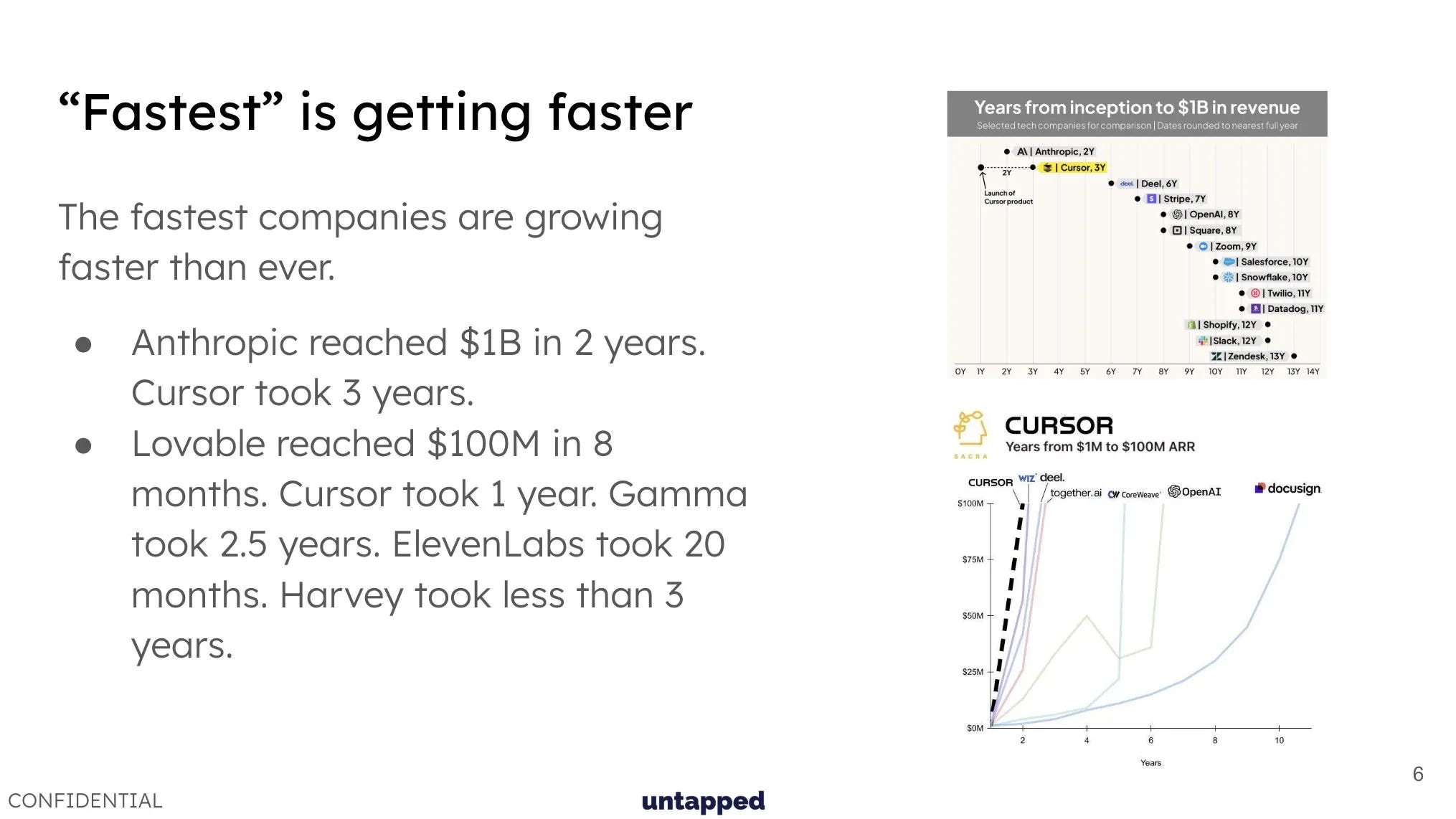
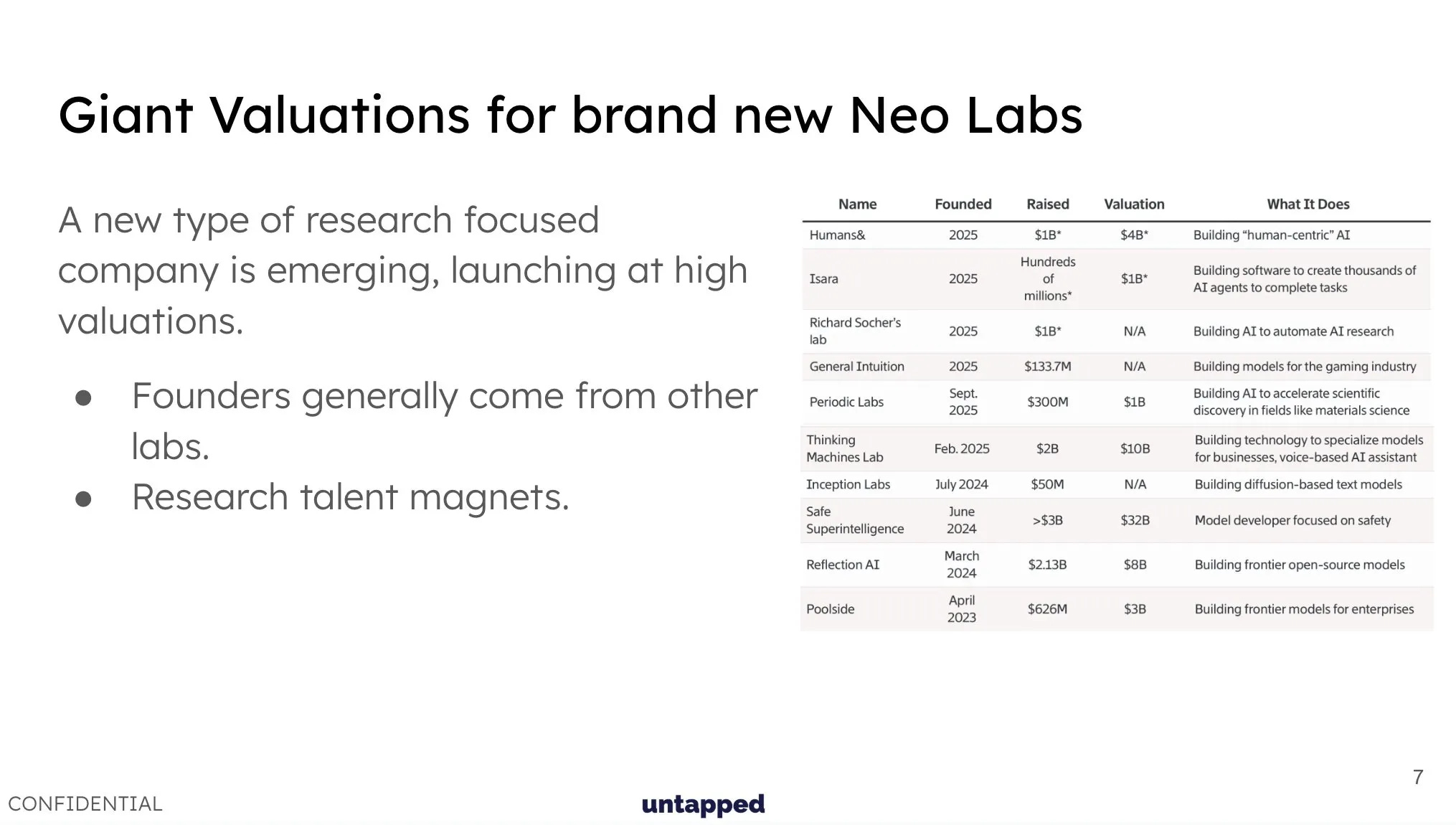
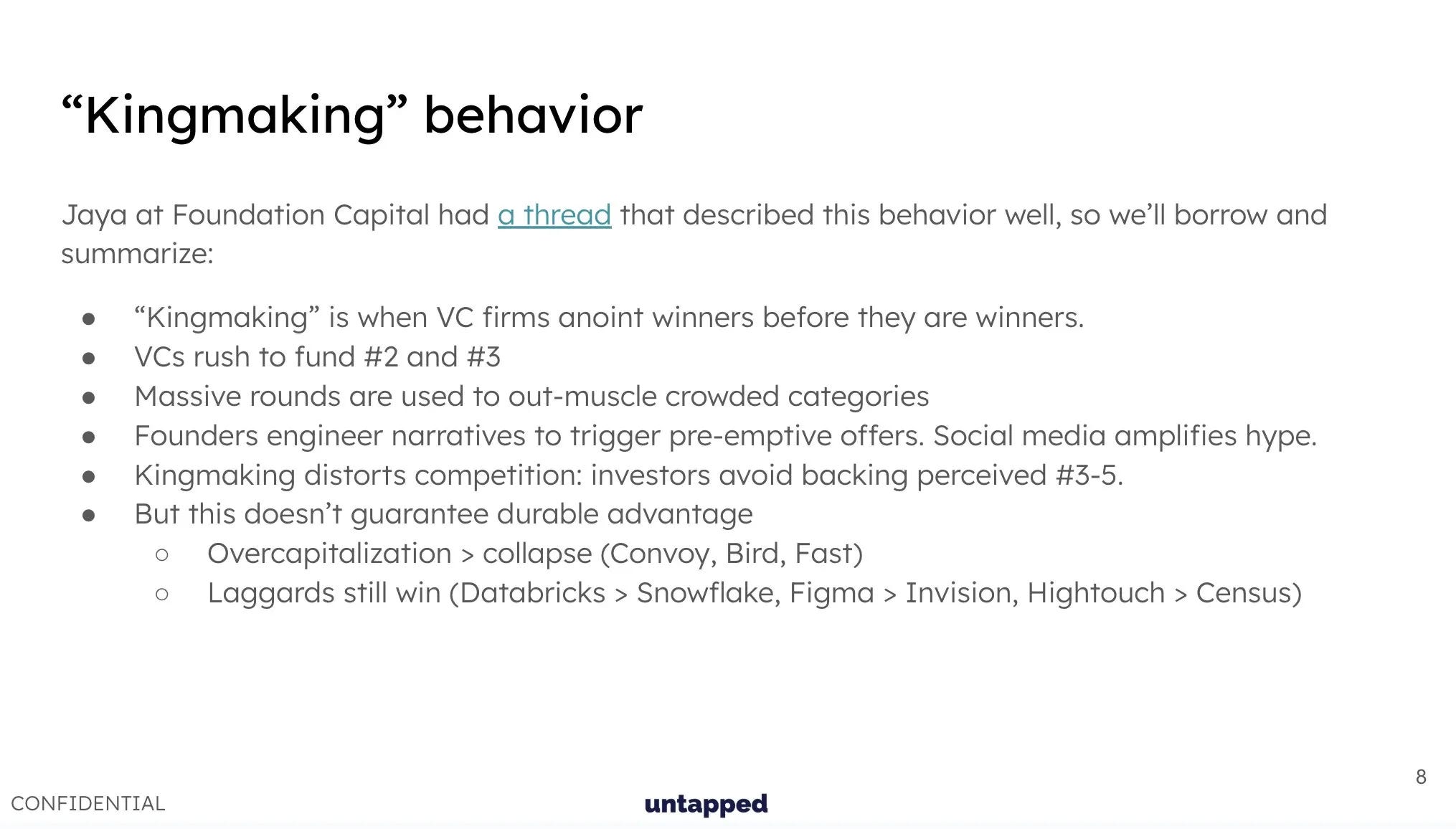
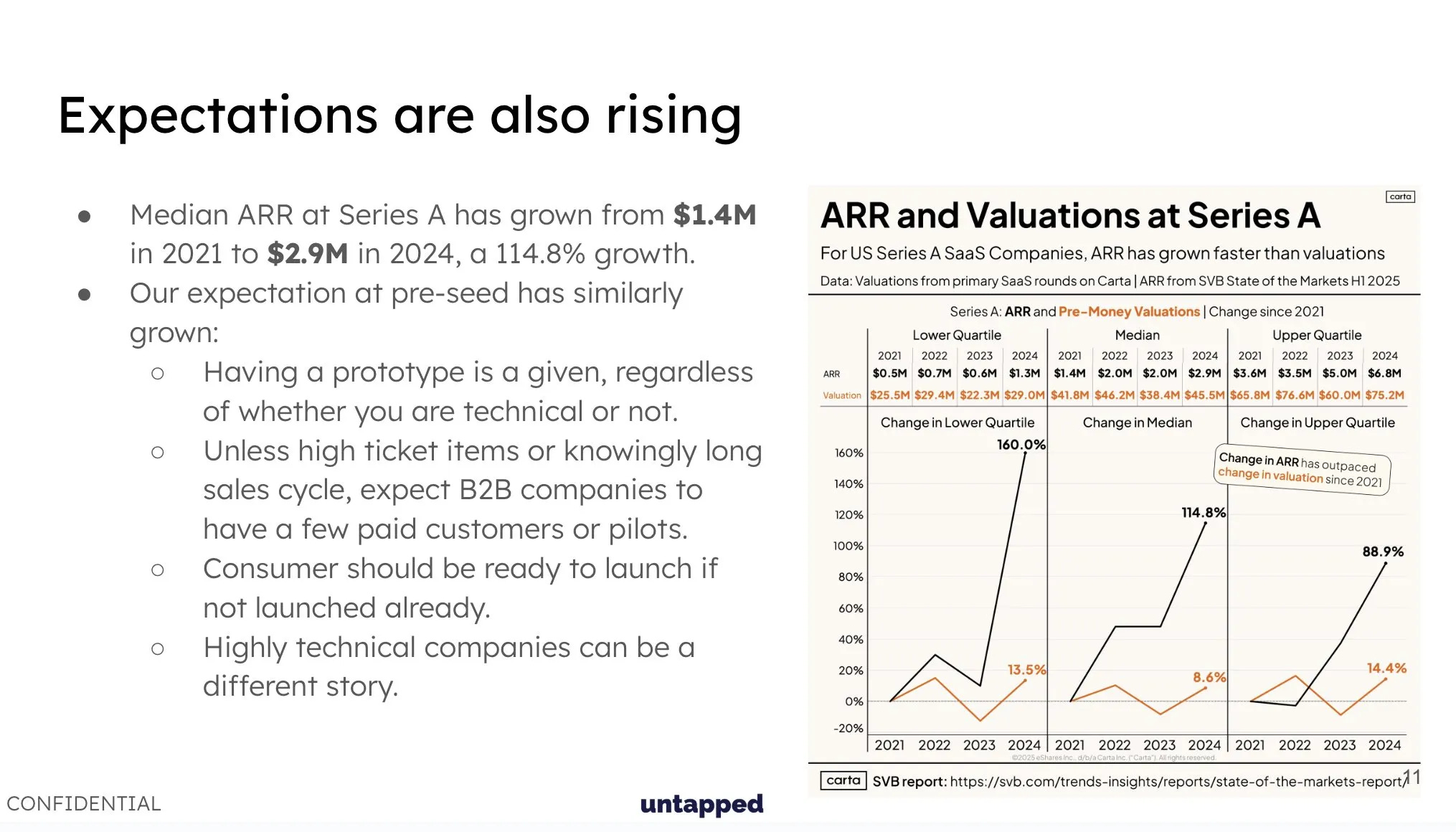
China is subsidising energy to promote its national AI infrastructure ecosystem. - FT
“China has increased subsidies that cut energy bills by up to half for some of the country’s largest data centres, as Beijing steps up efforts to boost its domestic chips industry and compete with the US.”
“Local governments have beefed up incentives to help Chinese tech giants such as ByteDance, Alibaba and Tencent, which have been hit with higher electricity costs following Beijing’s ban on purchasing Nvidia’s artificial intelligence chips.”
“The move is a further sign of how China is incentivising its tech companies to break their reliance on Nvidia and boost the country’s homegrown semiconductor industry so it can compete in an AI race against the US.”
“Despite the higher energy costs related to using domestic chips, China’s more centralised grid network still provides cheaper and greener electricity than the US with no near-term shortage.”
AI is shifting the economy from goods-driven to service-and-outcome-driven with three phases: commoditisation of knowledge work, a shift from consumption to goal-seeking with AI automating routine tasks, and emergence of business models focused on human flourishing rather than spending. - Fintech Brainfood
“Middle-income consumer populations will have less disposable income as their jobs come under pressure from AI. Meaning consumerism ceases to be the driver of economic growth.”
“Service businesses typically report gross profit margins in the high-90% range, while goods-producing companies like automotive businesses achieve only 9-12% gross margins. Law, consulting, and finance will become lower-cost to distribute, and the competition will shift to who can bring once rare, high-quality knowledge work to the mass market.”
“If AI Agents take care of our weekly shopping needs, help us find food to enjoy, and take care of the services that eat our time (filing taxes, mortgages, applying for and managing schooling). We end up with more time to pursue higher goals like entrepreneurship, creativity, and health or wellness. What replaces shopping is goal seeking. And AI helps us achieve those goals.”
“If you look at some of the ultra-wealthy today, what they value changes. They’re less likely to doomscroll Temu for useless shit, and more likely to view longevity and health as a status symbol. What replaces that is AI experiences that compete to add value to the end user defined by their health, wealth or wellbeing.”
Palantir’s CTO Shyam Sankar recorded a podcast episode with The New York Times. - NYT
“We’re a software company and we build software that allows you to manage your data to make better decisions.”
“If you’re a manufacturer, you have a system called a P.L.M. system — product lifecycle management system — that you use to design your product. You have another system that you use to manage the manufacturing, the actual production of it, on the assembly line. You have another system called an ERP system, for inventory management and supply chain management, and yet another system for managing sales orders. What we do is we build software that allows you to bring the data from those systems together so that you can manage the process holistically.”
“In the commercial world, you’re optimizing the value chain. You have a series of decisions that you’re making from the hand of your supplier to the hand of your customer. And of course, you can generalize it to the military, which we’re very well known for what we do there. You can think about that as you’re optimizing the kill chain from sensor to shooter.”
Most large institutions—from manufacturers to government agencies—suffer from data silos. Information is spread across numerous legacy systems (e.g., ERP, CRM, PLM) and the “greater truth is lost in the seams between these systems.” Palantir’s software unifies this disparate data.
Palantir’s work is divided roughly in half between commercial and government clients.
Commercial: In sectors like energy, mining, and pharmaceuticals, the software optimizes the “value chain” from supplier to customer.
Government/Military: In the defense context, it optimizes the “kill chain,” which Sankar describes as doctrinally the same process of integrating data to make a sequence of decisions.
The Department of Defense is a “monopsony”—a single buyer. Like Walmart in the 1990s, which focused on squeezing suppliers for “everyday low prices,” the DoD’s lack of competitive pressure from other buyers stifles true innovation and leaves it blind to disruptive threats (akin to Walmart not seeing Amazon coming).
Thanks to Julia for the feedback! 🦒 Thanks for reading! See you next week for another issue! 👋
No posts
Comments
Nothing yet. Say the first thing.
Sign in to join the conversation.