
Nine years ago, I saw death lit by car headlights in the form of a concrete median.
It’s not right to say I almost died, because that wasn’t the case. A more accurate description would be, “Never in my life had circumstances been so perfectly poised to tip me over into death’s arms.”
Nine years ago, at five in the morning, I listened to the sound of pattering rain from my bedroom, and my heart sank.
“If there’s freezing rain, maybe you shouldn’t go,” Mom had said the day before.
“Oh, it’ll be fine.” I’d brushed it off because no one ever thinks it’ll happen to them.
Until it does.
Until you’re sliding across three lanes of the interstate, screaming, waiting to get control of the car, and then simply dreading the moment of impact.
Mere moments before we slammed into the concrete median, I had the horrific thought: I’m not ready to die; I haven’t gone to Confession in years. I’m a cradle Catholic who was going to Mass, but unfortunately going to Confession hadn’t really crossed my mind in ten years. (I wrote more about how this event catalyzed a slow change in my spiritual life last year, in relation to my debut novel).
I do think it’s a bit of a miracle that my dad and I made it out nearly unscathed. I had whiplash that lasted well into my following semester abroad in Siena. Somehow, the airbag knocked my glasses off, and they ended up in the backseat. I cut my finger—don’t even know how. I had aching pain across my chest and waist from the seatbelt that lasted for weeks. I could barely sleep for the next few nights as the event replayed over and over, and a dizziness would overcome me, the sense of sliding all over again, right as I would drift off. But that was all.
The car was totaled. I couldn’t even open my passenger side door. We sat there on the highway for nearly an hour, waiting for a tow truck. Quite honestly, I’m amazed we weren’t hit while waiting there. I screamed, “CALL 911!” to my dad, and when he didn’t react for a few moments, a paralyzing fear washed over me that something had happened to him. He was just stunned. I rolled down the windows to let the smoke out from the airbags.
If we had been in a smaller or lighter car, we probably would’ve been seriously injured. If we hadn’t been on the highway at such an early hour and if there had been more people around, we probably would’ve been hit by another car as we slid.
The ironic thing is I had texted my mom mere seconds before to tell her that the roads seemed fine.
I’m telling this story because what happened to me, while nowhere near a true “near-death experience” did get me to confront my own mortality for the first time. And I considered today’s cultural aversion to death—along with most other unsavory topics. We want to live comfortably, but it is only an illusion.
No one likes to talk about death. Fair, I suppose, but we avoid it in a willfully ignorant childlike way in today’s society. Which I find sort of funny considering how, in many respects, we are comfortable disposing of people when they are not convenient for us or for society. We celebrate Halloween and indulge in all the darkly macabre things that go along with it, yet ignore All Souls’ Day, the great day to pray for, and visit, the dead just two days later. “Death” itself is a trigger: when planning an icebreaker activity for a model lesson for a teaching certification course, a question I had was, “List 5 things you’d like to do before you die.” My advisors had me change it to “before you grow old.” (But what, instead, if there were a young student with a terminal illness who’d never grow old? Round and round we could go). While I am all for being sensitive to people’s different backgrounds and situations—and I’m not saying my advisors were necessarily wrong to have me change the wording—it made me think, more generally, how silly it is to try to ignore something that will happen to all of us. We can’t even write out the word “death” on most social media platforms without it being censored; we have to substitute it with a cute little skull emoji instead.
In case this is news for anyone, let me be the one to break it: we’re all going to die eventually.
There is a beautiful Catholic practice that has fallen out of fashion, but that thankfully people like Sister Theresa Aletheia Noble are slowly trying to bring back: that of meditating on one’s death, or memento mori. It used to be a common practice for Christians to meditate on the four last things: death, judgment, hell, and heaven.1 If you visit the old cathedrals, the subject of the Last Judgment is prominent, often on the tympana, which you walk under as you enter, such as at Autun Cathedral in France. Imagine being greeted with such an image every time you walk into church.
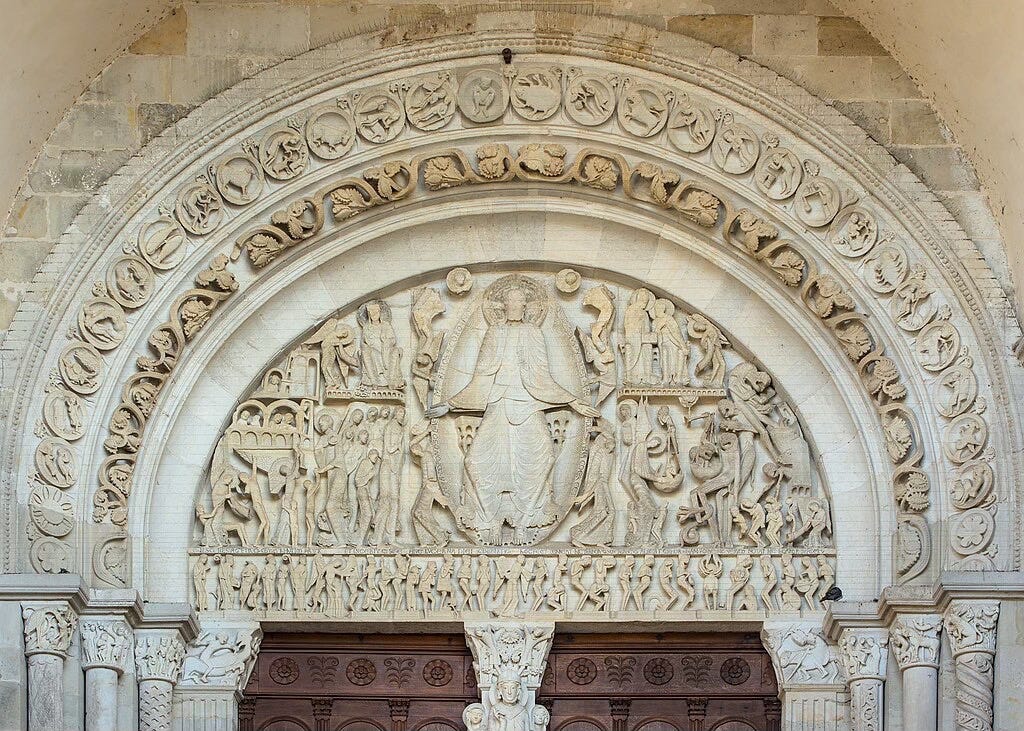
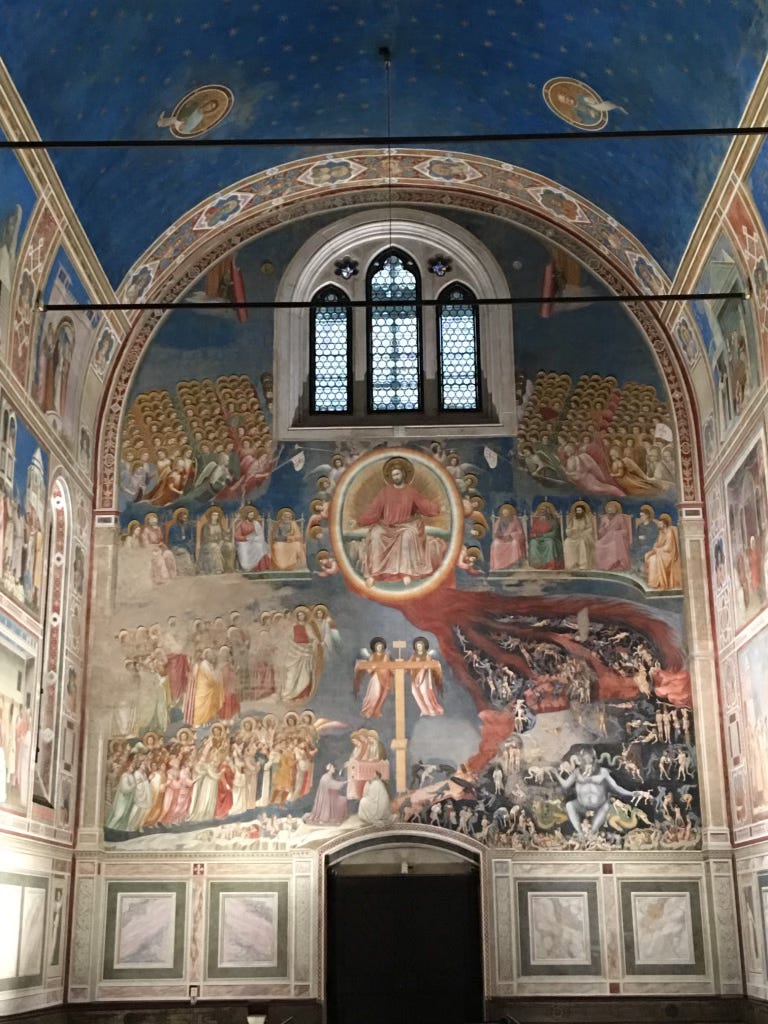
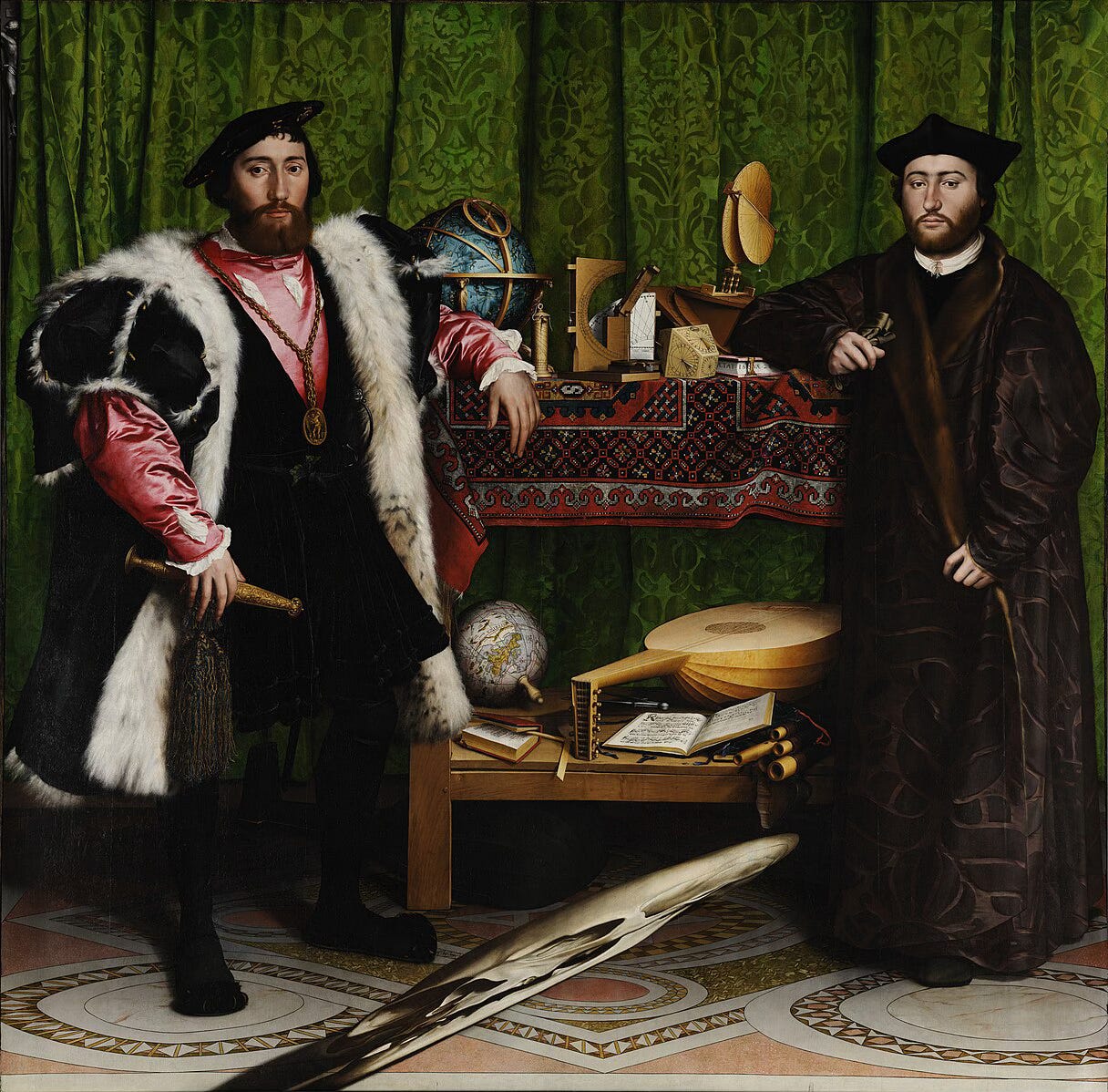
I could go on and on about medieval Last Judgment scenes—I actually wrote my senior thesis in college on them. For the sake of space, I will keep my remarks simple and short. We can spend a lot of time analyzing the grotesque nature of the hell scenes in such images: the brutal punishments and gleeful demons and torture devices only the most disturbed minds could conceive of. But what is most important here is the prominence of the Christ figure in these scenes. (In art history terms, we would call the study of this the hierarchic scale).2 He is almost always depicted in a mandorla, an almond-shape (“mandorla” is Italian for almond), to offset Him even more against the rest of the image or relief sculpture. The significance I want to point out here is that while it is important to meditate on the “final things,” we should always re-center our gaze on Christ, Who has won the ultimate victory over death.
I would encourage you to take some time to study Last Judgment scenes in medieval art. Check out Sr. Aletheia’s prayer book on the “final things,” which I personally have found to be spiritually beneficial. St. Alphonsus Liguori has a book on preparing for death as well.3 Even the Rule of St. Benedict instructs us to “keep death daily before [our] eyes.”4 Such practices aren’t meant to make us sad or fear what’s coming, but rather to better prepare us.
I think about that car accident fairly often. I wonder if I had died, what would’ve happened.
I don’t think my soul was properly prepared to meet God at that point.
But He protected me even when I didn’t ask for it. Even when I was so unworthy.
Let us not take life for granted. Let us not take our eternal souls for granted.
Are you ready to die? This is the only question I’ll leave you with today.
No posts
Comments
Nothing yet. Say the first thing.
Sign in to join the conversation.