
Today let’s review one of the most important story elements of all: your Hero/ine’s CHARACTER ARC.
What we’re looking at here is essential, but it’s also very simple:
Where does the hero/ine START in Act I?
Where do they END at the end of Act III?
How have they CHANGED?
While this can involve more money, a better job, a relationship, or other more superficial changes, what we really want to look at is:
Who are they at the beginning of Act I, and who are they at the end of Act III? How has their thinking, their actions toward other people, and philosophy of life changed?
The bigger the change, the bigger the Character Arc.
And that means you have to start your character somewhere that gives them room to grow.
I’m rewatching Mad Men for the fourth time. Why would I do that when there's so much new stuff out there to watch? Because of all this zeitgeist about trad wives and all the books cashing in on it without mentioning, never mind condemning, the far right’s plan to make it political reality. It made me want to go back to this far superior depiction of what life was life for women when they were legally and financially forced to live as trad wives.
And because it’s some of the greatest television of all time.
I could do a post for every Character Arc in the show, but let’s just take Peggy Olson right now. Her improbable and incredibly hard-fought rise at Sterling Cooper and beyond is so exhilarating because it IS improbable. The odds are astronomical, both at that brutally misogynistic company and in that brutally, legally misogynistic society. Peggy is very young, very naive, very much a good Catholic girl who starts the show as a meek secretary. She knows nothing and does what she’s told. So every time she does an end run around her male colleagues is a dopamine hit for the audience.
That would never play if she hadn’t started as such an underdog.
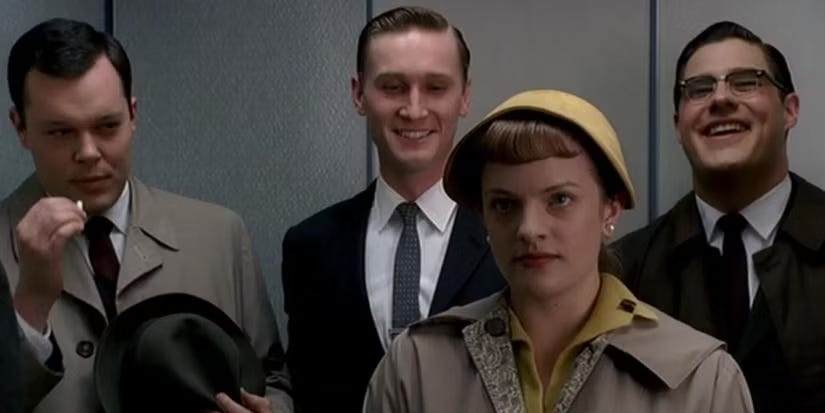
(Have you also noticed how we like the male characters in the show in direct proportion to how seriously they take Peggy?)
If there’s anyone out there who hasn’t seen Mad Men, then I sincerely hope you go do that (and vote in November against a hard-right return to that dystopia…)
For those who have seen Mad Men, I go through many more examples of great character arcs here:
As always, if there’s a particular character you’d like to see me analyze, I’m up for suggestions!
Since we’re on the subject of designing character…
Character Arc is one of quite a few story elements that are best developed by working with your Act I and Act III at the same time, including your:
Hero/ine’s SPECIAL SKILLS or SUPERPOWERS
Hero/ine’s GHOST, WOUND or CORE TRAUMA
Hero/ine’s GREATEST NIGHTMARE
Hero/ine’s INNER and OUTER DESIRE
All five of these components are pretty essential not just for creating a dynamic and memorable protagonist but also for the structure of your book or script, as I go into in each one of the above posts.
That’s a lot of material for you to choose from! But I’ve also been thinking about Author Characters this week.
I just made that term up. Maybe Author Persona is more accurate, but character is more what we do as authors. I’ll think more on what to call it.
What I’m talking about is the characters we play as authors or aspiring authors when we do live events like festivals, and Zoom appearances, and social media reels or videos — and the voice that we write in when we do social media posts and blogs.
Some people may recoil at the idea that we’re playing characters. It may seem fake, or insincere.
But what is your self? Is there ever really one self? We all show up as different aspects of our whole selves, all the time.
Because I just returned from another book festival, I had a chance to see a lot of authors on stage over three days. And it was yet another reminder of how important it is for us writers to be aware of and cultivate an author brand as well as a book brand.
If you’re a screenwriter, believe me, this is equally vital, because you’re always pitching yourself for writing jobs. And yes, I mean your self, as much as your story!
Just as we need to figure out how our books stand out from other books in our genre, it’s really important to do some thinking about how we stand out from other authors.
I absolutely do not mean in a cutthroat or competitive way.
I’ve known and worked with a lot of writers over my professional career and I can see a very clear pattern of author success correlating to a defined author brand - including this thing I’m calling author character.
It’s very helpful to stand back and look at yourself as a character, and how you can effectively communicate your core values to your audience of readers. There is no question that who we are sells our books.
Paying some focused attention to how other authors present themselves — what stands out, what resonates and appeals to you about those author characters —can really help you define how you want to present yourself.
After all, one of our primary jobs as writers is to observe character, and create characters. We all have that skill, or we wouldn’t have come this far already.
I just wanted to put that in your heads for now, and when I have more time I’ll do a full post on it, with real life examples!
Meanwhile, how is your book going? Anything in particular you’re stuck on? What can I do to help?
—Alex
All material © Alexandra Sokoloff, Screenwriting Tricks for Authors
Subscribe to the Screenwriting Tricks for Authors YouTube channel
for fifteen minute doses of craft to elevate your writing right now!
Likes, Comments and Shares are really helpful and much appreciated.
Share Screenwriting Tricks for Authors

Get the workbooks:
Stealing Hollywood ebook, $3.99, also available as print workbook
Writing Love ebook, $2.99
Need more help? The Screenwriting Tricks for Authors workshop is available online, as a self-paced course with all the videos, assignments, movie breakdowns and personalized feedback you need to get that book written next year. In three parts, and you only pay for what you use.
Comments
Nothing yet. Say the first thing.
Sign in to join the conversation.