
Intro
More on this newsletter here.
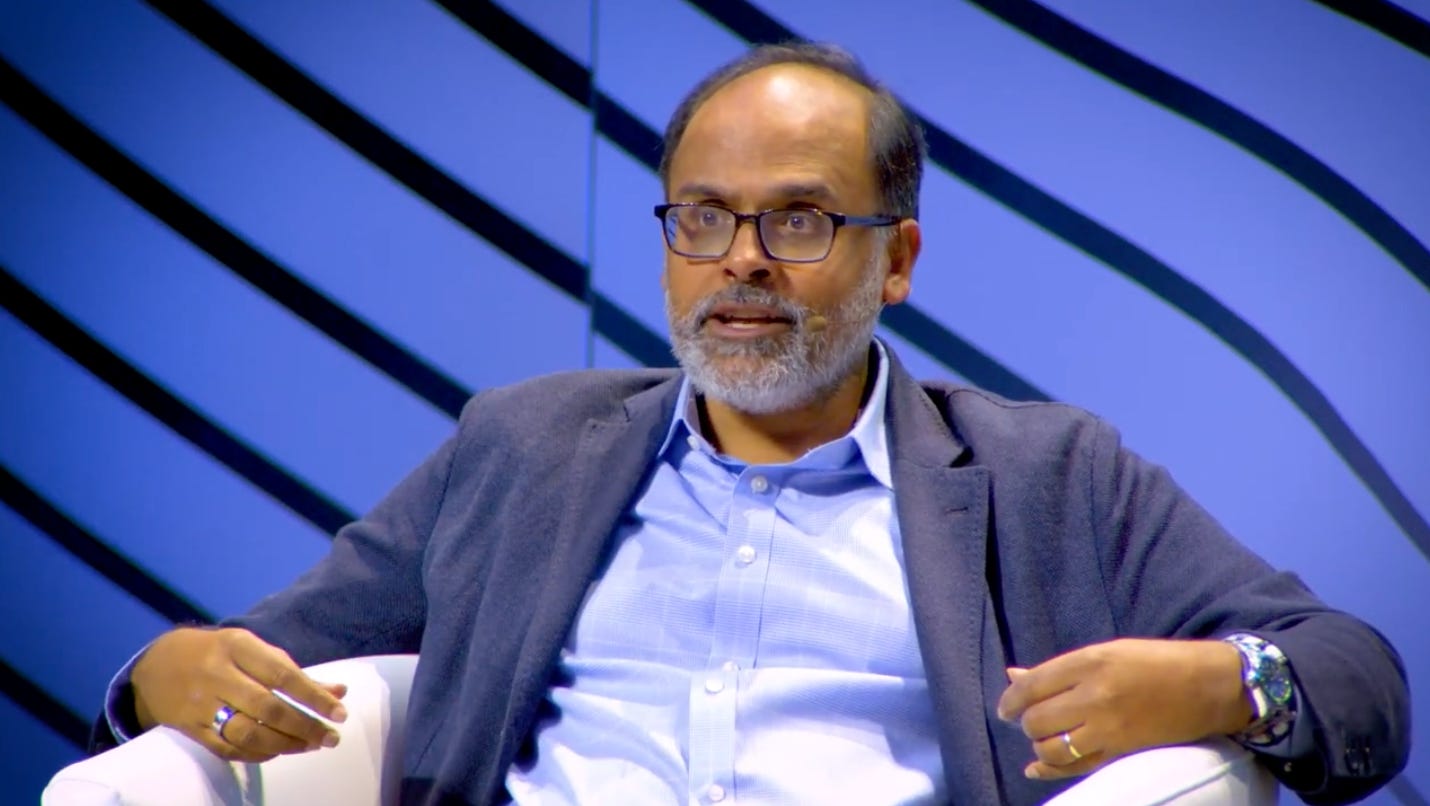
Today’s letter is the transcript of a fireside conversation with Devek Parekh reflecting on 30 Years of Insight Partners.
Short Bio
Deven Parekh is a Managing Director at Insight Partners.
Full Bio, Summary, and Related Resources below paywall
Transcript
Host: Alright, I’m excited to have this conversation because we’re talking about 30 years of Insight. I joined Insight straight out of school in 2003, so that was 22 years ago.
Deven Parekh: I only joined in 2000. This is particularly exciting for me, and thank you for having me, to be interviewed by somebody who used to work with us.
Host: This will be fun. Before we dive into the journey of Insight, where Fund I was a $30mn fund and Fund XIII is $12.5 billion – it’s a few billions, I guess – talk a little bit first about young Deven. Before you even got to Insight, the journey into thinking about even having a career in Venture Capital?
Deven Parekh: Well, I like to think I’m still “young Deven,” but I think it’s very improbable that I’m here. I started out studying—I was a science geek. I went to college thinking I was going to study biochemistry. I competed in international science fairs in high school, so business was not even on the table.
This is where—and this is the advice I often give my kids—let a little serendipity into your life. My roommates were all Wharton, and I wasn’t, so I got sucked into the “Dark Side.” I ended up out of college going to Blackstone and then being at a boutique where I met Jeff Horing and Jerry Murdoch, and the rest is history. So, this was not the master plan.
Host: So, what was the original vision of Insight when you joined? Describe the firm in 1999, 2000.
Deven Parekh: When I joined the firm, Fund III had been raised; it was a $300mn fund. My predecessor firm, Berenson Minella & Company, is where Jeff Horing and Jerry Murdock, the co-founders of Insight, actually met each other, and we were backing them in raising that fund initially. The strategy was simple: software was this big industry—not big as it is today, but a growing big industry. There was a lot of early-stage capital, but there wasn’t a lot of growth capital, capital that was really used by companies to invest in sales, marketing, and growth.
That’s really what it was at the time. The transition was happening between mainframe to client-server, and we were backing the next-generation companies that were making that transition. Over the course of the next 25 years, we’ve continued to fund different transitions from client-server to cloud, to mobile, to AI. But every transition leads to a new set of companies to back.
Host: I want to ask a question that I know is on a lot of folks’ minds: $12.5bn fund—you invest from $5mn Series A’s to $500bn buyouts—
Deven Parekh: Not $500bn, but yes.
Host: How does that work out of one vehicle? How do you manage all that?
Deven Parekh: Let me start with the end, and then I’ll get to the beginning of how it works. In the end, the most important thing is that each strategy contributes to our overall returns, and that to me is really the driver. Every one of our strategies, from Series A to buyout, has had a capital gain of north of $1bn. Every single strategy. And some of those strategies multiple times.
If you look at the top 10 capital gains in our history—that’s dollar capital gains—each one is at least $1bn, and there are multi-billion dollar gains. Half of them started with a first check of less than $50mn. So, a lot of these small checks have actually led to large gains. It gives us the ability, with a large fund, to see what’s working and double down on the things that are working really well. That’s what we call it with our LPs, our “Double Down” strategy: how do we find winners, how do we find them early?
One of the advantages we have being a big fund is we can take that $10mn or $15mn check, and if it doesn’t work out, it doesn’t really affect the overall performance of the fund. But for the ones that do, we have the ability to deploy significantly more capital, and we have lots of examples of that across the portfolio.
Host: How do you go about managing your time and the investment professionals’ time around some of those early checks where you’re hoping they potentially work out, and if they don’t, you can’t double or triple down. You start building up a portfolio of these companies. Because there’s discipline around how you—there are jobs, like time management, how you work with these companies, and also how you spend time with these founders that you’ve made this commitment towards in terms of giving them capital. How do you manage that balance?
Deven Parekh: I think that last point is a really important point because referenceability is key, both for getting the next deal but also with investors. We have a really firm commitment that if we say we’re going to do something, we’re going to do it. So, how do we do that with 500 companies—which is what we have today?
Our largest group at Insight is Onsite, our in-house consulting team that’s north of 125 people. That group is broken into working with three types of companies: early-stage companies, mid-stage companies, and late-stage buyout companies. We have dedicated teams for recruiting, marketing, and sales that serve the stage of company they are. That’s not how we started; it didn’t work so well when you had somebody who was really experienced with a $500mn revenue company giving advice to a company that doesn’t yet have product-market fit.
So, we segmented that and institutionalized it to have groups that focus on each size of company. By doing that, I think we’ve been able to do a much better job. The other thing we’re doing is that we can actually programmatically create a lot of content that’s applicable to a lot of companies. So all of a sudden, if you’re doing a marketing forum, hundreds of companies can leverage that work at once. Things like you do like this, you can do for CEOs, for marketing, for sales—each functional area. We spend a lot of time—we do a quarterly NPS with our portfolio companies on our service, because we really think of ourselves as a service provider.
Host: I want to shift gears a little bit to another key aspect of your strategy, which is the deal sourcing program. One that I went through it in 2003, where the job was: “Okay, there’s a phone, there’s a computer, you’ve got a brain, figure it out.” And literally just dialing, sourcing 100 calls a week, week in, week out. Some folks here probably went through that program, and it’s tough; it feels like you’re getting your teeth kicked in to a certain degree. But I’d say the value of that sourcing approach, and what it’s done, at least for me as an investor, is paramount to where I am today, because it gives you those reps and the ability to spend all your time talking to founders. But it’s a hard job. So, let’s talk a little bit about how you’ve managed the program over time, where it’s at today, and even a little bit about the diaspora you’ve seen in terms of the analysts who have gone through it all.
Deven Parekh: I’ll start with the last point. One of the pleasures of today is I’ve been trying to take a picture of every Insight person who has their own fund who’s at this conference, and, funny thing is, that actually takes some time. With the light, I can’t see who’s sitting here, but you’ve got Vinnie from Left Lane, Nikhil from Footwork, John Monagle (Benchstrength), Nnamdi (645 Ventures)—these are all people who started our analyst program, who all have their own funds; all of them are doing great. So, I think the training that’s come out of that program has been good and has been powerful.
We started with a single analyst. My partner Mike Triplett, who came out of Summit, hired a single analyst: Matt [Schlow (ph)]. The funny story about Matt [Schlow (ph)] is I took him out on his last day, and I said, “Matt, what are you going to do next?” He said, “I’m going to medical school,” and then after medical school, he went to the Peace Corps. The joke at Insight is we took all the capitalism and squeezed it out of him.
But I think that, over time, today we hire between 11 and 14 individuals right out of college. Typically, we hire them as summer interns. It’s a “try before you buy” both ways, meaning we’re making a judgment as to whether or not they’ll be good at the job, but they’re also making a judgment as to whether or not that’s a job they want to do—and it’s not for everybody. Today, I think we’re making their jobs—you still need the ability to build a relationship with an entrepreneur, and they’re still doing that—what AI and other tools we’re giving them allow them to do is spend less time figuring out who to call and more time figuring out what they’re going to say.
When Jeff Horing and Jerry Murdoch started the firm, they would literally have piles of magazines at the Insight offices—piles. And they would rip help-wanted ads out of them and cold call themselves. And then they started ripping them and handing them to analysts and associates.
Host: I remember those—getting bags of literally ripped-out magazine ads, and being told to call these people.
Deven Parekh: Today, of course, you don’t need bags of magazines; there are other ways to do it. You can go to conferences, you can use AI. But the fundamental skill of getting somebody on the phone and convincing them that they should work with us is a really, really critical skill, and I think it’s one that’s allowed many people, both at Insight to blossom, but also outside of Insight to blossom.
Host: I want to talk a little bit about how you’ve done a great job with retaining a lot of the team. Many who were there when I was there are now Managing Directors, and you have this cohesion among a senior leadership team that’s been there for many years. What have you done, from an overall culture perspective, to create that dynamic where you’ve been there since ‘99, and many other folks, Ryan Hinkle and Mike Triplett, are still very active.
Deven Parekh: Yeah, but more importantly than me, the Tripletts, and the Liebermans, are people like Ryan Hinkle, who hired a summer analyst who is now on the investment committee, Matt Gatto, on the investment committee. They started as summer analysts or analysts.
In this business, you can only keep great people if you give them enough rope to go do their own thing. You have to give them more responsibility. And you have to give them more economics. And the challenge in this industry, of course, is—and we’ve been fortunate that we’ve been able to raise amounts of capital that has allowed us to do that. I think one of the challenges in this industry is when you have fund sizes that are flat, and you’re trying to bring new partners, you’re trying to keep people, people have to be willing to let go of economics; otherwise, the model doesn’t work.
By being able to raise larger funds, we’ve been able to give people significantly more economics over time. But I don’t think economics is enough; it has to be economics and empowerment. You need both. People really have to feel like they’re running a team. Matt Gatto runs his own team, Ryan Hinkle runs his own team. I’m not looking over his shoulder; nobody’s looking over Matt’s shoulder. We are as an Investment Committee (IC), but they’re on the IC too, so they’re looking over my shoulder too.
So I think the economics are important, obviously, but I don’t think people genuinely leave for money. When you look at any HR study, 75% of people say they leave for money, but they don’t really leave for money. Money becomes the excuse later because it’s easy to tell somebody, “I got paid more.” But they generally leave because they’re unhappy with their manager, they’re unhappy with the responsibility, or they’re unhappy with how much they’ve been empowered. Both of those are critical; one is not enough.
Host: The one thing I’ve heard a number of other more junior investment professionals say is that you’ve been a great mentor to them. How do you think about mentorship and the role of mentorship as you’re grooming the next class of investors? Because this is a job where the job is—a lot of the knowledge is passed down from experienced professionals that have done it, while also putting in reps yourself. So, how do you manage this mentoring of the team you’ve hired, especially since you’ve hired so many?
Deven Parekh: I’m probably most proud of the fact that I’m still mentoring some people who didn’t make it at Insight. They didn’t make it at Insight, and I worked hard to make sure they got something else. They’ve all done great in that new thing because I’ve always believed that just because you don’t make it at one place doesn’t mean you’re not great; it just might not be a fit.
As you’re giving advice—I just gave a talk about feedback at our internal Summit, training the VPs and principals on feedback, and I said it took me until about five years ago to figure out that you need to give people super honest feedback. That you’re not being fair to them if you don’t give them super honest feedback. But you have to do that in a way that they also still feel you’re in their corner.
If you give somebody tough feedback and they think you’re giving them tough feedback because you want to be more important to them, or because you don’t want to give them a raise, you don’t want to give them more carry, they’re not listening. But if you give them feedback—and it can be really hard feedback, I’ve given some people really hard feedback—but at the end, they feel like I’m giving them that hard feedback, but I want them to win, and I want them to be successful, whether that’s at Insight or somewhere else.
It sounds like motherhood and apple pie, but I really feel like you can only mentor somebody if you genuinely care about the outcome. Don’t just say, “I’m going to mentor somebody”; only do it if you really care about the outcome, because people are pretty good at figuring out whether or not you’re on their side or not.
Kobe: 1000%. Let’s shift gears a little bit. You’re software investors, and it would be remiss if we didn’t talk about AI. How are you thinking about your AI strategy and the world we’re evolving into? Where are you investing and allocating dollars and resources? What excites you?
Deven Parekh: We think about AI in three ways. Obviously, we think about how we can use AI at Insight. Sourcing would be a great example of that, doing research would be a great example of that. Those who haven’t tried OpenAI’s deep research or one of the other deep research products, I encourage you to try those out.
The second is portfolio companies using it. That’s both for cost reduction type plays, but also, if you think about when you went to call center offshoring, you reduced costs but you also reduced customer satisfaction. Nobody really wants to be on a call center in India. The interesting thing is when you put AI chatbots in, not only does cost go down, but customer satisfaction goes up. Vinod Khosla talked about this earlier: these technologies are going to replace people—those are probably the most powerful ones; I agree with that. But you’re not only replacing people, you’re giving them a better experience, and that’s a pretty powerful combination that hasn’t really existed before.
The third, obviously, is we’re an investment firm. I think it’s been exceptionally difficult to find interesting things to invest in because of valuation in the AI space. I think Vinod said earlier that he thinks 80% of these deals are going to lose money; I don’t have a specific prediction, but that prediction didn’t surprise me. I don’t think he said 80% of companies will fail; he said 80% of those companies won’t make money as venture investments.
You just had Ilya Sutskever, one of the co-founders of OpenAI, raise money at a $30bn valuation pre-product, pre-revenue. I don’t even know what the investment memo could say that could justify that. So, I think there are going to be some tears in this space. But what we’re trying to figure out is, that’s an example of a case where playing early is okay with us. A $10mn or $15mn check, get in early, maybe you’re paying a little bit of a high price, but you’re taking a measured amount of risk. Then, we’re really trying to see the companies that we already have; we think there are a lot of companies where we can accelerate growth using AI as a driver.
Host: I know we have about five minutes left. I’d like to shift a little bit to the next five or ten years of Insight. What excites you about the future? Where do you think Insight is headed? Give us some insight into the future of Insight.
Deven Parekh: Today, we actually do have three distinct areas. We have our main fund that does what we talked about, from Series A all the way to buyouts. We have a Structured Equity Fund which focuses on much more mature companies with high cash flow, where we can get more of a structured type of return. Then, we actually have a public business; we have a public manager. That’s been interesting because the public managers bring a really different perspective on how they think about companies. For example, we just co-led a round in Databricks—that happened because of the public team. It was the public team spending time with that company that led that deal to happen, so it was a very interesting synergy.
So, I think it’s about how, in the markets that we know best—we’re not trying to be healthcare investors or something else—we continue to innovate and provide all the relevant solutions. To use an example of something that’s perhaps different, though we’ve been doing it for a while: if you think about the biggest challenge for many of you out raising money, it’s “Where’s your DPI? Where’s your liquidity? How come I don’t have liquidity?” There have been 10,000 companies funded in the last seven or eight years. The vast majority of them are not going to go public, and the vast majority of them are not going to find a strategic investor.
We’re going into those situations and saying, “Fine, we’ll buy them.” We’re going to treat it as a venture buyout. We’re not going to use leverage; we’re going to take control of those companies. The reality is a lot of these companies have super disparate cap tables, and they’re not that well-managed. They’re not that different than Thoma Bravo taking a public company private because you have misalignment between management and the public markets. Here, you have misalignment because you’re in the A, and he’s in the B, and that person’s in the C, and you’re in three different prices; nobody is really driving. By taking control in those situations, we can put management in place, we can rethink what the strategy is for the next five years.
This is a strategy we’ve been executing for 20 years actually, but it has really picked up in the last few years just because the volume of companies out there is high, and the volume of DPI needed in the venture industry is high. That’s creating a whole new set of types of deals. The beauty of this business is, if you think about it, five years ago there wasn’t really a secondary market in venture, there wasn’t a secondary market for continuation funds for venture assets. We did the first big one. So, the exciting thing is, even though we’re 30 years in, there’s still innovation, new things, new ways to use markets, exploit markets, new markets to find, and new ways to exit.
The reason I still love what I do is, I don’t think there’s been a day since I’ve been at Insight that I didn’t learn something new, whether it’s something about a new industry, a new type of deal structure. This morning, with very little sleep, I had to deal with a very thorny management issue—and that’s still interesting. The thing I think about a job that makes it boring is when you start feeling like, “I’m doing the same thing every day.” I don’t really have the same day any day. As long as I can keep doing that, this is a pretty exciting thing to do.
I think that if you think about any other industry, no other industry has had 30 years of uninterrupted growth through every recession that is legal. So, I think the prospects for the next 10 to 15 years in software continue to be high. That being said, the next 10 or 15 years—the next 10 for sure—are going to be a grind. We all have a lot of assets that we paid high prices for that we really have to focus on making work. And it’s going to take time. And we all have to be intellectually honest about that. One of the things that we often see in these cap tables is not enough intellectual honesty about what the companies are worth today. That’s what makes the venture buyout strategy hard, by the way: getting to a price that’s rational.
Host: Last question, because I know your life isn’t just investing in software companies and doing buyouts. There’s an additional purpose in terms of things you like to do on the order of philanthropy and helping others. Talk to us a little about how you’ve been involved and how you spend your time outside of Insight Partners.
Deven Parekh: My wife and I have gotten a lot more organized spending time on this. We set up a family foundation, and within the foundation, we have two basic areas of interest. One, my wife spends more time on is everything related to gender-related issues. This has recently included reproductive rights, but it’s about maternal health and all those related things, from storytelling—funding documentaries—to actual provision of care.
My interest, which ties back to what I thought I was going to do in life, which was going to be an MD-PhD, is funding scientific research. I do a lot of interdisciplinary neuroscience, metabolic psychiatry, and a lot of different areas, and that’s been interesting. I’ve always had an interest in government, and I’ve been pretty involved in the Council on Foreign Relations and the Carnegie Endowment for International Peace.
I think it’s really important in life not to have any one thing dominate too much of your brain. All of these things that I do make me a better investor. I don’t think I’m a less good investor because, as an example, yesterday’s board meeting at CFR was talking about defense procurement. It turns out a lot of companies these days are focused on how to come up with innovative software and even hardware technology for that market? So, I can actually talk about that more intelligently. Did I join the board of CFR for that purpose? No, I joined the board because I thought it was really interesting, but I’m able to use that in other ways as well. I always encourage people to read broadly and do things that are outside the mainstream. I’ve yet to find something that I’ve done, a hobby I have, an interest I have, or people I’ve met, that doesn’t end up over time being relevant to whatever it is you might be doing.
Host: Well, Deven, thank you for making the trip out to LA, joining us here on the stage. Congrats again on Fund XIII and congrats on 30 years. And many more. Thank you.
Deven Parekh: Thanks for having me, Kobie.
Summary, Full Bios, and Related Resources below paywall
Comments
Nothing yet. Say the first thing.
Sign in to join the conversation.