
It has become almost routine to complain that Hollywood has replaced ideas with sequels, remakes, and nostalgia-driven recycling. The complaint is now so familiar it feels like part of the same system it describes: a predictable cycle of familiar properties being revived, followed by predictable backlash, followed by another round of the same familiar properties being revived. None of this is especially new to say, and it is not trying to be. In fact, it is so not new that I am going to immediately undermine myself by doing it anyway. Please bear with me, I do have a point.
The current theory, as best I can tell, is that no successful property should be allowed to rest. Harry Potter is getting remade. Star Wars has been sequelled, prequelled, and side-quelled into a permanent content engine. Lord of the Rings, a trilogy that ended conclusively with a twenty-minute goodbye, apparently did not end. 13 Going on 30, Freaky Friday, and now The Devil Wears Prada are having their moments.
Nothing is sacred. There is no ceiling. Only the question of whether the nostalgia has ripened enough to be harvested. If something worked once, it might work again. The familiar is, by definition, not a risk. Most of these projects don’t feel like new films, but like echoes. The same material, orbiting itself, a little dimmer each time.
But there is a solution! The question film studios should be asking is not “what did audiences love?” It’s “what did audiences almost love?” The best candidates for remakes are not successful films. They are films with great ideas that were never fully realised. Those are worth going back for.
Here are five:

The Premise
In the future, humans are genetically engineered to stop ageing at 25. At that point a clock starts on your arm. When it hits zero you die. Time has replaced money as currency. You earn it, spend it, steal it. The poor live minute to minute, literally running out of time. The rich accumulate centuries and live forever in walled communities. Justin Timberlake plays a poor man who comes into a large amount of time and uses it to infiltrate the upper class.
What Didn’t Work
It became a chase movie. The premise arrives with an entire economic system built in, one that has genuinely interesting things to say about how wealth compounds, how poverty traps, and how the people at the bottom are kept running just fast enough to never stop and ask why. Justin Timberlake starts running, and Cillian Murphy starts chasing, and the film never stops long enough to interrogate any of it.
Who built the system? Who benefits from it? What does it do to a person to live with a number on their arm that is also their bank balance? The film brushes past all of this on the way to the next set piece.
How to modernise it for 2026
We don’t need to invent this world anymore. We live in it.
We are far enough into late-stage capitalism that this no longer feels abstract. A handful of people hold more wealth than billions combined. That fact gets reported, absorbed, and forgotten because it doesn’t feel like a story. This is the story.
Money already buys time. Better healthcare. Safer work. Longer lives. The gap isn’t theoretical, it’s measurable. It’s different lifespans. A class that doesn’t just have more than you, but lives longer than you.
So stop making it a chase. Make it about someone inside the system. An auditor. A compliance officer. Someone whose job is to decide who gets more time and who doesn’t.
At first, it’s small decisions. Minutes. Hours. Then years. Then entire lives, quietly erased on a spreadsheet. The horror isn’t that the system is broken. It’s that it’s working exactly as designed.
Who Should Make It
Bong Joon-ho, for reasons that barely require explaining. Ruben Östlund would brutally remind the audience exactly where they sit in this economy. Park Chan-wook would make it beautiful and furious.
If you’re enjoying this piece so far, I often write about cinema and film—subscribe here
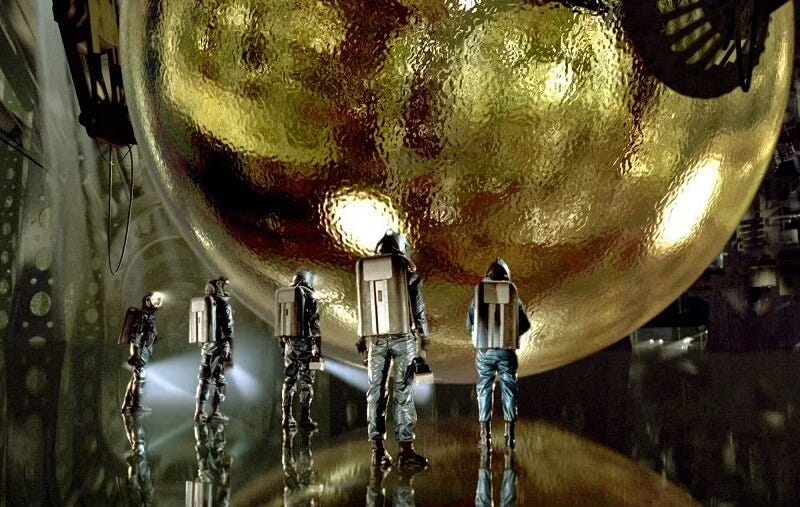
The Premise
A team of scientists is sent to the bottom of the Pacific Ocean where the US Navy has discovered a spacecraft that has apparently been there for three hundred years. Inside the spacecraft is a perfect golden sphere. One by one the team members enter the sphere and one by one they begin manifesting their deepest fears into physical reality, without knowing they are doing it. Jellyfish (whose biggest fear is jellyfish?), sea snakes, and worse start appearing in the habitat. The team starts dying. Nobody can agree on what the sphere is, what it wants, or whether leaving is still an option.
What Didn’t Work
Sphere had it, and then it turns into a conventional underwater monster movie, complete with a resolution that explains everything and therefore ruins it. The mystery only works if it stays mysterious. The sphere should not be solved.
How to modernise it for 2026
Make it a privately funded deep-sea expedition. A tech billionaire wants the sphere because he wants everything. The crew is contractors with NDAs, not oaths.
The sphere shows each of them their worst fear (like their wife finding out they pee in the shower when she explicitly said not to). Then they start making decisions that get them killed - or get each other killed. The station gets smaller. The crew gets smaller. Whatever the sphere is, it’s pushing them toward a kind of controlled insanity.
Sunshine meets Event Horizon meets Alien at the bottom of the ocean.
Who Should Make It
Alex Garland would be perfect. He has spent his career crafting intellectually challenging, visually precise science fiction that takes technology, psychology, and human nature seriously. Ex Machina and Annihilation are both films about humans encountering something that operates on completely different rules, and being fundamentally unprepared for what that means.
He also knows how to make horror land without over-explaining it.

The Premise
Mel Gibson plays a Chicago advertising executive, charming, successful, and comprehensively convinced of his own brilliance. After an accident involving a hairdryer and a bathtub, he wakes up able to hear the thoughts of every woman around him. Initially, he uses this to sabotage his female colleague, Helen Hunt, who has been promoted above him. Then he falls in love with her. Then he has to figure out what to do about the ability, the job, and the woman, in that order.
What Didn’t Work
What Women Want treats it as an opportunity for Mel Gibson to become a better boyfriend, which is one way to go, and also the least interesting way by a significant margin. The film is so committed to making the premise charming that it never pauses to notice what it is actually describing. A man who uses a woman’s biggest hopes and fears to manipulate her into bed and steal her job. yikes.
How to modernise it for 2026
The premise stays the same. One man, suddenly hearing every woman around him. But the film is not interested in what he does with that access professionally or romantically. First, it is interested in what he hears. And what he hears is not what he expected. Not thoughts about him.
The other stuff. The calculation when a woman walks to her car at night. The body image noise. The workplace math of who takes credit, who makes it uncomfortable if she pushes back. The dating arithmetic. The low-level, constant threat assessment. All of it, suddenly unavoidable to someone who has never had to hear it.
He’s not using it to get the girl. He’s trying to figure out what you’re supposed to do with that information once you have it. Whether you can do anything at all.
Who Should Make It
If I were trying to make this film, I would get on my hands and knees and beg Greta Gerwig. If she’s busy making the next ten Narnia movies, my next call is Mary Bronstein. If I Had Legs I’d Kick You was an underseen but great movie last year, and she has the exact register this needs.
The Premise
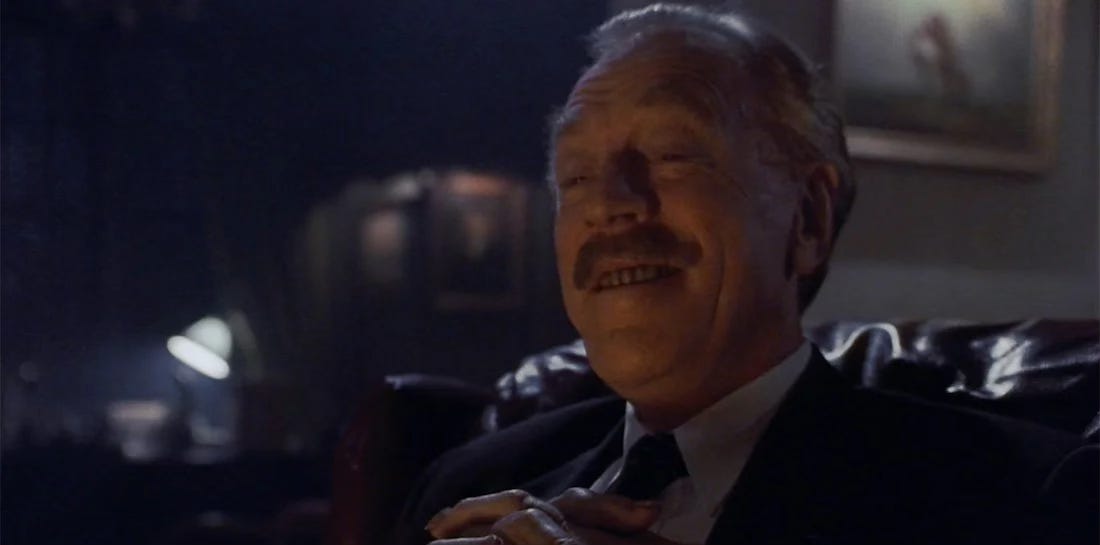
A mysterious shop called Needful Things opens in the small town of Castle Rock, Maine. The owner, Leland Gaunt, stocks it with items that seem to be exactly what each customer most desires. The price is always low. The catch is that each customer must also play a prank on another townsperson. The pranks escalate. Old grudges resurface. Neighbour turns on neighbour. The town tears itself apart while Gaunt watches, collects souls, and moves on to the next place.
What Didn’t Work
Too many characters, too many subplots, too many people doing terrible things to each other until the film becomes noise. The central idea, that desire is the mechanism of control, gets lost somewhere in the third act behind a lot of screaming.
How to modernise it for 2026
The store is online. It knows what you want, not in a vague demographic sense but specifically, personally, the thing you have wanted for years and never told anyone. The price is not money. It is a small betrayal of someone you know. A message. A secret shared. A loyalty quietly withdrawn.
And everyone pays it. One by one, the whole town makes the same private calculation, decides their need is worth the cost, and goes back to their life. Except now there’s a little less trust in everything. A friendship with a crack in it. A history that no longer feels stable. Nobody is standing together because everyone is too busy settling scores and getting theirs, and by the time the violence comes, and it comes, there is no community left to stop it. Gaunt does not destroy the town. The town destroys itself.
Who Should Make It
Yiorgos Lanthimos would keep it tight and airless, highlighting the absurdity of human desire. Peele would pull back and look at the whole town, the social architecture of who trusts whom, who owes whom, which grudges were already there waiting for someone to hand them a match. Two completely different films. Both work.
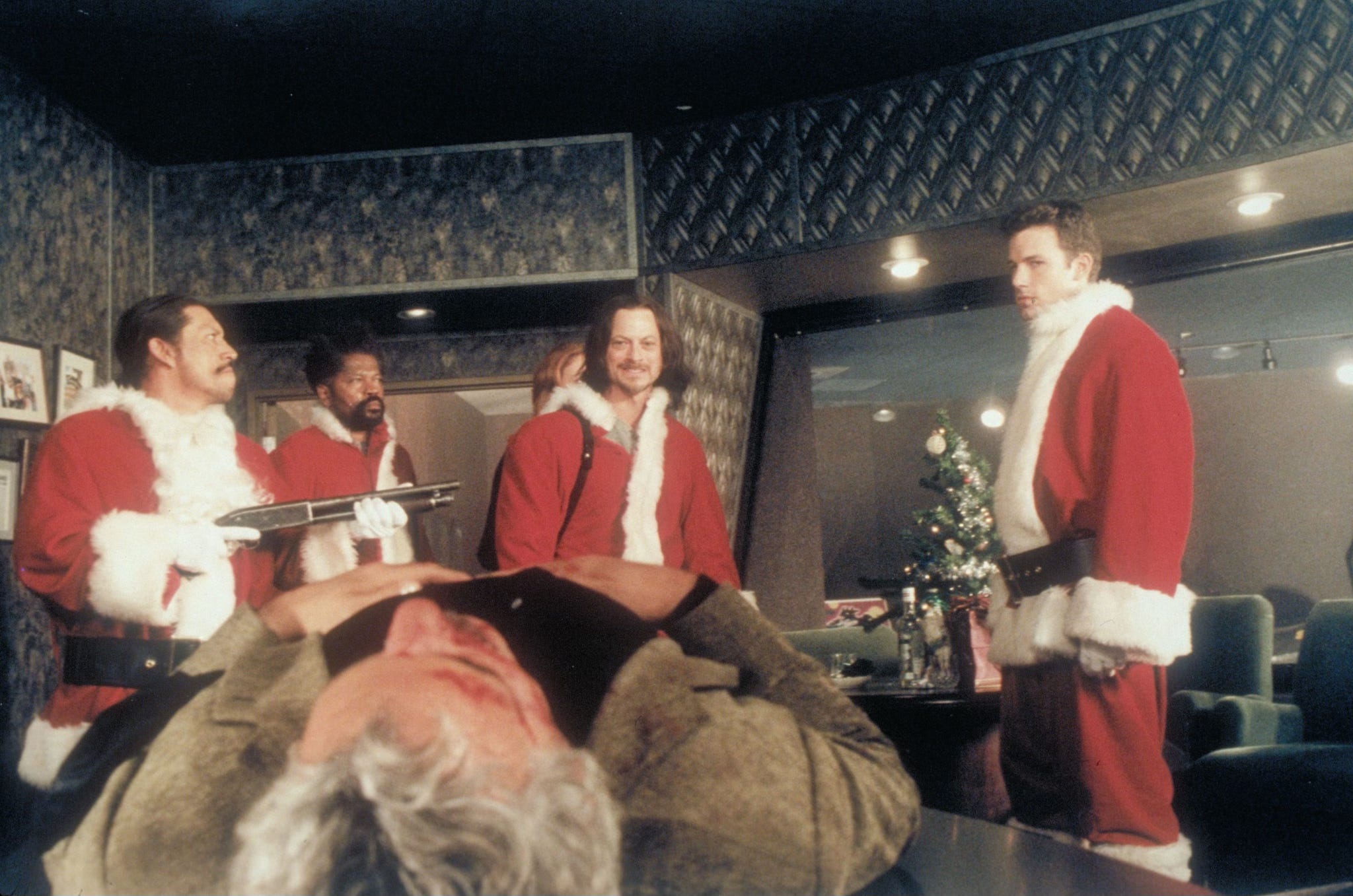
The Premise
Two cellmates, Rudy and Nick, bond over Nick’s letters from a woman called Ashley. Days before release, Nick is killed in a prison fight. Rudy, who has fallen for Ashley through the letters, pretends to be Nick when he gets out. Ashley has a brother, Gabriel, who needs someone who used to work at a casino for an armed robbery on Christmas Eve. Nick used to work at that casino. Rudy did not. He is now committed to a lie he cannot get out of, in a heist he does not know how to execute, with people who will kill him if they find out who he actually is. This all happens in about ten minutes. It’s a lot of plot.
What Didn’t Work
Reindeer Games does not trust itself to be fun. It keeps stopping to be clever, layering twist on top of twist until the characters are just mechanisms for delivering reversals. It cannot decide if it is a serious crime thriller or a pulpy Christmas caper, so it is neither, just a film that keeps interrupting itself with a new revelation every fifteen minutes like a magician who cannot stop showing you his hands.
How to modernise it for 2026
Stop fixing the twists. Fix the tone. This is a dark Christmas crime comedy about people who are bad at crime, doing increasingly stupid things with increasingly high stakes. The holidays are already a system of enforced goodwill and ambient desperation. A heist movie set at Christmas that’s focused on character rather than plot engineering writes itself.
Who Should Make It
Gavin O’Connor is the first choice. He has spent his career making films about men who are the architects of their own downfall. He understands how to make genre material land. He would make Reindeer Games gritty, fast, and just grounded enough that the desperation feels real. We’ve got our Christmas version of The Town. The Tinseltown, so to speak. COPYRIGHT!
Shane Black is the second choice, his entire career is essentially this film made correctly. He understands that crime stories are dialogue engines, that the violence lands harder when the conversation is good. He already proved it with Kiss Kiss Bang Bang. Black would know exactly which twists to keep, which to cut, and how to make a morally dubious ensemble feel like people you would follow anywhere, even into a casino, even with a plan this bad.
Maybe Kathryn Bigelow wants to dust off the Point Break hat.
So, five films. Five genuinely interesting premises that were made once, imperfectly, and have been sitting there ever since, available, waiting, not requiring a single act of original imagination from anyone involved. The cultural moment for most of them is better now than when they were made. All that is needed is for someone to make slightly different decisions from those previously made.
I have now fixed Hollywood. This follows on from having already fixed the Oscars last month. The two institutions have been resistant to correction for some time, and I am aware that solving both in consecutive months is an unusual level of output, but here we are. I’m not sure what problem I’ll sort next. If you have a suggestion, drop me a comment.
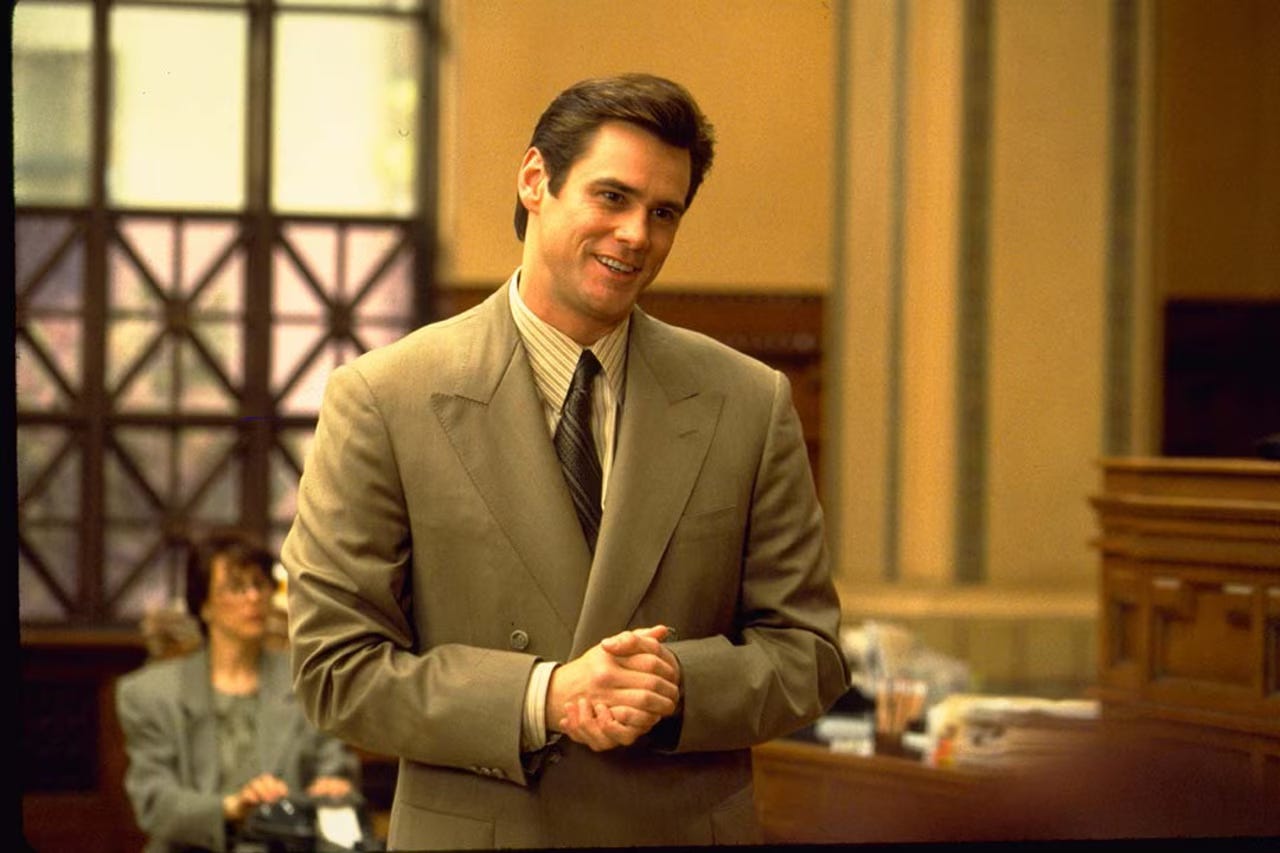
I should note, for legal purposes, that I checked, and none of these films are currently in development. This means the window is open. It also means that if any of these projects quietly enter production in the next eighteen months, I will be asking my lawyer Fletcher Reede to make a call. Fletcher operates under a recent medical condition that makes deception temporarily impossible, which makes him an unusual choice for entertainment law but an extremely effective one.
The call will be short. The invoice will not be.
So the only remaining question is which films have I missed, and what should be next?
No posts
Comments
Nothing yet. Say the first thing.
Sign in to join the conversation.