
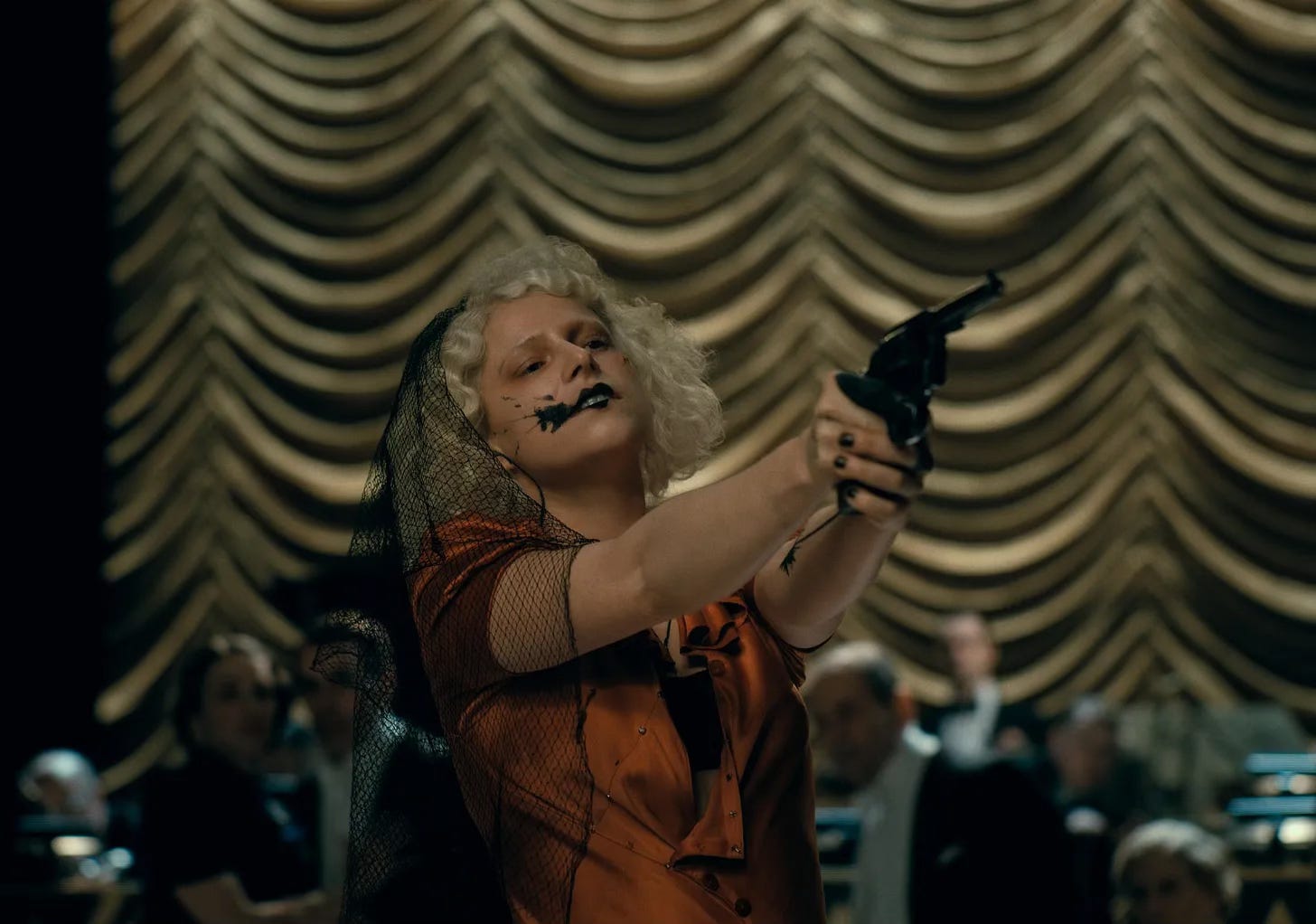
The Bride! is a mess. It is also one of the more genuinely strange films a studio has put out in years, and I mean that as a compliment. We should champion ambition in films that are trying to do and say something, even when that something is strange. It does not always hold together, but I had a good time watching it.
The film is set roughly a hundred years after the events of Mary Shelley’s Frankenstein, relocating the myth to Chicago during the height of the gangster era. The film imagines a strange overlap between gothic horror and American crime mythology. In this world, Frankenstein’s monster (here called Frank) exists, the novel exists, Mary Shelley exists and is somewhat conscious.
It is a fascinating premise. The world-building is one of the film’s biggest strengths. Chicago feels heightened and mythic, place where gangsters, monsters, and performers all seem to inhabit the same strange reality, and where none of them seem especially surprised by each other.
The story gradually shifts from monster movie into something closer to an outlaw romance. At times, it recalls films like Bonnie and Clyde or True Romance, stories about lovers carving out a place for themselves in a world that was never built for them. The Bride begins life, after all, as a stolen corpse. Something borrowed, something blue.
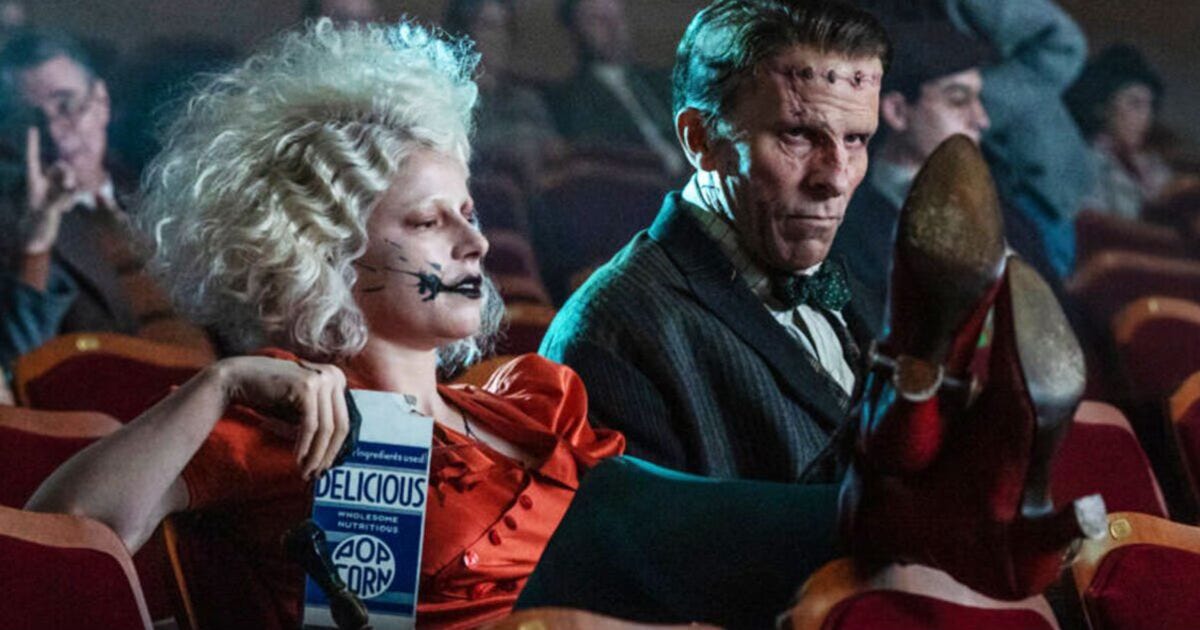
Gyllenhaal directs the film with an unapologetically maximalist sensibility. The film throws a lot of different traditions into the same space. Gothic horror, gangster cinema, outlaw romance, vaudeville spectacle, and musical theatre all coexist within the same world. It is a reach and a mishmash, and it is not always completely coherent.
The film seems less interested in smoothing those influences into a single tone than in letting them collide with each other. Sometimes the result is a fascinating mash-up. Sometimes it feels ungainly and forced. Either way, it rarely feels cautious, and in the current landscape of studio filmmaking, that alone is worth something.
The production design, costumes, and colour palette all lean toward theatrical excess rather than realism, reinforcing the feeling that this Chicago exists somewhere between historical setting and myth. It’s a fresh and invigorating take on Frankenstein, in a way that a certain recent adaptation was not.
One of the film’s more unusual elements is the presence of musical and dance numbers. These worked for me less as traditional musical moments and more because of the tone in which they are staged.
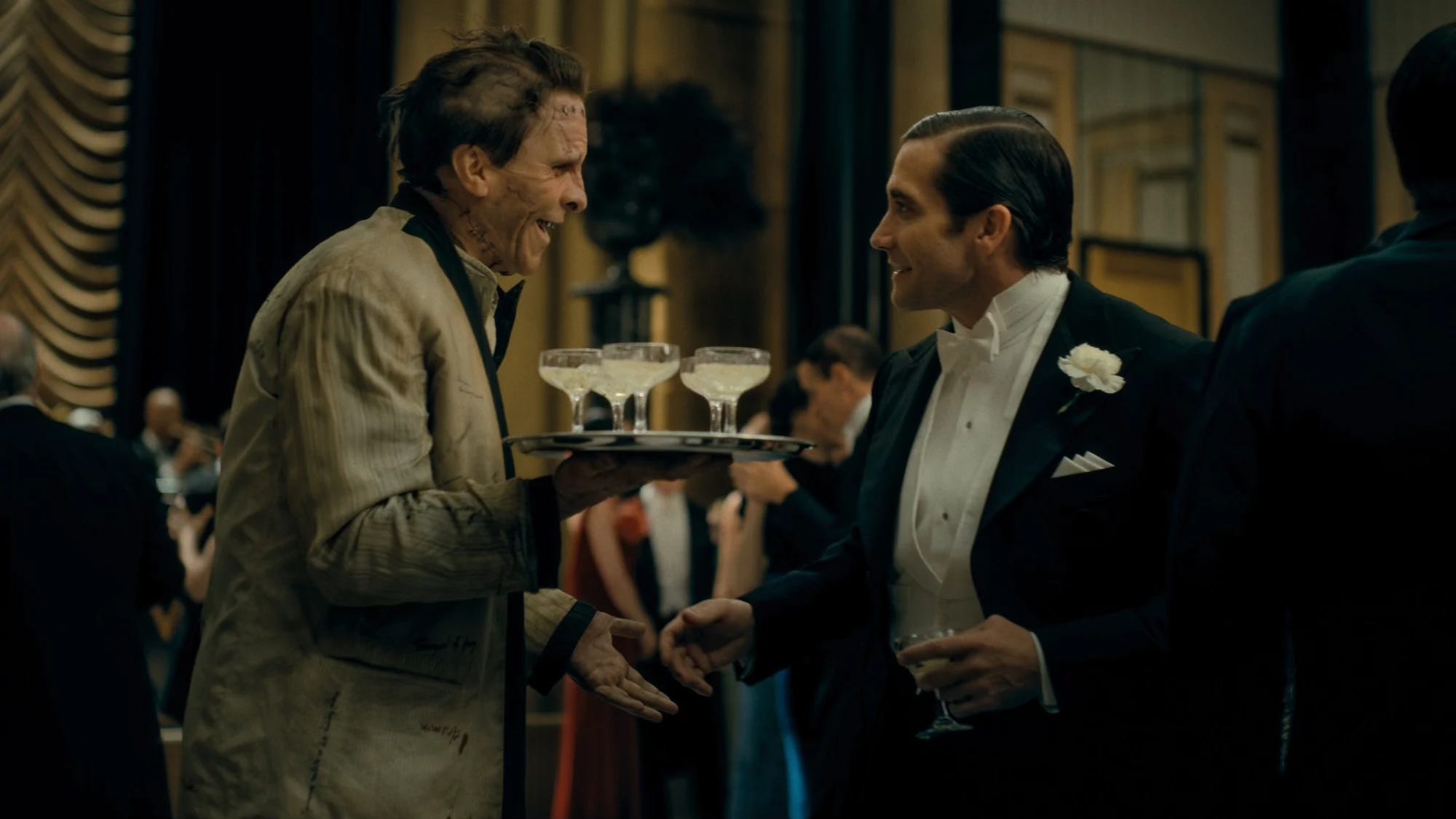
In one scene, a spontaneous dance breaks out during a Chicago party. Normally, a moment like that would play as pure musical fantasy. But here the surrounding characters watch it unfold with mild confusion and amusement, as though a vaudeville act has suddenly appeared in the middle of the room, before they too begin to join the party. When the police eventually arrive they stand, mouth agape at the dancing troop. That framing makes the moment feel playful rather than surreal. Everyone is in on the joke and having a great time with it.
Jessie Buckley carries the film as the Bride and is absolutely magnetic throughout. The entire film orbits her energy, curiosity, and fury. Her character has a sense of unpredictability that keeps the film alive even when its narrative becomes messy. However the split-personality device introduced early in the film never quite lands, and the film eventually seems to quietly abandon it, almost as though it has realised mid-scene that the bit isn’t working. It is the film’s most visible misstep, and it is a shame, because Buckley doesn’t need the gimmick.
Christian Bale’s performance as Frankenstein’s monster is more straightforward. It is essentially the classic gentle monster interpretation of the character. He is physically powerful but emotionally soft, with an added streak of crude humour. Bale plays him as big but slightly awkward, devoted to the woman he believes he loves and constantly fumbling his way through situations he does not fully understand. The performance works well enough, but the role itself does not give Bale a huge amount to do. The complexity in this film belongs to the women.
Annette Bening is fantastic as Dr. Euphronious, the scientist responsible for creating the Bride. She brings a sharp intelligence and comedic timing to the role, and that anchors many of the film’s best scenes.
Penélope Cruz’s performance worked less for me. The character sometimes feels like she is in a different film to the rest of the cast. A Pink Panther European investigation that happened to end up on the same set. Her entire storyline is one of several threads the film loses grip of in the final twenty minutes.
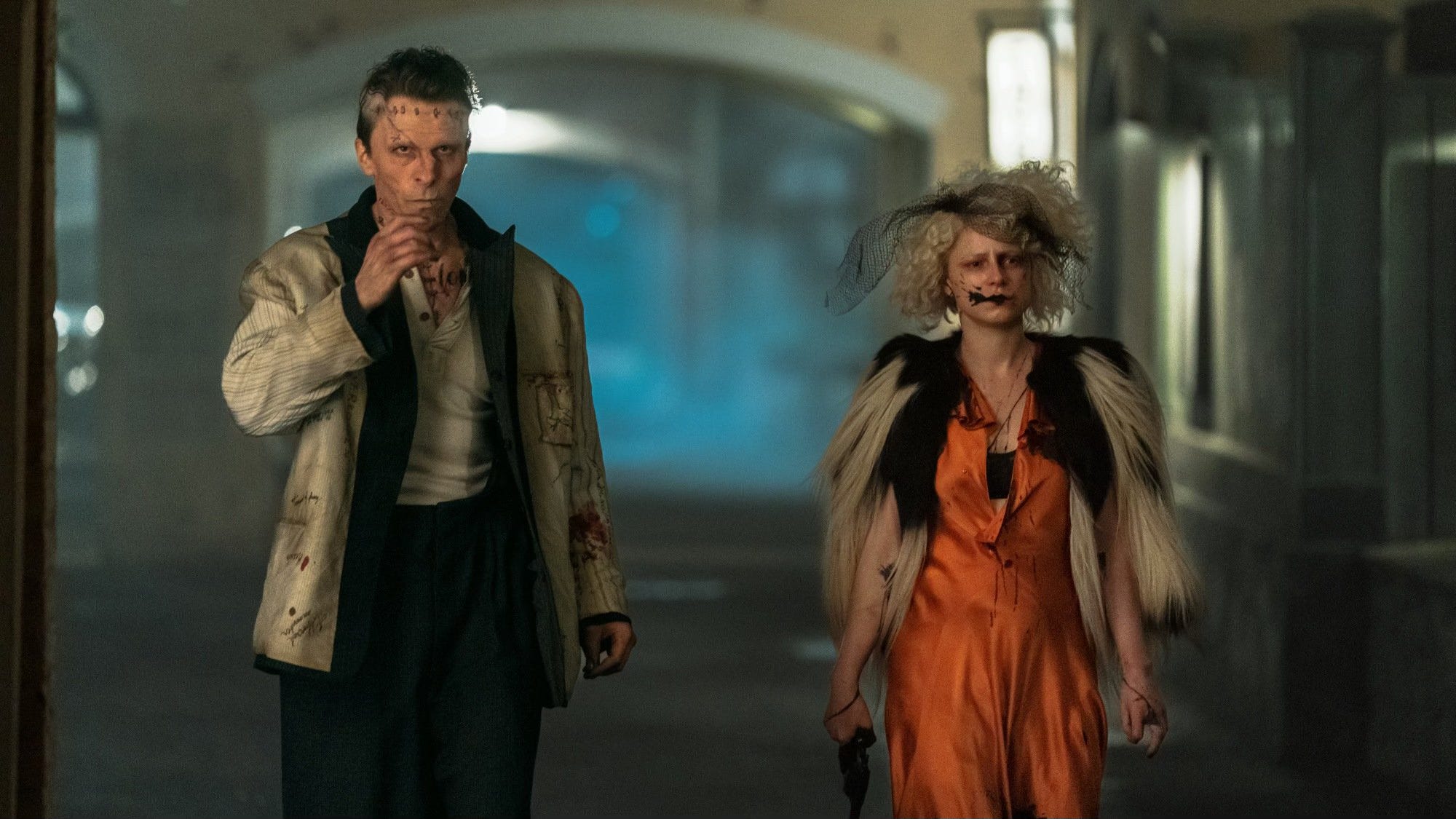
I am slightly wary of overstating the film’s politics. The Bride! is feminist and wears its heart on its’ sleeve, but not in the sense of presenting some sweeping ideological manifesto. What the film asks for is something far more basic; that a woman should be treated like a person. That a woman has autonomy over her body, agency over her life, and the right to exist without being lied to, or violated.
If that feels like a radical political statement, it says more about the world we live in, and the films we are used to seeing, than it does about the film itself.
The Bride’s struggle is not revolutionary, although it is does literally contain revolution. But that the most basic dignity still has to be fought for, is the point. The film understands how absurd that is, and much of its anger comes from refusing to pretend otherwise.
At times, the film delivers its message with a heavy hand, but given the world we live in, that bluntness feels earned.
The Bride! is messy, undisciplined, and full of ideas it doesn’t quite follow through on. It has plot lines that evaporate, a tonal register that occasionally tips into incoherence, and a final twenty minutes that struggles to land everything it has set in motion. But for all its flaws, I still enjoyed the ride.
And yet. For most of its runtime I was having a genuinely good time. There is a central couple worth rooting for, beautiful visual design, a surprising amount of humour, and the unmistakable sight of Jake Gyllenhaal dancing like no one told him he was supposed to be in a Frankenstein movie.
In many ways the film itself resembles Frankenstein’s monster. It is stitched together from different influences and ideas, occasionally ungainly, but still very much alive.
No posts
Comments
Nothing yet. Say the first thing.
Sign in to join the conversation.