
Complete freedom is not what a trail offers. Quite the opposite; a trail is a tactful reduction of options.
― Robert Moor, On Trails
About two weeks ago, I was at Boston Logan Airport for my flight to Detroit. I was headed to my cousin Jerry’s wedding and was looking forward to being with my mom’s side of the family. On my way to the gate, I was gravitating towards the group boarding for San Francisco. It reminded me how I haven’t boarded that flight in over a year now.
I walked past it slowly, looking back as if I might see someone I know seated in the chairs or stepping off the jetway. I could already smell the Pacific Ocean from memory alone. The grey fog swallowing the hills in great soft rolls. The way the afternoon sun cuts through it at a low angle, turning everything gold and nearly unimaginable.
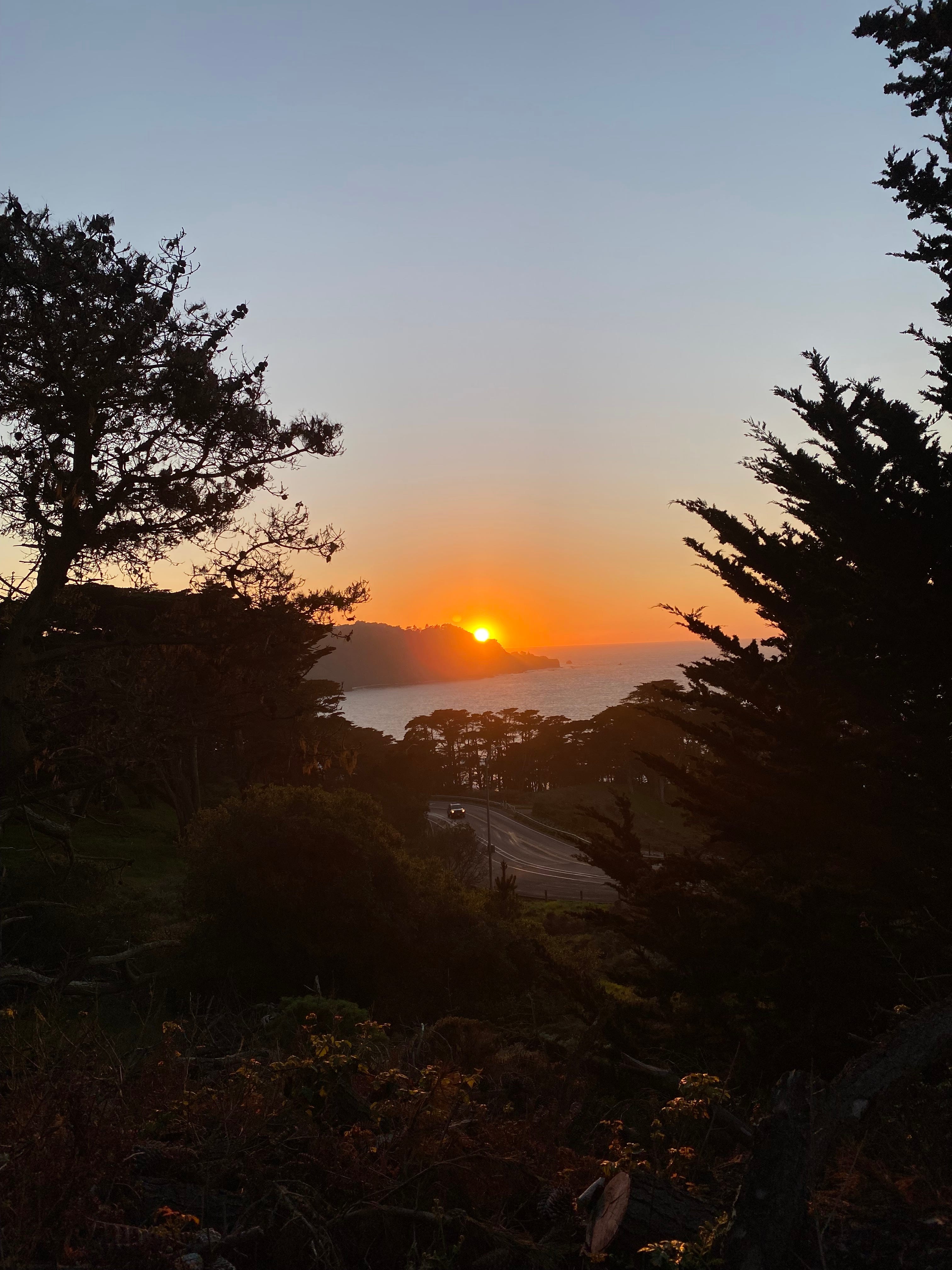
It’s dreamy in the way that only familiar places can be. It lives in your body before it reaches your eyes. I often reflect back to these memories. Like this extraordinary view from our backyard trail when we lived in the Presidio neighborhood.
Opposite from that gate was a bookstand display. A year before moving to the Bay Area in 2017, On Trails by Robert Moor used to be a familiar cover in airports.
My partner at the time had just finished reading it and gave me her copy to read. In the book, the author writes how it’s impossible to fully appreciate the value of a trail until you’ve been forced to walk through the wilderness without one.
The worship of nature, he wrote, is "a modern, artificial, and somewhat precarious invention of refined minds." Byron and Wordsworth could only rhapsodize about their love of nature because the English countryside had already been "enslaved to man." In the tropics, he observed, where forests dripped with venom and vines, Romantic poets were notably absent. Tropical peoples knew something Englishmen didn't. "Nature," Huxley wrote, "is always alien and inhuman, and occasionally diabolic."
― Robert Moor, On Trails
All our bicoastal belongings from our San Francisco apartment had found their place in Vermont, but it didn’t feel like we understood the weight, the gravity, of fully committing our lives to the opposite side of the country.
We just had our Wababaland party, I was beginning to feel the come down of that high from completing my Mt. Washington hillclimb goal, and I was hoping that getting into skiing might be the thing to keep me busy through the winter.
But after twisting my knee descending Whaleback Mountain at the start of the season, without an outdoor sport of some kind, I realized that I didn’t have any activities to do in Vermont as I did in California.
It felt like I had pulled the rug from under my own feet, not realizing I had needed our past life in San Francisco as much as I did. I was having an identity crisis that I haven’t had in years, maybe ever. I only ever had a romantic image of myself in woods, but still as a being of the city.
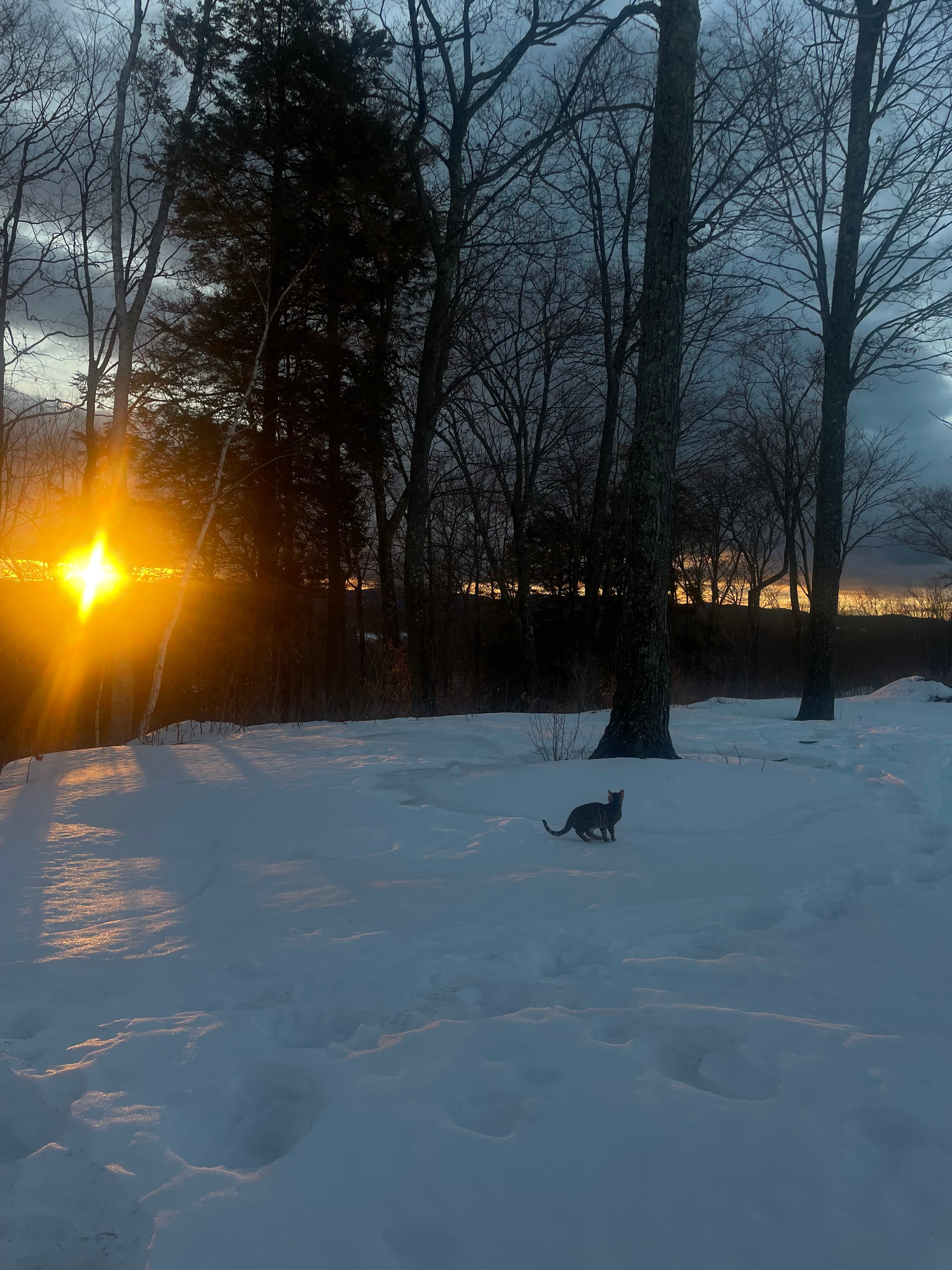
I didn’t know what I was building in Vermont. I had left the trail I understood, one made of professional growth and familiar networks and the known rhythms of a design career, and in its place was snow and silence and a question I couldn’t answer by thinking harder about it.
I’ve been managing feelings like these the way I managed hard training weeks: push through, hit the numbers, empty the tank, come out the other side stronger. That framework made sense in the context of a sport with a finish line. I would only continue to outrun the emotions on the bike, by building a moat of fatigue and a wall of fitness gains to block out the inconvenient feelings.
But a life in transition doesn’t have a trail to follow.
What I was learning, slowly and against my instincts, was a different kind of training altogether: training to feel. I was training to stay present inside the discomfort long enough to confront my inner demons.
“In the English language it’s I think this, I think that; I want this, I want that. It’s as if we’re in the center of the world and the world is around us,” Belt said. “In our language, everything is here and we’re some place around it. Which means that we’re just a part of it, as opposed to being in the center of it.”
― Robert Moor, On Trails
My monthly posts and daily writing practice have been its own trail. Like every trail, it started rough and narrow and barely understandable. I could see the footsteps of others, their faint impressions in the ground of my words, and I wasn’t sure if I was following them or starting something new.
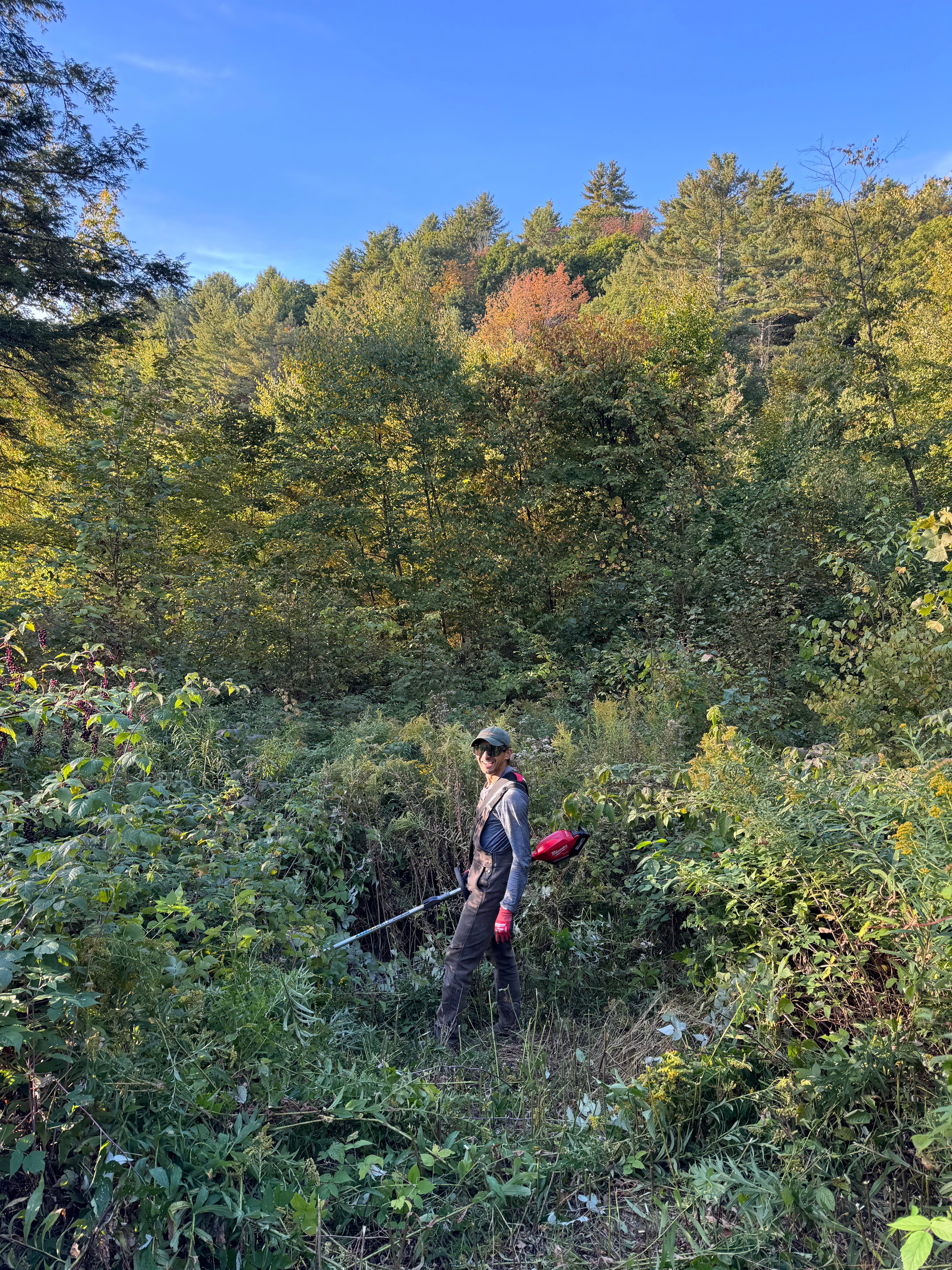
Coincidentally, this writing trail and the physical trail I’ve been building on our property have taught me they are reflections of each other.
There was so much density to cut through that it was hard to know where to begin. Barbed wire mark the edges of land that was touched on before us. Over 8 acres of land, a majority of it on a hillside of brush, maple, and pine trees.
Underneath the new growth, there was an old logging path left by the previous owner, buried under years of bramble and encroaching saplings. I didn’t restore the path so much as extend it, connecting it to what I could see and care about. I would run it out toward the long views and the particular shape of the hill I’d been slowly learning to read.
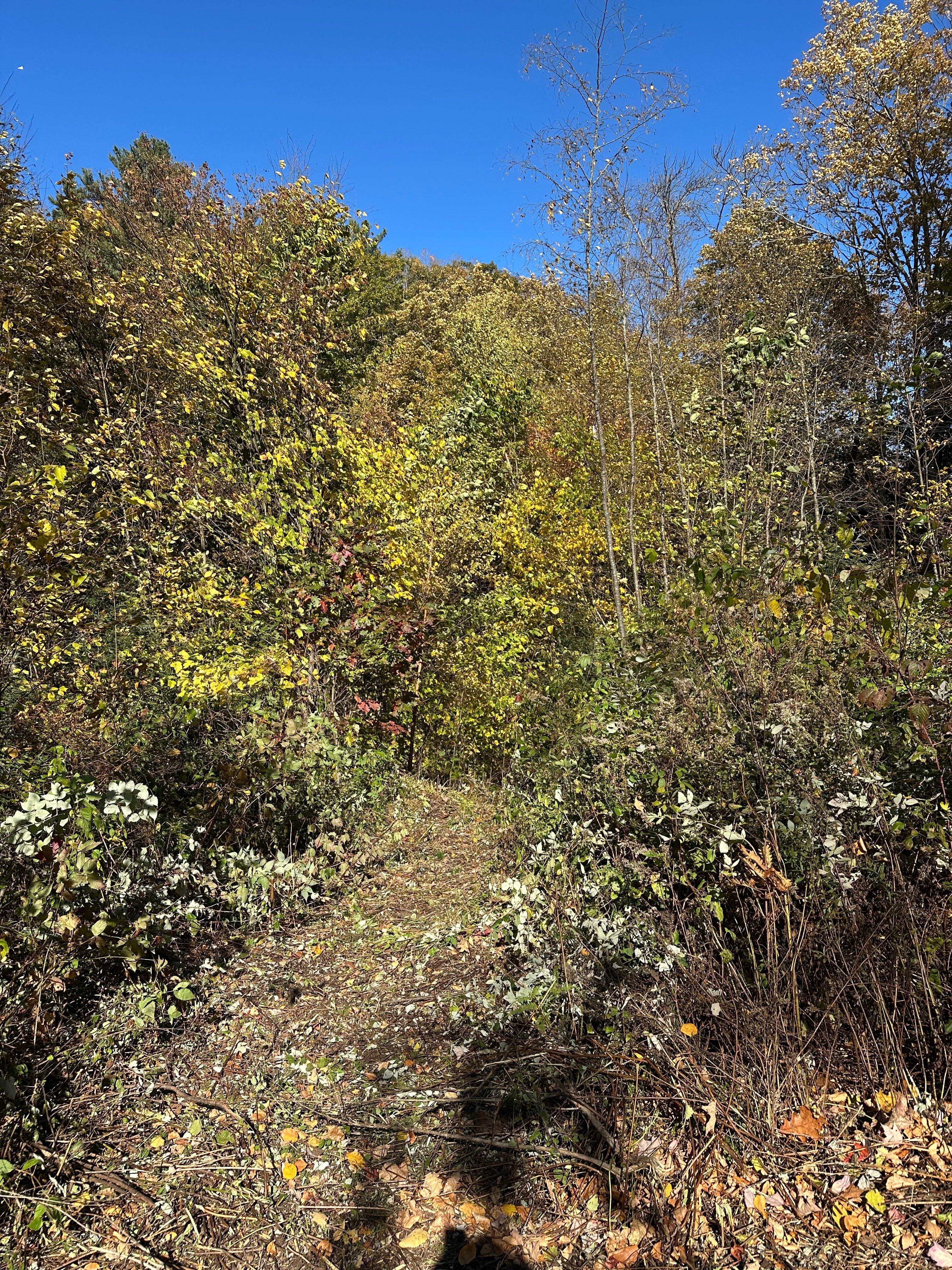
There are deer trails all through the brush. I’ve found it’s best to follow them because they know this property: the smoothest path across the hill, where the blackberry bushes are, and how to get back to the road.
I’d come back into the house and pull up Google Maps in satellite view, draw the property lines in rough strokes across the screen, and sketch the loops I was wandering. This view from above gave the trail an identity, its shape a representation of this new life I’ve been forming in Vermont.
There are, it is often said by the more ecumenical prophets, many paths up the mountain. So long as it helps a person navigate the world and seek out what is good, a path, by definition, has value.
― Robert Moor, On Trails
The ground is most malleable in the weeks before and after winter: stick season and mud season. The roots break their hold and the soil softens. The time for trail building means physical and specific work over an unremarkable distance, often a dozen feet in a couple of hours.
It fills an afternoon without producing anything you can easily photograph or explain without a timelapse of the process. It’s painfully slow.
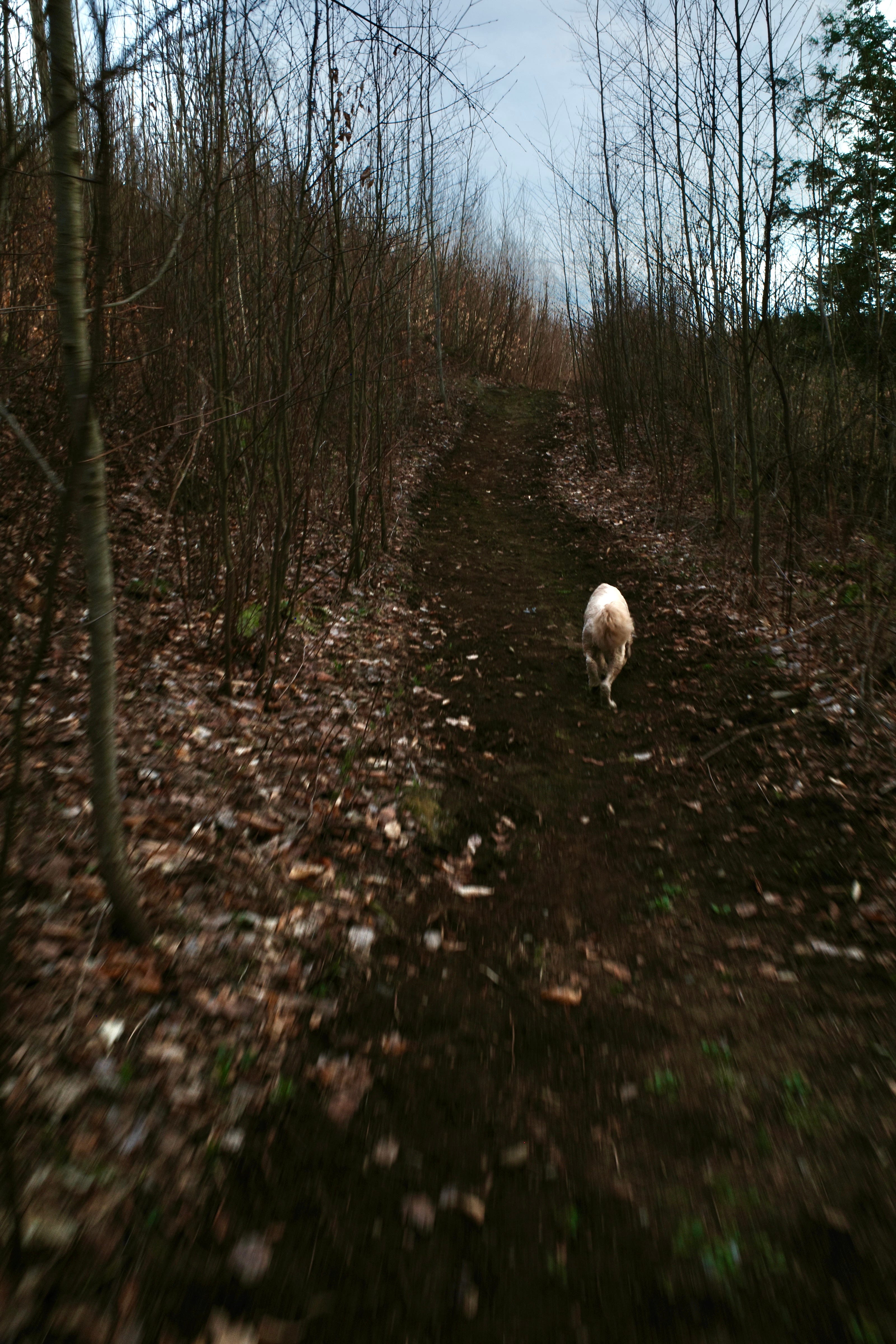
Chainsaw into the ground to break root systems that have had years to settle in. Mow the brush down to something crossable. Shovel dirt from the high spots to the low ones and smooth it with the back of the blade. Walk the section back and forth. Get on the bike and ride the sections slowly and note what disrupts the flow. I’d consider how it might feel going the other direction.
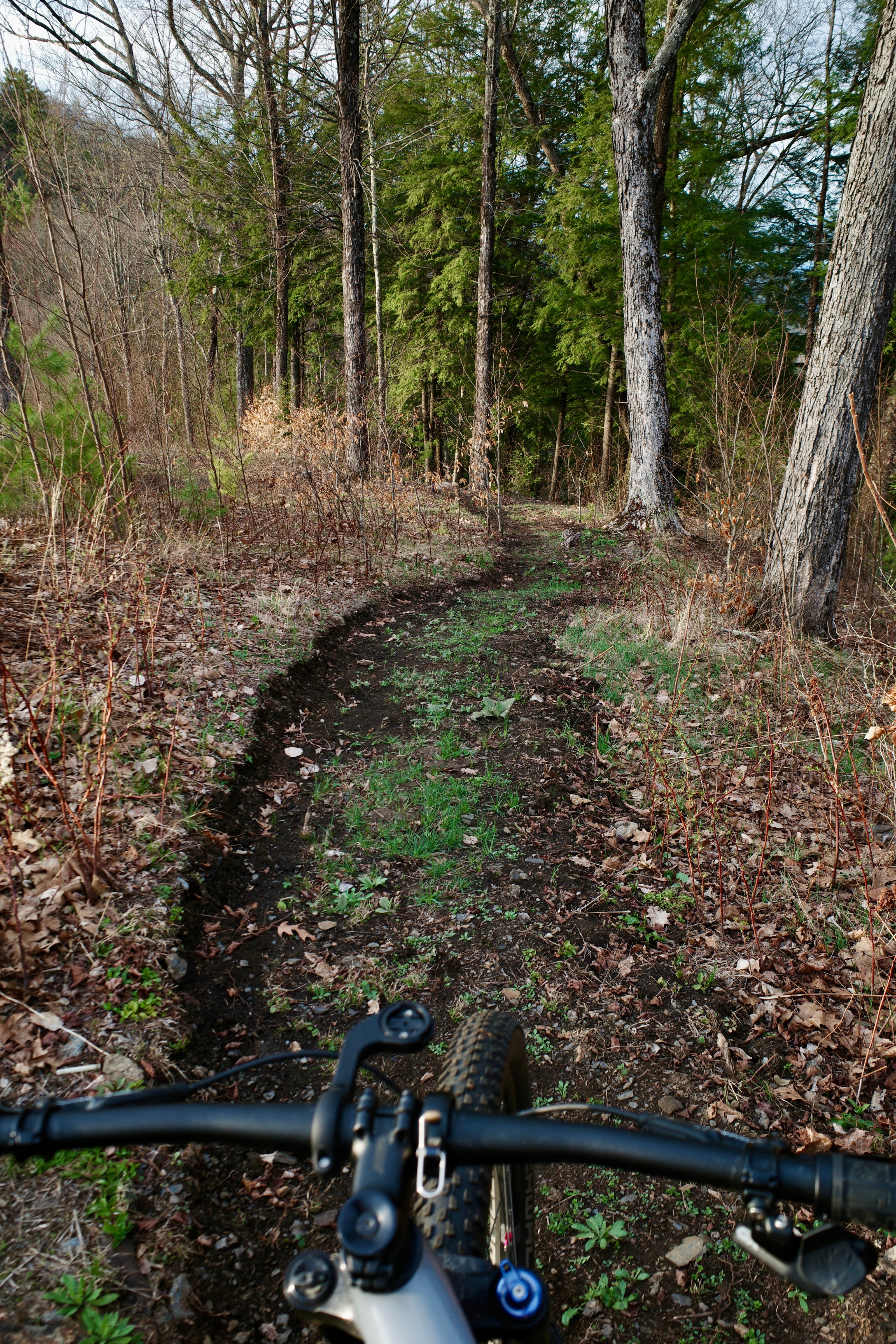
The jarring root. The off-camber corner. The blind drop where the trail loses its rhythm for a moment. I spread dirt across the rooty sections until they were rideable without flinching. I figured out how to bank a corner just enough that it carried speed instead of killing it. I wanted there to be a variety of features and a little bit of everything.
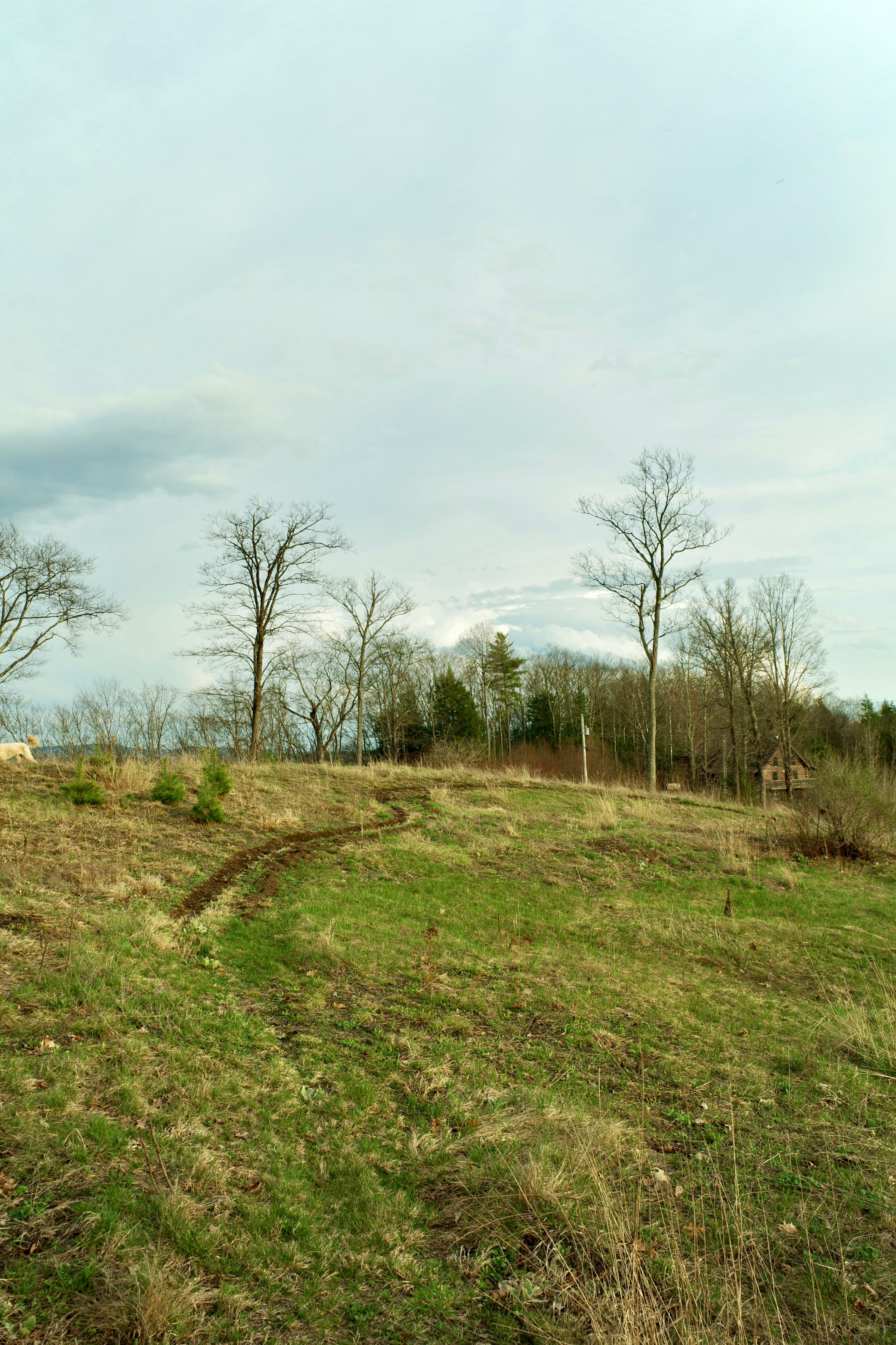
There is a rewiring that happens when doing this kind of work. The act of making a path connect, of cutting through what’s in the way and smoothing the grade and refining the curve until it finally flows the way I want it to. And watching nature grow into and around it.
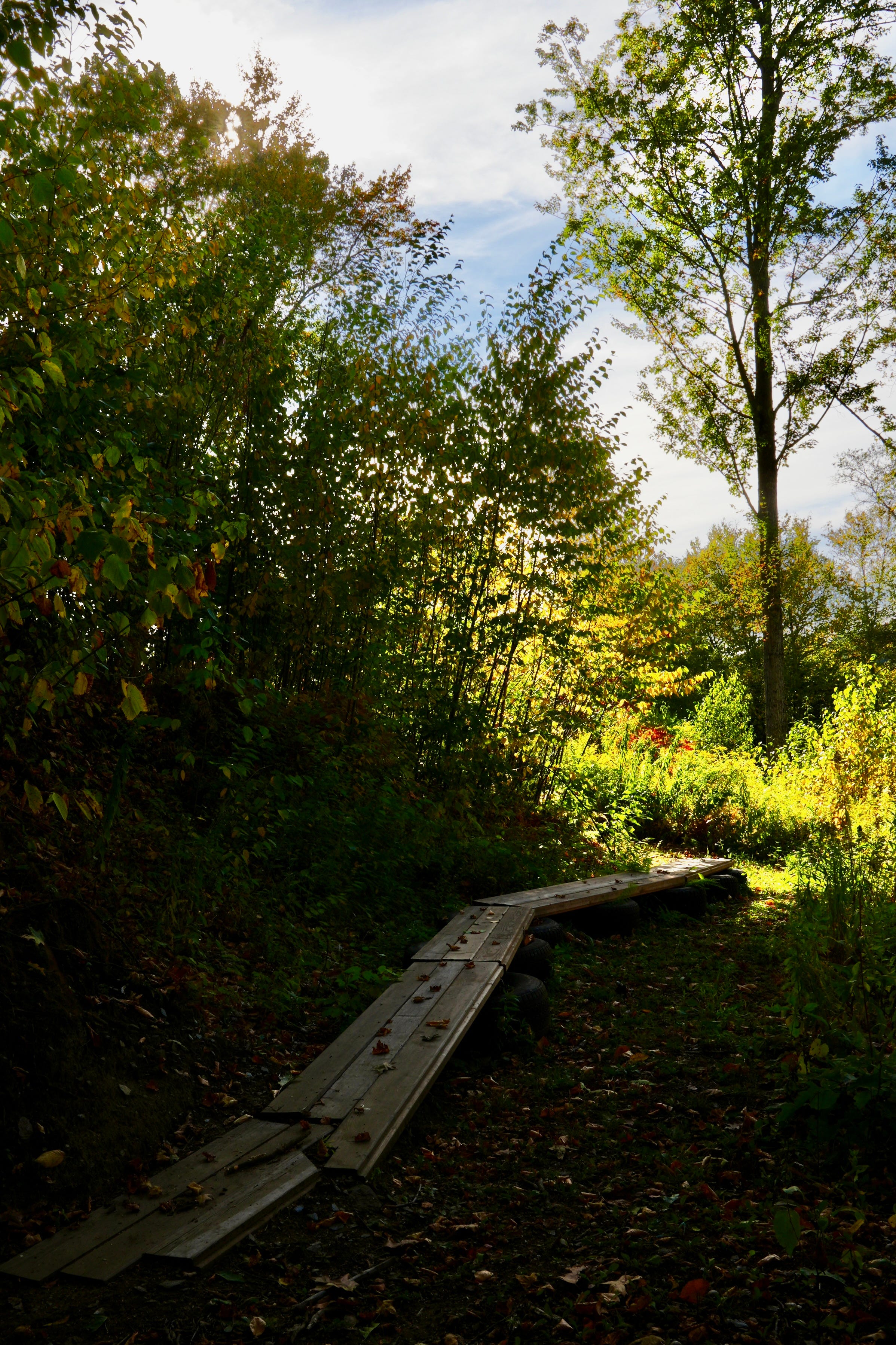
From trains to automobiles to airplanes, each time the speed of connection quickens, travelers have expressed a sense of growing alienation from the land blurring past our windows. In the same vein, many people currently worry that digital technology is making us less connected to the people and things in our immediate environment.
― Robert Moor, On Trails
None of these sections were finished in the first, or the second, or the fifth iteration. I went out between meetings, ran laps in the early evening light, and walked it slowly to notice where my body wanted to go, and what nature needed to reclaim.
I am more patient about this work than I would have been a year ago. I give credit to that winter when I was forced into stillness, to be with what I was feeling, to be present with what I am surrounded by.
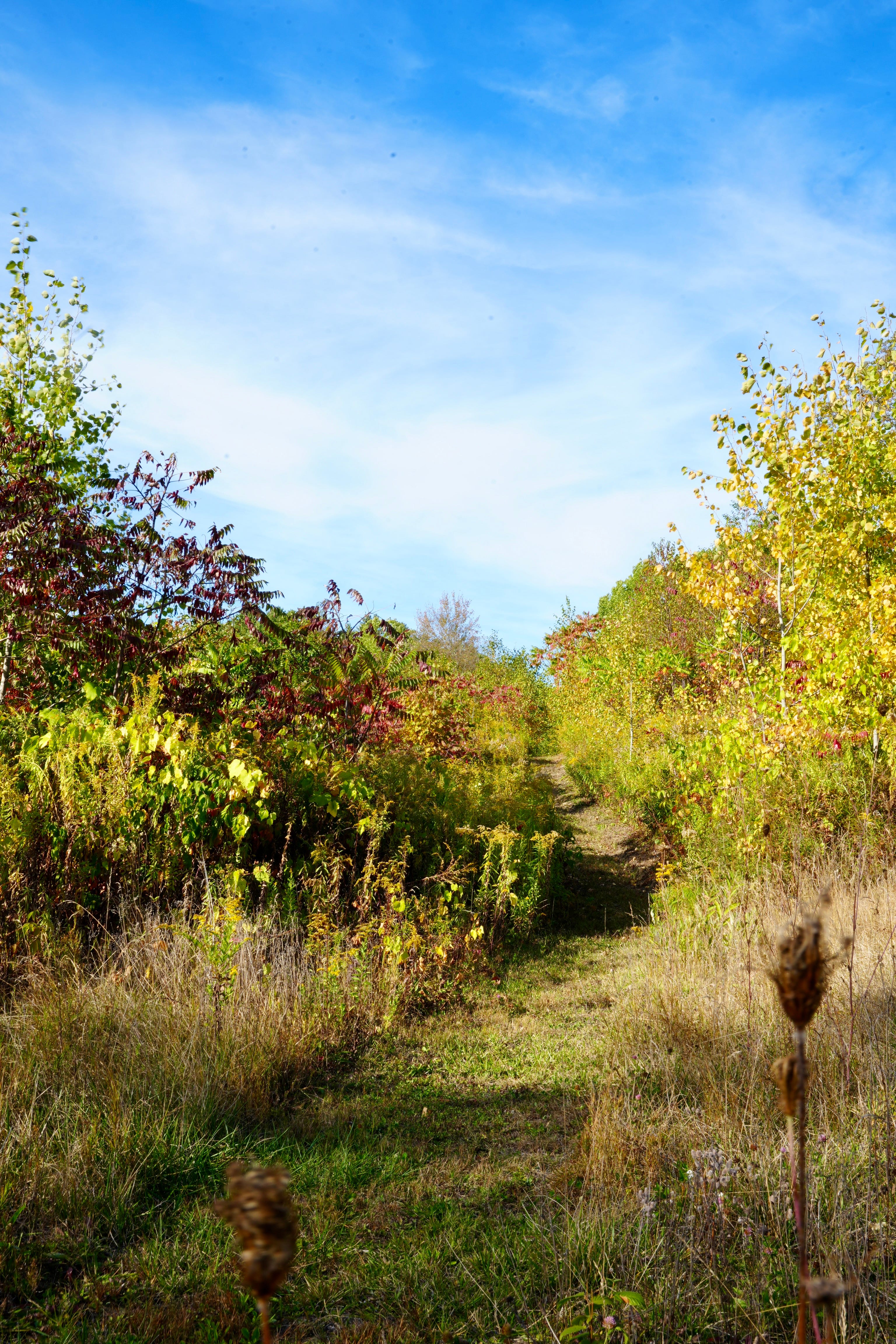
This time taught me a lot of what I desired. The identity I had built was a desire I'd inherited from other people's lives. That by not following the same well-worn routes, and cutting paths in the direction of what isn’t obvious, but unique to me, is uncomfortable work.
Like uncovering a trail, I remembered that I am more than a designer and an athlete, I am also an artist and a homebody.
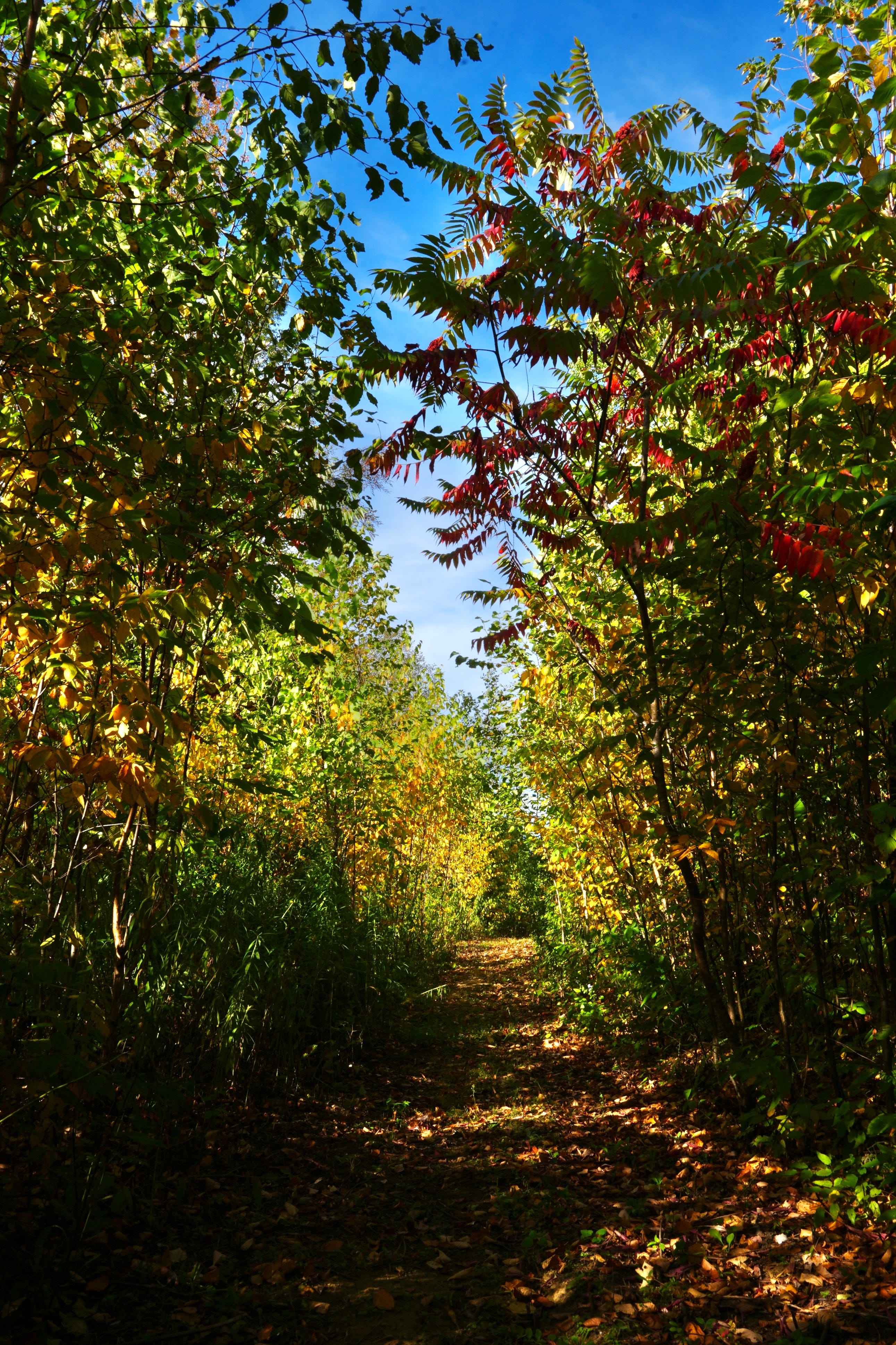
According to Strava, our trail is a reversible loop over a kilometer long with about 140 feet of elevation gain. All of it built by hand. A lot of sweat. In September, it will be two years old.
May will mark a year of writing on Substack. The shape of that work is starting to feel a lot like this trail does.
I'm proud of this path, and I await the wilderness that yearns to pull me off it.
-Pips
No posts
Comments
Nothing yet. Say the first thing.
Sign in to join the conversation.