
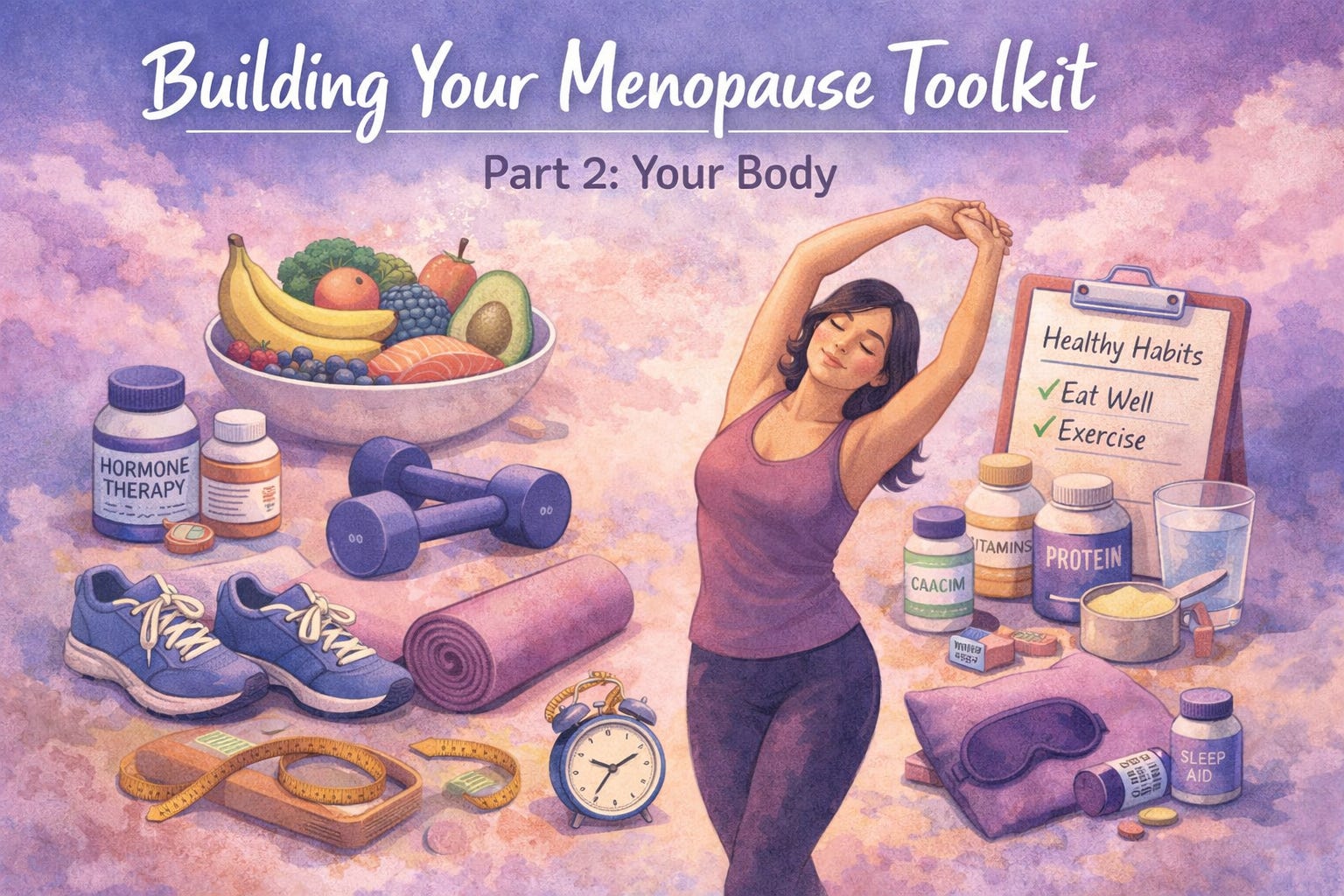
Building your menopause toolkit is all about discovering what works best for you.
In this second part, we’re focusing on strategies to support your physical health because how you care for your body during menopause can have a profound impact on how you feel day to day.
As always, think holistically. Your mind, body, and spirit are deeply connected, so give yourself permission to experiment, adjust, and evolve your approach as your needs change.
If you missed Part 1 (all about supporting your mind), you can catch up below
And remember: there is no one-size-fits-all solution.

1. Physical Activity
Regular movement is one of the most powerful tools you have. The key is finding what feels good for you.
Exercise can support sleep, improve mood, boost energy, and help manage common menopausal symptoms. But this doesn’t mean pushing yourself through workouts that leave you exhausted.
This might be your cue to swap intense gym sessions for more nourishing movement like yoga, Pilates, walking, or swimming.
You could also consider working with a fitness professional to create a plan tailored to your needs and lifestyle.
Consistency is key: Small, regular movement matters more than intensity.
Mind-body connection: Practices like tai chi, yoga, or meditation can reduce stress and support emotional balance.
Menopause often brings changes in metabolism, bone density, and weight regulation, so nutrition becomes even more important.
Focus on a balanced, nutrient-dense diet that supports your body’s evolving needs.
Prioritise foods rich in calcium, vitamin D, and omega-3 fatty acids to support bone health, heart health, and overall vitality.
Bone health boosters: Include leafy greens, dairy (if suitable), nuts, and seeds. Pair with vitamin D from sunlight, oily fish, or fortified foods.
Anti-inflammatory choices: Fill your plate with fruits, vegetables, whole grains, and healthy fats like olive oil and avocado.
Hydration matters: Staying well-hydrated can help with hot flushes, joint discomfort, and overall function.
You may want to explore complementary approaches that support both the physical and energetic aspects of your health.
Options like acupuncture, hypnotherapy, chiropractic care, or herbal support can work alongside conventional medicine.
The key is working with qualified professionals who can guide you safely.
Mind-body techniques: Deep breathing, progressive muscle relaxation, and mindfulness can help regulate stress and improve resilience.
Herbal support: Remedies such as black cohosh, red clover, or evening primrose oil may help some women, but always seek professional advice before starting anything new.
For some women, hormone therapy can be a helpful part of their menopause toolkit.
If you’re considering HRT or bioidentical hormones, speak with a qualified healthcare provider to explore what’s appropriate for you.
Informed decisions: Understand the benefits, risks, and different options available.
Ongoing support: Regular monitoring ensures your treatment remains safe and effective.
Your body is changing but that doesn’t mean it’s working against you.
With the right support, it can become your strongest ally.
Take what resonates, leave what doesn’t, and trust yourself to build a toolkit that truly supports you.
If you’re looking for deeper guidance, practical tools, and step-by-step support, my Menopause: Now What? course is designed to help you feel informed, empowered, and back in control.
Find our more about this 8-week program here: Menopause: Now What?
Pam x
Comments
Nothing yet. Say the first thing.
Sign in to join the conversation.