
New Publication notice! I have a book review of Jacob Siegel’s The Information State up at University Bookman. I hope you’ll check it out. It’s here. Now to the story.
The day gets long under the sun, walking alone out here directionless, with the whole desert before me. The river seems to have disappeared. I don’t mean the river itself, but the trees which mark its existence, a scraggly line of pale green in an ocean of mottled sandy ochre, all of it bleached nearly white at mid-day. Now, out of the Mule Mountains, there’s no longer a vantage point from which to see the cottonwood ribbon. The land isn’t so flat as it appeared from higher elevation. It jumps and dives and goes on forever. So the route isn’t a short string pulled tight. It’s a long springy coil kinked back on itself. This could go on all day and the Huachuca Mountains no closer.
I was stupid to think it was going to work with her. We could have helped each other. And children, maybe. So we’re done, and while I’m at it, not another day lost to the cubicle farm. Better to be hot, tired, hungry, and uncommitted. Better even to be lost, I’d say, though I won’t be lost here. I might be deluded into a walk I can’t survive, but I won’t be lost doing it.
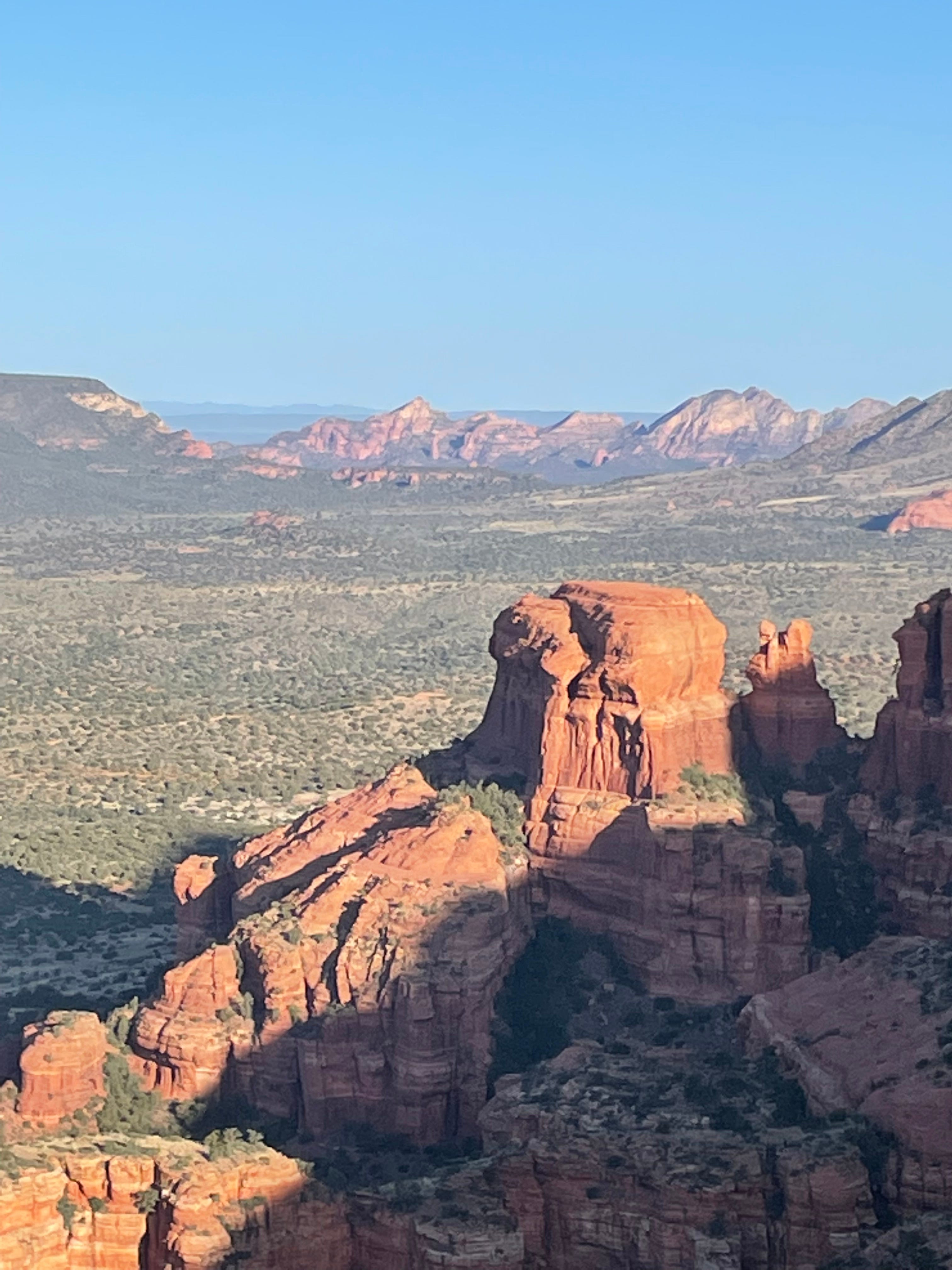
For some reason it seems like all rivers ought to flow south. But that couldn’t be. All the water would flow down there until it gets heavy and the world flips over, starting the process all over again. Turns out the San Pedro doesn’t flow south, it flows north. Out of Mexico and into the US, which hardly seems fair.
I’m kidding myself, it isn’t her. It’s everything. The very opposite of this wide-open landscape, it all crowds in. The windows in my office were the kind that wouldn’t open. We were all climate-controlled. The phone is on all the time. Unsolicited emails, letters, phone calls. You’re nothing if you don’t copy the attitude. Knowing irony. We’re all absent. We’re up there in our heads somewhere, operating the avatar like in a computer game.
It’s getting hotter out here and it’s disorienting down in the sandy washes. This one has gone on a bit, maybe it’ll widen out instead of dead-ending like the others. I think it is. If it doesn’t close up it’ll have to drop out in the river basin, unless gravity stopped working while I wasn’t paying attention. The crown of a cottonwood tree. Another one. This must be it, at last.
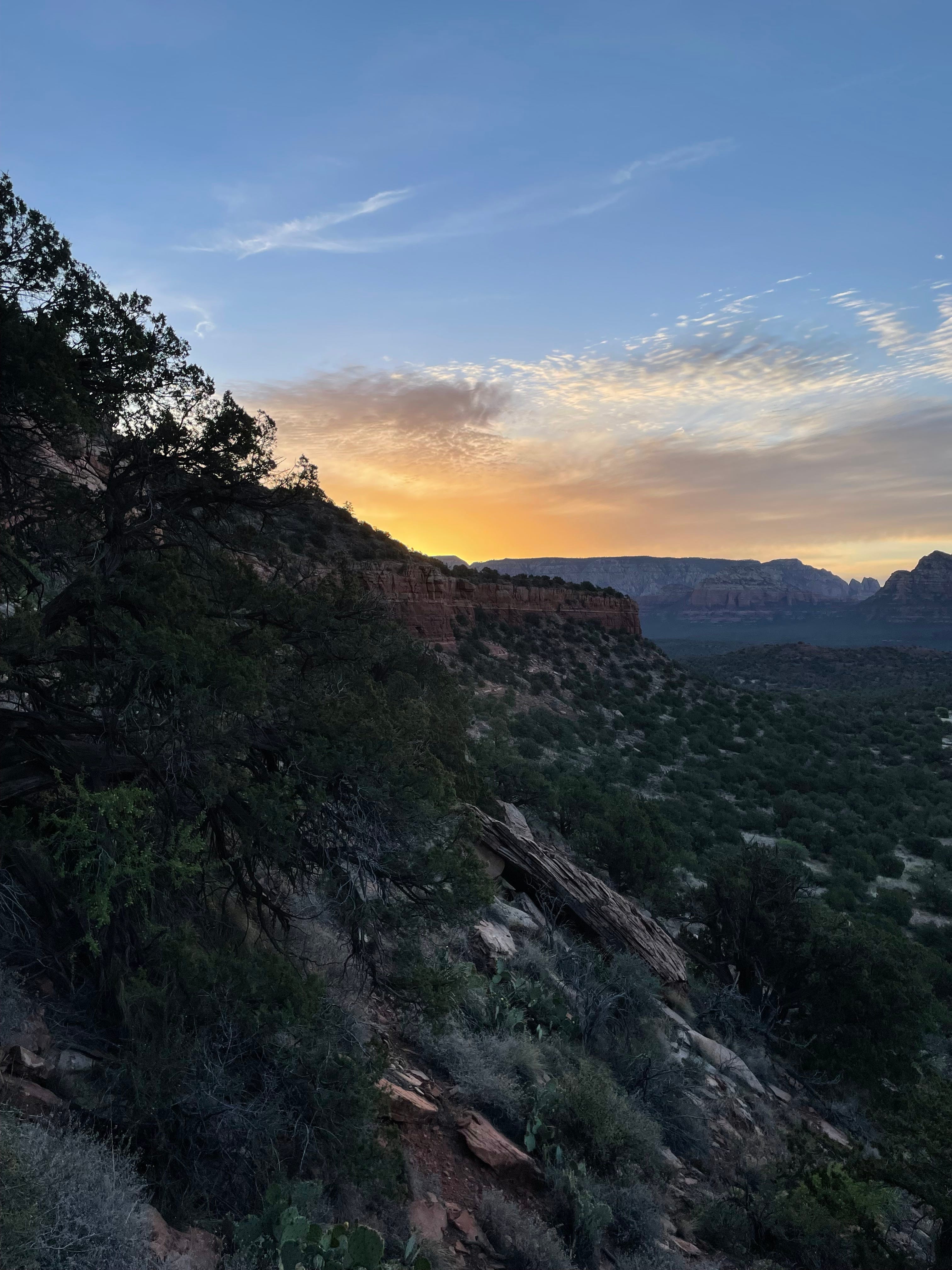
Now that I’m finally out of the direct sun, night is coming on anyway. This should have been the mid-day break, but here I am at twilight. The water isn’t even up to my knees. Right here the bottom is rocky, though the chalky sand piles up on the sides. It’s like someone built a road for the river before releasing the water.
It was right to stand firm when she asked “why Bisbee.” None of her business, that’s why. That sound of her driving off behind me. No turning around, then or now. She probably thinks I’ll call from Sierra Vista, but I intend never to see her again, and it feels good. It’s not just her. It’s everything. Freedom in this age is illusory. I was a unit of meat in the big machine. No more. The Chiricahua Apache did just fine, here, they had freedom, for a time.
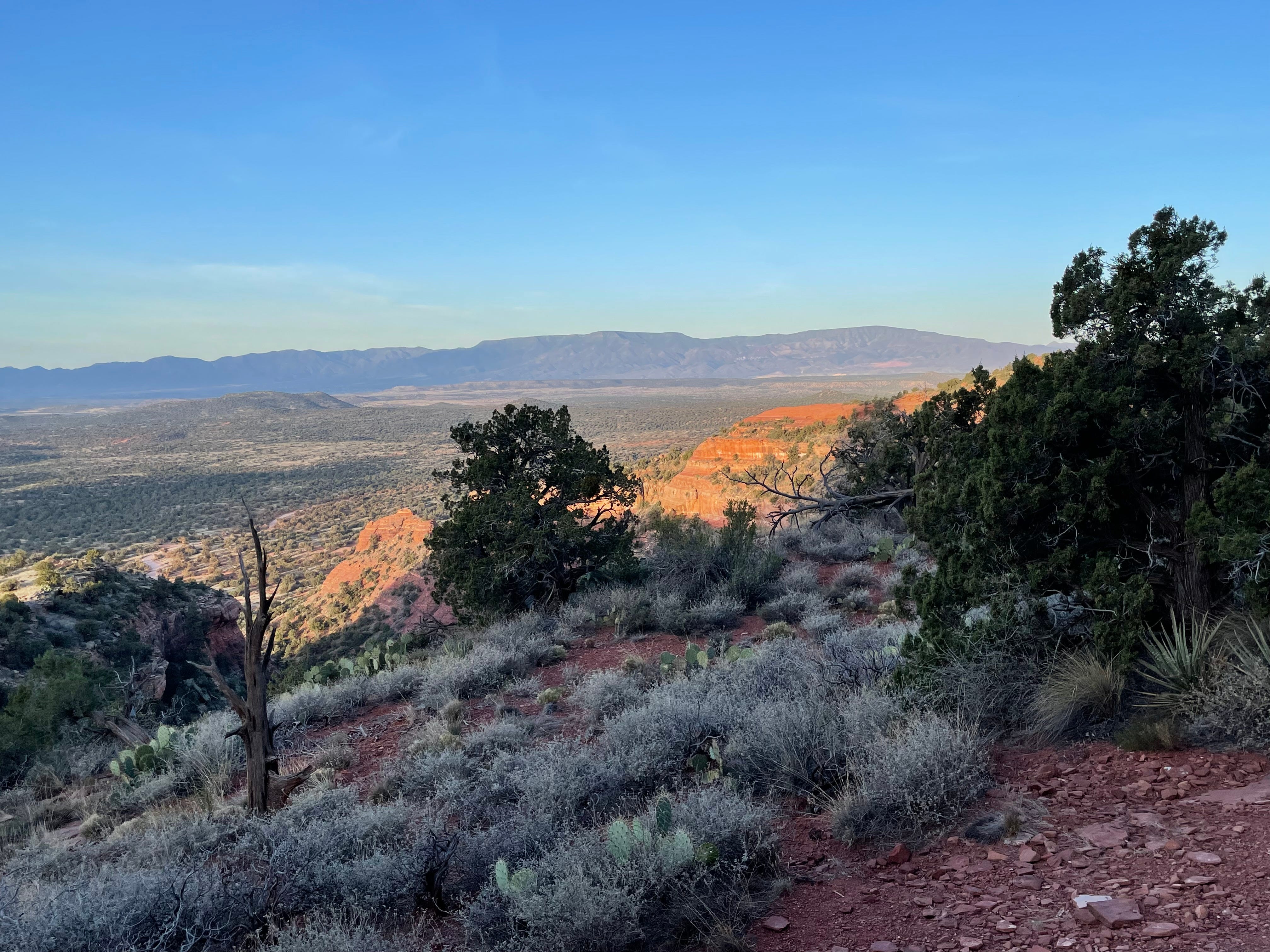
The cottonwood dapple would have felt good a few hours ago. Now the world has flipped over, everything is opposite. Light turns to dark. Heat to cold. Prosperity to poverty of spirit. The Apache and Comanche were famous for disappearing in plain sight. You could step on them without seeing them first. They would survive exposed in the desert for days on end. I can too. Around one of these bends I’ll find loose river soil that was in the sun all day.
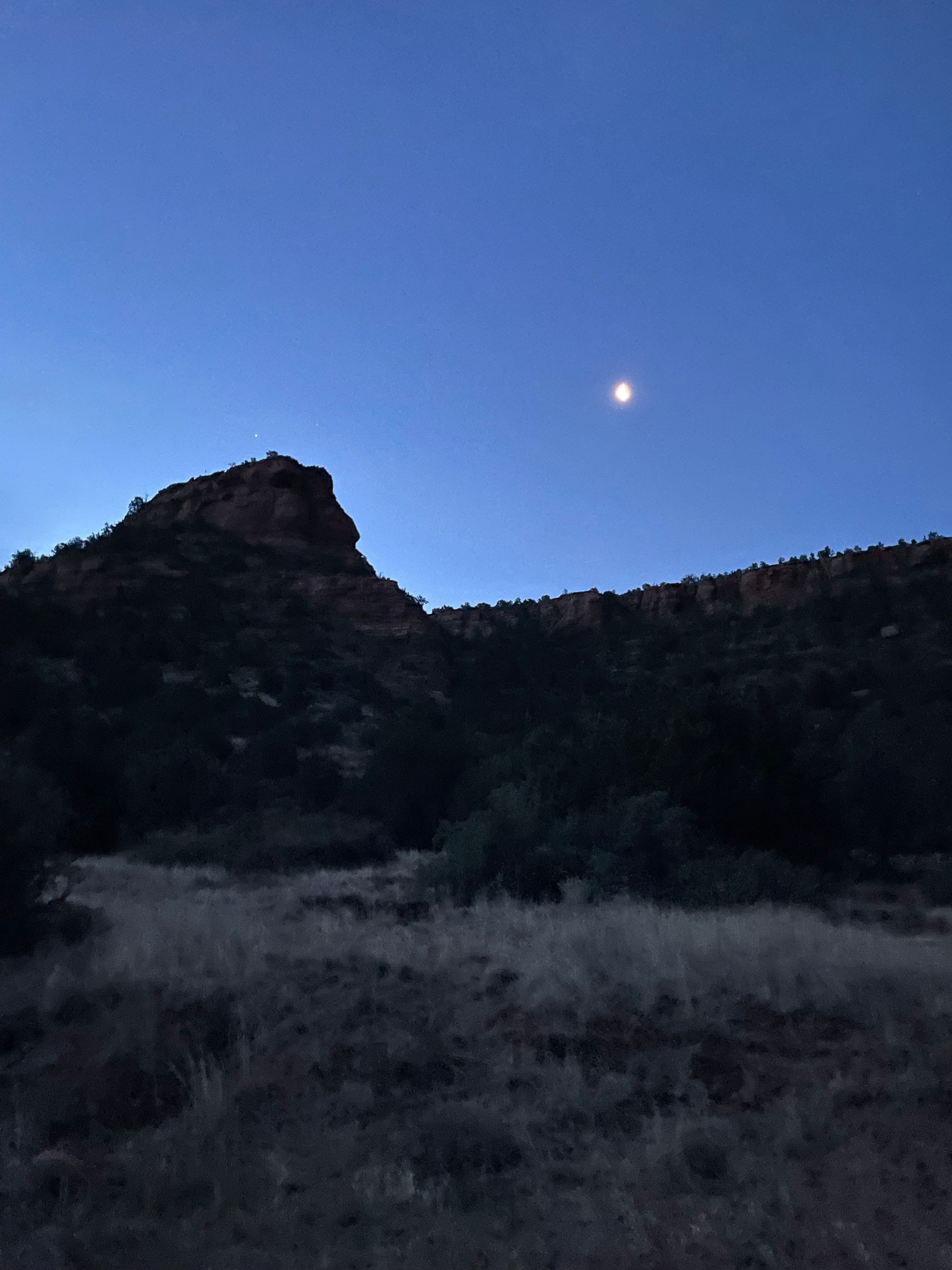
The pre-dawn darkness is almost tangible. The Huachucas are a hulking inky presence in the foreground of a limitless blue starscape. They would loom larger and more ominous as I approach, if it stayed dark, but they’ll colorize and soften when the sun comes up behind me. Noon-time nap, maybe, in the straw grass north of the army post.
There was that guy, a Greek, who took it on himself to fast 40 days in a cave. That was an option but this is better. He was surprised he still had to defecate many days into the fast. Walking is better so long as there is no destination. That’s kind of what I’ve been living, really, so is this any different? It could be that we need a destination, for some reason, to live, and so we create the illusion of one. Where do we all think we’re going, in all this bustle and striving?
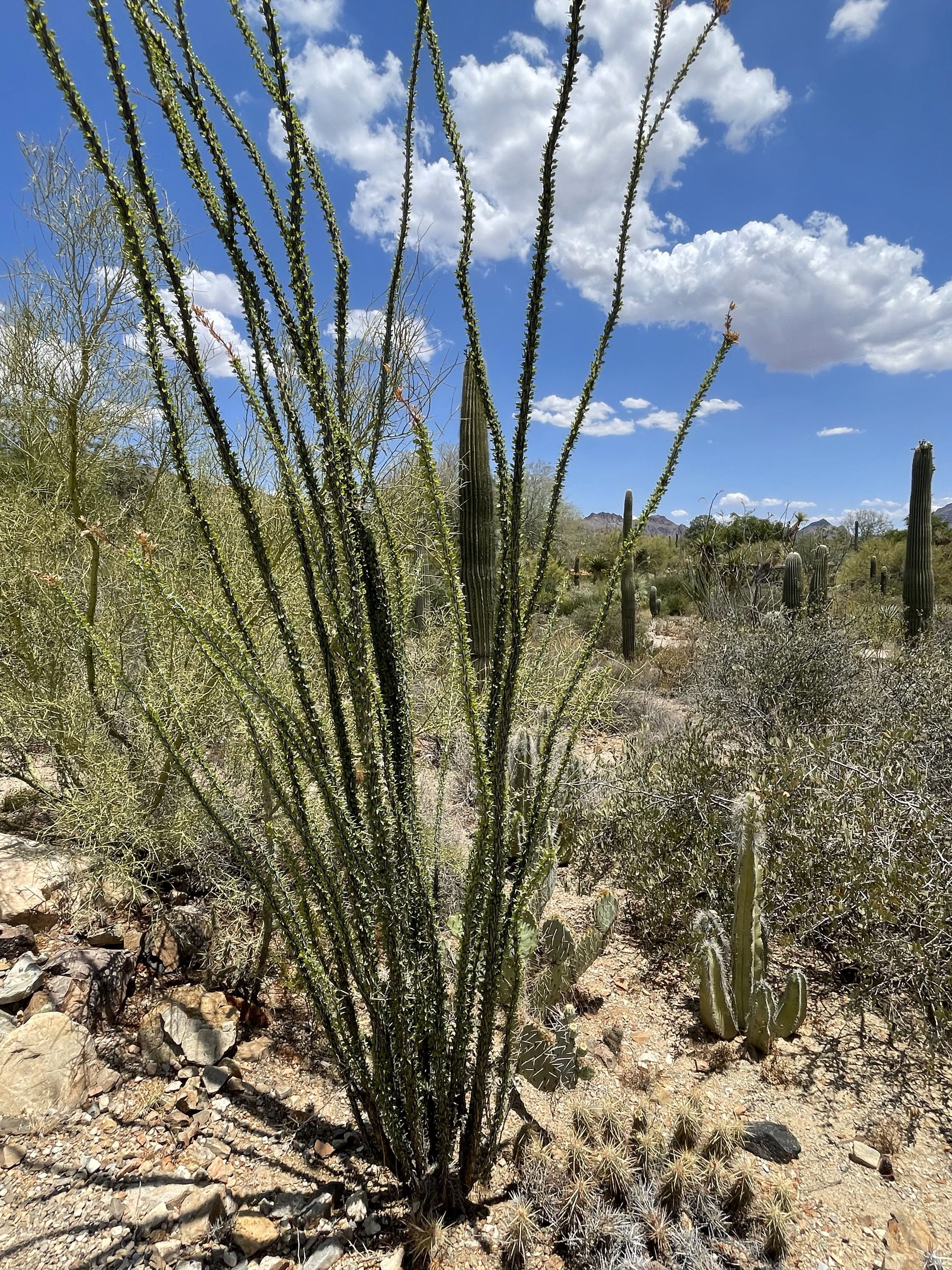
The northern boundary of the army post is longer than I thought it would be. The land is starkly beautiful. No more winding arroyo’s, here. The creosote on the foothills of the Mules became monotonous. Here there are thicker patches of sage, but it’s all or nothing. It’s thick and then the sage thins to nothing. Back to grass and scrubby trees. Also ocotillo and barrel cactus, here, plus prickly pear, and dark sticks not yet grayed by weather – upstart trees that didn’t make it. Mostly the land is given to upswept waves of rock adorned with house-sized boulders, arranged, you might almost say, into miniature mountain ranges, wide so it’s easier to climb up and over than to go around. It’s still not really enough, though. I don’t just want to be in the desert, wandering around. I want to be the desert. I want to disappear into it like water from a spilled canteen.
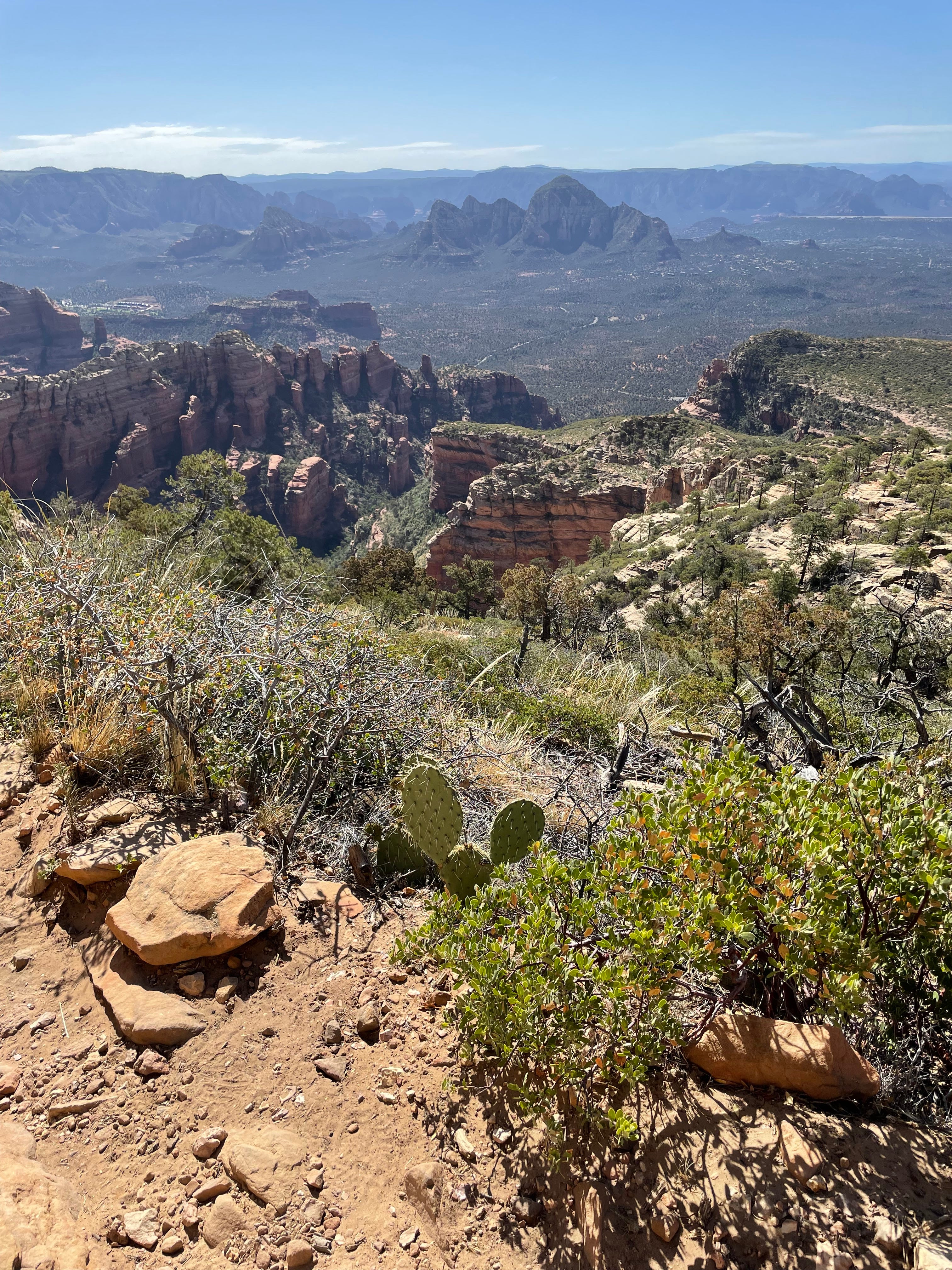
The tank is supposed to be around here somewhere. If I were still at the San Pedro I’d drink up the whole river, so deep and so long I would interrupt the flow. If the water flowed on at its regular rate, wouldn’t there be a blank space, like a dry hyphen in the middle of the stream? The tank will surely be just over one of these pop-up hills. If not I’ll have to climb one of the long ridges on the north side of the Huachucas until it greens up and there’s evidence of water.
Down here it’s all agave and yucca and ubiquitous straw grass. No trees other than an occasional thicket of manzanita or mesquite. Nothing bigger that might suggest water.
It’s really hauntingly beautiful, even when the sun’s at its highest and the colors merge closest. This is what I came for. That and to disappear into freedom. There are all kinds of restraints out here, there’s no such thing as absolute freedom, but the cloying, human kind of restraint is too much. The stink of mankind, noise and electrical buzz and bright lights and fences and bodies always in my way. And I know I’m that to them, how could it be otherwise? They don’t want me in their snoot any more than I want them in mine. It’s the invisible restraints that bind most uncomfortably. The shared cultural memory that straps us down.
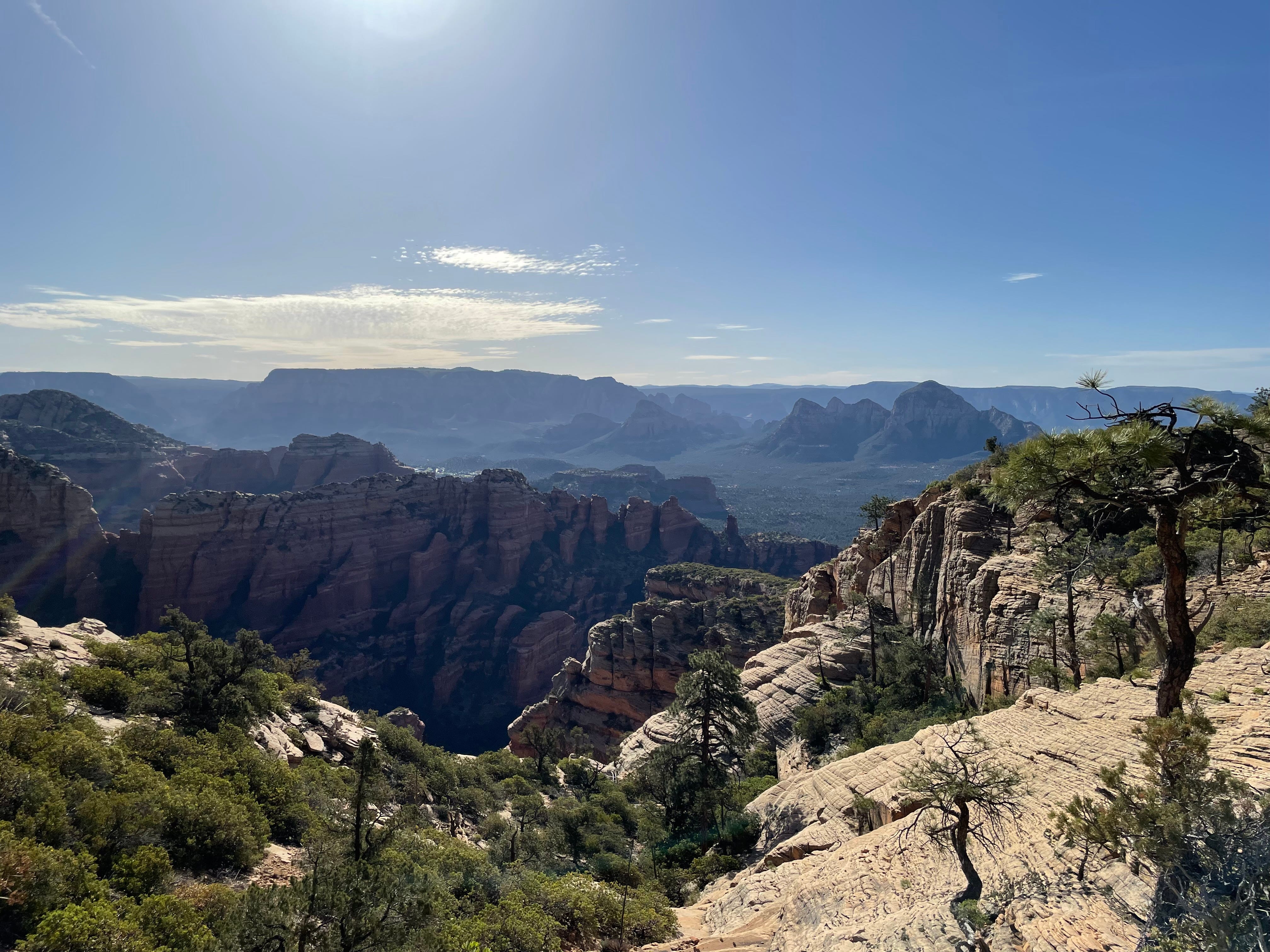
I thirst, Jesus said. A dirt track leads to the tank, not a good sign. Here are junipers like I’ve seen scattered in the lee of the hills, but also there are stooped patient oaks and desert willow and on the opposite side from my approach, the tops of a few cottonwoods peeking over the hill. Water, but also flies and mud. I’ve not been sick yet, maybe my luck will hold. There are swarms of tiny organisms, living inside the streams and hills and rocks of the human body. I am legion. There might be a flotilla of good bioflora in the ol’ gut right now, desperately paddling away from the sneering desperadoes I just introduced. We’ll see.
Instinct tells me where the little hamlets are, like Elgin and Sonoita. So I avoid them. I’m more or less on course to go through the Papago reservation. I should say Tohono O’odham. “Papago” was a name attached to them by others, as with the Navajo and Apache, for two locally-prominent examples. Names that mean “enemy” or something, in some other tribe’s language. So with “Papago:” eaters of a particular type of desert bean. No wonder they reverted to their own words for “desert people.” They are among the poorest Indians in America. But I’m not purposely aiming for their reservation, that’s too much of a plan, I’ll put it out of mind. A little discipline is called for here. Not to hew to the plan, but to hew to the planlessness.
I’m already a failure at this. If there were no plan at all I’d walk around in circles and wouldn’t care. My route analogizes to all my decisions upon decisions, little course corrections all through this puzzling life. It all ends at the same point, no matter what. I think I’m going somewhere and I’m intent on getting there but there is only the one “there” and I arrive with or without planning. Here it’s inverted. Instead of pretending I’m going somewhere, I pretend I’m going nowhere. But pretending, regardless. You can’t purposely go nowhere.
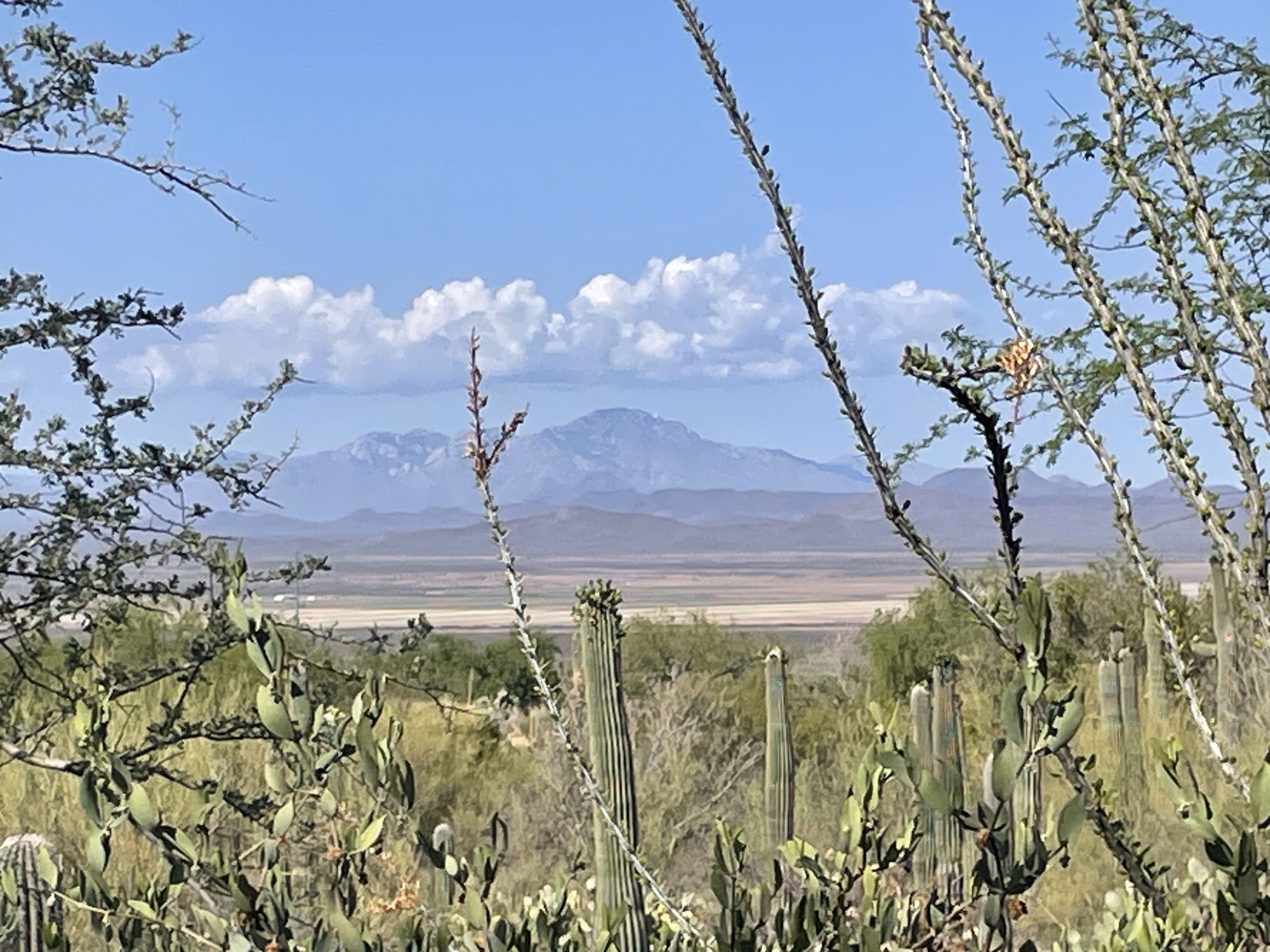
I got one good thing out of that relationship: a ride to Bisbee. The job just kept me in cornflakes. I could bootstrap some purpose I guess by running out and marching for this or that. I could be Mother Teresa. I could take my prompts for action from instinct, from some grand harmony extracted from the wheel of life, mounting up against this enemy or that one as the earth seems to dictate. I’d be run to ground, though, like the Indians were. The European version is to build a temporary empire and put up fences like this one snagging my pants leg. I wonder where this road goes? Who cares. It runs north-south, and I’m going west. Roads don’t “go” anywhere. They lie there. We think they imply an imperative of movement but they are inert, they imply nothing. It feels good to wade into the grass again here on the far side, free of this boundary-making strip that the earth will eat in time.
Getting smarter, now. The water is going to be significantly up-slope, but it’s getting late. When the sun disappears here, even just to go behind a cloud, the warmth in the air disappears too. There’s too little humidity to sustain it. So I’ll stay down here and get ready for the night. Thirst rides my shoulder like a fickle fiend. I’ll sleep anyway. Hunger makes food taste better. Sleeplessness induces sleep. This is only the third night out but I feel hardened already. Before tents and adobe and concrete, there were wikiups. Mine will be a one-person model. Sticks everywhere from trees that couldn’t get through a dry spell. I’ll innovate, here. My ancestors were European, I can’t help making life softer. I’ll make two halves, like the hemispheres of a bean husk, then climb in and close it up. Then pray away the predators and bean-eaters. I don’t want tomorrow to come and me a has-bean.
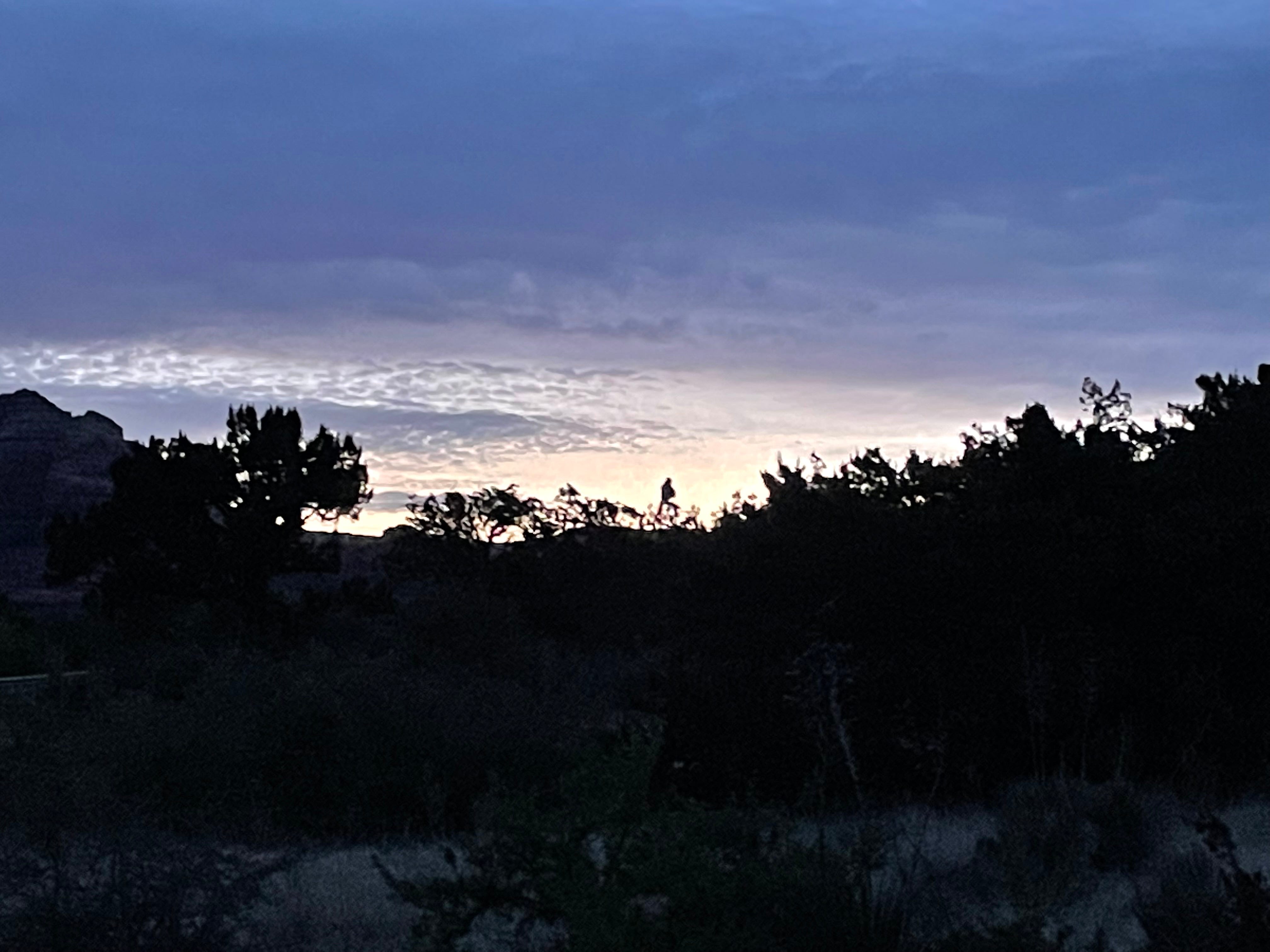
Long, long shadows. The sky already a pale blue before the first orange shards splash against upheavals of timeless rock and soil, leaving eddies of night-time on their western aspects. The light is harsh and penetrates, rationality piercing blue pools of emotion. Imagine being in sterile unmediated space, way out there between this presumptuous earth and the dangerous sun. Physicists, some of them, say this is all there is, a few principles of matter in motion that explain it all, except existence and order and conscience and curiosity. I have a fistful of legumes, but I’ll let them go. Water now. There will be springs in the mountain crevices, I can tell from here.
The mass of men lead lives of quiet desperation, saith Thoreau, who is now dead. He wanted to “really live.” A vague yearning, and that’s all. Am I “really” living now? I feel more alive I guess than I do in the cubicle. But maybe it’s just a different view? One difference now is that I have more elemental concerns. Better? Escaping elemental concerns was supposed to be freeing. So we could all do art and poetry and philosophy all day. Instead we race the hamster-wheel ever faster. We sit in front of back-lit screens until the next food pellet drops from the dispenser. Out here feels free, for now, but I’ve not yet melded into the lone desert life. I’m still a tourist.
It has been more level and now the mountains are far behind me. The walking is regular, automatic like breathing. I propel forward or else the earth rotates backward like a treadmill. I’ve laid down miles behind me, but there’s no reason to. I have to count fingers and think, to remember how many days I’ve been alone.
I don’t care if I never see another paloverde. This far out of the mountains there’s an ocean of them. Their shade is incomplete, a green-tinted relative dimness. As if there were a thin sheet of water overhead. But there is no water. All this space seems pointless after the indignity of crossing the interstate. The walk to here seems sullied, somehow.
I’m fatigued in my bones. I feel the sun and imagine x-rays. Where has my freedom gone? The monotony is only natural constraint, uncomfortable like thirst. Inevitable – freedom is not absolute, I haven’t forgotten. The space between me and every other person is unmediated like this atmosphere.
A man approaches. I’d stand up and move off but I don’t want to insult him. An old man, or just middle-aged and sun-dried. He has jet black hair and penny skin. He’s wearing a light green baseball hat. His pants are too big, they’re pleated by a cinched-up belt. Pima, I imagine. I might be trespassing. He holds a clay pot. I can smell the water from here. He sets it next to me. He’s sitting down opposite me, at the edge of the paloverde shade, such as it is. My throat is dry and I can’t speak, my tongue is thick and I feel the dust has settled in my mouth, turned slick so words can’t get traction. I don’t want to speak anyway. There is all the earth for him to sit on. All the earth for me to walk in. I drink. He doesn’t speak but he doesn’t avoid my eyes. I don’t want him to go. He sits in the dust with me. We sit a long time.
Comments
Nothing yet. Say the first thing.
Sign in to join the conversation.