
Arctic wide sea ice extent has been running near the lowest in the 48-year satellite record not only this spring but much of the time since mid-November (Fig. 1). Based on National Snow and Ice Data Center analysis, the October 2025 through May 2026 average daily sea ice extent was the lowest since 1978-79 (the start of the daily satellite estimates of sea ice extent).
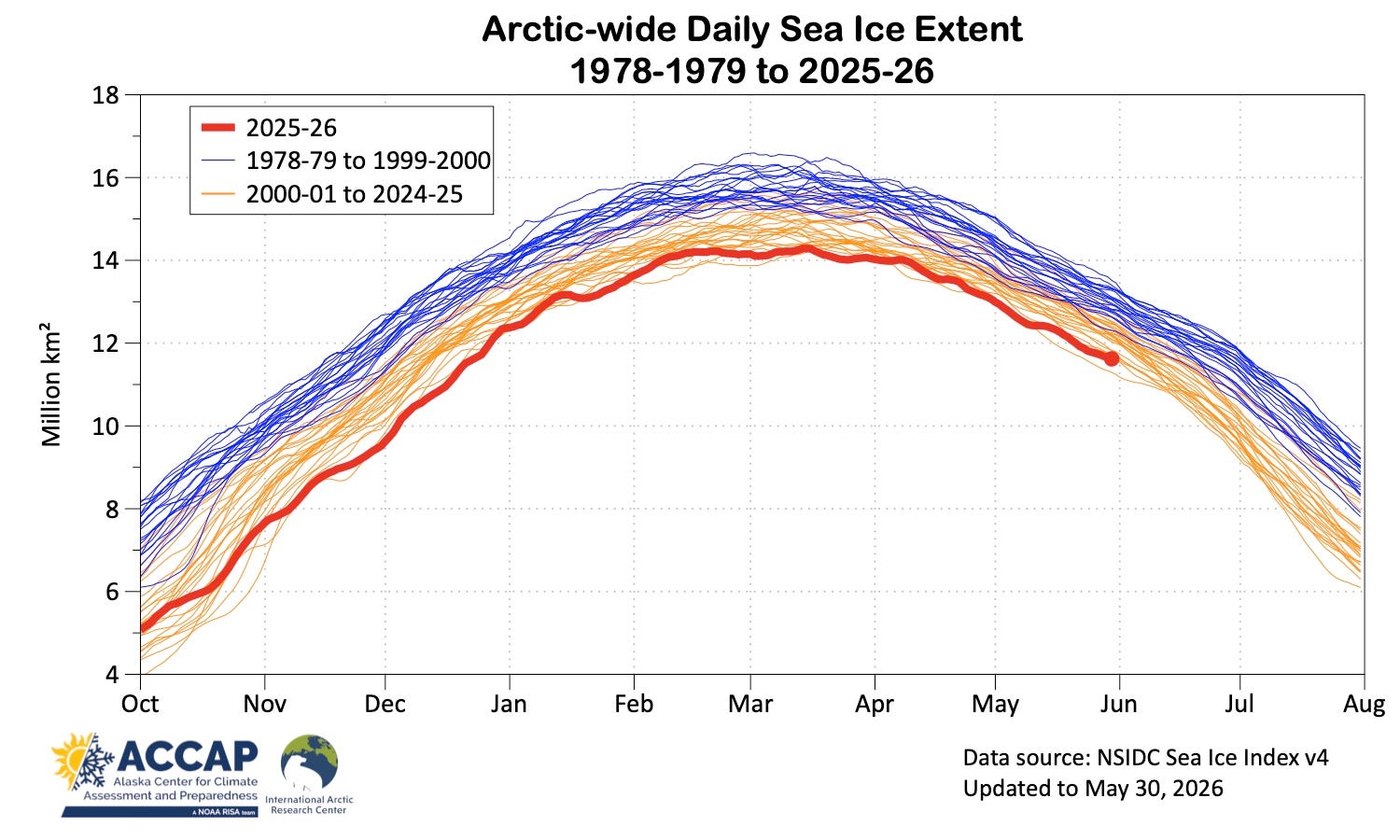
As of May 30, arctic-wide sea ice extent ranks in the lowest five on record in all the major analyses: NSIDC Sea Ice Index was second lowest, Japanese Aerospace Exploration Agency (JAXA) third lowest, U.S. National Ice Center/NSIDC Multisensor Analyzed Sea Ice Extent (MASIE) fourth lowest and EUMETSAT OSI SAF fifth lowest.
Sea ice extent decreased about 10 percent from the beginning to the end of May, which is typical (Fig. 2).
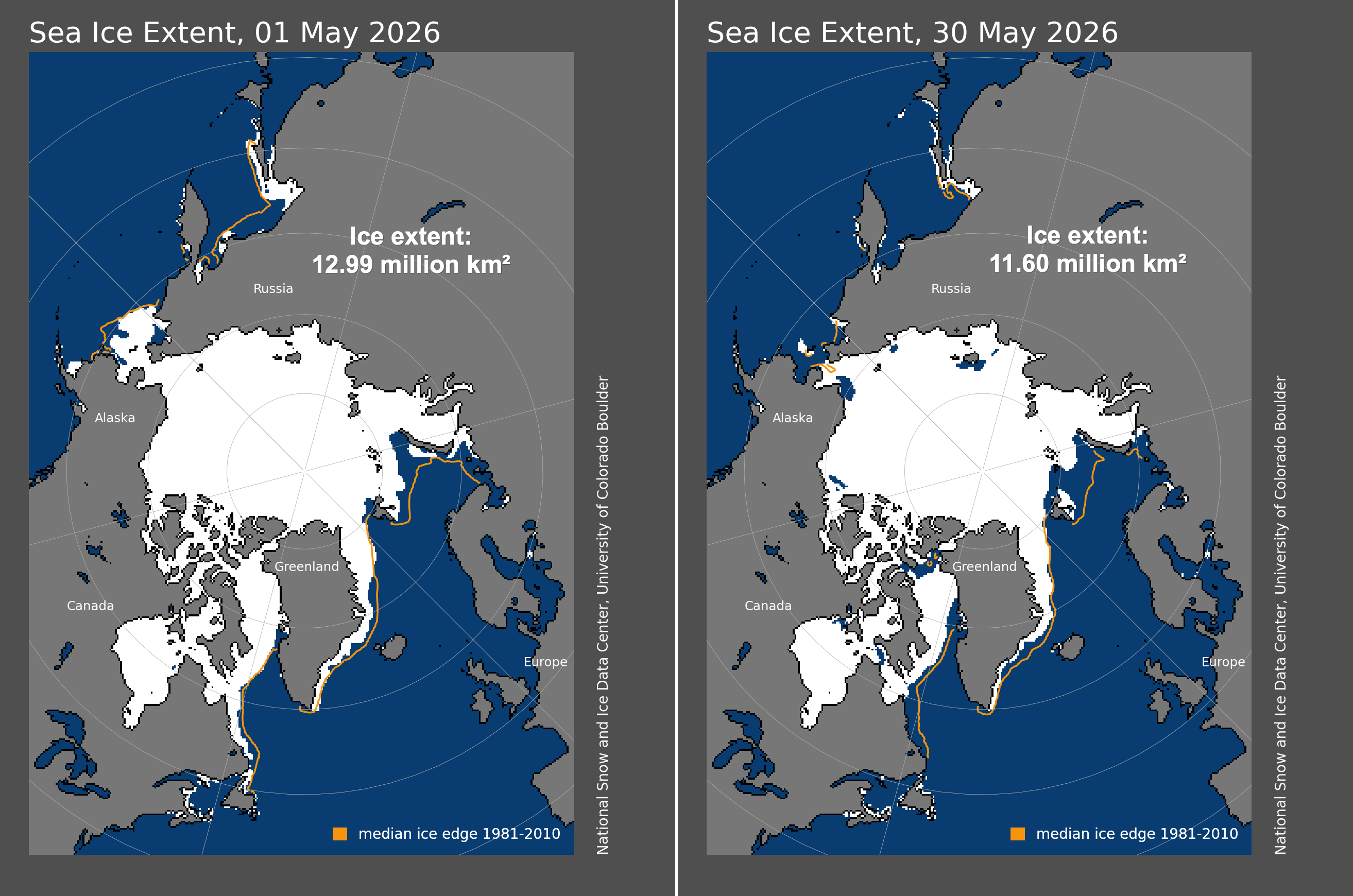
The largest losses occurred in the Barents and Bering Seas, Baffin Bay and the Sea of Okhotsk. As of May 30, ice extent was the lowest in the satellite era in Baffin Bay (between Greenland and Canada), third lowest in the Barents Sea, fourth lowest in the Greenland Sea (east side of Greenland) and eighth lowest in the Bering Sea.
Sea ice thickness
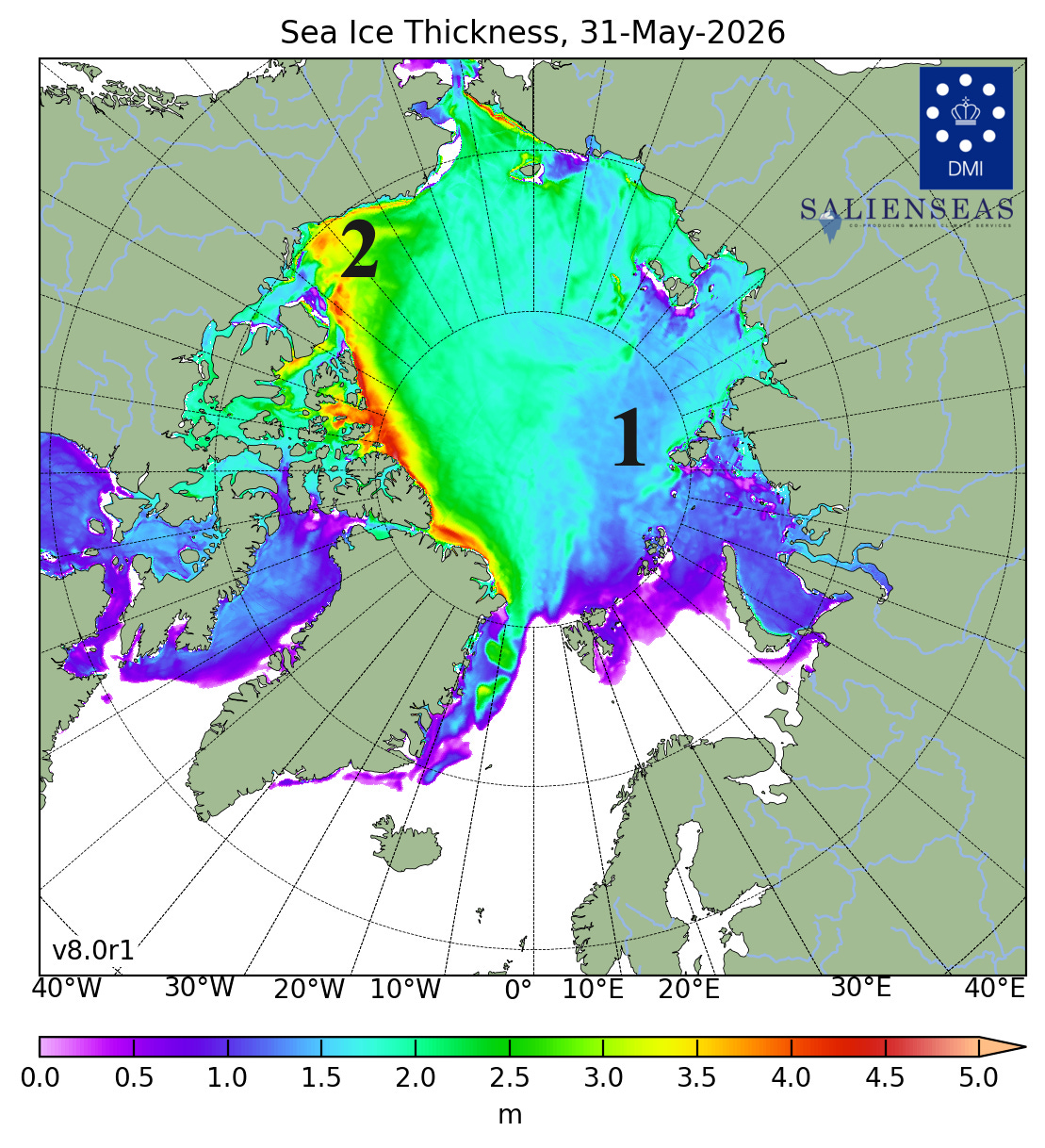
Sea ice thickness at the end of May, as modeled by the Danish Meteorological Institute, has a couple of interesting features that may be important in coming months. In the central Arctic basin north of the Kara Sea (“1” on Fig. 3), there is a large area with comparatively thin ice well north of 80N. Ice is thinner in this region than last year at this time (in the DMI model) and is at risk to melt out late this summer. On the flip side, unusually thick ice (by 21st century standards) has moved into the southeast Beaufort Sea offshore of the Mackenzie River delta, with ribbons extending west to north of Alaska coast (“2” on Fig. 3). Sea ice more 3 meters (10 feet) thick will take quite a while to melt regardless of the details of summer weather.
Snow cover extent around the Arctic typically decreases rapidly in May, and this year was no exception. Excluding the Greenland Ice Sheet, snow extent decreased by more about 40 percent during May (Fig. 4). This is a lower May decrease compared to some recent years due more extensive April melt out this year and slightly higher end of May extent.
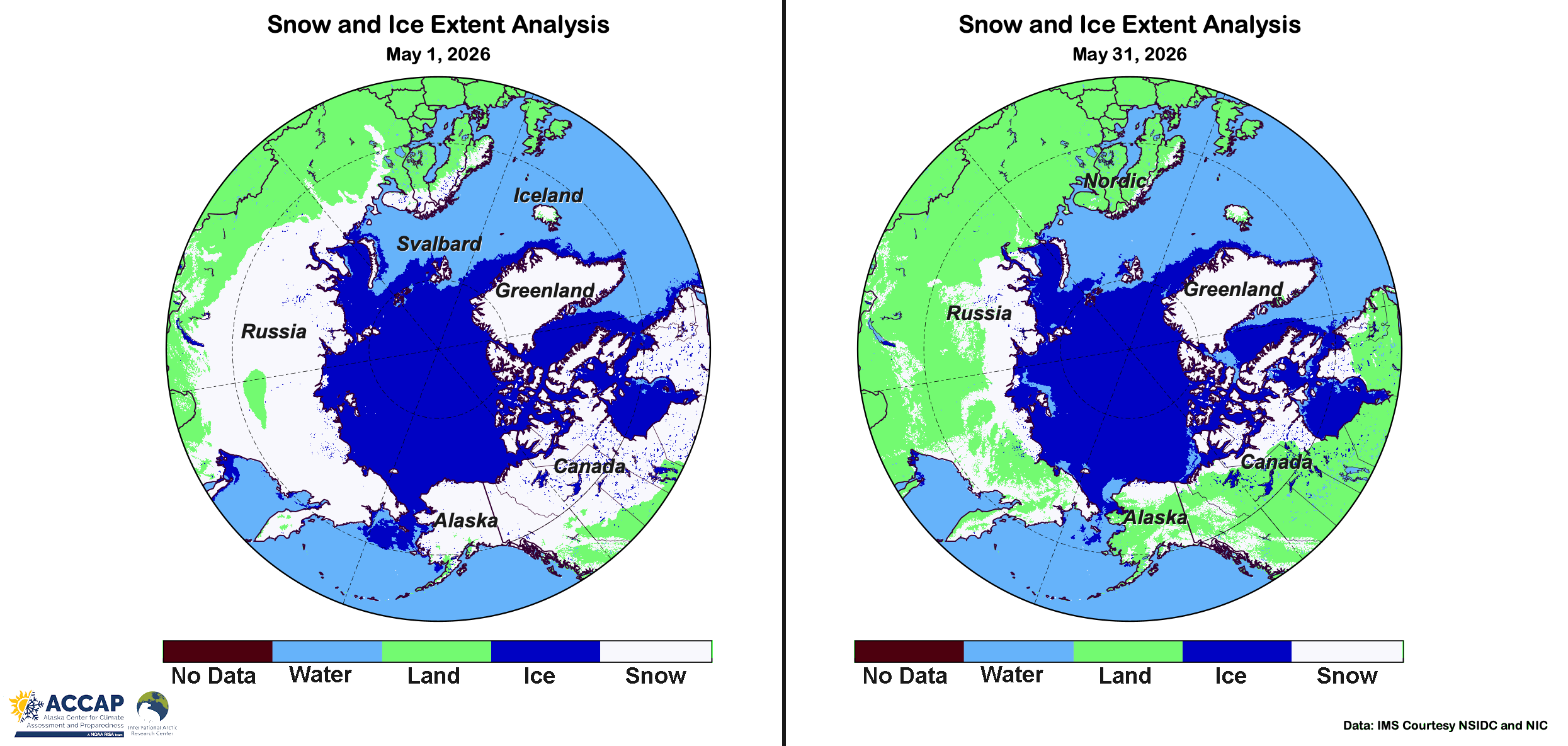
By the end of the month, snow cover was mostly confined to tundra and high elevation areas in North America and the Nordic Arctic. In the Asian Arctic there was still snow cover present in some taiga areas, especially in western Siberia.
Technical details and underlying data sources
As usual in this newsletter, Arctic means “poleward of 60°N” unless otherwise specified except for sea ice, where “Arctic” means all northern hemisphere sea ice.
NSIDC Arctic Sea Ice information, graphics and data available here.
Products from the OSI SAF High Latitude Processing Center (including but not limited to sea ice) are available here.
Arctic-wide sea ice extent data is available from JAXA here.
MASIE information and data available from NSIDC here.
Modeled sea ice thickness and volume from the Danish Meteorological Institute is available here.
IMS Snow and ice analysis products are available through the landing page here. There is no information in this product about the depth or water content of the snowpack or sea ice thickness or type.
No posts
Comments
Nothing yet. Say the first thing.
Sign in to join the conversation.