

Neonates are a highly vulnerable population. The mortality risk in the first 24h of life is greater than any other 24h period, and a substantial portion of this risk is from infection. As such, most countries take a highly risk-averse position on investigating and treating for so-called Early Onset Sepsis (EOS).
This is not without consequence. High numbers of infants who may not be very unwell are admitted for intravenous antibiotics. For a risk of EOS that affects only 0.5 - 1% of live births, we end up treating up to 1 in 6 babies with antibiotics. Besides the stress and inconvenience this places on mothers and families at an already challenging time, there is growing concern over the impact of early life exposure to antibiotics on the infant microbiome and how this might affect later life risks of inflammatory, atopic, or autoimmune disease.
This risk aversion has also made it difficult to get much high quality research done in this area, but there have been a couple of huge steps forward in the past few years.
Let’s take a look at these some new studies and what they mean.
RAIN
In 2022 the Netherlands based “Reduction of intravenous Antibiotics In Neonates (RAIN)” study, looked at whether it was safe to switch neonates with negative blood cultures (no evidence of bacteria in the blood) from the usual intravenous (IV) antibiotics to oral antibiotics. This is a bigger step than it might seem, as there is a historical hesitation to use oral medications in very young babies due to concerns their gut won’t absorb them well enough.
Eventually 510 babies with probable bacterial infection (for example, symptoms or raised inflammatory markers such as CRP) were randomised to a full course of 7 days IV antibiotics or to switch to oral Co-amoxiclav. After the follow up, there was no difference in adverse events in either group nor any difference in the number of babies re-admitted for suspected infection (<1% in each group), and the babies who were switched to oral antibiotics were able to be discharged from hospital 3 days sooner.
So did everyone start switching these high risk babies to oral antibiotics? Sadly not. Some people will never be convinced oral antibiotics are just as effective as IV antibiotics; but some made a different point. Perhaps the reason it doesn’t matter if you switch to oral antibiotics or not, is that most of these babies don’t need any antibiotics at all. A bold suggestion!
But now we have some data to test it.
The Munro Report is a reader-supported publication. To receive new posts and support my work, consider becoming a free or paid subscriber.
DURATION
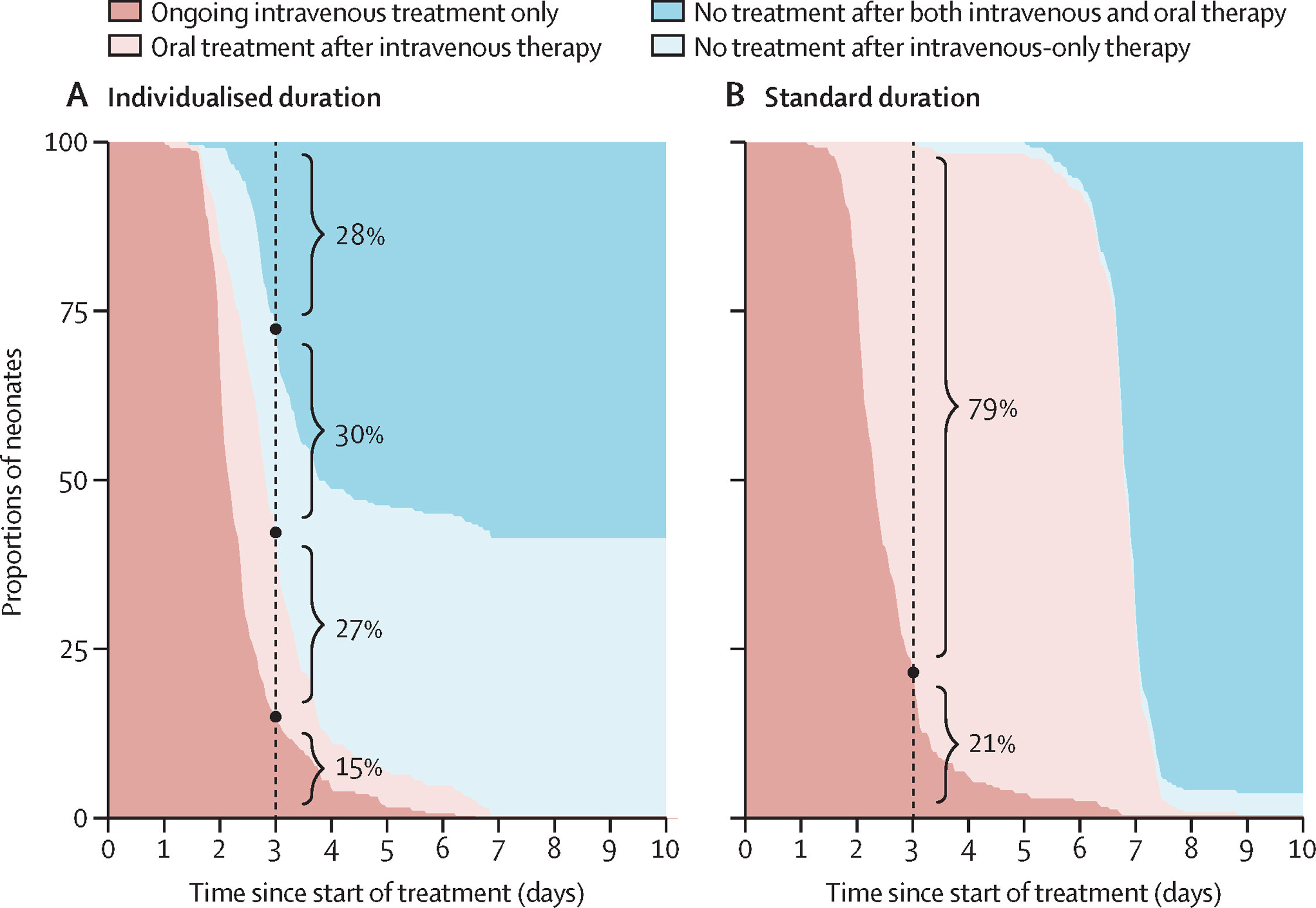
A brand new trial has just been published out of Denmark looking at whether all these high risk babies with negative blood cultures need to receive a full course of 7d of antibiotics, or might be able to stop completely.
They randomised nearly 500 babies to either receive 7 days of antibiotics (including an oral switch by the way), or to receive individualised care; in this case, the antibiotics were stopped completely once the baby had no symptoms of infection for >24h and their inflammatory markers in the blood (CRP) were below 30.
Once again the finding was that the intervention was non-inferior for readmission due to bacterial infection (≤1% in each group), and there was a substantial reduction in the number of days of antibiotics given to the individual care group - by four days.
Thanks for reading The Munro Report! This post is public so feel free to share it.
What does this mean?
Neonates are still a high risk population, and they are worthy of a high degree of caution. However, the feeling among many infectious disease specialists (including myself) and many neonatologists is that the pendulum has swung deep into the over-cautious territory (often due to highly risk averse guidelines). This is not what is best for the infants, and need to find safe ways of reducing the level of invasive interventions and antibiotic exposure to them in the first days of life.
Getting babies home sooner is a quick win, and switching babies with suspected sepsis and negative blood cultures to oral antibiotics is clearly safe. Furthermore, in babies who are no longer symptomatic and their inflammatory markers have reduced it is almost certainly safe to stop completely.
Stopping antibiotics as early as possible helps enable families to start settling into their new normality sooner. It also reduces the potential risks of antibiotic exposure in a cohort who have an immune system trying to learn what is friend and foe.
We are currently treating too many babies with antibiotics, and for too long. The evidence is clear that there are things we can change now to improve care for these infants, and they deserve better than lengthy delays in changing practice.
Comments
Nothing yet. Say the first thing.
Sign in to join the conversation.