
Hi! I’m Alanda, a writer and researcher interested in systems, decisions, and behaviour. Welcome to Bottled-Up Buttercup, a newsletter I created to share some personal musings and (occasionally!) research notes. If you enjoyed this piece, please consider sharing to your friends or subscribing to this newsletter. Your support means a lot to me.
I’ve been behind on so many things. A week behind on this Substack, and God knows how many weeks behind on my PhD thesis.
Last week I was going to write about how I’ve been trying to juggle the PhD with life as a mother of two. Reality got in the way, which just goes to show I’m still not great at juggling the two. Life has been good, though. Being behind on the big stuff (the PhD) and the me stuff (this Substack) has meant a front-row seat to my kids’ everyday, which always feels wonderful, albeit exhausting sometimes.
So instead of writing about that, I thought of sharing something else: the story of building one of my dreams. (After publishing a book about chasing your dreams in 14 years ago, turns out it’s still a theme in my life!).
This month marks the sixth anniversary of Advislab, the behavioural science research and consulting firm I founded and still lead.
It goes back to late 2015, early 2016, when I was applying for the Chevening scholarship to pursue a master’s degree in behavioural economics in the UK. Part of the application was a “post-study plan”: what I intended to do once I finished, assuming they granted it. I was fascinated by behavioural economics, and the UK was the hotspot for what still felt like a new field. It had the Behavioural Insights Team (BIT), the pioneering “nudge unit” that ran experiments on human behaviour and built interventions for pressing social problems around the world. One of its projects was in Indonesia, using behavioural insights to improve tax reporting (SPT) compliance and reduce BPJS Ketenagakerjaan payment arrears.
I believed that a developing country like Indonesia, with all its socioeconomic challenges, should have its own behavioural insights firm. Its own nudge unit, to borrow the term everyone started using after Thaler and Sunstein’s book Nudge. So that’s what I wrote in my scholarship essay. I wanted to build something like BIT, in Indonesia.
So in 2020, I finally did. Partly to keep the promise I’d made on that application, partly because there was no job out there that fit what I actually wanted to do. In July 2020, right in the onset of the pandemic, I found a co-founder, registered Advislab as a legal entity, and hired a creative agency to build the logo and brand guidelines. That was it. Our first project was with the Jakarta provincial government, helping them understand how residents were responding to mask protocols during COVID-19.
The original business plan was to build an app called Advis, something that would nudge people toward healthier habits, like eating better or changing a stubborn routine. I already had several engineers onboard as well as a nutritionist who was going to be a third co-founder. The research and consulting firm was meant to be the side project (hence the name, Advis-lab). Time went by and the side project became the whole thing. I’m not remotely tech-savvy, so building an app was never going to end well, I suppose.
In 2021 and 2022, more people came on board. I called them the Advislab Collective. They weren’t full-time or even part-time. They were consultants on call, a small group of Indonesians who’d studied (or had some sort of expertise in) behavioural economics and could jump in whenever a project suited their expertise. Since we were still in the thick of the pandemic, we ran our first online behavioural science bootcamps, built out educational content on behavioural science and economics on Instagram, and finally landed our first major private client, a project on food consumption and urban mobility.
In late 2022, I finally got news about my PhD, a plan that was originally meant to happen in 2020 (I was set to leave in February 2020, and then, well, COVID-19 happened and borders were closed). I started in January 2023, fully expecting Advislab would have to go on hold. The opposite happened. The PhD sharpened my quantitative and qualitative research skills, which fed straight back into the work.
In 2024, we unexpectedly won a run of projects that fit our vision perfectly. Most projects were social impact work that affected local communities, such as…
Designing interventions to increase immunisation uptake
A mini parenting curriculum to encourage parents to read to their children and enrol them in early childhood education
Entrepreneurship and SME development
to name a few.
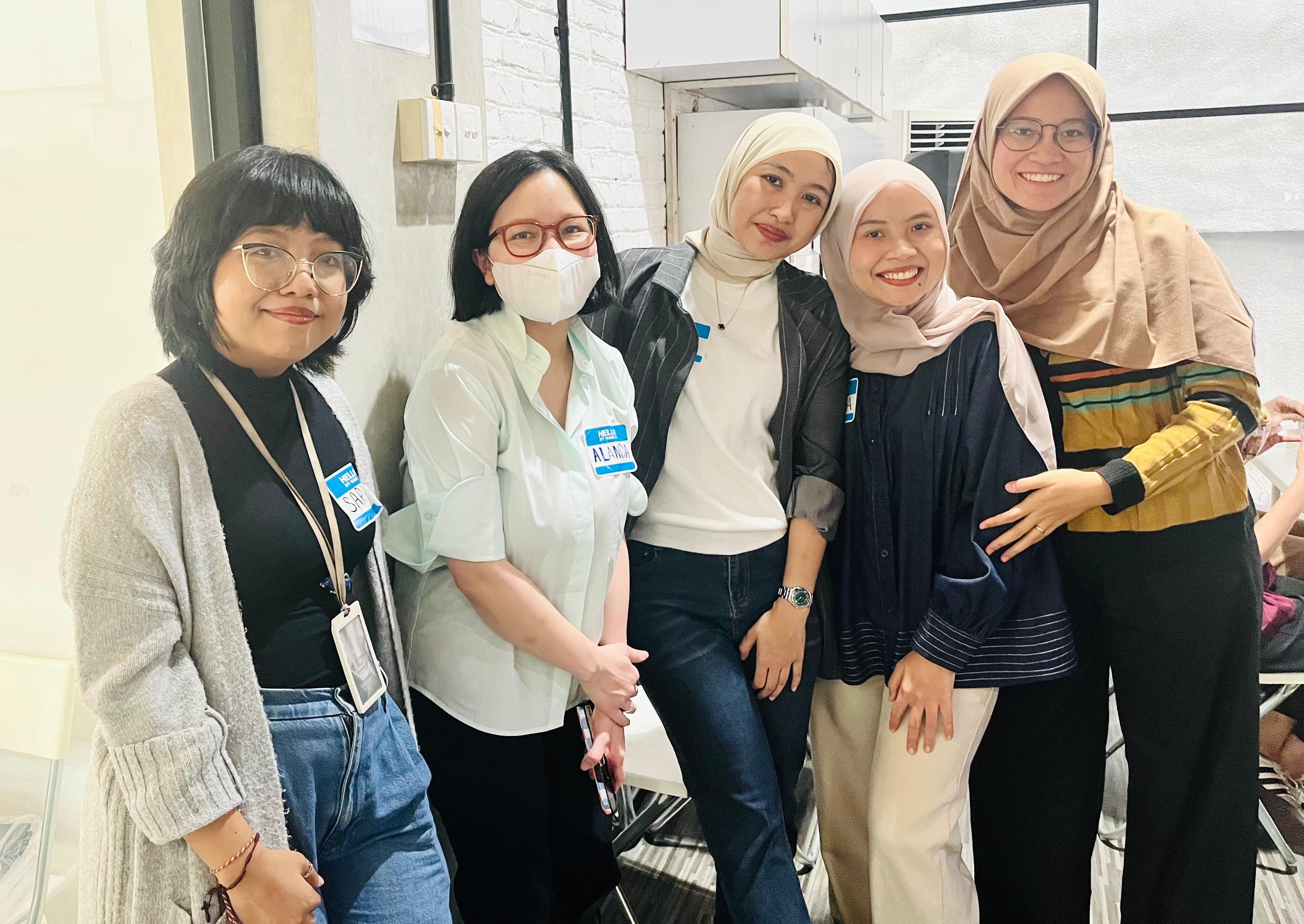
That was the year we could finally hire and build a full-time team, so Advislab stopped being a solo dream.
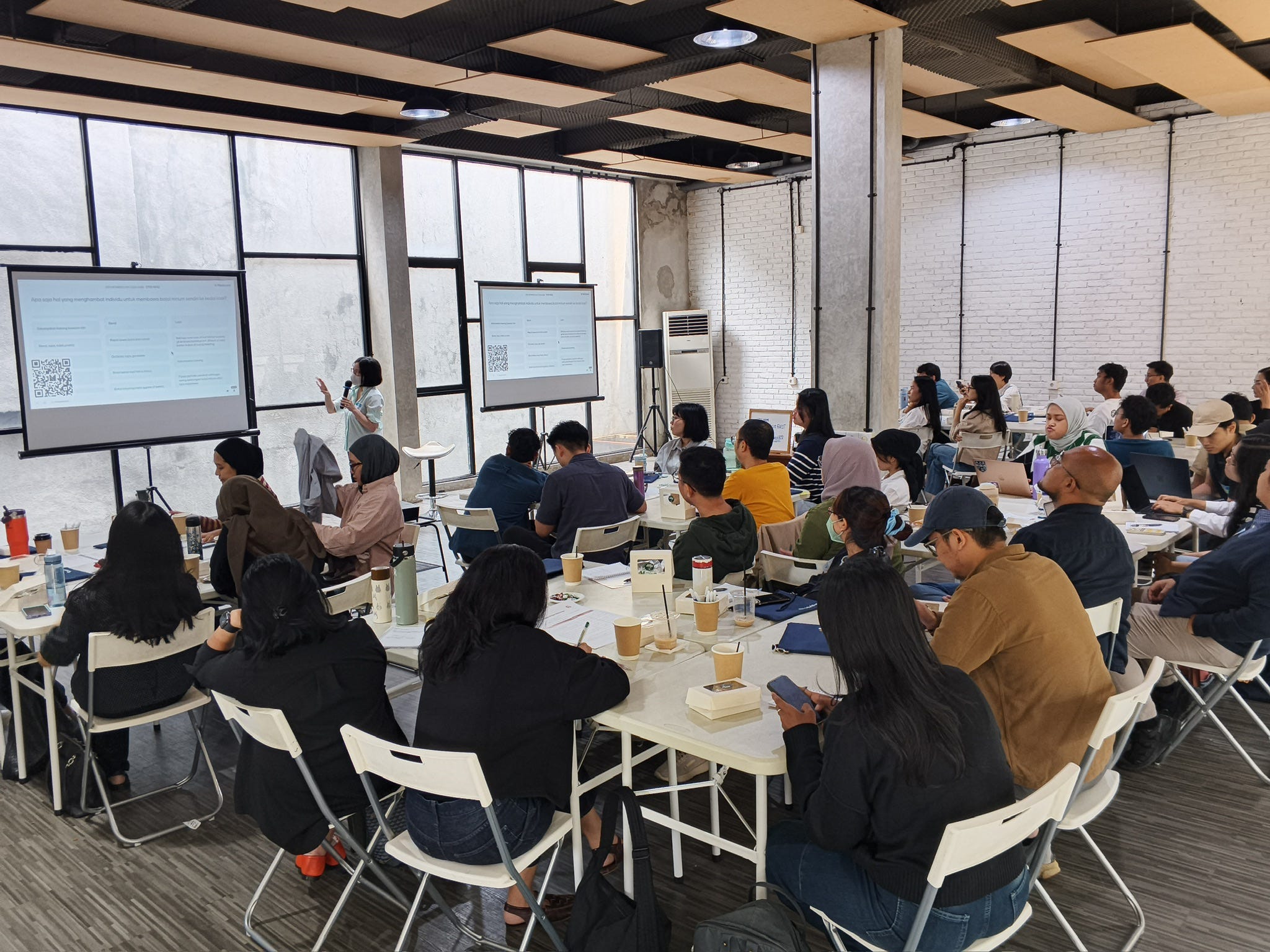
In 2025, the work stretched into a couple of new fields, such as leadership development and education, democracy, and even public policy. We also finally ran our first in-person behavioural science bootcamp (and I luckily could be there in-person as I was also collecting data for my PhD at the same time).
And now, 2026. Year six. A few projects on the go, and the scale isn’t wildly different from before, which is by design. I take a lot from Rework by the founders of 37signals, so aggressive growth has never really been the goal. There’s still so much I want to do, but I would like to do it right instead of growing too big too fast.
What I’d tell you if you’re building something of your own
Six years is enough distance to see a few patterns. Here’s what I’d pass on.
Write down the future you want, even before you’re ready for it. My whole company started as a paragraph in a scholarship essay. I wasn’t trying to make a promise to anyone. I just wrote what I hoped for, and years later realised I’d been quietly holding myself to it. Putting an intention on paper does something. It keeps you accountable in a way you don’t notice until much later.
You don’t need permission, or a perfect plan, to start. I registered Advislab as a legal entity partly because no existing job fit what I wanted to do. If the door isn’t there, sometimes you build it yourself. The first version won’t be the final version, and that’s completely fine.
Come to think of it, this has been my pattern for a long time. When I was 14, I wanted to volunteer for an international NGO but got rejected for being too young. That was the seed for eventually building the Indonesian Youth Conference, which spanned for a decade once it was built.Let the side project surprise you. Advislab was supposed to be the small thing sitting next to an app. The app never happened. The “small thing” became the work. Hold your plans loosely enough to notice when the real opportunity turns up somewhere you weren’t looking.
Your competing commitments can compound instead of collide. I assumed the PhD would force Advislab into hibernation. Instead it made me better at the exact work the firm needed. Before you drop one thing for another, it’s worth asking whether they might actually feed each other.
Growth doesn’t have to mean getting bigger. Six years in, we’re deliberately not much larger than we started. Having a lean team works so well for us. Small can mean focused, sustainable, and genuinely yours. I’d rather decide what “enough” looks like for myself than let someone else decide it for me.
I am not expert, but hopefully my learnings could be yours too! (That’s the point of this Substack, isn’t it?)
Last but not least…
Want to work together?
Advislab works on behavioural science research and interventions across public policy and social impact. If any of this resonates and you’re sitting on a project where understanding human behaviour is the missing piece, I’d love to hear from you.
Good behavioural questions show up everywhere. Hit me up in my message or comment here, let’s work on something together.
Note: No budget but doing something that have social impact? Hit me up — we always have room for some impactful pro bono work.
If you enjoyed this piece, consider sharing to your friends or becoming a free or paid subscriber. Thank you for supporting my writing!
Comments
Nothing yet. Say the first thing.
Sign in to join the conversation.