
with Soul Sustenance through the Seasons

I’m in my birthday season, and this year I’ve officially reached the age of aging. Like most of us, my silver hairs snuck up like a sly prank by the trickster sun: No, those aren’t free highlights, my love.
At first, I denied that aging could happen to me. The lines were fine enough to call it hallucinating. But this year, there could be no denial as canyons form every time I smile.
It’s been a rude awakening as I’ve had all kinds of horror stories threaded into my grays, threats to my dignity, worth and grace.
It’s been a battle everyday.
Which is why, for the last few weeks, I’ve been writing songs as a lifeline for peace.
Thankfully, I’ve had a massive breakthrough in the last few days. Thanks to the love that I’ve received from my friends and family, and to the creative practice that make amends with the booms and busts of living, I’ve found beauty in the new season that’s coming. As such, in this post I share:
The Story Behind the Song (the challenge that the song is addressing).
The Science Behind the Song (the nerdy details of the nature-metaphor that speaks to the challenge).
The Gift of the Song (how the nature-metaphor supports the challenge, and how my art amplifies its benefit).
Now, let’s get into it:
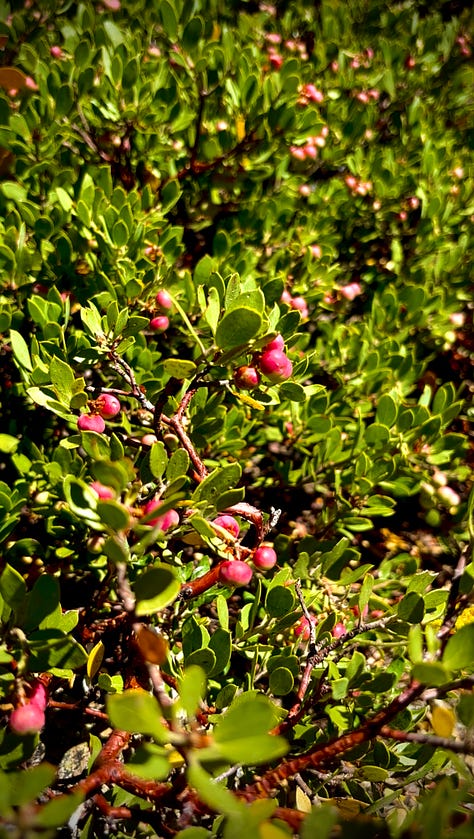
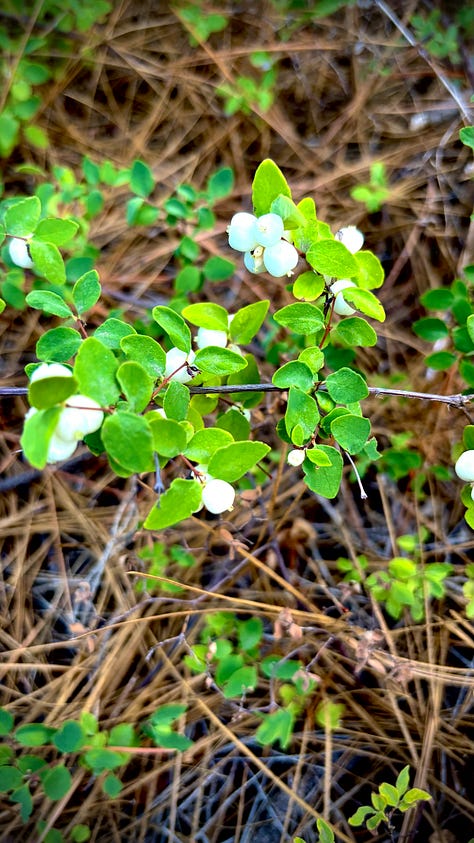
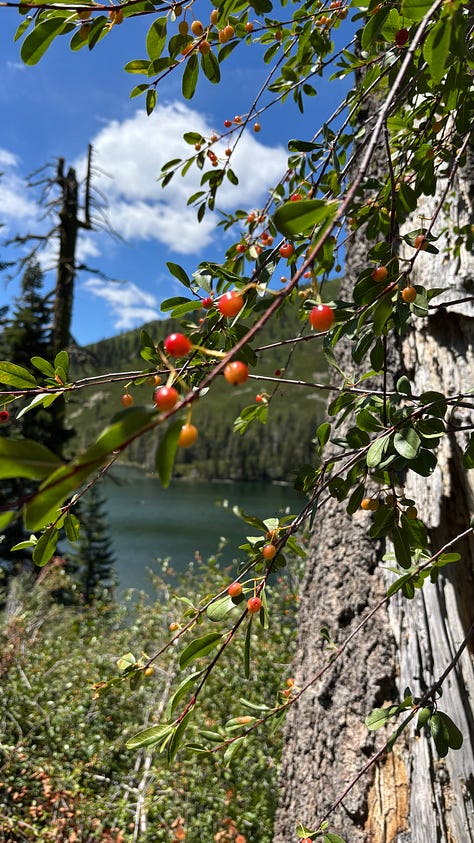
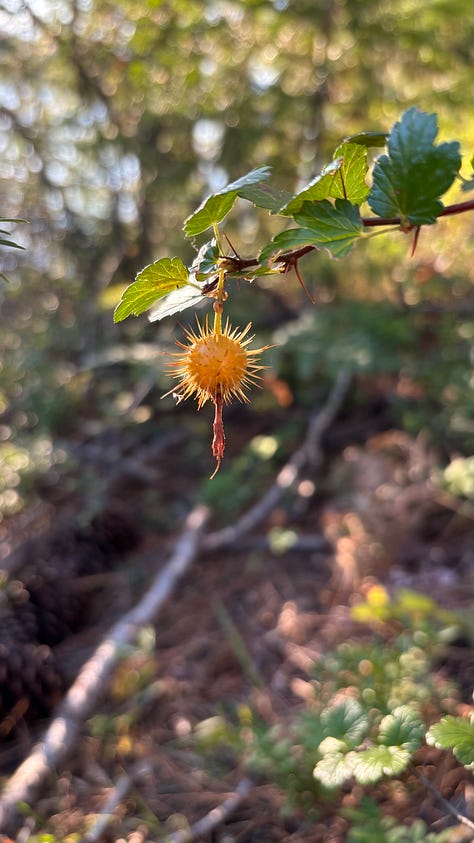
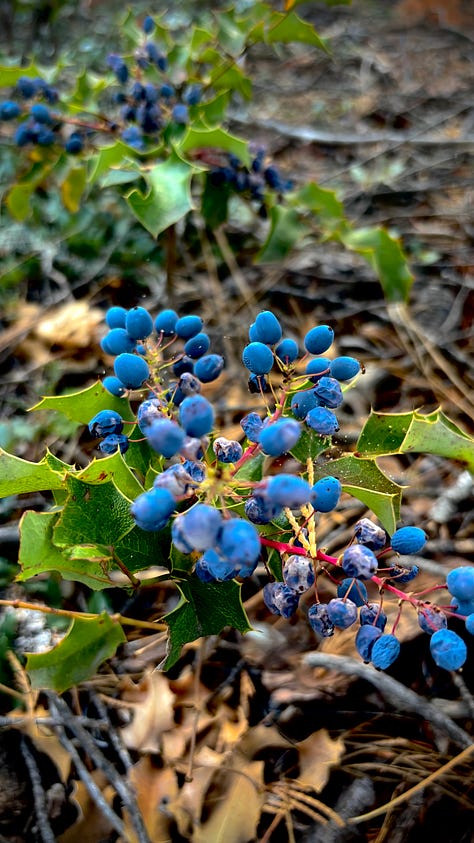
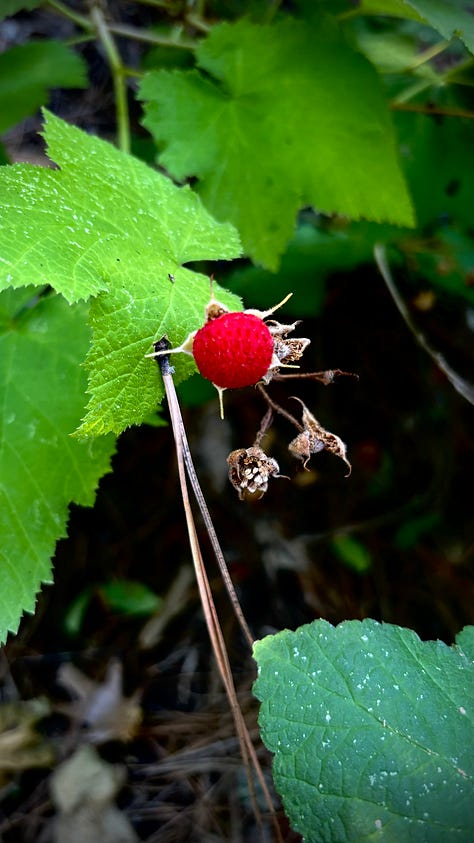
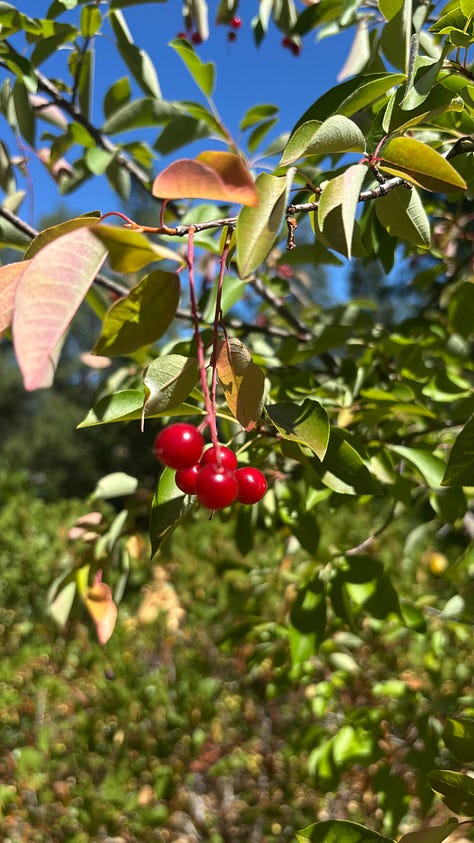
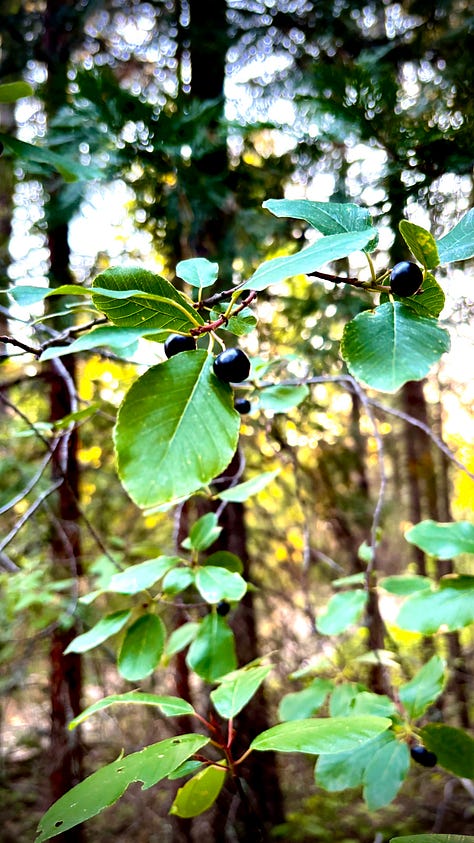
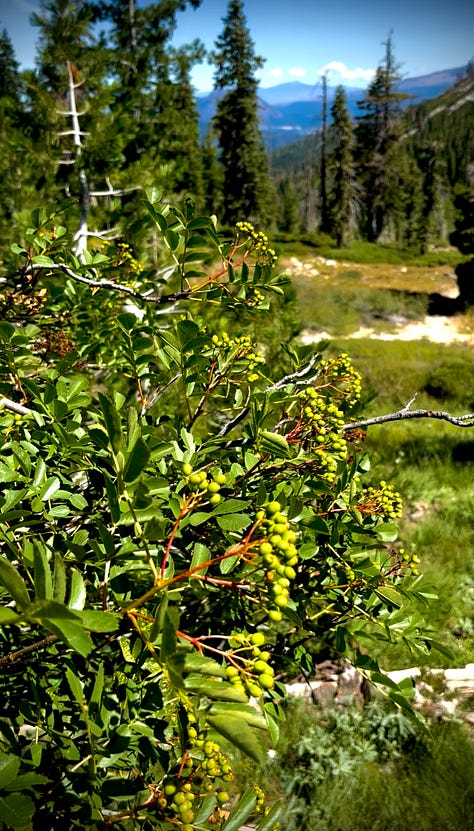
I had never seen as many berries in the forest as I did this summer. In all the years that I’d spent camping on the mountain and bathing in the river, I’d never seen the trees dripping so lavishly. Acorns and Cedar seeds covered the forest floor as branches drooped with the weight of new life -like I’d never seen before.
Never had I seen such a sea of berries: red berries, orange berries, yellow berries, green berries, blue berries, purple berries, white berries, and even different kinds of black berries. Each color of the rainbow was brimming with fruit, spilling over as only a zealous painter would do. Even the wildflowers joined the display with lupines in August as if to say: “I dare you to doubt what the forest can make.”
I imagine that if someone had drawn the forest as it was this summer, I wouldn’t have believed there could be so much color. It was as if all the flowers and trees and bushes were showing off their fruit, just in case we’d forgotten what they all can do.
Amazed and astonished, I wasn’t entirely sure how to take it. I thought, “It must be a good sign to have so much abundance.” Still, I was hesitant to get too excited for fear that my gratitude would somehow jinx it. Why is it that the moment I can finally see gems in my hands, they start slipping through my fingers like stone into sand?
In any case, I wondered why this year was so full of food. Why had the forest so bountifully bloomed?
So I prodded around looking for clues, and along the way I learned something new:
(let’s NERD OUT!)
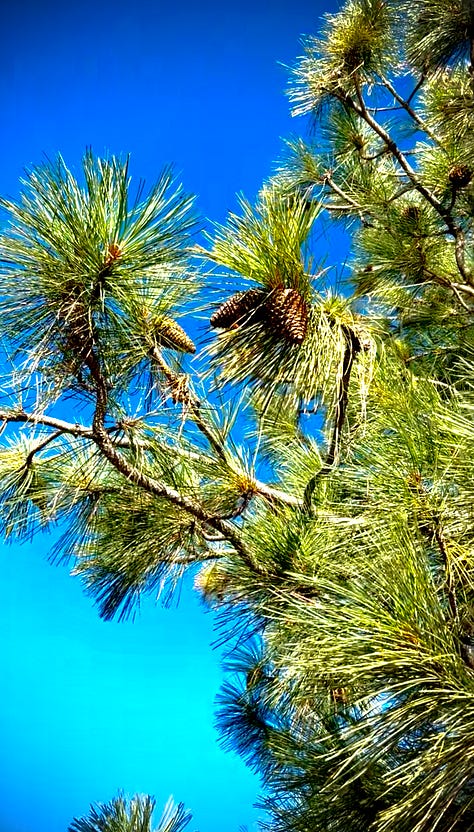
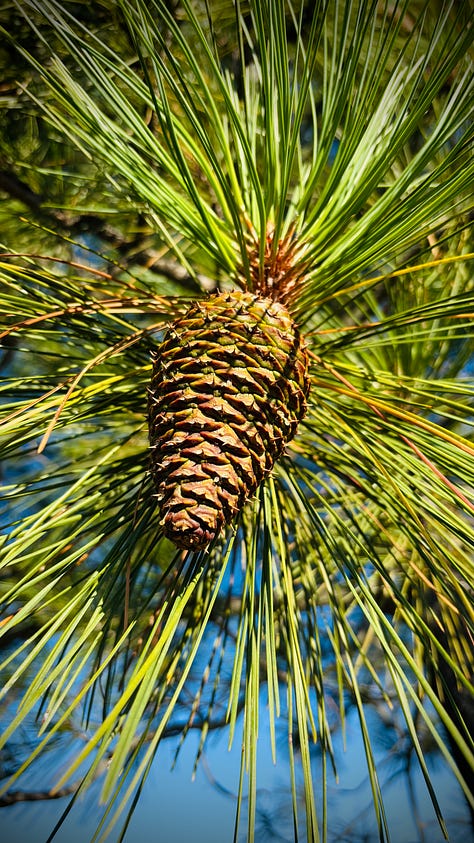
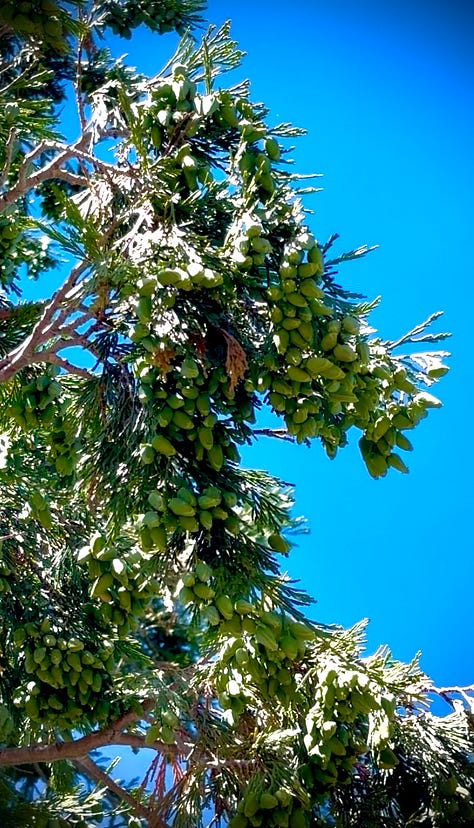
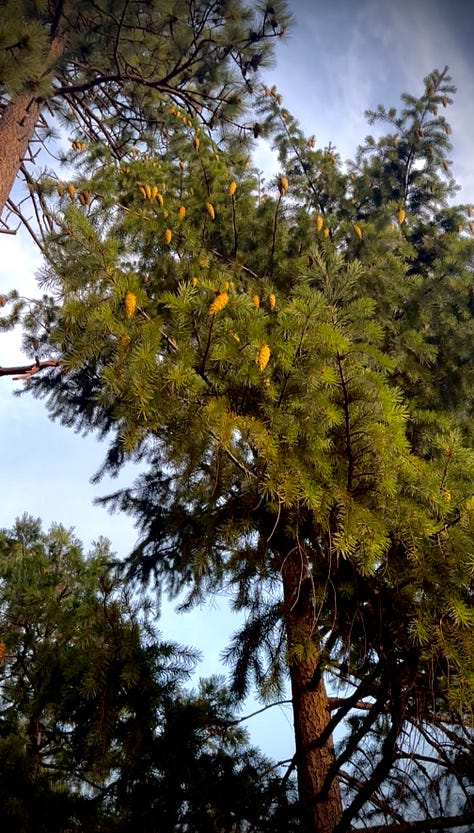
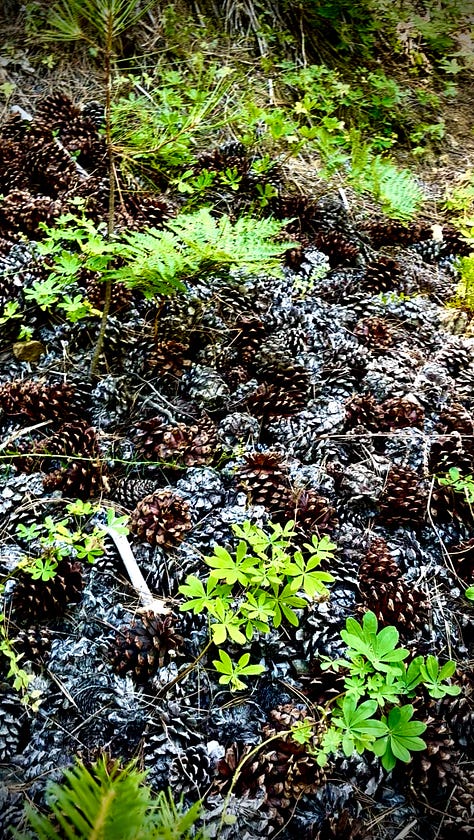
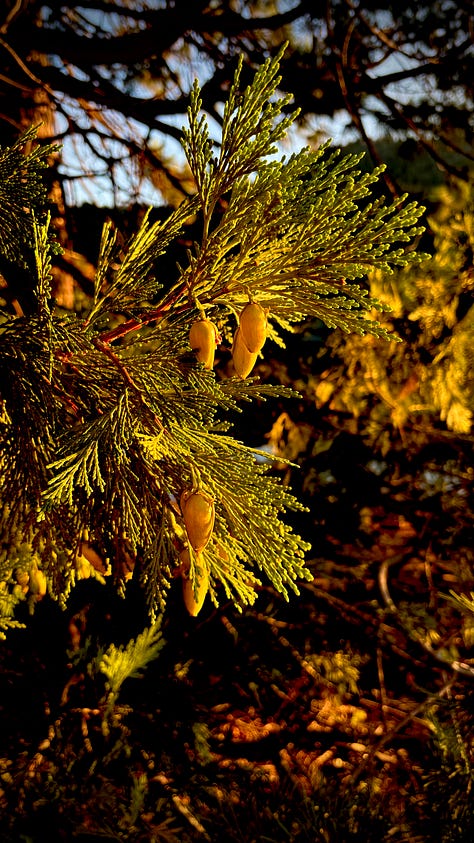
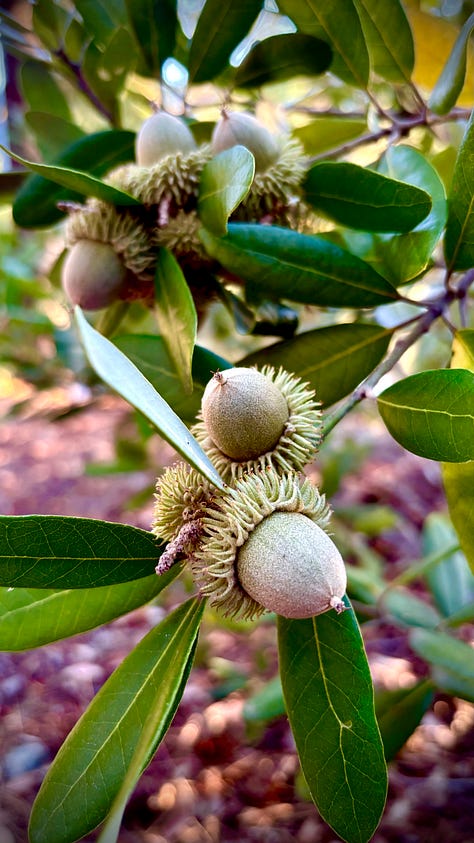
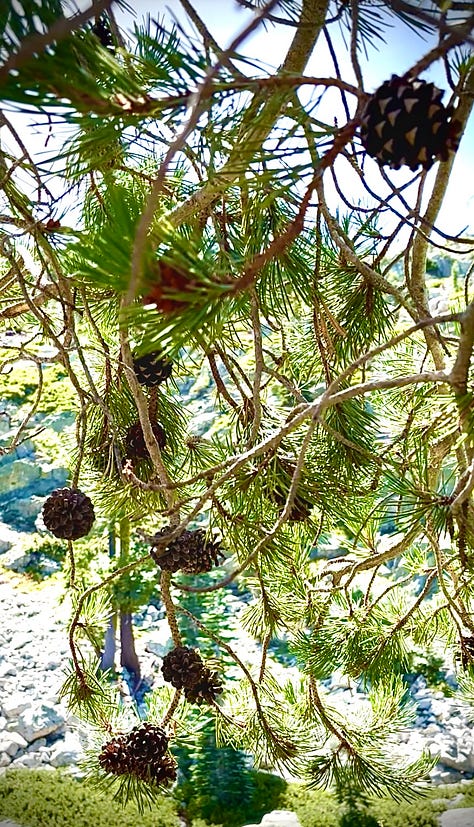
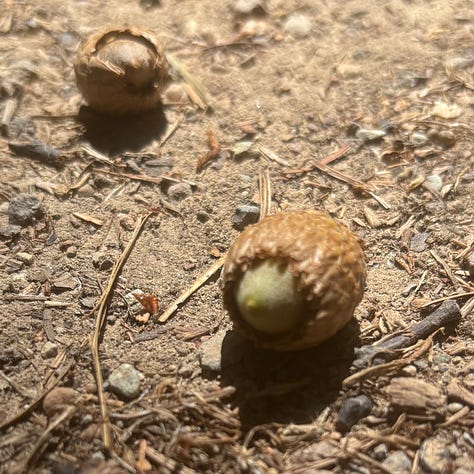
Like all of life, trees are made to perpetuate their species for the next generation. Reproduction (and/or supporting offspring1) is an essential part of being alive. As such, trees expend tons of energy to produce their seeds, which as a whole, are called “mast”.2
Unsurprisingly, these tiny treasures are also appealing to other creatures, who appreciate the energy that the seeds have to offer. That being said, feeding hungry bellies was not the original intention for the tree that birthed the seeds; as you can imagine, it’s not great news to lose all your babies.
So, to meet this challenge, trees have developed special adaptations3. For example, oaks produce chemicals in their seeds that make them unsavory, like tannins4. That being said, these chemicals can’t be so strong that they kill the gobblers because trees (inconveniently) need their predators. They need the critters to spread their seeds around, and to fertilize the soil for their seeds to sprout5.
Stuck in a pickle, trees are challenged to navigate life’s big conundrum: to need the stinkers that make life so hard and be dependent on the rascals who put up our guard; to care for that neighbors who sometimes scare us, and give thanks for the friends who sometimes hurt us.
That being said, in a wonder (that’s still a mystery to science), some trees have figured out a brilliant solution: if they produce a butt-load of seeds, all at once, predators can eat their hearts out for breakfast, dinner, and lunch -
and there’ll still be seeds leftover to sprout.
It’s called “predator satiation.6” The concept is simple: when trees produce more seeds than the critters can eat so, there’s a better chance that some will get buried.
Here’s where it gets really mysterious and amazing: in order for this method to be successful, all the trees (of that species) in the area need to be in-on-the-plan7: one tree producing butt-loads of seeds (all by its lonesome) couldn’t possibly satisfy all the hungry bellies of the whole forest. But, if all the trees (of that species) make the extra effort, no one will go hungry that season, and the next generation of trees will be happily seeded. It’s a win-win for everyone.
Except- the amount of energy that’s required of trees to produce such a bounty takes a toll; it’s tiring (imagine producing 10 to 20 times more than average8, or even “100 times the normal supply9”). Plus, trees can’t focus on growing themselves while they’re so focused on growing their seeds; growing and reproducing are very different things that each require focused energy10.
As such, after they can’t boom every year; they need to take breaks to regenerate. What’s amazing is that all the local trees (of the same species) rally and rest together (and how they do so is a wonder). Though it’s been noted that different species (generally) have different amounts of time between each cycle, the numbers aren’t reliable11. It’s not clockwork that every so-many-years acorn bursts from the branches; the timeline has been found to be more inconsistent.
Still, scientists have noted that there are some environmental conditions that may support the synchronized decision. For example, acorns thrive with a warm spring and dry summer12. That being said, these changes in weather are relatively subtle compared to the hugely different harvests between boom and bust years. So, the weather can’t explain it completely.
As such, there are other theories: some propose that trees communicate through chemicals, or fungus in their roots. Some say they communicate through pollen exchange, too13. But, these theories have yet to be proved.
That being said, whether or not we understand how it happens, the effect is the same: every so often, there’s a booming mast season (with tons of seeds) that’s followed by a few bust years (with much less to eat). The technical term is “mast cycling.”
Still, what’s even more amazing is that, every so often, the forest has conditions where multiple species (that produce “mast”) will boom -together! From what I can tell, that’s what happened in the forest this summer.
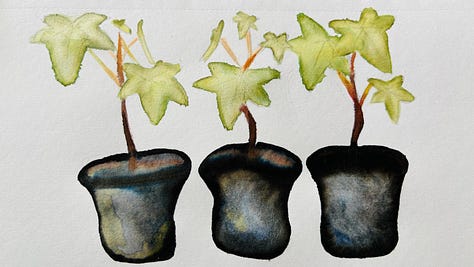

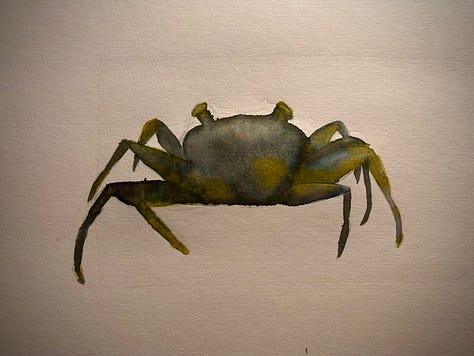
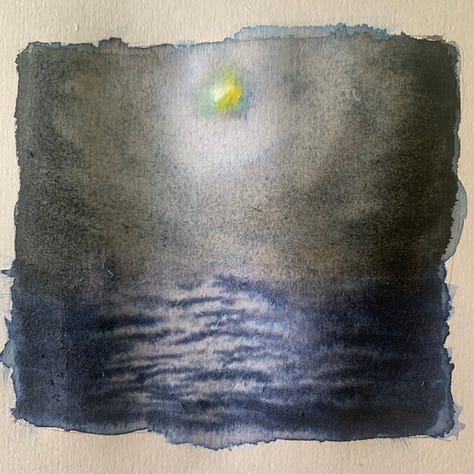
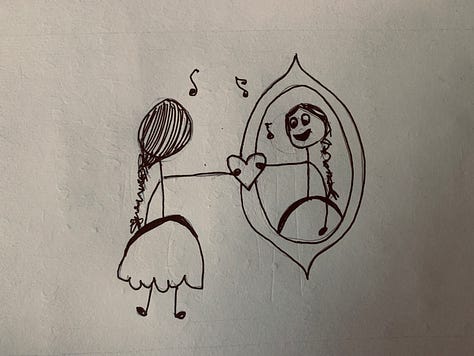
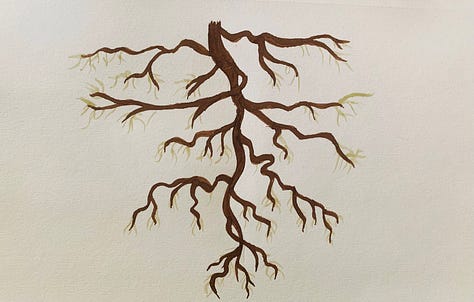
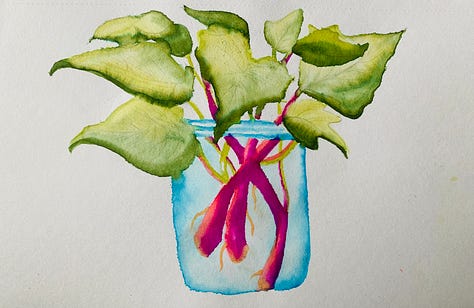
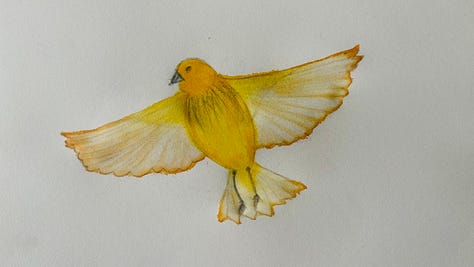
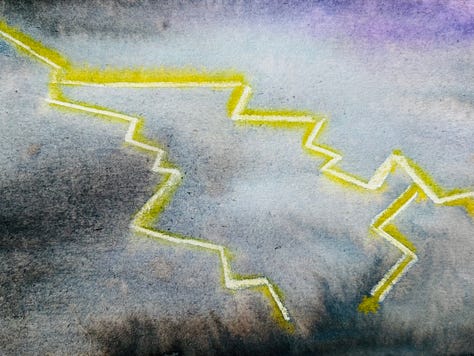
All things considered, learning about the mast cycles of boom and bust only verified the pang of grief that came up when I saw the sea of color, and just as quickly imagined it gone.
Indeed, it’s a fine line between the wisdom of impermanence and the fear of loss that’s made me jaded. I’ve had a tendency to grieve life’s gifts before they’re gone, afraid to embrace all that I’ve got.
In the song “Beautiful Things,” Benson Boone couldn’t have sung it better:
“…If everything's good and it's great, Why do I sit and wait 'til it's gone?…I’ve got peace, and I've got love, but I'm up at night thinkin' I just might lose it all”
So, though I was amazed to learn about the synchronistic cycles of bust and boom, my heart felt scared too, flooded with folklore of gloom and doom:
“Acorns that fall heavily means a cold winter is coming.14”
An abundant crop of berries signals a winter that’s snowy15.
Though no scientific evidence has been found to support the correlation between rough winters and lots of acorns on the ground, I know that pattern of prediction all-too-well: to dread the valleys that come after the peaks, to freeze at the top for fear of falling.
In all cases, the result of this recipe is guaranteed: when I get stuck imagining inevitable loss, I miss out on all that I’ve got.
So, I returned to the mirror of the forest: How do critters handle the forest’s fickle abundance?
Gratefully, I found that they’ve adapted: squirrels, for example, save seeds, and many animals have diversified their needs (eating bugs, berries and leaves). Their populations also adjust: in boom years, reproduction also booms. In bust years, reproduction slows16.
Around the world, humans, too, have found ways to work with these cycles by drying and storing food1718 for the years that trickle.
It was reassuring for my heart (as the fall approaches with shorter days and darker starts) that I can adapt to the cycles that arrive and depart.
For me, this means creativity: even before I realized that I was aging, I lived much of my life with debilitating anxiety, worried about all the treasures that could be taken from me.
But since I’ve begun making art as a cellar, I’ve begun to feel so much better. Every day I gather moments of gratitude and grace to store and save. Then, I preserve these gifts with what I create.
With every song and story I harvest my heart to carry me through the hunger and dark- a survival snack through the seasons, a morsel of hope, a burst of endurance.
But like the trees, I can’t do it alone -it takes a village to gather the enough mast to hold.
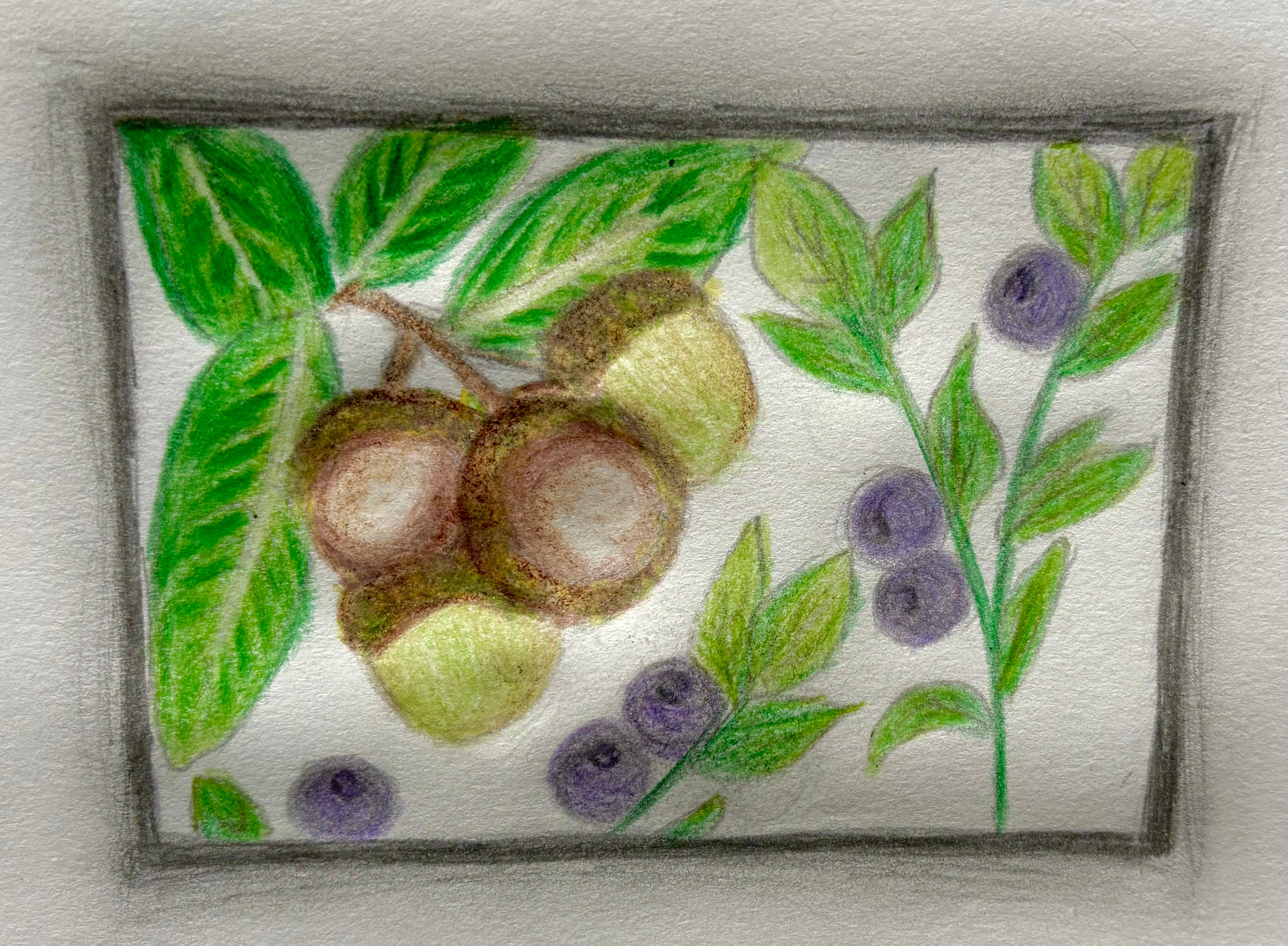
With that in mind, this song is dedicated to the all artists who keep me going with poems and pictures, and songs and stories:
Text within this block will maintain its original spacing when published
sustenance for the soul to keeps my heart singing
through the booms and busts of the seasons changing.
It’s not always easy being human, but it sure does help to sing through it! In a mix of music, metaphor, and ecology, every song and story affirms the heart of our nature through all of life’s weather and wonders.
Hear More Love Songs to Our Nature
In trying times, I look to the world around me for reflections to keep my heart going, then I anchor them in little ditties. Check it out:
By subscribing, you can access the heart of our nature right in your inbox.
https://www.americanscientist.org/article/why-some-animals-forgo-reproduction-in-complex-societies#:~:text=For example, birds such as,long and unusual life histories.
https://www.charlottenewsvt.org/2019/09/05/mast-years/#:~:text=Trees that produce mast, like,spike following a mast year.
https://www.sciencedirect.com/topics/psychology/evolutionary-adaptation#:~:text=Evolutionary%20adaptation%20is%20defined%20as,in%20response%20to%20environmental%20conditions.
https://www.tannins.org/tannins-and-plant-defenses/#:~:text=Tannins exert a protective effect,in the next Tannin Chronicles.
https://www.charlottenewsvt.org/2019/09/05/mast-years/#:~:text=Trees that produce mast, like,spike following a mast year.
https://www.treesforcities.org/resources/the-mystery-of-the-mast-year
https://www.charlottenewsvt.org/2019/09/05/mast-years/#:~:text=Trees that produce mast, like,spike following a mast year.
https://askmarystone.com/shagbark-hickory-and-mast-years/#:~:text=Nature's%20way%20of%20controlling%20populations,starve%2C%20keeping%20populations%20in%20check.&text=Large%20oaks%20can%20produce%2010%2C000,but%20neither%20is%20scientifically%20proven.
https://www.hobbyfarms.com/mast-years-trees-acorns-nuts-seeds/#:~:text=Oaks and other nut-bearing trees such as,very lean or not productive at all.
https://www.journals.uchicago.edu/doi/full/10.1086/704155#:~:text=Survival and fertility are the,fertility decreases—and vice versa.
https://www.charlottenewsvt.org/2019/09/05/mast-years/#:~:text=Trees that produce mast, like,spike following a mast year.
https://www.massaudubon.org/news/latest/about-those-acorns#:~:text=Strangely, mast years are not,Year Mean for the Ecosystem?
https://www.treesforcities.org/resources/the-mystery-of-the-mast-year
https://appalachianfreepress.com/fall-folklore-signs-of-a-harsh-winter/#:~:text=Break away from your computer,that many days this winter.”
https://www.njconservation.org/acorn-booms-and-busts-a-nutty-tale/#:~:text=It has to do with,away from the parent tree.
https://nchfp.uga.edu/resources/entry/historical-origins-of-food-preservation#:~:text=In the Middle Ages purposely,cases smoking them as well.
https://www.parks.ca.gov/?page_id=935#:~:text=Antlers, bones, and hooves were,large granaries called cha'ka.
Comments
Nothing yet. Say the first thing.
Sign in to join the conversation.