
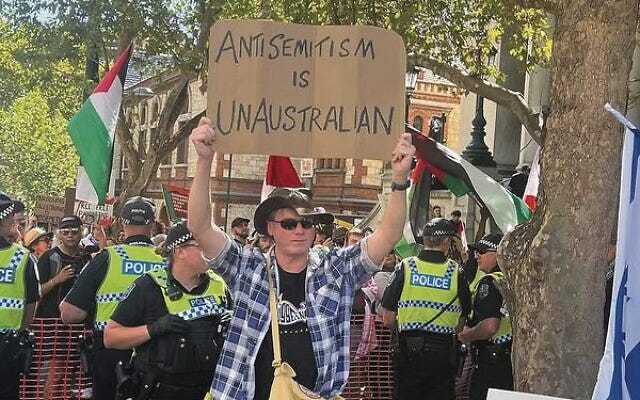
I ended my last post, “The recalibration of the ‘war on antisemitism’ after Bondi” by citing my concerns that the Palestine movement is not prepared for what is coming in the wake of the shootings of fifteen people on Gadigal, Bidjigal, and Birrabirragal land on December 14. And so the start of the Christian new year 2026 is proving that to be a rational fear. Amid the application of the “Donroe Doctrine” in Venezuela rapidly followed by Trump’s threats to intervene in Iranian unrest, not to mention the escalation of Zionist bombing in Gaza despite the “ceasefire”, the rampant spread of viruses amid torrential rain and biting cold across Palestine, the Australian left was having its own moment in the shape of the Adelaide Writers’ Festival’s cancellation of Palestinian writer and scholar Randa Abdel-Fattah from its programme. This has led to the decision, at the time of writing, of 100 out of 124 of those scheduled to speak at the event to refuse to do so, as well as to the resignation of its chair and several board members.
I have very little to say about the furore itself that has not already been said by Matt Chun on Instagram. In brief, Chun expresses rage at Abdel-Fattah’s cancellation but questions why we continue to collude with “colonial events, institutions, and systems of reward.” He reminds us that several partners and board members of the Adelaide Writers’ festival, such as The Australian newspaper and former LNP Minster, Lockheed Martin’s Amanda Vanstone, are deeply compromised by their embeddedness in genocidal, colonial organisations. He reminds us how, despite the need to support them, cultural boycotts can also be mechanisms for laundering reputations; several of those who have boycotted the AWF have “never condemned the genocide or dispossession of Palestinians. Indeed they continue to platform and publish Zionists. Their red line is not Palestine, their red line is ‘freedom of expression’.” As he rightly points out, the applause for these boycotters is due to “the creeping liberalism… when the bar is set at ‘freedom of expression’ rather than liberation.”
Matt Chun’s argument is evidenced by journalist Alex McKinnon’s sharing of a comment of support for Adelaide Writers’ Festival board member Tracey Whiting on her resignation from her former colleague at “defence contractor”, Raytheon.
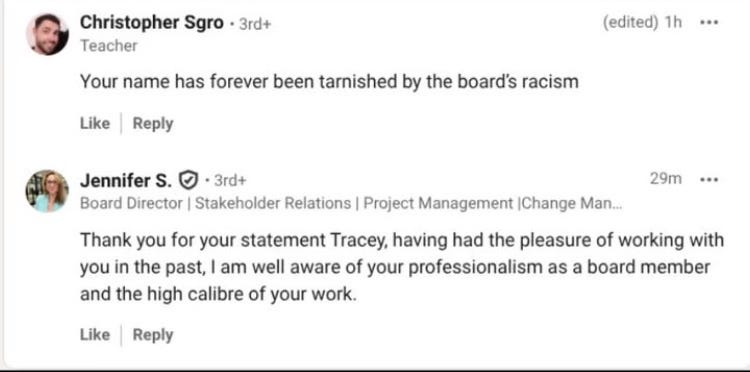
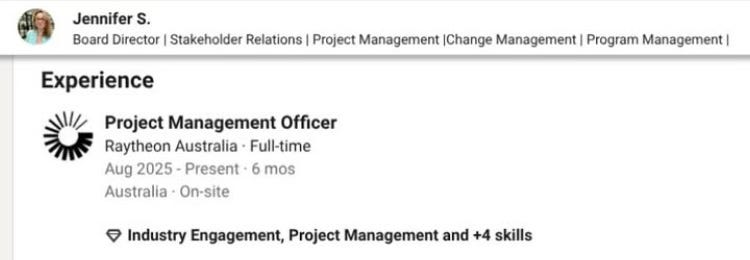
These are vital points which chime with my longstanding and public opposition to appealing to respect for “free speech” and “academic freedom” as a purported tactic to draw more people over to the cause of anticolonial liberation. We can see clearly in the case of this phase of the genocide of the Palestinians by the Zionist Entity in Gaza that there is no clear conduit from one to the other, nor is this really ever the demand from those who centre their activism around free speech. In fact, many of the same people who decry the clamp down on the right to protest, speak, or write against genocide draw the line at the right of people to freely state their support for Palestinian resistance fighters and armed struggle even though this is a right upheld by the United Nations General Assembly. Many of the same people who have boycotted the Adelaide Writers’ Festival would doubtless also draw the line at principled anticolonial positions that oppose the normalisation of Zionism, for example by opposing the idea of a single democratic state or even uphold the widely discredited two-state “solution”. Moreover, many would have undoubtedly supported the failed Indigenous Voice to Parliament referendum but balked at the necessity to return land to Indigenous peoples on this continent, arguing perhaps that invasion and colonisation was a “long time ago” and that, like it or not, australia is here to stay. For many, the question of Palestine can be confined to a humanitarian one; they imagine a future “after Gaza”, as some of their favourite writers like to put it, when perhaps a more just colonisation can resume, like the one they assume Australia pursues (except they probably think about it as being “postcolonial”).
The problem with the liberal belief in broad churches and strategic essentialisms is that there is no connection between elite drawings of lines at author cancellations - a low-cost position especially given the overwhelming number of withdrawals (even the former New Zealand Prime Minister withdrew) - and a change of course which would end up where we need to end up: with a wholesale dismantling ofAustralian zionism. The reason that will not happen is both because australia is a subimperial power and because it is a settler colony; to attack zionism is to attack australianism.
To attack Zionism is to attack australianism.
And this, beyond the ins and outs of the Adelaide Writers’ Festival furore itself, is what concerns me. The overwhelming take-away of the “bridge too far” tone of the opposition to the festival’s decision to ban Abdel-Fattah has been that australia, or the Australian arts and culture sector, has been “taken-over” - colonised if you like - by Zionists. These two posts on Instagram by The Shot editor, David Milner, are indicative of the problem.


Australia’s Prime Minister, Anthony Albanese, is not a “Zionist bootlicker”. He is a Zionist. While many like to recall Albanese’s past as a supporter of Palestine, Zionists are defined by their actions in the present. As the Prime Minister of Australia, Albanese has acted in lockstep with the western imperialist requirement to arm Israel and to secure its legitimacy domestically and internationally. It is for this reason that Albanese has funnelled funds in the form of arms contracts to the Zionist Entity and given free reign to its Antisemitism Envoy, Jillian Segal, to install mandatory Zionism across Australian public life.
Australia’s Prime Minister, Anthony Albanese, is not a “Zionist bootlicker”. He is a Zionist.
Rather than adopt the infantile perspective that Zionists are the tail that wag the dog, there are clear benefits to waging the “war on antisemitism” for furthering the ends of Australian racial capitalism. Climate protesters, already under harsh restrictions, can be further suppressed under general protest bans such as those installed by New South Wales Premier, Chris Minns. Although for the moment permission to allow the 26 January Invasion Day march and rally to go ahead on Gadigal land has been granted, other protests such as those organised against Indigenous Deaths in Custody are at risk. Already poorly attended, this has ramifications for the ability of First Nations people to draw attention to the state’s continuing assault on their communities in jails, prisons and lock-ups and in assaults by racist cops around the continent. The opportunity to clamp down on dissent provided by the “war on antisemitism” are boundless because it is ostensibly waged in the broad aim of promoting antiracism, stamping out “hate” and enhancing “social cohesion”.
“Social cohesion”
Seeming to cave to right-wing pressure to call a Royal Commission into antisemitism in Australia, Anthony Albanese added “social cohesion” to its remit. Albanese, having originally opposed the Royal Commission, turned the tables and declared that it was necessary to ““heal” and unite a wounded nation after its worst-ever terror attack.” That Albanese cynically mobilises the language of social cohesion to railroad us into what will effectively be a Zionist show trial is par for the course. The Jewish Council of Australia has of course put its hand up to participate in this farce by once again naively proposing that it can prod it in an antiracist direction, wilfully missing the point that the entire aim of such a Royal Commission is to further incriminate anti-Zionism as a legitimate political stance with punitive effects for anti-Zionists.
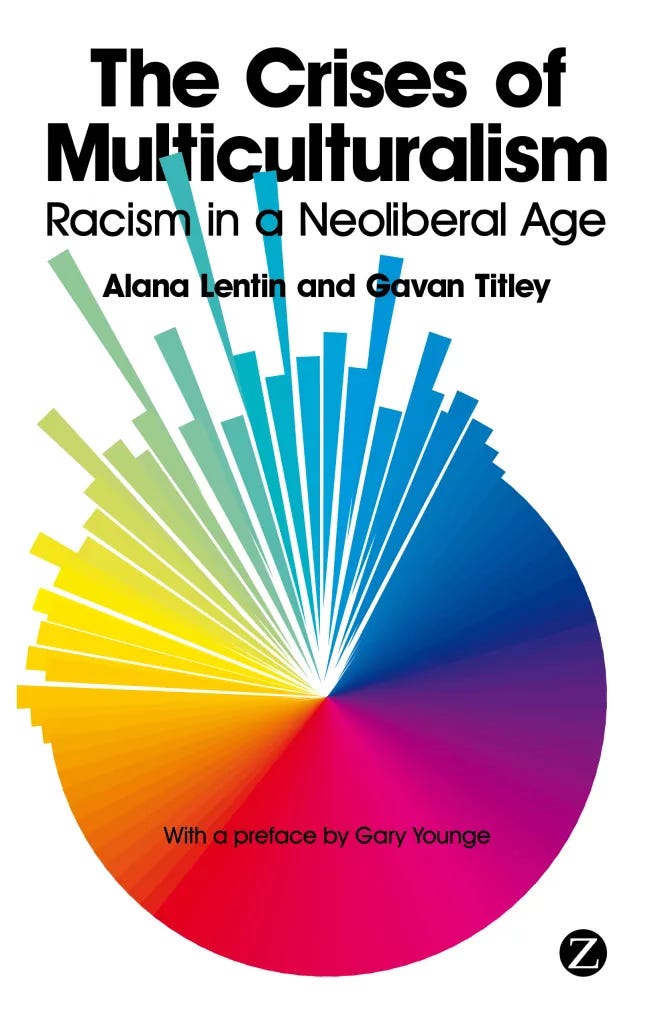
Opponents of the Royal Commission who argue that it would - contrary to Albanese’s claim - be detrimental for social cohesion equally miss the point, revealing a profound misunderstanding of the genealogy and politics of “social cohesion”. There is no way to understand the work done by the term “social cohesion” - alternately “community cohesion” - without setting it in the context of what Gavan Titley and I, in 2011, called “The Crises of Multiculturalism”. This was in turn shaped by its immediate location within the global “War on Terror” as well as the longer history of containment of Black, Indigenous and formerly colonised uprisings in the colonial metropoles of Europe, Canada and Australasia. It is important to recall this as we struggle under the onslaught of the “war on antisemitism”.
A profound misunderstanding of the genealogy and politics of “social cohesion”.
As Anna Younes sets it out, the “war on antisemitism” is a logical outgrowth of the wars on drugs and terror that preceded it. Setting it against this background, Younes introduces her 2020 article, “Fighting Anti-Semitism in Contemporary Germany”, by stating:
the “war on anti-Semitism” resembles these policies [the wars on drugs and terror] by managing, criminalizing, and targeting migrant, refugee, and of color communities with the figure of the Palestinian anti-Semite as its main culprit. The events and structural changes described detail how civil society initiatives merged with a government policy around race and the figure of the Muslim which were discursively already present, but until the end of the 1990s and beginning of 2000s not yet fully institutionalized as a fight against anti-Semitism amongst Muslims.
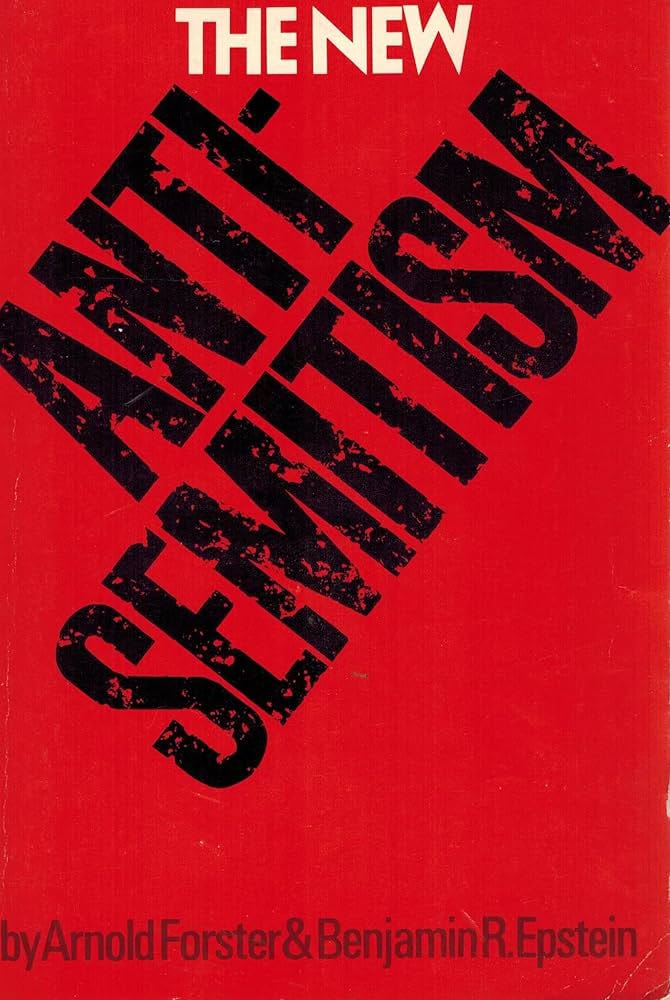
The “war on antisemitism” proceeds on the basis of a default standpoint that Palestinians (and their supporters) are antisemitic, a thesis worked up under the aegis of the Anti-Defamation League with the 1974 publication of The New Antisemitism by Arnold Forster and Benjamin Epstein (for more on this history please read everything by Emmaia Gelman). The dovetailing of the thesis explored in it, also developed in the French context by far-right ideologue Pierre André Tagieff in his 2002 book La Nouvelle Judéophobie, with the attacks on critical race theory against the genocide in Gaza is more deeply explored in the third chapter of my book, The New Racial Regime, “Institutionalising Dissent in a Time of Genocide”.
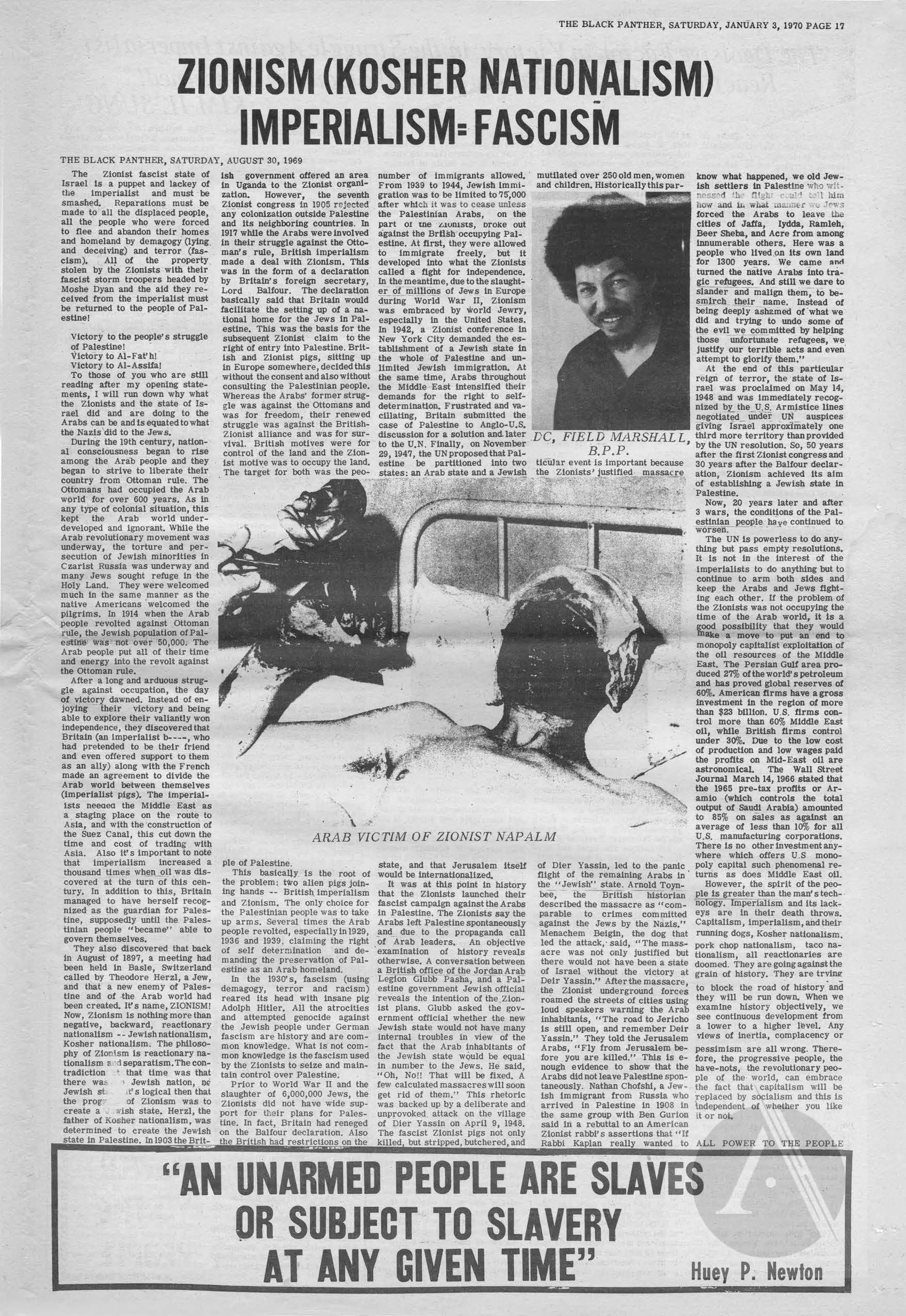
Its long history, which in large part can be understood as response to Black solidarity with Palestinians in the US since the Naksa, is inseparable from the politics of “social cohesion” as a response to the failures of multiculturalism, if we understand - with Younes - the “war on antisemitism” on having effects that are much more far-reaching than the direct recrimination of Palestinians. Huey P. Newton understood this when in 1970 he connected the Black and Palestinian experiences during a press conference (reproduced in To Die for the People) saying:
Black people in America have been persecuted; therefore it is easy for us to identify with other people who are suffering… Some people who happen to be Jewish and who support Israel will use the Black Panther Party’s position that is against imperialism and against the agents of the imperialist as an attack of anti-Semitism. We think that is a back-biting racist tactic and we will treat it as such.
Returning to the genealogy of “social cohesion”, fifteen years since Gavan and I wrote about it in The Crises of Multiculturalism, reveals the extent to which it is consistent with the trajectory I have been schematically tracing. The backlash against multiculturalism of the first decade of the 2000s which the book analyses is an outgrowth of the “war on terror” and state Islamophobia which is in turn continuous with a much longer assault on the revolutionary potential of the unification of anti-imperialist third worldist and domestic struggles against racism (a history beyond the scope of this post). In the context of the declaration by European leaders such as Angela Merkel, later echoed by David Cameron, that multiculturalism had been a “failed experiment”, societies were declared to be “sleepwalking to segregation”, as the former head of the British Commission for Racial Equality, Trevor Phillips put it in 2005.

In Britain, the furore over multiculturalism came after the 2001 riots which tore up the Northern towns of Bradford, Burnley and Oldham. Although these were, as Arun Kundnani reminds us, “prompted by racist gangs attacking Asian communities and the failure of the police to provide protection from this threat,” they were dominantly presented as being due to a lack of social cohesion. Trevor Phillips ignored the far-right’s targeting of Asian communities, stating instead that “the nation is becoming more divided by race and religion, with young people being brought up in enclaves,” not knowing who each other are.
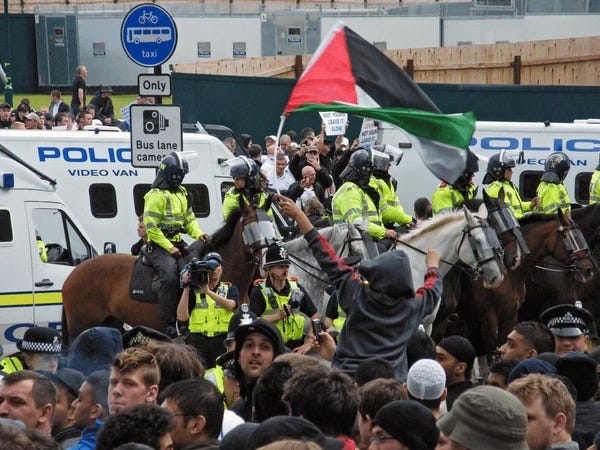
Phillips’ pithy slogan - “sleepwalking to segregation” - laid the ground for an industry of solutions that led as far as the mass state surveillance programme that is “countering violent extremism”. In Britain, the call from Phillips to end state support for multiculturalism, which in itself was an ideology with an accompanying suite of policies and programmes to curtail Black revolt, led to “community cohesion”. The British Labour government established the Commission on Integration and Community Cohesion (CICC) led by Ted Cantle to respond to the 2001 riots in Northern England. Cantle proposed “community cohesion” as a solution to the problem of what he called “parallel lives”. As we argued in The Crises (p. 185), while the language of “community cohesion” stressed finding unity across difference, borrowing from the lexicon of “interculturalism”, in fact societal diversity was “folded into an increasingly authoritarian understanding of Britishness involving a ‘duty to integrate/ into shared values’ (Pitcher 2009).” We cited Tony Blair who said that “integration is not about culture or lifestyle. It is about values. It is about integrating at the point of shared, common unifying British values.”
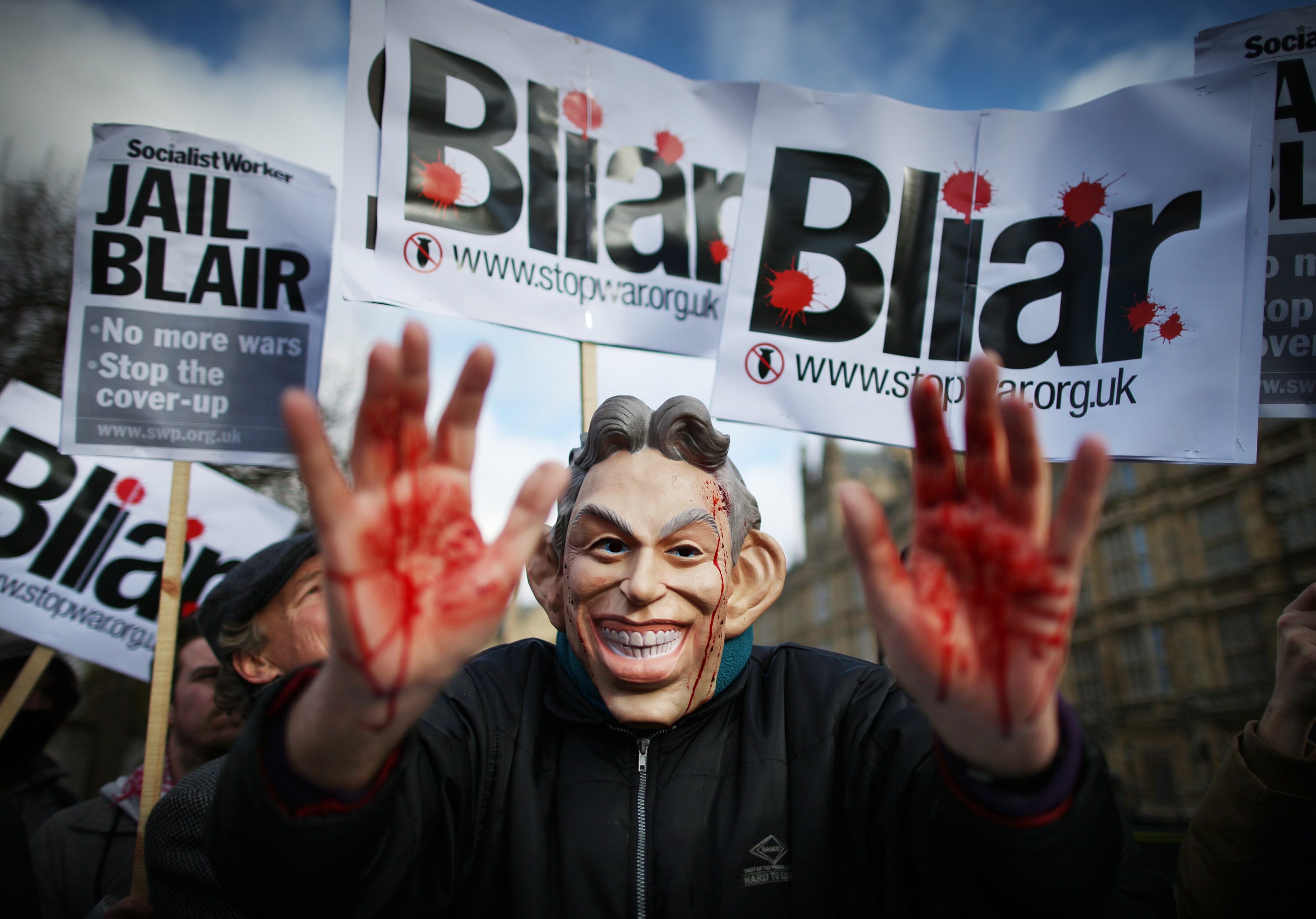
“Sleepwalking to segregation” laid the ground for repressive state policies underpinned by Islamophobia
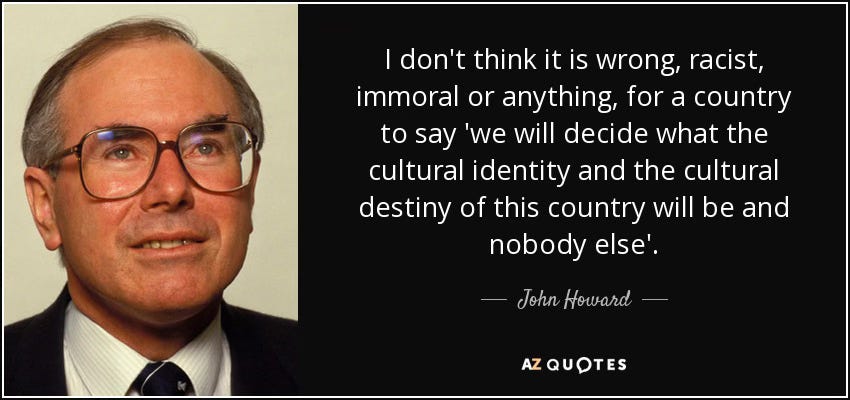
This was mirrored in Australia by John Howard’s dismantling of multiculturalism as a “national narrative” and the divestment from state initiatives to promote it. This was replaced by what Augie Fleras calls the “social and economic dividends of productive diversity.” Tellingly, we could consider the development of the Western Sydney literary genre critiqued by Sheila Ngoc Pham or Jumaana Abdu as an outgrowth of the harnessing of “productive diversity” and a cottage industry of Australian racial capitalism by those who probably hate John Howard with every fibre of their being.
We can split hairs, as does Ted Cantle himself, and argue that social and community cohesion are not the same (“Social cohesion generally refers to the way that economic inequalities create a sense of unfairness and undermine solidarity… Community cohesion, on the other hand, focuses on the problems between identifiable communities, based on ethnic, faith or cultural divisions and often involve a degree of racism or religious intolerance”). However, the one is used interchangeably for the other and the material and structural inequalities that the need for social cohesion made reference to are entirely lost in the way it is commonly used after 2001 as a vehicle for forcing compliance with [insert western national] values. This is coerced in a whole gamut of ways, from citizenship tests to border policy, education curricula, the discourse of mainstream media, to state surveillance and punishment.
Therefore, to argue against the Royal Commission into Antisemitism and Social Cohesion, not because it is a racist tool to advance the “war on antisemitism”, but because it would be “bad for social cohesion”, as some have on social media, is to wilfully misinterpret what social or community cohesion have meant from a perspective that is seriously opposed to state racism. While it is unsurprising that they would promote this position, the stance taken by some in the Greens or Labor parties that the scope of the Royal Commission should be extended to “all forms of hate” equally misunderstands that the framing of racism as “hate” originates in Zionist manoeuvring of antiracism away from the demands of Black, Indigenous and other colonised peoples, as analysed brilliantly by Dylan Rodríguez.
A wilful misinterpretation of what “social cohesion” means in practice
The Royal Commission itself, its supporters and implementers, is a racist endeavour. And if you need any other reason to convince you, this particularly vile taken “Islamic antisemitism” and its risks for social cohesion from the Journal of Phrenology, Quillette Magazine, should be able to sway you. But polluting your eyes and ears should be unnecessary to refuse collusion with this mechanism for deepening the “war on antisemitism” on this continent.
Promoting the Good Muslim
It is unsurprising that I found the same language used twenty-five years ago by Trevor Phillips to strike the death knell for multiculturalism in an article by former Chief Executive of Westfield, Steven Lowy - amongst other things, a recipient of the recipient of the [Zionist fascist] Ze’ev Jabotinsky award - titled “Time for sleepwalking on antisemitism is over.”
In it, he makes clear that the outcome of the Royal Commission into Antisemitism and Social Cohesion should lead to:
structural changes in how intelligence agencies, law enforcement, and political leaders identify, assess, train, communicate with each other and respond to emerging threats from here and abroad
Second, cultural leadership beyond legislation. Governments will introduce and strengthen laws criminalising hate speech and hate preachers. These changes are necessary but not sufficient. Laws tell us what we must not do. They do not inspire us about what we should become.
In other words, what Lowy and his supporters want, and what the government will provide, is the criminalisation of all those they see as providing the cultural fodder for the Bondi attacks, including as the Adelaide Writers’ Festival revealed, anti-Zionist writers and scholars such as Randa Abdel-Fattah.
Lowy’s article also points to another way in which “social cohesion”, far from promoting unity across difference, is a tool for differentiating between what Gavan and I described as “good” versus “bad” diversity. Lowy writes,
There will be hard political choices ahead. We need a more robust response to dealing with those who don’t share our Australian values or who bring ancient hatreds and violence from other places. Immigration is a wonderful thing so long as those who wish to enjoy all of Australia’s freedoms and benefits also sign up to our values and our shared responsibilities.
Fourth, recognition that this threatens everyone. Antisemitism is not solely a Jewish problem, just as attacks on Muslims, Christians, Hindus or any other community are not isolated concerns. When hatred targets one group based on identity, it threatens the entire social fabric that protects us all.
This is a warning, just as the demand for “community cohesion” as the invocation to step into one around nebulously defined “national values” was in the early days of the war on terror. The barely veiled sub-text is that there are good and bad ways to be a (Muslim) immigrant to Australia (leaving aside the fact that this continent only exists as an illegal “white possession”).
Last week, the contrast between the two sides of this coin was illustrated by the demonisation of Randa Abdel-Fattah and the celebration of the Bondi hero Ahmed Al Ahmed. In the days following the murders at Bondi and Al Ahmed’s brave disarming of one of the shooters, resulting in serious injustices to himself, I commented that his celebration demonstrated the ease with which we all fall into the trap of elevating the “Good Muslim” with the knock-on effect of demonising everyone else. This hardly original thought is laid out in detail in Mahmood Mamdani’s Good Muslim, Bad Muslim and Yassir Morsi’s brilliant Radical Skin, Moderate Masks.
Fast forward to the second week of January 2026 and Ahmed Al Ahmed was flown to New York as a guest at the Colel Chabad awards gala dinner, greeted and escorted by agents of the FBI. During the visit with Australian ambassador to the US, Kevin Rudd, Ahmed said “Australia is the best country in the world. And I’m an Aussie, I put my blood to my country.” He further expressed his admiration for Donald Trump.
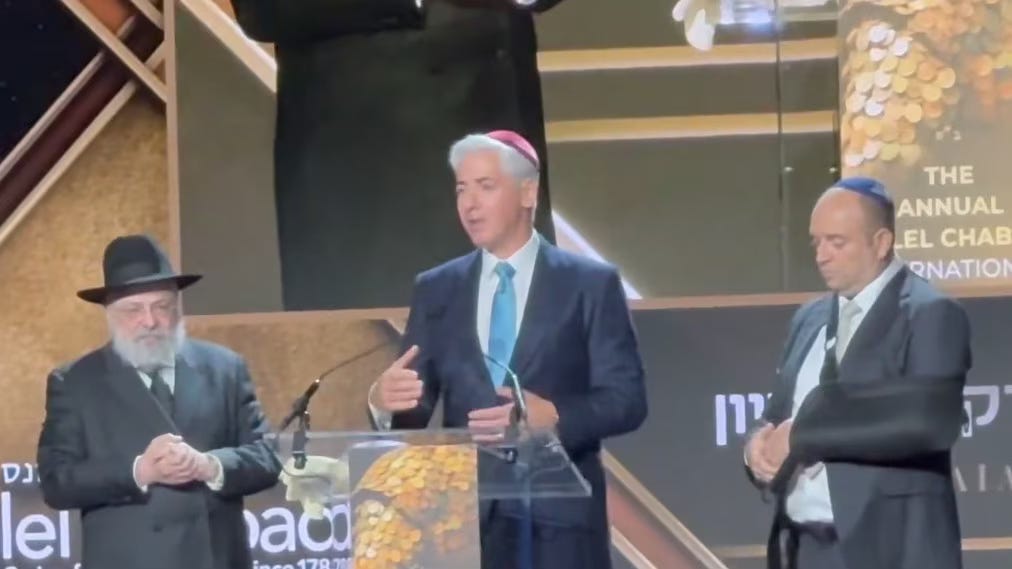
At the Chabad dinner, Ahmed Al Ahmed was feted by hedge fund manager Bill Ackman, who as a major Harvard university donor, in 2023, instigated the attack on Harvard President Claudine Gay, blaming the “reverse racism” of the “powerful” diversity, equity and inclusion “movement” for her promotion, as a Black woman (discussed in The New Racial Regime, p. 138-9). Ackman is further described in The Guardian as having
taken stridently pro-Israel positions, including justifying the scale of the attacks on Gaza in which more than 25,000 Palestinians have been killed, mostly civilians, and the forced removal of about 2 million Palestinians from their homes. He has described criticism of Israel as antisemitism and called for the blacklisting from employment of American students who signed petitions denouncing the offensive in Gaza in the wake of the 7 October Hamas attack on Israel.
There is arguably no way Ahmed Al Ahmed, having been authentically lauded by people across the world from all political stripes for his undeniable bravery, could have played any other role within the terms of the ‘war on antisemitism”. Had his brave act not been followed by a willingness to embody a pre-determined narrative of what his act signified for Zionist ideologues determined to couch Jews - “0.2% of the world”, as Bill Ackman put it at the Colel Chabad gala - as the actual victims of genocide, not Palestinians, then it could have easily been moved past. The point is not what Ahmed Al Ahmed himself believes, or at least says publicly. I have no desire to racistly take away his agency; he is clearly right-wing and a Zionist. Neither am I surprised by how his Zionist cheerleaders are using him. The point is how those of us on the side of Palestinian liberation respond when we are presented with the racial signifier of the good and bad Muslim. Just as we must reject it in the case of Ahmed Al Ahmed so we must when legitimate writers and academics are counterposed, as they tacitly are, to the masses with whom we can less easily identify as “people just like us”.
If you have gotten something out of this post and any of those I have written in the past, please consider becoming a paid subscriber on Substack. Any money I raise (thanks to my three existing paid subscribers!)will go towards my mutual aid efforts for families in Gaza. Ia, part of a collective of people based in australia which supports ten families in Gaza, mainly around deer Al-Balah. As I start to post more regularly over the next few months I will post more details about our fundraisers and how the money raised is apportioned.
No posts
Comments
Nothing yet. Say the first thing.
Sign in to join the conversation.