
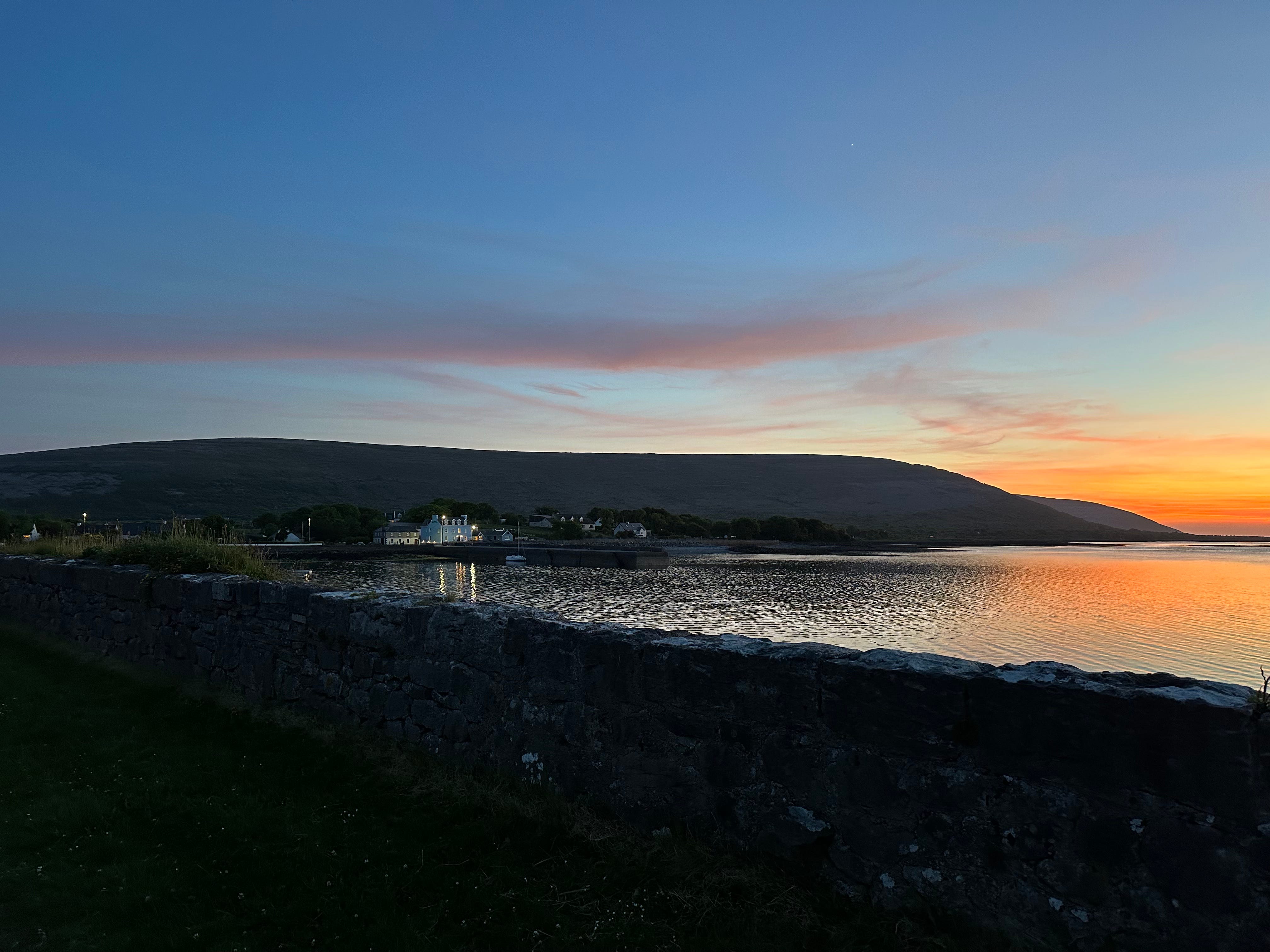
“So, what do you do?” asked the man to my right. I was at a dinner table at a pub in Ireland, surrounded by fellow travelers and retreat attendees. I paused, absolutely terrified as to how to answer that question.
Just before I’d left, I had decided that my writing business needed to end (it didn’t end, but that’s a story for another time). Although I didn’t know what was coming down the road and how that would change my decisions, it was significant in that I had finally admitted out loud that something about my work didn’t work for me.
And this was the first time that I did not have a ready-made, easy answer to that question. Nor had I thought about how I would answer it.
I took a breath. Reminded myself that this was just one conversation with one person. Then I told him that I had made a big decision to move forward with a new direction. He asked what, and again I paused because I’d never had to say “energy work” or anything of the sort. It felt like uttering blasphemy! But I did it. I said “I’m going to study shamanic healing,” and that I was about to start my training in a few weeks.
For some reason, the entire table had quieted down by then. Without being fully aware, I’d shared this news with everyone. When it dawned on me that all of these people had witnessed that statement without any intense reactions. In fact, they all showed curiosity and support. No one screamed “witch” and pointed at me accusingly, and I had not been smote (smoted? is that the past tense of smite?) by fire.
But I wasn’t quite ready to own it yet. I had dreamed of taking on that role and vocation since I was a child, but I did not know what it meant to carry that responsibility. I was about to get a taste.
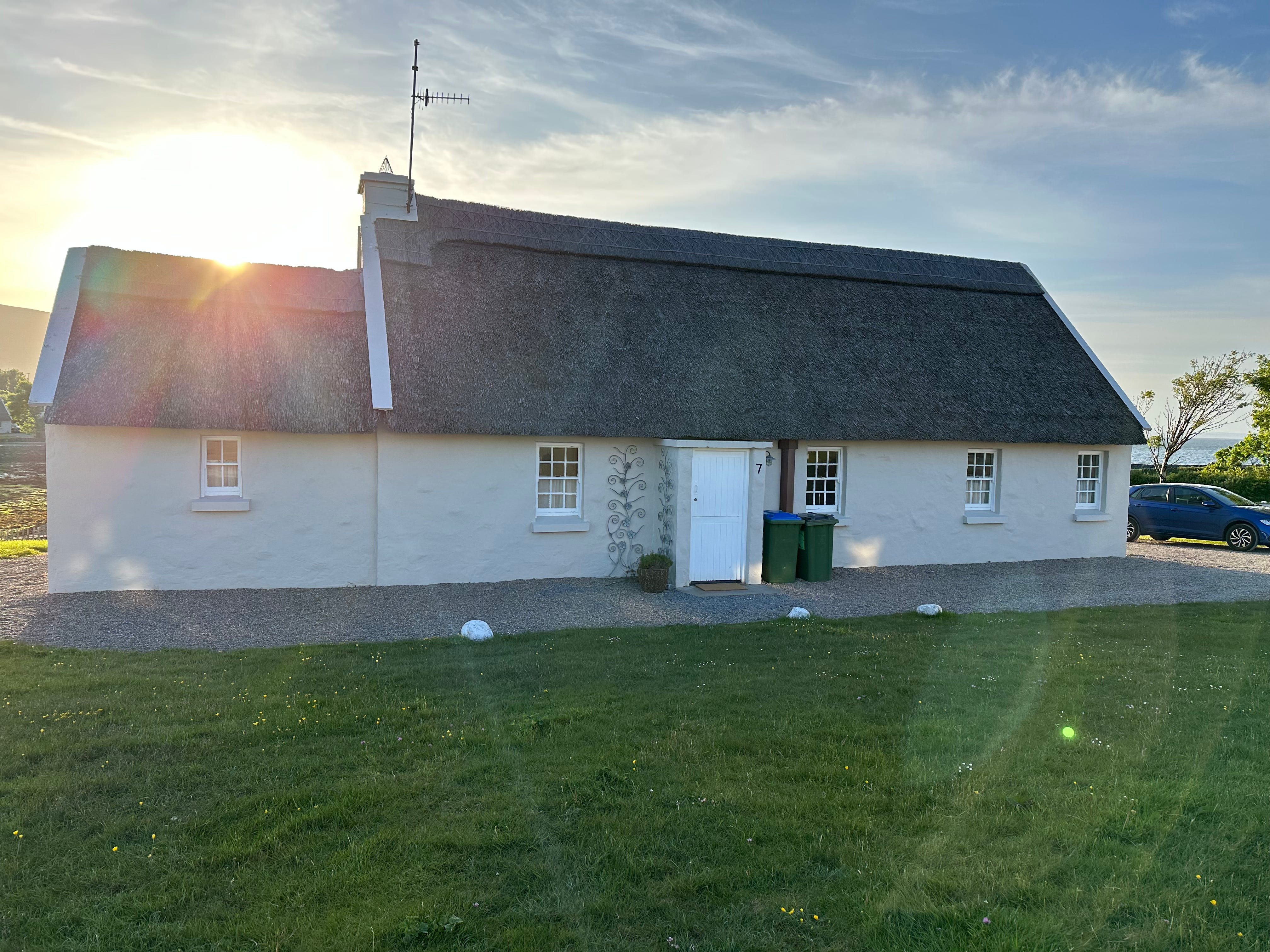
When we arrived at the small cottages that we would be staying in for the week, I instantly felt the presence of a lot of different… awarenesses. I couldn’t have said what they were, but they felt to me like a troop of small ones watching, poking in and then dipping out of the space. They weren’t unfriendly, and it wasn’t a scary feeling, but neither were they all open arms and welcome party, either. They felt curious, watchful, and a little prankster-ish.
Right away, I knew I ought to go outside and greet them. I could not say how I knew this. Nowadays, I would tell you this is wise no matter who you are or what faith you come from. When you arrive in a new place, the beings who guard and tend to that space want to know who you are and what you intend to do there. You wouldn’t walk into a human home without greeting the host. In the same way, arriving in a new place without acknowledging your unseen hosts is poor form. It doesn’t have to be dramatic or big, just intentional.
In this case, though, I sensed I needed to do more than stand in the room and introduce myself. They wanted an offering but I had nothing to give at that time.
Plus… part of me remained unconvinced. There was something stubborn in me. What if it was all in my head? What if I was just being “over the top” and dramatic? What if I was being mystical when there was nothing to myst about? What if I did exactly what I thought was necessary and I’d make myself into that new age wacko walking around in flowing robes with crystals hanging from my ears, totally disconnected from “the real world”? I felt like my newfound dedication was causing me to overblow things.
I can also admit that I felt plain lazy in that moment. I was tired and wanted to go to bed. Traipsing around the cottage did not sound appealing to me.
So, I did nothing.
Even though I had formally declared my intention to do this work, I was resistant to dealing with the realities of it.
The feeling of visitors got worse at night. Nights are weird in Ireland; it doesn’t get dark until 10 pm or later, and there is a strange aliveness to the dark that I don’t feel in the US. It’s active. I woke up multiple times the first two nights with the feeling of “people” popping in and out of my room to check in, look around, poke a little. Maybe literally. I had the strong sense that it was a downright party in my room, and these beings were coming in and out at random, causing a ruckus. It was nothing mean and I didn’t feel threat. I just felt a low-level sense of being badgered.
On the second morning my friend Jane reported that a necklace that meant a lot to her had gone missing. She had scoured her room looking for it, turned everything over and inside out and still couldn’t find it. Even the way it disappeared was weird; one minute it was there, the next it was not. As she told me and the rest of our cabin mates about it, I thought: “Oh shit. It’s time to stop messing around.”
I was starting to see that reality contains relationships whether we acknowledge them or not. And unacknowledged relationships have a way of causing trouble, of going a little sour.
That night I poured a healthy glass of whiskey and took some flowers and herbs outside and stood off to the side of the cottage. I felt both convinced about what was needed and foolish, certain and silly in equal measures, trooping out there in the twilight. Anyone who looked toward our cabin could see me. I imagined myself through the eyes of others. What would it look like, me circling the cabin, making offerings, muttering “to myself”?
Crazy.
I did it anyway. I did what felt right and approached a small stand of three trees close to the cottage. Although I was not necessarily speaking to the trees, I felt that this was the right place to meet my nightly visitors. I introduced myself, raised up the whiskey and asked for it to be blessed, then offered it to them by pouring a little at the base of each tree. Then I explained why we were here and what we were doing. Then I asked for the beings’ permission and protection while we were here, and promised we would do no harm to the land. Then I walked around the cabin and asked again that no harm would come to the folks inside.
The whole thing took under ten minutes, probably because I felt a vaguely nervous energy which caused me to rush. But it was done and I immediately felt a sense of relief.
I slept undisturbed that night.
The next morning, Jane woke up, went into the bathroom to prepare for the day, and came out to find her necklace sitting neatly on top of her bedspread, where she had just slept. It made no sense; it was not there when she had woken and gotten out of bed. What’s more, she had ripped her sheets off the bed in search of the necklace the day before. There was no way that the necklace had just been “lost” in the bedclothes.
When Jane told me, I felt both relief and confirmation. Satisfaction.
Three years and two healing apprenticeships later, I’ve thought a lot about what that experience meant to me. For one thing, I had the benefit of being witnessed, twice over. Once by people who heard me say shamanic healing and simply nodded, and once by whatever was gathered at those trees who accepted the whiskey and the introduction and seemed to find my offering acceptable in return. For another, I’m grateful that my first lesson wasn’t about power or visions or healing techniques. It was about etiquette.
But the greater lesson is what it taught me about answering the call of a dream, and about vocation. A calling is not merely permission or invitation. It is obligation.
You can declare your acceptance of your vocation, you can step into the practice and finally say yes, but until you begin to accept the responsibilities that come with it, you are still stuck behind the starting line.
When we dream of a vocation, we usually imagine its identity. We imagine being the artist, the parent, the doctor, or the healer. We rarely imagine the duties that immediately come with the title.
The artist must discover discipline and dedication.
The parent must experience sleepless nights and commitment to the next generation.
The doctor must discover the responsibility for someone else’s body and health.
The healer must discover that relationship is reciprocal (in my tradition, we call this reciprocity ayni).
The moment I moved toward the title of healer, I became someone who does not just get to make offerings when she feels like it, but someone who must make offerings, especially when she doesn’t feel like it.
I still feel that dual experience of silly and certain, and I’ve stopped waiting for it to fade. I’ve come to suspect that certainty without humility is dangerous, while humility without conviction is paralysis. The work always asks for both. To know what must be done while never losing awareness of how strange it looks from the outside.
This publication is supported by readers like you. If you like this, please share. If you feel you’d like to support the work, becoming a paid monthly subscriber is the best way to do so. Thank you for reading!
Comments
Nothing yet. Say the first thing.
Sign in to join the conversation.