
'Cracking Prejudice is harder than cracking atoms.' Albert Einstein had the foresight more than five decades ago, which might still hold for decades to come. With this piece, I want to establish the merits of Nuclear Energy over other sources and then investigate why countries are anxious about producing more of it. And I want to do this by answering the most important questions around nuclear energy.
But nuclear energy production is so unsafe. Do you remember Chornobyl & Fukushima?
Chornobyl and Fukushima did indeed cause the deaths of 433 and ~2400 people, respectively. But just looking at the death rates from nuclear energy is unfair. In the interest of fair comparison, let's look at the death rates from other energy sources.
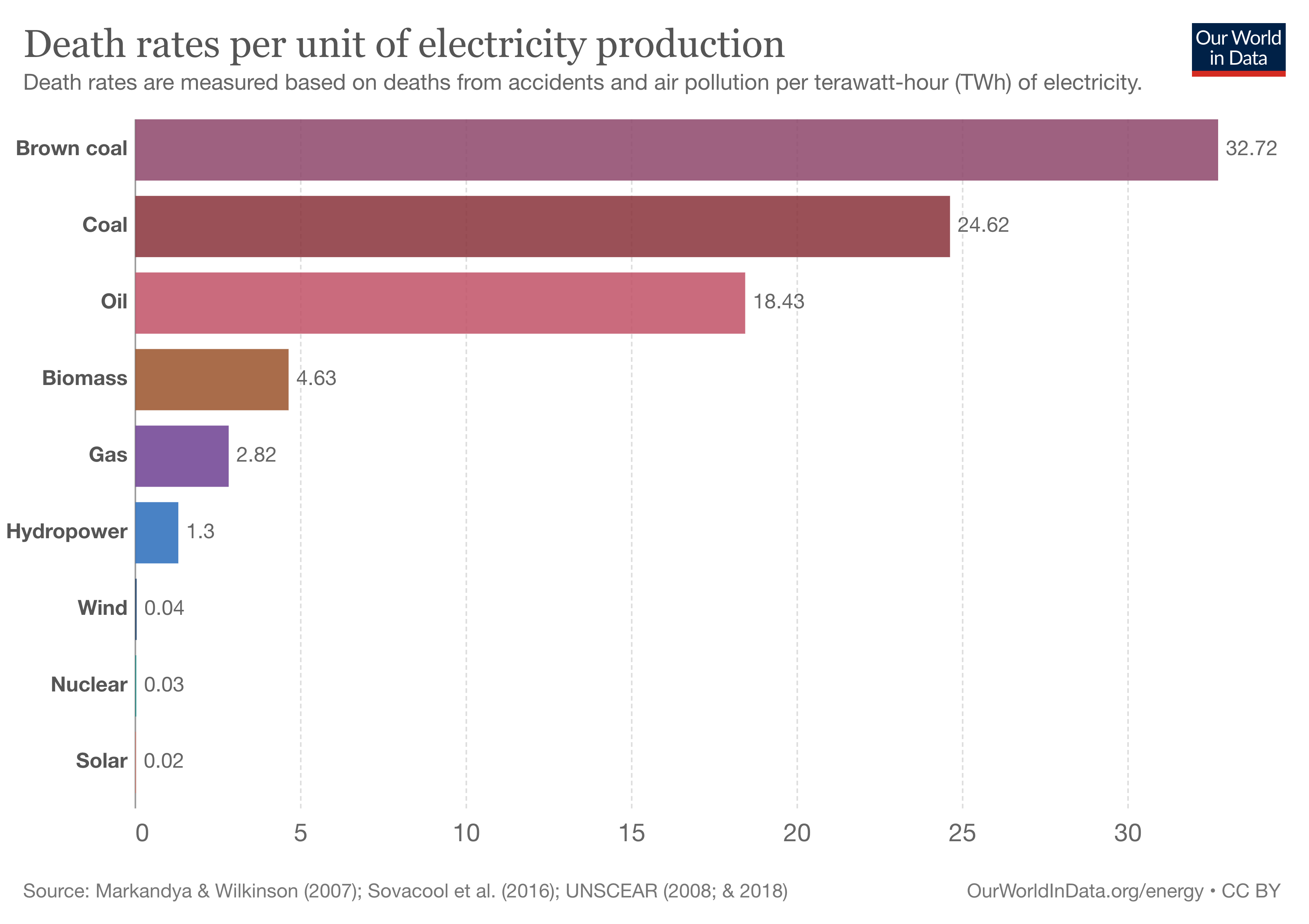
The graph above looks at the death rates from different energy sources per Terawatt hour. Surprising, isn't it? Doing some back-of-the-envelope calculations, brown coal and hydropower are 1030 & 43 times more lethal than nuclear energy respectively!
Okay, is nuclear energy even clean? Aren't cleaner fuel sources like solar/ hydel better in the long run for controlling climate change?
So, nuclear energy only releases 3 tonnes of GHGs as opposed to 490 tonnes of natural gas for the same amount of energy. This comparison is even more critical with the current crisis the EU faces. Most countries in the EU decided to phase out nuclear power by 2025. Germany had planned to shut down all its nuclear reactors by 2022. Interestingly, Germany agreed to also fire up its coal-powered plants to deal with the low supply post the Russia-Ukraine war.
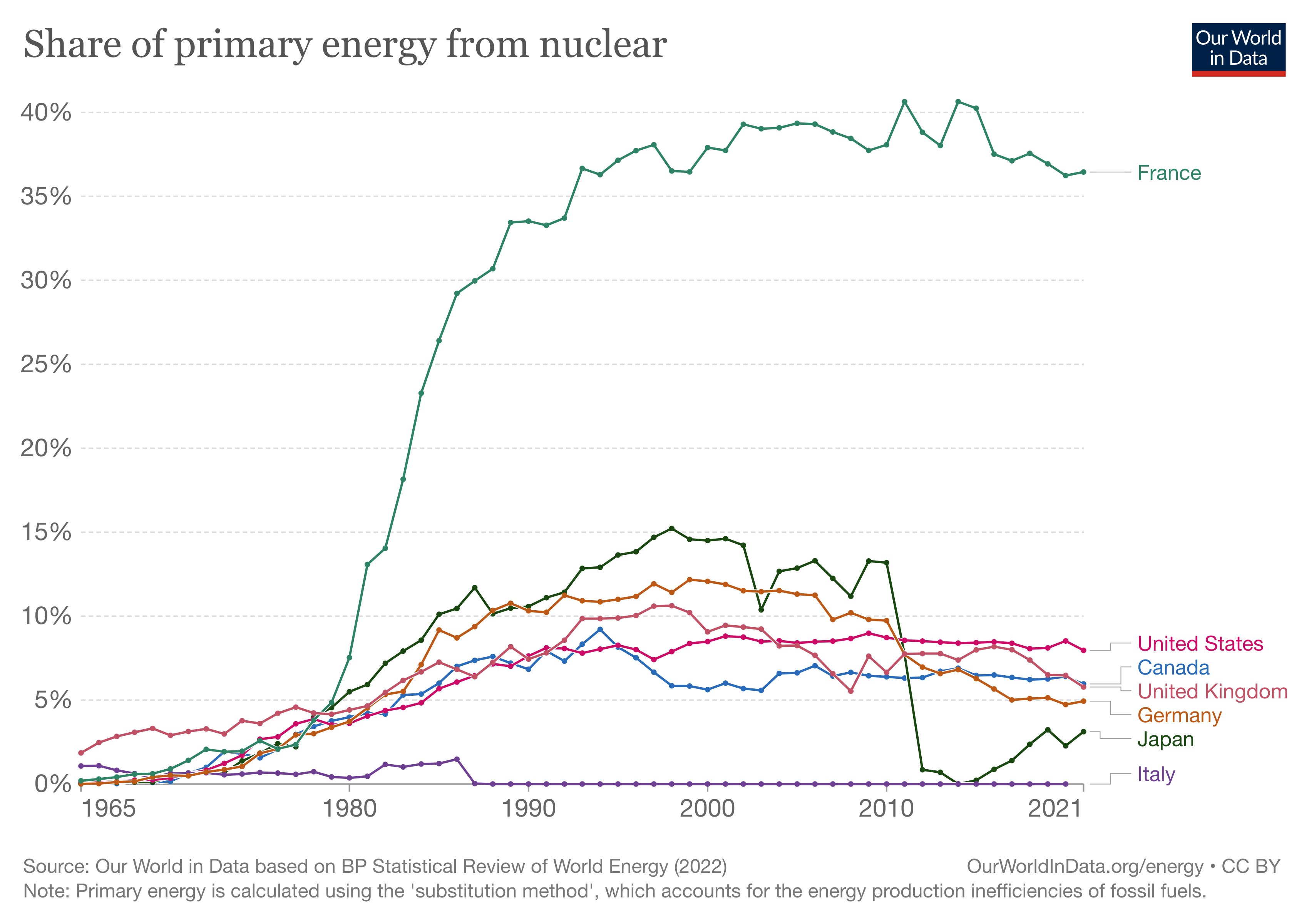
In the graph above, most countries in the global north see a downtick after 2011 (Fukushima disaster). This downtick is concerning if countries are replacing nuclear with more lethal & more polluting fuels like natural gas, coal, etc.
So, is the debate around nuclear energy more political than scientific?
Surveys by Ipsos say that 3 in 5 people oppose using nuclear energy to meet the world's energy needs. Interestingly, the Fukushima disaster influenced 26% of those people's opinions. Media coverage is way higher for nuclear disasters. After all, news agencies cannot report the daily deaths due to coal and natural gas as they happen consistently every day. Apparently, there is no novelty in reporting that. And when people are subjected to one-sided reporting, bias sets in. People look at the demerits of nuclear energy and invariably overlook the demerits of its alternatives. Political parties worldwide have become aware of the popular opinion of nuclear energy and want to capitalize it to get bigger vote banks. Political strategy takes precedence over good policy.
Nuclear energy has more calorific value than any other fuel on this planet. It is only second to solar in terms of the safest fuel. And yet only 2 out of 5 people approve of using nuclear fission to create energy as opposed to 97% for solar energy and 95% for wind energy. Until the villainization of nuclear energy stops, this bias won't get corrected.
Japan is an example of this bias correction. To tackle global energy shortages and combat climate change, Japan has started producing nuclear energy again. This shift is commendable as it was quite an uphill battle against bias as the Fukushima disaster had tainted the reputation of nuclear, most of all in Japan.
No energy source is completely safe or completely clean. It is in our best interest to identify the least lethal and polluting ones and ramp-up their production. Highly visible disasters must not be conflated with highly lethal ones.
Thanks for reading the 4th edition of Factorial! If you want to see more data-driven narratives, please subscribe!
Comments
Nothing yet. Say the first thing.
Sign in to join the conversation.