
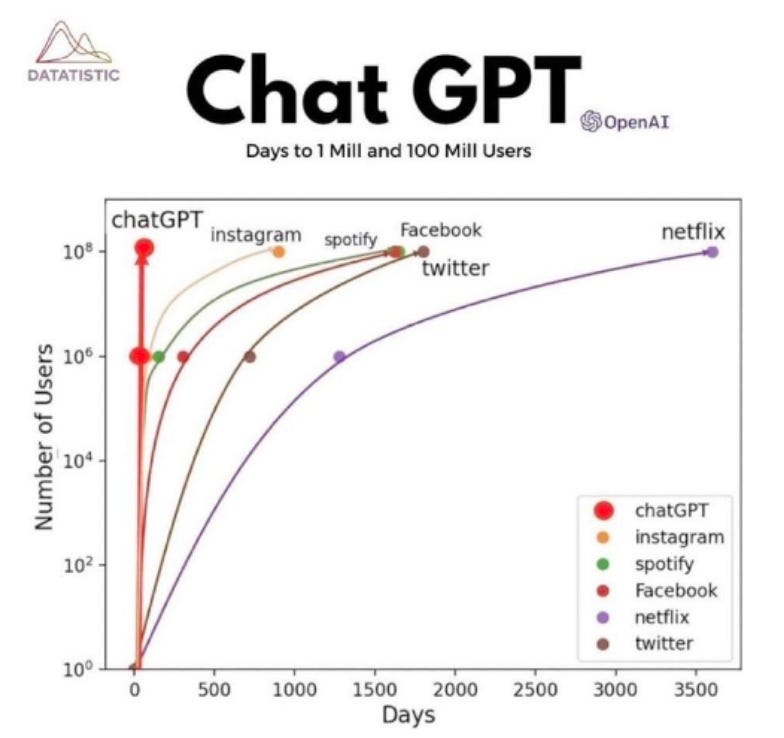
When ChatGPT first came out, I noticed the personal use case in it. I saw some friends take a backseat in academics and let the AI do the thinking, others overplayed it and crossed the threshold into plagiarism. Just by word of mouth, the AI had become popular in just over a few days. The sheer anticipation and popularity of a powerful AI like this can be best understood by the chart below. It beats really sticky social media apps by more than a mile.
The next use case I noticed was for small businesses like start-ups. For a company with very low capital, both human and monetary, it can't afford to have a person on payroll for simple bookkeeping tasks, or for rudimentary analytics. ChatGPT, in collaboration with Microsoft, offered a solution by launching Copilot. Copilot AI is the prowess of ChatGPT embedded into your MS 365 apps. So, you won't need a content writer, analyst, bookkeeper, or designer as long as your start-up is in its early stages.
Governments, too, can achieve an exciting use-case of ChatGPT, especially the ones in developing nations. That is why Italy banning ChatGPT took me by surprise. Right now, the state of education in developing countries is dismal. When countries post data about the education statuses of their citizens, they use the worst metrics. India, for instance, uses enrollment rates. The problem with only recording enrollment is that you don't know about the kid's situation after registration. Is the kid attending class regularly? Is the kid getting good grades? Can the kid speak/listen effectively in the medium of instruction? We need better metrics in the world's largest and most complex education system.
Currently, 3 out of 4 students in India can't download and install software into a computer. Only 1 in 4 students can send an email with an attachment. In a world that is dominated by tech, these skills are necessary to have.
ChatGPT can be a silver bullet in this respect. Imagine a software that OpenAI can collaboratively make with the Indian Government (or any developing nation) which is tailormade for the ages 13-18 with the characteristics below
It is rid of all age-inappropriate content
It is contextualised for the Indian crowd
It has the ability to translate its output into a lot of languages that are spoken in the subcontinent
This morphed version of the AI can be a personal tutor for every student in this country, no matter what background they come from, given these students have an electronic device with a decent internet connection. Currently, 700 million people have access to the internet of decent quality. By 2025, this number is expected to reach 900 million.
How will this benefit students?
Every student can access this system which will reduce the inequality of opportunity in the education system.
Students won't have to pay for extra coaching or external tuition classes. This is especially important when so much educational material is behind a paywall. Indians paid 25,000 crores in 2020, giving school kids private tuition. All of this money can be better allocated when this job can be outsourced to a more intelligent, more accessible, time-flexible, and, most notably, cheaper teacher.
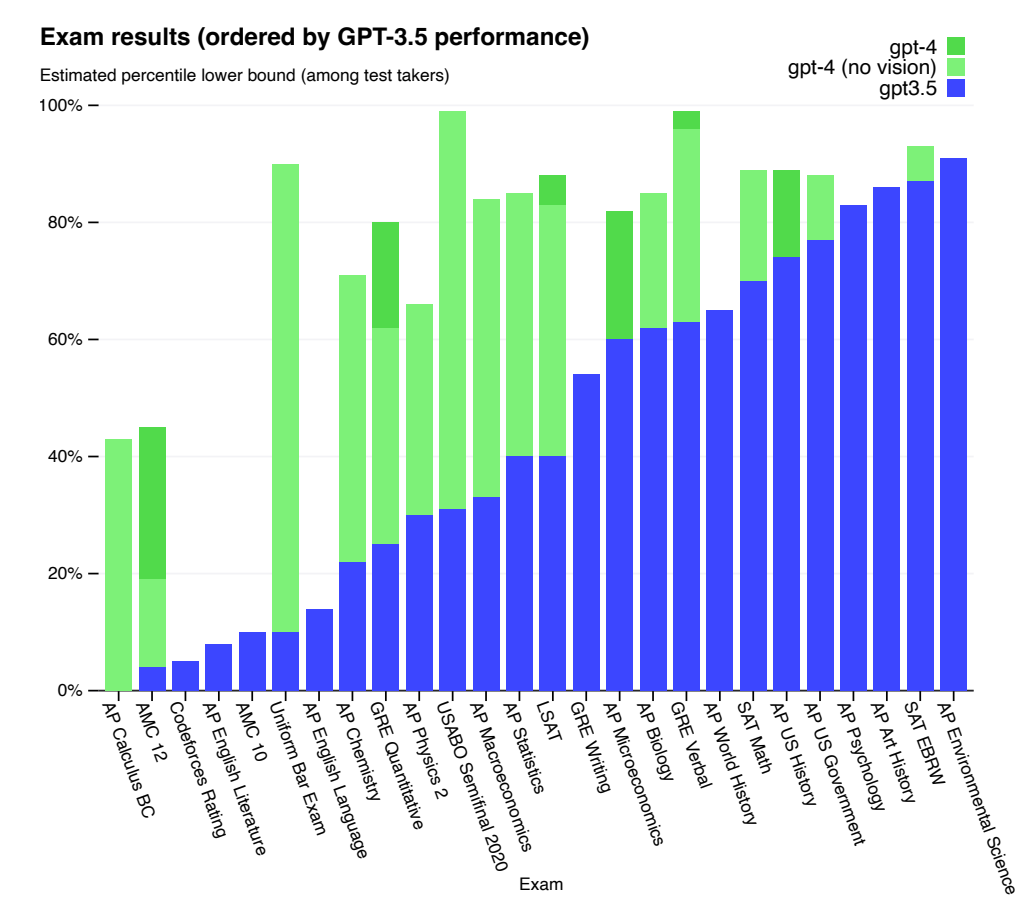
Students can begin preparing for competitive exams from an AI that can score high percentiles in many standardised tests. For instance, the AI can score > 95 percentile in GRE verbal section.
If businesses can capitalise on this mighty AI and increase employee productivity, governments should take a page from their book to boost their citizens' productivity. By leveraging the strengths of AI tailormade to India's requirements, the country can significantly increase the quality of its education.
There is only a potential upside to this idea. AI is getting better by the day. Any entity that fails to understand this will be outperformed by the early adopters.
Comments
Nothing yet. Say the first thing.
Sign in to join the conversation.