
We deal with clients moving around Japan constantly, whether they are viewing properties in rural areas or traveling between cities. Almost all of them have the same concern at the start: the train system looks overwhelming.
In practice, it is one of the most reliable and straightforward systems you will use once you understand how it is organized.
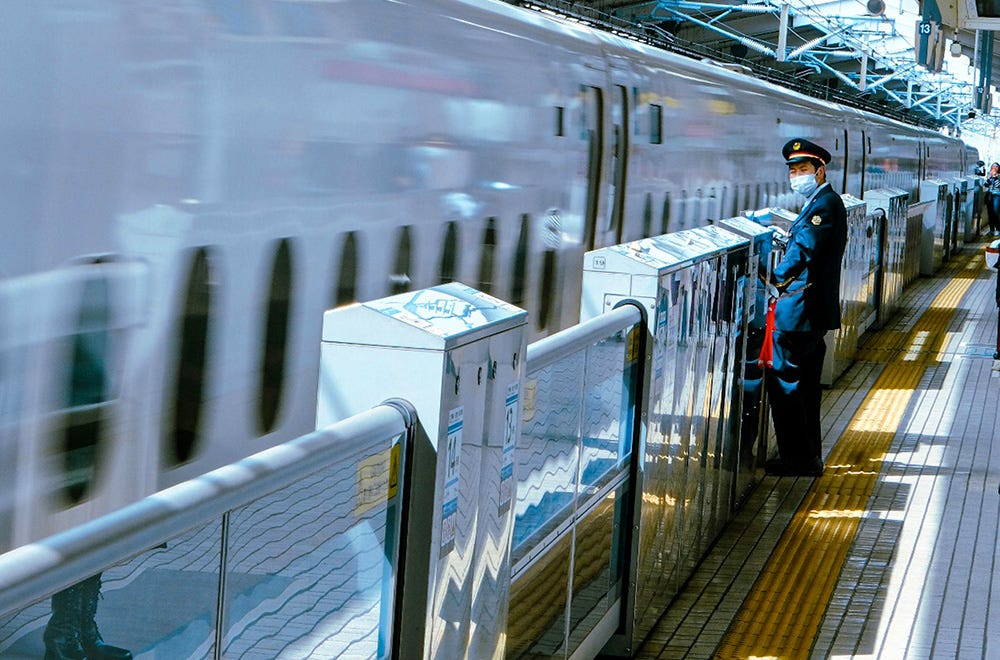
The first thing to get clear is that not all trains serve the same purpose. The Shinkansen connects major cities at high speed. Limited express trains cover longer regional distances with fewer stops. Local trains handle short trips and stop everywhere. In cities, subways and private lines fill in the gaps. Once you separate these roles, the system becomes much easier to read.
For most visitors, an IC card like Suica or Pasmo is the simplest way to get around. You load money onto the card and tap in and out of stations. It removes the need to calculate fares or buy individual tickets, especially in cities where you may be changing lines frequently.
The Japan Rail Pass is often mentioned, but it only makes sense if you are covering long distances in a short period. It works well for intercity travel on JR lines, including most Shinkansen routes, but it does not cover everything, particularly subways and private railways.
In Tokyo and Osaka, the scale is what catches people off guard. The networks are large, but they are also highly structured. Lines are color-coded, stations are numbered, and signage is consistent in both Japanese and English. Route planning apps fill in the rest, showing platform numbers, transfer points, and timing with good accuracy.
Buying tickets is straightforward if you need to. Machines support multiple languages, and for longer trips like the Shinkansen, you choose between reserved and unreserved seating depending on how fixed your schedule is.
What tends to matter just as much is etiquette. Trains are quiet. People queue in marked areas. Priority seating is respected. These are small things, but they make the system function smoothly at scale.
If you are spending time in Japan beyond a short visit, the train network quickly becomes part of daily life. It shapes where people live, how they commute, and how accessible different regions are. For anyone considering property here, especially outside major cities, understanding the rail network is not just useful, it is essential context.
For the full guide, read the original article here:
https://akiyaheaven.jp/how-to-navigate-japans-train-system-tips-for-first-time-visitors/
No posts
Comments
Nothing yet. Say the first thing.
Sign in to join the conversation.