
For many people arriving in Japan, the tea ceremony is one of those traditions they have heard about but rarely understand in detail.
Known as chanoyu or sado, the Japanese tea ceremony is a structured practice centered on preparing and serving matcha. It developed over centuries, with strong influence from Zen Buddhism, and was shaped into its recognizable form by Sen no Rikyu.
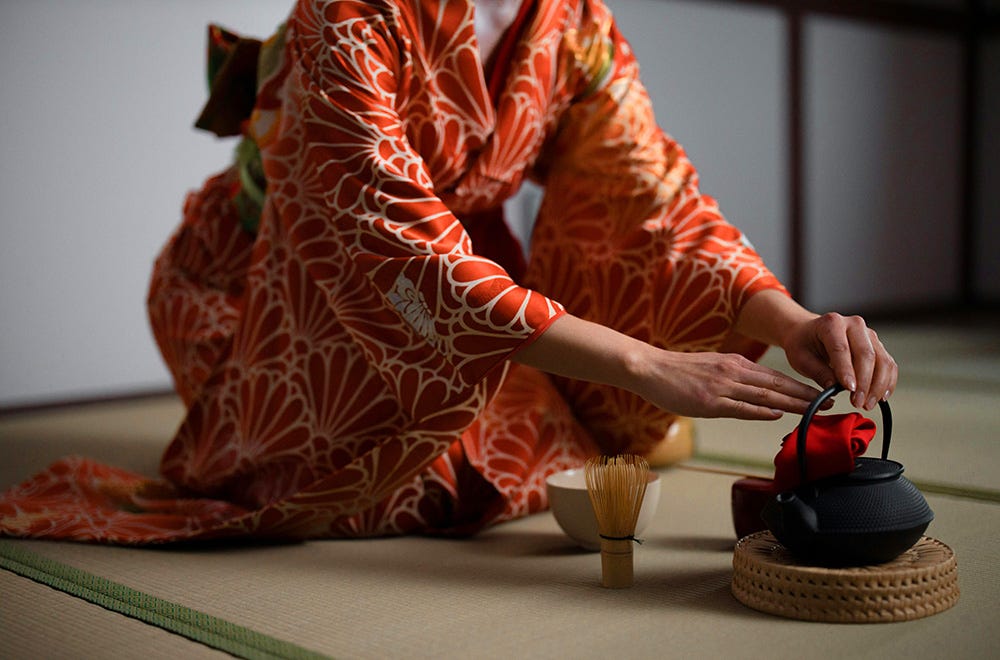
The ceremony is guided by four ideas: harmony, respect, purity, and tranquility. These are simple words, but they appear in every part of the experience. The quiet room, the careful cleaning of utensils, the way guests enter, and the slow preparation of tea all help create a calm and respectful atmosphere.
The tea room itself is usually modest and uncluttered. Tatami mats, sliding paper doors, seasonal flowers, and a hanging scroll are often part of the setting. Nothing is there by accident. Each detail supports the mood of the gathering.
The utensils are also important. The tea bowl, bamboo whisk, tea scoop, and tea caddy each have a specific role. Many are valued not because they are perfect, but because they show age, simplicity, and character. This reflects the Japanese idea of wabi-sabi, which finds beauty in imperfection and transience.
A tea ceremony can be formal or informal. A full chaji may last several hours and include a meal, while a shorter chakai focuses mainly on tea and sweets. Both follow established forms and both place importance on attention, etiquette, and consideration for others.
For anyone interested in Japanese homes, especially older traditional houses, the tea ceremony offers useful context. It shows how space, materials, seasonality, and hospitality come together in daily culture. It is not only about drinking tea. It is about slowing down enough to notice the room, the tools, the host, and the moment.
For the full article, read more here:
https://akiyaheaven.jp/the-art-of-japanese-tea-ceremony-a-deep-dive-into-tradition/
No posts
Comments
Nothing yet. Say the first thing.
Sign in to join the conversation.