
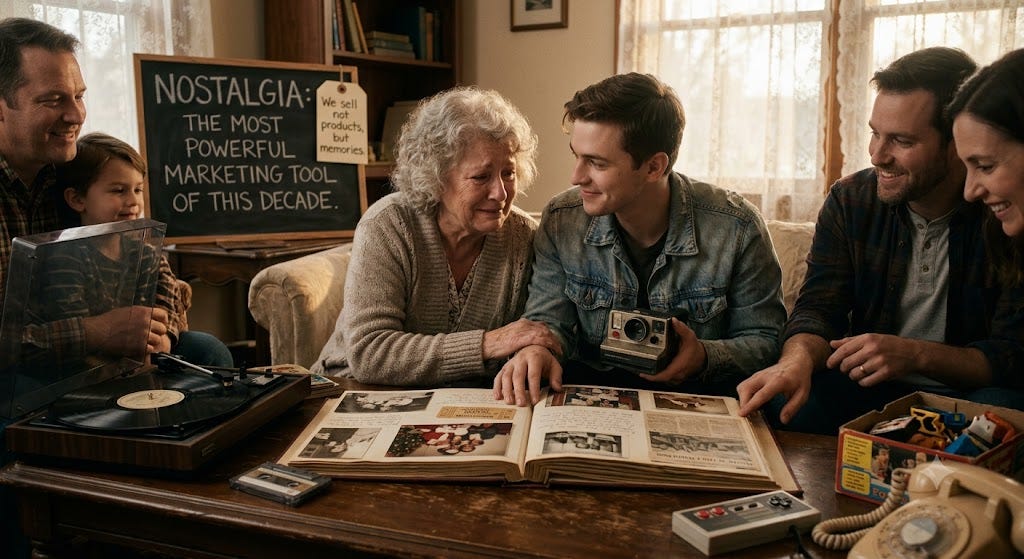
In 2024, every single one of the year’s top 14 highest-grossing films was a sequel, reboot, spin-off, or franchise expansion. The first genuinely original movie on the list showed up at number 15. That’s not a fluke year - it’s the visible endpoint of an industry that figured out, with real precision, that the safest bet in entertainment isn’t a great new idea. It’s a familiar old one, dressed up and re-released to an audience already primed to love it before the trailer even starts.
What I think gets missed in the usual “Hollywood is out of ideas” complaint is that this isn’t creative laziness. It’s the correct response to a genuinely powerful, well-documented psychological lever, and the data on how well it works is almost uncomfortably specific. Streaming titles explicitly marketed as revivals of 80s and 90s intellectual property drove an average 33% spike in new subscribers in the two weeks around their premiere this year, with animated revivals outperforming live-action reboots by 11 percentage points. Nostalgia-coded subject lines in marketing emails get opened 19% more often than neutral copy. Nostalgic elements in advertising improve recall by 39%. Retro product re-releases produce a 24% lift in repeat purchases. Nobody is guessing at this anymore. Marketers have a genuinely granular, quantified playbook for exactly how much extra performance a dose of nostalgia buys them, channel by channel.
The psychology underneath those numbers is the part I find genuinely interesting, because it isn’t simple affection for the past - it’s something closer to a documented coping mechanism that happens to be extremely exploitable commercially. Research on nostalgia and spending has found that people asked to think about past memories become willing to pay more for products than people asked to think about future or new experiences. Separately, and this is the detail that actually explains the mechanism, other research has found that nostalgia measurably weakens people’s desire for money itself - it loosens the normal financial guardedness that makes people careful with what they spend. Put those two findings together and you get something coherent: nostalgia doesn’t just make old things feel good. It temporarily lowers a person’s normal resistance to spending, while simultaneously making the specific thing triggering the nostalgia feel more valuable than it would otherwise. That’s about as close to a perfect marketing mechanism as psychology has ever handed an industry.
And there’s a reason that mechanism is firing especially hard on this particular decade rather than some other one. Nostalgic consumption research consistently finds that anxiety, insecurity, and a general sense of losing control over the future all increase people’s preference for familiar, nostalgic products - it functions as a genuine soothing response to exactly the kind of uncertainty that’s been unusually abundant lately: economic instability, rapid and disorienting technological change, a political and information environment that feels less predictable by the month. Sixty-two percent of consumers now say nostalgic advertising specifically feels comforting “during uncertain times,” which is marketing research quietly admitting the mechanism out loud. Layer that anxiety-driven demand on top of pure demographic timing - millennials, the generation that grew up on 80s and 90s franchises, are now sitting at peak career earnings and peak purchasing power at exactly the moment their own childhood IP is old enough to revive - and you get a genuinely unusual alignment: the audience with the most money to spend is also the audience most primed, by both age and by ambient anxiety, to spend it on something that reminds them of a calmer version of the world.
I don’t think this is a trend that reverses on its own, because it isn’t really a trend in the fashion sense - it’s a company-level discovery that a real, replicable psychological lever produces measurable revenue, at a moment when the underlying anxiety fueling demand for it shows no sign of easing. What I find slightly uncomfortable about sitting with the research is how deliberately the mechanism gets targeted once it’s this well understood: brands aren’t stumbling into nostalgia by accident anymore, they’re engineering specific temporal cues - a font, a jingle, a decade-appropriate color palette - to trigger a documented psychological state that quietly makes people worse at guarding their own wallet. That doesn’t make the tactic dishonest, exactly. It makes it the rare case where the emotional comfort being sold and the commercial mechanism extracting value from that comfort are, transparently, the exact same thing.
No posts
Comments
Nothing yet. Say the first thing.
Sign in to join the conversation.