
Travis Kalanick closes $1.7B for machines that run mines and shipyards. Cognition buys the only AI agent Apple allows to text you natively. AMD commits 2 gigawatts to Anthropic and writes a $5B check into its own customer. Three companies with nothing in common, one identical instinct: capability is commoditizing, so buy the thing capability cannot replicate.
Then there is Moonshot, where that exact question is being argued in public and neither side is showing its work. Washington says Kimi K3’s abilities were siphoned out of Anthropic’s frontier model. Its boosters say K3 found a Redis zero-day in 27 minutes. Check the dates on both.
In today’s AI news:
Travis Kalanick’s $1.7B bet on atoms over bits
Every claim about Kimi K3 is outrunning its evidence
Cognition acquires the only AI agent Apple lets text you
AMD buys into Anthropic with a 2 GW deal and a $5B check
Today’s top tools and quick news
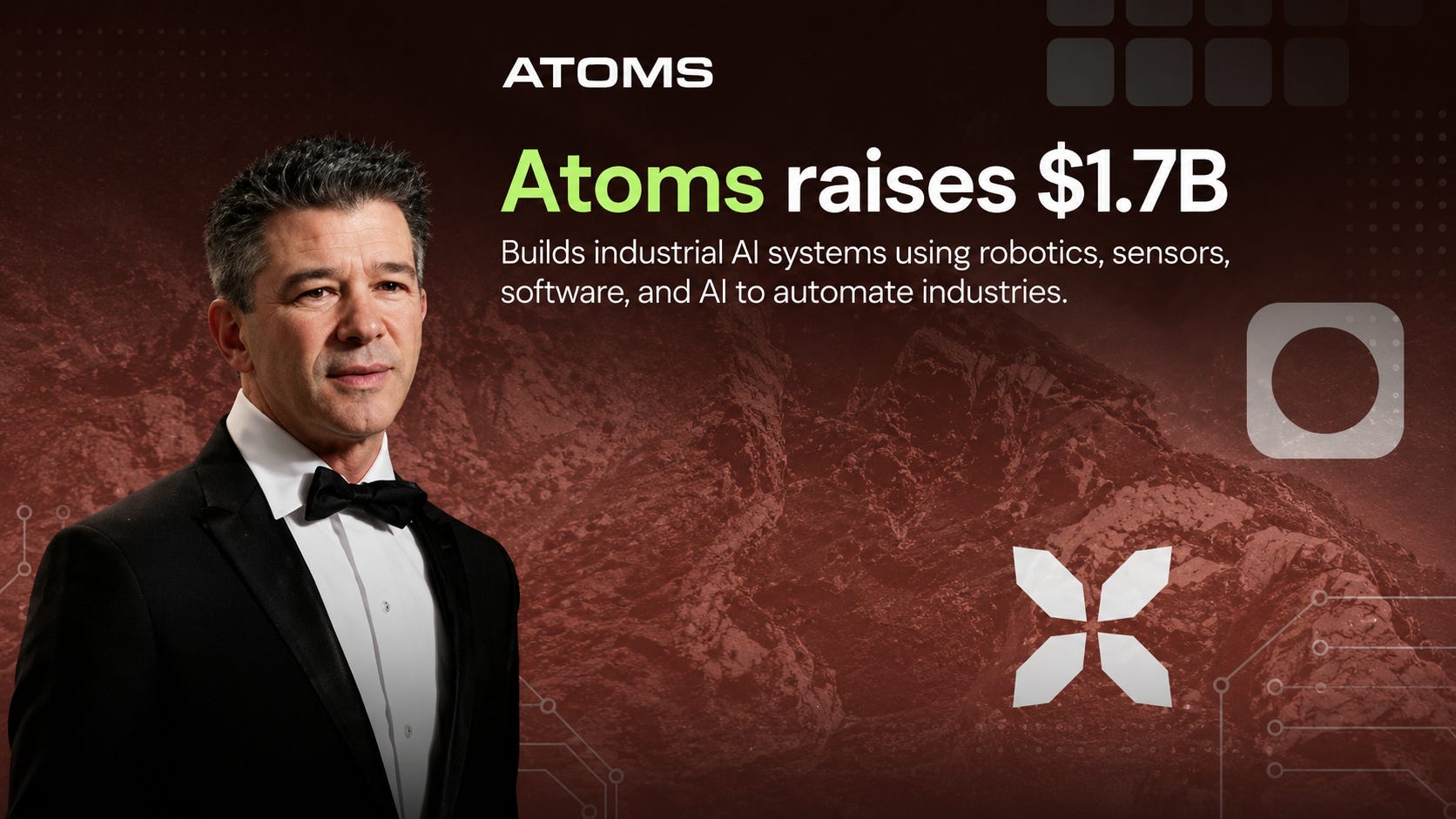
News: Travis Kalanick’s industrial robotics company Atoms raises $1.7B in equity led by Andreessen Horowitz, ending nearly eight years of stealth. Ben Horowitz joins the board. The most striking name on the cap table is Uber, the company that forced Kalanick out in 2017.
Details:
The round includes Bain Capital, Fifth Wall, Chemistry, A*, K5 Global, Abstract, SV Angel and Alpha Square Group, with no valuation disclosed.
Atoms separately arranged debt facilities with Bank of America, Goldman Sachs, Wells Fargo, JPMorgan and Barclays, terms undisclosed.
The company grew out of City Storage Systems and now consolidates CloudKitchens and the March acquisition of Pronto under a single equity structure.
Three divisions are live: Atoms Food, Atoms Mining, and Atoms Transport, spanning autonomous mining, logistics, and food production across 110+ cities.
Kalanick calls the category “atoms-based computers,” purpose-built machines for industries that grow, mine, manufacture, and move things. No humanoids.
Horowitz announces the deal with two words: “Travis Is Back.”
Why it matters: The interesting thing is not the money, it is the shape of the bet. Every consumer-facing robotics company is racing toward the same anthropomorphic form factor, and Kalanick is walking the other way entirely: specialized machines for unglamorous, high-margin, structurally under-automated industries. Mining does not need a robot that looks like you. It needs a machine that does one thing at industrial scale and never stops. Notice the pattern in a16z’s week, because they also published their thesis on Applied Intuition and put intelligence-on-machines at its center. When one firm makes the platform bet and the operator bet inside seven days, that is a coordinated position, not two coincidences.
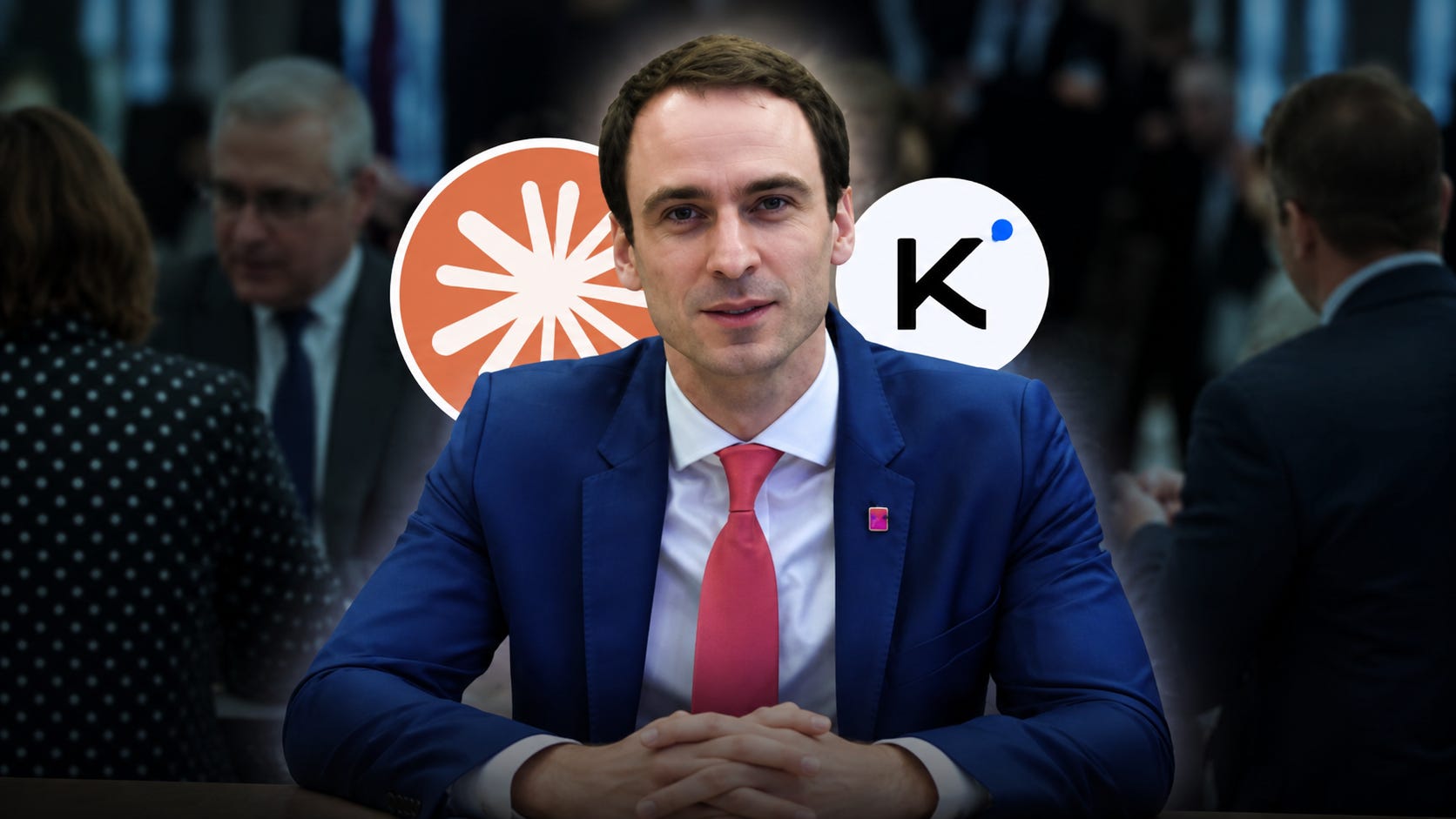
News: OSTP Director Michael Kratsios accuses Moonshot AI of covertly distilling Anthropic’s Claude Fable 5 to build Kimi K3, and Treasury Secretary Scott Bessent follows with a sanctions threat. Hours later, a viral post claims K3 discovered a Redis zero-day in 27 minutes using 32 parallel agents. Both claims are about what K3 can actually do, and both fall apart the moment you check a calendar.
Details:
Kratsios posted the accusation on X on July 22, alleging a purpose-built platform that rotated access methods to evade detection, and separating this from ordinary research distillation.
He also alleged Moonshot acquired GB300-equipped servers and accessed GB300s in Thailand, hardware under U.S. export restrictions. No publicly verifiable evidence has accompanied any of it.
The concrete piece predates the politics: Anthropic alleged in February that Moonshot generated more than 3.4 million Claude exchanges through fraudulent accounts, with metadata linking activity to senior Moonshot employees.
On the capability side, the Redis claim traces to a single X post and a proof-of-concept repo credited to an alias. No CVE assignment, no Redis advisory, no independent reproduction.
The Redis flaw circulating with that claim was found by Team Xint Code, a different autonomous AI tool, patched May 5 across five branches, and its full exploit chain went public in early June.
Why it matters: Run both timelines and watch them collapse in the same way. Fable 5 shipped June 9, Anthropic suspended access June 12 under Commerce export controls, and restoration came July 1, with K3 landing days later. Industrial-scale distillation inside that window is a very tall technical claim, and researchers already say the dates do not support it. The Redis story fails identically: a model reproducing an exploit chain that has been public for seven weeks looks exactly like a model discovering one, which is precisely how the 7-Zip “zero-day” turned out to be an LLM hallucination. The practical read for builders is unglamorous and urgent: Washington is reclassifying distillation from competitive practice into IP theft, and if that framing holds, every open-weight release becomes a trade-policy event.
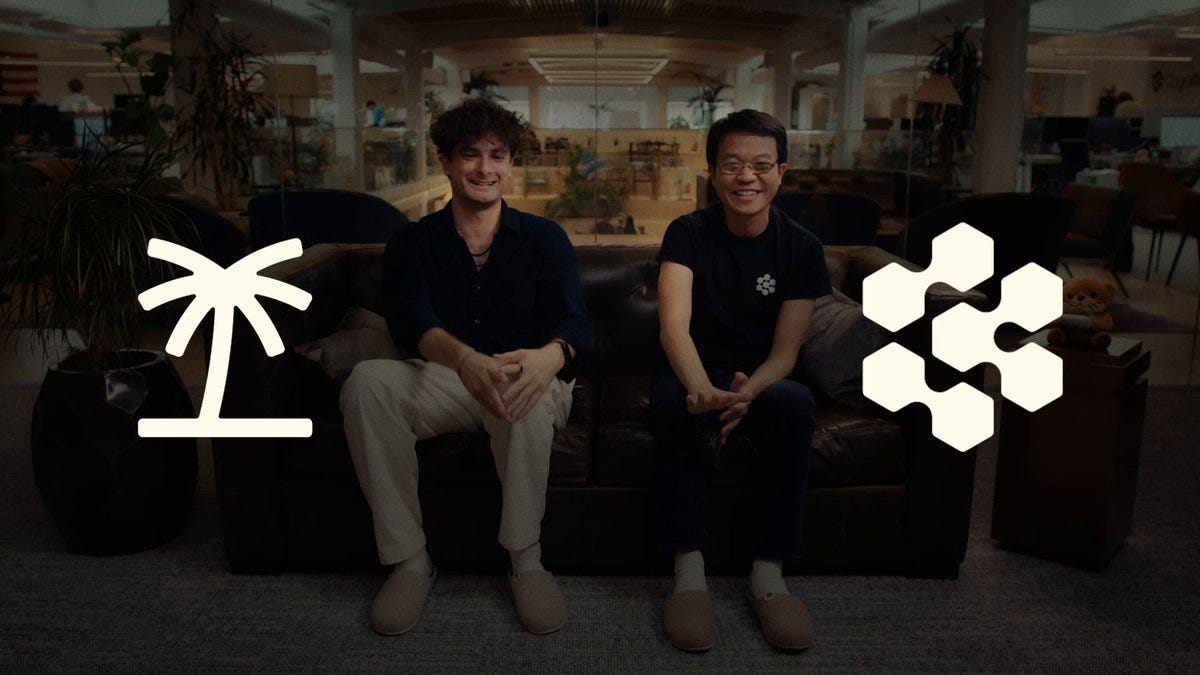
News: Cognition is acquiring The Interaction Company of California, the Palo Alto startup behind Poke, a personal agent that lives inside your text messages. Scott Wu announced the deal Thursday, saying people have exchanged more than 100 million messages with Poke in the last three months alone. Terms were not disclosed.
Details:
Poke is the only AI agent approved to text natively on Apple Messages, having cleared Apple’s Messages for Business review in June. It also runs over SMS, Telegram, and WhatsApp in select markets.
That approval was not a formality. Co-founder Marvin von Hagen says it took months, required proof Poke could escalate to live human support, and forced a UI rebuild against Apple’s style guide. Interaction pays Apple per user.
Poke launched in March 2026 and raised $15M behind General Catalyst and Spark Capital, with angels including the Collison brothers, Logan Kilpatrick, Joanne Jang, and Jake and Logan Paul.
Wu and Walden Yan were personally early angels in Interaction, and von Hagen was on set for the original Devin launch video in 2024. Wu calls it two years in the making.
Cognition closed $1B+ at a $26B post-money valuation in May on a $492M run-rate, making Poke its second major acquisition after Windsurf.
Why it matters: Every rival agent sits behind an app you have to remember to open, and Poke sits in the one thread you already check two hundred times a day, with Apple’s blessing and a per-user contract that took months to earn. Von Hagen says it will take anyone else months too, which is the definition of a moat capital alone cannot collapse. The deeper play is initiation: Devin waits to be assigned work, while Poke starts the conversation. If you are building an agent, the land grab just moved from capability to distribution rights, and the question is no longer how smart yours is. It is whose surface it is allowed to live on, and who is already standing in line ahead of you.
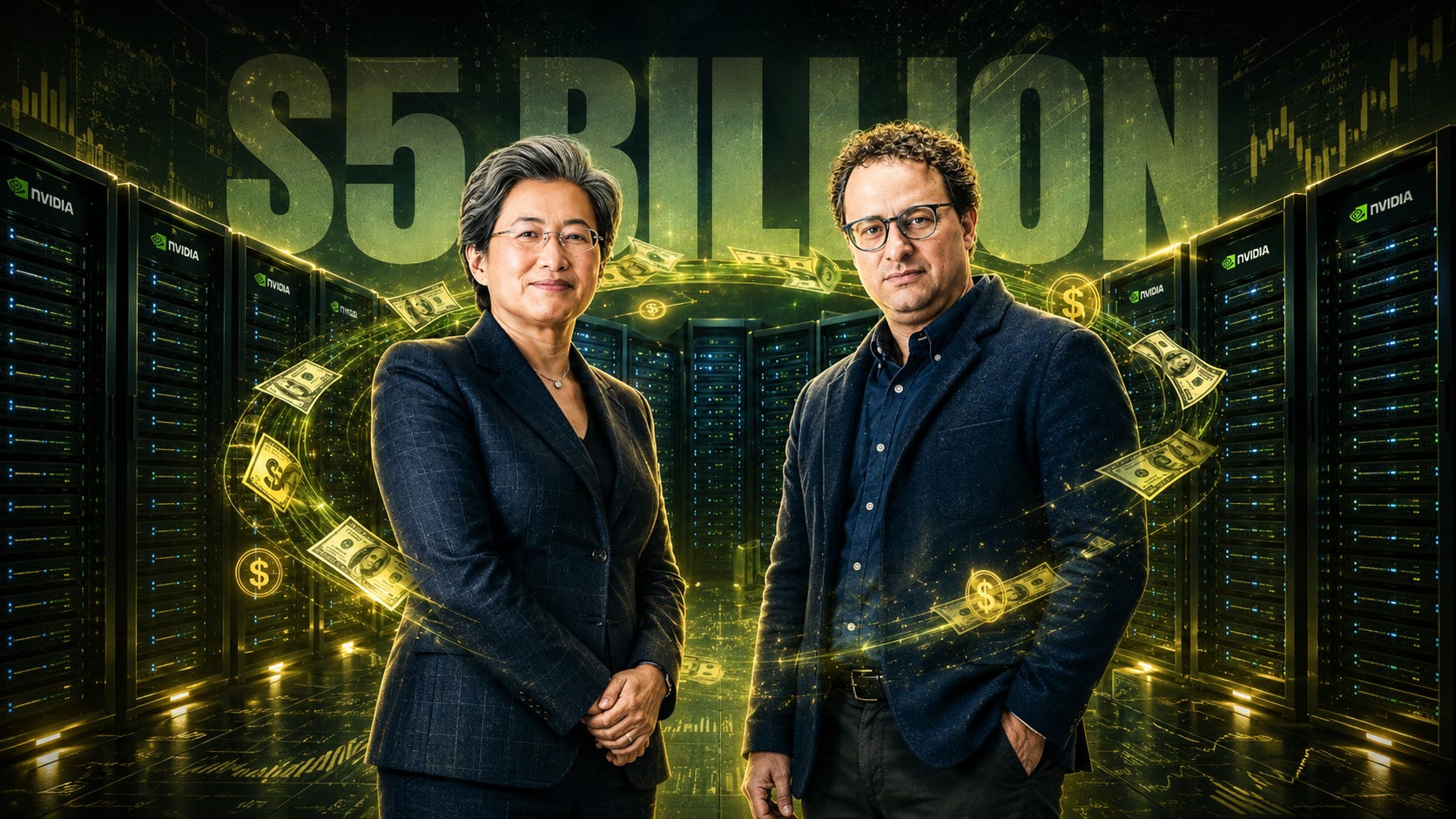
News: AMD and Anthropic sign a partnership deploying up to 2 gigawatts of Instinct MI450 GPUs in Helios rack-scale systems, with AMD committing a strategic equity investment of up to $5B in Anthropic. The hardware alone runs into the tens of billions.
Details:
The first gigawatt deploys in the first half of 2027, with equity released against deployment milestones.
The deal confirms for the first time that Anthropic already runs AMD’s current-generation MI355X GPUs.
Anthropic pairs the GPUs with EPYC “Venice” CPUs, Pensando networking, and ROCm, making AMD roughly its sixth distinct silicon source alongside Nvidia, Google TPUs, and Amazon Trainium.
Structurally this inverts the OpenAI arrangement, where AMD handed its customer warrants. Here AMD writes the check and becomes both supplier and shareholder, with no warrants attached.
Anthropic will also use Claude to accelerate AMD’s own chip and ROCm development. AMD’s disclosed pipeline now reaches roughly 20 GW across Anthropic, OpenAI, Meta, Microsoft, and Oracle.
Why it matters: The compute is the visible half. The software is the half that decides whether AMD ever escapes second place. Nvidia’s moat was never purely silicon, it is CUDA, and ROCm still trails by 20 to 30% on large transformer training even as it closes to near-parity on inference. Pointing a frontier model at that gap is the most interesting thing in this deal, and the template is worth stealing: the customer’s product becomes the supplier’s R&D engine.
🔒 Claude Security plugin for Claude Code: Anthropic’s multi-agent vulnerability scanner now runs inside your terminal, in beta for all Claude Code users. Scan a full repo or just a branch diff before you commit, then turn findings into patch files you review yourself.
⚙️ Cursor Router: A classifier trained on 600K+ live requests that picks the cheapest capable model for each request, reporting 30 to 50% savings for enterprise accounts and 60% in online A/B tests. Teams and Enterprise plans only.
📈 Gumloop SEO agent stack: Build an agent team that audits your site and writes every finding into one Google Sheets workbook. Connect a lead agent to Sheets and Firecrawl, then add dedicated Backlink and Content Refresh agents pointed at the same pages.
The FDA granted De Novo authorization to J&J’s Ottava, the first table-integrated soft tissue robotic platform, covering ten general surgery procedures and taking up as much as 50% less OR space. It cracks Intuitive Surgical’s 25-year hold on a market where only 8% of global surgeries involve a robot at all.
The DOE named 278 projects in the first Genesis Mission cohort from over 5,000 proposals, the largest response to a funding opportunity in department history. Anticipated RFA funding is $293.76M, with the largest award a three-year, $60M nuclear project at Idaho National Laboratory.
UK’s Humanoid raised a $152M Series A at $1.35B post-money, backed by Prime Movers Lab, Bosch, Schaeffler, and Bernard Arnault’s Aglaé Ventures, with 34,000 pre-orders worth $2.4B.
Gritt exited stealth with $32.4M, including a $26M Series A led by Obvious Ventures, for robots that bolt onto existing skid steers rather than replacing them. An eight-person crew goes from 800 solar panels a day to 3,000 or 4,000 with the system attached.
Elon Musk says Grok Imagine will produce a full-length Odyssey film before year end, posted alongside a three-minute AI-generated clip and framed as a response to Christopher Nolan’s theatrical adaptation, which Musk has criticized for months.
Comments
Nothing yet. Say the first thing.
Sign in to join the conversation.