
Good morning AI entrepreneurs & enthusiasts,
Anthropic spent the last two weeks shipping its strongest models ever. But here’s the part most people are missing: the cheaper one might be the bigger deal.
The new Sonnet 4.6 goes toe-to-toe with Opus 4.6 across coding, finance, and computer use benchmarks at 1/5 the cost. That’s Anthropic collapsing the gap between what the best AI can do and what most companies can actually afford to deploy at scale.
(And yes, Apple is quietly fast-tracking three AI wearables that could redefine what Siri becomes in 2027...)
In today’s AI news:
Anthropic’s powerful Claude Sonnet 4.6
Meta and Nvidia lock in a massive multiyear AI chip deal
Apple going all-in on AI wearables
Mistral makes its first-ever acquisition
Figma turns Claude Code builds into editable designs
Today’s Top Tools + Quick News
🧠 Anthropic Ships Claude Sonnet 4.6: Near-Flagship Power at 1/5 the Price
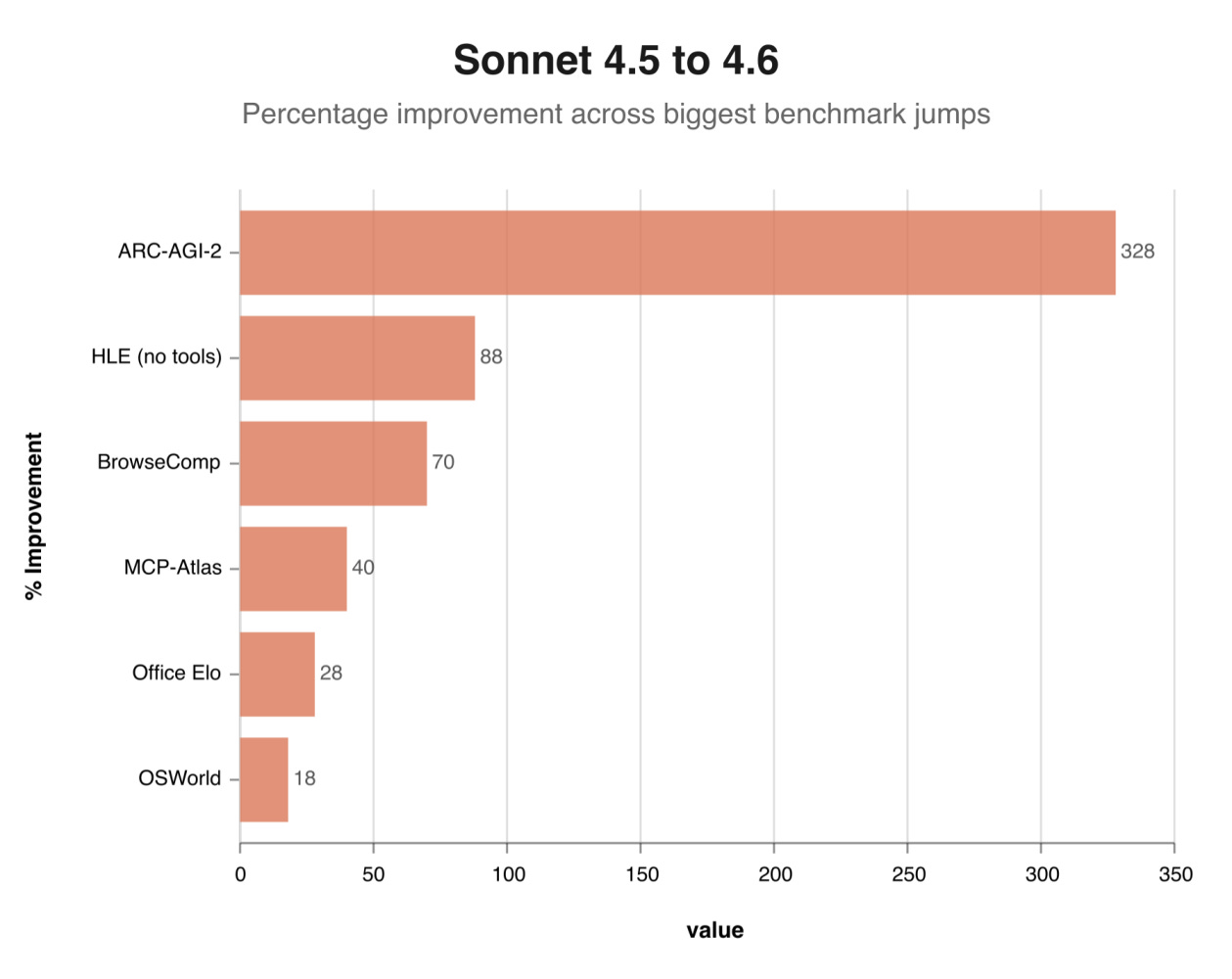
News: Anthropic just released Claude Sonnet 4.6, its newest mid-tier model that matches or outperforms the flagship Opus 4.6 across finance, computer use, coding, and office benchmarks at 1/5 the cost. The model features a 1M token context window in beta and is now the default across claude.ai for all users, including the free tier.
Details:
Priced at $3/$15 per million tokens vs. Opus’s $15/$75, Sonnet 4.6 scored 79.6% on SWE-Bench Verified for coding, just below Opus 4.6’s 80.8%, the smallest Sonnet-to-Opus gap in any Claude generation. For companies running AI agents that make thousands of API calls per day, that pricing gap rewrites the unit economics of automation.
Early Claude Code testers preferred Sonnet 4.6 over its predecessor 70% of the time, and it beat the previous flagship Opus 4.5 at a 59% preference rate. Developers reported less overengineering, fewer hallucinations, and stronger instruction following.
Computer use capabilities continue their steep climb: Sonnet’s OSWorld scores jumped from 14.9% in October 2024 to 72.5% today, nearly quintupling in 16 months. Enterprise customers are already migrating: Pace reported 94% accuracy on its insurance computer use benchmark, and Box saw a 15-point improvement in heavy reasoning Q&A.
Sonnet 4.6 outperformed Opus 4.6 on agentic financial analysis and office-task benchmarks, a first for any mid-tier Claude model. The mid-tier is no longer a compromise. It’s the default.
Why It Matters: This is absolutely insane. I’ve been writing for months about how Chinese models keep delivering similar performance benchmarks at a fraction of the price, and Anthropic just answered with the exact same playbook: near-flagship intelligence, 80% cheaper, shipped two weeks after the flagship upgrade. But the number that should make every builder pay attention is the 59% preference rate over Opus 4.5. That’s not “almost as good.” That’s testers choosing the cheaper model over last month’s best by a significant margin. Anthropic just keeps shipping, and they’re not slowing down. If you’re building on AI, your cost-to-deploy just fundamentally changed.
💰 Meta and Nvidia Lock In Massive Multiyear AI Chip Deal
News: Nvidia announced a multiyear, multigenerational strategic partnership with Meta spanning millions of GPUs and CPUs across on-premises, cloud, and AI infrastructure. The deal, estimated at tens of billions of dollars, makes Meta the first Big Tech company to deploy Nvidia’s standalone Grace CPUs at scale.
Details:
Meta will deploy millions of Nvidia Blackwell and next-gen Rubin GPUs, alongside Nvidia’s Arm-based Grace CPUs as standalone chips and Spectrum-X Ethernet switches integrated into Meta’s Facebook Open Switching System platform.
The standalone Grace CPU deployment is a first for any hyperscaler at this scale, with Nvidia claiming 2x performance per watt on backend datacenter workloads. The CPUs run inference and agentic workloads as companions to GPU racks. Meta is already testing Nvidia’s upcoming Vera CPUs for large-scale rollouts from 2027.
The partnership is part of Meta’s broader $600 billion U.S. commitment by 2028 on data centers, with plans for 30 facilities (26 in the U.S.), including the 1-gigawatt Prometheus site in Ohio and the 5-gigawatt Hyperion site in Louisiana.
Meta’s 2026 AI capex target sits at $115 billion to $135 billion. Back-of-the-napkin math: a million GPUs at $3.5 million per rack works out to roughly $48 billion for Nvidia alone.
Why It Matters: This is history in the making. Meta becomes the first hyperscaler to deploy Grace CPUs as standalone chips, operating on the cutting edge of what’s possible in AI infrastructure. The scale is unprecedented: $600 billion committed to data centers by 2028, $135 billion in capex this year alone, and the critical thing most people are missing is that Meta actually has the revenue and profitability to back it up. This is Zuck signaling three things at once: inference over training, crazy amounts of scale, and the stated goal of building everyone’s personal superintelligence. That requires infrastructure that doesn’t exist yet. This deal is the down payment.
🕶️ Apple Fast-Tracks Three AI Wearables to Give Siri Eyes and Ears

News: Apple is accelerating development on three camera-equipped AI wearables, according to Bloomberg’s Mark Gurman. Smart glasses (code-named N50), a pendant device, and new AirPods are all designed to feed Siri real-time visual awareness through the iPhone, marking what could be Apple’s most significant wearables pivot since the Apple Watch.
Details:
The smart glasses feature dual cameras (one high-resolution for photo/video, one for computer vision), Apple-designed premium frames, no display, and a production target of December 2026 ahead of a 2027 launch. Apple chose to design its own frames rather than partner with established eyewear brands.
The pendant device acts as an always-on camera and microphone for your iPhone, internally dubbed the phone’s “eyes and ears.” It includes a dedicated chip, can be clipped to clothing or worn as a necklace, and is designed as an iPhone accessory, not a standalone product.
Camera-equipped AirPods could ship as early as September 2026, using infrared low-res sensors to give Siri live visual context. Development is further along than the pendant.
All three devices connect into Apple’s revamped Siri for iOS 27, expected to gain a chatbot-style interface this year, powered by AI models co-developed with Google’s Gemini.
Why It Matters: Now the $2 billion Q.ai acquisition from last month makes sense. Q.ai‘s technology reads facial micro-movements through headphones and glasses to detect speech, emotions, and intent, exactly the kind of sensing layer these wearables need. We’ve all been wondering why Apple has been dropping the ball on AI (sorry Apple, but you know it’s true), and this roadmap finally reveals a coherent strategy: own the hardware interface between AI and the physical world, and let Google’s Gemini handle the intelligence layer underneath. The AI itself still needs to be better, but Apple is carving a lane for itself that no one else can match: 1.5 billion devices, premium hardware DNA, and now a wearable form factor designed from the ground up for ambient AI.
🇫🇷 Mistral Makes Its First-Ever Acquisition with Koyeb
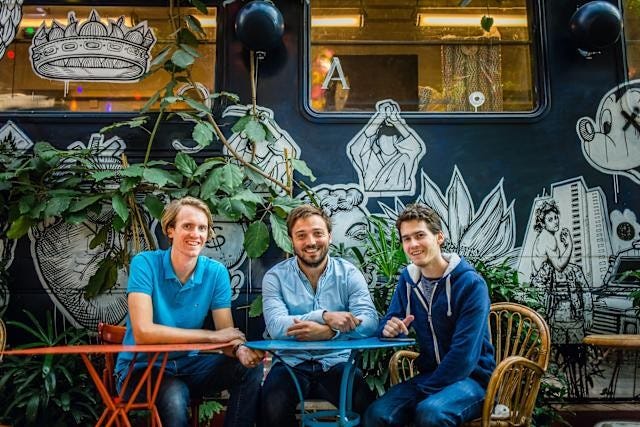
News: French AI startup Mistral AI confirmed its first-ever acquisition, buying Paris-based serverless cloud platform Koyeb for an undisclosed amount. The deal folds Koyeb’s 13 employees and three co-founders into Mistral’s engineering team and signals a push to become a full-stack AI provider, not just a model maker.
Details:
Koyeb’s serverless platform becomes a “core component” of Mistral Compute, Mistral’s AI cloud offering launched in June 2025. The technology enables developers to deploy AI applications without managing infrastructure, with autoscaling and isolated sandboxed environments for AI agents.
The acquisition complements Mistral’s $1.4 billion data center investment in Sweden announced days earlier, where the company is deploying 40 MW of capacity and 18,000 Nvidia Blackwell GPUs as the starting point for its sovereign European AI infrastructure.
Mistral recently passed $400 million in annual recurring revenue and is targeting $1 billion for 2026. The company was valued at roughly €11.7 billion after raising a €1.7 billion round led by ASML last September.
Koyeb had raised $8.6 million total. Founded in 2020 by three former Scaleway employees, the platform already supported Mistral model deployments and recently launched Koyeb Sandboxes for isolated AI agent execution.
Why It Matters: When an AI company starts acquiring others, it’s a strong signal they’ve graduated from research lab to real business. This is the same playbook the Western hyperscalers run: own the entire stack from models to compute to deployment. Mistral is executing it from Europe, with $400M ARR, a $1B revenue target for 2026, and now a $1.4 billion infrastructure commitment in Sweden. For the EU’s AI champion, this deal confirms the ambition extends far beyond model weights. Mistral is building sovereign European AI infrastructure that gives global founders a credible non-U.S. alternative for compliance and data sovereignty.
🎨 Figma Bets On Design Layer for AI-Coded Products
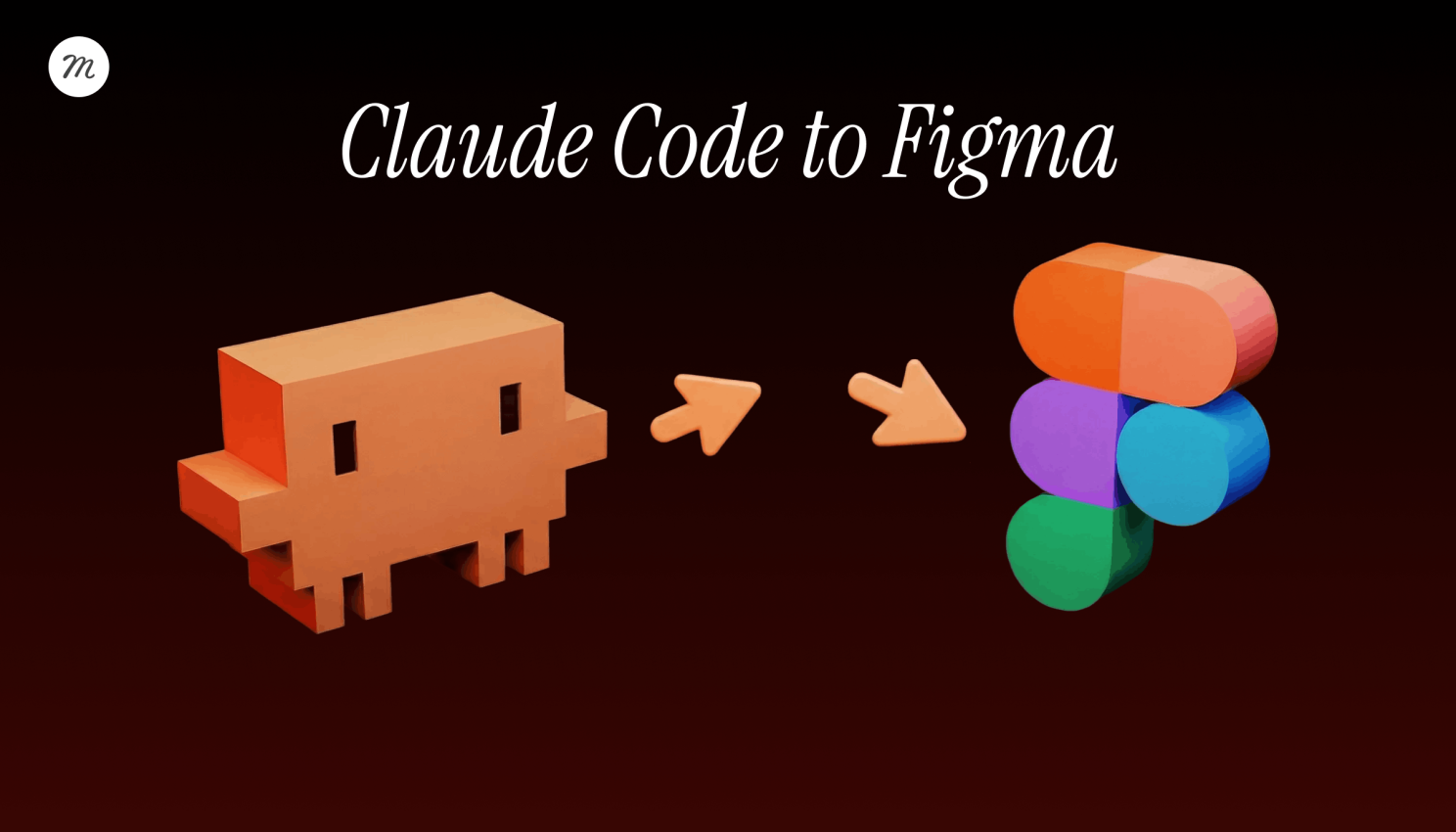
News: Figma launched “Code to Canvas” in partnership with Anthropic, a new integration that converts interfaces built in Claude Code into fully editable design files on Figma’s canvas. CEO Dylan Field framed it as a bet that “the design canvas is better at navigating lots of possibilities than prompting in an IDE.”
Details:
The feature captures live UI from any browser (production, staging, or localhost) and transforms it into native Figma layers. Users type “Send this to Figma” in Claude Code, and the rendered state translates into editable, annotatable frames.
Figma’s MCP server closes the loop: developers pull edited designs back into coding environments without losing context. Teams can capture entire multi-step flows at once, preserving full user journeys for side-by-side review.
The launch arrives amid the “SaaSpocalypse”: a sector-wide selloff that has erased nearly $1 trillion in software stock market value in early 2026. Figma stock has dropped roughly 85% from its 52-week high of $142.92. The company reports Q4 earnings on February 18.
Why It Matters: Figma is positioning itself as the “last mile” between raw AI-coded prototypes and production-ready design. It’s a logical play: AI tools build functional UIs in seconds, but someone still needs to decide which version ships. The problem is that model capabilities only keep improving, and that polishing layer gets automated next. The 85% stock decline and $1 trillion SaaS wipeout signal the market already prices this in. If you run or invest in SaaS companies, the Figma story is a preview of every software company’s existential question in 2026: what happens when the AI does 90% of the work?
🛠️ Today’s Top Tools
🧠 Claude Sonnet 4.6 - Anthropic’s upgraded mid-tier model with a 1M token context window, near-flagship performance, and $3/$15M token pricing
🎨 Recraft V4 - New image AI built for typography and production-level design outputs
🌎 Tiny Aya - Cohere’s open-weight 3.35B parameter model covering 70+ languages with regional variants. Runs offline on laptops
📰 Quick News
xAI began rolling out Grok 4.20 in a public beta, introducing a 4-agent collaboration system where specialized AI agents (Grok, Harper, Benjamin, and Lucas) work in parallel to research and execute tasks. Available to SuperGrok ($30/month) and X Premium+ subscribers with a 2M token context window.
Cohere Labs open-sourced Tiny Aya, a 3.35B parameter multilingual model handling 70+ languages with regional variants (Earth for Africa, Fire for South Asia, Water for Asia-Pacific/Europe). Trained on just 64 H100 GPUs, it runs offline on everyday laptops.
WordPress launched a new AI assistant capable of editing layouts, generating images via Google Gemini’s Nano Banana models, and rewriting content directly inside the editor. Available on Business and Commerce plans with @ai commands in the block notes editor.
Comments
Nothing yet. Say the first thing.
Sign in to join the conversation.