
In the early hours of Friday morning, a powerful 7.7 magnitude earthquake struck central Myanmar. Towns have crumbled, villages remain cut off, and the death toll continues to rise. As the country and wider region reels from the immediate devastation, attention is rapidly turning to those tasked with leading the humanitarian response. For these leaders, both national and international, military and civilian, the challenge is not only logistical, but also emotional, ethical, and likely to be complex. So how do leaders make decisions during a crisis like this especially when reliable data is scarce, emotions are high, and the clock is ticking?
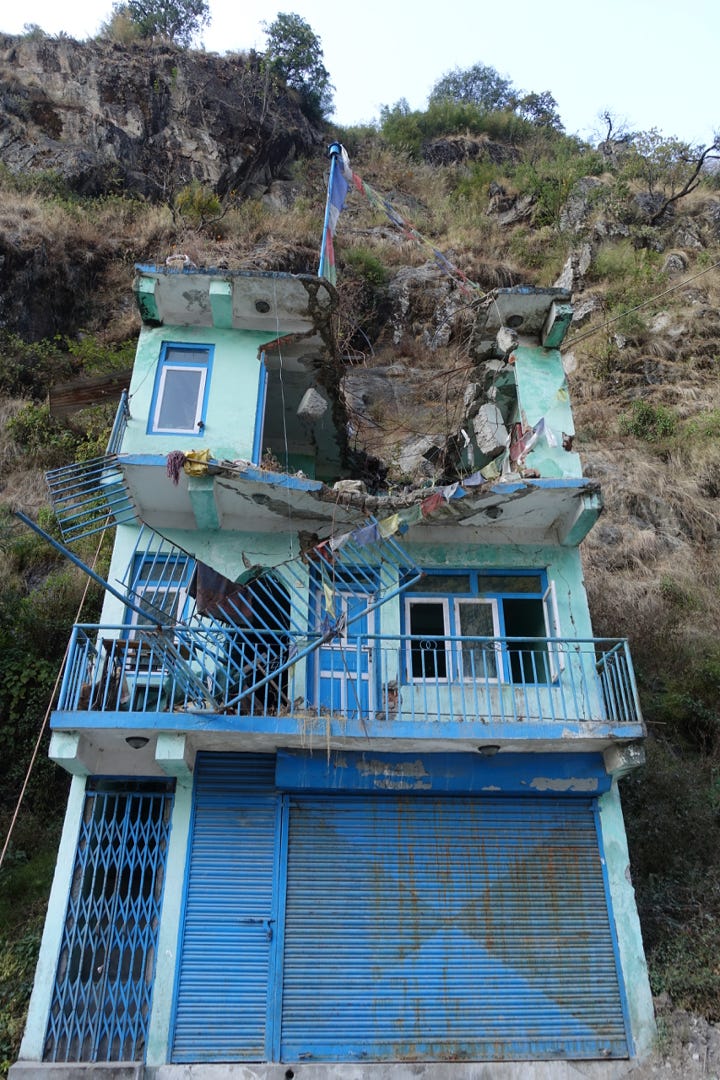
When disaster hits, leaders must quickly answer critical questions such as: how many people have been affected? Where are they? What help do they need first? These are no simple answers when roads are blocked, communications are down, and verified information is slow to arrive.
Rather than waiting for perfect data, leaders must rely on their judgement, rules of thumb and/or gut instinct: what ancient philosophers called phronesis, or practical wisdom. In research I did with colleagues from Institute of Hazard, Risk and Resilience and with support from the South Asia Research Hub of the Foreign, Commonwealth and Development Office, following the 2015 Nepal earthquake, we explored the factors which shaped the practical judgement and the decision making of humanitarian leaders.
For instance, humanitarian leaders often acted on deeply held values like saving lives and protecting the most vulnerable. These values are essential. But they’re accompanied by assumptions (such as the worst-hit areas must be closest to the epicentre), previous experience (especially among international ‘surge’ staff), and the emotional weight of the moment. One striking finding: some leaders, under intense pressure to deliver, chose to ignore reports that roads were blocked by landslides - they preferred to take their chances rather than delay action.
Humanitarian managers must navigate a thicket of organisational mandates, donor expectations, and media scrutiny. Some choose to deliver aid in areas where they already have programmes, staff, or partners. Others work alone to carve out distinct achievements they can report to headquarters or funders.
Media narratives also shape decisions. In Nepal, early coverage focused heavily on the collapse of historical monuments in Kathmandu, skewing early response efforts towards the capital - even though the worst-hit areas were elsewhere.
In Myanmar, we can expect similar pressures: attention focused on major urban centres, while remote communities suffer invisibly. Political sensitivities will further complicate coordination with local authorities. Trust, already fragile in many humanitarian settings, will be put to the test.
One element often overlooked in crisis leadership is the emotional landscape. Disasters don't just cause physical destruction; they shatter people’s sense of safety and meaning. Communities may experience fear (of e.g. aftershocks, grief, helplessness, and rage. These emotions can ‘spread’ - from survivors to relief workers and leaders alike.
We’ve found that when these emotions are not acknowledged or processed, they can impair judgement. The urgency to act, if fuelled by uncontained anxiety or guilt, may lead to hasty decisions that do more harm than good. Although humanitarian leadership is about making the right call, it’s also about holding space for fear, pain, and uncertainty - both one’s own and others’ - while still finding a way forward.
There is always an imperative to act fast, to move quickly, reach people in need, and demonstrate impact. In the aftermath of an earthquake, delay can feel like moral failure. Every hour lost could cost lives.
And yet, acting too quickly can sometimes make things worse. Rushing to action too quickly can lead to misdirected resources, duplicated efforts, or the neglect of those most in need. The early focus on Kathmandu during the Nepal response, for example, left remote areas cut off and underserved for days.
This is the paradox at the heart of humanitarian leadership: sometimes the bravest thing a leader can do is wait.
It’s what the poet John Keats famously called negative capability, the ability to hold uncertainty, to resist the urge for immediate clarity, to stay with doubt and ambiguity just long enough for better decisions to emerge. It requires emotional discipline, containment of the frustration that one feels, and a large degree of courage.
In the space created by waiting, more accurate information may surface, relationships between responders might strengthen, the context may evolve, requiring a different kind of intervention than initially imagined, which together can lead to a more thoughtful response. Holding your nerve in those early hours can make the difference between a response that simply moves fast and one that moves wisely. But how long do you wait? Well that, of course, is a matter of judgement…
What’s needed now in Myanmar is not just coordination, but reflection. Leaders must pause - not to delay action, but to ground it, to ask: what assumptions are we making? Who are we not hearing from? What emotions are in the room, how might this skew our thinking and action and whose are being ignored?
Disaster response is often framed as a technical challenge. But in the immediate aftermath, scientific evidence often comes too late to be useful. During the Nepal earthquake, managers didn’t have the luxury of waiting for robust scientific data. They acted on what was available - satellite images, shaky estimates and social media reports.
However, expert advice did make a difference. Leaders who had pre-existing relationships with trusted scientists and engineers were able to access timely insights - about aftershocks, landslide risks, and safe delivery routes. These conversations didn’t depend on peer-reviewed studies. Instead, they were shaped by trust, shared language, and mutual understanding of what’s needed in a crisis.
The lesson is clear: scientific evidence is most useful when the groundwork has been laid before disaster strikes. Building bridges between scientists, engineers and humanitarian leaders during calmer times makes those links stronger and faster when the stakes are highest.
Drawing on lessons from Nepal and beyond, here are five things humanitarian leaders in Myanmar should consider:
1. Hold onto values, but test assumptions
Values like saving lives and helping the most vulnerable are guiding stars. But assumptions about where people are, what they need, and how to reach them, must be regularly challenged.
2. Create emotional containment
Leaders must acknowledge the emotional toll of disaster, for communities and teams. Containing this doesn’t mean suppressing it but creating space for it to be expressed and metabolised.
3. Practise negative capability
The pressure to act is immense. But sometimes, a short pause allows for better information, deeper collaboration, and more appropriate interventions. Holding your nerve may save more lives in the long run.
4. Seek advice, not just evidence
Don’t wait for perfect data. Instead, consult trusted experts who can interpret partial data and offer timely insights.
5. Build relationships before the next crisis
Now is not the time to initiate trust. That work must happen in the off-season, between disasters. Scientists, NGOs, donors and local leaders must meet before the next crisis hits.
As Myanmar begins the long road to recovery, humanitarian leaders will continue to make thousands of decisions - some life-saving, others imperfect. The hope is that these choices are made not in isolation, but informed by experience, grounded in compassion, and enriched by thoughtful collaboration. While humanitarian leadership is about responding fast, it's also about responding wisely.
No posts
Comments
Nothing yet. Say the first thing.
Sign in to join the conversation.