
Earlier this month, I joined a lecture given by Earl Hopper, organised by Farhad Dalal as a fundraiser for Group Analysis India.
Hopper, a group analyst, offered a theory about what happens when levels of anxiety rise in groups. Building on the work of Wilfred Bion, who identified three unconscious “basic assumptions” that govern group behaviour under stress (fight-flight, dependency, and pairing), Hopper proposed a fourth: Incohesion – Aggregation/Massification (I:A/M).
What just happened? is a reader-supported publication. To receive new posts and support my work, consider becoming a free or paid subscriber.
Drawing on sociological insights from Norbert Elias and his own clinical experience, Hopper suggests that when groups encounter trauma or overwhelming anxiety, they do not simply become anxious or defensive, they become incohesive. They lose the ability to hold themselves together.
When a group is in this state, it tends to oscillate between two poles:
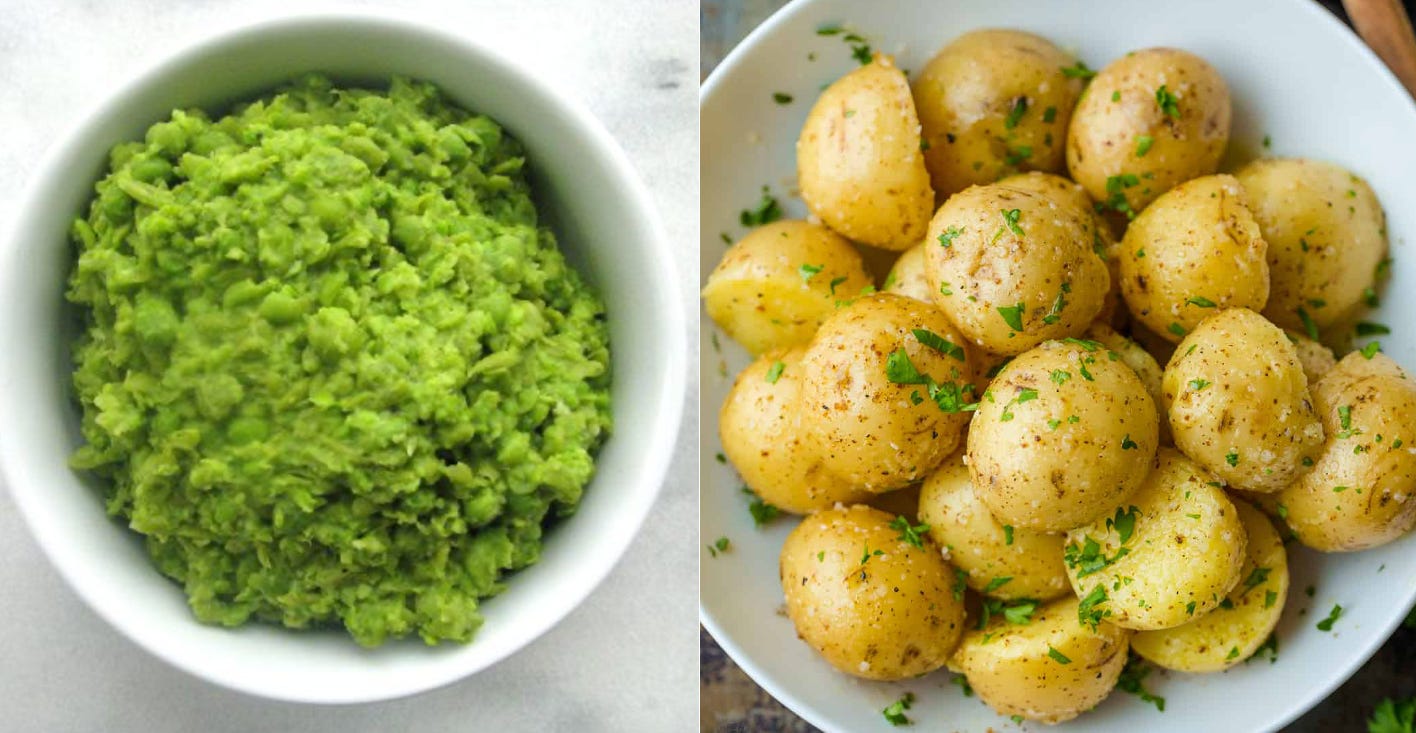
Aggregation: individuals splinter into disconnected parts, like a bowl of boiled potatoes - each with distinct shape, but no binding force.
Massification: the group fuses into a homogenous whole, like mushy peas - individual identities dissolve into a uniform mass.
Neither state supports meaningful collaboration or relational safety. Yet these polarities become default coping strategies when a group is under strain, especially when trauma - personal or societal - goes unacknowledged.
What drives this incohesion? Not, as Melanie Klein would argue, the death instinct or primordial envy. Hopper says instead that the core human experience is helplessness, not envy. This helplessness, especially when met with insufficient containment, whether in the family, community, or wider society, becomes the breeding ground for trauma.
He described a cycle of what he calls the fear of annihilation: it begins with psychic fragmentation, followed by a desperate fusion with others in the hope of safety. But this fusion soon becomes unbearable, prompting a return to fragmentation—a painful back-and-forth between dissolving and drowning. It’s from this state, Hopper suggested, that envy emerges - not as a primitive instinct, but as a secondary reaction against those perceived as unwilling or unable to help.
These dynamics don’t just shape inner life, they spill out into the social world. Traumatised groups fragment into silos or massify into ideological conformism. They form enclaves, ghettos, or what Hopper terms contra-groupings, subgroups formed around shared hurt or defensive identities. Communication suffers: in aggregation, it becomes abstract and bureaucratic; in massification, it devolves into cult-like repetition. Shared values swing between nihilism (nothing matters) and conformity (everyone must think the same).
Drawing on Wilfred Bion’s idea of valency, Hopper argues that individuals are often unconsciously pulled into roles that enact the group’s unspoken fears. A fragmented group might idealise a saviour figure, or turn against anyone who challenges the collective narrative.
Trump and the dynamics of incohesion
An example of incohesion at scale is the behaviour of the Trump administration and the broader movement that emerged around it.
In the wake of economic insecurity, political polarisation, and cultural fragmentation, many Americans found themselves suspended in the helplessness Hopper described. The Trump presidency didn’t resolve this helplessness - it exploited and enacted it.
On one hand, the country fragmented into ideological silos - aggregation. On the other, Trump’s rallies, slogans, and cult of personality created a pressure to conform - massification. People fused into identity-driven collectives (“Make America Great Again”) that offered belonging but suppressed individuality. Dissenters were/are not merely disagreed with - they were scapegoated, sacrificed in Hopper’s terms, to sustain a fragile sense of cohesion.
Trump himself, in this reading, personified incohesion. His performative fragmentation, aggression, and disavowal of complexity reflected the very psychic state of the collective. His leadership did not contain anxiety, it amplified it. Hopper would say that Trump was pulled into a role offered by a traumatised society, a figure elevated not to heal, but to act out.
This, Hopper warns, is often how groups function under duress: they raise up leaders who mirror their psychic wounds. And rather than repair those wounds, such leadership repeats them.
Incohesion in the groups which study groups
Hopper’s concepts extends to the very organisations which study group life. He noted that even in fields dedicated to reflection, incohesion is rife. The very concepts we use “the social unconscious,” “intersectionality,” “lived experience”, can become identity badges, deployed to signify belonging rather than to deepen understanding.
In these spaces, Hopper observes a different form of fanaticism—not religious, but ideological. It emerges when organisations, wounded by disappointment, loss, or betrayal, double down on certainty. The result is not inquiry, but entrenchment. Dialogue becomes impossible. Positions harden into dogma.
What can be done?
Asked what might help, Hopper offered no grand solutions. He admitted, humbly, that he doesn’t know. But he returned to what he does believe in: group work, especially large group processes that invite people to collectively reflect, witness, and metabolise the incohesion they are caught in.
He spoke of Trilogue Events - large groups structured around concentric circles, each focusing on personal, organisational, and societal dimensions. The goal isn’t resolution, but containment. Done well, these formats can offer a shared space where the mushy peas and boiled potatoes, the fragmented and the fused, can be held in the same bowl - without needing to become the same.
What just happened? is a reader-supported publication. To receive new posts and support my work, consider becoming a free or paid subscriber.
Comments
Nothing yet. Say the first thing.
Sign in to join the conversation.