
The passing of actor Dean Sullivan, aka Brookside’s Jimmy Corkhill, stirred inside me a couple of years ago a reminder of the very last episode of the Channel 4 soap opera. 80 minutes of pure, working class dystopian horror that you almost can’t believe was broadcast in 2003.
Before we get to that, a quick reminder about Brookside, a serial these days in danger of drifting into the mists of television past. Created in 1982, on the launch of Britain’s fourth TV channel, by Phil Redmond—who had previously developed popular BBC children’s serial Grange Hill—Brookside offered British audiences the third regular, successful soap experience after Coronation Street and Emmerdale Farm, both on ITV.
Predating the BBC’s EastEnders by three years, a show destined to long outlive it in longevity and popularity, Brookside followed Corrie and Emmerdale’s leads with a northern setting, in this case a suburban close in Liverpool. As Coronation Street evoked the working class manufacturing roots of Manchester, and later EastEnders the rough edged capitalism of London, so too did Brookside capture the Scouse mindset across the 1980s - that of a militant rebuke to Thatcher’s Britain.
Redmond and his writers worked hard throughout the 1980s to explore social issues that afflicted the British working class population at a time of economic change, with characters such as trade unionist Bobby Grant (Ricky Tomlinson - himself a former trade union rep) defending the Arthur Scargill corner against Thatcherite thinking. Brookside is unafraid of polemic even as Redmond steps away and the series, as was the trend of soap operas heading into the 1990s, becomes ever more sensationalist with headline-grabbing storylines that absolutely stray into a deep vein of domestic horror.
While Coronation Street had melodramatic stalkers getting ran over by Blackpool trams or Emmerdale crashed a jumbo jet in a tiny Yorkshire village, Brookside had the saga of the Jordache family, where mother and daughters conspired to murder their sexually and physically abusive patriarch and bury him under the garden patio. Other soaps had their fare share of ghoulish villains and serial killers (Corrie’s Richard Hillman springs to mind), but Brookside was truly unafraid to enter the darkest of territory, marrying stark brutality with mundane suburban life.
Nonetheless, despite memorable, earthy characters and attention grabbing storylines (such as the erroneously labelled ‘first lesbian relationship on TV’ with Anna Friel’s Jordache daughter), Brookside’s viewing figures steadily plunged across the 1990s and into the 2000s, even with creative efforts to revitalise and relaunch the cast and storylines on repeated occasions. Unlike the aforementioned soaps, Brookside just didn’t strike the same iconic chord, perhaps by virtue of being on a smaller, niche channel. Come the beginning of the 21st century, viewing figures were down to less than half a million.
Channel 4 therefore began the process of scaling the soap down. The budget decreased, as did the amount of cast involved. It was condensed first into a Saturday afternoon omnibus edition and, later, thrown into a graveyard, post-watershed midweek slot, as in 2002 it was announced—as the series hit two decades old—that Brookside would end a year later in November of 2003. Redmond reflected almost a decade later to The Scotsman that a contributing factor was the broader TV trends in play:
“All the data from all over the world shows that the audience for television is on a sharp decline, except in the over-50s, where it’s showing a slight increase. You get to a certain age and at the end of the day, the walking dead syndrome starts to hit you. What you want to do is sit on the couch and press a button. I used to try to get the channel to think about ageing the slot of the programme with its audience, instead of trying to keep [a show] at 8 o’clock, which is why, in the end, Brookside finished, because you could not have this 25 minutes of social reality in the middle of all the froth and the titillation that ran through the rest of the schedule.”
Here’s where it gets interesting. The move to a late time slot allowed Brookside to edge away from the safe, PG-orientated, salacious thrills of early evening viewing. It had the space to go darker than ever. Stalwart figures such as the aforementioned Jimmy Corkhill or Ron Dixon (Vince Earl) had the space to drop an F-bomb, giving the soap a cable television veneer akin to American shows coming to prominence at the time freed of network restrictions over content. Brookside had dabbled in dark plotlines before - the highest viewing figures, indeed, were in the mid-80s when the close was held hostage by a crazed gunman.
The late night run of Brookside was a different affair, however. The more contained storylines became ever more grim in content, fuelled by dark and depressing storylines, with Redmond utilising experimental filming techniques including split screen (popular at the time thanks to American import 24), abstract dream sequences and flashbacks, techniques not at all common to social realist soap opera in the U.K. Brookside was part of a tradition of serials that were initially designed to reflect contemporary audiences lives but grew over decades into melodramatic, hyper-realised expressions of infidelity, crime and rapidly changing social mores.
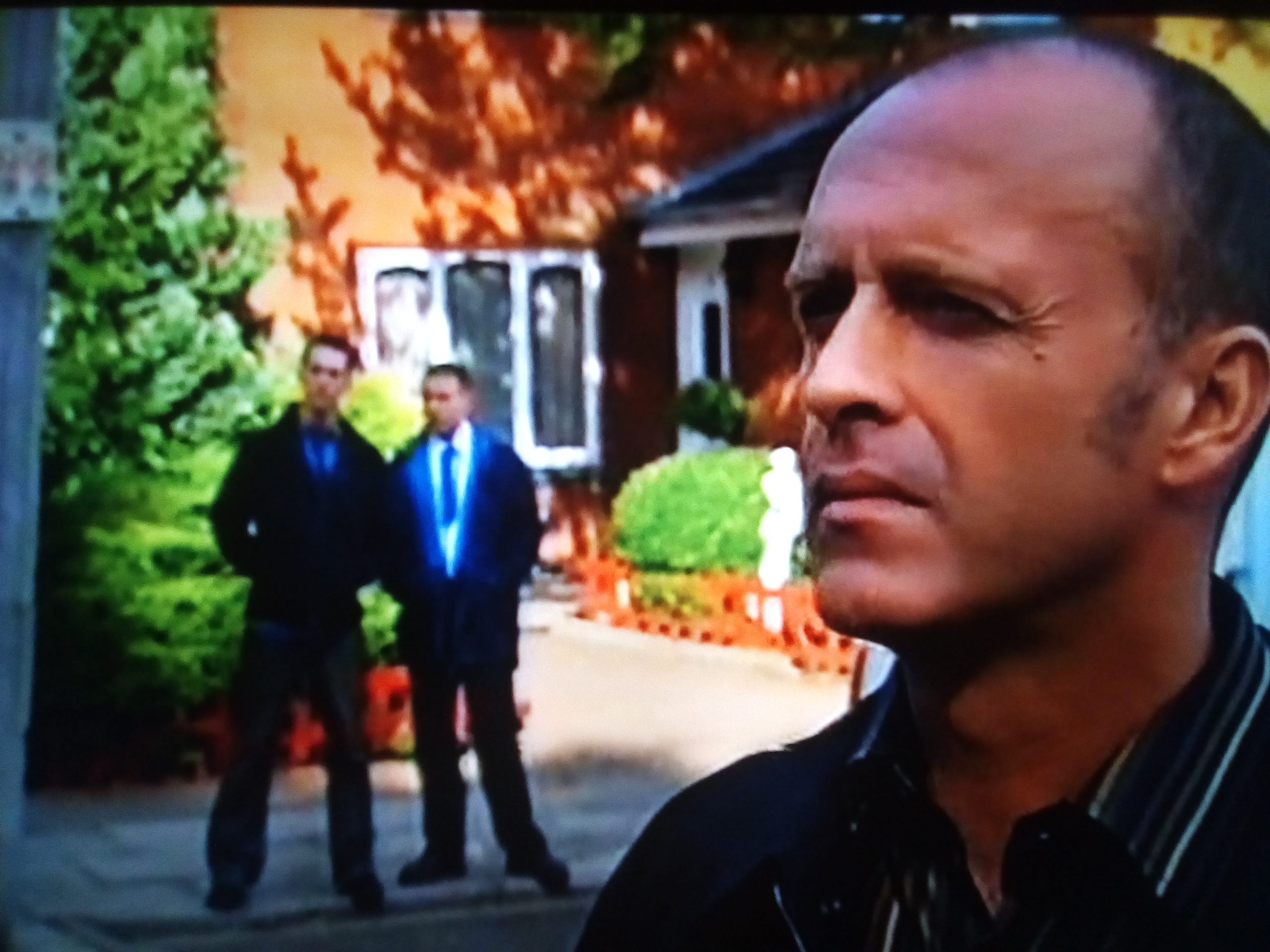
With a strong sense of cultural cache over two decades, Brookside chose with the final episode, dated November 4th 2003, to go out with a memorable feature length conclusion that does what many soaps simply never have the chance to do - end. Few people were watching anymore but most of the British public knew Brookside existed, given the aforementioned serialised storylines and more recent attempts to reboot the show with evocative, explosive narratives - such as the 20th anniversary siege on the close which results in mayhem, the ripples of which still play into how the series ends. Redmond’s final episode feels, frankly, a representation of deep, existential, societal trauma.
This is perhaps represented in the character of Jack Michaelson (Paul Duckworth), a pure avatar of amoral, modern decay; a vicious drug dealer who, over previous weeks, takes hold of a house in Brookside Close and leaves residents in a grip of fear, as children suffer as a result of his dealing and residents are cowed into silence. All this, by the way, in the shadow of the close literally being bulldozed by Cinerco, a reclamation company who seek to use the land to build a plant. Brookside Close itself will cease to exist as a residential area once the story closes, as if to add greater fuel to the fire. Redmond’s story has the pallor of dystopia, of a world crumbling before our very eyes, infested with the virus of open, unchecked criminality.
Many of the storylines being wrapped up in the final episode are almost incidental now. Redmond spends the first half an hour establishing the deep-seated fear of the Murray family, or the rage of the Gordon boys, determined to see Michaelson pay for his son almost being killed by his drug dealing, and Jimmy Corkhill’s unconventional reunion with his daughter Lindsay (Claire Sweeney), revealed to be living in a mansion in the North East with her fiancé, Barry Grant (Paul Asher), a notorious gangster and long-term Brookside villain with long-standing beef with Jimmy. These are by far the most interesting scenes, as Redmond presents Barry as a calm but deadly figure, seeking Jimmy’s approval to marry his daughter, before being drawn into the Close’s terror of Michaelson.
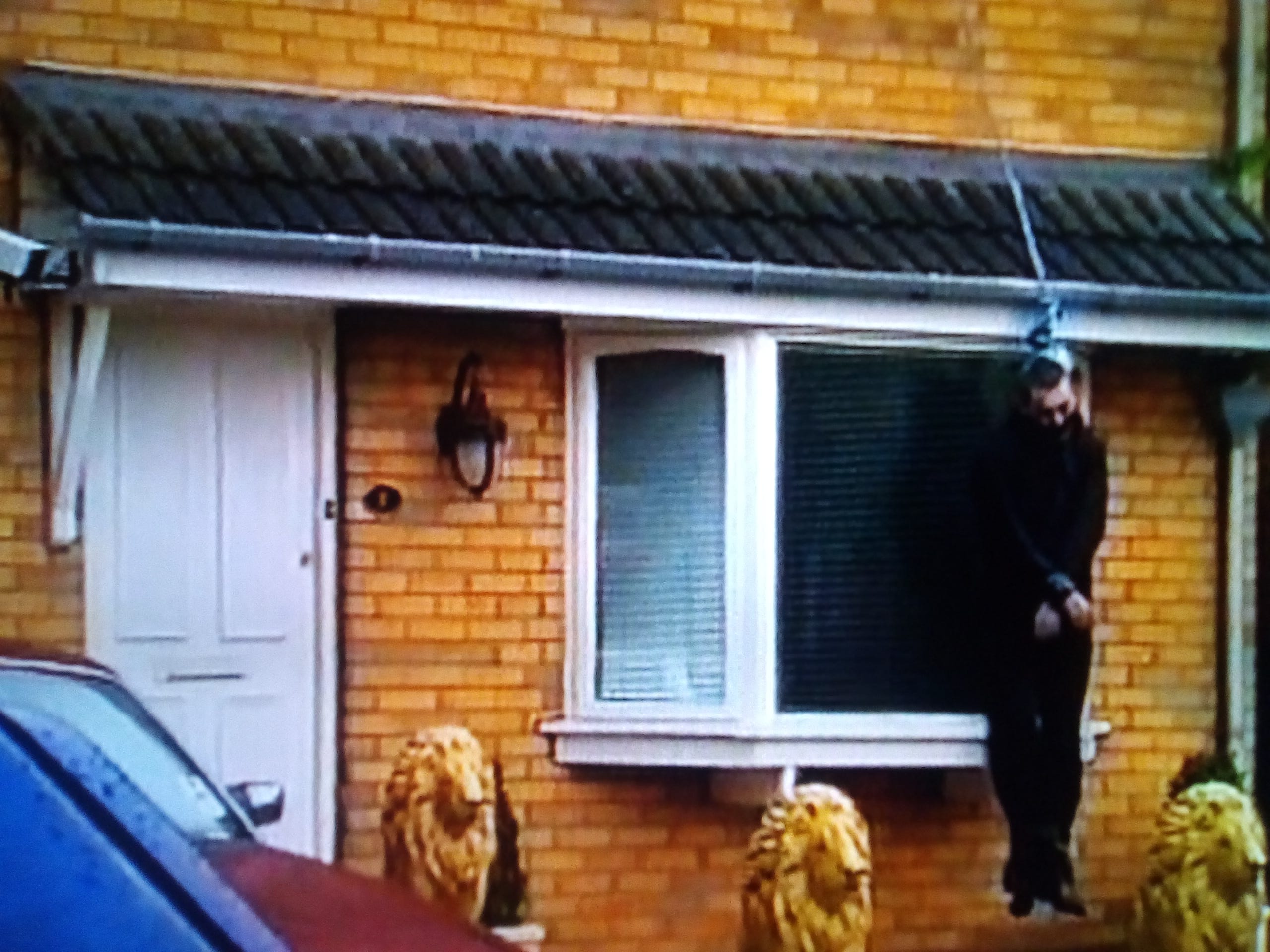
Redmond’s writing balances sinister evocations with light comedy, and Barry coolly staring down Michaelson is great fun—the arch villain recast as a anti-hero protector—but the most chilling thing Barry does is plant a seed with one of the residents, telling him a near-mythical story of vigilante justice as a parable of what the Close residents could do. Redmond then completely removes Barry from the picture when he could have simply had him kill the comparatively small-fry dealer. Instead he makes a far more powerful and terrifying choice. Barry’s seed takes root and a group of residents, not all of them completely revealed, break into Michaelson’s house at night, string him up and hang him from the first floor window overlooking the Close, his body for all to see. A killing filmed as background to perky, brassy Bev Dixon (Sarah White), watching junk TV.
Imagine being curious about how Brookside might end and turning the TV channel, halfway in, to see a murdered drug dealer hung to death? Brookside had arguably, like most soaps, jumped the proverbial shark years ago, but to end a long-running serial with a vigilante murder as the central crux is frankly unbelievable. More terrifyingly, Redmond allows them to get away with it. He doesn’t necessarily endorse it but the criminal investigation never features. The culprits simply move on, showing zero sign of remorse. Michaelson was evil. He got what was coming to him. He feels the vessel for Brookside to channel all of the injustice the characters feel for how the moral decay of society has resulted in so much pain, trauma and death - a story you could arguably tell in most British soaps, especially the grim dark EastEnders.
It’s why Jimmy, and Dean Sullivan, serve as the anchor of the entire final episode. As the residents move, and the houses are boarded up, Jimmy literally burns many of his household goods on a fire in his front garden, sitting on rotting old sofa chairs as he rails against the capitalist calcification of modern communal society, and indeed how TV has reflected it: “See I can remember when the telly meant something. You know, you watched a documentary, you watched a drama, and it made you think about life. Not whether you had the right wallpaper to match your carpet. And newspapers, they were about what was going on in the world, not what was going on in the back of a limo or some trendy bar in London. See these days it’s all about lifestyles isn’t it? Not values.”
I mean, given Jimmy’s significant criminal history, there is quite some irony hearing this moral diatribe come from him, so really we should read this as Redmond talking. Three years later, Ricky Gervais and Stephen Merchant pull a similar trick on the final episode of Extras, as Gervais uses his character Andy Millman to rail against the pervasive shallowness of reality television and the pursuit of fame - an extension, in truth, of what Jimmy Corkhill decries here. The idea that portraying social realism, that reflecting community and human issues, are falling away in the glare of facile entertainment. And this was before the age of Instagram, TikTok, influencers and such. Jimmy would be either spinning in his grave or ranting in a park as an old man, proclaiming the end of days.
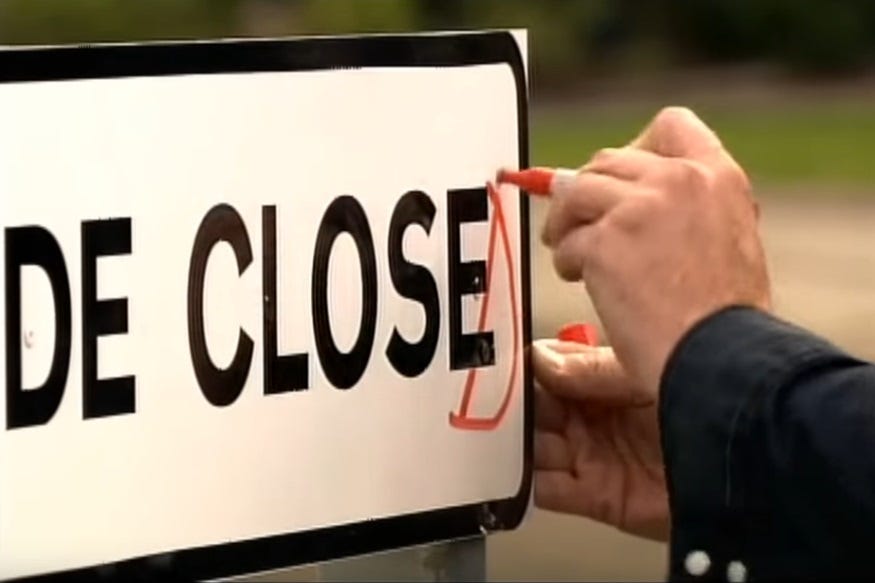
Brookside ended, then, on an anxious note for the future. Communities shattered. Society decaying. People feeling forced to resort to savage vigilante justice. Jimmy leaves by painting a D on the end of Close, to spell Brookside Closed, as if to hammer the point. He might get a happy ending living at the bottom of his gangster son-in-law’s garden, but it has little hope for the future and reflects this in the darkest finale any soap opera is likely to deliver.
I just hope we don’t forget Brookside. Indeed fellow soap Hollyoaks confirmed it was set in the same universe in 2025 by bringing some of the most iconic characters back for a special. Even if it failed to survive the distance, it said something about who we are. Even if what it showed often reflected our darkness back into our faces and our homes.
If you enjoyed this piece, and you fancy ‘buying me a coffee’ to show it, you can hop over to Ko-fi and donate. Thanks if you do!
No posts
Comments
Nothing yet. Say the first thing.
Sign in to join the conversation.