
This is the seventh of a 10-part section by section analysis of Indiana Jones and the Last Crusade. You can find links to the other nine parts at the end of this piece.
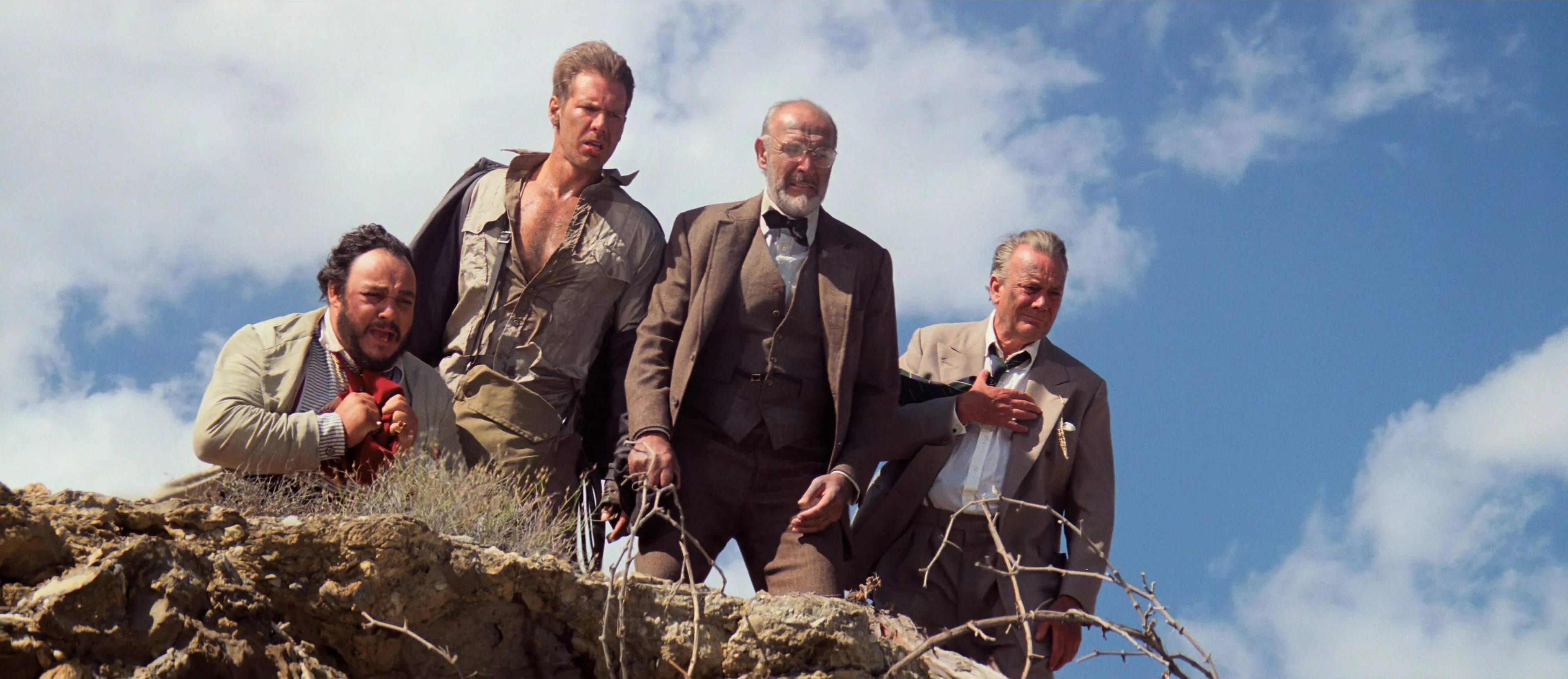
We begin this section of Indiana Jones and the Last Crusade in the Republic of Hatay, which you may never have heard of. There’s a good reason for that - it doesn’t exist. But it did! Briefly. Very briefly, between the autumn of 1938 and the summer of 1939, serving as a ‘transitional nation’ between at the time the colonial French Mandate of Syria from the Sanjak of… Alexandretta! A place that serves as key to Indy and Henry, and Walter Donovan’s, search for the cup of Christ.
This gives Steven Spielberg the space to establish Hatay, which became the Hatay Province of Turkey weeks before the outbreak of World War 2, as enough of a kingdom that Donovan would arrive to schmooze the Sultan whose permission he and the Nazis need to enter his territory. You might imagine the Nazis would happily storm their way in given how they’re in 1938 seizing territory left, right and centre, but Donovan and Vogel’s mission here isn’t exactly on the front cover of Völkischer Beobachter. They need to be more subtle.
It’s a fun scene, especially given the Sultan, in a touch of whitewashing admittedly, is played by one of the doyen’s of British alternative comedy, Scouse funnyman Alexei Sayle. He hams it up deliciously opposite Julian Glover, rejecting Nazi treasure in favour of the Rolls Royce Nazi steed they have arrived in. He’s more of a petrolhead than gold digger. Sayle doesn’t display the zany, politically charged comedy he gave us in the Comic Strip Presents, but his presence certainly presages a trend of quirky British actors cropping up in small Hollywood blockbuster roles, threatening to steal scenes.
Speaking of scene-stealers, how fun is it to have John Rhys-Davies back again as Sallah? Last seen skipping off singing “I Am the Monarch of the Sea” from HMS Pinafore after stealing a kiss from Marion Ravenwood in Raiders of the Lost Ark, he’s played more broadly here than the more dashing aide he essays in Raiders. He has of course presided over Marcus Brody being kidnapped before Indy and Henry meet up with him in Iskenderun on the Nazi trail, and working to rescue their erstwhile, out of his depth academic friend serves as the impetus for the big set piece as they head for the heart of the ‘Canyon of the Crescent Moon’.
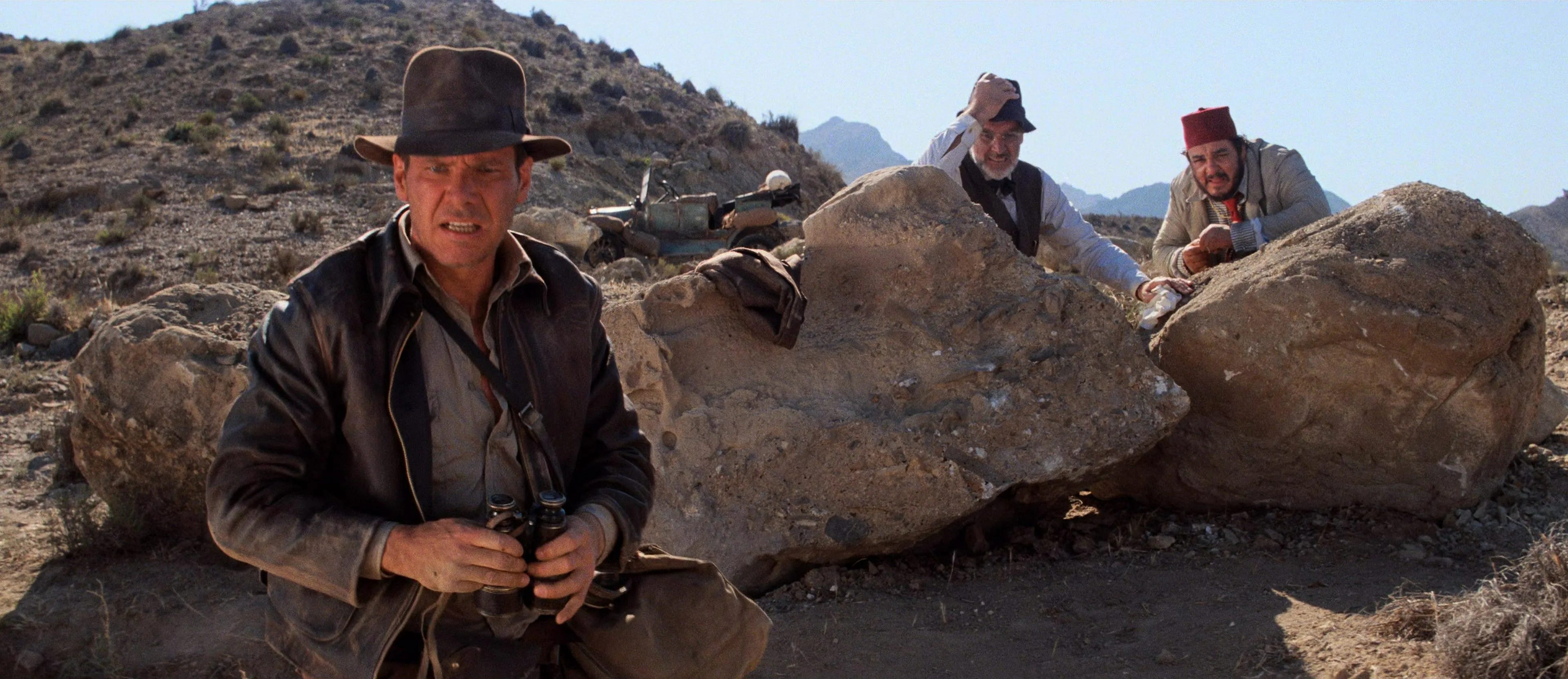
Some great fun is had with this whole sequence in how well, much like the scenes of Indy and Henry escaping the zeppelin, Spielberg balances comedy and thrilling action stakes. Indy’s “Dad, we’re well out of range” before the bomb blows up Sallah’s car is the inverse of Henry’s “Well, they don’t come any closer than that!”, perhaps drawing a further parallel between two men who are more alike than they would care to admit. Sallah’s throwaway “That car belonged to my brother-in-law!” is another good laugh, as then is him corralling camels as recompense. His mind is firmly on the domestic as well as the epic in this quest.
What could be considered a flaw in the writing—and perhaps it is—I’ve always found to be intriguing. The use of the Brotherhood of the Cruciform Sword as almost a deus ex machina to help Indy out, a legion of Middle Eastern fighters protecting the Grail, led by Kasim who we last saw trying to kill Indy in Venice. He then just disappears from the picture until now, when these guys pop up almost like a fly in the ointment. “Now, who are all these people?” Henry asks and Donovan says “Who is he?” over Kasim’s dying form. Even Indy doesn’t know who they are. All three of them could represent the audience at this point.
Kasim simply appears there to impart the warning that Donovan will fall foul of later in the climax. “For the unrighteous, the Cup of Life holds everlasting damnation,” and we’ll return to the theme of worth soon given it has ran through the entirety of Last Crusade thus far. Had there been much more of a use or integration of Kasim and the Brotherhood, they would doubtless have been woven more skilfully into the narrative in play.
Perhaps the most enjoyable scenes in this entire section are when Henry infiltrates the tank where Marcus is being held hostage and two old friends reunite for the first time. Sean Connery and Denholm Elliott work wonderfully off each other, immediately bringing out the 19th century fraternity boy in each other with their “genius of the restoration, aid our own resucitation!” toast as a greeting. This was a genuine Manhattan University Club toast from the 1800s, which recurs in fact later in The Young Indiana Jones Chronicles series where a younger Henry encounters another old college buddy.
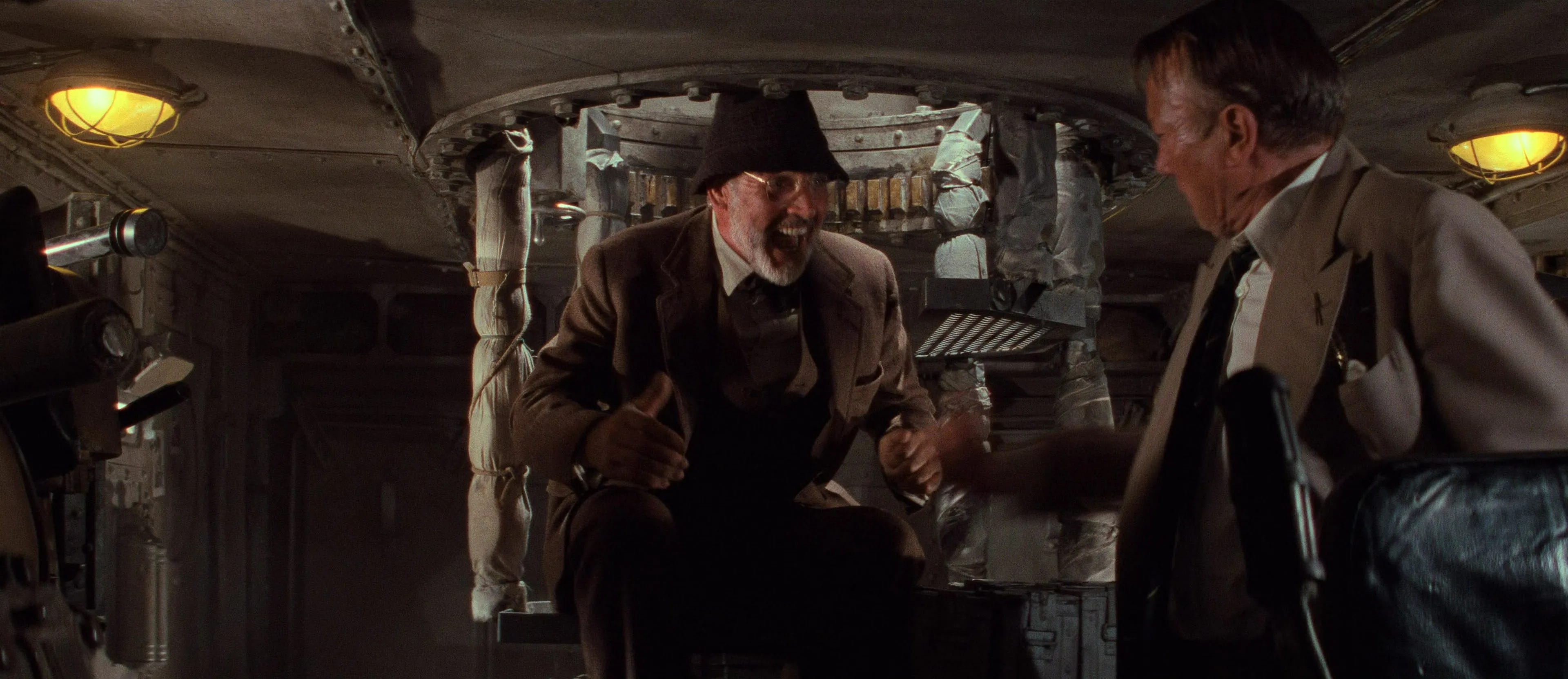
Vogel is at perhaps his most sneering and casually horrible when he prevents Henry’s rescue, slapping him casually and menacingly around the face with his leather glove, in a similar fashion to the cane pulling the newspaper down. He cements himself in this moment as perhaps the Indiana Jones series’ most overtly cartoonish Nazi. He’s not camp in the ‘Allo ‘Allo sense like Toht in Raiders, but he’s clearly designed to ramp up all of the worst, casually evil aspect of Nazi zealot soldiers. His death later, eyes bulging as he plummets down the ravine at the head of the tank, underscores this well.
Again, scenes such as this underline how much Connery was playing against type as Henry. There are plenty of films where Connery would have just punched the lights out of Vogel and his men—indeed one or two films in the 90s to come he plays characters like this—but here Henry is completely helpless, as much as Marcus, though he is braver and gets wonderful middle finger lines such as “goose stepping morons like you should try reading books instead of burning them!”, which is more cutting to an incensed Vogel than any punch in the face could have been. Can you imagine Gregory Peck saying that line in quite the same way? Me neither. That’s all Connery.
In the tremendous action sequence that follows, with Indy battling Nazis on horseback and the tank to rescue his father and Marcus, Henry gets his own comedic heroic moment involving the pen. I’ve always felt that Elliott delivers the line “The pen is mightier than the sword!” like he sounds a bit drunk, and in truth he might well have been. The actor had a long history of alcoholism that plagued him until his death from AIDS in 1992. Nonetheless, it doesn’t distract from a fun level of comedy Spielberg cuts to between Indy and Harrison Ford doing all the furious action outside, allowing for a brilliantly structured action sequence. “You call this archaeology!” is another punch the air laugh moment as Henry reunites with Indy. The film is just full of them.
There’s another great inverse parallel here as, after Henry fires the tank gun, Marcus exclaims “Look what you did!” This was precisely what Henry said when he sees Indy gun down Nazi soldiers during their castle escape. It displays how far Henry has come in the shadow of his son, and how much the action adventure aspects of his own character are coming to the fore. Marcus is now his sidekick. This evolution will become increasingly apparent as the film races to its conclusion, and I will argue how by the end, Henry Jones has morphed into the archetypal Sean Connery on-screen hero. I’ll get to that.
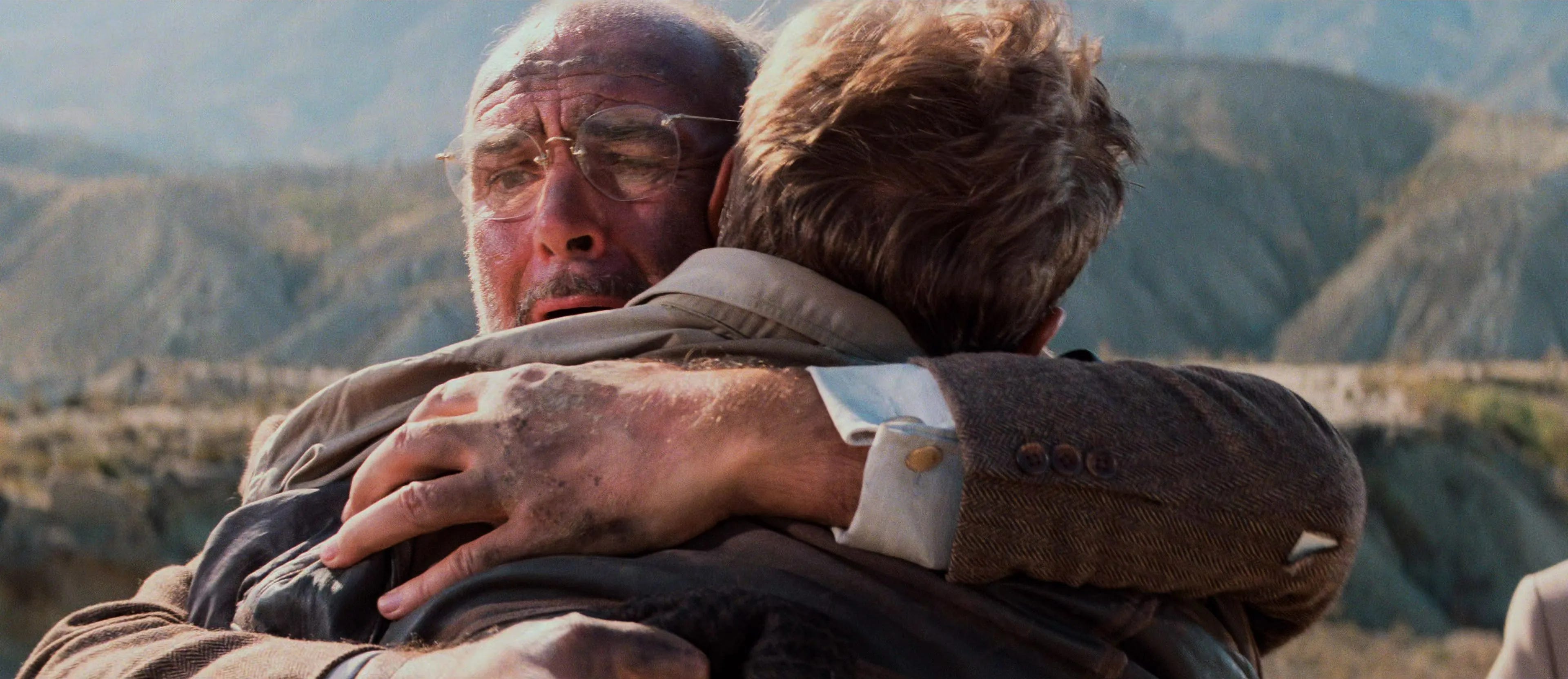
For now, this sequence ends with a moment that almost rivals how emotional the beach sequence with the umbrella makes me. The tank plummets and Henry, Marcus and Sallah believe Indy has crashed to his doom like Vogel did. Henry is devastated. “I’ve lost him… and I never told him anything…” he says, claiming he wasn’t ready. “Five minutes would have been enough.” Bear in mind, he had those five minutes on the zeppelin but he squandered them, still possessed by the Grail and taking his son for granted. This is the moment Henry, after seeing the man Indy has become, realises just what he has been missing.
Connery’s emotional elation once Indy reappears (in another golden comic moment where he joins them peering down the ravine, half dazed), is wonderful. It’s beautiful. Both Connery and Ford clearly feel it in this moment as they embrace, the love between them evident. Sallah and Marcus briefly almost feel embarrassed being there. It’s such a lovely payoff to all of the development they have had across the film thus far. Henry does of course snap back a little at the end, into the patrician father with a quick “well done”, but the dam has burst. They can’t go back to the dynamic they used to have.
At which point Henry/Connery then almost reaches out of the movie by exclaiming “why are you sitting there resting when we’re so near the end?!”, almost giddy (as a schoolboy) for us all reaching the climax of the film and, at this point, Indiana Jones’ story itself.
Finally, just to make the point, Indy’s hat rolls in. The hat that across the film is almost imbued with supernatural power, never leaving Indy even when you’d imagine it would be down that ravine. John Williams’ theme tinkles in and we’re off, goosebumps in tow. The end is in sight. Time for Indy, and the film itself, to prove its worth.
Indiana Jones and the Last Crusade
Pt 8 - The Word, Breath and Path of God
Pt 9 - That’s the Cup of a Carpenter
Pt 10 - Into the Sunset
If you enjoyed this piece, and you fancy ‘buying me a coffee’ to show it, you can hop over to Ko-fi and donate. Thanks if you do!
No posts
Comments
Nothing yet. Say the first thing.
Sign in to join the conversation.