

COUNSEL, GOSSIP & FRATERNAL CORRECTION
St. Thomas Aquinas tells us that offenses against charity are mortal sins according to their external acts—which means that they are mortal sins regardless of the “intention or will of the doer”. (De Malo (“On Evil”): Question 7: Article 1: Response)*
Further, he elaborates that charity is love of God & love of neighbor—so sins against God or our neighbor are mortal sins in themselves, and the Ten Commandments give us the categories of the offenses that exclude charity, in principle:
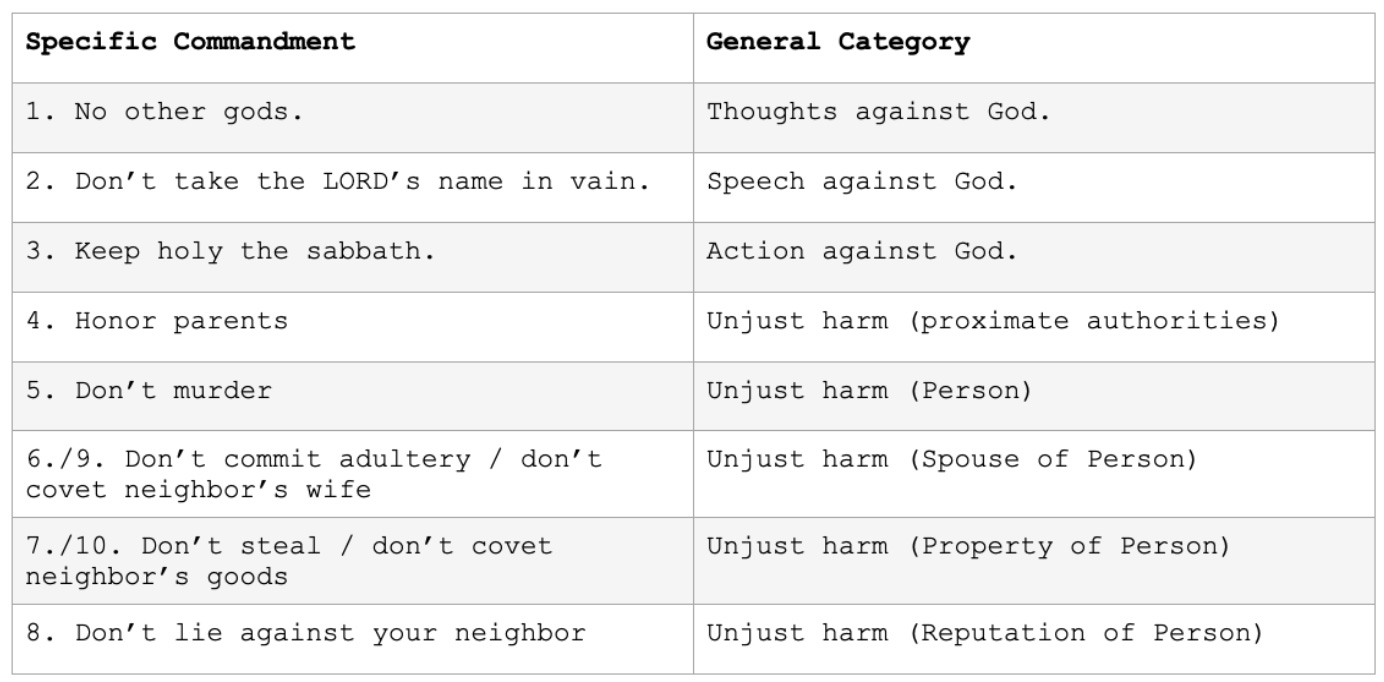
Voluntary acts (necessary for a sin to occur) are speech, thought, or physical action, so each of those are proscribed as offenses against God, specifically. Then for all the other commandments any abuse of your neighbor, whether in speech, thought, or physical action, that causes unjust harm, to them or one of the rightful extensions of them (i.e. spouse; property; reputation) is proscribed.
Under the 8th Commandment: You shall not bear false witness against your neighbor, we are to understand that all unjust harm to another’s reputation is an offense against this commandment, and consequently a sin against our neighbor, excluding charity, and thereby a “mortal sin”.
The most prominent of these acts against the 8th Commandment today is “gossip”—where we talk about bad things a person has done, whether true or untrue, to others, without any intention to bring it to them in fraternal correction to help them grow in virtue. Gossip is a mortal sin—and it’s everywhere.
In today’s Substack I’m going to share with you all a diagram I created for the school I was Principal of to teach my faculty and staff about the sin of gossip and the standard we were going to operate from as a school. The clarity of the diagram immediately helped us to diagnose the problem and recognize the meaningful solution.
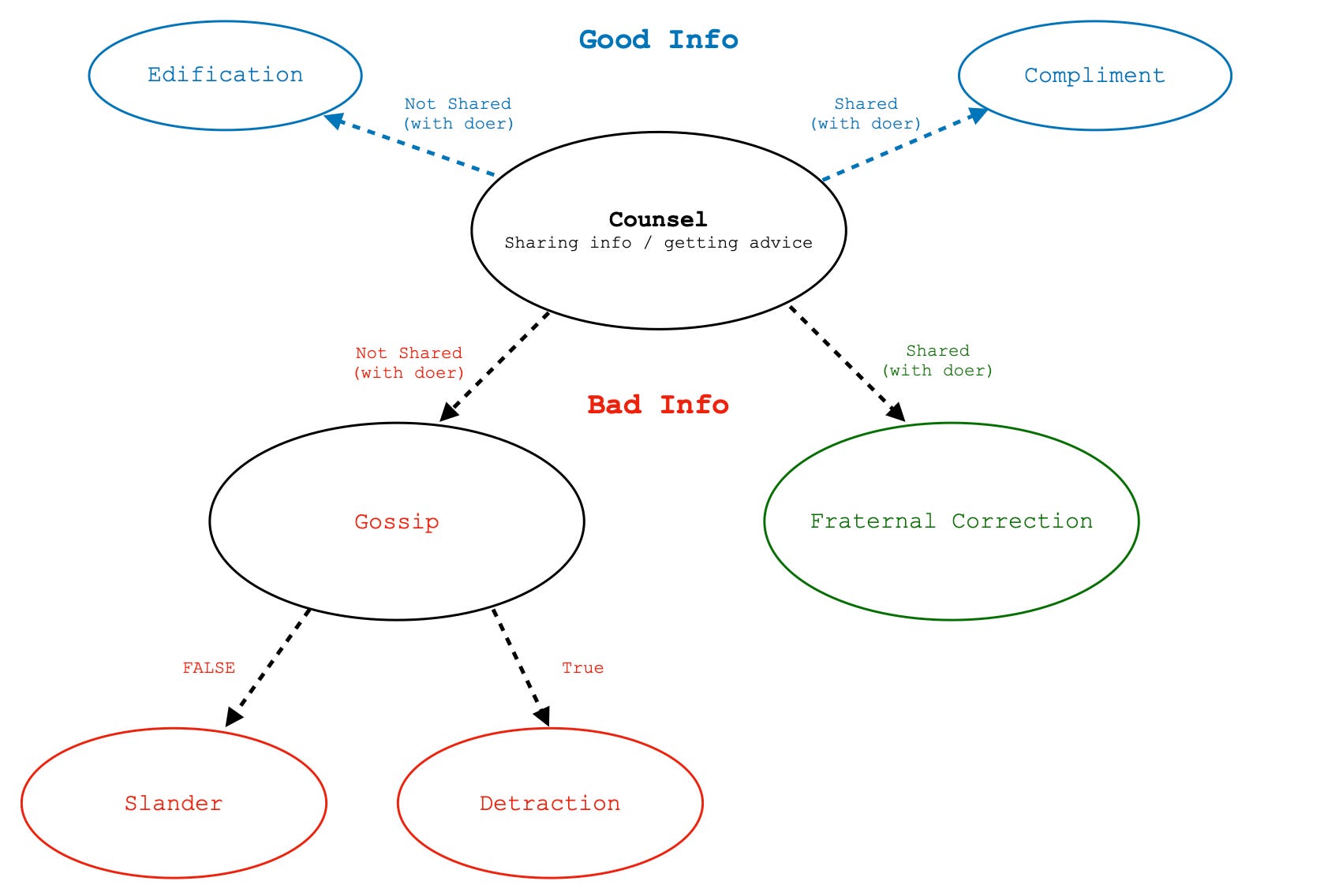
In this diagram you’ll first see the full picture of what we’ll break down in more detail throughout the rest of this article. You’ll notice at the center is the circle with the word “Counsel” in it. I’ve taken “counsel” to be loosely defined as the sharing of info / getting advice. Counsel is working as the generic term that unites all the other possibilities that spring out from it—based on what you do with the info you discuss / advice you seek.
On the bottom half of the diagram we have “bad info”, either shared with the one who did it (i.e. Fraternal Correction), or not shared with them (i.e. Gossip). On the top half of the diagram we have “good info”, also either not shared [with the one who did it] (i.e. Edification), or shared [with the one who did it] (i.e. Compliment).
The key to this diagram is that you’ll begin to see that, in dealing with “bad info”, it’s not about whether you have any way of addressing bad things or not, it’s entirely about whether you bring it back to that person, for their correction, or not.
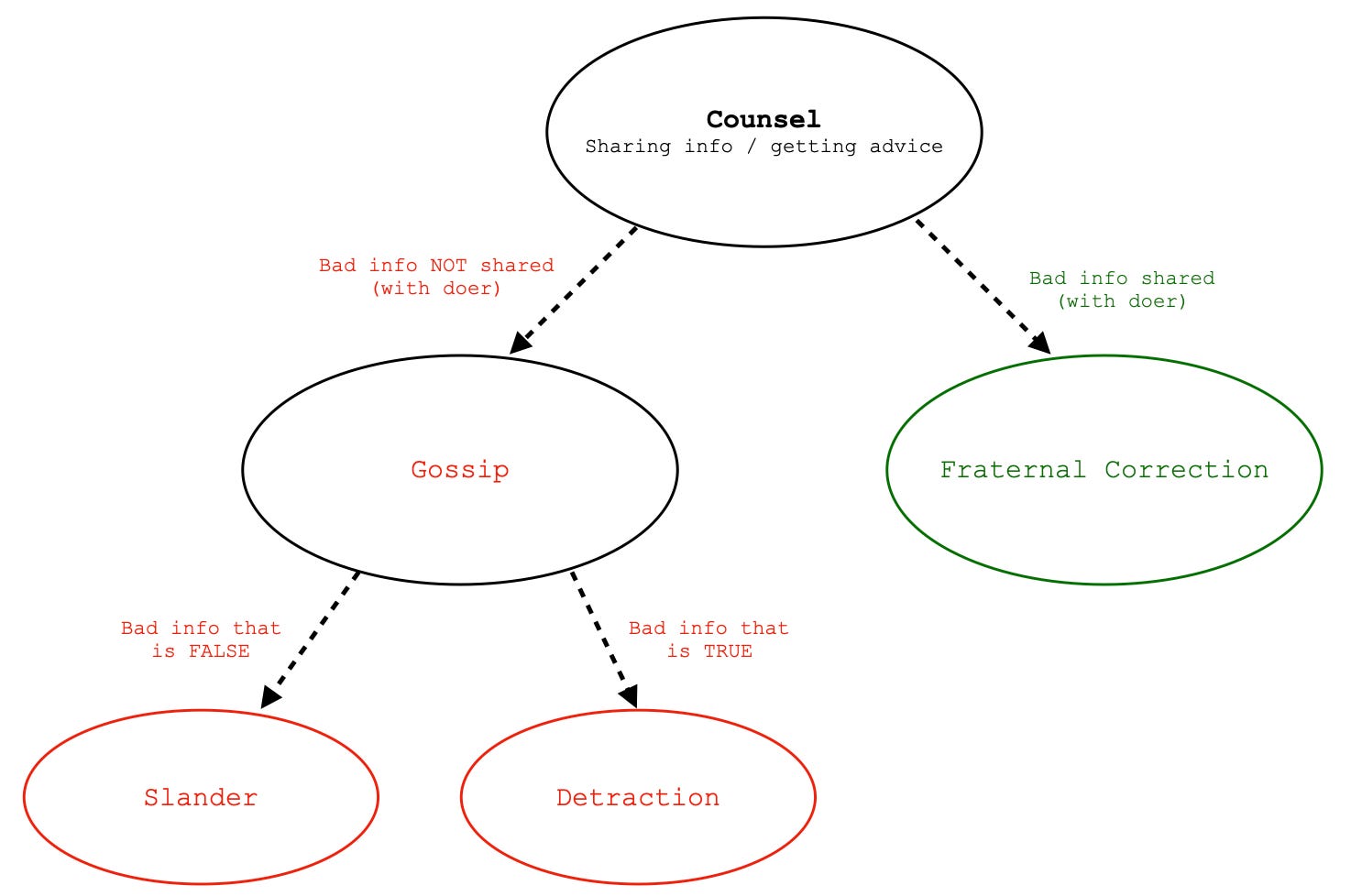
Within the category of Gossip we have two subcategories: “Slander” and “Detraction”. The sin of slander is when you say something bad about someone else that did not actually happen—it’s when you lie about them doing something bad that they didn’t… The sin of detraction is when you say something bad about someone else that actually did happen. In this case, you are not lying, but you are guilty of a sin against your neighbor nonetheless.
The thing I stressed to my faculty & staff was that, while it’s natural for us to try and process bad things that someone else did to us—that we can confide our struggles to someone close to us (either a spouse or a close friend or a close colleague)—we should always understand that if we don’t eventually bring that back to the person (on a reasonable timeline (think: something like ~72 hours)), then we’re only gossiping about them. When we bring it back to the person, we evidence that we care about the state of their soul, and how we want them to grow in virtue. Care for the good of others is the basis of charity, and the whole reason Christ came down to earth to make Himself known to us and open a way to salvation.
Sometimes, nonetheless, it’s difficult to bring things back to the person who did them, so a further clarification/understanding of what qualifies “Fraternal Correction” is helpful here.
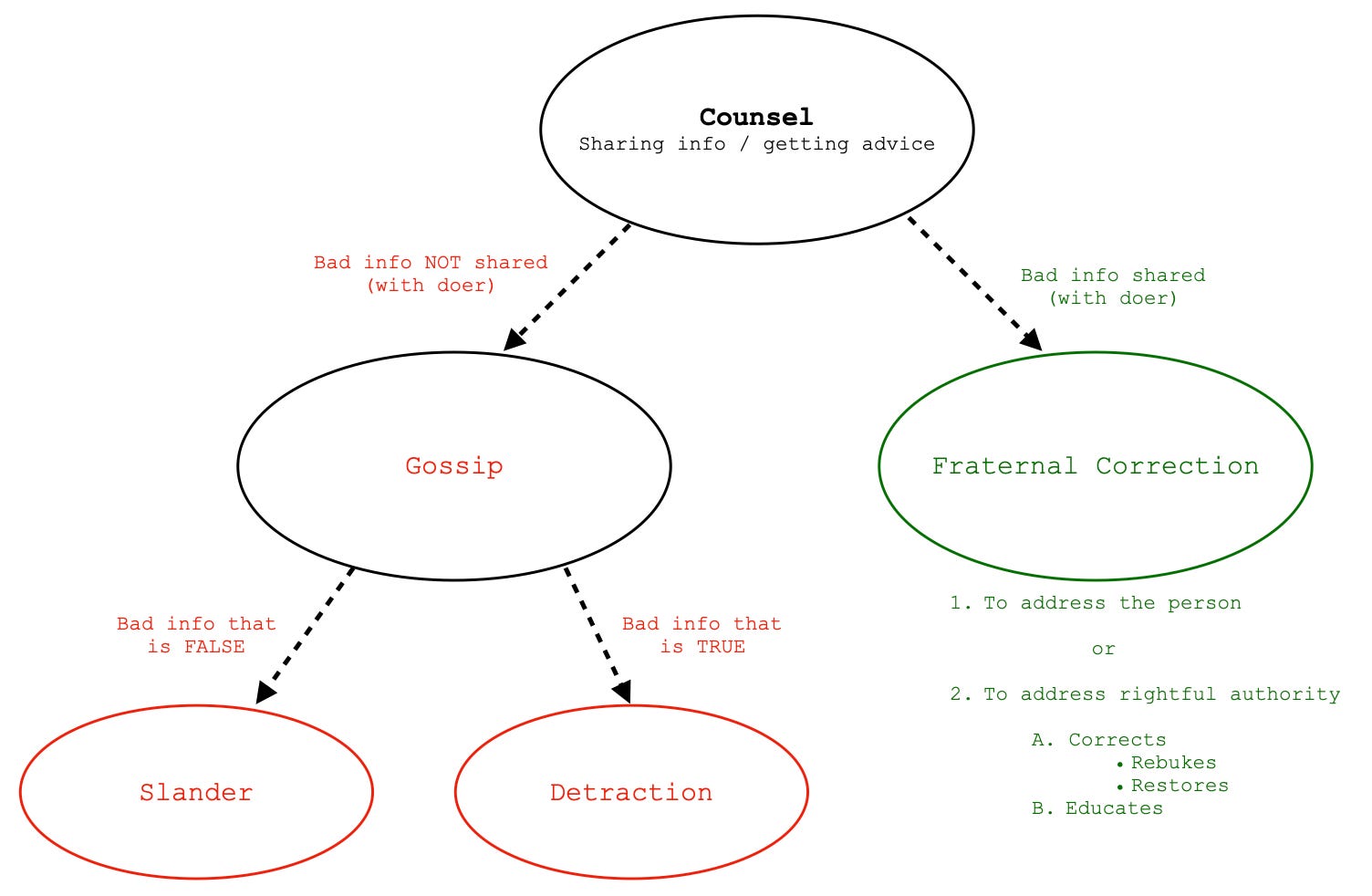
Notice here that there are two different ways we can bring bad info back to the person who did it for the sake of their correction: directly or indirectly: One, to them directly; Two, to someone that has rightful authority over them, indirectly.
If a colleague, or fellow classmate, or civilian, did something evil to you, and you don’t feel that you can reasonably bring your grievance to them without enflaming further problems—which happens when dealing with vicious individuals that are prone to the vices of wrath or pride—then you can bring it to someone with rightful authority over them. For classmates, that would be a teacher or a Principal. For colleagues, that would be a manager or a boss. For civilians, that would be the civil authorities.
At that point, the responsibility to affect justice falls to the rightful authority, and any dereliction on their part is accounted to them as sin. If you have authority and don’t wish to use it, or are too intimidated to use it, that is to your shame. St. Thomas Aquinas notes that a prosecutor who fails to prosecute a criminal offense that took place within their jurisdiction owes restitution back to their community—amounting to the returning of their salary to the public and paying compensation (penalty) over and above that. While our society may turn its nose up at such a suggestion today, it’s still the case that to be right with God demands just such restitution of an offense.
Mortal sins kill charity, and with it the life of the soul (viz. because the principle of the life of the soul is charity). Gossip is one of the most pernicious sins rampant in our society today—talking about bad things another person has done away from them without desiring or bringing it back to them for their good.
A good distinction is one that helps us understand the landscape of a given problem more clearly, and also how we can correct that problem. When I pieced together this relationship between “counsel”, gossip, and fraternal correction, it greatly helped me in holding myself to account with more precision and peace.
I didn’t have to worry about never saying anything about bad things that happened to me (i.e. seeking counsel), I just knew I had to get better at restraining who I share that with (so I didn’t share it with people that would have no interest in encouraging me/others to fight for charity), and be sure to bring it back to the person I was originally upset with (or an appropriate authority over them). From there I was able to start bringing my offenses in this regard to God in the confessional—there were numerous times I caught myself speaking about something bad someone else did that I knew I would never bring back to them. My wife and I worked hard on it and after a good year-and-a-half of implementing it, it has bore much spiritual fruit in our lives. You begin to notice your sincere charity for others grow, along with your patience in bearing trials and abuses.+
May the God of all good things guide all of you into the fullness of His truth and glory, to one day dwell eternally with Him, where I hope we can all join in the chorus of unending praise: “Holy, Holy, Holy is the Lord God Almighty, who was and is and is to come!” (Revelations 4:8)+
*Excerpts from St. Thomas Aquinas’ De Malo, Chapter 7, Article 1, Response, where he notes that there are mortal sins according to their external acts, and that mortal sins [according to those external acts] are mortal regardless of the “intention or will” of the doer:
“External acts”:
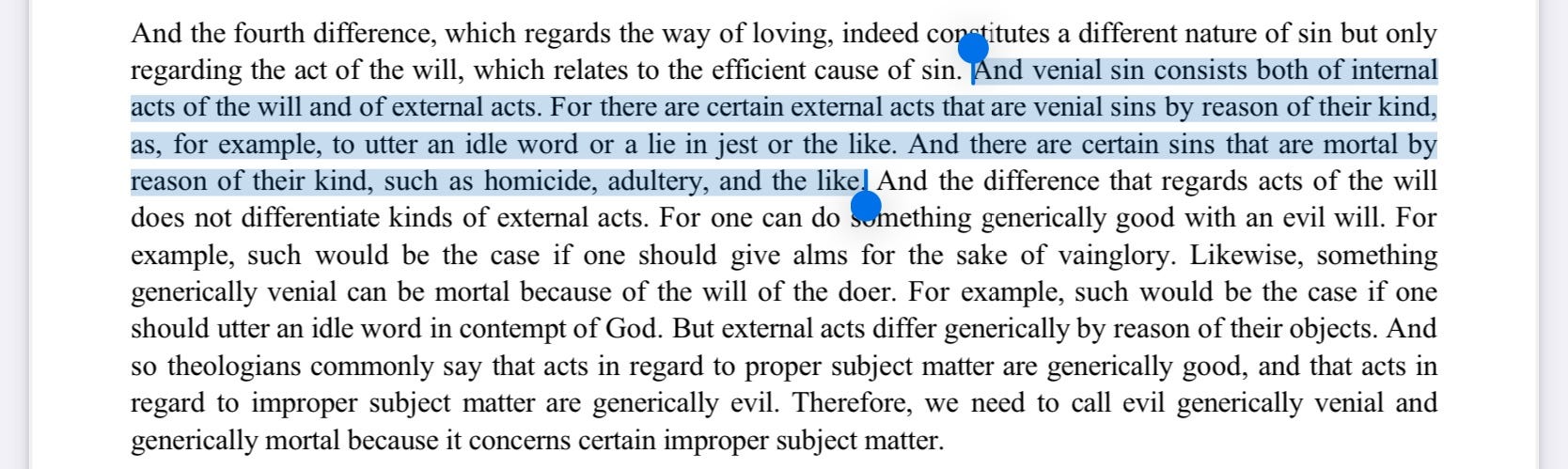
Regardless of “intention or will”:

No posts
Comments
Nothing yet. Say the first thing.
Sign in to join the conversation.