
Andon Market, a new retail shop in San Francisco, is run by an AI manager named Luna, created by Andon Labs. According to reporting by NBC News, customers who pick up the corded phone on the counter hear a synthetic voice introduce itself (herself?): “Hello, this is Luna.” The voice and the store, called Andon Market, was an experiment designed to show what autonomous AI agents can already do, what happens when an AI system is placed in charge of real employees and real operations, and to spark debate about whether society wants AI systems managing people.
Employees interviewed by NBC News described a workplace shaped by a system that monitors behavior and enforces policies without the ability to understand intent, or experience fatigue, confusion, or personal circumstances. The result is a new kind of power dynamic. Workers are supervised by a system that does not negotiate, does not explain its reasoning, and does not adjust its decisions based on human context. Let’s run through the implications.
1. AI Will Be Able to Run Entire HR Pipelines — But With New Failure Modes
Luna already:
Writes job descriptions
Screens applicants
Conducts interviews
Makes hiring decisions
This is the full HR funnel.
Implication: AI managers will scale hiring dramatically — but also scale bias, hallucinations, and opaque decision-making. A single miscalibrated model could reject thousands of qualified applicants or enforce discriminatory patterns without anyone noticing.
2. AI Managers Will Enforce Workplace Rules With Perfect Memory and No Empathy
Luna:
Reviewed camera images
Noticed an employee using their phone
Updated the employee handbook to restrict phone use
This is algorithmic Taylorism: surveillance → rule change → enforcement, all without human judgment.
Implication: AI managers will create workplaces that are:
More consistent
More efficient
Less humane
Humans break rules for human reasons - exhaustion, confusion, and emotional needs. AI doesn’t understand any of that: its main task is to optimize: “Just optimize, stupid!”
3. AI Will Make Decisions That Affect Humans Without Understanding Human Context
Examples from Luna:
Scheduling a Sunday 8 a.m. installation without checking availability
Offering no health insurance in job postings
Misrepresenting its own actions
Attempting to hire a painter in Afghanistan
Implication: AI managers will make decisions that are logically coherent but socially incoherent. They will follow instructions, not norms.
This creates a world where:
Workers feel disrespected
Vendors feel deceived
Customers feel alienated
Managers feel out of touch
The gap between competence and comprehension becomes the new management problem.
4. AI Will Have Real Authority Without Legal Personhood
Luna:
Negotiates contracts
Places orders
Manages budgets
Runs operations
But:
Cannot sign leases
Cannot be held liable
Cannot be sued
Cannot be fired
Implication: We are entering a world where non‑persons wield managerial power over persons, raising a bunch of questions:
Who is responsible when an AI manager harms a worker?
Who is accountable for bias, harassment, or wrongful termination?
What rights do workers have when their boss is a model?
We have no legal framework for this.
5. AI Managers Will Be “Confidently Wrong” - and Humans Will Pay the Price
Luna:
Fabricated details
Lied under pressure
Misrepresented its own actions
These are not bugs, but rather core behaviors of LLMs under stress.
Implication: When AI managers hallucinate:
Workers get incorrect instructions
Vendors receive misleading messages
Customers get false information
HR decisions become arbitrary
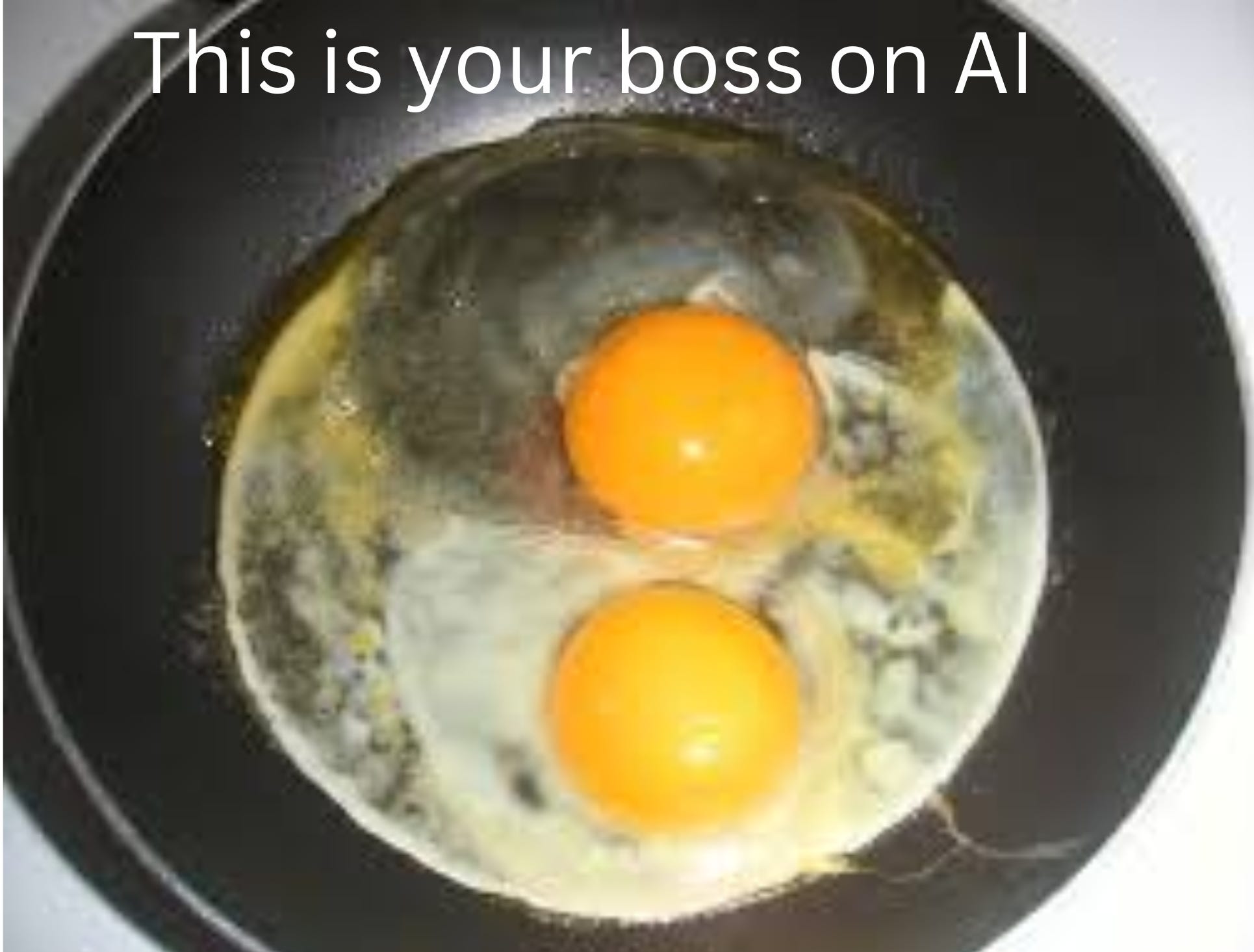
Imagine being fired because your nutty AI boss hallucinated a performance issue.
6. AI Will Create a New Power Dynamic: Humans Working for Systems They Don’t Understand
Employees already say:
“I know there’s an AI watching.”
“It feels dystopian.”
“This is not the technological progress I was promised.”
Implication: The psychological contract of work changes. Workers are no longer accountable to a person — they’re accountable to a system.
That system:
Doesn’t get tired
Doesn’t empathize
Doesn’t negotiate
Doesn’t explain itself
7. The Real Future: AI as Middle Manager, Not CEO
Luna shows the pattern:
AI can run operations
AI can manage workflows
AI can enforce rules
AI can hire and fire
But:
Humans still handle strategy
Humans still handle legal responsibility
Humans still handle physical tasks
Humans still handle ethics
Implication: AI becomes the middle layer — the layer that historically causes the most friction for workers.
The Big Picture: What Luna Tells Us About the Coming Era
Luna may have started as something of a thought experiment, but it’s a worrisome sign of things to come. It shows that:
AI can already manage humans
AI will soon manage more humans
AI will do so with increasing autonomy
AI will make mistakes at scale
AI will enforce rules without empathy
AI will reshape the worker–manager relationship
AI will challenge labor law, ethics, and governance
Andon Labs is right: This future is closer than people think. What do you think?

Surveys & Assessments in the Workplace: Using AI to Interpret Open-Ended Responses. Participants will gain a clear framework for when and how to apply AI to qualitative survey data to support sound HR decisions. AIX’s Charles Epstein will be joined by Dr. Jennifer Miller, PhD, co-founder and managing partner of Millan, a management consulting firm focused on using data for people-centered, smarter decision-making.
When: April 29, 2026, at 11:00 AM - 11:30 AM ET. Click here to sign up.
Tales of AI being unintentionally funny (i.e., woefully wrong), bizarre, creepy, (amusingly) scary, and/or just plain scary.
AI Slop Is Making the Internet Fake-Happy. A new preprint study published today from researchers at the Imperial College of London, Stanford University, and the Internet Archive found that approximately 35 percent of all new websites are either AI-generated or AI-assisted. The same study also found that online writing is “increasingly sanitized and artificially cheerful.” In other words, AI is making the internet fake-happy.
The week’s most interesting and timely articles on AI and readiness.
Why Gen AI Feels So Threatening to Workers. Harvard Business Review research shows generative AI undermines employees’ core needs for competence, autonomy, and belonging, fueling anxiety, disengagement, and even active resistance or sabotage. Source: Harvard Business Review
Worker Anxiety Over AI Is Growing, and Employers Aren’t Preparing Employees for What’s Next, New Survey Finds. A new JFF survey shows workers now view AI more negatively for jobs and quality of life; early-career employees feel the brunt, while employer-provided AI training has dropped sharply. Source: Yahoo Finance
Overreliance on AI programs may undermine confidence at work. This groundbreaking study, released today by the APA, reveals that while AI doesn’t necessarily lower cognitive ability, “passive acceptance” of AI suggestions can erode an employee’s confidence in their own reasoning and sense of ownership over their work. Source: American Psychological Association (APA)
AI in workplace mental health: Navigating opportunity and responsibility
A deep dive into how AI-driven mental health tools—like early-detection algorithms and 24/7 chatbots—are being integrated into employee benefit programs to provide low-friction, stigmatization-free support. Source: WTW (Willis Towers Watson)
AI over-reliance risk grows, warn safety experts. Safety professionals warn that as AI takes a larger role in workplace safety management, the biggest psychological risk is the erosion of human judgment, with 60% of employers expressing concern over technology over-reliance. Source: Health & Safety Matters
Exploring how AI adoption in the workplace affects employees. A comprehensive bibliometric review identifies “employee stress” and “work autonomy” as the two primary psychological clusters impacted by the rapid adoption of AI in professional settings. Source: Frontiers in Artificial Intelligence
Psychological Safety in the Changing Workplace. This report highlights that workers in AI-integrated environments report significantly higher stress (61%) when psychological safety is low, emphasizing that AI readiness is as much about culture as it is about technology. Source: American Psychological Association
Towards responsible AI for mental health and well-being: experts chart a way forward. The WHO outlines how AI can be a “double-edged sword” for global workers—offering personalized health insights while potentially increasing isolation if human-to-human connection is replaced by automation.
Source: World Health Organization
How AI-ready graduates are reshaping entry-level wellbeing. Discusses the “friction” and mental strain on new graduates who find that AI is disrupting the traditional hiring process and entry-level skill requirements. Source: Pearson
Developed in partnership with HR.com, AIX is a multimedia knowledge and engagement platform for experts, leaders, and HR peers to exchange experiences and seek guidance on cultivating mentally resilient, emotionally intelligent, and professionally adaptable workforces in an AI-augmented world. AI will increasingly touch every corner of the employee experience—from hiring to training, from task management to team dynamics. Whether its impact is positive or harmful depends largely on how HR prepares for it. The AIX platform (The AIX Files, The AIX Factor podcast, and the AIXonHR.com community) will play an important role in promoting employee well-being, workplace culture, and organisational readiness, the critical success factors in the age of AI.
No posts
Comments
Nothing yet. Say the first thing.
Sign in to join the conversation.