
Welcome to this week’s AI round-up! In this edition, we look at the frontier benchmark performance and repriced cost structure of Gemini 3.5 Flash, explore new research on small language models as the engine of on-device AI, and examine three policy briefs on health AI evaluation gaps, GenAI labour exposure, and digital HIV prevention in Africa. We also take a look at three start-ups raising funds across industrial thermal monitoring, legal operations, and virtual chronic disease care.
This week at a glance:
Gemini 3.5 Flash reprices the budget tier: Google’s new Flash model beats 3.1 Pro on coding and agentic benchmarks but arrives at three times the price of its predecessor, closing the gap with frontier models while opening a new one for developers who built on Flash’s cost-effectiveness.
Small models, big infrastructure question: new research confirms that sub-billion parameter models now match previous-generation large ones on key tasks, and a heterogeneous SLM-plus-LLM architecture is emerging as the practical design for agentic systems.
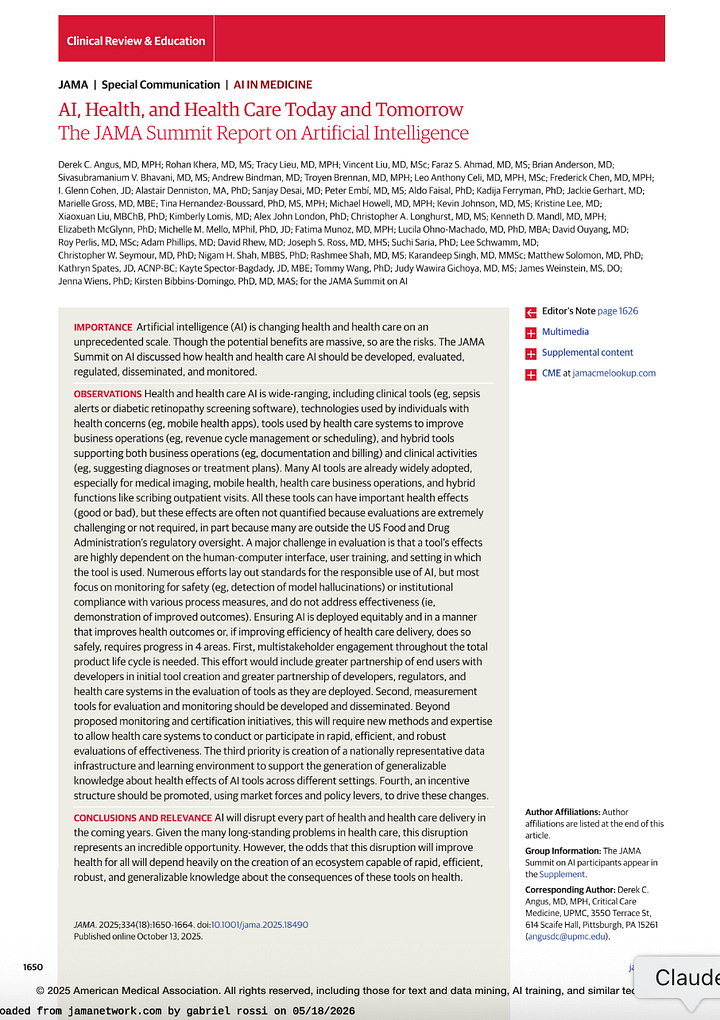
Three policy briefs on AI’s social and labour costs: a JAMA Summit report finds that most FDA-cleared health AI tools were never evaluated for outcomes, while ILO data shows women in high-income countries face nearly three times the top-band automation exposure of men.
Startup spotlights: AVIAN, LawX, and 9amHealth each closed rounds this week across industrial fire prevention, legal operations infrastructure, and virtual chronic disease care.
Google has released Gemini 3.5 Flash, which ranks fourth on the AI World aggregated leaderboard, just three points behind Claude Opus 4.7. It outperforms Gemini 3.1 Pro on coding and agentic benchmarks, processing more than 280 tokens per second. While the claim that it is cheaper than the frontier models it now outperforms is accurate against GPT-5.5 and Claude Opus 4.7, the comparison that matters most to developers is against its own lineage. At $1.50 per million input tokens and $9.00 per million output tokens, Gemini 3.5 Flash is three times more expensive than Gemini 3 Flash and six times more expensive than Flash-Lite.

This continues a pattern visible across the major labs: the era of subsidised inference is coming to an end, and this time the repricing reaches the volume tier where cost predictability was the primary value proposition. Google has indicated that Gemini 3.5 Pro is undergoing internal testing and is expected to be released next month.
→ Read the full article at AI World

This week's selection examines the maturing architecture of on-device AI, from battery constraints and model depth trade-offs to routing logic between small and large models, and the practical limits that still separate benchmark performance from real deployment.
→ Read the full paper summaries on AI World
A JAMA Summit report finds that over 1,200 AI tools hold FDA clearance and AI scribes are now present in most US health systems, yet most were never evaluated for their effect on health outcomes and most are not required to be. A new ILO paper finds that one in four workers worldwide has a job with some exposure to AI, but only 3.3% are in the top automation band, with women in high-income countries outnumbered by men in that band.
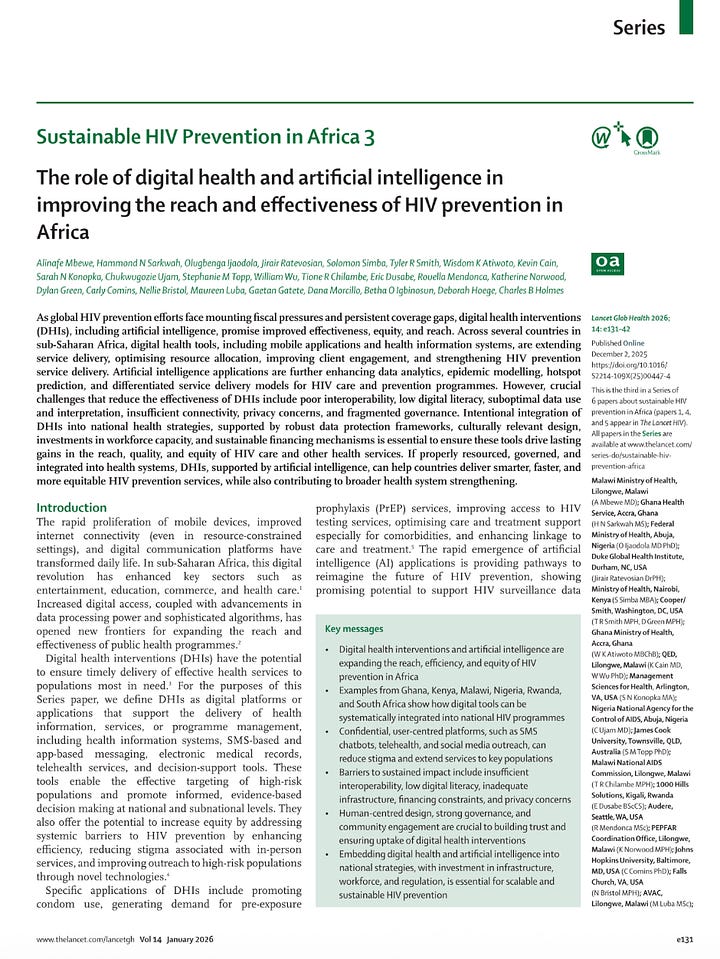
A Lancet Global Health Series paper examining six African countries finds that digital tools are already reshaping HIV prevention reach, but structural limits, broadband coverage, intermittent power, and criminalisation risks define where such services can be used.
→ Read the full analysis on AI World Linkedin page
This week’s selection showcases how AI can be applied to address structural gaps in industrial fire prevention, legal and notarial operations, and employer-sponsored chronic disease management.
🇨🇭 AVIAN: Zurich-based, founded by Drew Hanover and Thomas Laengle. AVIAN deploys continuous thermal camera monitoring across critical industrial assets such as bearings, conveyors, and electrical cabinets, with AI models trained per asset to detect heat drift before it reaches failure or ignition point, already operating profitably on a bootstrapped basis for two years before its first external raise. Raised $2.6 million in a pre-seed round led by Founderful, May 2026.
🇩🇪 LawX: Berlin-based, founded by Dr Norman Koschmieder. LawX consolidates case management, document processing, billing, and calendar coordination into a single platform built to German and European legal and notarial standards, targeting the administrative infrastructure surrounding legal work rather than research or drafting assistance. Raised €7.5 million in a seed round led by Motive Partners, with WENVEST Capital, xdeck, and SIVentures participating, May 2026.
🇺🇸 9amHealth: San Diego-based, founded 2021 by Frank Westermann, Anton Kittelberger, Paul Geevarghese, and Bernhard Schandl. 9amHealth delivers virtual specialty care for obesity, type 2 diabetes, hypertension, and high cholesterol through AI-assisted clinical workflows, at-home laboratory testing, and remote monitoring, contracted directly by employers and pharmacy benefit managers. Raised $26 million in a Series B led by Define Ventures, May 2026.
For more updates, research and insights across the AI ecosystem, visit aiworld.eu. Subscribe to receive next week's round-up directly in your inbox and stay ahead of key developments.
Have a great weekend!
Gaia Cavaglioni
On behalf of the AI World Team
Comments
Nothing yet. Say the first thing.
Sign in to join the conversation.