
Note: AI Weekender has moved. New posts are published at ai-weekender.com, and this Substack is now an archive.
To keep receiving weekly issues, please subscribe at ai-weekender.com instead of here.
The worst feeling isn’t when a project fails. It’s when you finish it, write about it, and realize no one cares.
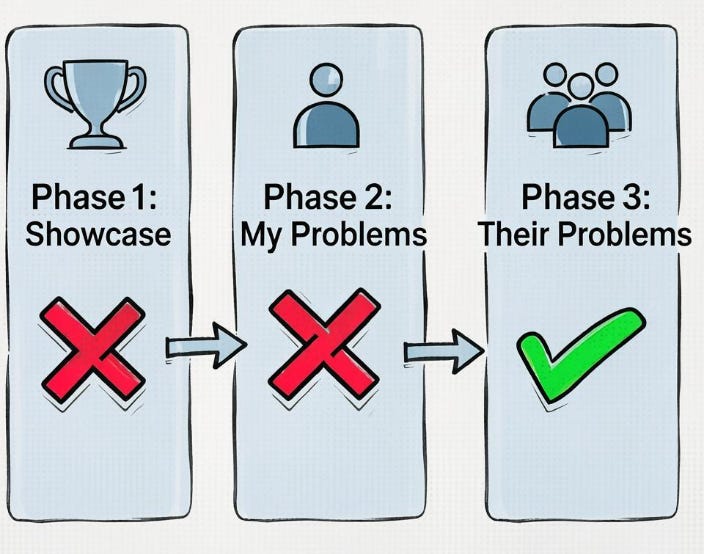
I went through three phases:
Building to get hired,
Solving my own problems,
Solving what others told me they needed.
Only the third produced projects that are still running.
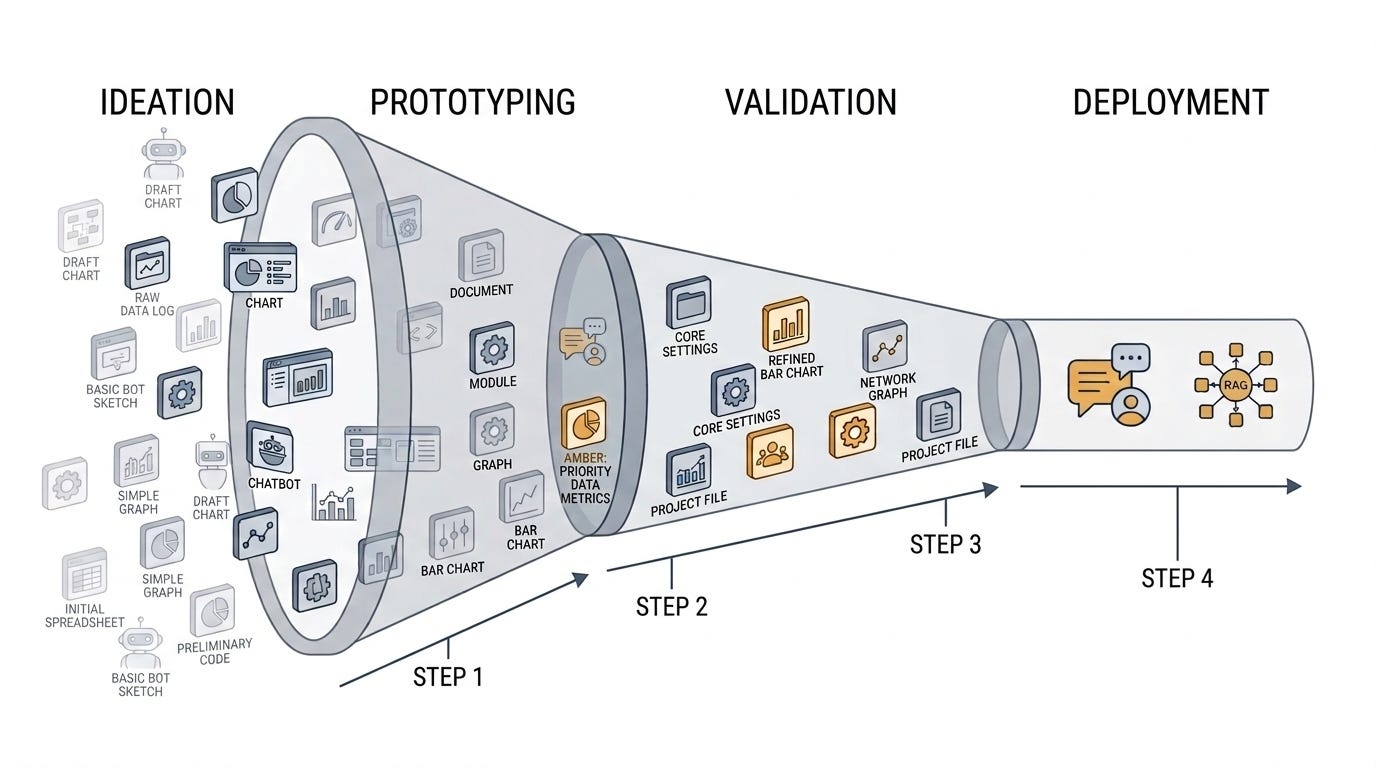
In 2020, I wanted to break into data science but I don’t have a STEM degree. So, the most effective way to prove I could code was to build. No Copilot, no Cursor.
I chose projects that would answer the question recruiters were asking: can she code? I built:
ML models
Neural Networks
Geospatial heatmaps
Graph-based anomaly detection
A gambler’s fallacy simulation dashboard
A Twitter bot that scraped and summarized news headlines daily
Each showed I could turn a problem into an ML solution and turn raw data into visualizations.
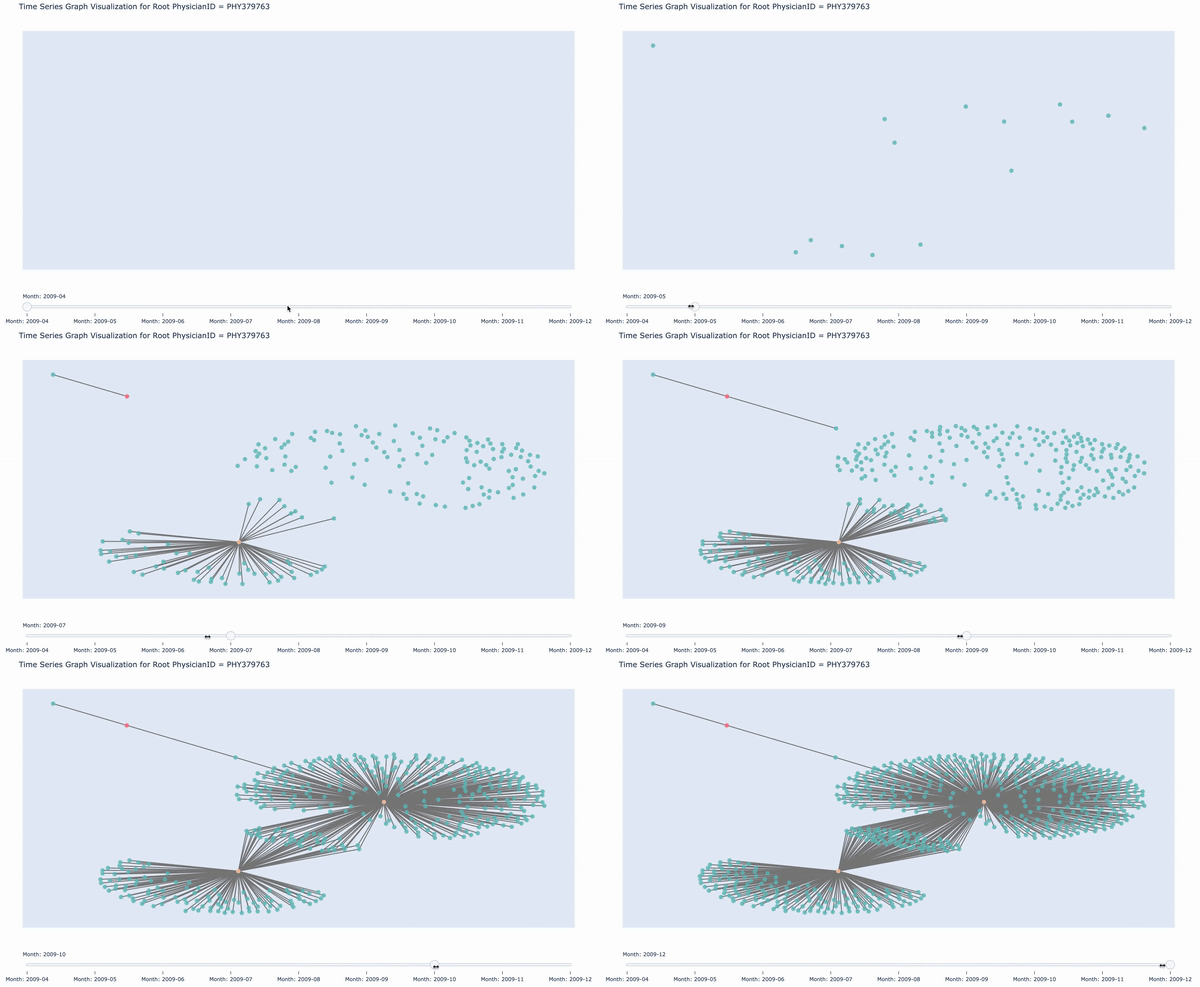
The highlight was winning second place in a Web3 Credit Scoring ML challenge by Spectral Finance in 2024 (read my post here). I’d never worked with web3 data before. The win proved that domain knowledge plus solid fundamentals mattered more than the specific stack.
Each project taught me a skill, but none had users. They were exhibition pieces, not products. That’s when I learned portfolio and traction are different games.
Then I built for myself.
The day before Thanksgiving in 2022, I was stuck in an Uber for 45 minutes trying to leave LAX. My flight was at terminal 5, but LAX is a loop, so I had to sit through dense traffic at terminals 1, 2, 3, and 4 . I almost missed my flight.
After that, I built a dashboard that fetched flight data to show which terminals had less congestion on a given day, so I could pick better times. I used it maybe twice.
When ChatGPT first appeared, I built a daily AI Python tips generator. I learned prompt engineering, and it was useful for me, but it didn’t get any traction.
I never asked whether anyone else had the same problem. I assumed my itch was universal, but I was wrong.
Building for yourself doesn’t mean others want it. Without validation, traction is luck, and I had neither.
I stopped assuming and started listening.
I built in this order:
A RAG for Bluesky posts
A Spanish pronunciation coach
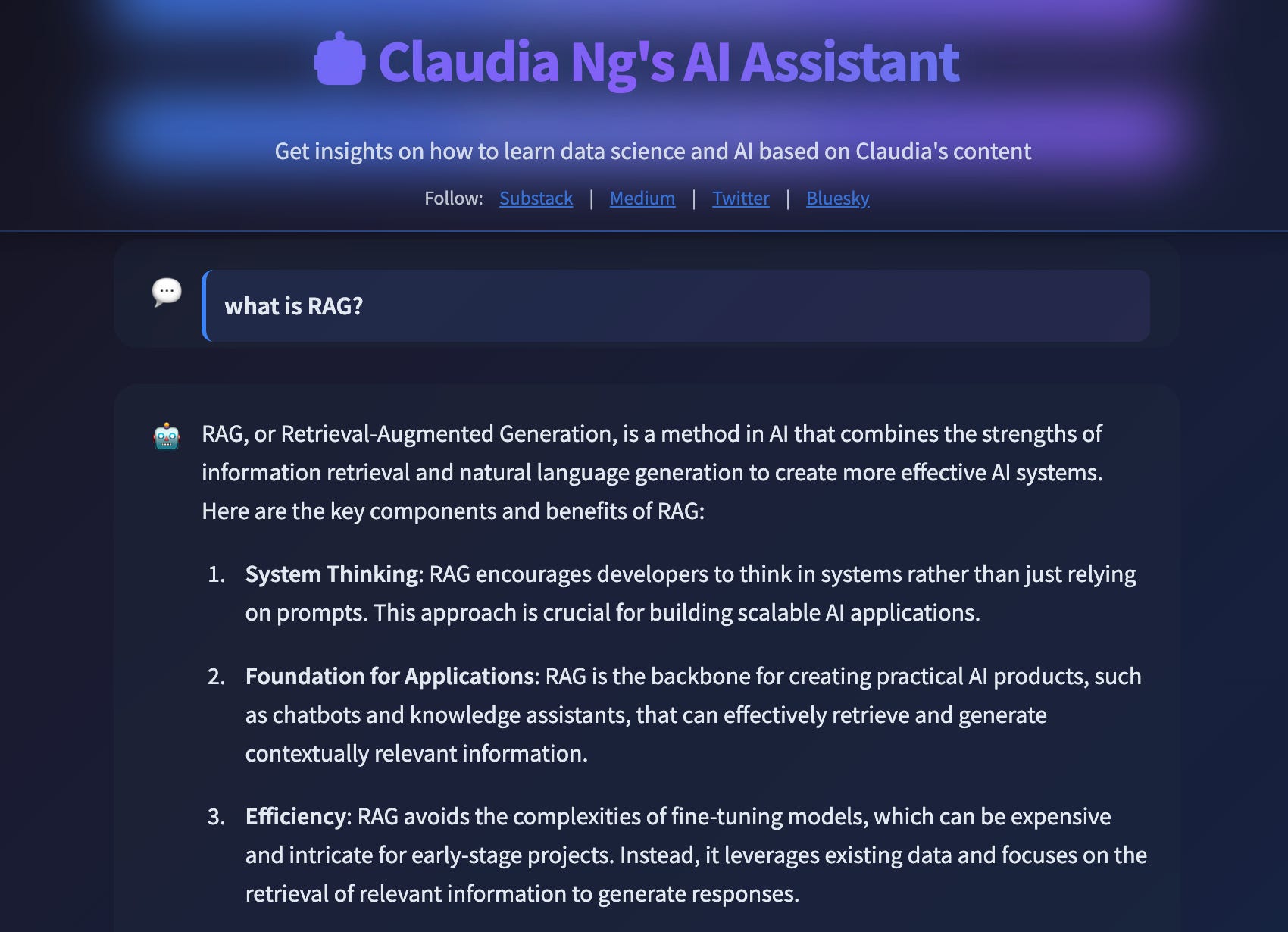
A RAG assistant that answers questions from my blog archive
An AI Cantonese tutor (CantoAI).
Each came from a conversation. Heritage speakers told me they wanted to practice Cantonese but felt judged by humans. Readers asked if I had relevant posts on learning to code. I heard the problems before I built.
Here’s what I didn’t expect: just because one project doesn’t get traction doesn’t mean it was wasted. Bluesky RAG never took off, but the RAG pipeline I built became the backbone of my personal AI assistant.
The Spanish coach got no traction; I built it before talking to enough learners and built the wrong thing. That wrong turn cost me ~30 hours. But the skills I learned working with LLMs and text-to-speech transferred straight into CantoAI.
CantoAI and the RAG assistant are still running. The skills compound even when the projects don’t.
After years of building, here’s the filter I use before I write a line of code:
1. Can you name one person who will use this? If not, pause. “Build it and they will come” is a lie. I learned that in Phase 1.
2. Did someone tell you they have this problem, or did you assume it? Assumptions killed projects in phases 1 and 2. If you can’t name anyone, go find them before you build.
3. Can you ship a v1 in a weekend? If not, scope down. Weekend scope forces validation before over-investing.
What do you struggle with most when picking out weekend projects to pursue?
The projects that died were ones I built before I knew who would care. The ones that survived? I knew before I wrote a line of code.
Note: AI Weekender has moved. New posts are published at ai-weekender.com, and this Substack is now an archive.
To keep receiving weekly issues, please subscribe at ai-weekender.com instead of here.
Comments
Nothing yet. Say the first thing.
Sign in to join the conversation.