
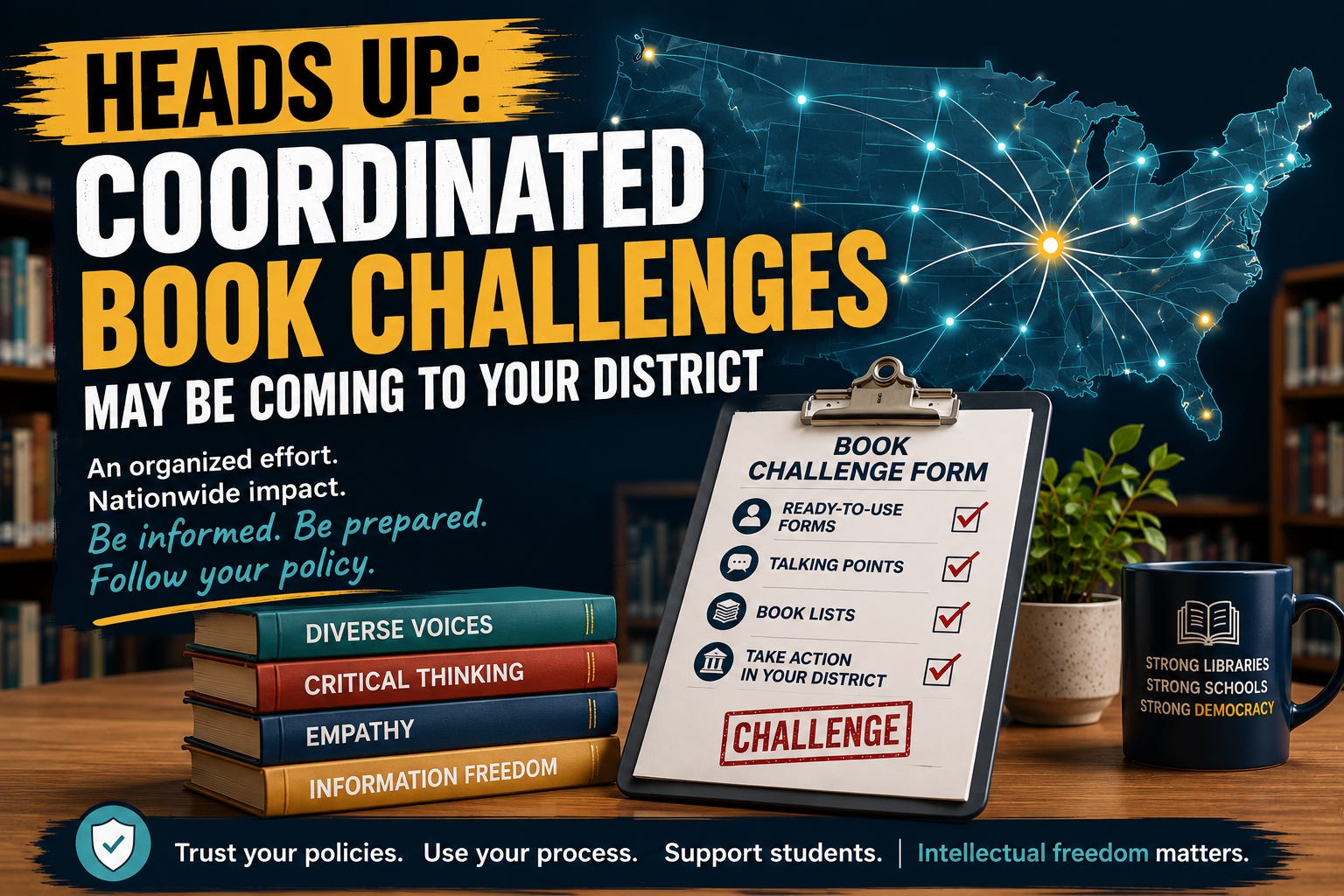
Reports circulating this week suggest that the Capitol Resource Institute’s Take Back the Classroom campaign is encouraging supporters to file coordinated book challenges across the country using prepared challenge forms and talking points. While I have not independently verified every aspect of those reports, the organization publicly provides resources designed to support individuals who wish to challenge books in schools.
Whether this specific effort grows into a nationwide campaign or not, it serves as an important reminder that book challenges are changing. Increasingly, districts are seeing organized efforts that provide book lists, challenge forms, and messaging that can be used in communities across the country. That means the next challenge your district receives may not be an isolated local concern.
As both a school librarian and a former school board vice president, my advice is simple: don’t panic. Prepare.
This is a good time for school boards, administrators, and librarians to review their reconsideration policies before the next challenge arrives. Make sure your procedures are current, your review committee understands its role, and everyone involved knows how the process works. The best time to review a policy is before emotions are high and public pressure begins.
A well-written reconsideration policy exists for moments like this. Every request deserves to be handled professionally, consistently, and according to the procedures adopted by your board of education. Decisions should be based on district policy, educational value, professional reviews, and the complete work being considered, not on social media posts or political pressure.
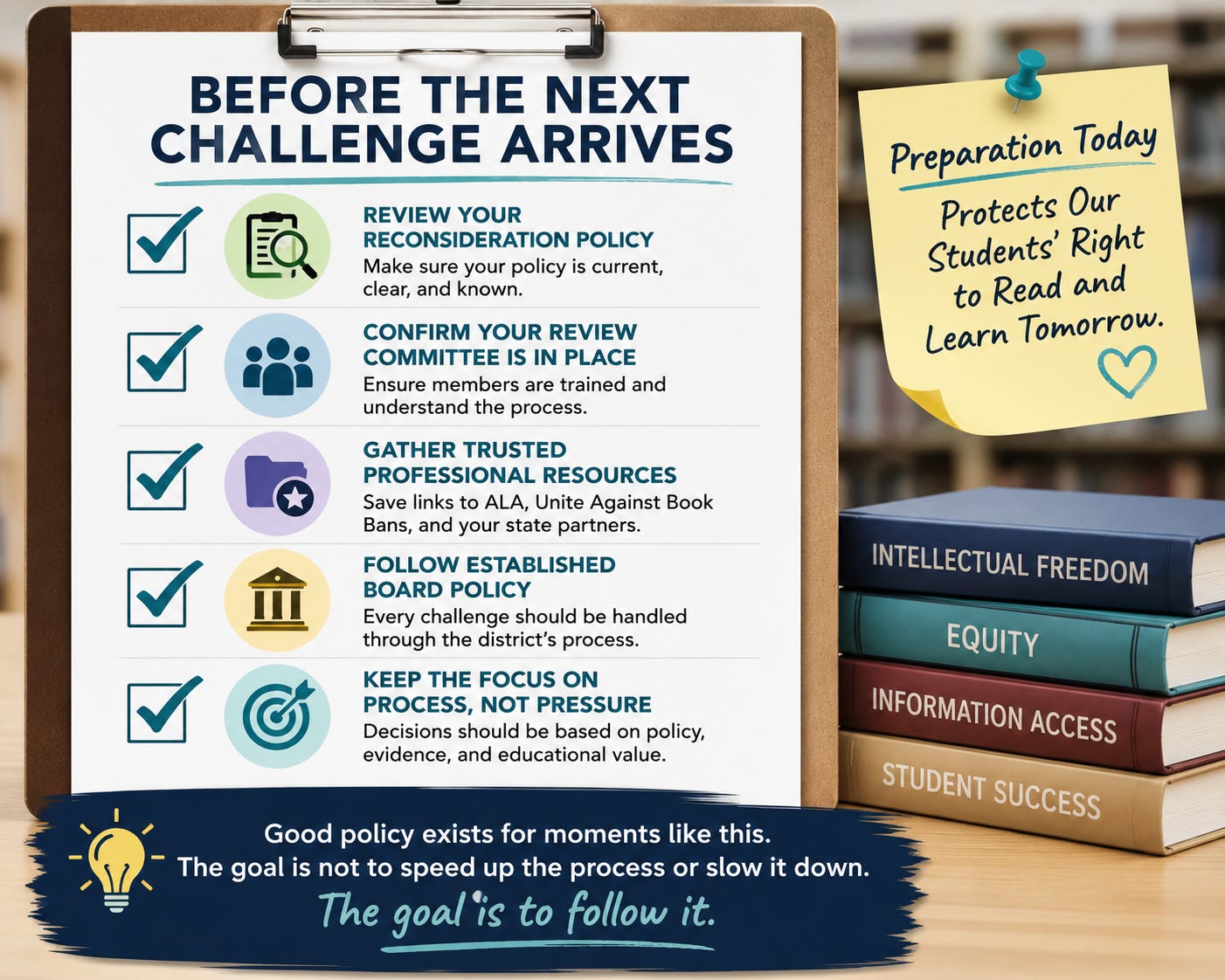
Review your district’s reconsideration policy.
Confirm that your review committee is in place and understands the process.
Save trusted resources from the American Library Association, Unite Against Book Bans, and your state library association.
Remind school leaders that consistency matters. Every reconsideration request should follow the same established process.
Good governance is built on consistent procedures, not reactions to the issue of the day. Whether a challenge comes from one concerned parent or from a coordinated campaign, the response should be the same.
Know your policies. Trust your process. Be prepared.
Comments
Nothing yet. Say the first thing.
Sign in to join the conversation.