

Author’s Note: I’m trying a new format here on Airplane Mode, where I write about a trend or a piece of movie news at the top of the post, followed by a movie review or two at the end. I’m hoping it can serve as a fun way for me to engage with contemporary moviegoing at a more frequent pace. If you have any thoughts, please feel free to let me know in the comments!
Happy 2026! As we enter the new year, the bidding war for Warner Bros. Discovery is entering its final stages. Paramount Skydance’s most recent bid for the company—the latest in their attempted hostile takeover of the historic Hollywood studio—has just been rejected by the WBD board, effectively confirming Netflix’s victory over its rival bidders. Of course, victory in a bidding war doesn’t guarantee that the deal itself will succeed, as everyone from the FCC to the Justice Department to the EU will have a say before such a merger concludes.
Yet Netflix’s triumph over Warner Bros.—or rather, Warner Bros.’ continuing interest in selling itself away to the world’s #1 streamer—remains noteworthy. It points to a future in which streaming services aren’t simply prioritized over theatrical as the dominant mode of viewing—but in which they are in control of theatrical viewing itself.
How that future will play out remains unclear. It’s entirely possible that Netflix, who have not had the means for large-scale theatrical distribution to this point, would elect to keep Warner Bros. movies in theaters. Netflix co-CEO Ted Sarandos has indicated as much, citing his intention to “release Warner Bros. studio movies in theaters with the traditional windows.”
That sounds nice, but what exactly constitutes a “traditional window”? Prior to the pandemic, theatrical release windows averaged 90 days in theaters before going to VOD; after 2020, that number plummeted to anywhere between 17 and 45 days. By the time Netflix finalizes a deal for Warner Bros.—a process that could take years to complete—the length of a “traditional window” could have shrunk even further.
If recent reporting is anything to go by, it appears that Netflix’s usage of the word “traditional” is shorthand for “as short as possible.” According to Deadline, Netflix have been proponents of a 17-day theatrical window—well below the 45-day window advocated by most theater owners. It’s a demonstration of Netflix’s overriding priority to keep audiences watching movies at home.
You can see it in the recent case of Stranger Things, which released in theaters for a scant two days. From New Year’s Eve to New Year’s Day, Netflix made $25M+ on the theatrical release of the much-hyped series finale—a damn good sum for just two days on the big screen, but effectively meaningless for a season that cost in the upper reaches of $480M. No, the point of releasing Stranger Things in theaters has almost nothing to do with money, and has almost everything to do with generating excitement for the superfans. In other words, Stranger Things in theaters isn’t a theatrical release, but a theatrical gimmick—a quick moment of spectacle before reverting to the bog-standard experience at home.
The effects of a 17-day window would be similar. It goes without saying that smaller windows are bad for theatrical, which perhaps makes it worthwhile to be just a wee bit romantic about what movie theaters can offer to the general public: a moment of shared cultural excitement. Original spectacles like Sinners, F1, and Marty Supreme don’t embed themselves public consciousness without a moment of collective hype, and that hype is generated by moments of collective viewing. That’s a public good I don’t want disappearing anytime soon.
Dir. Bradley Cooper
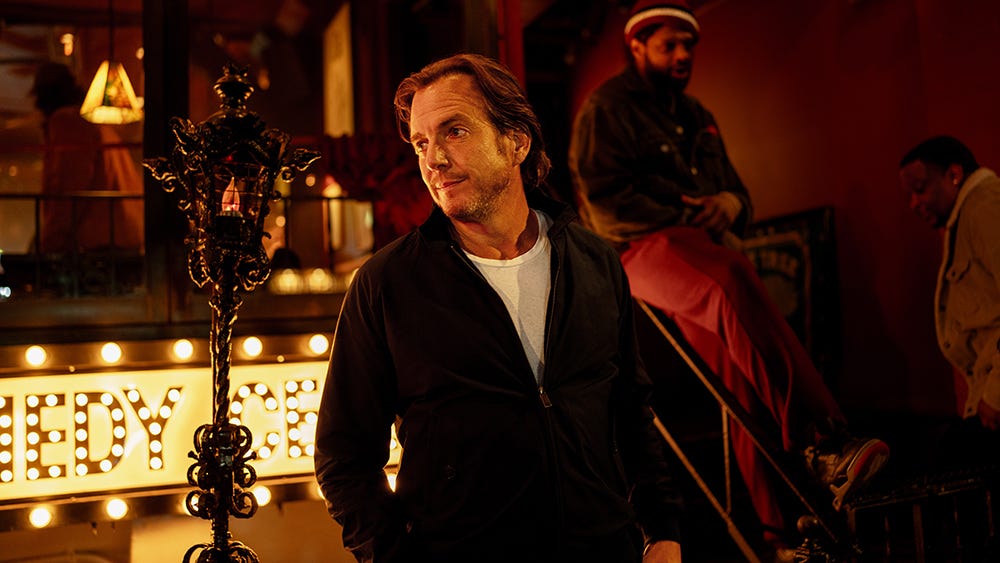
Is This Thing On? begins with divorce. Alex (Will Arnett) and Tess Novak (Laura Dern) are calling it quits despite 20 years of marriage and two young boys in grade school; they have simply grown apart from each other after years of sameness. Separated and lonely, Alex stumbles into a West Village comedy club and decides to sign up for an open mic slot rather than pay the entry fee. He isn’t very good, but his brief moment on stage ends up paying dividends for his unexplored feelings about his marriage.
A smaller and more intimate film than Bradley Cooper’s previous films in the director’s chair, Is This Thing On? uses Alex’s moments onstage—always shot in an intimate close-up, emphasizing his emotional proximity to the audience—to deliver a tender story about the line between self-expression and a healthy marriage. There’s more than a touch of James L. Brooks in the film’s screenplay—a suitable tone for a low-key dramedy filled with a charismatic supporting cast that includes Andra Day, Christine Ebersole, Ciarán Hinds, and a winning cameo from Peyton Manning. Cooper himself delivers the film’s best supporting performance as Balls (yes, Balls) a constantly stoned actor and Alex’s best friend.
This is the first film in Cooper’s oeuvre that doesn’t feel desperately in pursuit of an Academy Award. It lacks the sweeping Americana of 2018’s A Star is Born, and the self-insistent Oscar-bait quality of 2023’s Maestro, though this should be seen as a feature rather than a bug: Is This Thing On?’s enclosed scale ironically allows the film greater freedom of expression. Cooper himself served as one of the film’s camera operators, which lends the film a newfound sense of directorial authenticity. This is a film attuned to the emotional fluctuations of its characters—a natural fit for Cooper’s directing instincts.
Dir. Kristen Stewart
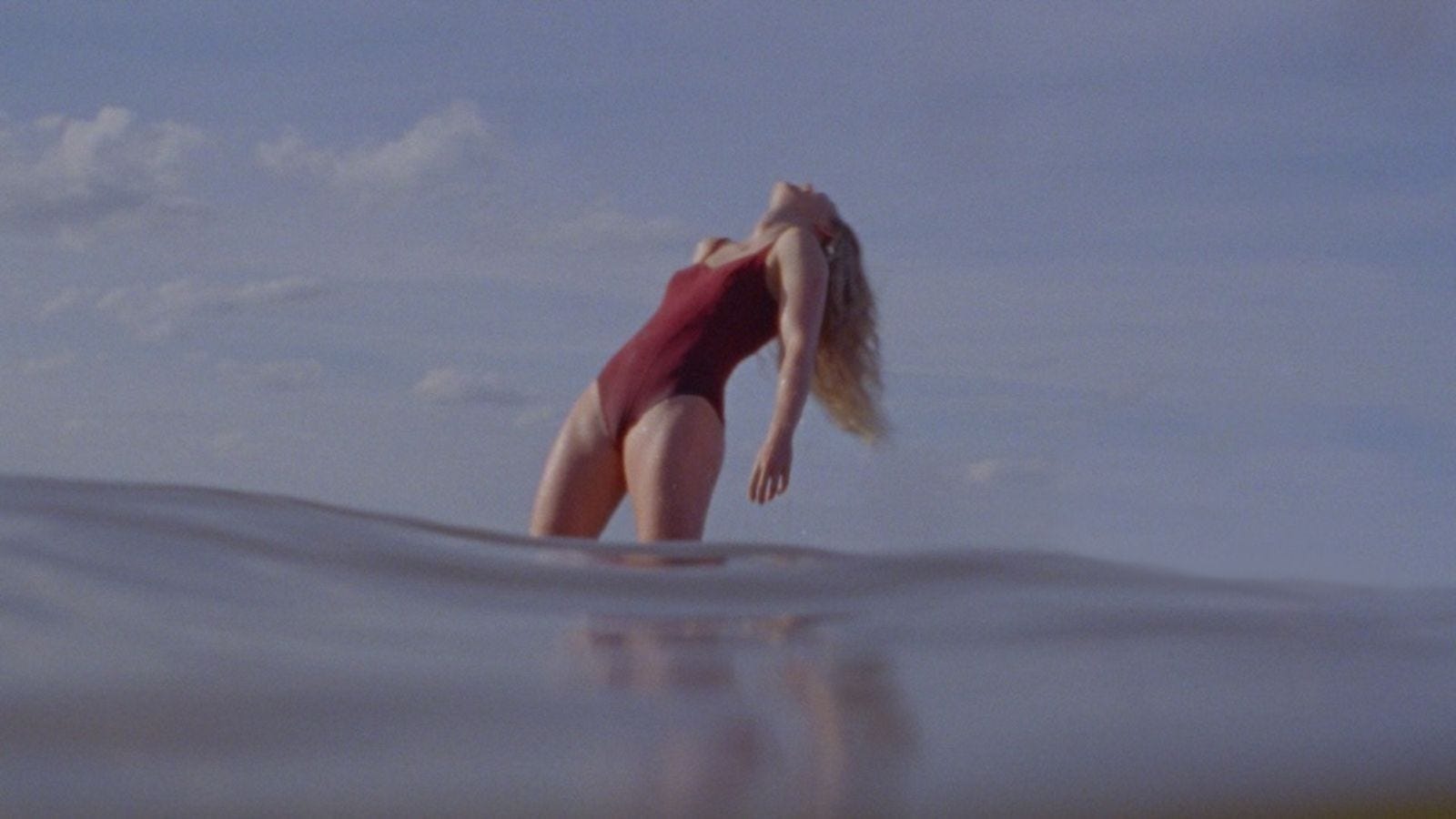
The story of Lidia Yuknavitch (a remarkable Imogen Poots) begins with intense trauma. The beginning of The Chronology of Water is marred by moments of incest and abuse, recounting Lidia’s difficult upbringing in 1970s San Francisco. These instances are recounted by first-time director Kristen Stewart with a skillful indirectness—that winds up feeling more unflinching than if she were to depict them head-on—and its this sensibility that drives the rest of the film, playing with a similarly mixed-up quality. Sequences are delivered chopped and screwed; we find ourselves awash in memories, as in a river flowing with uncertain identity.
Stewart’s directorial debut is a cinematic telling of Yuknavitch’s 2011 memoir, conveyed with a fractured, abrasive sensibility that one would more naturally expect in the aesthetics of punk rock than in a coming-of-age story about a competitive swimmer-turned-acclaimed academic. Then again, “coming-of-age story” is itself an unfair descriptor of The Chronology of Water—or at least an insufficient one. It’s a phrase that accurately describes the film’s narrative: a story, at least in part, about trauma and the healing process that emerges from artistic self-expression. Yet the film defies the conventional associations of that genre through Stewart’s pile-driving direction and Olivia Neergaard-Holm’s fragmentary editing. Far more kaleidoscopic than its basic descriptors would suggest, The Chronology of Water transforms into a 16mm collage of a life—one that dreams its way towards a steadier surface, emerging quietly triumphant.
Thanks for reading Airplane Mode! This post is public so feel free to share it.
No posts
Comments
Nothing yet. Say the first thing.
Sign in to join the conversation.