
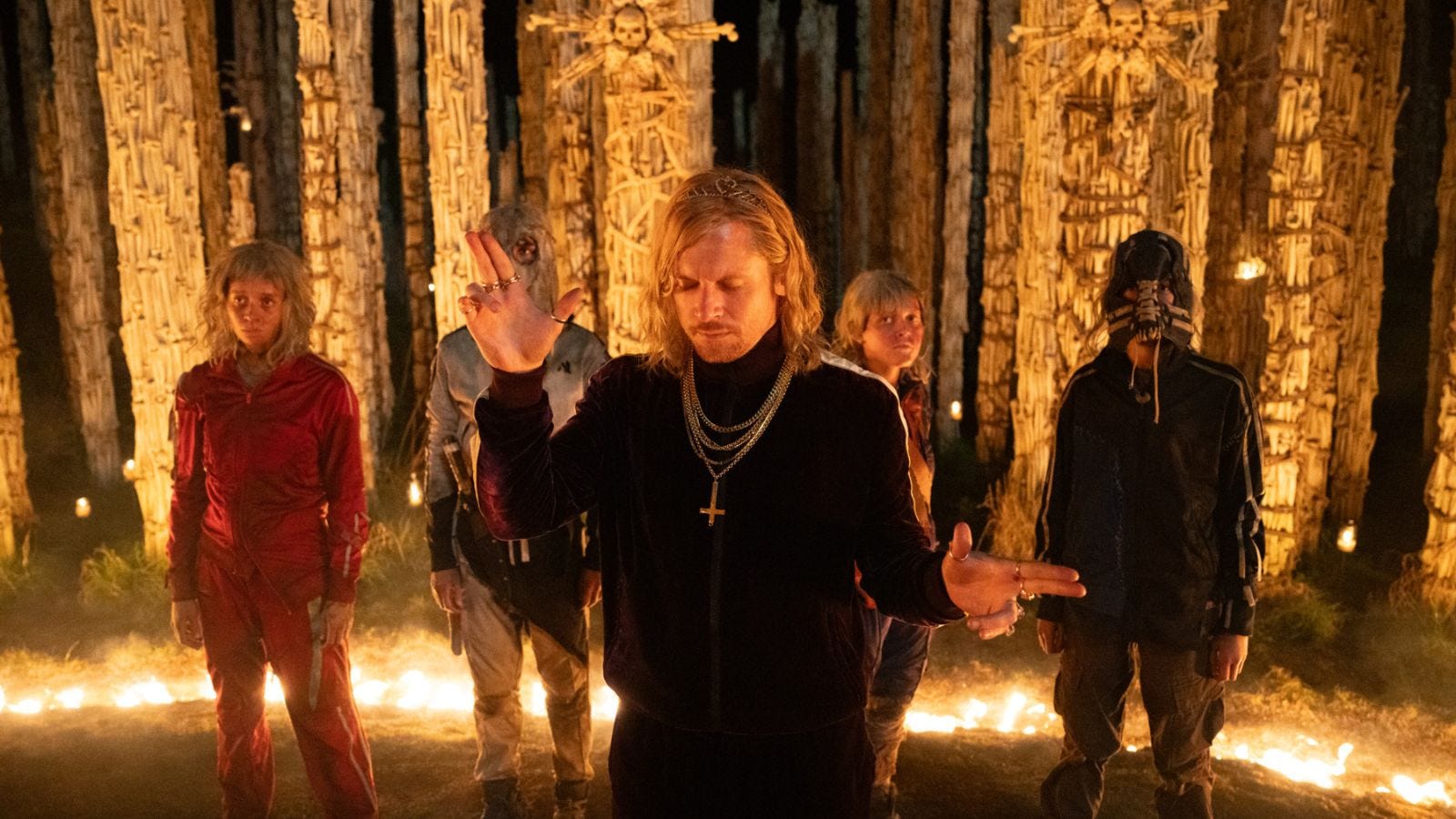
Movies like 28 Years Later: The Bone Temple are supposed to be bad. The fourth entry in a zombie series that started more than 20 years ago (and one released in January, no less) feels like the kind of desperate franchise play made by a studio executive who couldn’t find better IP to mine from their archives. But that isn’t the story with The Bone Temple, a film that manages to at once be a stunning action-horror film—one whose hideousness belies genuine substance—and the rare instance of franchise filmmaking that feels creatively intentional.
Much of the film’s intentionality can be attributed to screenwriter Alex Garland, who planned and penned a trilogy of 28 Years Later films simultaneously. “A whole idea for a trilogy just sort of came—bing!—into my head,” Garland told The Guardian in early 2024, giving some evidence to how the transition out of last June’s 28 Years Later and into The Bone Temple manages to work as brilliantly as it does. As that film ended, the young Spike (Alfie Williams) had just concluded the first chapter of his grisly coming-of-age story set against the backdrop of a United Kingdom overtaken by the Rage Virus (in which zombies roam the earth, but also run really fast). He had rebelled against his alpha male father (Aaron Taylor-Johnson) and mourned the death of his mother (Jodie Comer), who was ushered into the great beyond by the kindly Dr. Ian Kelson (Ralph Fiennes) with poignancy and beauty. So tender were the film’s concluding moments that the film’s actual concluding moments—a tone-switching coda in which a merry band of tracksuit-sporting, blond wig-wearing satanists (they are styled after Jimmy Savile) show up to perform acrobatic pirouettes and zombie decapitations before Spike’s own eyes—turned the film on its head, shocking the audience into a hyperviolent stupor.
It’s a shocking, borderline campy epilogue to an otherwise sincere work of zombie cinema, and it is no small miracle that The Bone Temple takes that chavvy baton and runs it to a metaphysically profound finish line. The film picks up mere minutes after 28 Years Later left off, with the flamboyant Sir Lord Jimmy Crystal (an Oscar-worthy Jack O’Connell), leader of the aforementioned Jimmys, forces Spike into a ritualized fight to the death with a Jimmy of his choice. When Spike comes away victorious after stabbing an artery, he finds himself unwittingly inducted into their ranks—wig, tracksuit, and murderousness to boot.
Simultaneous to Spike’s murderous countryside cavorting are the continuing adventures of Dr. Kelson, whose solitary existence is predicated on commemorating the victims of the virus by building a massive ossuary in their honor. Which is to say, a temple of bones—their bones. The Bone Temple is indeed named after Dr. Kelson’s work (“fucking knockout,” per Jimmy Crystal), and the film likewise spends a great deal more time with Dr. Kelson than the previous film, expanding on his relationship with Samson (Chi Lewis-Parry), the six-foot-nine alpha zombie who develops an increasing reliance on Dr. Kelson’s opiate-loaded tranquilizer darts. This in turn begets a sort of friendship between zombie and man—one often soundtracked to Dr. Kelson’s Duran Duran LPs.
That’s another way of saying that The Bone Temple, a film filled with intense cruelty and exteriorized viscera, knows how to have fun amid the violence. O’Connell performs Jimmy Crystal with an ostentatiousness that rides a knife’s edge between charismatic and horrifying, while Fiennes delivers a typically masterful vision of the means by which kindness perseveres amid indecency. Both performances—the best of the year so far—are given the patient tenor they deserve by director Nia DaCosta, arriving here after her previous directorial effort Hedda, a zippy Ibsen adaptation proved DaCosta’s ability to translate character-driven stage dynamics to the screen whilst retaining cinematic aplomb. That tendency is used to brilliant effect here: for a film whose climactic set piece involves an off-the-cuff musical fantasia set to Iron Maiden’s “The Number of the Beast,” it’s notable that the best scene takes the form of a quiet conversation between Jimmy and Dr. Kelson on the nature of faith in a godless world.
The Bone Temple has not made a splash at the box office, which is a shame. Its particular blend of kooky depravity feels like the kind of thing that would bring horror movie audiences to theaters, but not so here. Some have attributed this soft opening to the quick turnaround time between sequels; with only 7 months between the release of 28 Years Later and The Bone Temple, audiences may simply have not had time enough to rebuild excitement for a new foray into the Rage Virus—which is itself a bit of poetic irony for Sony Pictures. The studio constantly in search of new IP to mine must have felt they were being offered a golden ticket when Garland presented them a three-picture vision for their dormant zombie franchise—a choice that in the end oversaturated the market, leaving them high and dry.
Not that I’m complaining. The Bone Temple has set a high bar for this year’s horror films, and I’m grateful that it exists. It’s a wonderful demonstration of how franchise filmmaking can flourish when a single creative vision undergirds the whole project, rather than a haphazard melting pot of producorial voices. If this is what it takes to make a movie in 2026, so be it. Let’s start those three-picture deals with the artists.
Dir. Joe Carnahan
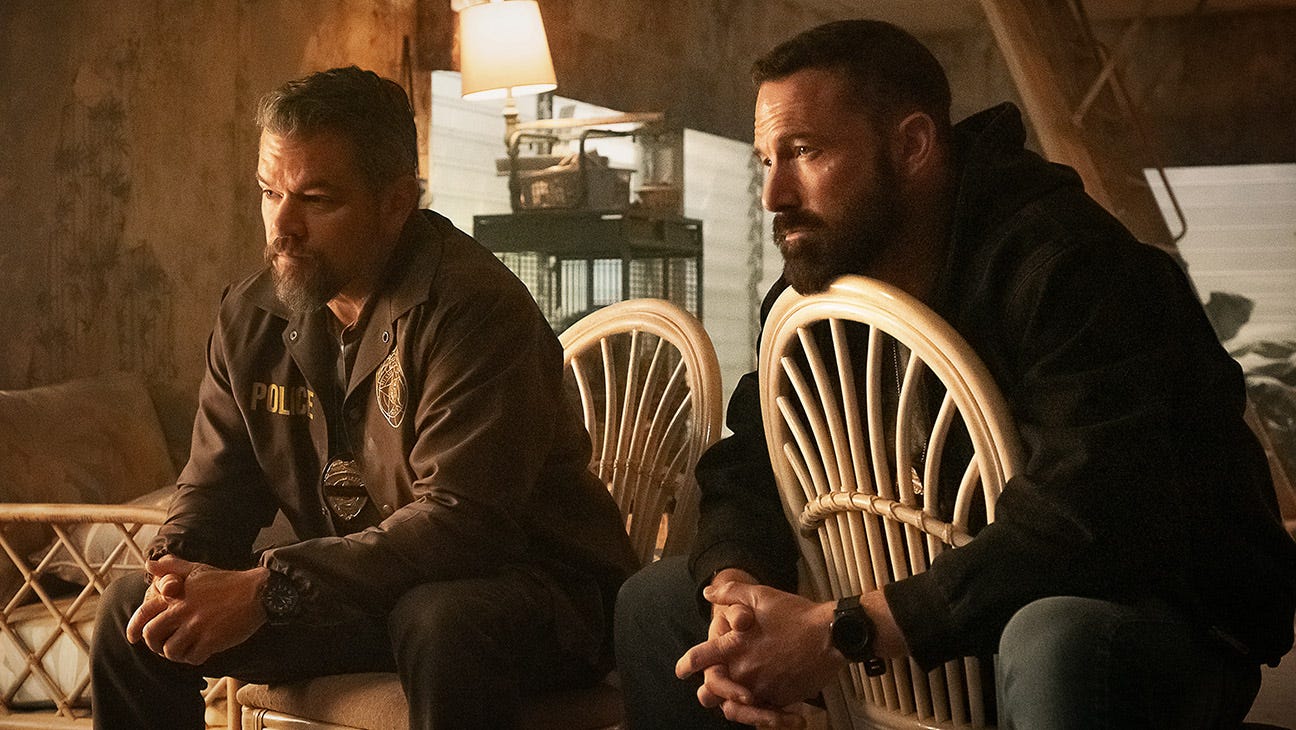
Joe Carnahan’s The Rip depends on Matt Damon and Ben Affleck: not just their performances as two Miami cops and longtime bros who begin to suspect each other of trying to steal from a hidden cash operation, but on their production company, Artists Equity. To put it more bluntly, The Rip—a depressingly mediocre riff on mid-90s cop thrillers, ratcheted up to the militancy of 2020s copaganda—couldn’t have been made without Matt and Ben’s express investment in the project, which has me sincerely wondering why Hollywood’s bestest friends would invest their time and energy into such a lackluster script. Maybe it’s Carnahan’s track record with dad-core action thrillers like The Grey and Copshop. Maybe it’s their opportunity to reclaim as action stars in a mid-budget blockbuster—to reunite under the filmmaking middle class that made them.
Whatever the case, the film is Netflix slop. The script is as nonsensical as it is repetitive; the direction flits between over-emphasizing the obvious and incoherent shaky cam. Damon recently made headlines with his comments that Netflix wants the plot repeated numerous times in dialogue for the viewers at home who are also on their phones, and it shows in the film. The Rip boasts an impressive cast of performers including Steven Yeun, Teyana Taylor, Sasha Calle, and Kyle Chandler, each of whom goes underutilized, and whose casting exists solely to feed into the film’s unearned third-act twist into whodunnitry. It’s a shame to waste that much talent on such a lackluster pivot—an apt statement for the film itself.
The Rip is currently streaming on Netflix.
Thanks for reading Airplane Mode! This post is public so feel free to share it.
No posts
Comments
Nothing yet. Say the first thing.
Sign in to join the conversation.