
Steve Jobs famously said, “Customers don’t know what they want until you show them.” In 2007, that was a radical way to think about connecting with audiences. Today, it needs an update.
The creator‑driven, algorithm‑ruled marketplace we release brands into demands an evolution of Jobs’ quote: “Customers don’t know what they want until other customers show them.”
This poses a significant change how brands launch campaigns or products. It’s a shift away from long, closed-door strategy sessions and rigid brand architecture, toward something more fluid—flexible campaigns, audience collaboration, live iteration, and ideas built to evolve over time.
Non‑linear cultural context
Three significant cultural forces have driven us to content fragmentation.
Brands zig-zagging their values. One year sponsoring Pride parades, the next fleeing en masse. This inconsistency has eroded trust in brand-broadcasted messages and pushed audiences toward a web of bottom-up sources.
The rise of creator intimacy. Audiences have formed parasocial relationships with creators who are increasingly open about their lives—messy screenshots and all—in ways brands can’t match. This intimacy has more influence than even the glossiest 30‑second spot.
Culture speeding up. Scandals, memes, and even seismic events flare and fade in days. Remember when Trump got shot? What would have dominated cycles for months is now just a blip in an endless scroll. Rigid, slow-developed campaigns can’t keep pace with active cultural interest.
Platform reality: The algorithm is the market
We are all at the mercy of the algorithm and brands are no different. Social platforms don’t reward followers, craft, or perfect messaging. They reward content hits, which are nearly impossible to predict. Smart brands spin the wheel with a wide range of content to increase their odds. They treat this unpredictability as a feature, not a flaw.
Echo chambers deepen this challenge. My timeline is not yours, and the same message lands differently across fragmented feeds. A single brand voice can’t stretch across them; tone and format matter.
Loewe is an incredible example of this: their Instagram is classic luxury—beautiful product shoots, craftsmanship, aspiration. But with influencers, they flex. Non-fashion creators use their voice to reach audiences who might never have sought the brand out. Flexibility is a passport into splintered segments.
Creators also now offer more than content and endorsement. They amplify, drive affiliate sales, and test messages—all at exceptional ROI.
Pouring gasoline on the algorithm
At Fragment, our campaign process is built to leverage creators and platform responses to shape campaigns in real time. We don’t try to predict what our audiences will be receptive to; we build systems for them to tell us, quickly. These systems are designed to beat the fixed returns brands get with standard paid social campaigns.
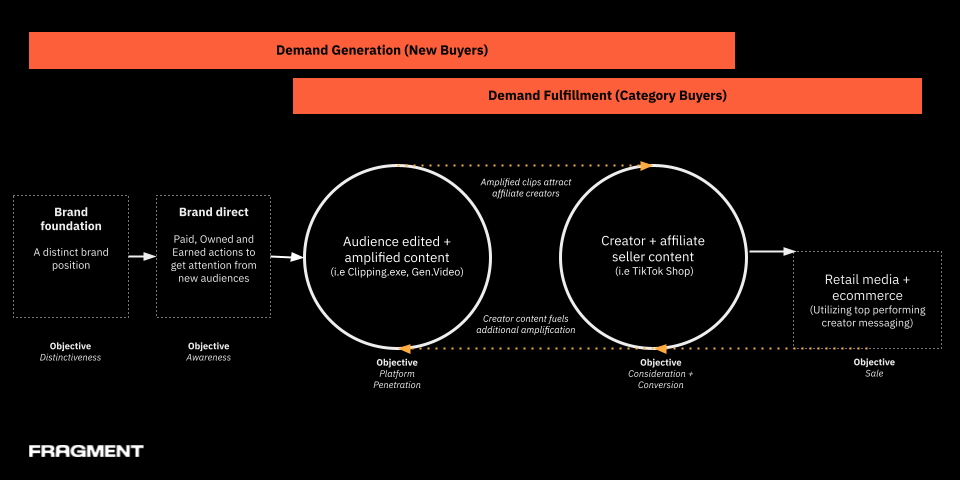
One system we have built recently is the Creator Accelerator; it’s a process designed to get the most out of creators across the funnel.
1. Building a foundation
The first step is building a distinct foundation, one that draws in people who might not otherwise consider your product.
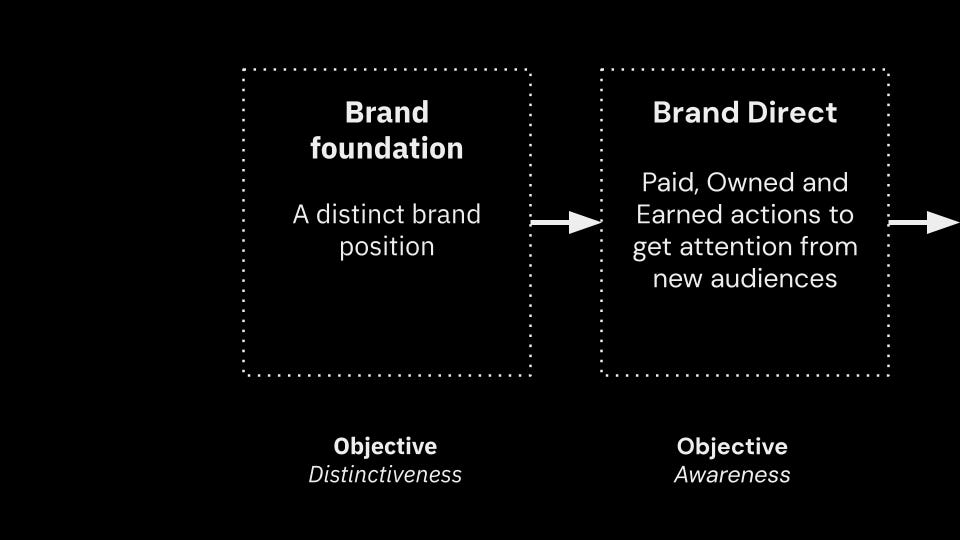
Vacation did this by repositioning sunscreen from a clinical, science-forward category to a fun, emotionally resonant lifestyle experience. While most brands leaned on SPF stats and chemical claims, Vacation zagged—centering its identity on “making sunscreen fun.” Its retro-tropical aesthetic taps into the actual context of sunscreen use—sunny days, good times, being on vacation.
What sets Vacation apart is its commitment to world-building: every brand touchpoint—from 80s-inspired packaging to cheeky LinkedIn job titles—reinforces a playful, immersive universe. They’ve built a credible universe that people can poke around. This clarity makes it easier for creators to make content that’s both memorable and on-brand.
2. Acceleration
Now we accelerate. The first step is building awareness and frequency. To attract creators who will frame, reframe, and sell your product, you need them—and their audiences—seeing it constantly.
One of the most effective tactics is clip farming: recruiting a network of social-specific editors to splice existing content up into a thousand different micro-edits, pushed to the algorithm to see what hits.
The best clips are under 60 seconds and optimized for cultural relevance—reaction shots, side-by-side commentary, quick cuts, or trend-jacked riffs on internet drama. Because the brand pays per view, waste is minimal. The sheer volume allows rapid testing of hooks, formats, and memes. Done right, clip farming makes your brand feel inevitable—always in-feed, always in-conversation.
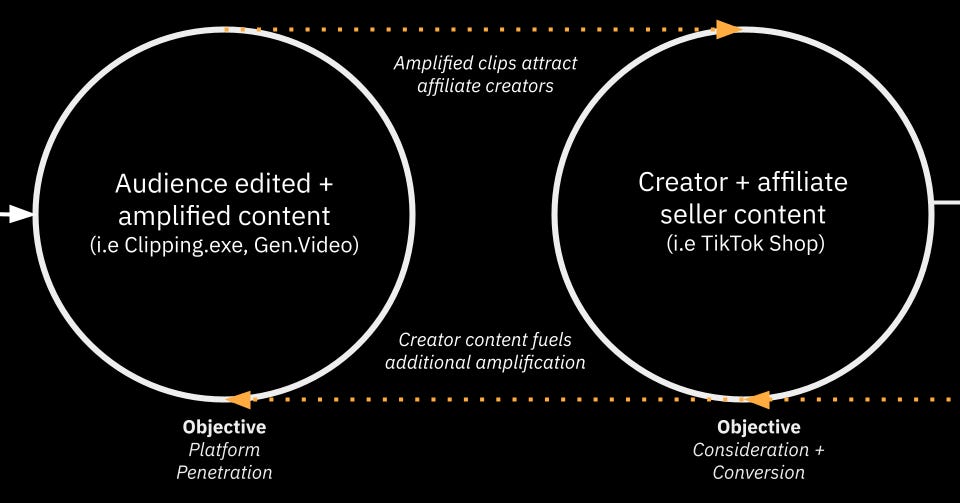
The second step is activating a creator affiliate network, such as a TikTok Shop campaign. This drives a flood of freely produced content, with payment only on commission from sales.
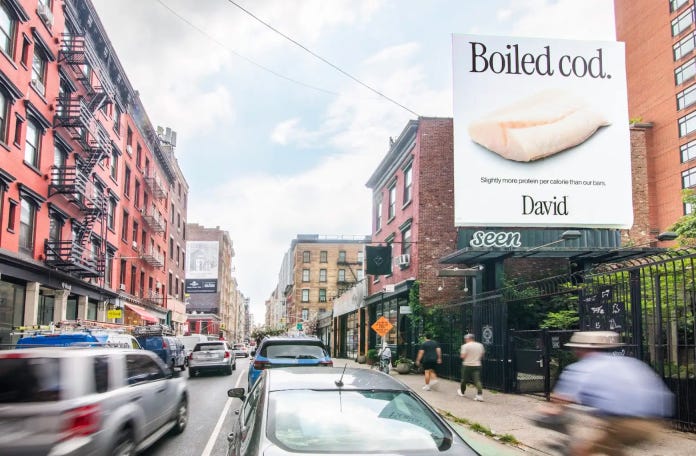
Let’s say you’re David Protein and you’ve just released the recent Boiled Cod campaign. You might start with long-form content rooted into the brand’s protein-maxxing ethos. That content can be edited and amplified through clip farming, raising interest and awareness at scale. Once interest builds, you layer in creator affiliates to produce conversion-optimized content—turning interest into sales.
The structure is self-optimizing—winning creator messages feed back into awareness content, which attracts more creators, priming an ever-growing audience.
3. Extending beyond platform
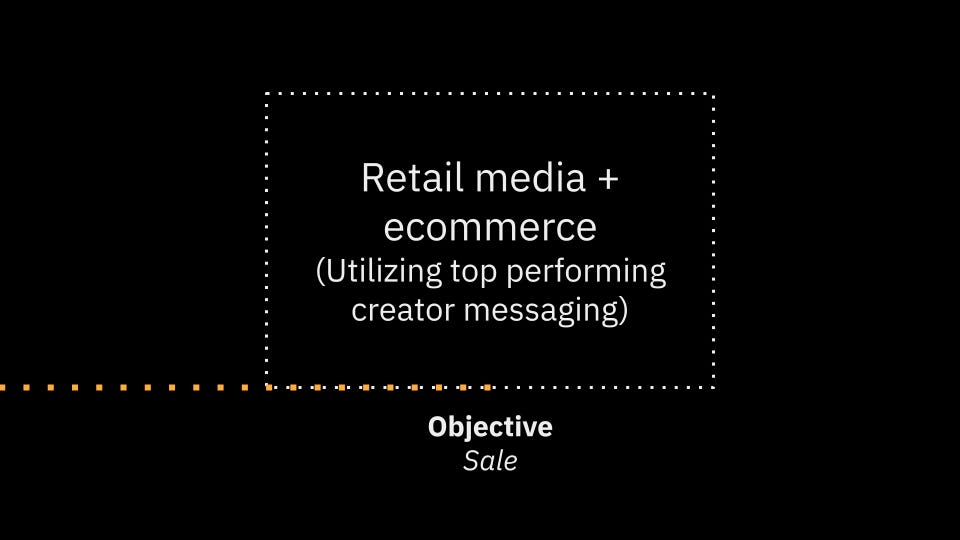
The machine doesn’t stop there. By campaign’s end, you have audience-tested insights on features, messaging, and framing. Apply them to sharpen e-commerce and retail presence, targeting in-market shoppers already searching the category. Doubling down on proven resonance beats gambling on untested assumptions.
The era of adaptive brands
Perfect positioning doesn’t win anymore; speed and iteration do. Steve Jobs believed in showing customers what they didn’t know they wanted: a top-down revelation. Today’s brands need the inverse: letting customers show each other what they want, then amplifying those signals at machine speed.
The future belongs to brands that can be clay in their audience’s hands: malleable enough to be shaped by real-time feedback, yet strong enough to hold their core identity. Campaigns that rely solely on paid impressions will get average results. To break through, you have to hack the system—feed it signals, test, double down, scale.
The question isn’t whether your brand can predict the next cultural moment. It’s whether you’ve built the systems to ride the wave when it comes.
Michael Goldstein is the founder of Fragment, a New York-based communications strategy collective launched in 2024 to help brands navigate the complexities of modern media and messaging. With a background leading communications strategy at major agencies like DDB and McCann, Goldstein is known for blending sharp media knowledge with a creative instinct for breakthrough brand storytelling.
Comments
Nothing yet. Say the first thing.
Sign in to join the conversation.