
Hi, i am shreya and i love my job.
I want to say that first because everything after it will sound like a complaint, and it isn’t one. I like the pace, the pitching, the small daily proof that something I did had an impact in the big wheel. It is good work, done at a desk with the AC running at 22°C and John Mayer in my ears.
Then the tools got faster, and I got faster with them, and somewhere in that speeding up I noticed I had stopped reading anything that took longer than a scroll. I was answering questions I hadn’t asked. Summaries of summaries.
A model would tell me the shape of an idea before I’d had the pleasure of finding it myself, and I kept taking the shortcut because the shortcut was right there and I had a newsletter to ship.
What I miss, it turns out, isn’t information. I has more of that than ever. What I miss is the specific ache of a syllabus. There is a kind of learning that only happens when nothing is optional and nothing can be asked to explain itself faster. College gave me that by accident. I have been trying to steal it back on purpose ever since.
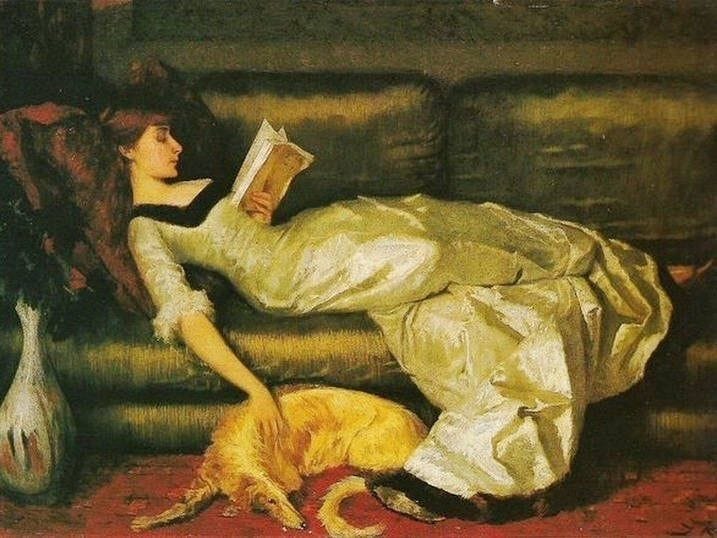
So this July I did something a bit mad. I put my mother’s old paperback of Wuthering Heights by the bed, the spine so soft it folds like fabric, and I started rereading it the way you’re meant to read a set text: slowly, with a pencil, refusing to let the internet tell me what it means before I’ve decided for myself. Brontë wrote the whole moor-mad thing in a parsonage she barely left, and there’s something in that isolation I recognise now. Not loneliness exactly.
Concentration that looks like loneliness from the outside.
There’s a line in one of the newer film versions, not the novel itself but close enough to the novel’s bones that I’ve forgiven it, where a child insists that “blue is blue no matter how small”. I keep coming back to it.
So I built myself a syllabus. Not a life-restructuring one, just enough structure to make the craving specific instead of vague.
One primary text a month, read slowly, on paper, no summaries allowed until I’ve finished it myself. Brontë this month. Something technical next, so the habit doesn’t calcify into only-fiction.
One long lecture a week instead of five short videos. Karpathy’s from-scratch builds are my current standing assignment, the two-hour kind where you watch someone actually think rather than perform having thought.
One essay, handwritten notes only. Gwern or Raschka usually. The pencil is the whole point. Typing feels too much like the job.
One evening a week with the phone in another room. This is the actual syllabus. Everything else is scaffolding for this.
Here’s a list of 25 things I assigned myself this month and some i have read already and honestly have. truly enjoyed reading and learning. It may not be everyone’s taste or preference but the goal is to enjoy the art of studying again.
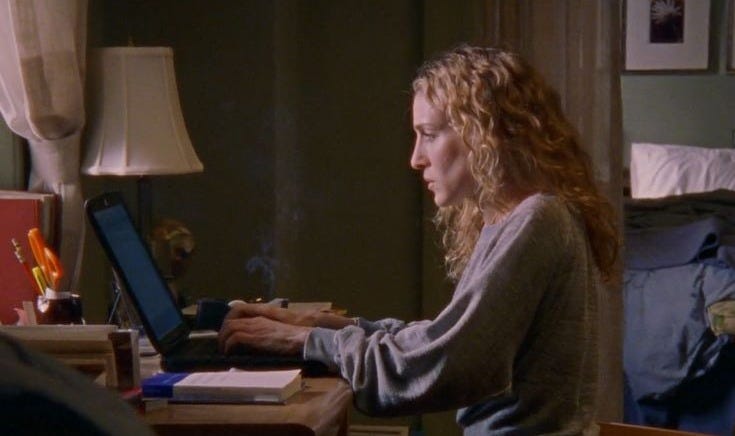
Jay Alammar’s diagram that made attention mechanisms click for an entire generation of engineers. Still the first link anyone sends when a friend asks how GPT actually works.
Sebastian Raschka, PhD reads the papers so you don’t have to, then draws you a picture anyway. His comparisons of modern LLM architectures are the closest thing this field has to a family tree.
An anonymous writer running Gwern.net who called the scaling hypothesis years before it was consensus, working alone, funded by readers. The internet’s strange, brilliant uncle.
Lilian Weng on why giving a model more time to think actually works, written with the clarity that only comes from someone who sat with the confusion first.
Simon Willison, plainly, on what these tools are actually good for and where they’ll quietly lie to you.
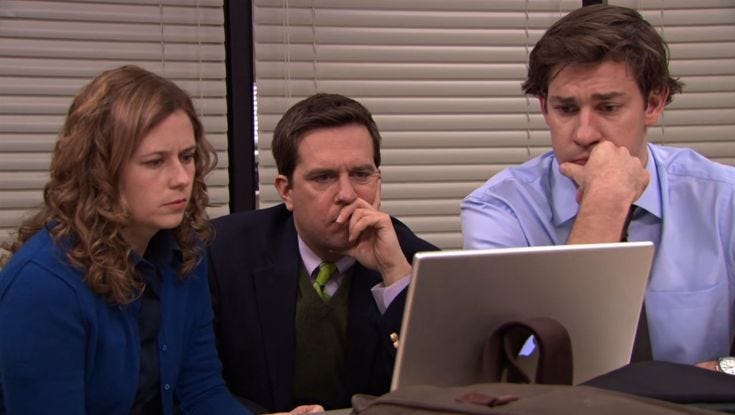
Andrej Karpathy, two hours, one notebook, zero slides. You watch a transformer get built line by line, the way you’d watch someone actually cook rather than read the recipe.
3Blue1Brown, animated and patient, the video equivalent of someone drawing on a napkin until the idea has nowhere left to hide.
Live, unedited, on Twitch. A man arguing with his own GPU in real time, archived for anyone who wants to see what it looks like when someone doesn’t know if the thing will work.
Forty-five minutes, no music bed, no false urgency, just someone who read the whole paper and will tell you bluntly if the claims hold up.
Two hours of one of the internet’s most careful thinkers, unmasked and unhurried, on intelligence, anonymity, and what it costs to write for a living in public.
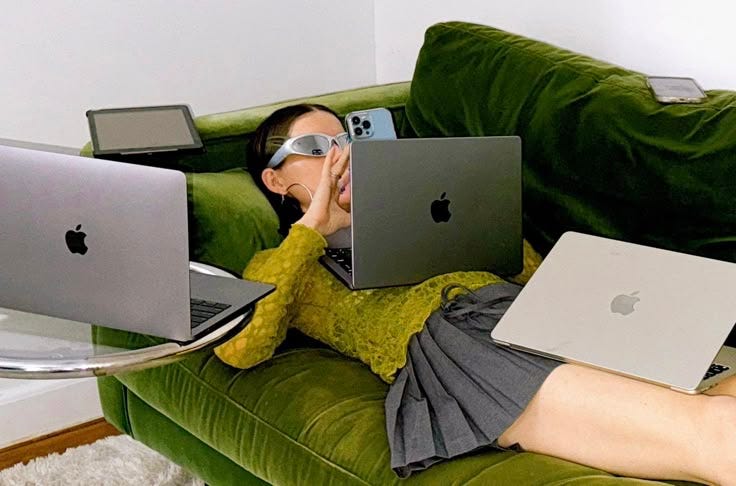
Data journalism that reads like an essay and looks like art. Scroll-led, obsessively researched, the kind of storytelling that makes you forget you’re looking at a spreadsheet at all.
Nicholas Felton turned ten years of one man’s life into infographics. It sounds cold. It’s one of the most human things you’ll read this year.
Kirby Ferguson’s video essay proving, patiently and with receipts, that originality is mostly a myth we tell ourselves to feel less derivative.
David McCandless turns billion-dollar figures and death statistics into something you actually want to look at twice. Data as a clearing in the jungle, not more jungle.
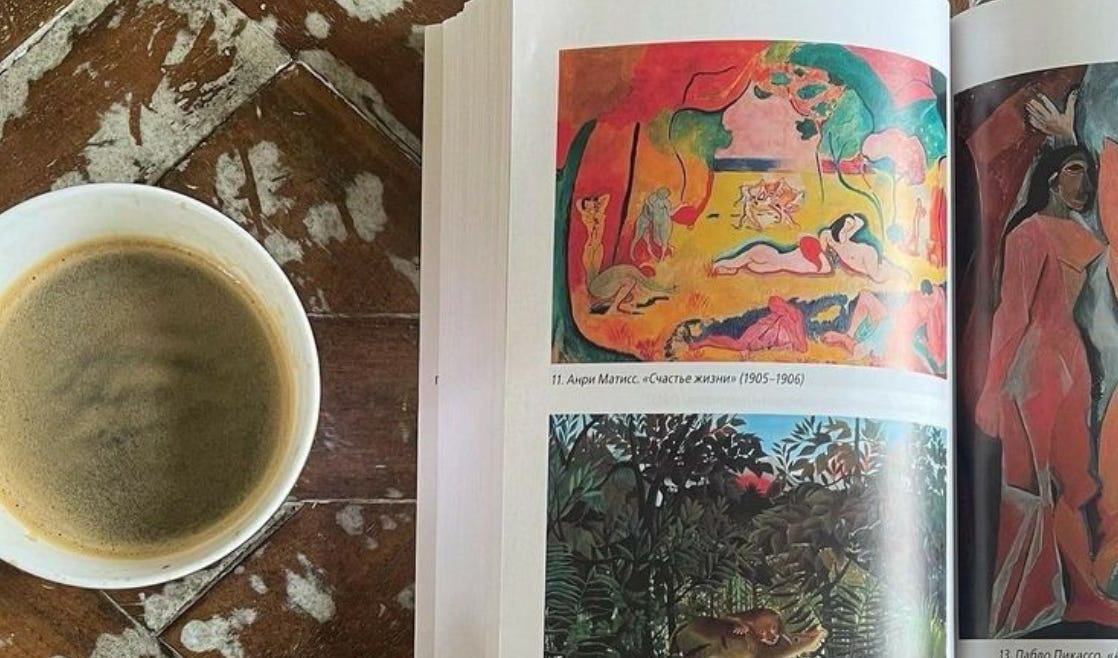
Eleanor Janega writes about the Crusades with irreverent, sweary precision, and somehow makes every post feel like gossip from six hundred years ago.
Fifteen years of scholars talking about the empire that connected the Balkans to Baghdad, one specific and slightly odd topic at a time.
Bret Devereaux will explain, at glorious length, why Sparta was never that impressive, and why your favourite fantasy siege would never have worked.
Maria Popova, twenty years of reading everything so she can hand you the sentence that changes how you see the rest of your week.
I discovered George Saunders through this one post of his Office Hours and at that time I too was reading one of Ann Patchett’s books called Tom Lake and I really enjoyed his writing and I really recommend you guys to check out his work.
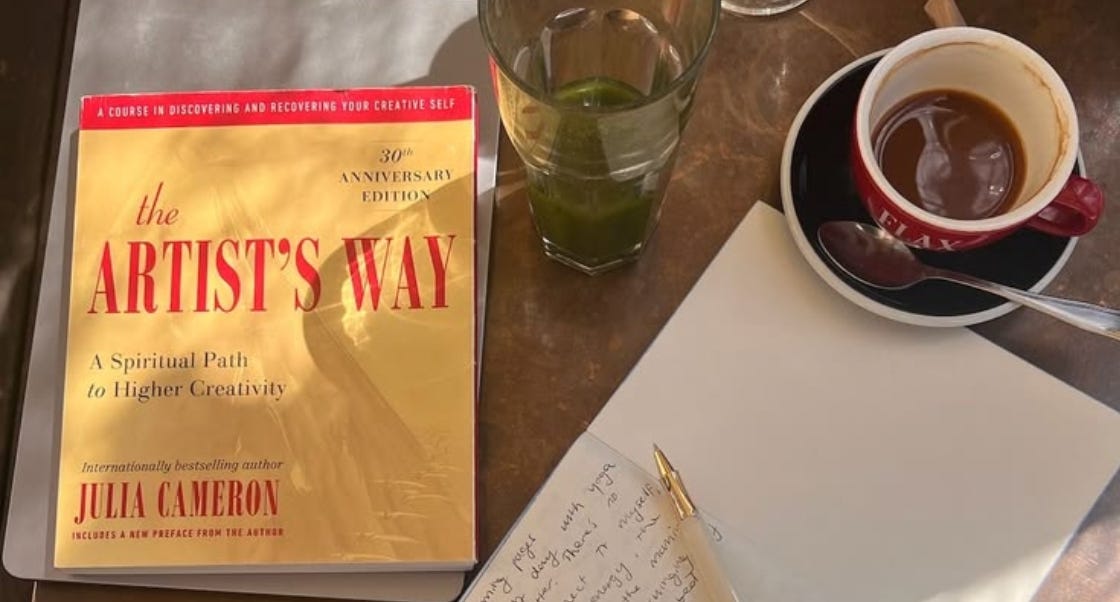
An art and visual culture magazine finding the strangest, most delightful things being made in studios nobody’s heard of, and still writing a real paragraph about every one.
Gary Hustwit’s documentary about the man whose design principles quietly built the aesthetic of every phone in your pocket, and who, at eighty-six, isn’t entirely sure it was worth it.
Frank Chimero’s small, strange, generous book on why design matters, released free online, which somehow makes it feel more honest, not less.
Founded 2007, still publishing daily, still finding the illustrator or typographer you haven’t heard of yet. The blog equivalent of a friend with unfairly good taste.
Eight episodes, eight disciplines, all making the same quiet argument: design is a way of thinking, not decoration. Now this one is a Netflix series.
The point of assigning it to myself is to make myself realise that nobody’s measuring the output, so for once the output doesn’t have to justify the input.
Brontë never explained the moors. She just kept writing them, page after page, until you stopped asking why and started feeling the wind. That's the thing I actually missed. Blue is blue no matter how small.
So is a single page, read properly, by someone nobody is checking on.
Everything is a win when the goal is to experience.
Love and knowledge,
Shreya
PS: I don’t own any of the photos used in the blog. All have been sourced from pinterest.
No posts
Comments
Nothing yet. Say the first thing.
Sign in to join the conversation.