
I love being wrong about a company. It almost always means something more interesting than I expected is sitting underneath.
A few days back Ash from the AI Collective called me to tell about this one amazing company that had just won a product and innovation event his org ran.
I was not very quick to google about the company once he said the name- BionIT Labs. My brain went straight to the wrong place. Bio. I assumed pharma. A protein, a molecule, some clever biotech startup with a lab and a deck full of trial phases. I thought, ” Nahh not right now, later”.
And then he said , “There is a hand being built in the south of Italy for people who have lost one. This year it showed up on two robots.”
That is roughly when I abandoned everything else I was meant to be doing.
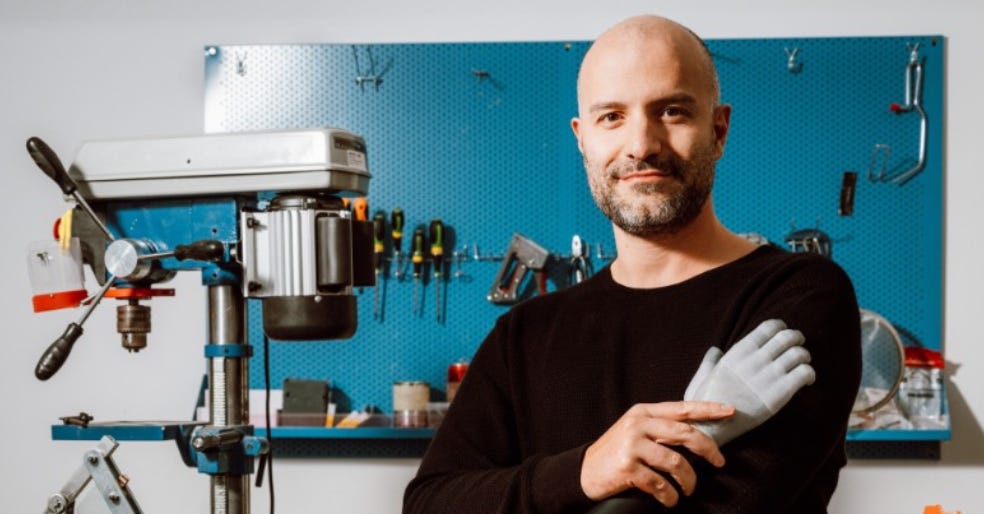
BionIT is bionic plus IT.
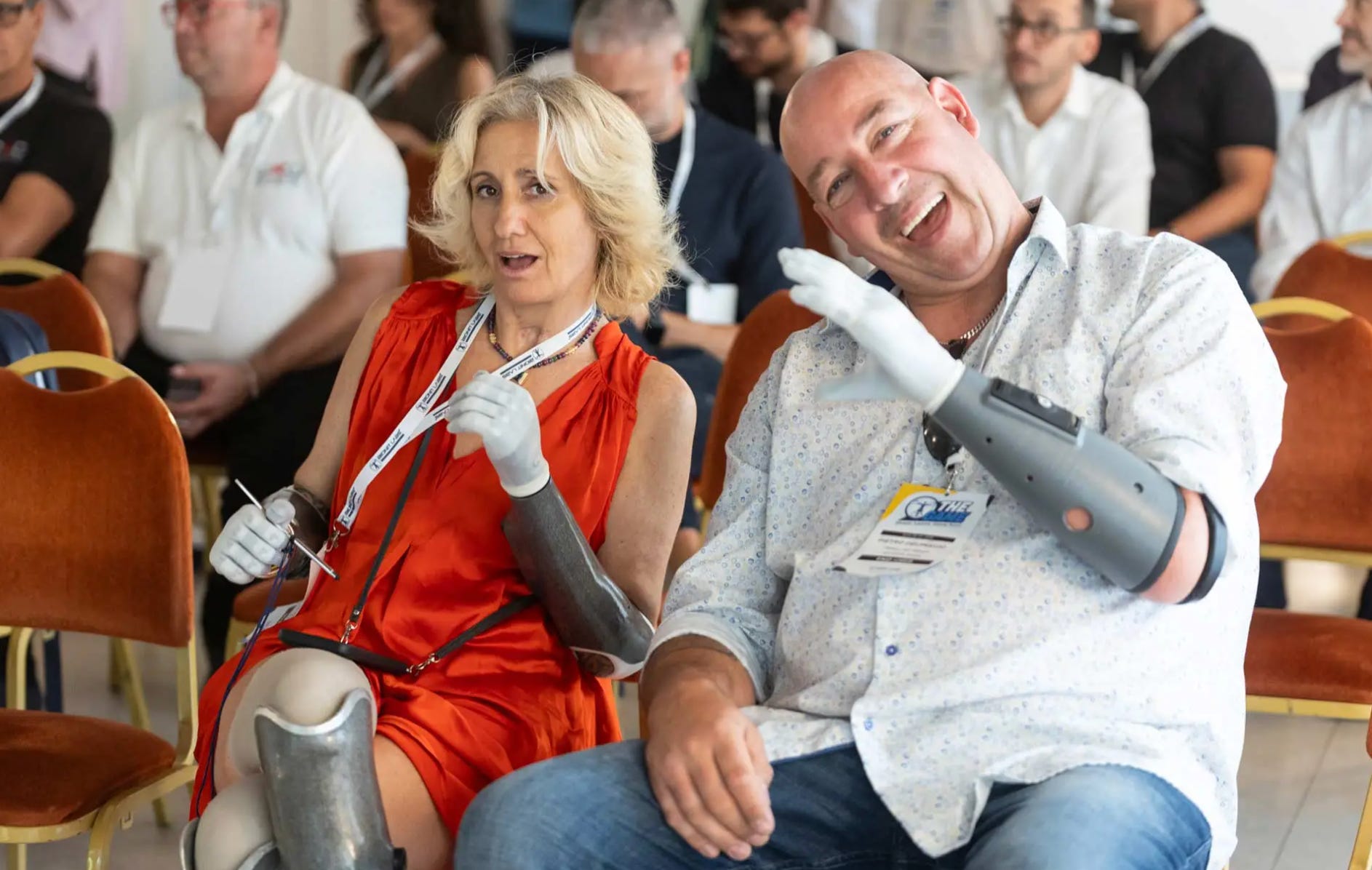
And the thing they’ve built is a hand. An actual bionic hand, for people who have lost one. It’s called Adam’s Hand, and it comes out of Soleto, a small town in the south of Italy that until pretty recently was known for its beaches and its food and not a lot else.
I kept reading, and this is where it got me.
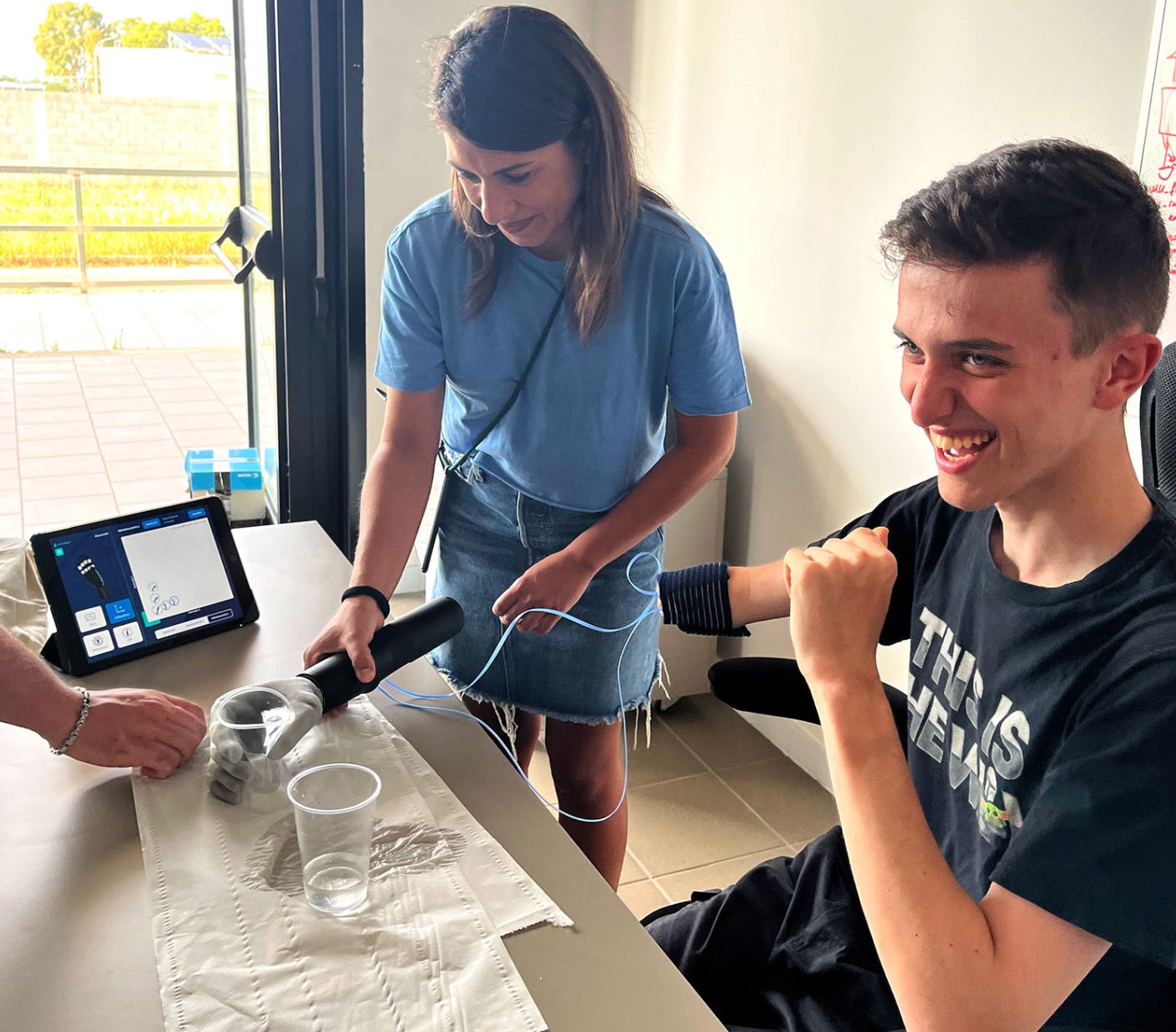
Most bionic hands make you do the work. You flex a specific muscle to tell the hand you’re about to pick up a mug, a different one to hold a key, and you carry that small mental effort around with you all day. Adam’s Hand doesn’t ask you to do any of that. You open it, you close it, and the fingers work out the shape of whatever you’re holding on their own. One motor. No settings to flick between. It sounds like a small thing written down. It isn’t.
And then I hit the part that actually made me email the founder.
This January, at CES, they put the same hand on two humanoid robots. So the thing they built to give people back their grip is now being sold as the grip for machines that never had one.
Giovanni, the founder, said something that stuck:
AI can reason and plan and predict, but without dexterity, it can’t actually do anything.
That was the bit I couldn’t let go of. A hand made for the people who know exactly what it means to lose one, now teaching a robot how to pick up a glass without crushing it.
I asked Ash for an introduction. He very kindly obliged. And me being me, I showed up with far too many questions.
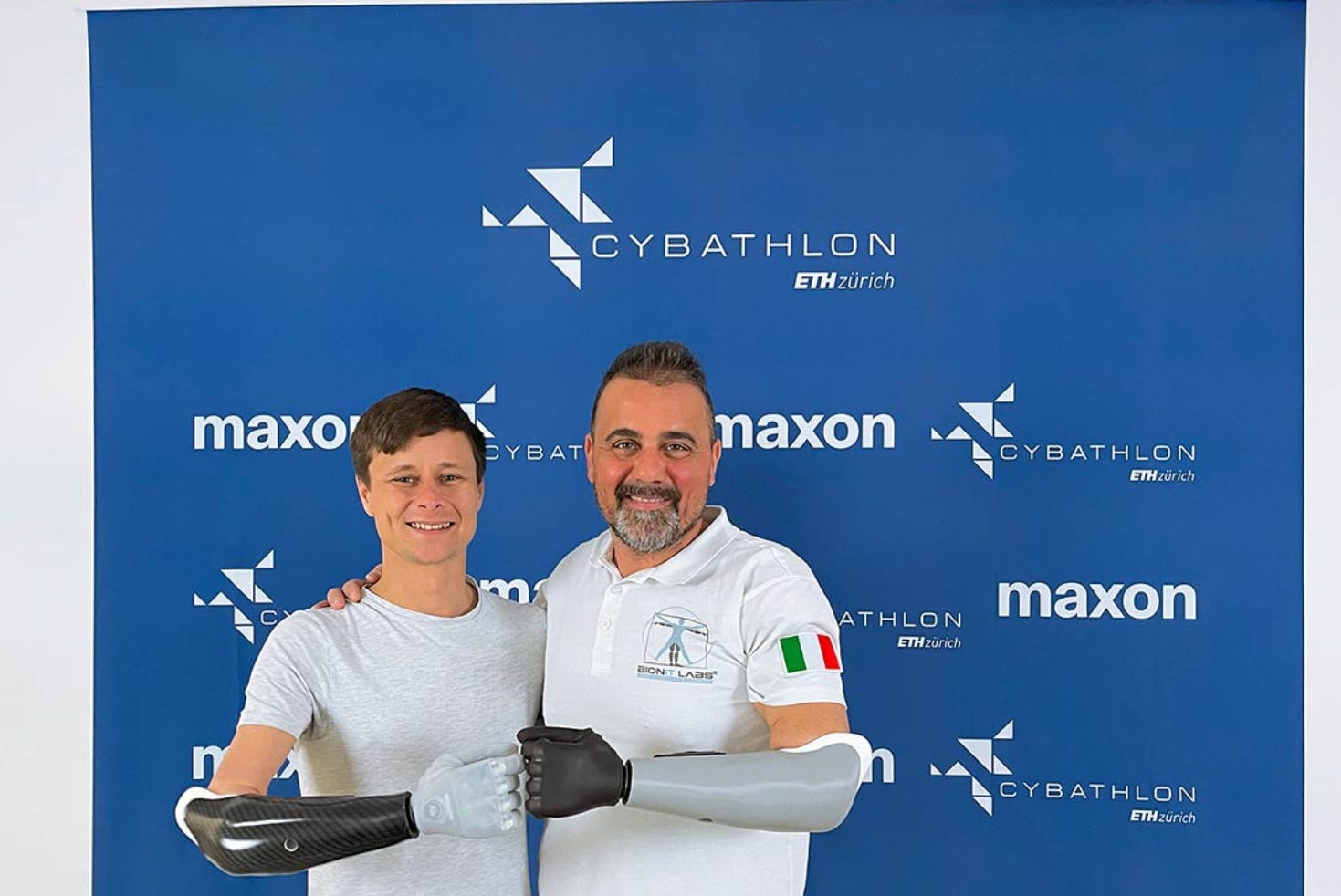
Giovanni Zappatore is a mechanical engineer. He wrote his graduation thesis on the mechanism behind this hand before there was a company to build it in.
I asked him when it stopped being a school project and became a real company. I was expecting a funding round, a launch, something with a date on it. Instead he told me about a photo shoot.
We were doing a photo shoot in the new office with the whole team. At a certain point I turned around and saw 20 people wearing the company T-shirt, and I thought, wow, this is real.
Not the prototypes. Not the machines. The 20 people in T-shirts. He came back to this a few times in different ways: the people are the company, everything else is secondary.
The early days sound nothing like the polished origin stories we usually get sold. His first 3D printer was a gift from his grandmother. He taught himself to read muscle signals off skin because it wasn’t part of his degree and he wanted to know it anyway. He built the hand in the gaps between exams, one class project at a time.
It wasn’t one big breakthrough or one dramatic garage startup moment. It was built over time, in small steps, in between classes, deadlines and exams.
I asked why he went with hardware at all, given it’s the slow, expensive, unglamorous route, and whether he’d ever been tempted to build something easier to fund. He seemed to enjoy that one. He’s a mechanical engineer, he said, he’s always been drawn to hard things. They wanted the hardest challenge first.
Every hardware company has a point where the money nearly runs out or the product nearly doesn’t work. I asked for his.
He gave me two. The first was a redesign, where the whole architecture wasn’t good enough and key parts had to be rebuilt from scratch. Instead of quietly pushing through, he stopped everything and opened it up to the entire company, an honest conversation about what was broken and why. Three months later they were back on track. Sometimes the fastest way forward, he said, is to stop, be honest, and rebuild together.
The second one is a more unusal one.
A funding round was ready. The money was committed. And then, at the last minute, a bureaucratic requirement nobody had seen coming delayed the whole thing by three months. They were already out of runway, and there was nothing anyone could do to speed it up. So for a few weeks, the entire team worked without getting paid.
Nobody left. Some of them offered to advance money so their colleagues could get through it.
“That’s why I always say our team is our biggest asset. I could not be prouder of them.”
I asked what building this has taken from him that doesn’t show up anywhere public. And it so warm that he didn’t reach for anything heroic but rather said something so genuine and fun:
Startup life is a dog’s life. You age seven years for every normal year.
So he’s probably lost a bit of health along the way, he said, though his girlfriend is now dragging him to the gym to claw some of it back (as she should) . She’s the one who keeps him alive, he joked, which is why he can work twice as hard as a normal person, because in a way there are two of them doing it.
It’s genuinely hard to be precious about the whole founder-hero thing when the founder keeps puncturing it himself.

And then the answer I actually came for. I asked if there was one real person, a user and not a mission statement, whose reaction had stuck with him. He said they’re never the same twice.
“Some smile, some cry. Others just stay silent and speechless.
That’s the exact moment we work for. When you realise that what you built is no longer just a piece of technology, but something that can genuinely change a person’s life.
That’s the whole company, really. That one second before someone’s face changes.”
I finished where I usually do, somewhere slightly morbid. If he let himself imagine this not working out, what’s the version of failure he’d least want to explain? He laughed first. The thing he’d dread most, he said, is having to explain it 300 times to everyone who asks, so he’d probably just write one blog post and send everyone the link.
Then the honest bit under the joke.
Italy still isn’t Silicon Valley. The culture around failure is thinner, people are more risk-averse, and starting again from scratch would be genuinely harder here. But he loves a challenge, so even then, he’s fairly sure he’d find a way to enjoy the next one.
I love this guy’s spirit .
I went in thinking about drug companies. I came out thinking about touch.
A hand built to give people back their grip is now, quietly, teaching machines how to have one.
We spend so much of the AI conversation on what these systems can think. Giovanni built a company on the older, harder question of what they can actually hold, and he built it first for the people who know exactly what it costs to lose that.
To more innovations,
Team AI+
No posts
Comments
Nothing yet. Say the first thing.
Sign in to join the conversation.